DRIFT AUDIO
Listen to this story
Choose a voice, then press play.
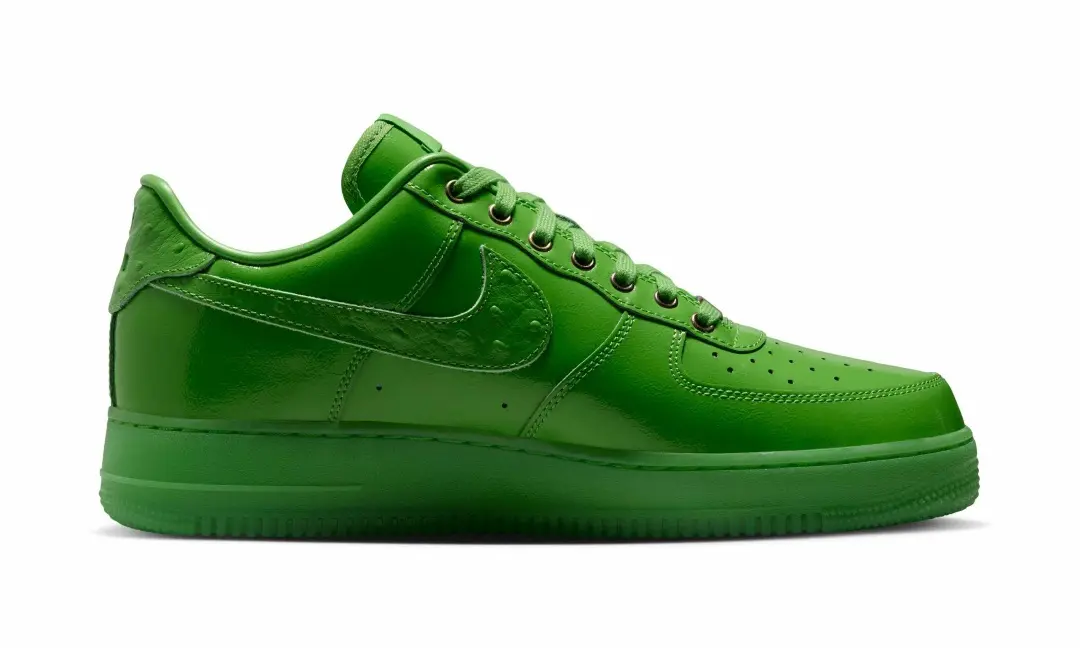
Nike drapes the Air Force 1 Low LX in full tonal green, ostrich leather, and aged bronze hardware — a quiet, confident nod to the sil’s 1982 debut.
In This Story
- A Single Idea, Worn All the Way Through
- The Material Story Beneath the Green
- Ostrich Texture, Premium Leather, and Monochrome Finish
- Metal Hardware and Quiet Signature Details
- Why Nike Is Revisiting Luxury Air Force 1s Now
- Verd
There’s a moment every few years where Nike stops treating the Air Force 1 like a blank canvas and starts treating it like a monument. This is one of those moments. The Nike Air Force 1 07 Low LX “Icon/Green Apple,” arriving under style code IV6822-399, doesn’t try to reinvent the silhouette or bury it under a designer’s fingerprints. Instead, it does something almost more difficult: it points a spotlight directly at the shoe itself and asks you to remember why you cared in the first place.
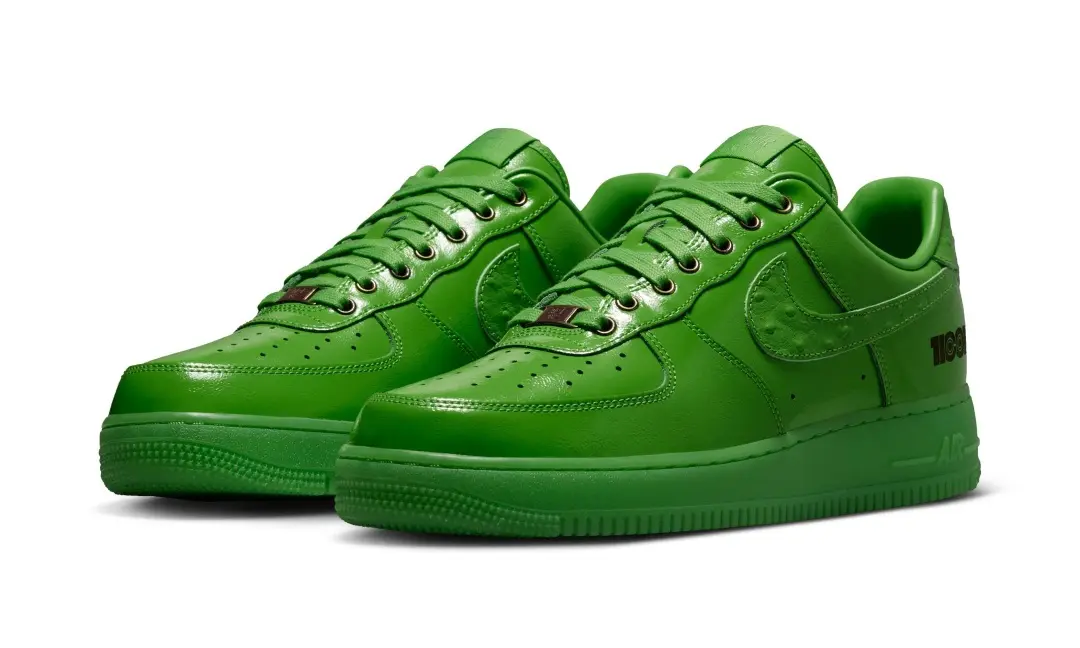
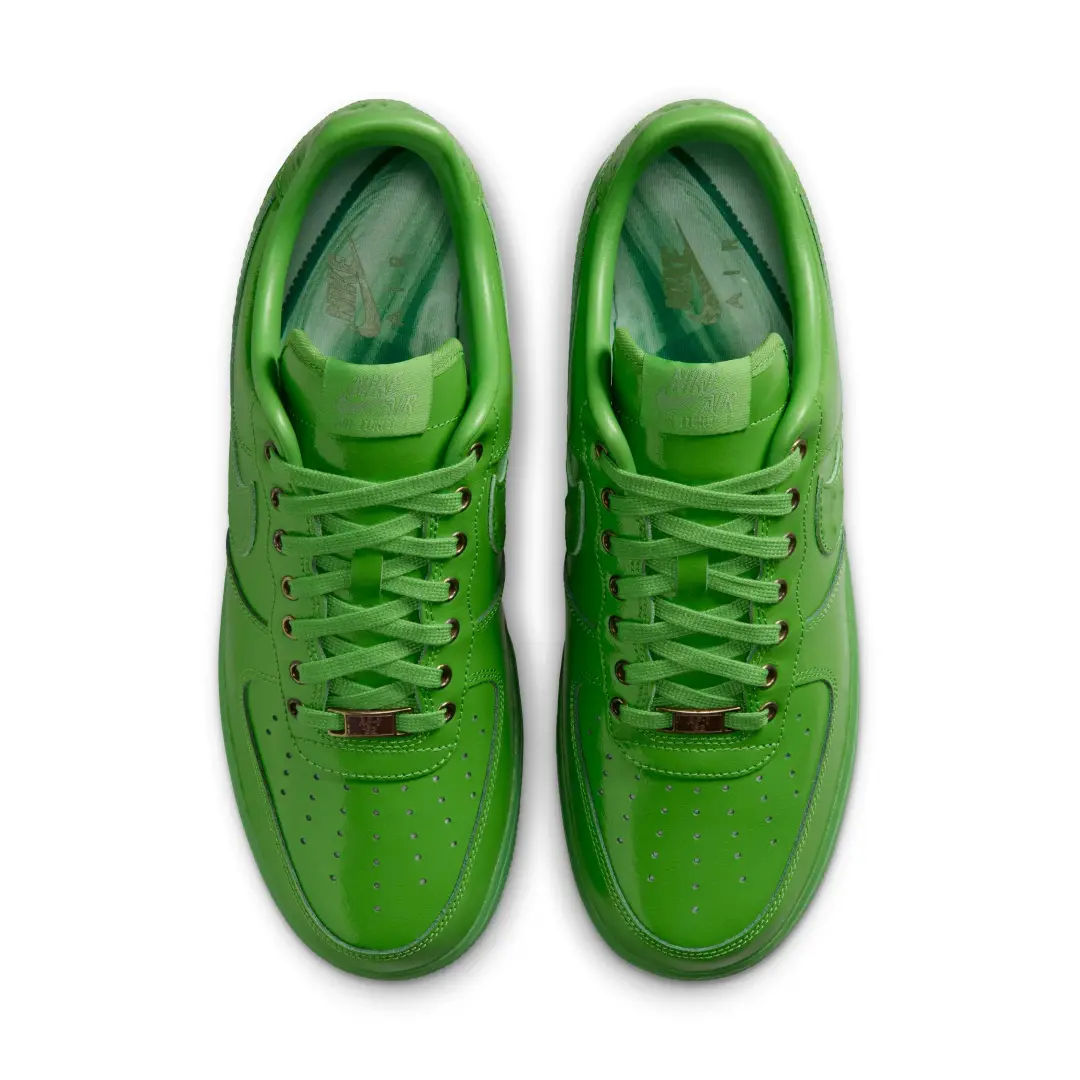
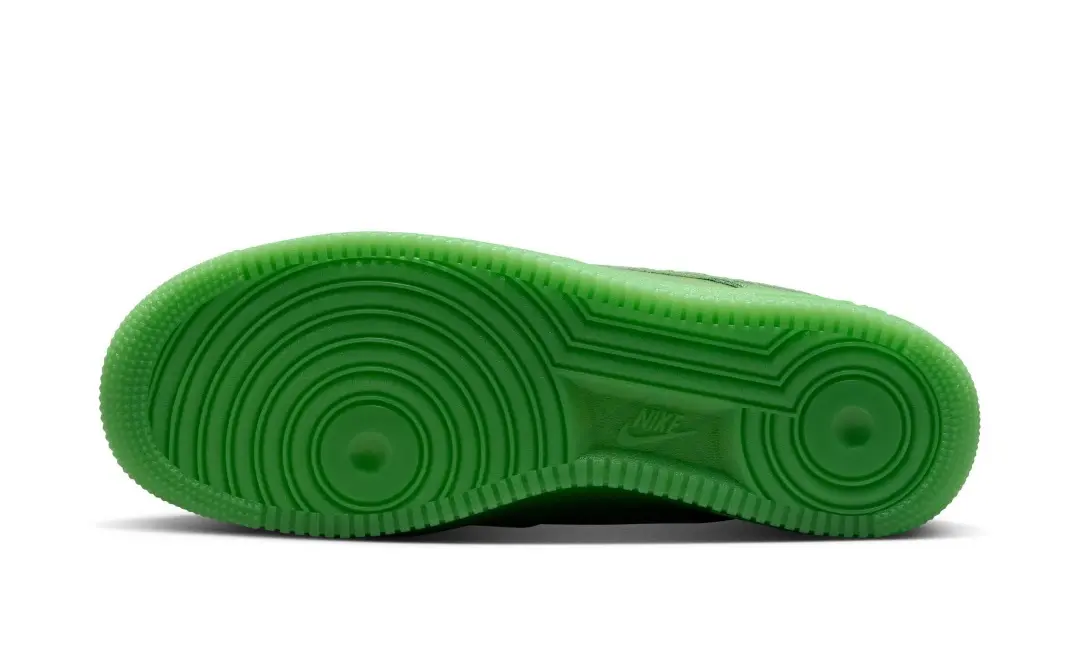
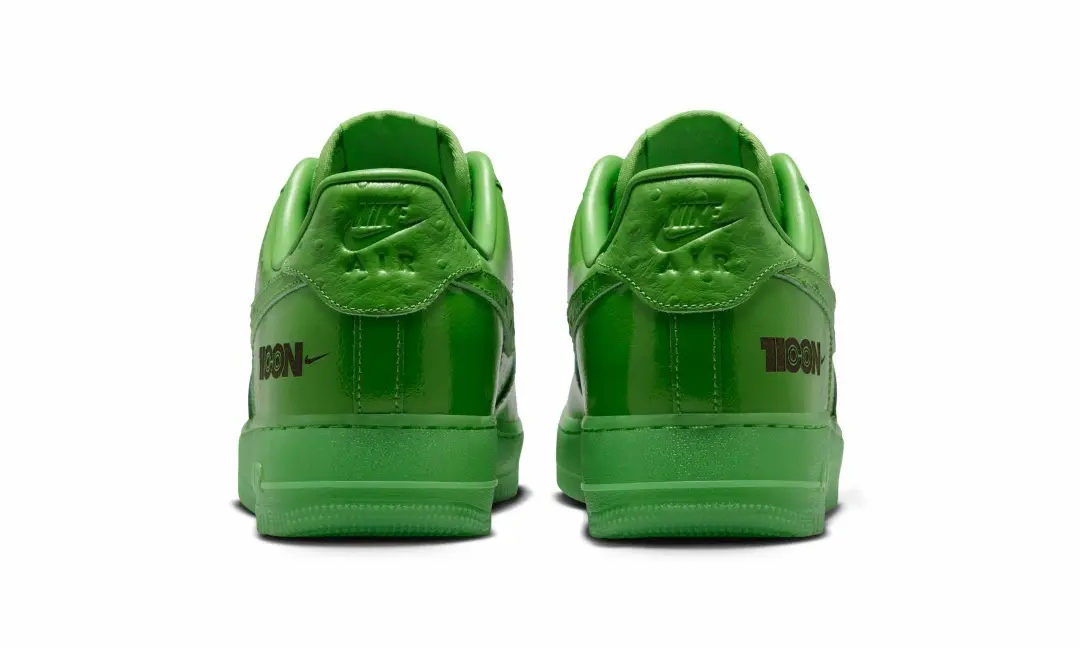
Nike is calling the colorway “Green Apple/Chlorophyll/Green Apple” on the official spec sheet, and the redundancy in that name is almost the point. The pair delivers a full green takeover from top to bottom, covering the leather upper, laces, lining, midsole, and outsole in tonal shades of green. There’s no contrast panel to break it up, no accent color sneaking in to soften the effect. It’s a single, saturated idea worn all the way through, and that kind of commitment is rarer than it should be in a market that usually hedges its bets with a neutral base and one loud detail.
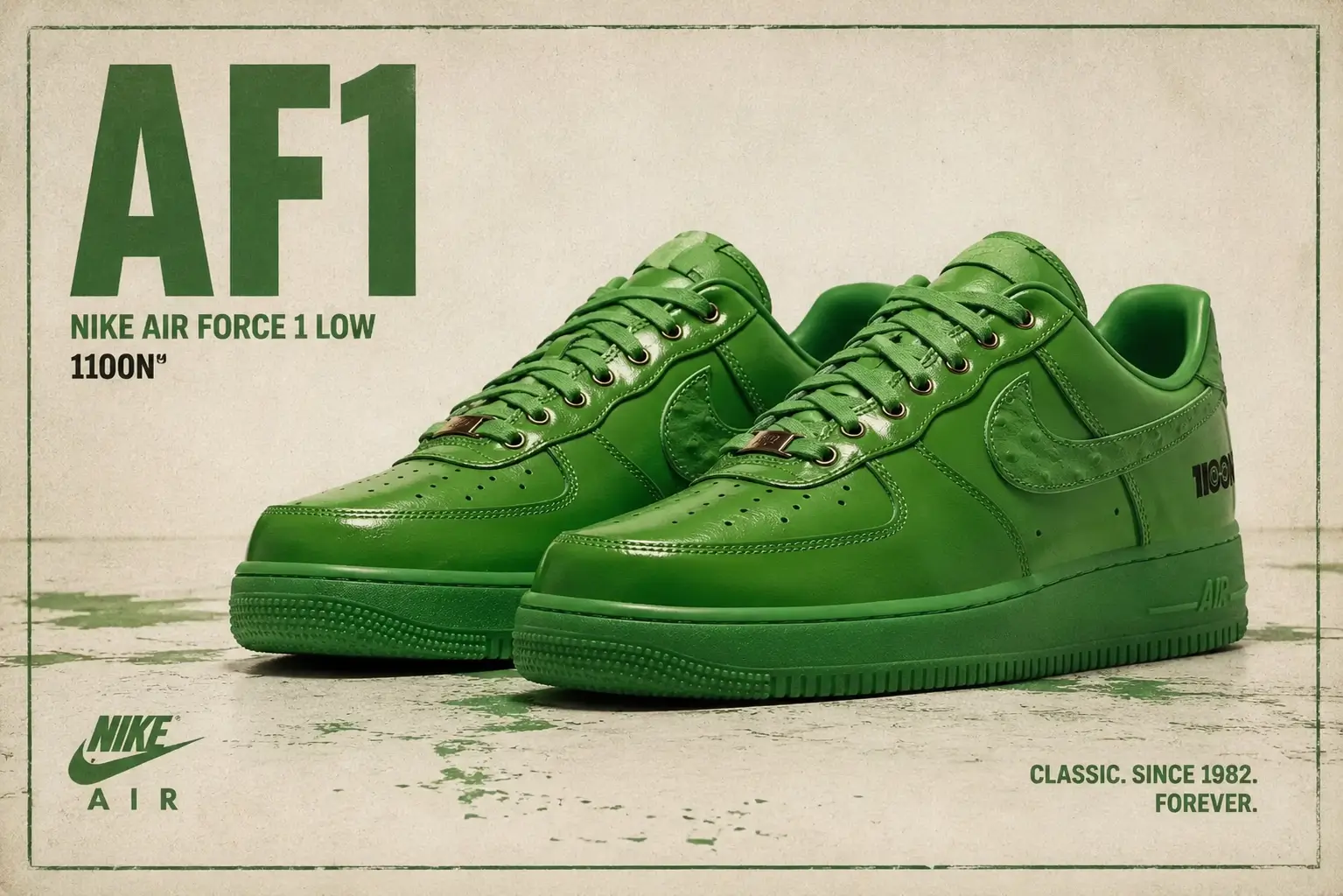
A retro-inspired campaign presents the monochromatic green Nike Air Force 1 Low with vintage typography, textured paper effects, and timeless sportswear design cues that celebrate the silhouette’s enduring legacy.
mat
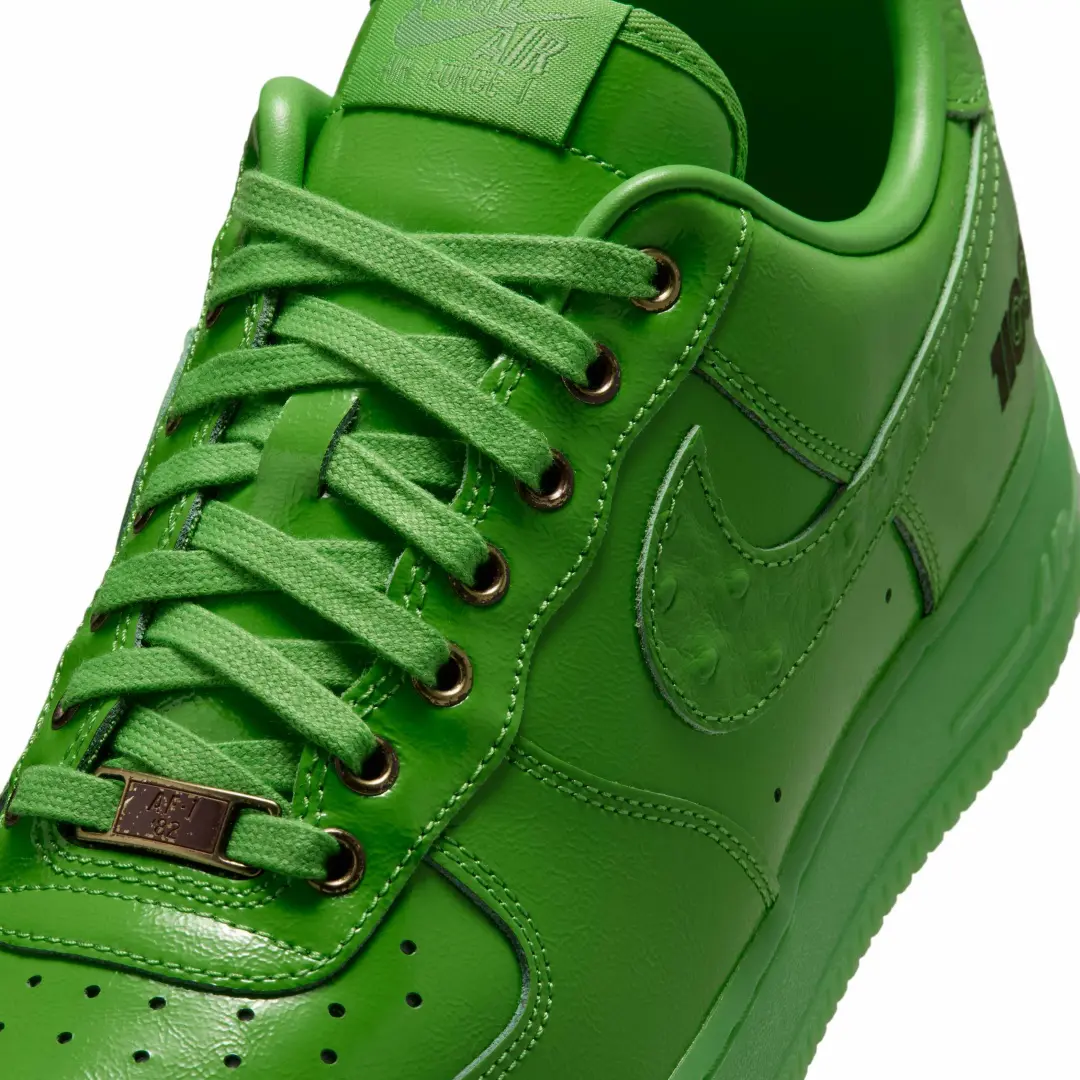
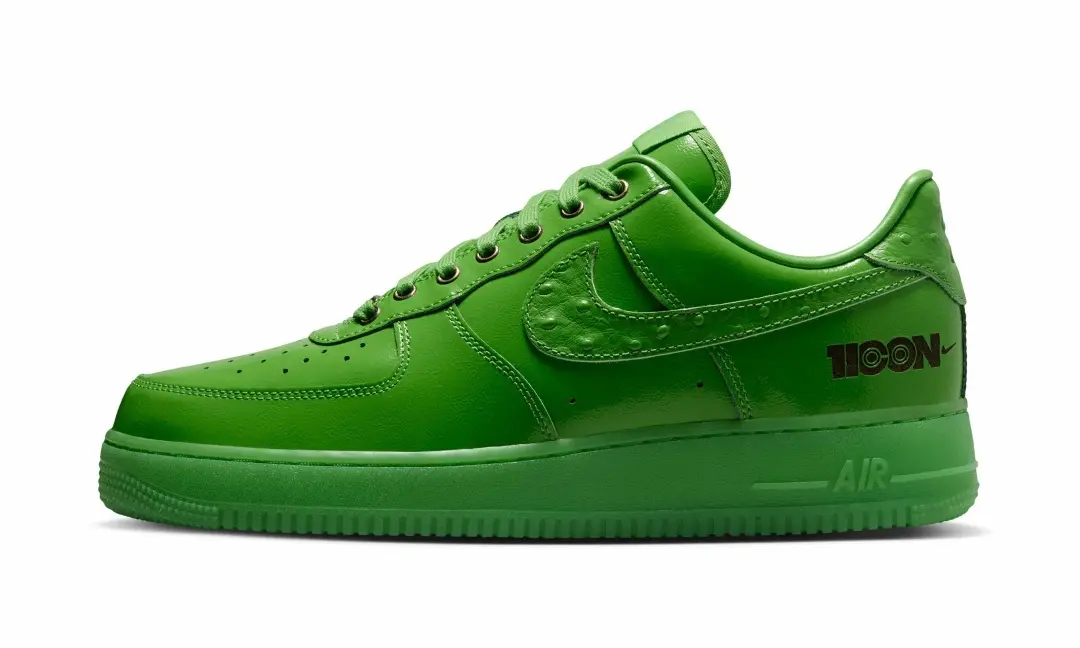
What keeps the shoe from reading as a novelty is the material story happening underneath the color. A shiny leather foundation carries the palette, while ostrich-textured leather makes an immediate premium statement on the Swoosh and heel tab, which is the kind of upgrade that photographs quietly but feels completely different in hand. Ostrich leather has a texture that catches light in a way glossy calf leather never will, and putting it specifically on the brand marks, rather than the whole upper, is a smart restraint. It says “premium” without saying “costume.”
flow
The hardware is where the shoe starts telling you what it’s actually about. Bronze metal eyelets and a matching lace dubrae carry an antique, chipped-away finish, and that dubrae is stamped with “AF-1 ’82,” a direct nod to the sneaker’s debut year. That detail matters more than it looks like it should. Aging hardware on a shoe that’s brand new is a design trick, sure, but it’s also a quiet argument: this isn’t a new shoe wearing old branding, it’s an old icon that’s earned the patina.
That argument gets made explicitly elsewhere on the shoe. Branding shows up on the lateral heel, with the middle letters of the word shaped from the Air Force 1’s familiar outsole tread pattern — a typographic wink that only works if you already know the silhouette by mid, which, at this point, most of the planet does. Nike doesn’t often get this cute with its own iconography, and the fact that it’s doing so here, on an inline release rather than a designer collaboration, tells you something about how the brand is positioning this pair internally.
View this post on Instagram
show
Even the parts of the shoe nobody photographs got attention. Inside, the insole carries a green X-ray-style illustration of the shoe with its laces loosened, a detail that exists purely for the person actually wearing it, not for the sneaker photo. It’s a small thing, but it’s the kind of small thing that separates a shoe designed to be sold from a shoe designed to be lived with.
why
Timing is doing a lot of work here too. Nike is leaning into this release ahead of Air Force 1 Day on August 2nd, marking the model’s debut year of 1982, and it arrives during a stretch where the silhouette has found renewed momentum in 2026 through the return of the ’01 cut, special editions tied to the New York Knicks championship run, and a wave of collaborations pulling on 2000s-era nostalgia. In other words, the Air Force 1 is having one of its cyclical resurgences, and “Icon” reads like Nike’s way of planting a flag in the middle of it — less a new chapter than a reminder of who’s writing the book.
Retail-wise, the pair is listed at $140, positioned as the Air Force 1’s standard LX premium tier rather than a hyped limited drop, with release timing pointing to late summer or fall 2026 depending on the outlet. That pricing matters for context: this isn’t chasing resale culture, it’s chasing the collector who wants a genuinely elevated version of the shoe they already own three colorways of.
verd
There’s a version of this release that could have felt like a marketing exercise — slap a name like “Icon” on a shoe and let the title do the talking. What keeps “Green Apple” from falling into that trap is that nearly every choice on the shoe reinforces the concept instead of just decorating it. The color commitment, the tonal branding, the aged hardware, the insole show — none of it is loud on its own, but stacked together it builds a genuinely cohesive argument for why the Air Force 1 still deserves the word in its name.
Either “Icon” ends up being remembered as a defining Air Force 1 moment or just a well-executed seasonal drop probably depends less on the shoe and more on what surrounds it this fall. But as a standalone object, it’s hard to argue with the pitch: a legend, dressed exactly like one, for once.
From the DRIFT archive: A Review: The Nike Air Force 1 Low Boucle Reimagines Texture and Haute · Dr. Martens’ Immersive 1460 Rain Experience Makes Digital Retail Feel Alive
Related Articles
Nike A’Two “Potion No. 22” Gives A’ja Wilson a Mismatched Horror Double Bill
Two shoes, two monsters: A’ja Wilson’s Halloween A’Two splits blood splatter and honeycomb across a […]