DRIFT AUDIO
Listen to this story
Choose a voice, then press play.
The GameDev Tavern’s new 18-episode YouTube series builds a complete 3D dungeon crawler in Godot 4 from scratch, free, and without touching AI-generated code.
In This Story
- Why This Course Arrives Now
- What You’ll Actually Build
- Inside the 18 Episodes
- Who the Course Is Really For
- Godot’s Growing Case as a 3D Engine
- Where This Fits Among Other Free Godot Resources
- How to Follow Along
Free tutorials promising to teach game development are not a new phenomenon, but the timing of this one is doing a lot of the work. The GameDev Tavern has launched an 18-episode YouTube series that walks through building a complete 3D dungeon crawler in Godot from an empty project file to a finished, playable game, over roughly 20 hours of video. It lands at a moment when Godot’s own governing foundation has moved to restrict AI-assisted code contributions to the engine itself, a decision that has been read across the indie development community as a deliberate stand in favor of developers who actually understand the tools they’re using rather than prompting their way around them.
That context matters for how this course is being positioned. It isn’t just another walkthrough aimed at total beginners looking for a five-minute win. It’s being pitched, implicitly and explicitly, at developers who want to actually understand Godot’s 3D pipeline well enough to build something real by hand, at a moment when doing so by hand is being treated as a meaningful skill rather than a slower alternative to typing a prompt.
The broader backdrop here is a game engine that has spent the last several years steadily converting curiosity into commitment. Godot is free and fully open-source, with no royalty structure and no per-seat licensing to work around, which has made it a natural landing spot for solo developers and small studios who’ve grown wary of the licensing changes that periodically ripple through the commercial engine space. That goodwill has translated into a genuinely active community of tutorial creators, modders, and plugin developers, and a course of this scale is best understood as one more contribution to that same ecosystem rather than a standalone commercial product trying to carve out a paying audience.
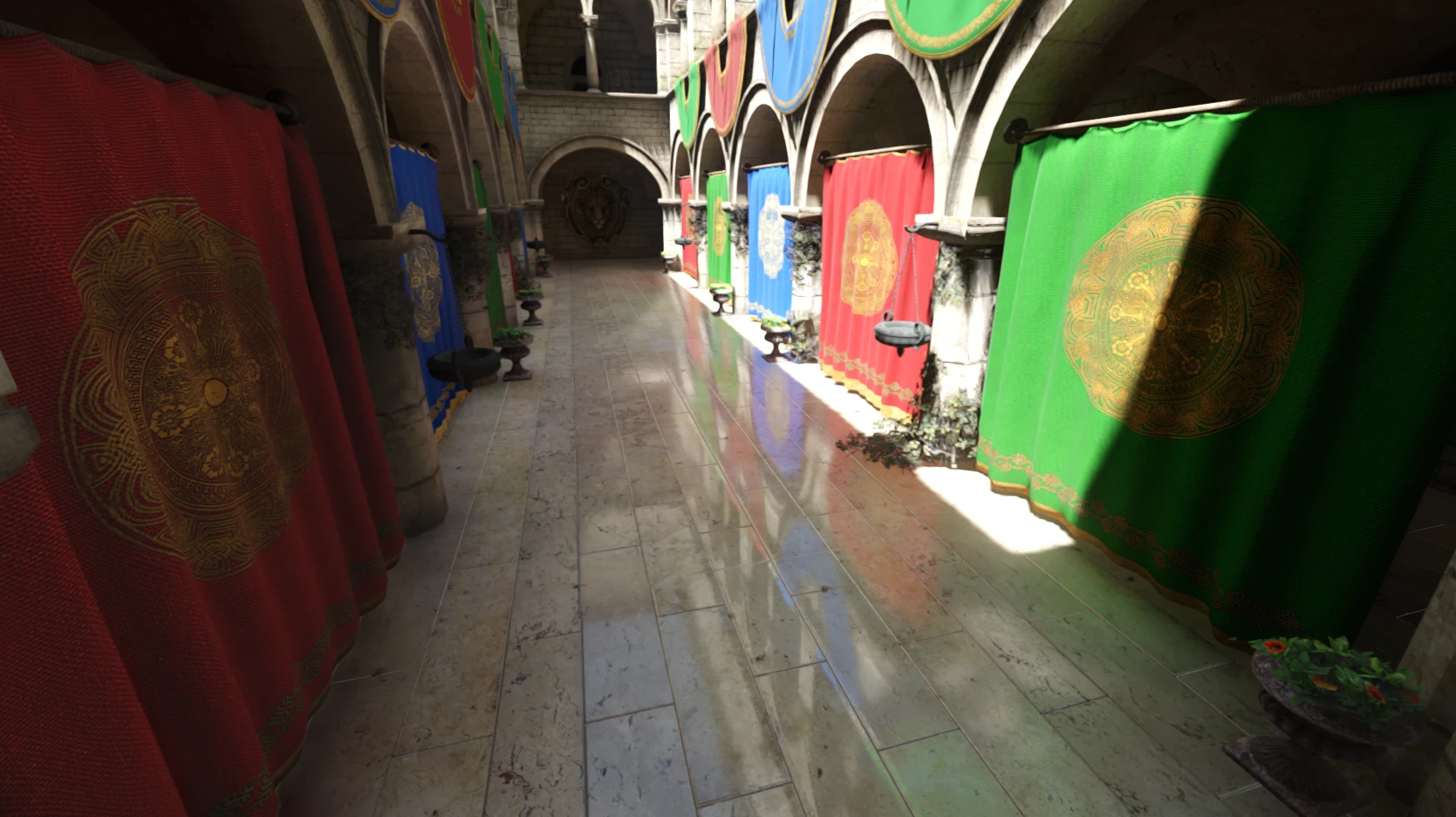
A medieval-style stone hallway demonstrates realistic reflections, dynamic lighting, and richly detailed fabric materials in a high-fidelity 3D scene.
stir
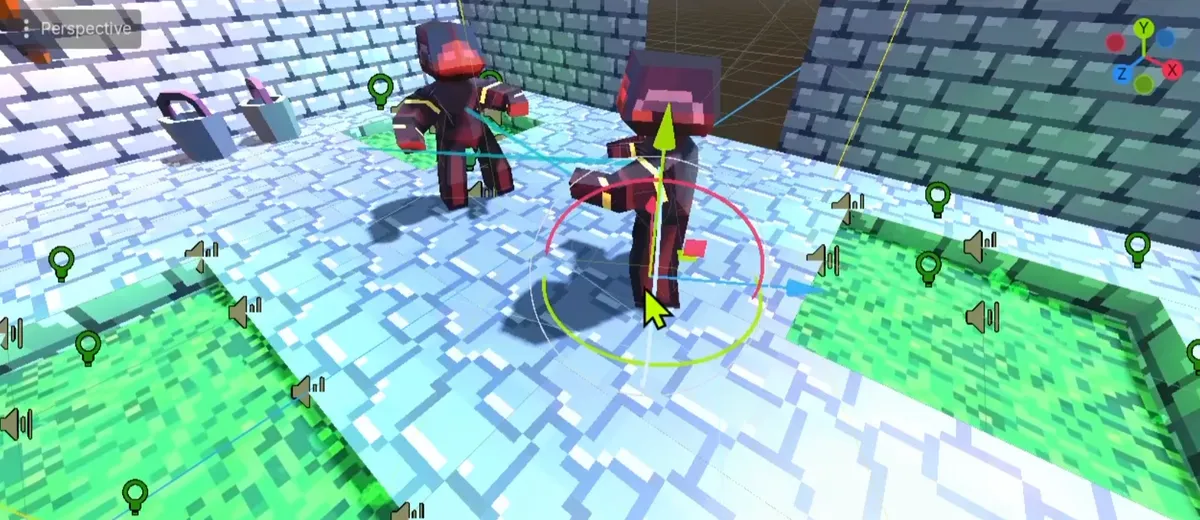
The example project running through the entire series is Goblins’ Den, a first-person 3D dungeon crawler that the GameDev Tavern has made available as a free download through Itch.io. Rather than treating the finished game as a black box to admire, the studio has structured the whole series around recreating it piece by piece, so that following along means ending up with your own working copy of the same project, built from your own understanding of each system rather than copied wholesale.
That distinction, between a finished download and a fully rebuilt project, is what separates a tutorial series from a simple asset pack. Plenty of free Godot projects exist that let you open a finished dungeon crawler and poke around its code. This one is explicitly designed so that by episode eighteen, you have built every visible and invisible part of that same game yourself, which is a considerably more useful outcome for anyone hoping to apply the same techniques to a project of their own afterward.
in
The series covers the full stack of what a first-person 3D dungeon crawler actually needs, rather than stopping at movement and calling it done. According to the studio, the 20-hour run covers character models and rigging, animation, texturing, and sound design alongside the programming side of the project, meaning the course treats art production and code as equally essential parts of finishing a game rather than treating the visuals as an afterthought bolted onto working mechanics.
On the technical side, the topics named for the series include shader work, lighting setup, node-based state machines for managing character and enemy behavior, composition models for structuring a project’s scenes sensibly, ragdoll physics, pathfinding for enemy AI, and level design itself. That is a genuinely broad spread for a single course, closer to a semester of game development fundamentals compressed into a linear playlist than a narrow “how to make a first-person controller” clip.
The first episode, understandably, starts with the first-person controller itself, since a dungeon crawler lives or dies on how it feels to move through its corridors. From there, the series is structured to add complexity in layers: once movement works, enemies and their behavior get built out, then the level itself, then the atmosphere and polish that make a finished game feel like more than a tech demo.
That layered approach is worth dwelling on, because it mirrors how experienced developers actually tend to build games rather than how tutorials often teach them. A lot of beginner-oriented content treats a game as a checklist of isolated features, a movement tutorial here, a shooting mechanic there, an inventory system somewhere else, each existing in its own disconnected example project. Structuring 18 episodes around a single continuous build forces every new system to interact with what came before it: the state machine has to work with the animations already built in an earlier episode, the pathfinding has to respect the level geometry designed in another, and the lighting has to sit correctly on top of the shaders introduced elsewhere. That kind of integration is closer to the actual, messier experience of shipping a real project, and it’s a detail that separates a course built around one continuous game from a looser collection of standalone technique videos.
who
The GameDev Tavern has been explicit that this series isn’t aimed at total newcomers. The studio describes the course as built for intermediate to advanced developers, people who already have some working familiarity with Godot or game development more broadly, rather than viewers picking up a game engine for the very first time. At the same time, the studio has said the course avoids heavy mathematics, which suggests an attempt to keep the more advanced systems, ragdoll physics and pathfinding among them, approachable without requiring a background in the underlying math that usually accompanies those topics in more academic treatments.
That positioning makes sense given the sheer range of systems the course covers. Shaders, state machines, and pathfinding are not concepts most true beginners tackle in their first weeks with an engine, and a course trying to teach all of them inside 20 hours would struggle if it also had to explain what a script or a scene tree is from zero. Framed as a step up for developers who already have the basics down, the series reads as an attempt to close the gap between “I can make a simple 3D game” and “I can make a complete one,” which is a genuinely underserved space in the free tutorial ecosystem.
grow
It’s worth pausing on why a course like this matters beyond its own runtime. Godot has built its reputation primarily on the back of 2D work, powering a steady stream of indie platformers, puzzle games, and metroidvanias that take advantage of the engine’s lightweight footprint and its scene-based architecture. Its 3D capabilities have existed for years, but have historically had a smaller body of tutorial content built around them compared to the wealth of 2D material available, which has meant that developers curious about Godot for a 3D project often had less to go on than those working in 2D.
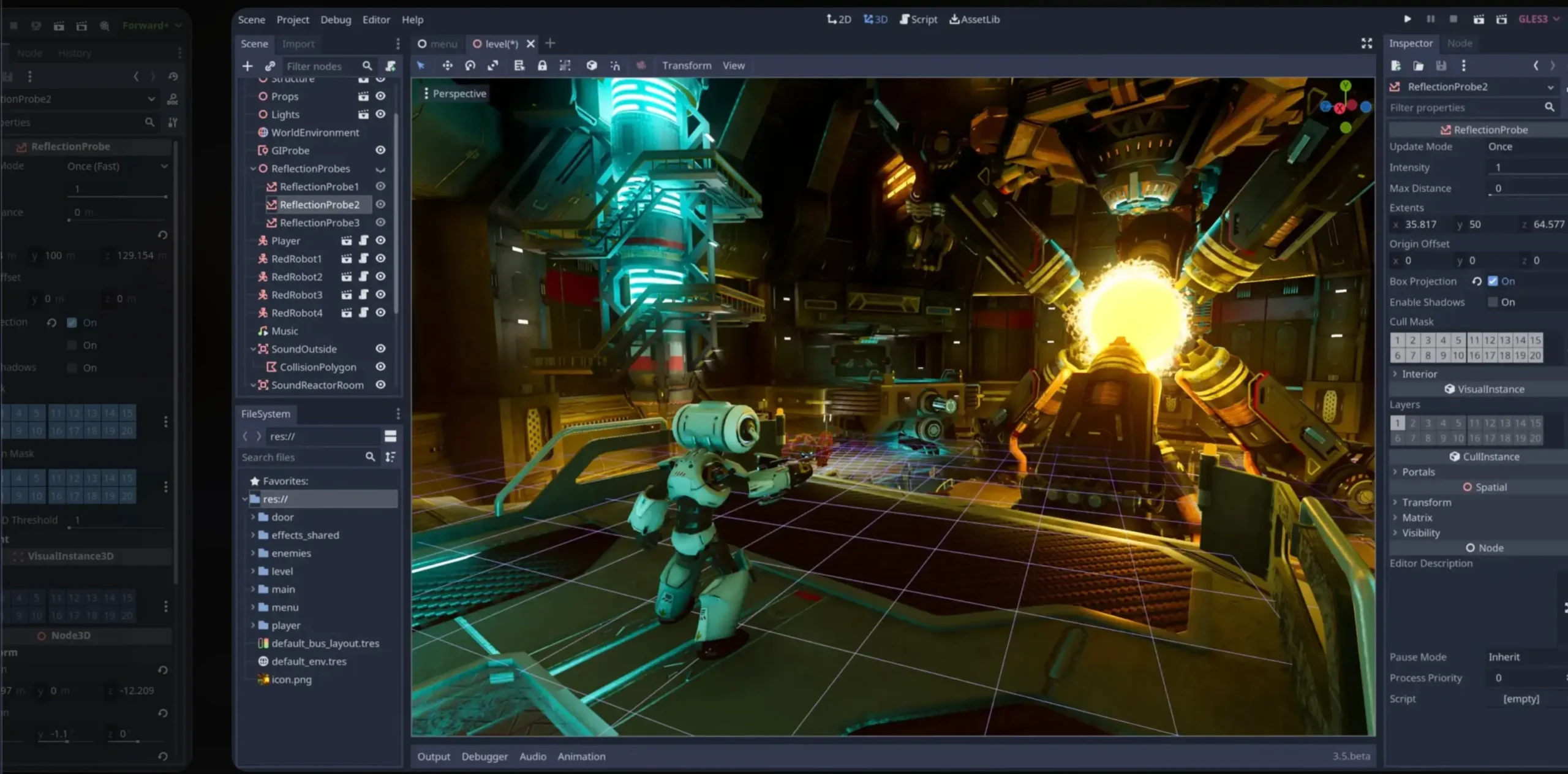
The Godot Engine editor showcases a futuristic 3D level featuring advanced lighting, reflection probes, and a robot character inside a sci-fi environment.
A dedicated, full-length 3D series addressing that gap head-on is a meaningful data point for anyone weighing Godot against the more established 3D options. It suggests the engine’s 3D toolset has matured to the point where a studio is willing to build 20 hours of educational content around it rather than treating 3D as a secondary feature worth only a quick-start guide. For developers who have leaned on Unity or Unreal Engine specifically because that’s where the 3D tutorials were concentrated, a course of this scope is one more reason to take a serious look at what Godot’s 3D pipeline can actually do.
This isn’t happening in isolation, either. Developer comparisons weighing Unity against Godot for identical 3D projects have become a fairly common genre of content in their own right recently, generally landing on the conclusion that Godot’s 3D workflow has closed much of the gap that once made it a clear second choice behind more established engines. A tutorial series willing to tackle shaders, ragdoll physics, and pathfinding together, rather than treating any one of them as too advanced to cover in a free course, reads as further evidence that the engine’s 3D side has moved past “usable” and into genuinely competitive territory for the kind of mid-sized indie project a solo developer or small team might realistically ship.
compare
The GameDev Tavern’s series isn’t arriving into an empty landscape. Godot’s own documentation includes an official “Your First 3D Game” walkthrough that has long served as the standard entry point for newcomers wanting a guided, beginner-level introduction to the engine’s 3D workflow. GDQuest, one of the most established names in free Godot education, offers its own beginner-focused 3D course built around a first-person arena survival game, aimed squarely at people who are new to both Godot and game development more broadly and want a gentler on-ramp before attempting anything more ambitious.
There’s also a substantial body of intermediate content elsewhere, including a widely watched freeCodeCamp course that walks through building a 3D action RPG in Godot across roughly five hours, covering world-building, character animation, and enemy state machines along the way. Compared to that landscape, the GameDev Tavern’s series sits at the more advanced, more comprehensive end of the spectrum, both in its total runtime and in the sheer number of systems it tries to cover inside a single connected project rather than a series of standalone lessons.
Taken together, that range of free options, official beginner documentation, GDQuest’s structured courses, freeCodeCamp’s intermediate RPG walkthrough, and now this dungeon crawler series, gives developers a reasonably complete path through Godot’s 3D capabilities without paying for a single course, which is very much in keeping with the open-source, community-driven spirit the engine has built its following on.
huh
The first four episodes of the series are already live on The GameDev Tavern’s YouTube channel, with the remaining installments scheduled to post on Mondays, Wednesdays, and Fridays at 9:00am PST until the full 18-episode run is complete. The example project, Goblins’ Den, is available as a free download through the studio’s Itch.io page for anyone who wants to see the finished result before committing to the full course, or to compare their own build against the reference version as they work through each episode.
For developers weighing whether to jump in, the practical prerequisite worth taking seriously is the “intermediate to advanced” framing the studio itself has used. Anyone brand new to Godot or to game development in general will likely get more out of starting with an official beginner walkthrough or a GDQuest course first, then returning to this series once the fundamentals of scenes, scripts, and nodes feel comfortable rather than confusing. For everyone else, a free, structured path through shaders, AI pathfinding, and full level design, built around one cohesive project rather than a scattered collection of unrelated clips, is a fairly rare thing to find without a price tag attached.
For more on free, see Cotopaxi x Free People 9L Shoulder Bag — The Weekender Carry-On Rewritten.
For more on wants, see Inside Trone, the Paris Startup That Wants You to Actually Like Your Toilet.
Related Articles
Blown Spheres On An Extruded Bar
Luce Sferica by Ronan Bouroullec for Flos. Modular suspension. Glass spheres ~180 mm. Dual LED strips. Touch dimmer. Three lengths.