DRIFT AUDIO
Listen to this story
Choose a voice, then press play.
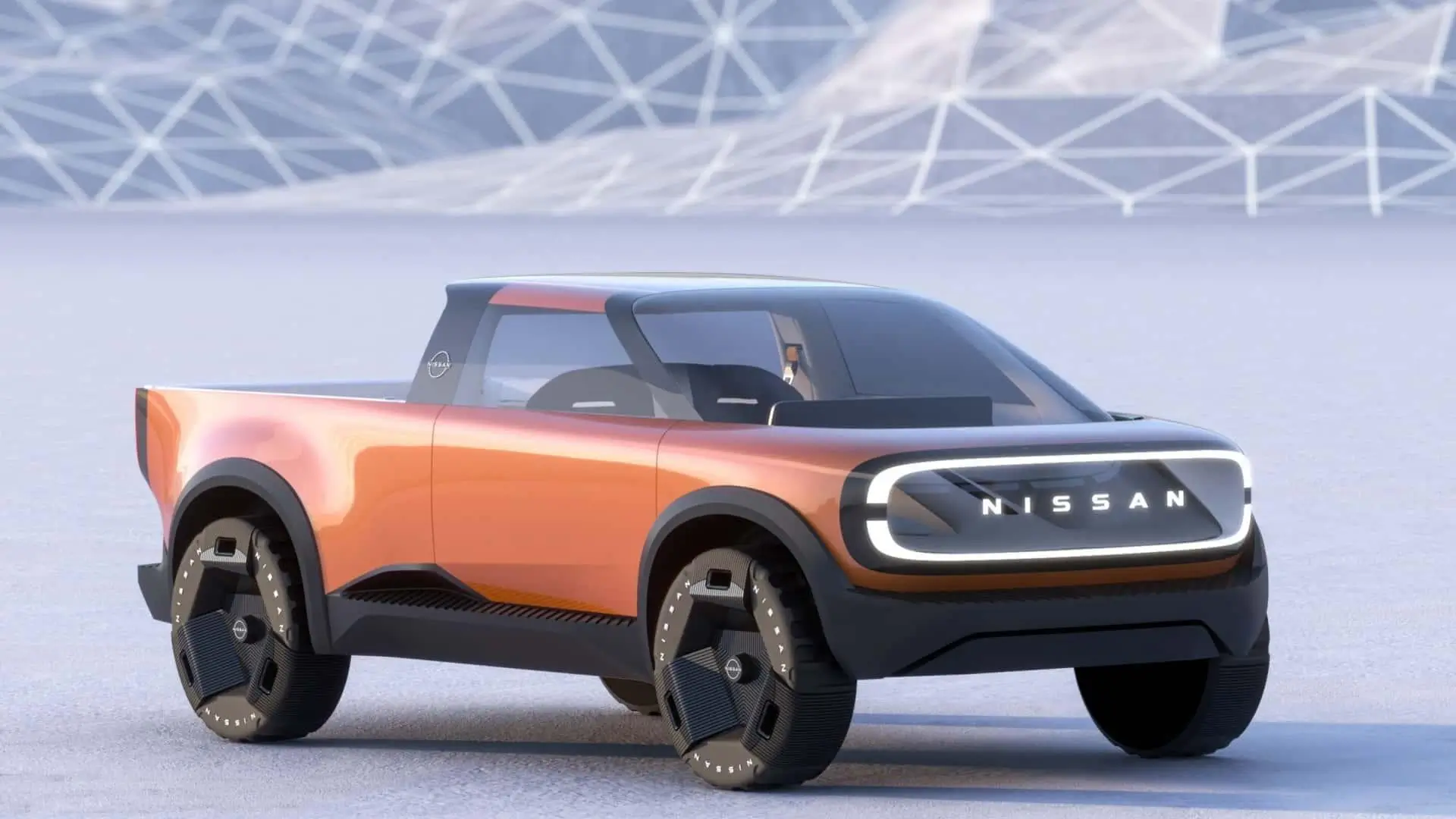
In late November 2021, during the peak of global EV optimism, Nissan pulled the wraps off four futuristic concept vehicles as part of its ambitious Ambition 2030 plan. Among them, the Surf-Out Concept stood out as a bold statement: a compact, electric-powered pickup designed for lifestyle adventurers, beachgoers, and off-road enthusiasts. With its transparent grille, party-ready social hub features, and e-4ORCE all-wheel drive, it promised to blend fun, utility, and zero-emission capability in a segment traditionally dominated by combustion-engine trucks.
Fast-forward to May 2026, and Nissan’s reality looks markedly different. The company has canceled a $500 million investment to retool its Canton, Mississippi plant for EV production, opting instead to focus on gasoline and hybrid trucks and SUVs. This pivot reflects slowing U.S. EV demand, the expiration of certain federal tax credits, and a strategic realignment toward what customers are actually buying. The Surf-Out, once a symbol of Nissan’s electrified future, now serves as a fascinating case study in ambition versus pragmatism.
View this post on Instagram
stir
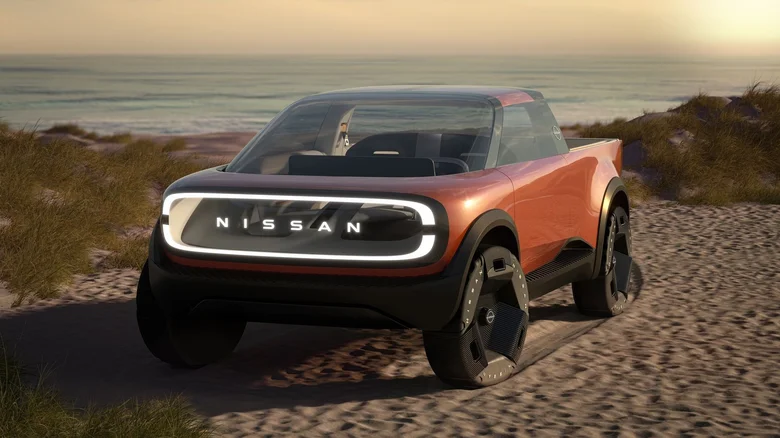
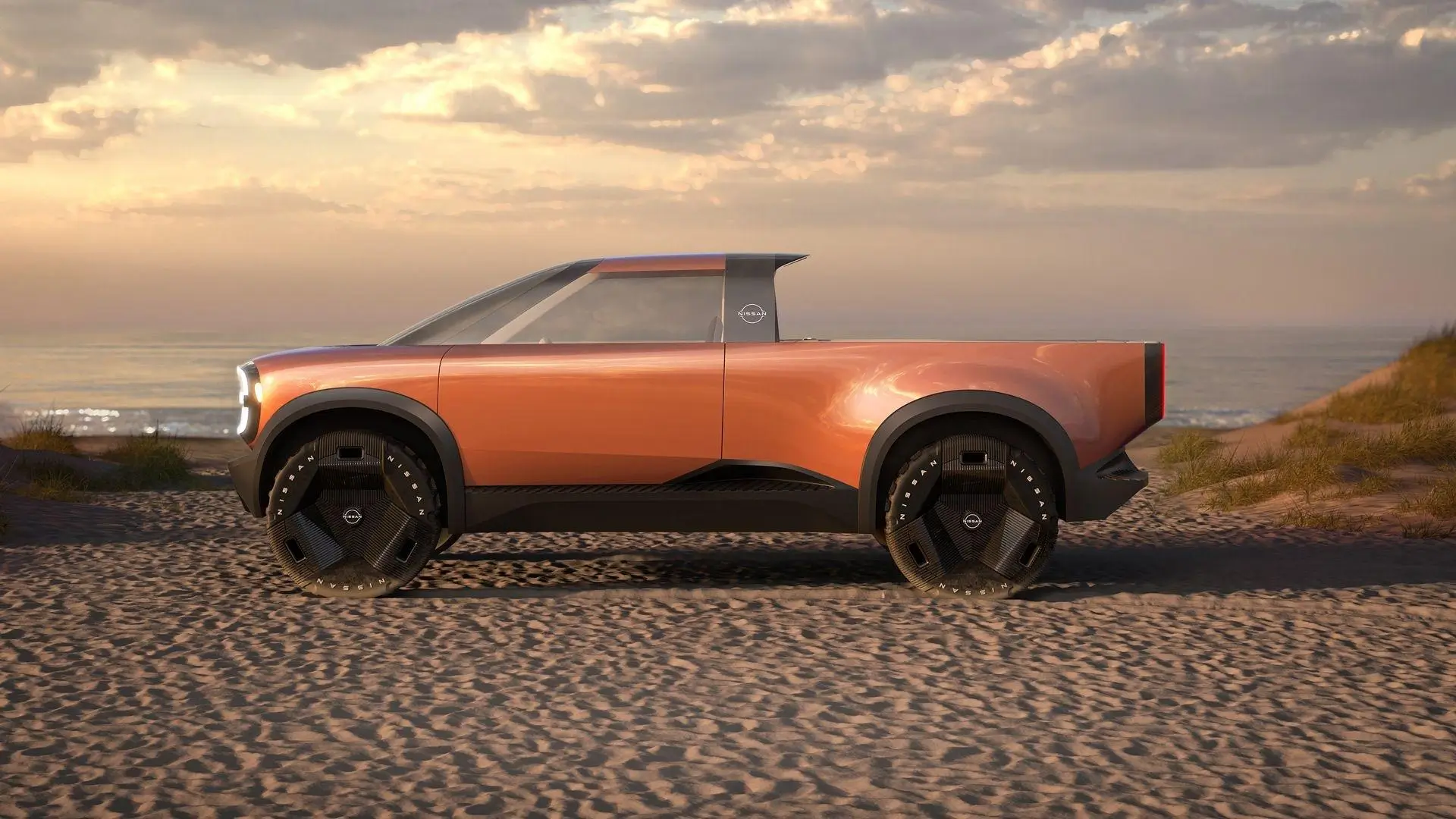
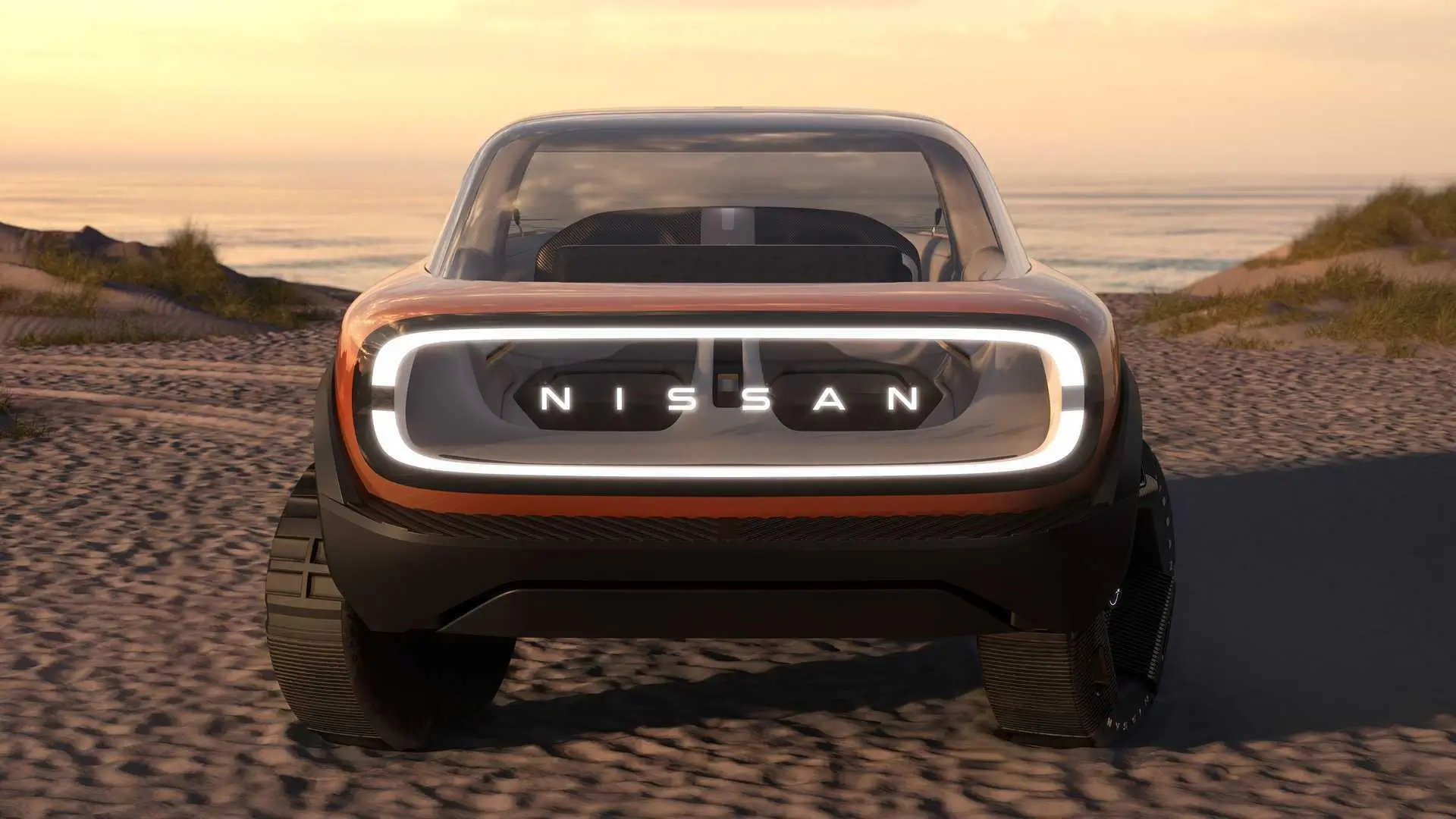
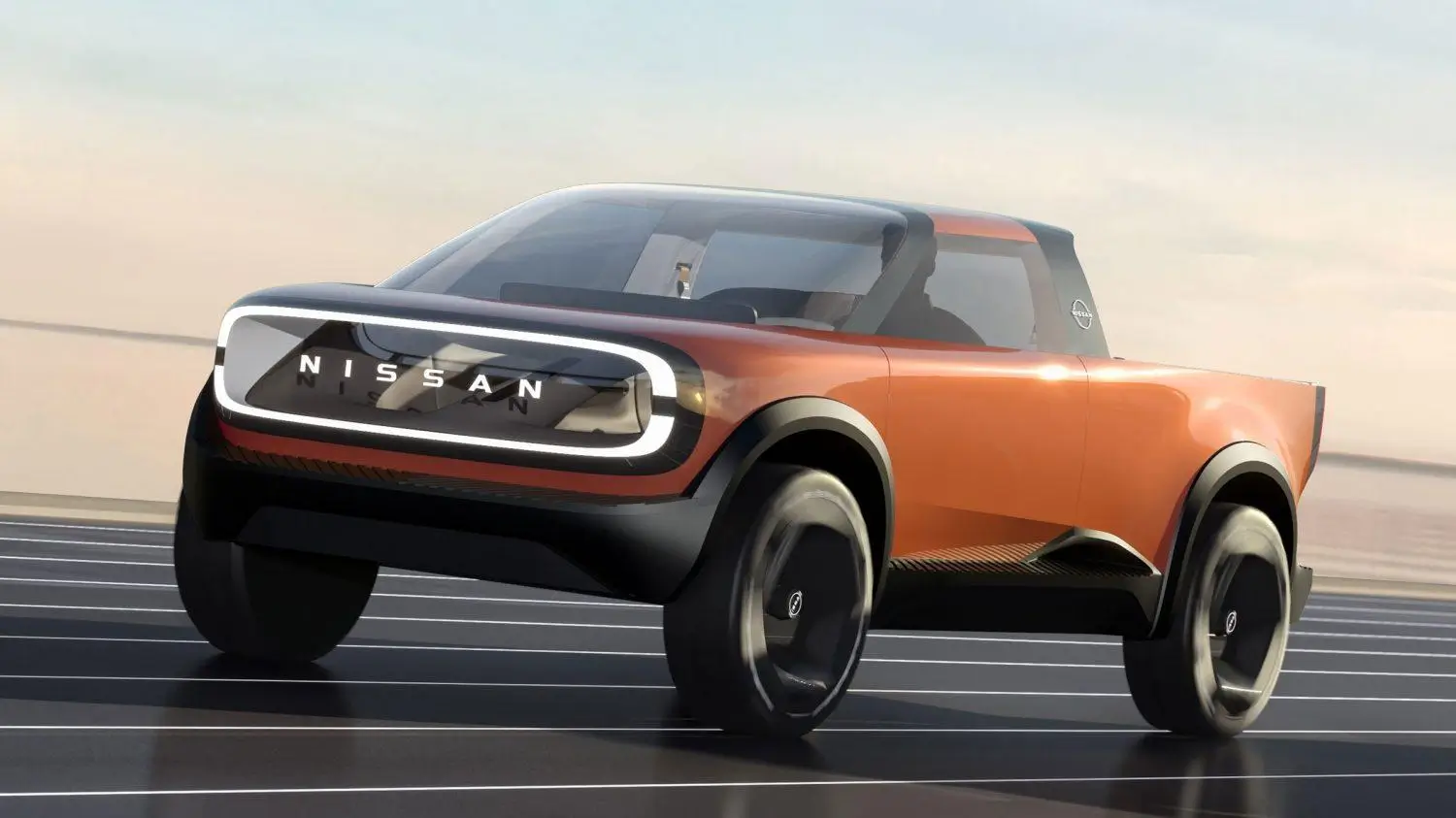
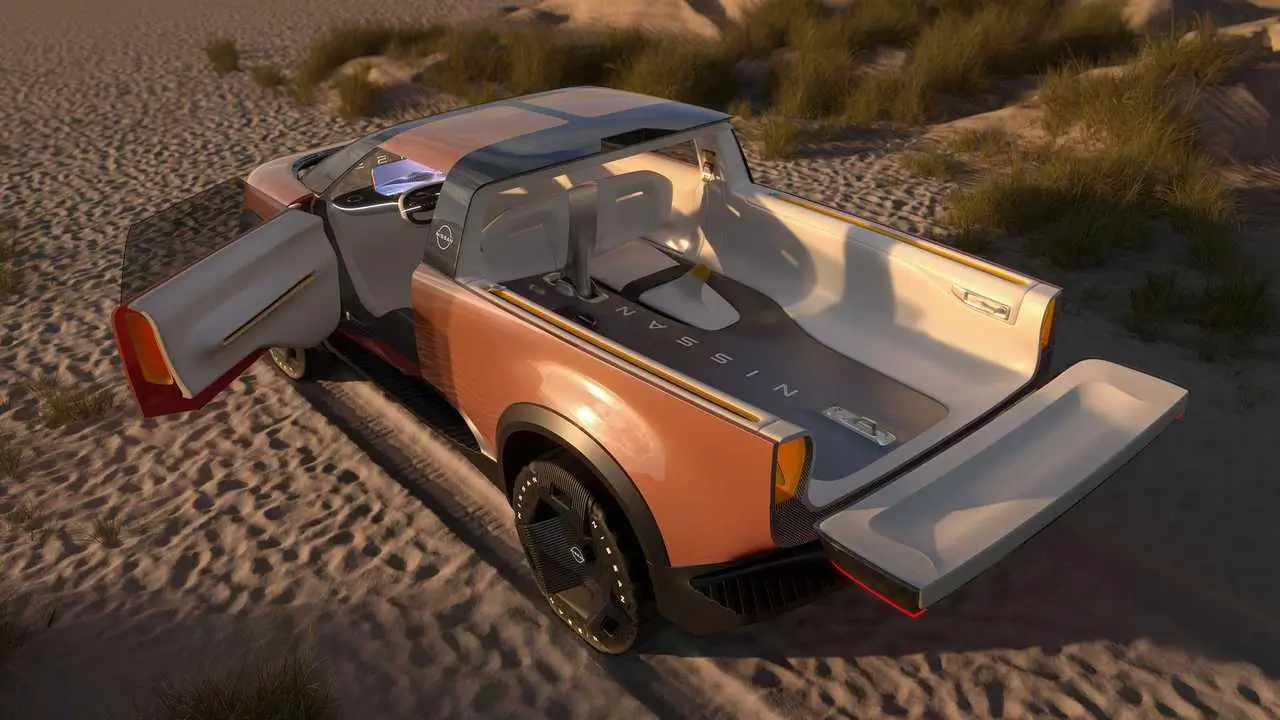
The Surf-Out Concept was never intended as a direct production preview but rather as a vision of how Nissan could empower “customer activities” in an electric era. Measuring roughly in the compact pickup territory—smaller than the Frontier—it featured a two-door regular cab layout with an impressively long, flat bed. Its most striking view element was the see-through front grille, which housed advanced lighting and sensor technology while giving the truck an almost futuristic, lightweight appearance.
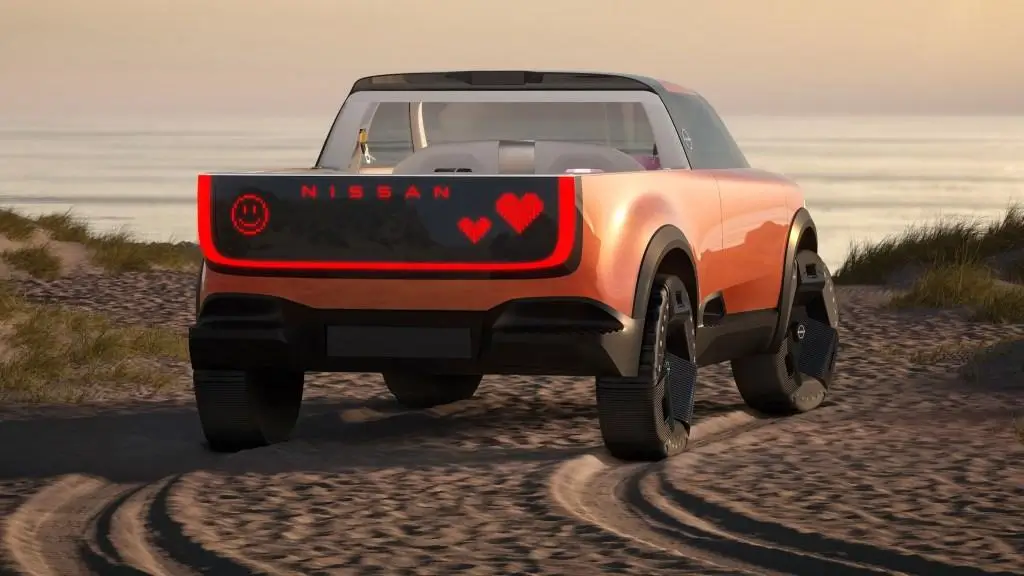
The rear featured a unique light bar on the tailgate capable of displaying emojis and messages to following drivers—a playful “social hub” touch that underscored the vehicle’s lifestyle positioning. Coach-style doors and a minimalist interior with a sweeping full-width touchscreen emphasized openness and connectivity. The cabin could open seamlessly to the bed area, creating a versatile space for tailgating, camping, or beach days.
Nissan positioned the Surf-Out as more than transportation. It was designed as an enabler of experiences: powering tools and appliances via vehicle-to-load (V2L) outlets, providing stable off-road performance, and serving as a mobile basecamp. This aligned with broader trends in the early 2020s where automakers envisioned EVs not just as efficient commuters but as adventure platforms with clean, quiet power delivery.
scope
At its core, the Surf-Out leveraged Nissan’s advanced electrification toolkit:
- e-4ORCE All-Wheel Control: Nissan’s sophisticated twin-motor AWD system (first seen in the Ariya) promised precise torque vectoring, excellent traction on sand, mud, or snow, and a smooth ride regardless of terrain.
- Onboard Power Generation: External power outlets allowed users to run camping equipment, power tools, or even small appliances—functionality that has since become more common in production EVs but felt innovative in 2021.
- Lightweight Construction and Solid-State Battery Vision: The concept hinted at future lightweight materials and next-generation batteries for better range and efficiency. Nissan aimed for solid-state battery technology by fiscal 2028, promising higher energy density and faster charging.
- Off-Road Capability: Elevated ride height, rugged tires, and protective cladding suggested genuine light off-roading prowess—enough to reach remote surf spots or mountain trails without drama.
Nissan claimed the Surf-Out would deliver a confident, comfortable ride “anywhere,” with power outputs flexible enough to support both daily driving and recreational demands. While exact specs like horsepower, battery size, or range were not fully disclosed (typical for concepts), it was positioned as a practical, fun alternative to traditional compact trucks.
forward
The Surf-Out debuted alongside the Chill-Out (a compact crossover), Hang-Out (a boxy family hauler), and Max-Out (a convertible sports car) as Nissan unveiled its Ambition 2030 strategy. The plan called for 27 new electrified models by 2030 (19 of them pure EVs), carbon neutrality by 2050, and significant investment in battery technology and manufacturing.
In the U.S., the Canton, Mississippi plant—spanning 4.7 million square feet—was central. Nissan announced a $500 million investment to transform it into an EV and battery production hub, aiming for 200,000 EV sales annually in America by 2028. The Surf-Out, while not explicitly tied to Canton, embodied the adventurous, diversified EV lineup Nissan hoped to offer.
At the time, the strategy seemed sound. Global EV sales were surging, governments offered incentives, and consumers appeared eager for electrification. Nissan’s own Leaf had pioneered the mainstream EV market years earlier, giving the company credibility.
pivot
By 2025–2026, cracks appeared. U.S. EV sales growth slowed dramatically—down as much as 27% in some periods amid high interest rates, range anxiety, charging infrastructure gaps, and reduced tax incentives. Many buyers, especially in truck-heavy segments, preferred the familiarity and long-range confidence of gasoline or hybrid powertrains.
In April 2026, Nissan informed suppliers it was canceling EV production plans at Canton. The facility will instead produce gasoline and hybrid trucks and SUVs, including a revived body-on-frame Xterra (expected late 2028), an expanded Frontier lineup, and other models. The company cited the need to “better align with market conditions, customer demand, and Nissan’s updated strategic direction.”
This represents a significant scaling back of Ambition 2030’s purest EV elements in North America. Nissan is not abandoning electrification entirely—it continues investing in e-POWER series hybrids and selective EVs—but it is prioritizing profitability and what sells today over aggressive BEV targets.
why
Even if it never reaches production, the Surf-Out highlighted several important trends:
- Lifestyle Pickups: The rise of adventure-oriented trucks. Rivals like the Ford Maverick (especially in hybrid form), Hyundai Santa Cruz, and various overland concepts showed demand for smaller, more efficient pickups.
- Power as a Service: V2L/V2H capability has become a selling point in modern EVs (e.g., Ford F-150 Lightning, Chevy Silverado EV). The Surf-Out was ahead of the curve here.
- Fun-to-Drive Electrification: Quiet torque, instant response, and low center of gravity from battery placement could make an electric compact truck genuinely enjoyable off-road and on.
Had market conditions been different, a production Surf-Out could have slotted nicely below the Frontier as an affordable, efficient option for urban and suburban buyers who occasionally venture off-pavement.
challenge
Nissan’s broader situation adds context. The company has faced profitability pressures, leading to job cuts, plant consolidations, and strategy revisions. Its U.S. lineup refresh focuses heavily on ICE and hybrid refreshes in the short term while maintaining some EV development (such as the updated Leaf crossover).
Critics argue the pivot is shortsighted, potentially ceding ground to Tesla, Rivian, Ford, and GM in the electric truck space. Others praise it as pragmatic realism—better to build vehicles customers want than lose money on low-volume EVs.
The Surf-Out’s transparent design and emoji-display tailgate might have been too whimsical for conservative truck buyers anyway. A production version would likely need to be toned down while retaining core utility.
leg
In 2026, the Nissan Surf-Out Concept remains a digital and show-car artifact—a reminder of a more optimistic period for EVs. It captured imagination with its blend of utility, technology, and fun. Its emphasis on enabling adventures rather than just transportation still resonates.
While a production Surf-Out seems unlikely in the near term, elements of its philosophy could live on. Nissan could apply V2L technology and e-4ORCE to hybrid trucks, or revisit a smaller electric pickup if battery costs drop and demand rebounds.
The concept also underscores the cyclical nature of the auto industry. Visionary ideas must navigate economic realities, consumer preferences, and policy changes. Nissan’s shift toward hybrids as a bridge technology mirrors moves by Toyota, Honda, and others—acknowledging that full electrification will take longer than hoped in many markets.
fin
As Nissan redirects Canton toward trucks, the Surf-Out serves as both inspiration and cautionary tale. It showed what an electrified future could look like: joyful, capable, and versatile. Yet its timing collided with a market correction.
For enthusiasts, the concept lives on in renderings, videos, and speculation. For Nissan, it represents lessons learned—balance ambition with flexibility, listen closely to customers, and maintain multiple powertrain pathways.
Either the Surf-Out remains a one-off dream or seeds future models, it captured a moment when anything seemed possible in electric mobility. In an industry shifting gears once again, that spirit of exploration endures—even if the power source changes.
Related Articles

Under Rue de Castiglione, Liaigre Gives Hôtel Costes a Spa With No Hard Corners
A 20-meter lap pool, eight treatment rooms and not one sharp angle: Studio Liaigre’s spa […]