DRIFT AUDIO
Listen to this story
Choose a voice, then press play.
Oakley reduces the frame to a single continuous line with the Infiniloop, a limited-edition sil suspending Prizm Black lenses between titanium and O-Matter in a design built for July’s Future Genesis Chapter 2 drop.
recall
- A Single Continuous Line
- Titanium Meets O-Matter
- Future Genesis, Chapter Two
- Release Details and Pricing
- Why It Matters for Oakley
Oakley has never been shy about treating eyewear like an engineering brief rather than a fashion accessory, and the Infiniloop pushes that instinct to its furthest point yet. The design question at the center of the release is almost absurdly simple: what is the fewest number of lines a frame needs to hold a lens across a human face? Oakley describes Infiniloop as a prototyping breakthrough built on mastering the geometry of a single continuous line, reducing the frame to the fewest lines needed to carry a lens across the face. Oakley Media Hub

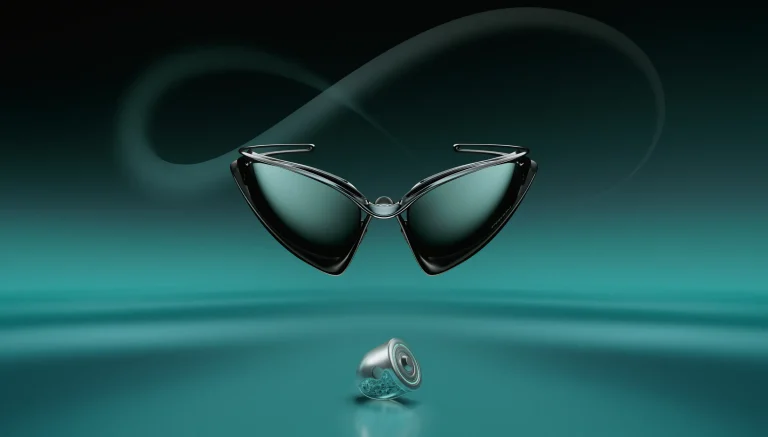
Oakley’s Infiniloop sunglasses debut with a sculptural cat-eye silhouette, reflective lenses, and cinematic teal lighting that emphasizes the collection’s futuristic design language.
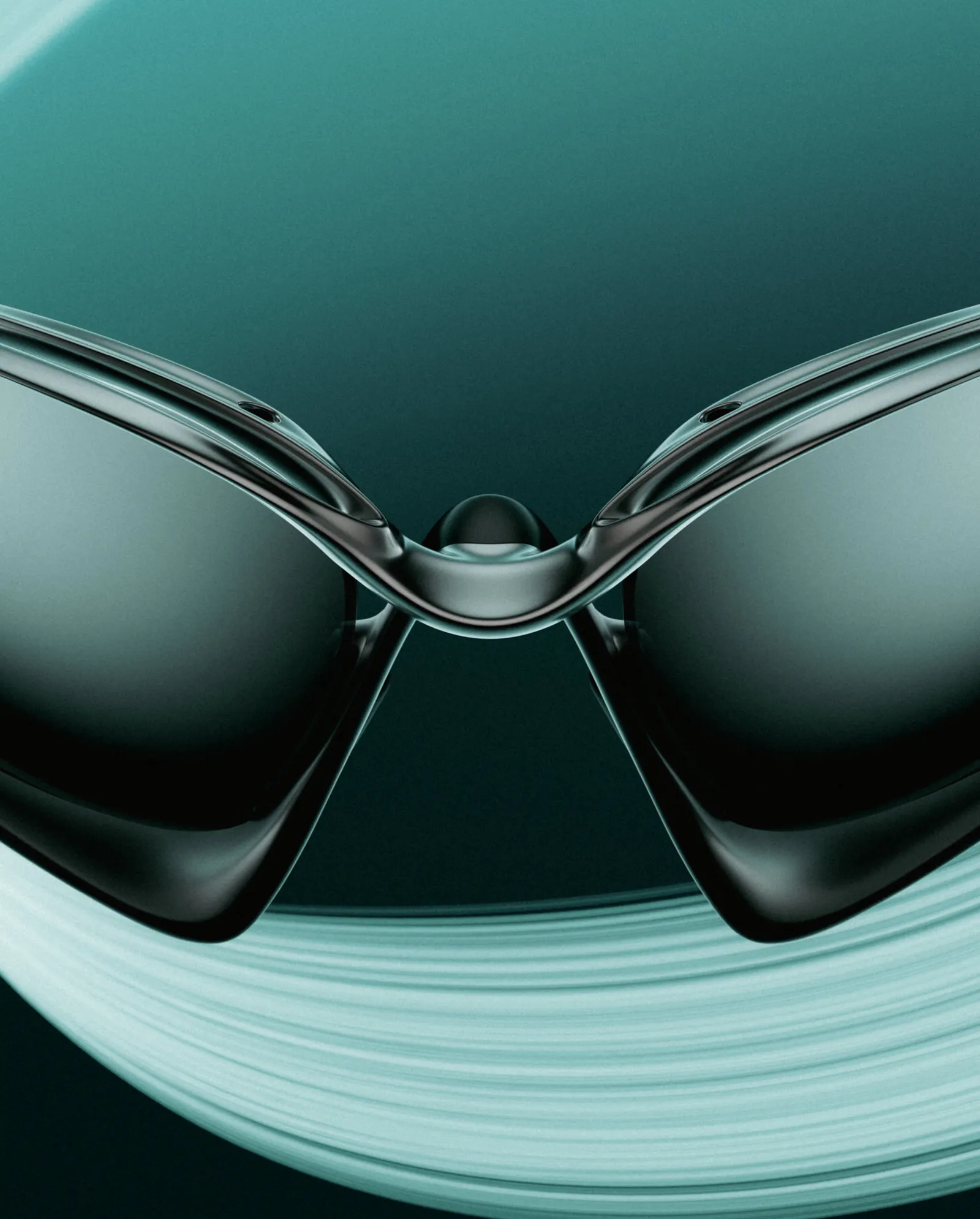
That reductive brief is what gives the Infiniloop its almost sculpture presence. Rather than a traditional rim wrapping fully around each lens, the frame is pared down to two structural lines, one arcing over the top of the lens and one running beneath it, joined only where absolutely necessary. Everything else is negative space.
The view effect reads less like eyewear and more like an architectural model of eyewear. The lenses appear to hover independently of any surrounding structure, their edges left fully exposed instead of tucked into a rim. It is a look that trades the reassurance of a fully enclosed frame for something more precarious, more sculptural, and considerably more attention-grabbing on a face.
View this post on Instagram
flow
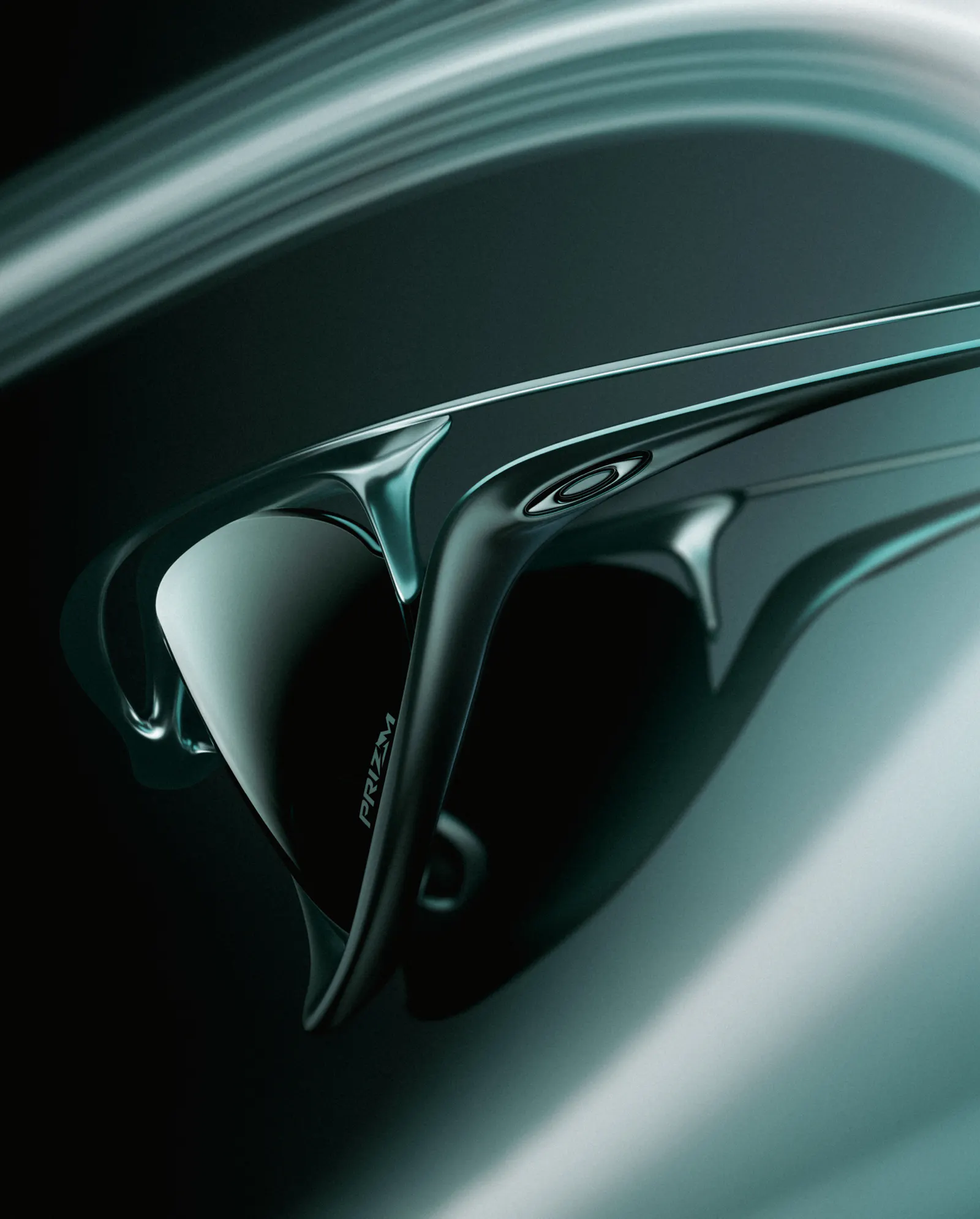
The Infiniloop’s negative-space effect is only possible because of a deliberate split in materials between the upper and lower frame lines. The upper frame line is built from titanium while the lower frame line uses Oakley’s O-Matter material, with the two meeting at only a few delicate intersection points. That pairing does real structural work: titanium’s stiffness-to-weight ratio lets the upper line stay rigid enough to anchor the lens without adding bulk, while O-Matter’s flexibility and impact resistance across the lower line gives the frame the give it needs to survive actual wear rather than existing purely as a display object.
One breakdown of the design puts it plainly: a polished chrome titanium wire traces the upper frame while a matte black O-Matter line handles the lower half, with the two touching only at a handful of tiny intersection points, so the lenses hang in the negative space between them with their edges fully exposed. The effect is deliberately engineered to look accidental — as if the lens simply happens to be floating there, rather than being the product of two dissimilar materials meeting at calculated stress points. HiConsumption
Despite the gallery-piece styling, the Infiniloop isn’t purely conceptual. It ships with Oakley’s Prizm Black lens, a grey-base tint built for high contrast in bright conditions and backed by the impact resistance Oakley eyewear is engineered around, meaning the frame is intended to be worn and used rather than simply displayed. That duality — an object precise enough to belong in a design museum, tough enough to survive daily wear — is very much the point.

A futuristic campaign image showcases Oakley show eyewear paired with a reflective hooded ensemble and sculpted face covering, emphasizing the experimental aesthetic of Future Genesis Chapter Two.
stir
The Infiniloop doesn’t exist in isolation. It’s the latest physical artifact to emerge from Future Genesis, the multi-year storytelling platform Oakley has been building since late 2023 around Max Fearlight, the bunker-dwelling scientist from the brand’s iconic 1992 promo film, and his daughter Maxine, introduced as the character carrying Oakley’s design language into its next era.
Brian Takumi, Oakley’s VP of Creative and Soul, has described the Future Genesis platform as more than a story and a campaign — a framework connecting brand vision to product design and innovation, running from retail environments through to physical product. The first product to emerge from that framework was the 13.11, a model directly inspired by the eyewear Maxine wore in the platform’s early teaser films, which launched in early 2024 as Chapter One’s tangible payoff.
The Infiniloop arrives as the product counterpart to Chapter Two. Oakley frames the new chapter as reconnecting audiences with brand hero Maxine Fearlight on a rogue journey toward the outer world that is about to change her life, with Infiniloop extending the story of the universe that inspired its creation. Each pair of Infiniloop glasses ships alongside a collector’s set of Future Genesis Chapter Two comics, continuing Oakley’s pattern of pairing hardware releases with narrative material rather than a conventional lookbook or campaign video alone.
It’s an unusual model for a performance eyewear brand to lean on, and not without its skeptics. Some longtime collectors have questioned whether Future Genesis is generating genuinely wearable product or simply expensive collector’s-item marketing dressed up as innovation. But the platform has also given Oakley license to get strange again after a long stretch of more conventional releases, drawing on the same appetite for science-fiction theatricality that produced Medusa, the Over The Tops, and the original X-Metal line decades ago.
View this post on Instagram
rel
The Infiniloop releases in two colorways: Polished Chrome and Matte Black, both paired with Prizm Black lenses. In the U.S. market, the Infiniloop is priced at $997 and set to release July 14, with each pair including the Future Genesis Chapter Two comic set, available through Oakley’s website and select stores.
The Japan release runs on a distinct timeline and retail structure. According to Oakley’s Japan press materials, Infiniloop launches July 15 through Oakley’s official online store and the Oakley Store Shibuya, with the Shibuya location running the release as a lottery draw and entry available at Oakley stores nationwide. The Japan SKU is listed as OO6027-0172, priced at ¥161,810 including tax. PR TIMESPR TIMES
That Japan pricing runs meaningfully above a straight currency conversion of the U.S. figure, and the release dates differ by a day between markets — details worth flagging rather than smoothing over, given how central exact pricing and timing are to a limited-edition drop like this one.
why
Set against Oakley’s broader catalog, the Infiniloop reads as a statement piece rather than a volume release. It costs roughly double the 13.11 that preceded it in the Future Genesis timeline, positioning it closer to a design object than a mainstream performance sunglass. That pricing, combined with the limited run and comic-book bundling, signals Oakley is treating Infiniloop as a collectible first and a wearable second — even if the Prizm Black lens package underneath ensures it can still function as one.
For a brand that built its reputation on selling a version of the future — Medusa’s alien-artifact styling, the reflective drama of the original X-Metal line — Infiniloop is a reminder that Oakley’s most interesting work still happens when it treats a frame less like an accessory and more like a structural puzzle. Whether the Future Genesis platform ultimately produces a steady stream of these design exercises or fades after a handful of chapters, the Infiniloop itself makes a convincing case that there’s still real experimentation happening inside a legacy performance-eyewear brand.
From the DRIFT archive: Dyson x PORTER: Engineering Meets Urban Craft in the OnTrac Limited Edition · Cornell Team Develops Ultrablack: The “Darkest Fabric Ever” That Reflects Close to No Light
Related Articles
Pocket-sized Xbox Ctrl
Xbox Nano Controller. Announced 14 October 2026 by James Hunter. $49.99. Rechargeable battery. Programmable Action Button. Xbox Wireless and Bluetooth.