
DRIFT AUDIO
Listen to this story
Choose a voice, then press play.
phil
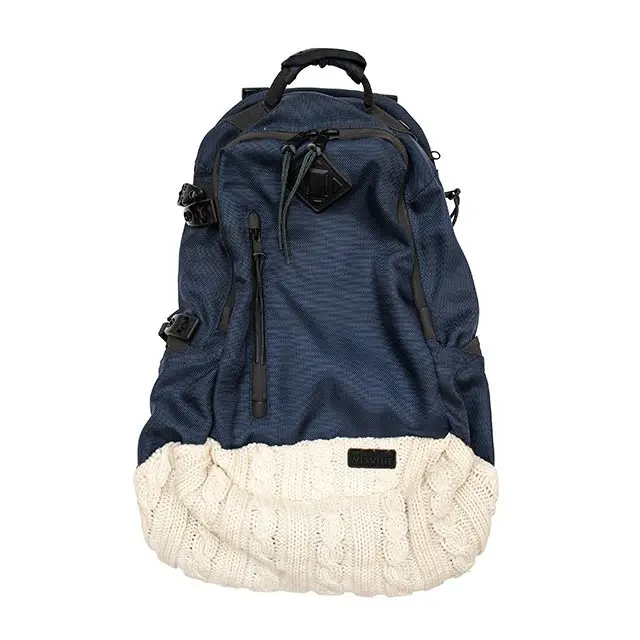
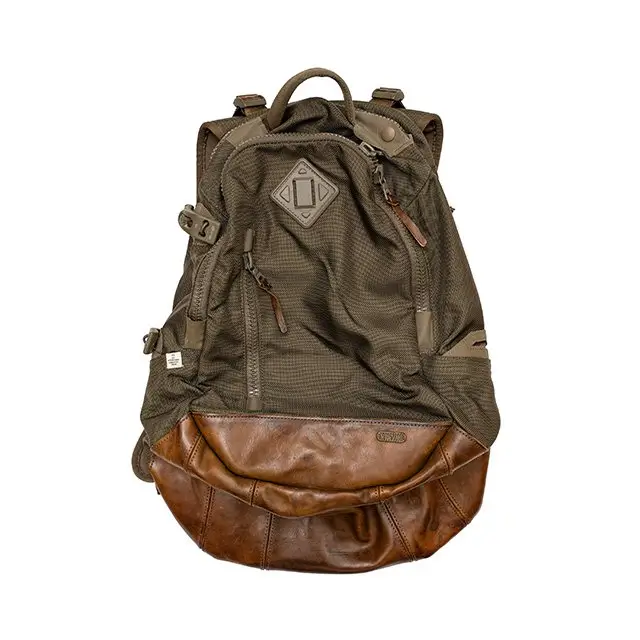
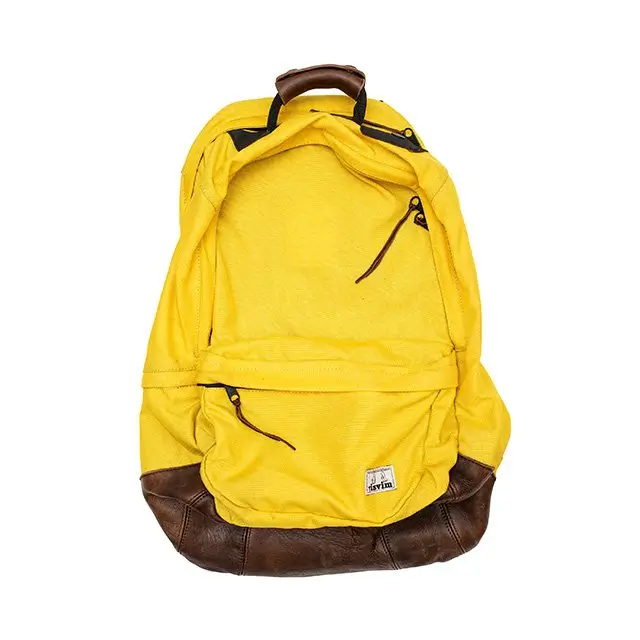
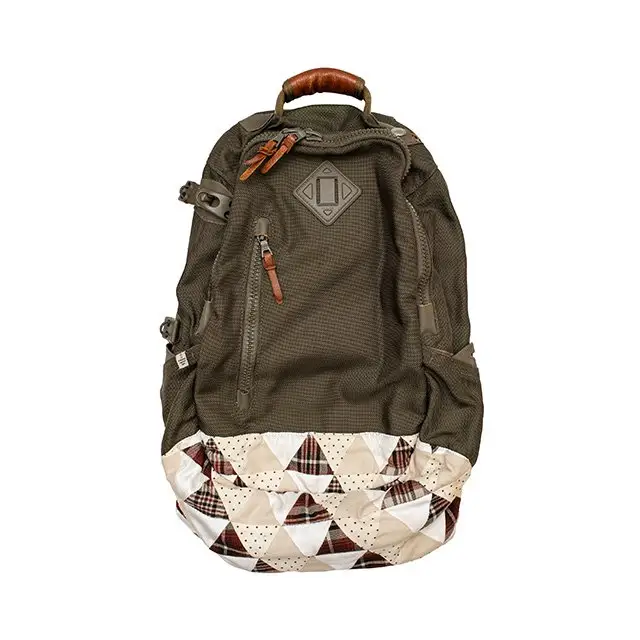
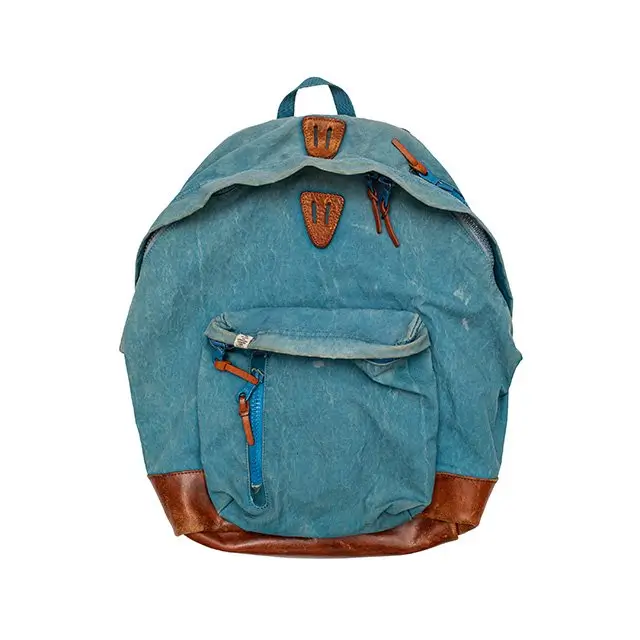
The guiding philosophy behind visvim has always been about more than clothing. Hiroki Nakamura built the brand on a devotion to materials, craft traditions, and the deeply human relationship between object and owner. But “OLD VISVIM NEVER DIES” takes that guiding philosophy and places it on a pedestal, not through newly released products or runway staging, but through the lived-in belongings of long-time wearers. The project borrows garments and accessories that have stayed with their owners for years, showcasing them in their current state—marked, softened, worn, stained, and reshaped by life.
This exhibition isn’t concerned with the myth of “newness.” Instead, it elevates age itself into an aesthetic, and perhaps more importantly, a narrative. Every piece included represents a visible journey. A jacket carries the faint memory of countless seasons. A pair of boots reveals the posture, habits, and terrain of its wearer. Fading becomes handwriting. Fraying becomes punctuation. The central idea is disarmingly simple: time is the greatest collaborator in the design process.
Nakamura has frequently invoked the idea of “future vintage”—creating garments that are meant to be worn for decades and eventually passed on. Here, the concept reaches a fully realized form. The clothing on display is not hypothetical. It is not an aesthetic simulation of wear. These are real stories, collected through fabric and leather rather than text. “OLD VISVIM NEVER DIES” becomes an argument for what clothing can become rather than what it begins as.
idea
Step into the exhibition and the first thing you notice is the quiet power of presence. These are not display models or archival museum pieces kept in climate-controlled perfection. They are companions—garments that have lived full lives. Each creased surface holds a memory. Each patch reveals a decision. The garments do not imitate history; they carry it.
A Social Sculpture denim jacket hangs with the silhouette softened from years of daily repetitions, the indigo palette shifting in gradients that follow the wearer’s patterns of movement. A pair of FBT moccasins shows the leather darkening around the toe where step meets step, forming a map of routine and ritual. A corduroy shirt has evolved from its deep, unbroken original tone into a complex landscape of washed-out ridges, sun-faded seams, and softened collar points. These aren’t imperfections. They are fingerprints.
The exhibition’s curators position the items without theatrics. There are no dramatic spotlights or stylized backdrops. Instead, garments are given the space to stand as themselves, allowing their textures to communicate the intimacy of real use. This authenticity is what makes the display emotionally resonant. Clothing is often treated as disposable, yet these pieces illustrate what happens when someone refuses to discard an object simply because it has aged.
In their current states, the items become biographies written in cotton, wool, leather, and linen. They tell stories that words alone cannot. They speak of cold mornings, long travels, unpredictable weather, and personal transformation. They reflect the passage of years not as decay, but as enrichment. This is the essence of the project’s charm: the beauty lies not in perfection, but in truth.
wear
What makes “OLD VISVIM NEVER DIES” uniquely compelling is its emotional specificity. The pieces have a quiet pathos—clothes that have seen the owner through chapters of life. There is tenderness in the worn elbows of a jacket, once sharp and structured, now rounded and softened by countless gestures. There is vulnerability in the threadbare lining of a bag that held daily necessities. There is strength in a boot sole that has molded to the exact arch of a foot over thousands of steps.
Wear, when authentic, has character. It holds memory. It is fundamentally human.
The exhibition doesn’t romanticize distress for aesthetic effect. Instead, it presents wear as a natural conversation between owner and object. Each fade is earned, not manufactured. Each crease is the result of repeated behavior. Each repair is an act of care. The clothing becomes a visual diary, documenting the ways in which we inhabit our possessions.
This emotional dimension is amplified because visvim pieces are slow-made. The brand’s dedication to natural dyes, artisanal stitching, authentic indigo vats, vegetable-tanned leather, and hand-finished construction ensures that time interacts with the garment in meaningful ways. Natural dyes respond to sunlight differently than synthetic ones. Hand-sewn seams break in with irregularity and charm. Leather tanned with plant-based agents gains richness and shadow rather than the flat cracking typical of chemically treated hides.
The garments, therefore, are designed not just to withstand time, but to converse with it.
define
Fashion often leverages “vintage” as a selling point, but the industry’s definition is often superficial—distressed denim produced in a wash house, pre-worn leather crafted to imitate age, artificially whiskered jeans meant to mimic years of use. These shortcuts may create an aesthetic approximation, but they lack the lived reality of true aging.
Visvim refuses shortcuts. “OLD VISVIM NEVER DIES” stands as a counterpoint to artificial aging, demonstrating what authenticity looks like when it is not engineered. The patina on each piece in this exhibition is unrepeatable. It cannot be replicated in a factory. It cannot be industrialized. It exists because someone lived with the garment, because someone took it through rain and sun, because someone allowed it to become part of their life.
In this sense, authenticity becomes relational rather than transactional. It is not bought. It is built.
The project subtly critiques the fashion industry’s obsession with perpetual newness. Trends move quickly, but meaning takes time. The owner’s willingness to care for a garment over years creates a different kind of value—one that cannot be commodified or mass-produced. In an age where clothing cycles become shorter and garments increasingly disposable, “OLD VISVIM NEVER DIES” proposes an alternative rhythm.
Here, slowness becomes haute.
show
A profound sense of wabi-sabi permeates the exhibition. The Japanese aesthetic philosophy, rooted in the beauty of impermanence and imperfection, has always informed visvim’s design language. Here, it becomes the central thesis. The frayed edge of a garment is not an error; it is a sign of life. The uneven pigmentation on an indigo-dyed coat reveals its relationship with light and movement. The slight warping of leather straps demonstrates the warmth of the body they once hugged.
The project encourages viewers to see aging not as loss, but as transformation. A brand-new visvim garment carries a certain purity—clean lines, stiff structure, vibrant dyes. But as years pass, that purity evolves into complexity. Colors soften. Textures deepen. Shapes shift. A kind of quiet elegance emerges, one that can only develop through time and wear.
The exhibition’s curatorial approach reinforces this form of beauty. By presenting garments in their unaltered, current form, it allows imperfection to become the centerpiece. Nothing is restored. Nothing is manipulated. Everything is accepted.
In a world dominated by uniformity and digital perfection, this celebration of nuance feels radical.
origin
Another subtle yet powerful aspect of the project lies in the shared authorship between maker and owner. When visvim produces a garment, it arrives as a starting point—a foundation crafted with extraordinary care. But the brand knows that its work is only half of the story. As the piece enters the owner’s life, a new layer of authorship begins to unfold.
The owner becomes responsible for shaping the garment’s future. How often it is worn, where it travels, how it is stored, cleaned, or repaired—all of these decisions sculpt its eventual form. The brand sets the stage, but the owner writes the narrative.
“OLD VISVIM NEVER DIES” honors this co-authorship. The exhibition text rarely highlights product names or seasonal collection codes. Instead, it includes notes about the owner’s relationship with the garment, capturing how the piece lived within a personal context. In doing so, the project positions clothing not as a static object but as a dynamic collaboration.
It is a rare acknowledgment in the fashion world: the most beautiful version of a garment emerges after it leaves the hands of its maker.
sustain
Sustainability is a persistent theme in contemporary fashion discourse, but too often it is framed in terms of recycling, certifications, or carbon impact. Visvim, on the other hand, approaches sustainability through emotional longevity.
When a garment is loved—and when its owner forms a deep relationship with it—it stays in use longer. It avoids the cycle of disposal. It gains value rather than losing it. The pieces in this exhibition prove the efficacy of this philosophy. They were not replaced simply because they changed; they were cherished because they changed.
The exhibition conveys sustainability without speaking of it. Nothing about the project is overtly didactic. Instead, the garments show that durability is not merely a matter of material strength. It is a function of emotional durability. A garment that someone cares for will naturally live longer.
This is perhaps the project’s most important quiet message: sustainability begins with valuing what we already own.
fin
The exhibition closes not with a conclusion, but with an open door. Many of these garments will return to their owners after the show. They will continue to age, continue to shift, continue to breathe. Their stories are unfinished, and their beauty lies in this ongoing process. The project’s title, “OLD VISVIM NEVER DIES,” is not metaphorical. It is a statement of continuity. As long as an owner continues to wear, repair, and appreciate a piece, it remains alive.
Visvim has long been revered for its craftsmanship, but this project clarifies something deeper: the brand’s true genius lies not only in how things are made, but in what happens to them afterward. The afterlife of a visvim garment is not a decline. It is a deepening.
The exhibition, then, is less an archive than a conversation—between maker and wearer, between past and present, between object and life. It honors the belief that garments are not disposable but companionable, that age is not loss but revelation.
In the intimate evidence of each piece’s journey, we see a reminder of our own. Nothing stays new forever, but things that are cared for never truly disappear. They evolve, they accumulate meaning, they reflect who we are and where we’ve been.
Old visvim does not die. It becomes more alive.
Related Articles
Eric Haze Stitches a Nineties Friend Into TOKYO Capsule
Five pieces carry Eric Haze's embroidered tagging for TOKYO No.1 SOUL SET, sold online and in Osaka around the band's Oct 25 BAYCREW'S FESTIVAL set.