The Digital Prince of Darkness: Jack Osbourne Defends His Father’s AI Avatar Amid Fan Backlash

May 26, 2026
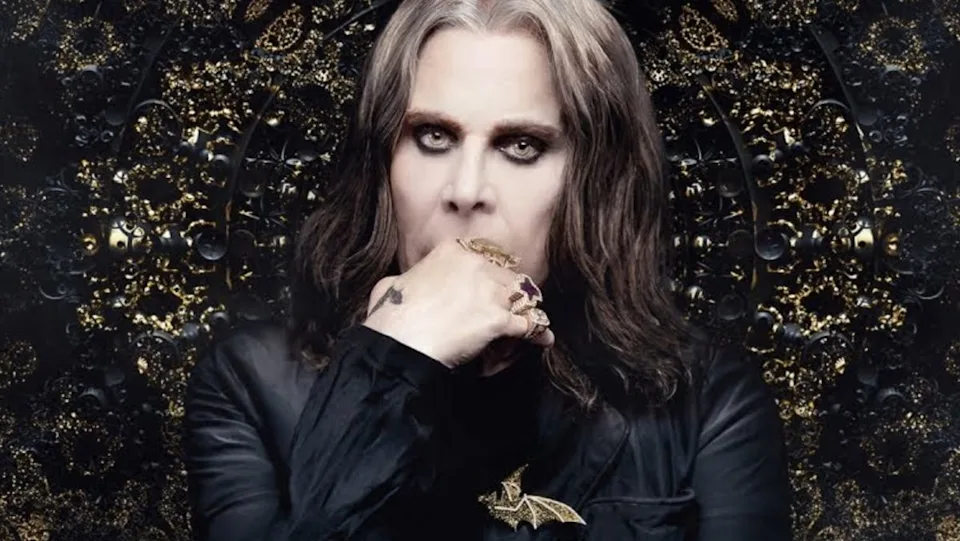
In the ever-evolving landscape of entertainment technology, few announcements have sparked as much intrigue, excitement, and controversy as the Osbourne family’s reveal of an AI-powered digital avatar of the late Ozzy Osbourne. Announced at Licensing Expo 2026 in Las Vegas on May 20, the project—developed in partnership with Hyperreal and Proto Hologram—promises a lifelike, interactive “Digital Ozzy” capable of real-time conversations with fans. Available later this summer in Proto Luma holographic units across the U.K. and U.S., the avatar represents a bold step into posthumous legacy preservation through cutting-edge AI.
Jack Osbourne, Ozzy’s son, stepped forward during a Saturday livestream Q&A to address growing public and fan backlash. His defense was characteristically blunt and passionate: “Here’s the thing, it’s gonna be so tasteful what we’re doing. It’s not gonna be fucking lame.” He emphasized the project’s technological sophistication, distancing it from simplistic AI experiments. “This isn’t just like hooking up an image of my dad to ChatGPT. This is some high-level technology that we’re gonna be working with, and it’s gonna feel very real.”
This announcement arrives nearly a year after Ozzy Osbourne’s death on July 22, 2025, at age 76 from a heart attack. The timing has fueled much of the criticism, with some fans viewing it as a commercial exploitation of grief. Yet the Osbournes insist the project honors Ozzy’s wishes and leverages technology to keep his larger-than-life persona alive for generations.
View this post on Instagram
stir
Sharon Osbourne and Jack made the announcement together at the expo, framing it as an extension of Ozzy’s enduring brand. Sharon described the avatar’s capabilities vividly: “You can ask [the digital] Ozzy anything, and he will answer you in his own voice — and the answers will be what Ozzy would have said. We’re going to take it all around the world. People can talk to him and he will talk back.”
Jack echoed this enthusiasm, noting the eerie accuracy: “It’s kind of scary how it’s really very accurate.” He revealed that the family had discussed similar ideas with Ozzy before his passing. “It’s really cool and it’s something that I think my dad would be into. We actually talked about it before he passed, about doing something like this … I know he would be into this.”
The technology behind the avatar comes from Hyperreal’s patented “Digital DNA” system. CEO Remington Scott explained to Rolling Stone that it draws exclusively from authenticated source material—curated, consented, and controlled by those closest to Ozzy. “It can perform live, respond to audiences, and exist within interactive environments. This isn’t pre-rendered content playing on a loop. It’s a living performance.”
Proto Hologram’s Luma units will allow fans to experience this in physical spaces, creating holographic interactions that feel personal and immediate. Jack highlighted the simplicity of modern tools: “Technology has come such a long way to where it’s almost drag-and-drop. You could shoot a template for a commercial … literally prompt what you want Digital Ozzy to do in that commercial and you just drop it in.”
This isn’t the Osbournes’ first foray into innovative branding. The family’s MTV reality show The Osbournes (2002–2005) revolutionized celebrity access, turning private chaos into public entertainment. Ozzy’s career, spanning Black Sabbath’s groundbreaking heavy metal sound and his solo “Prince of Darkness” persona, always thrived on boundary-pushing. The AI avatar feels like a natural, if futuristic, evolution.
scope
Despite the family’s excitement, reactions have been mixed. Social media erupted with criticism ranging from accusations of “tasteless cash grab” to deeper know concerns about digital resurrection. Some fans argue that less than a year after Ozzy’s death, commercializing his likeness feels premature and disrespectful to the mourning process.
Critics draw parallels to other posthumous projects—like Tupac Shakur’s hologram at Coachella in 2012 or more recent AI recreations of deceased musicians. While those often received praise for live performances, the interactive, conversational nature of Digital Ozzy raises unique questions. Can an AI truly capture the nuance of Ozzy’s rambling, profanity-laced wit? Will it evolve, or remain frozen in approved archives?
Jack directly confronted these concerns in his livestream. He stressed the project’s tastefulness and complexity, positioning it as a high-fidelity tribute rather than a gimmick. The family has reportedly been meticulous about sourcing: using Ozzy’s vast catalog of interviews, performances, and personal recordings to train the model under strict ethical guidelines.
Supporters counter that Ozzy himself embraced spectacle and technology. From biting the head off a bat to starring in reality TV, he was never one to shy away from controversy. His battles with Parkinson’s disease in later years made public appearances challenging; a digital version could allow fans continued access without straining his health during his final years.
compare
The Ozzy avatar sits at the intersection of several booming industries: AI, holographics, licensing, and legacy management. Hyperreal has previously created avatars of Stan Lee, Paul McCartney, and others, demonstrating a track record in respectful digital humans.
“Digital DNA” technology aggregates voice, image, movement, and personality data to create responsive entities. Unlike basic chatbots, these avatars operate in real time, adapting to context and audience interaction. This raises exciting possibilities for education, therapy, and entertainment—but also profound questions about consent, authenticity, and the nature of identity after death.
Philosophers and ethicists have long debated digital immortality. Does a sufficiently advanced simulation constitute a continuation of the person, or merely a sophisticated echo? In Ozzy’s case, the family’s involvement and prior discussions with him provide a layer of consent often missing in unauthorized deepfakes.
However, broader societal implications loom. As AI avatars become commonplace, how will we regulate their use? Could malicious actors create unauthorized versions? What happens when these digital entities generate revenue indefinitely? The Osbournes’ project could set precedents for how estates manage celebrity IP in the AI age.
Jack addressed the “scary” accuracy, acknowledging the uncanny valley effect while embracing its potential. For many fans, especially younger ones who discovered Ozzy through streaming or The Osbournes, interacting with Digital Ozzy might be their closest connection to the legend.
ozzy
To fully appreciate the project’s significance, one must revisit Ozzy’s monumental impression. Born John Michael Osbourne on December 3, 1948, in Birmingham, England, he co-founded Black Sabbath in 1968. Albums like Paranoid (1970) defined heavy metal with tracks such as “Iron Man,” “War Pigs,” and the title song. His dark, doomy riffs and theatrical stage presence earned him the “Prince of Darkness” moniker.
Solo success followed, with hits like “Crazy Train” and “Mama, I’m Coming Home.” Personal struggles—substance abuse, multiple rehab stints, and family turmoil—became part of his mythology. The Osbournes humanized him as a bumbling yet loving father, endearing him to millions beyond metal circles.
Even in declining health, Ozzy remained active. His final performance at the “Back to the Beginning” concert in Birmingham on July 5, 2025, was a poignant farewell. His death 17 days later sent shockwaves through the music world. Tributes poured in from Metallica, Ronnie Wood, and countless fans who saw him as a symbol of resilience.
The AI avatar arrives as Ozzfest reportedly returns, suggesting the family aims to keep Ozzy’s musical and cultural legacy vibrant. Licensing opportunities—merchandise, virtual experiences, perhaps even digital concerts—could sustain the brand for decades.
flow
Critics of the project sometimes overlook the personal dimension for the Osbournes. Losing Ozzy was not just a celebrity death; it was the loss of a husband, father, and grandfather. Sharon has been open about the family’s grief. Creating something that keeps his voice and personality accessible might serve as both tribute and coping mechanism.
Jack’s defense carries emotional weight. As someone who worked closely with his father and appeared alongside him in various projects, his insistence that “I know he would be into this” carries authority. The family has consistently portrayed Ozzy as forward-thinking and open to new experiences, despite his self-deprecating humor.
That said, the backlash highlights a culturel tension. In an era of rapid technological change, traditions around death—mourning periods, sacredness of memory—clash with commercial opportunities. The Osbournes must navigate this carefully to avoid alienating core fans while expanding reach.
fwd
As summer 2026 approaches, anticipation builds for the Proto Luma deployments. Early demos suggest conversations ranging from music recommendations to life advice, delivered in Ozzy’s unmistakable Birmingham accent laced with expletives.
Potential expansions include virtual Ozzfest appearances, educational modules on music history, or therapeutic applications for fans dealing with their own struggles—mirroring Ozzy’s openness about mental health and addiction.
Challenges remain: maintaining accuracy without veering into caricature, managing fan expectations, and addressing ethical concerns about AI “ownership” of a person’s essence. The family’s control over the “Digital DNA” data offers reassurance, but transparency will be key.
sum
The Digital Ozzy project encapsulates our era’s fascination with technology as a bulwark against mortality. From ancient Egyptian mummies to modern cryonics, humans have sought ways to defy death. AI offers a novel, accessible form of this quest.
For the Osbournes, it’s a pragmatic embrace of innovation to honor a man who thrived on chaos and reinvention. Jack’s passionate defense underscores a core truth: this isn’t about replacing Ozzy, but extending his ability to connect.
As one fan commented online, “Ozzy bit the head off a bat. He’d probably think an AI version of himself is metal as hell.” In that spirit, the Prince of Darkness may yet continue to roam—digitally, eternally, and on his own terms.
Related Articles

Rose Byrne and Mary Bronstein Are Doing It Again, and This Time They Brought Jenna Ortega
A coach and her prodigy are about to become the most dangerous relationship in a […]