DRIFT AUDIO
Listen to this story
Choose a voice, then press play.
In the borderlands where concrete meets chaos and resilience blooms in the cracks, Pablo Aristo operates like a stray cat navigating the night—elegant, untamed, and utterly unapologetic. A Tijuana-born graphic artist whose work pulses with “stray energy,” Aristo channels the raw vitality of street life into bold, reproducible art: stickers that colonize walls, prints that travel the world, and t-shirts that wear their attitude like armor. His aesthetic—punk-infused, gothic-tender, spiritually streetwise—merges analog grit with digital fluency, creating a view flow that feels both deeply local and universally restless.
This is not polished gallery minimalism or sanitized street art for Instagram backdrops. Aristo’s practice embodies the border’s hybrid soul: a place where cultures collide, economies strain, and creativity becomes an act of shh defiance. From sticker convocatorias that turn public space into communal archives to merch that spreads his feline philosophy globally, he brings stray energy to Tijuana and far beyond. In an era of algorithmic curation and corporate aesthetics, Aristo reminds us that true graphic power lives in the paste-up, the limited run, the sticker that outlasts the rain.
stir
Tijuana has long been a laboratory for view rebel. Its streets tell stories of migration, resistance, and reinvention—murals blooming on oceanfront walls, Pasaje Rodríguez alive with layered paint, and a DIY spirit that treats every blank surface as invitation. Aristo emerges from this ecosystem not as an outsider parachuting in, but as a native son attuned to its frequencies. His work carries the city’s chaotic poetry: the hum of maquiladoras, the cross-border flow of ideas, the stray cats that embody survival amid uncertainty.
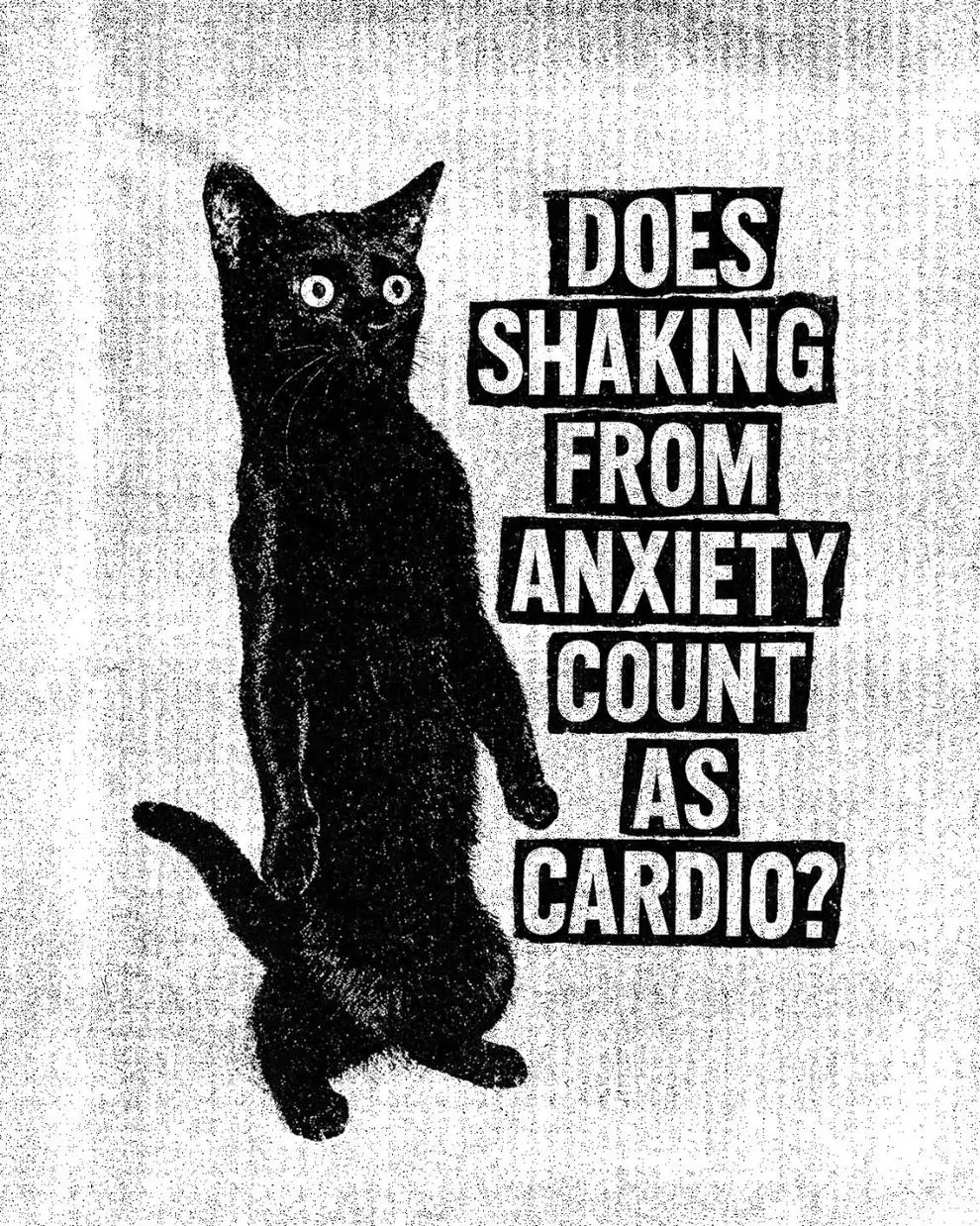
While details of his early biography remain as elusive as his nocturnal subjects, Aristo’s output speaks volumes. Operating under the handle @pablo_aristo, he has cultivated a community of over 52,000 followers who gravitate toward his blend of black cat mysticism and punk exhortations. Designs like “True Vatos Love Gatos,” “System of a Meow,” and “Angine de Purrrrine – Microtonal Ritual Cats” fuse linguistic play, feline iconography, and countercultural nods. These aren’t mere cute cat memes; they are totems of independence, resilience, and joyful irreverence.
The stray cat motif recurs as both signature and metaphor. In Tijuana’s alleys, feral felines navigate scarcity with grace and attitude. Aristo mirrors this: art that multiplies without permission, adapts to any context, and leaves its mark subtly yet indelibly. His involvement in events like Propaganda Sticker Art convocatorias positions stickers as “archive, community, and resistance”—democratic tools that anyone can deploy. A simple paste-up becomes an act of claiming space, archiving the moment, and fostering dialogue in a city defined by movement.
flow
Aristo’s scope vocabulary draws from multiple wells. Punk’s raw energy—DIY ethos, anti-authoritarian bite, and handmade urgency—meets gothic tenderness: moody palettes, skeletal elegance, and a romanticism for the overlooked. Street spirituality infuses the mix, evoking rituals of the day, the sacred in the profane, and the cosmic humor of survival.
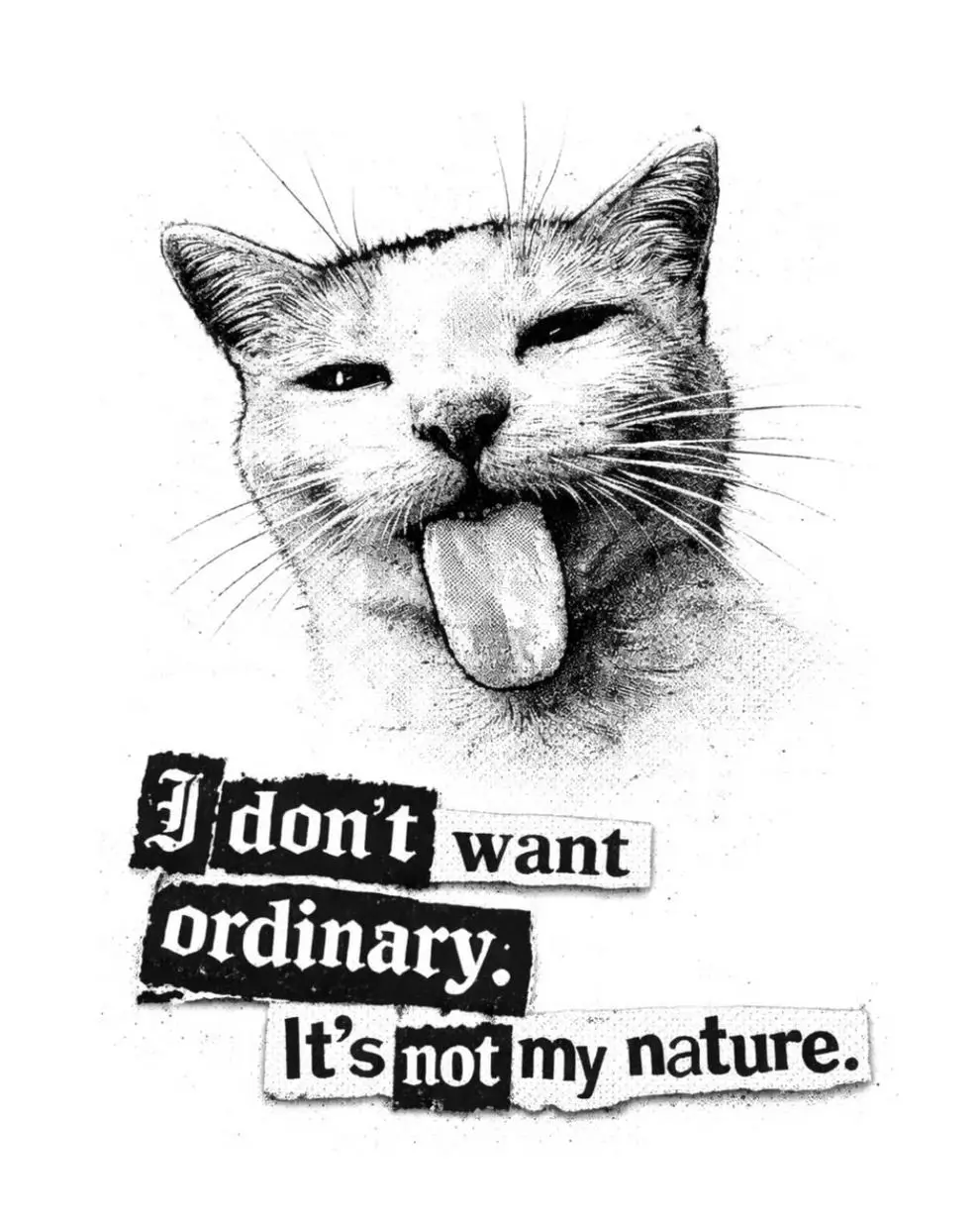
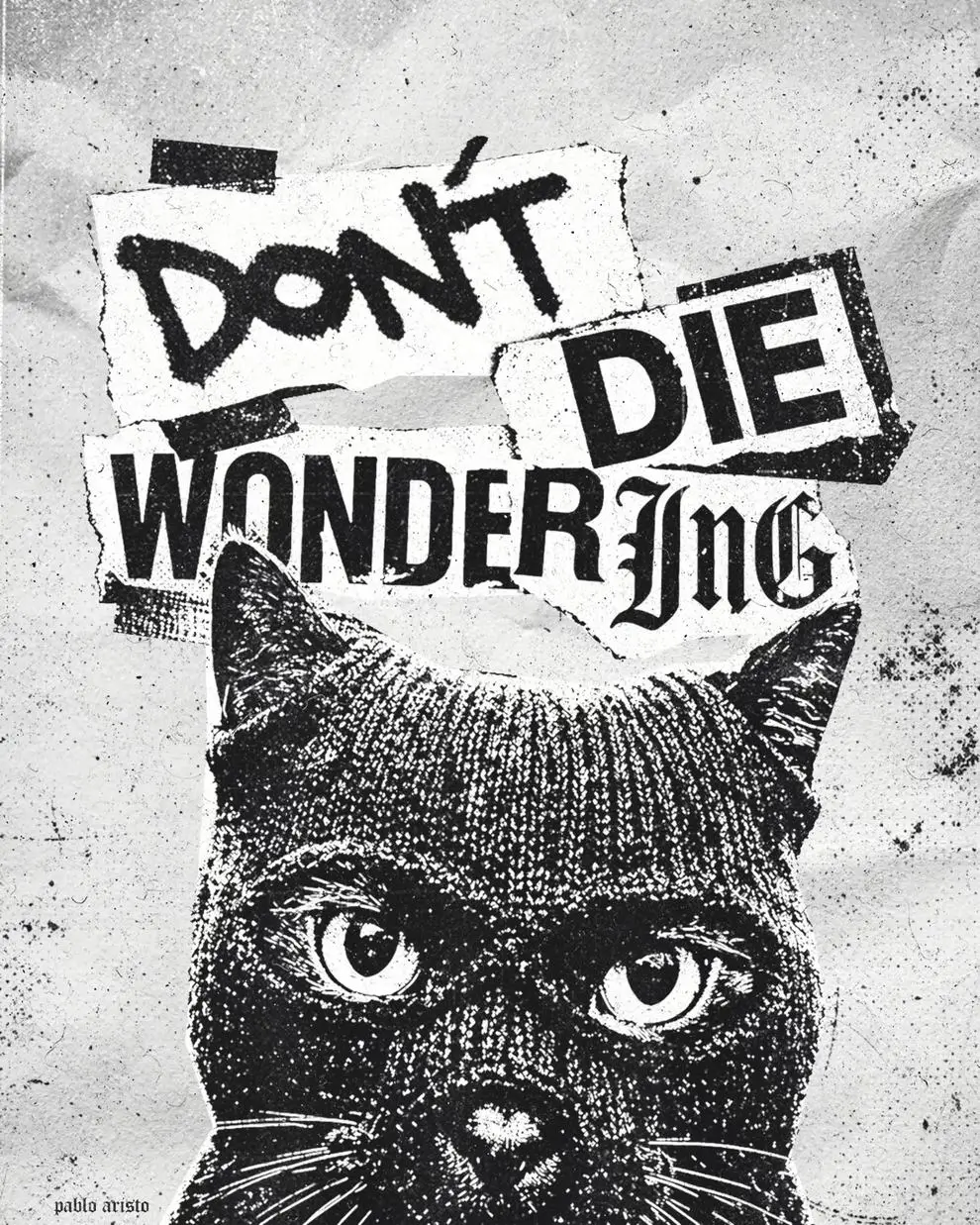
Look at pieces like “Do What You Want – The Punk Cat” or “Feel the Fear”: bold typography crashes against illustrated felines, creating tension and release. “Kind is Rebellion – Two Kissing Cats” flips expectations—softness as radical act in a hard-edged world. “Don’t Die Wondering” serves as manifesto, urging action over hesitation. These designs translate seamlessly from sticker to screenprint to apparel, embodying the reproducibility central to street graphics.
Threadless serves as a global outpost for his work, where collectors snag triblend tees and fine art prints. Yet the pulse remains in Tijuana: local events like Sticker Palooza, spooky editions, and community paste-ups keep the practice grounded. Aristo’s art doesn’t just decorate; it circulates, provokes, and connects. A t-shirt worn in Berlin carries Tijuana’s stray energy across oceans. A sticker on a Mexico City lamppost echoes the border’s restless pulse.
This approach aligns with broader traditions in Mexican and border art—think the graphic boldness of Posada’s calaveras updated for the digital age, or the muralist legacy reimagined for ephemeral media. But Aristo’s contribution feels distinctly contemporary: hyper-shareable yet analog-rooted, personal yet communal, commercially viable without selling out the street ethos.
mid
Tijuana’s art scene thrives on its liminality. Artists here have historically turned constraint into catalyst—limited resources breed ingenuity; culture friction sparks hybridity. Aristo exemplifies this. His sticker campaigns transform passive viewers into participants. The 2026 Propaganda Convocatoria, introduced by him, called for graphics exploring archive, community, and resistance—inviting others to contribute to a living visual dialogue.
The city’s free-for-all mural culture provides backdrop and inspiration. While Aristo leans more toward portable graphics than massive wall pieces, the ethos overlaps: accessibility, immediacy, and ownership of public space. In Playas de Tijuana or downtown alleys, art emerges organically, much like his stray cats. This democracy of expression counters narratives of border chaos, offering instead narratives of vitality and ingenuity.
Aristo’s practice also nods to fashion and wearable culture. Streetwear has long intersected with graphic art—think Human Made’s play irreverence or Nike collabs with artists. His merch bridges fine art prints and everyday armor, allowing wearers to embody the know. “Pay the Beginner Tax” or “Attractive Cat People” turn self-doubt and identity into wearable affirmations. In the context of Invent Blog’s focus on fashion-design crossovers, Aristo represents how graphic artists fuel streetwear’s culture relevance—blending utility, statement, and collectibility.
extent
While rooted in Tijuana, Aristo’s reach is worldwide. TikTok clips show him manifesting travel through art, using creativity as both passport and map. Prints and apparel ship globally, carrying his vision to new contexts. This portability mirrors migration stories central to border life—ideas, like people, cross lines and transform.
In a saturated digital landscape, Aristo’s analog emphasis stands out. Stickers and paste-ups resist perfect curation; they weather, tear, and accrue stories. This impermanence adds authenticity in an era of endless scrolls. His playlists (Spooky Palooza) and event involvement further embed him in multidisciplinary scenes—music, fashion, community gatherings—where graphics serve as connective tissue.
Critically, Aristo avoids didacticism. His work invites interpretation: a black cat as omen, trickster, or guardian; punk slogans as both rallying cry and personal mantra. This openness fosters engagement, turning passive consumption into active dialogue. Followers don’t just like posts—they paste stickers, wear tees, and internalize the stray ethos.
fin
Pablo Aristo’s contribution lies in revitalizing street-level graphics for the 21st century. In Tijuana, a city of relentless reinvention, he captures the stray energy—the unpredictable, adaptive force that refuses containment. His art honors the overlooked: alley cats, border hybrids, reticent rebels. It spreads tenderness amid toughness, humor amid hardship.
For the fashion and design worlds, Aristo offers lessons in authenticity and scalability. Graphics born on the street scale to merch without losing soul. Community convocations model collab creativity. And the stray cat archetype resonates universally—independence, curiosity, nine lives of resilience—in an age craving such qualities.
As Tijuana’s murals evolve and global interest in border art grows, artists like Aristo ensure the narrative stays multifaceted: not just struggle, but joy; not just grit, but grace. His work travels far because it starts close—pasted on a local wall, worn by a vato who loves gatos, shared in a sticker exchange that builds archive and resistance.
In the end, Pablo Aristo doesn’t just bring stray energy to Tijuana and beyond. He embodies it. Watch for his marks on walls near you—they multiply, adapt, and endure, much like the cats that inspired them. In a world that often demands conformity, his graphics whisper (or shout): do what you want, feel the fear, and don’t die wondering. The streets—and screens—are richer for it.
n
From the DRIFT archive: Chris RWK’s “Simple Math” Pillow Brings Street Art Deco · London Streets Print by Arina Iastrebova Captures the Soul of a Rainy City
Related Articles
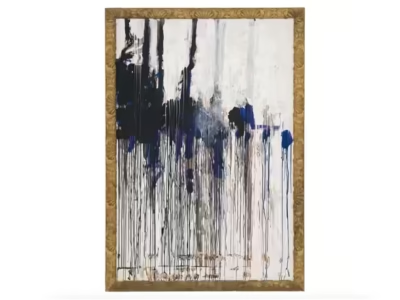
Winter Ran Down A Plywood Panel In Gaeta
Cy Twombly, Untitled (Winter Picture), 2004. Acrylic on plywood in the artist’s frame. Gagosian, Madison […]