DRIFT AUDIO
Listen to this story
Choose a voice, then press play.
A Danish portrait photographer spent six years following a bird nobody photographs on purpose, and the result is one of the strangest, most beautiful nature books in print.
Søren Solkær grew up in Sønderborg, a town at the southern edge of Denmark where the land runs flat into reed beds and tidal flats. As a boy he watched flocks of starlings gather there each spring and autumn, sometimes numbering close to a million birds, before they folded themselves into the reeds for the night. He carried that memory into a career that took him almost everywhere else. Starting in the mid nineties, Solkær built a reputation photographing musicians, and by the 2010s his portrait work had appeared in magazines and galleries from Sydney to Prague, the city where he studied at FAMU, the film and photography academy.
In 2017 he went back to the marsh. What began as a personal errand, a chance to photograph something he loved before it changed or vanished, turned into a project called Black Sun, after the Danish phrase “sort sol,” the local name for the murmurations that darken the horizon at dusk. He has said the project pulled him back toward “the landscape of my childhood and youth in the marshlands of Southern Denmark,” a place he had photographed almost nothing before.
The timing of the phenomenon is narrow and unforgiving. Murmurations of this size cluster around spring and autumn, when local starling populations swell as migrating birds pass through or overwinter along the Danish coast. The display only really happens in the hour before dusk, as birds converge from feeding grounds across the countryside and begin circling before dropping into the reeds to roost for the night. Weather, wind, and the presence of a hunting falcon all shape whether a given evening produces anything worth aiming a camera at. There is no way to schedule the shot. Solkær has spent countless evenings standing in cold marshland waiting for a display that sometimes never fully materializes, only to return the next evening and try again.
View this post on Instagram
flow
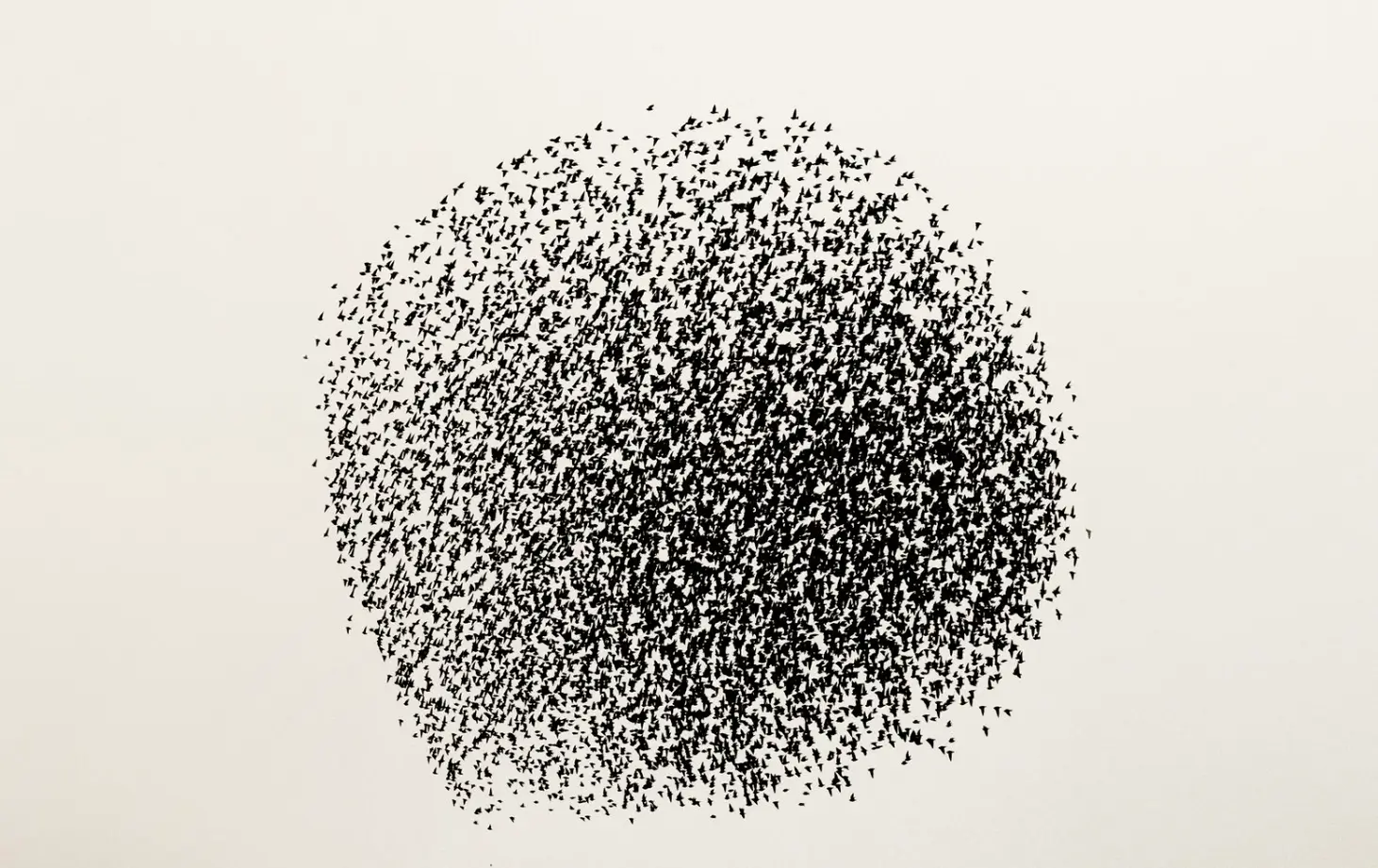
The starling, Sturnus vulgaris, is not a rare or protected species. It is common enough that most people ignore it. What makes the murmuration remarkable is scale and choreography: thousands, sometimes close to a million individual birds moving as a single mass, contracting and stretching, splitting and rejoining, without colliding. Ornithologists still debate exactly why it happens. The leading explanations point to predator defense, a confusion tactic against peregrine falcons and other birds of prey that hunt starlings at dusk, and a kind of communal signaling that draws scattered birds toward the evening roost.
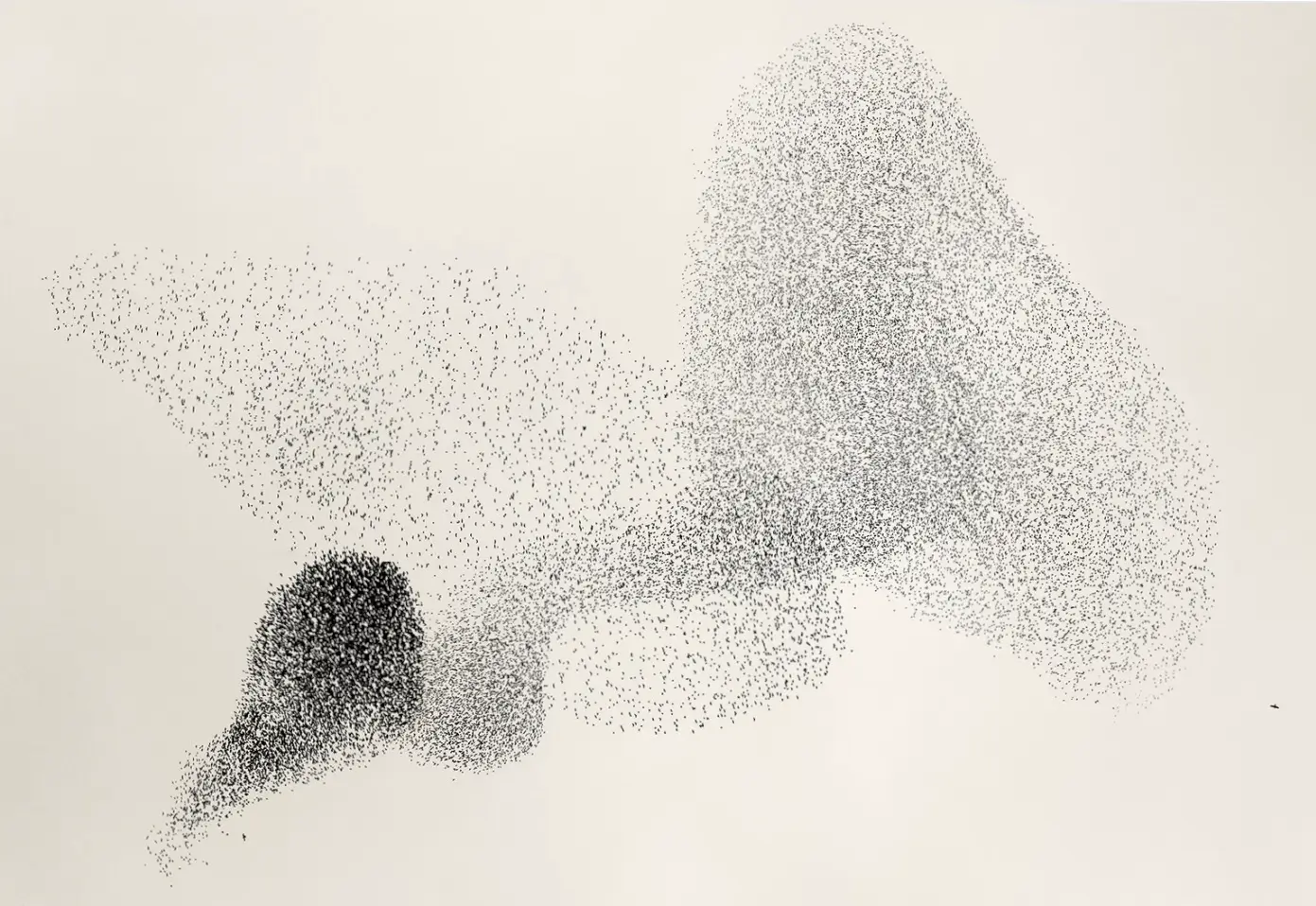
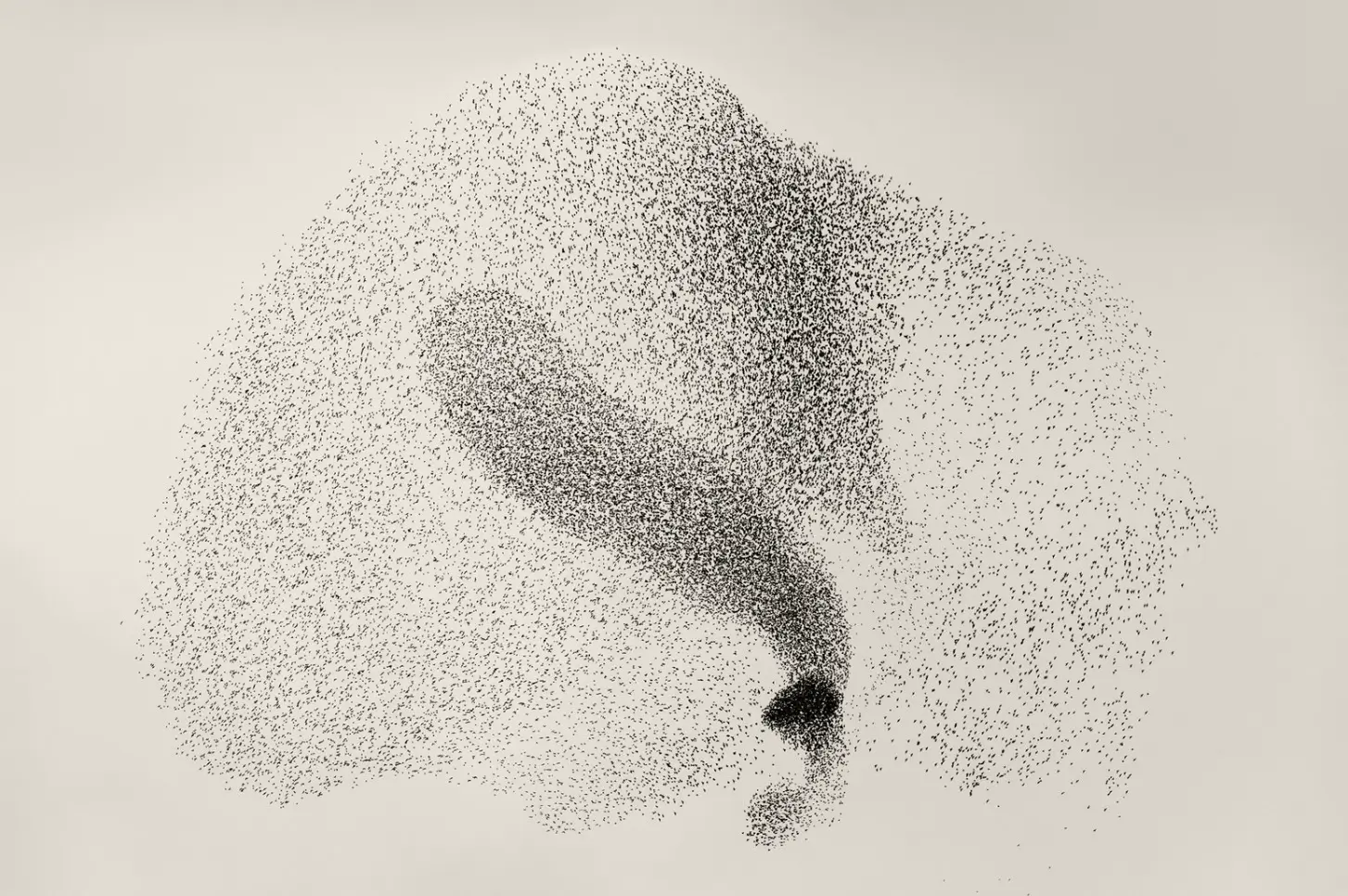
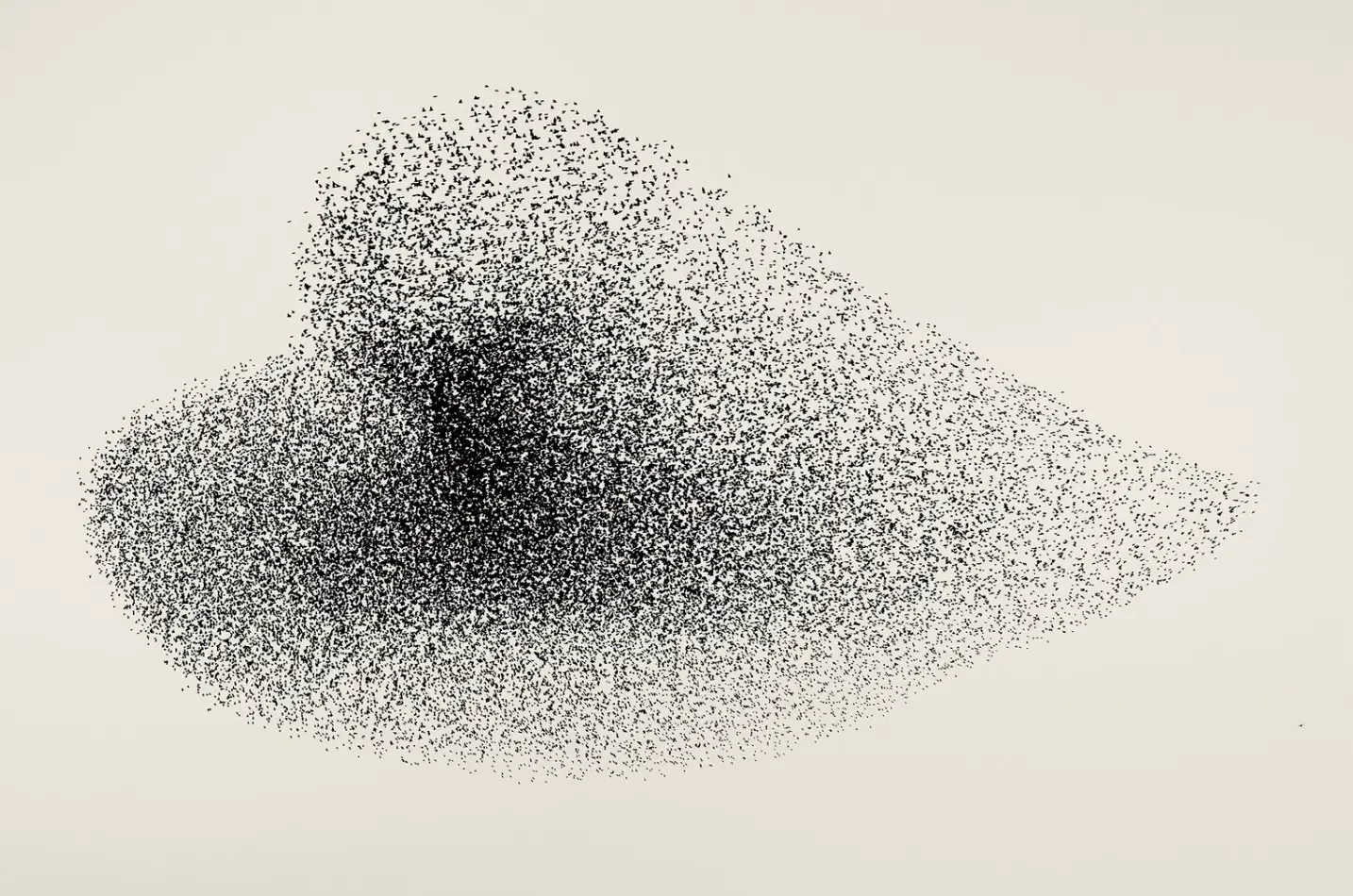
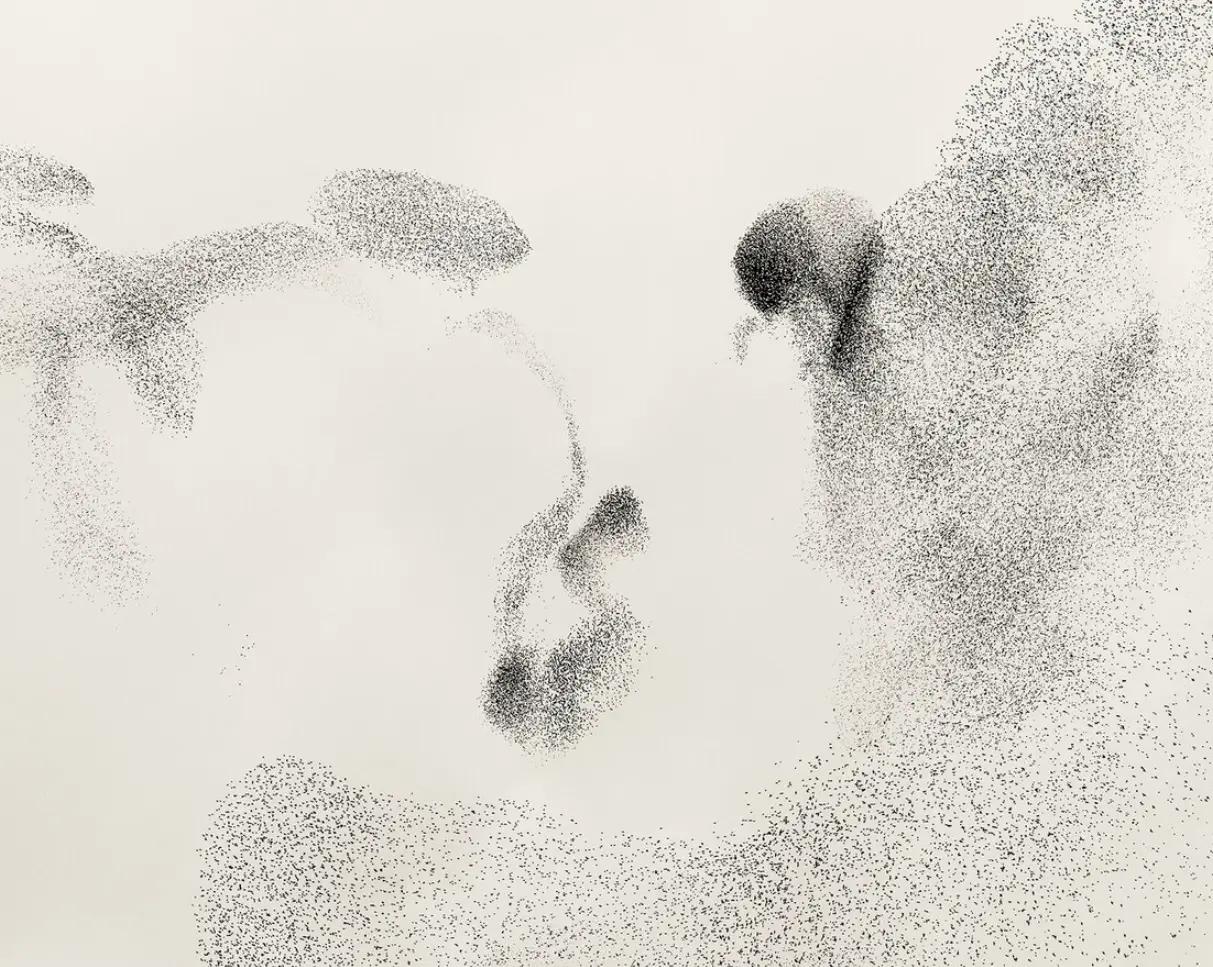
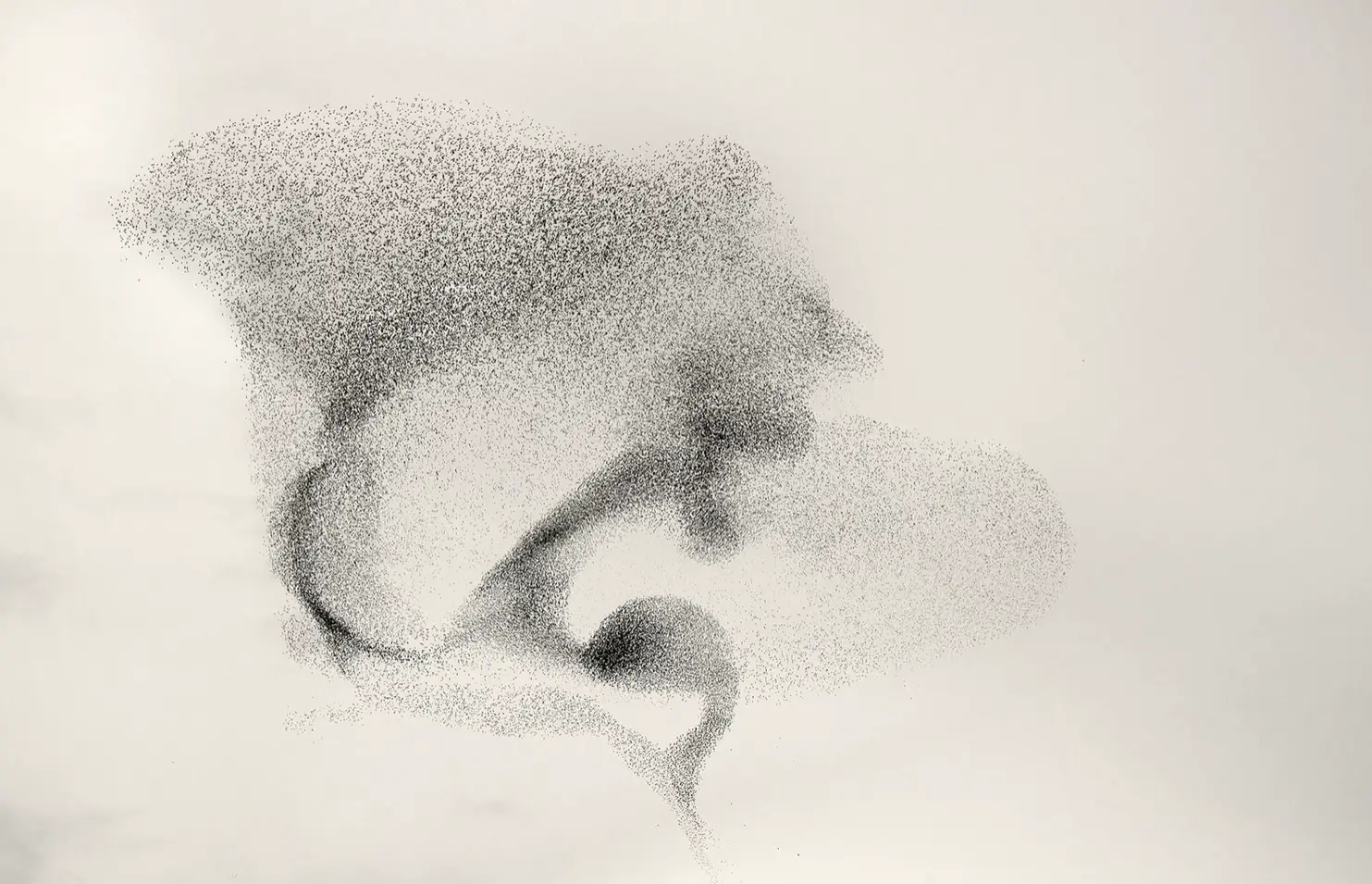
Solkær was drawn less to the biology than to the shapes the flocks made against the sky, especially in the seconds after a hawk or falcon dove into the mass. He has described the resulting forms as resembling other animals entirely, birds and whales appearing and dissolving inside the flock in the span of a breath. “I have noticed their incredible ability to navigate with great speed and agility in situations of great danger,” he told My Modern Met, “without ever even touching each other despite being very close together.” That combination, danger and precision, is what gives the pictures their tension. These are not passive landscape shots. They read more like documents of a live event that could break apart at any second.
Chasing that event meant chasing the birds. Denmark’s marshlands were the starting point, but starling migrations move, and Solkær followed them: to the Netherlands, where flocks gather over the polders near Houtwiel in Friesland, to Somerset and Glastonbury in England, to Ireland, to the wetlands of Sardinia and the countryside outside Rome, and to the Aiguamolls de l’Empordà in Catalonia, Spain. The project stretched from a single Danish marsh into a rough map of the starling’s European range, built over the course of what became roughly six years of returning to the same skies at the same time of year, waiting.
Each location changed the shape of the work in small ways. The flat, treeless expanse of the Wadden Sea gave Solkær an unbroken horizon line, closer to the classical landscape compositions he cites as an influence, while the wooded hills around Rome and the festival grounds at Glastonbury introduced structures, trees, tents, distant hills, that the flocks had to move around and through. Some of the most striking frames in the series come from these encounters between a fluid, constantly reshaping mass of birds and a fixed, solid piece of landscape underneath it, a visual argument between chaos and geometry that runs through the whole book.
transition
It is worth pausing on how unlikely this pivot was. Solkær’s name is attached to some of the more recognizable music photography of the past three decades. He shot Björk, Paul McCartney, Amy Winehouse, Patti Smith, David Lynch, U2, R.E.M., Franz Ferdinand, and The White Stripes, among others, and his early work with Danish band The Raveonettes helped define their visual identity in the early 2000s, including directing their “Beat City” video. He built a career on intimacy with famous faces, on finding, as one profile put it, the tension between closeness and edge in a single frame.
Black Sun has almost none of that. There are no faces in it at all. What connects the two bodies of work, if anything does, is a photographer’s eye for a single charged moment inside constant movement, whether that movement is a rock band mid tour or a million birds mid flight. Solkær has cited an eclectic set of references for his visual style over the years, from filmmakers David Lynch and Wong Kar-wai to photographer Philip-Lorca diCorcia and, notably for this project, the German Romantic painter Caspar David Friedrich, whose landscapes turn empty space into the main subject.
view
Solkær and the people writing about Black Sun keep returning to the same comparison: the flocks look less like animals and more like brushwork. The murmurations resolve, in still frames, into thick black lines and pooling masses that sit against pale sky the way ink sits against paper. Solkær has said he drew on classical landscape painting, calligraphy, and Japanese woodblock prints while shooting and editing the series, treating each frame less as a wildlife photograph and more as a composition problem: where does the black line go, and what does the empty sky around it need to hold.
That framing helps explain why the pictures read as fine art rather than nature documentary. Solkær is not chasing a clean, textbook image of a starling in flight. He is chasing the instant where the flock becomes a shape that no single bird could have made on its own, something closer to a gesture than a subject. He has called it, in his own notes on the project, an attempt to capture “a slice of eternity,” which sounds grand until you see the pictures and understand what he means: the shapes exist for a second or two and then are gone, reabsorbed into a moving cloud of birds that will land in the reeds and disappear entirely.
There is also a formal discipline to the series that keeps it from tipping into spectacle for its own sake. Solkær shoots almost exclusively in black and white or a heavily desaturated palette, letting the murmuration itself carry all the visual weight rather than competing with a colorful sunset or a saturated sky. The horizon sits low in most frames, sometimes barely present at all, so that the flock reads against open space rather than a busy landscape. It is a restrained approach for a subject that could easily be oversold, and it is part of why the pictures hold up as a coherent body of work rather than a collection of striking one off shots pulled from a long stretch of fieldwork.
alone
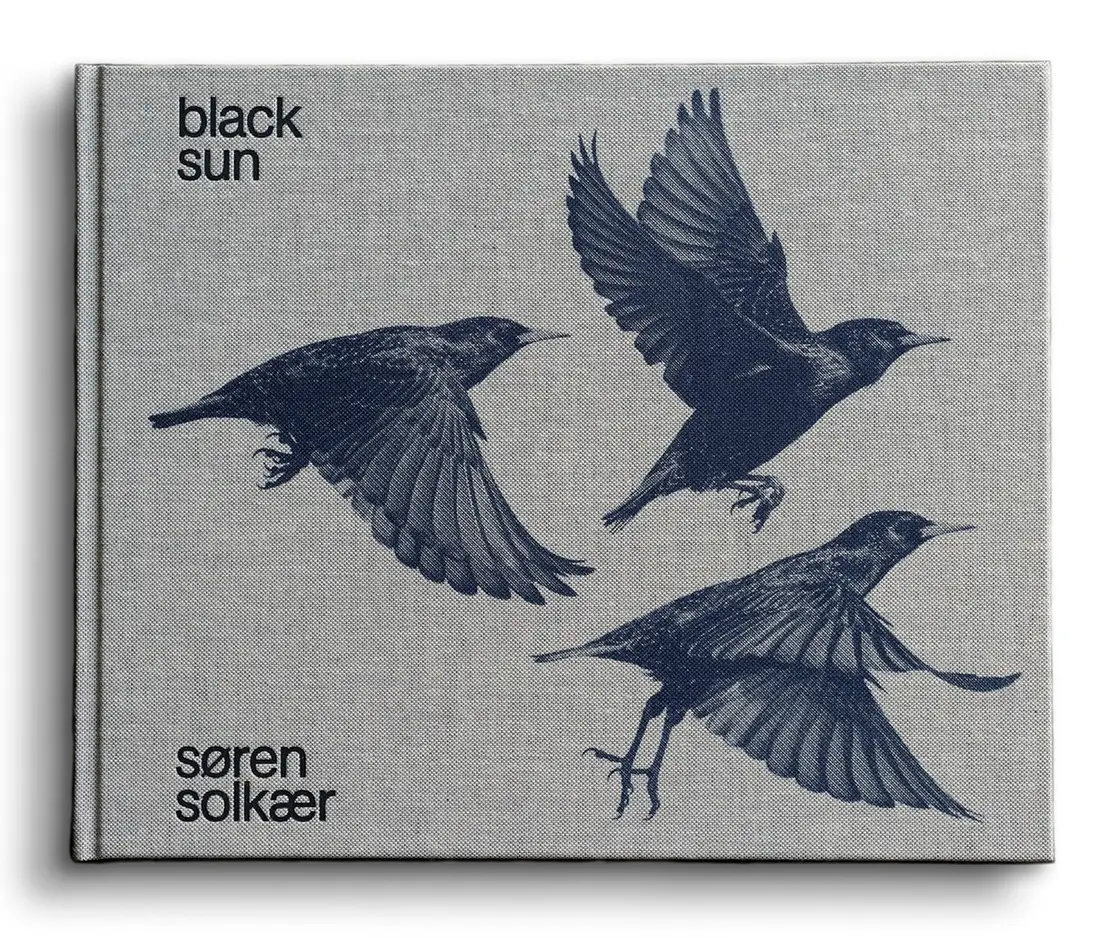
Black Sun exists as a photobook published through Edition Circle, running 172 pages in a hardcover, canvas bound format at roughly 30 by 24 centimeters, closer to a coffee table book than a monograph meant for a shelf. It was printed on four different paper stocks at Narayana Press in Denmark and designed by Rasmus Koch Studio, a Copenhagen design house. Copies are finished with a stamped cloth binding rather than a printed dust jacket, a physical detail that matters more than it might sound: the birds appear on the cover itself, pressed into fabric rather than laid over it.
The first edition, released in 2020, found an audience well beyond the usual photobook circuit. Coverage followed in National Geographic, the Observer, and the New York Times, unusual reach for a fine art nature title from a mid sized Danish publisher. Part of that reach likely comes from how the images circulate outside the book itself. A single striking murmuration photograph travels easily online, stripped of context, shared for its shape alone, and Solkær’s images have shown up repeatedly in that way over the past several years, often without much acknowledgment of the six year project or the photographer’s earlier career behind them.
Solkær has since expanded the project rather than closing it. A follow up monograph titled Starling, focused specifically on murmurations documented in Ireland, Italy, Denmark, and the Netherlands, was released alongside a museum survey of the work, and the series carries the alternate title Sort Sol in some markets and exhibitions, a direct translation of the Danish original. Video work has entered the project too, giving the murmurations a dimension the still photographs cannot: duration, the sense of a shape holding for a second before collapsing into the next one.
fin
Black Sun, under the title Søren Solkær: Sort Sol, opened as a dedicated exhibition at the National Nordic Museum in Seattle in December 2023, running through March 2024 and marking the first US museum showing of the series. The exhibition, curated by chief curator Leslie Anne Anderson, paired more than fifty photographs with video work and framed the murmurations through both artistic and scientific lenses, an acknowledgment that the project sits somewhere between gallery wall and nature documentary. Programming built around the show reportedly leaned into that split deliberately, pairing the artistic reading of the work with talks grounded in the actual ornithology of murmuration behavior, rather than treating the science as a footnote to the photography. Solkær’s photographs from the series are also held in the permanent collections of the Royal Danish Library and the National Portrait Collection at Frederiksborg Castle in Denmark, alongside institutions that have shown his earlier portrait work in New York, Copenhagen, Sydney, Melbourne, London, Los Angeles, Chicago, Vancouver, Milan, Munich, Prague, and Kyoto.
The project has taken physical form outside the book and the gallery, too. In Copenhagen, where Solkær has lived since the mid nineties, a mural based on one of the Black Sun photographs now covers a building wall, created in collaboration with a street artist known internationally for large scale murals. The piece doubled as a marker for the centenary of Southern Jutland’s reunification with Denmark, a regional milestone that connects back to the same stretch of marshland where the whole project started.
What comes through across the press coverage, the museum wall text, and Solkær’s own comments is a consistent origin story rather than a marketing one: a photographer who spent decades photographing people went home, pointed his camera at a common bird doing something uncommon, and kept doing it for six years because the shapes never repeated. Denmark’s starlings gather again this autumn, as they have every year Solkær has been watching, over the same reed beds outside Sønderborg, indifferent to the cameras, the books, or the museum wall labels that have followed them since.
Related Articles
Winter Ran Down A Plywood Panel In Gaeta
Cy Twombly, Untitled (Winter Picture), 2004. Acrylic on plywood in the artist’s frame. Gagosian, Madison […]