DRIFT AUDIO
Listen to this story
Choose a voice, then press play.
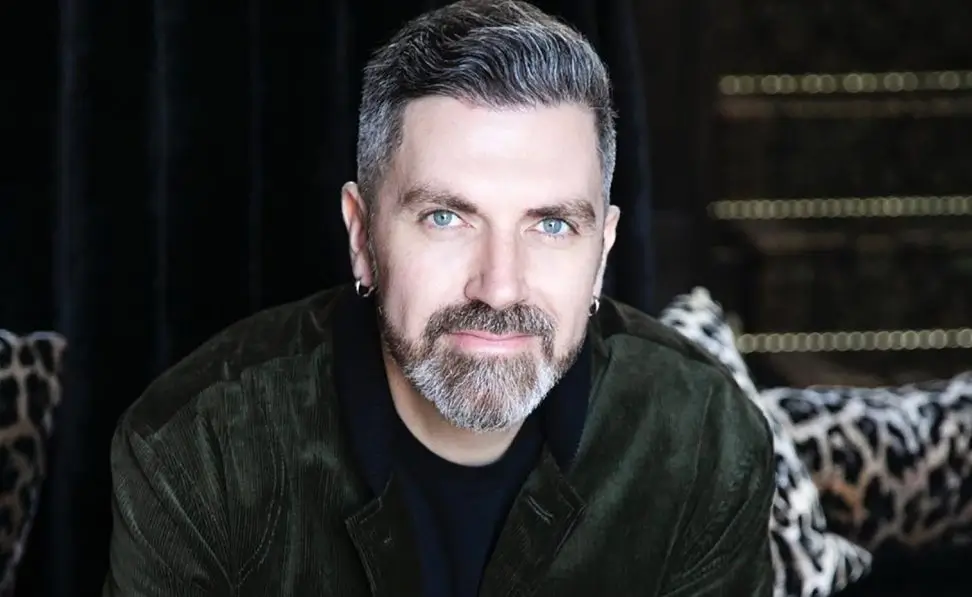
In a sunlit office tucked into the hills of Calabasas, Pasquale Rotella sits surrounded by the remains of a culture that was never supposed to survive this long. Old rave flyers from the 1990s scatter across tables like sacred relics. Vinyl sleeves covered in handwritten notes from fans lean against walls. A Techno Viking figurine stares outward from a shelf beside stacks of festival concepts and production layouts. The room does not resemble the headquarters of one of the most powerful live entertainment brands in dance music. It feels closer to an archive of obsession — part museum, part memory palace, part underground command center.
Outside, Las Vegas is preparing for another cultural migration. More than half a million people are expected to descend upon the Las Vegas Motor Speedway for Electric Daisy Carnival 2026, marking the festival’s 30th anniversary under the electric sky. Yet even as EDC has evolved into one of the largest music festivals in the world, Rotella continues to describe the experience in unexpectedly intimate terms.
“I still feel we’re doing underground parties,” he says.
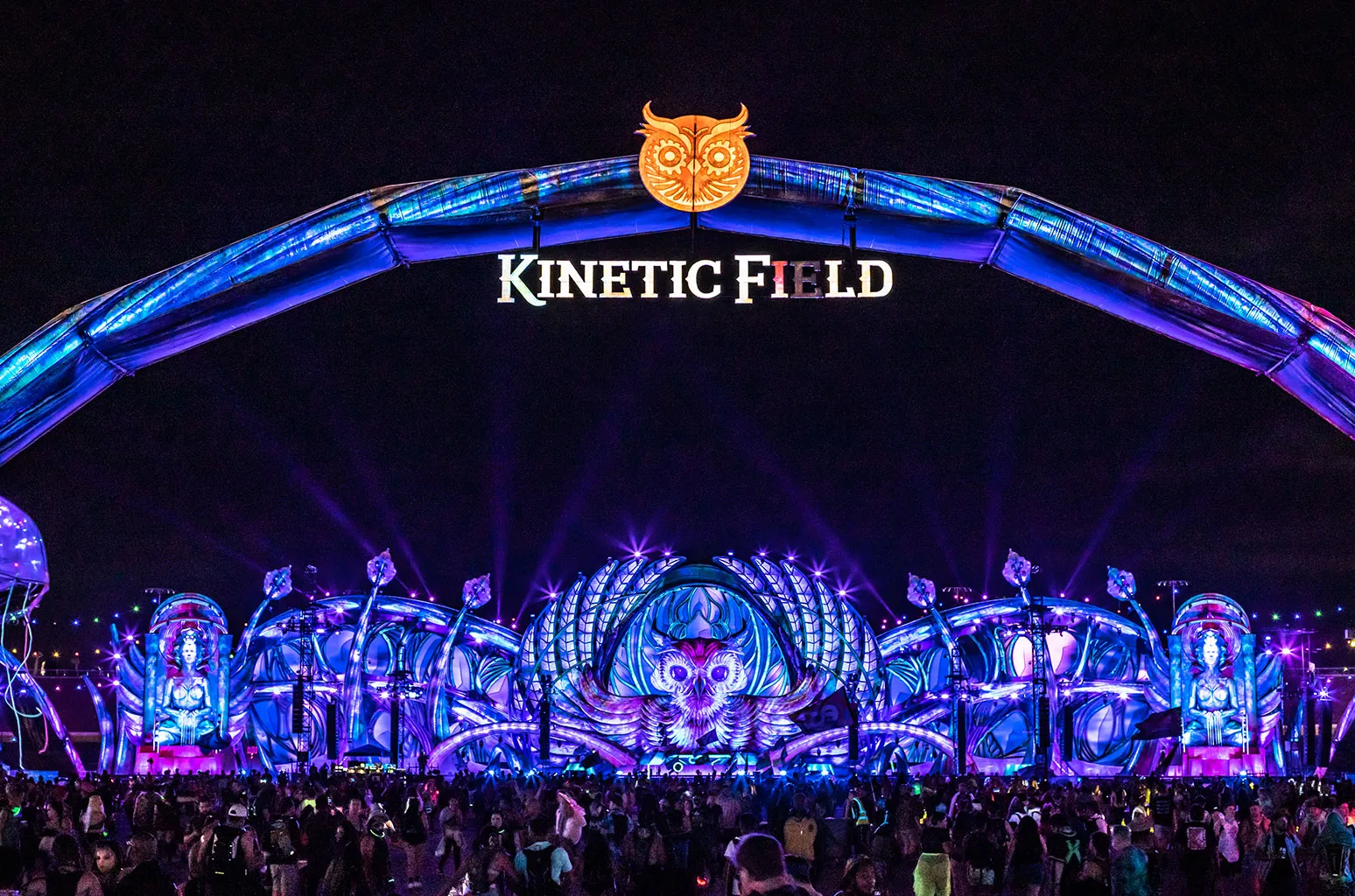
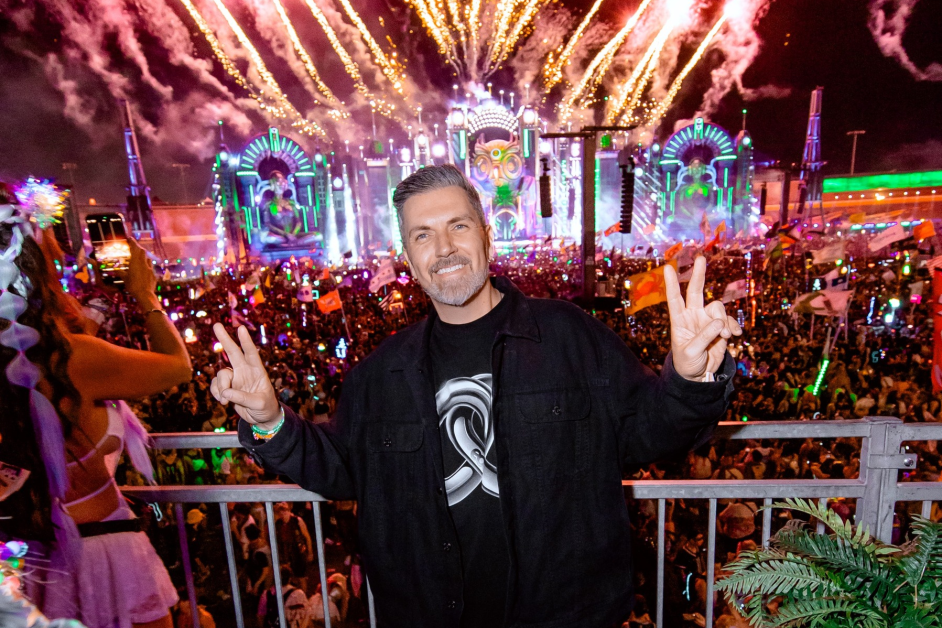
The statement sounds almost impossible considering the scale. EDC now spans nearly 20 stages, massive immersive installations, carnival rides, fireworks displays, and nonstop electronic music performances that stretch from dusk until sunrise. The kineticFIELD stage alone resembles a futuristic city built for temporary worship. Yet Rotella’s insistence is not nostalgia for nostalgia’s sake. It reflects a worldview that has guided Insomniac Events from illegal warehouse raves in Southern California to a global entertainment institution without entirely abandoning the emotional DNA that made rave culture meaningful in the first place.
stir
Long before EDC became a global tourism engine, Rotella was simply a teenager searching for belonging inside Southern California’s emerging rave circuit. In the early 1990s, the American electronic music scene remained fragmented, misunderstood, and frequently criminalized. Parties existed in abandoned warehouses, industrial lots, and improvised spaces hidden from public view. Flyers circulated hand-to-hand. Locations were revealed through hotline recordings. The entire experience carried the feeling of participating in a secret society built around music, freedom, and emotional release.
Rotella entered that world completely immersed. At just 17 years old, he promoted his first event, Unity Groove, before formally launching Insomniac in 1993. Those early parties were raw and precarious, held under constant threat of shutdowns and police intervention. But they also represented something profoundly different from traditional nightlife culture. Raves were less about status than surrender. People arrived to disappear into sound systems, lights, and collective emotion.
“I was going to events every weekend,” Rotella recalls. “It was a community.”
That sense of community became the guiding know behind Insomniac’s expansion. When the rave scene began facing increasing crackdowns throughout the mid-1990s, many promoters disappeared. Rotella doubled down instead, continuing to organize events even as public perception framed rave culture as dangerous or disposable. Electric Daisy Carnival emerged from that environment in 1997 at the Shrine Expo Hall in Los Angeles. It was comparatively modest by today’s standards, but the foundation was already there: spectacle fused with emotional escapism, theatrical environments fused with dance music, community fused with fantasy.
The eventual relocation of EDC to Las Vegas in 2011 transformed the festival into something far larger than even longtime attendees could have predicted. What initially appeared to be a risky gamble rapidly evolved into one of the defining festival experiences on the global calendar. Attendance exploded from roughly 230,000 attendees during the first Vegas edition to more than 520,000 visitors across recent years. The festival became a major economic driver for Clark County, generating billions in tourism revenue through hotels, restaurants, transportation, gaming, and nightlife spending.
Yet the deeper significance of EDC’s expansion lies in how it helped electronic music culture move from societal margins into mainstream visibility without completely severing ties to its emotional origins. The audience changed. The scale changed. The budgets changed. But the emotional architecture remained surprisingly recognizable to longtime ravers.
build
One of Rotella’s most revealing observations about modern live entertainment is his belief that “promoters are a dying breed.” The comment is not merely industry criticism; it is a distinction between two fundamentally different philosophies of event-making.
For Rotella, the traditional promoter was never just a logistical operator. The promoter functioned as a curator, world-builder, and emotional architect. The lineup mattered, but it was only one component of a larger sensory journey. Flyers were designed as art objects. Stage concepts reflected thematic storytelling. Transitions between environments mattered as much as headlining performances. Entire nights unfolded as adventures rather than isolated concerts.
“Every aspect of the show can have art infused into it,” Rotella explains.
That mentality shaped rave culture long before festivals became corporate entertainment products. In the underground era, few attendees purchased tickets based on a single artist. They arrived because the environment itself promised transformation. The experience existed in wandering between stages, discovering unfamiliar DJs, encountering strangers, and losing track of time beneath lasers and smoke machines.
Rotella worries that many contemporary festivals increasingly operate through analytics rather than intuition. Headliners become brands. Algorithms determine bookings. Festivals risk becoming collections of isolated performances rather than immersive ecosystems. In response, Insomniac continues investing in smaller-scale concepts like Factory 93, which caters to techno and deep-house audiences seeking more underground atmospheres. The company’s partnerships with international events like Time Warp similarly reflect a desire to preserve credibility within dance music’s deeper subcultures even while operating massive commercial festivals.
This balancing act remains central to Insomniac’s identity. On one side sits EDC, now an entertainment empire encompassing festivals, clubs, radio, apparel, and media. On the other sits the enduring desire to preserve the intimacy, unpredictability, and emotional vulnerability that defined early rave culture.
idea
Few concepts remain as associated with rave culture as PLUR: Peace, Love, Unity, and Respect. To outsiders, the acronym can sometimes appear naïve or overly sentimental. But within rave communities, PLUR functioned less as branding and more as social architecture. It established a code of emotional openness within environments that prioritized collective experience over individual performance.
That ethos still pulses through EDC despite the event’s massive scale.
The festival operates like a temporary city where strangers continuously interact through costumes, kandi exchanges, shared emotional catharsis, and communal movement. Underneath the fireworks and billion-dollar production value, the emotional mechanics remain remarkably human. People come to EDC not only for music but for permission — permission to feel differently, dress differently, behave differently, and connect differently than they do within everyday life.
Rotella knows this dynamic instinctively because he emerged directly from it. Even now, he reportedly walks festival grounds like an attendee rather than a detached executive, constantly studying how environments feel in real time. His obsession is not simply scale; it is emotional resonance.
That emotional resonance explains why EDC stories tend to linger long after the final fireworks disappear. Couples meet there. Friendships form there. Personal reinventions begin there. Fans routinely describe the festival in transformative language usually reserved for spiritual experiences or life milestones. The event functions simultaneously as spectacle and sanctuary.
This year’s 30th anniversary edition intensifies that emotional symbolism. The festival’s “kinetic journey” theme emphasizes movement through time, memory, and evolution. New stage designs, expanded Vegas activations, and the introduction of the World Party Parade signal continued expansion, but the emotional subtext feels more reflective than purely celebratory. Thirty years is an eternity within youth culture. Most underground scenes collapse under commercialization, legal pressure, or generational turnover. EDC survived all three.
survival
Rotella’s career is inseparable from the volatility of the American rave scene itself. The culture endured repeated periods where survival seemed unlikely. Throughout the 1990s, authorities aggressively targeted rave events through raids and legislative pressure. After 9/11, nightlife economies contracted sharply. Later tragedies connected to festivals generated new waves of scrutiny surrounding safety, drug policy, and crowd management.
Rotella himself became entangled in years of legal turmoil following a federal indictment tied to Los Angeles Coliseum events in 2012. He was ultimately cleared of all charges in 2016, but the process placed enormous pressure on both him and Insomniac during a critical growth period.
Many promoters from the same generation disappeared entirely under similar conditions. Rotella did not.
“What gave me the ability [to continue]?” he reflects. “I don’t really know.”
Part of the answer likely lies in how personally intertwined he remains with the culture itself. Insomniac was never simply a business venture detached from emotional investment. The company grew directly from his lived experience within rave communities. That emotional attachment appears to have created unusual resilience even during periods when continuing would have been financially, legally, or psychologically exhausting.
Today, the challenges facing live entertainment look different but remain equally significant. Production costs continue skyrocketing. Artist fees have exploded in the post-pandemic market. Audience fatigue affects oversaturated festival calendars. Corporate consolidation increasingly centralizes power within a handful of major live entertainment entities.
Insomniac itself operates within that broader ecosystem through partnerships connected to Live Nation, creating inevitable tensions around authenticity and independence. Critics argue that massive entertainment structures inherently dilute underground culture by turning subcultural energy into commercial product.
Rotella seems aware of those contradictions. Rather than pretending they do not exist, he frames the future around sustainability: building structures capable of preserving EDC beyond his personal involvement while attempting to maintain the emotional principles that built it.
arch within escapism
EDC’s true achievement may not simply be scale but environmental storytelling. The festival does not function like a traditional concert where audiences face a single stage awaiting performances. Instead, it behaves more like a living fantasy environment. Every corner contains sensory stimulation: glowing art installations, roaming performers, carnival attractions, tunnels of light, hidden stages, synchronized fireworks, and architecture designed to dissolve ordinary spatial awareness.
The kineticFIELD stage remains the symbolic centerpiece. Its gigantic owl imagery and ever-evolving visual design have become synonymous with EDC itself. Yet the festival’s emotional power often emerges away from the main stage — in side-stage discoveries, sunrise sets, random conversations, or moments of emotional release shared between strangers.
This design philosophy reflects Rotella’s belief that festivals should create worlds rather than merely host performances. Attendees are not passive consumers watching artists from afar. They become active participants inside an immersive emotional landscape.
That distinction matters more than ever within contemporary entertainment culture, where many live events increasingly resemble content-generation environments optimized for social media visibility. EDC still generates massive online exposure, of course, but its deeper appeal remains stubbornly physical and emotional. The experience overwhelms through scale, sound, exhaustion, sensory overload, and human connection in ways that cannot be fully translated through screens.
ensure
Perhaps the most fascinating aspect of Rotella’s current mindset is his growing focus on longevity rather than expansion alone. After three decades, Insomniac already exists as one of the defining brands in dance music culture. The challenge now is preservation.
Rotella speaks increasingly about governance, succession planning, and creating systems capable of sustaining EDC beyond any single individual. That concern reflects a broader question facing many founder-driven cultural institutions: can underground-rooted movements survive institutionalization without losing emotional credibility?
For Rotella, the answer appears to depend on preserving the promoter as artist. He rejects the idea that live events should be reduced to market calculations and ticketing data. Instead, he continues championing experiential imagination as the central force behind rave culture’s endurance.
That philosophy explains why EDC still feels emotionally meaningful to so many attendees despite its staggering commercial scale. Beneath the pyrotechnics and massive budgets remains a surprisingly sincere belief in collective transformation through music and shared experience.
Thirty years after Electric Daisy Carnival first emerged from the Southern California underground, the event now stands as both monument and contradiction: a mega-festival still chasing the intimacy of warehouse raves; a billion-dollar entertainment force still speaking the language of community; a global spectacle still attempting to preserve the emotional vulnerability that made rave culture matter in the first place.
As lasers once again cut across the desert sky above Las Vegas Motor Speedway, another chapter begins beneath the electric lights. Rotella may now oversee one of the largest dance music empires in the world, but somewhere underneath the fireworks, the rides, and the endless sea of neon, he is still searching for the same feeling that first drew him into the underground decades ago — the belief that a great party can temporarily remake the world.
From the DRIFT archive: Jodie Foster Narrates Morgan Neville’s Breakdown: 1975: A Cultural Autopsy of the Most Radical Year in American Cinema