DRIFT

On any given afternoon, beneath the busy crosscurrents of commuters and tourists spilling through Manhattan’s Penn Station, a parallel world begins to unfold—one of rhythm, dedication, and quiet rebellion. Here, in the lower level of Moynihan Train Hall, smooth terrazzo floors, echoing ceilings, and convenient public restrooms have created an unlikely sanctuary: New York’s unofficial, unregulated, open-air dance studio.

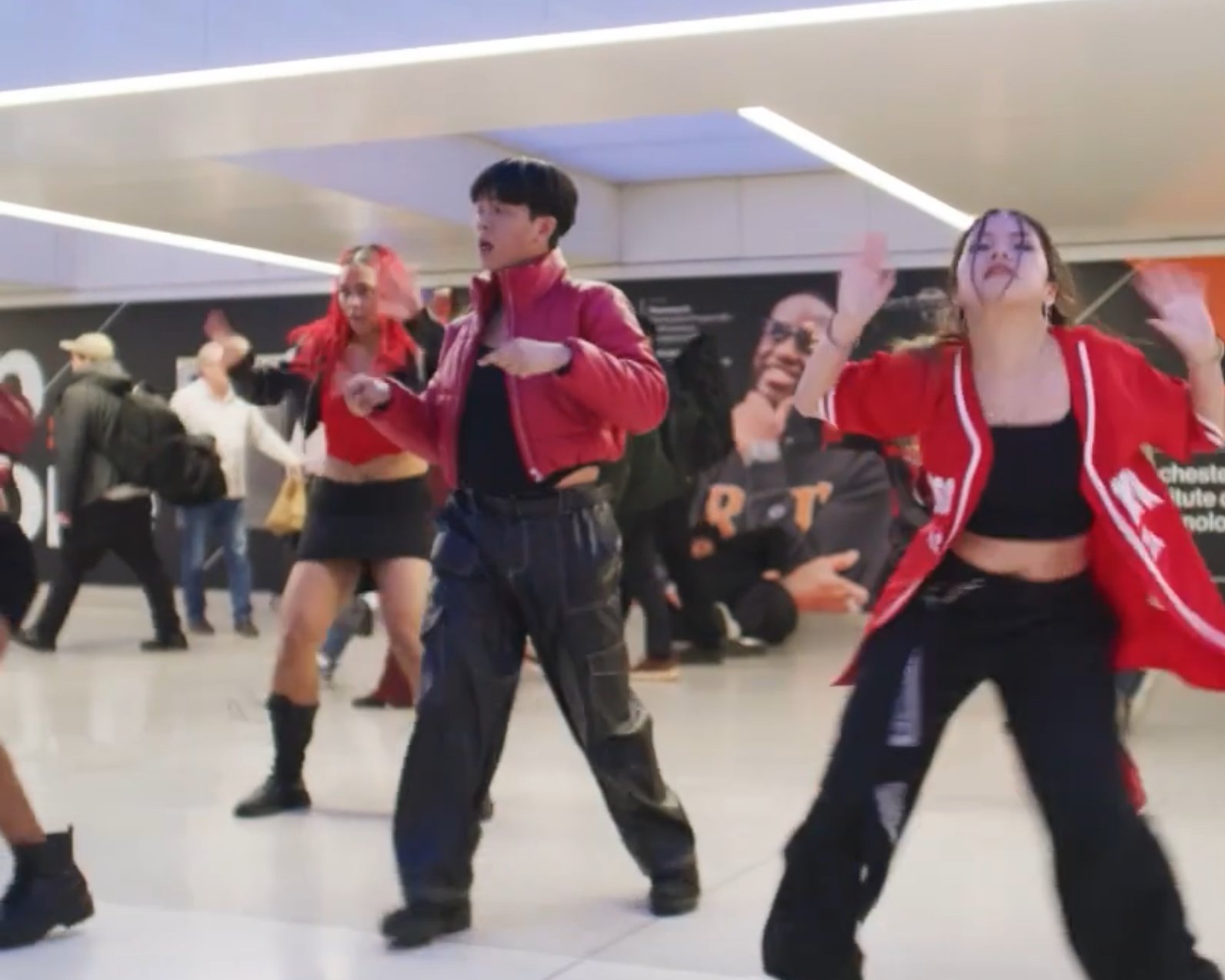
What was meant to be nothing more than a modernized pedestrian connector—practical, functional, barely noticed—is now transformed daily into a stage. K-pop dancers drill high-intensity routines, spinning and locking to the electronic pulse of Korean pop. Salsa couples, some in everyday sneakers, others in soft, worn-out ballroom shoes, glide across the space with dramatic flair. Brazilian Zouk dancers weave intricate, intimate patterns, their fluid torsos and rapid footwork creating the illusion of water flowing across the marble.

There are no mirrors, no ticket sales, no velvet ropes. Only the steady presence of people reclaiming urban space—not for profit or performance, but for practice, community, and expression. This unspoken takeover has become, in its own way, one of the most authentic reflections of New York’s spirit today: improvisational, inclusive, and profoundly alive.

The Accidental Dance Hall

Moynihan Hall, which opened in early 2021 as part of an ambitious plan to reimagine Penn Station, was meant to evoke grandeur—a civic cathedral of steel and light to soothe the chaos of midtown commuting. And in many ways, it succeeded. The Art Deco clocks, soaring glass ceilings, and white marble expanses promised to humanize the grim reputation of the original Penn Station’s crowded corridors. Yet it is precisely this humane design—the generous, open spaces, the sense of lightness and movement—that also made Moynihan fertile ground for another kind of movement altogether.

Most weekday afternoons, as the commuter rush ebbs into a quieter flow, young dancers arrive with backpacks, Bluetooth speakers, and an understated sense of purpose. They claim their small patches of floor space without formal permission, forming loose circles or discrete practice groups. There’s a mutual understanding: speakers at a moderate volume, no monopolizing too much room, and a general readiness to apologize if a collision occurs.

In a city notorious for the cost of studio rentals—where rehearsal spaces can charge upwards of $30-$50 an hour—Moynihan offers something rare: free, accessible, public floor space. In a way, it echoes the old adage about New York itself: if you can find your place here, even for a few hours, it’s yours.

K-Pop Colonizers

The largest and most visible of Moynihan’s dancers are the K-pop enthusiasts. On any given day, you might find a cluster of teenagers and twenty-somethings mirroring the hyper-precise choreography of BTS, BLACKPINK, NewJeans, or Stray Kids. Clad in black hoodies, cargo pants, and often sporting earbuds even as they perform publicly, they treat the station floor with a reverence normally reserved for professional studios.

Their routines are sharp, kinetic, and demanding—synchronized to the millisecond. Occasionally, you’ll catch the flicker of frustration when a turn is mistimed or a hand position falters. But more often, the atmosphere is one of camaraderie: a new friend adjusting a wrist angle; an older dancer offering a corrective tap on the shoulder; shy smiles when strangers stop to watch or offer quiet applause.

It’s fitting, perhaps, that a genre so rooted in spectacle, perfectionism, and relentless training should find its home not on a polished stage but in the imperfect embrace of public infrastructure. Here, the dancers rehearse not for fame or followers, but for mastery itself.

Salsa’s Second Home

The K-pop crews may dominate the visual landscape, but on weekend afternoons, another rhythm asserts itself. Salsa dancers, drawn from a broad diaspora of Latinx New Yorkers, claim a corner of the hall and bring an entirely different energy.

Salsa at Moynihan is louder, more communal. Bluetooth speakers pump out brassy horn sections and conga beats; spontaneous whoops and shouts punctuate the air. Unlike the precision-driven K-pop routines, salsa here emphasizes flow, connection, improvisation. Partners swap out mid-song. Beginners stumble and laugh. Experts spin faster and dip deeper, attracting little clusters of onlookers who tap their feet along the margins.

Many of these dancers first encountered salsa at social nights in Brooklyn or Queens. Others are older veterans who once danced in the legendary Copacabana or the late, great Gonzalez y Gonzalez downtown. For them, Moynihan is both a training ground and a tribute—a place to pass on the culture to the next generation, one basic step at a time.

Zouk’s Whisper

Then there are the Brazilian Zouk dancers—a smaller, quieter contingent, often tucked away in a corner less visible to casual passersby. Zouk, with its close body contact and hypnotic head rolls, is less about external spectacle and more about internal connection. It requires trust between partners, a willingness to surrender to the moment, the music, and each other.

Watching two Zouk dancers in Moynihan can feel almost voyeuristic, like intruding on a conversation spoken entirely in touch. And yet, they, too, have found a place here—tolerated by the station’s private security, occasionally joined by curious strangers willing to learn.

For these dancers, Moynihan is a laboratory of intimacy in a city built on anonymity. In a metropolis where human connection can feel impossibly distant, they create small pockets of profound closeness, just steps from the Acela Lounge and the Dunkin’ counter.

Dance as Civic Occupation

The existence of this unofficial dance hall speaks to a deeper truth about public spaces in New York: they are never truly public unless they are used, reshaped, reimagined by the people themselves. Dance in Moynihan is not sanctioned, curated, or monetized. It is spontaneous civic occupation—a reminder that public architecture must serve the organic needs of its citizens, not just the aesthetic ambitions of its designers.

It is tempting to romanticize this scene, to view it as evidence that “art finds a way” even in the harshest urban environments. But it’s important to recognize that it exists precisely because of a scarcity elsewhere. Affordable rehearsal space is almost nonexistent for the city’s independent dancers. Traditional public spaces like parks are not always practical for detailed choreography. Subway platforms and sidewalks are too chaotic, too dangerous.

Moynihan’s lower level became the people’s studio not because it was designed to be one, but because dancers had nowhere else to go—and because New Yorkers, in their endless, restless creativity, will always find a way to carve out room for their passions.

The Audience That Never Bought a Ticket

One of the most remarkable aspects of the Moynihan dance scene is its relationship with its accidental audience. Commuters, tourists, and Amtrak travelers pass by the dancers, sometimes slowing down to watch, sometimes ignoring them entirely. There’s a mutual understanding: the performers demand no applause, and the passersby owe none. Yet when a particularly stunning move lands—a perfect backflip, a seamless multiple spin—you’ll often see a few strangers stop, applaud, or offer a shouted “You got this!”

This dynamic creates a democratized performance space where participation is entirely voluntary. No one is selling anything. No one is asking for donations. The audience chooses whether to engage or to pass by, and both choices are equally respected.

In a city where art is often commodified beyond recognition—gallery openings with $20 entry fees, “immersive experiences” costing hundreds of dollars—this free, fleeting exchange between dancer and viewer feels revolutionary.

The Fragility of an Unofficial Utopia

Of course, the unofficial nature of this dance hall also makes it precarious. Already, signs of encroachment are visible: periodic sweeps by security guards asking dancers to move along, increasing signage reminding visitors that “No Loitering” is allowed.

As Moynihan continues to evolve—adding high-end retail, upscale dining, and ticketed events—it is not hard to imagine a future in which these dancers are seen not as colorful footnotes but as liabilities, obstacles to be cleared away for a “better customer experience.”

Yet for now, they endure. And in enduring, they offer a blueprint for what urban public life can be at its best: creative, chaotic, communal, and utterly uncontainable.

A Final Twirl

In the shadow of New York’s towering ambition—in the grand hallways built for billion-dollar trains and intercity travel—something humble and human persists.

A teenage boy perfecting his popping routine. A middle-aged woman teaching her niece the basic salsa step. Two strangers locking eyes over a shared love of dance, spinning and laughing in a cathedral of marble and light.

Here, beneath the steel beams and sweeping arches, the city dances not for money, fame, or Instagram likes, but for the oldest reason of all: because it must. Because movement is life, and life—despite everything—insists on breaking through.

And so, every day, while Penn Station carries thousands toward their destinations, a different kind of journey unfolds just below: improvised, embodied, defiantly free.

In this subterranean ballet, the city remembers itself—not as a place of hustle and transaction, but as a living, breathing, dancing thing.

Related Articles

Modern data center facility with a solar-panel-clad exterior, bright green administrative offices, and secure perimeter fencing, showcasing sustainable digital infrastructure and renewable energy integration

Lombardy’s Data Center Boom: Balancing Digital Ambition with Environmental Responsible

Lombardy has emerged as Italy’s primary hub for new digital infrastructures, particularly data centers—vast complexes […]

In a highly anticipated reunion after 24 years, Adidas Originals and Coca-Cola have joined forces once again to celebrate the FIFA World Cup 2026™. The collaboration revives their iconic 2002 partnership from the Japan-South Korea tournament, now reimagined for the biggest global sporting event of 2026, co-hosted by the United States, Canada, and Mexico. Set to launch on June 6, 2026, this collection masterfully blends Adidas' streetwear heritage with Coca-Cola's timeless branding, creating a vibrant fusion of football culture, nostalgia, and modern style. The drop arrives at a perfect moment. With the World Cup kicking off on June 11, 2026, fans worldwide are gearing up for a summer of football excitement. This collaboration isn't just merch—it's a cultural statement that merges two legendary brands under the banner of "Originals are the Real Thing," a clever twist on Coca-Cola's famous slogan. Historical Context: A Reunion 24 Years in the Making Adidas and Coca-Cola first collaborated during the 2002 FIFA World Cup, producing limited-edition pieces that captured the era's energy. That partnership helped define early 2000s football-streetwear crossover culture. Fast-forward to 2026, and the brands are back with fresh energy, leveraging Adidas' deep FIFA ties (as an official partner) and Coca-Cola's long-standing sponsorship of the tournament. The 2026 edition promises to be historic as the first 48-team World Cup, spanning three countries and generating unprecedented global hype. This collab taps into that momentum, offering fans wearable pieces that celebrate both brands' legacies while looking forward to the future of football fashion. Collection Overview and Design Philosophy The Adidas Originals x Coca-Cola collection fuses 2000s street style with classic sporting aesthetics. Expect bold reds, creams, whites, and silver accents inspired by Coca-Cola's iconic packaging—think classic script logos, droplet detailing, and can-inspired motifs. The lineup spans footwear, apparel, and accessories, divided into two visual directions: one logo-heavy and graphic-forward, the other drawing from vintage advertising aesthetics. Designs pay homage to Coca-Cola's visual language while staying true to Adidas Originals' archival roots. High-quality materials, attention to detail, and versatile silhouettes make these pieces suitable for both match-day wear and everyday street style. The campaign, featuring young football star Lamine Yamal and a diverse cast in everyday scenes building anticipation for the tournament, reinforces themes of originality and shared cultural moments. Footwear Highlights Footwear takes center stage in this collaboration, with reimagined takes on iconic 2000s Adidas silhouettes: Samba and Superstar Models: These classics get Coca-Cola treatment with white/cream/red colorways and prominent script branding. The Samba blends street heritage with football roots, while the Superstar II features weathered bases and bold side panels. Expected pricing around $110–$130. Adistar Control 5: A standout with droplet detailing mimicking condensation on a cold Coke can. This model brings performance-inspired design into lifestyle territory. Predator Sala: Indoor/hybrid style with silver-and-red accents, nodding to predatory precision on the pitch and Coca-Cola's bold energy. Climacool 1: Revived with breathable tech and Coke-inspired graphics, perfect for warm summer days. Megaride F50: A highlight paying tribute to the iconic Coca-Cola glass bottle, with unique contours and refreshing design cues. Each pair incorporates thoughtful details like embroidered logos, custom insoles, and packaging that mimics vintage Coke crates or cans. These shoes are built for durability and comfort, appealing to sneakerheads, football fans, and casual wearers alike. Apparel and Accessories Beyond kicks, the collection offers a full lifestyle range: Track Tops and Jerseys: Standout jerseys fuse retro Coca-Cola advertising from different eras into cohesive football designs. Track jackets feature signature three stripes alongside Coke branding, in vibrant reds and classic whites. Shorts and T-Shirts: Relaxed fits with graphic prints, ideal for casual wear or layering. Expect motivational football motifs blended with refreshing beverage references. Accessories: A bright red airliner bag stands out as a functional statement piece. Additional items may include caps, socks, and tote bags carrying the collaborative spirit. The apparel emphasizes comfort with premium cotton blends, mesh panels for breathability, and oversized silhouettes popular in contemporary streetwear. Unisex sizing and inclusive fits make the collection accessible to a broad audience. Cultural Impact and Fan Appeal This collaboration resonates on multiple levels. For football fans, it represents national pride and global unity ahead of the 2026 tournament. Sneaker enthusiasts will appreciate the nostalgic 2000s revival mixed with modern execution. Streetwear collectors see it as a prime example of how heritage brands can innovate through partnerships. In an era where sports and fashion increasingly intersect, Adidas and Coca-Cola deliver pieces that transcend the pitch. Wear them to watch matches at home, attend watch parties, or hit the streets in any host city—New York, Los Angeles, Toronto, or beyond. The designs are versatile enough for gym sessions, festivals, or daily commutes. The timing aligns perfectly with rising interest in football in North America, boosted by the co-hosting nations. Young talents like Lamine Yamal in the campaign help bridge generational gaps, attracting newer fans while satisfying longtime supporters. Where to Buy and Release Details The collection launches globally on June 6, 2026, via: Adidas CONFIRMED app (for early access and raffles) Adidas.com Select retailers and flagship stores worldwide Some regions may see staggered drops, with Japan and other markets getting early access. Prices are expected to range from $50–$150 depending on the item, making it relatively accessible compared to ultra-limited drops. Pro Tips for Copping: Enable notifications on the CONFIRMED app. Check local stock at Adidas stores in major cities. Monitor resale platforms post-drop for exclusive colorways, but be wary of markups. Size up slightly for oversized apparel fits. Given the World Cup hype, popular items like the Sambas and jerseys are likely to sell out quickly. International shipping is available, but factor in potential customs delays. Styling Suggestions Match Day Look: Pair a collaborative jersey with classic black shorts and Samba sneakers for effortless fan style. Streetwear Rotation: Layer a track top over a graphic tee with wide-leg pants and the Megaride F50 for a bold urban ensemble. Casual Summer: White Superstar with denim shorts and the airliner bag for a refreshing, vacation-ready vibe. These pieces mix seamlessly with existing Adidas or neutral wardrobes, maximizing versatility. Broader Context in 2026 Fashion and Sports The Adidas x Coca-Cola drop is part of a larger wave of high-profile collaborations tied to the World Cup. Adidas continues its dominance in football kit design, while Coca-Cola leverages its sponsorship with collectibles, bottles, and experiential activations like the Trophy Tour. In the sneaker industry, this collab exemplifies the ongoing trend of lifestyle reinterpretations of performance silhouettes. It also highlights how global brands use major events to drive cultural conversations around unity, originality, and joy—core values for both companies. Sustainability notes (based on Adidas' broader initiatives) suggest some pieces may incorporate recycled materials, aligning with modern consumer expectations. Looking Forward: Legacy and Excitement As the countdown to kickoff continues, this collection serves as the perfect prelude to an unforgettable summer of football. Whether you're a die-hard supporter, a fashion-forward collector, or someone seeking motivation through style, the Adidas Originals x Coca-Cola FIFA World Cup 2026 lineup delivers. Expect potential restocks, special event exclusives in host cities, and continued campaign content featuring more athletes. This isn't just clothing—it's a ticket to participate in the global celebration of the beautiful game. Mark your calendars for June 6, 2026. Refresh your wardrobe, lace up those Sambas, and get ready to cheer on your team in style. The "Real Thing" meets the Originals in what promises to be one of the most talked-about releases of the year. This collaboration captures the essence of football's universal appeal: bringing people together through shared passion, iconic brands, and unforgettable moments. As the world prepares for 2026's expanded tournament, Adidas and Coca-Cola remind us that some partnerships are truly timeless.

Adidas Originals x Coca-Cola Collection: FIFA World Cup 2026

In a highly anticipated reunion after 24 years, Adidas Originals and Coca-Cola have joined forces […]

Loewe shoulder bag crafted in brown and black leather with minimalist lion face detailing and a matching fur tail charm

180 Years Unfolded: The Full Story Behind Loewe’s New Campaign

The year was 1846. Queen Victoria was on the British throne and the telephone, the […]