DRIFT AUDIO
Listen to this story
Choose a voice, then press play.
Soil from 124 nations went into a marble urn in 1968. Architect Nipun Prabhakar says the argument over what to build there is now being settled on the ground.
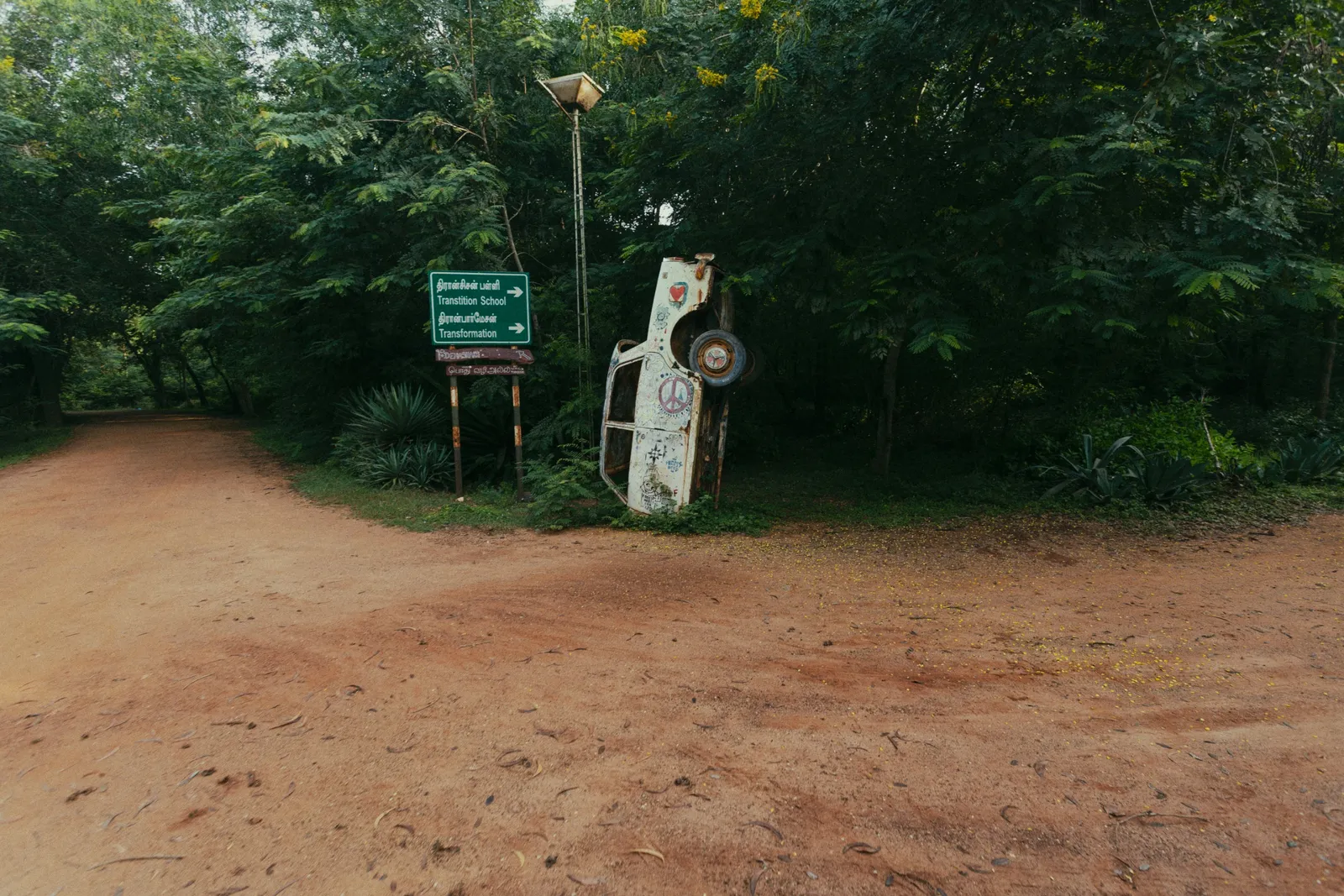
On February 28, 1968, more than 5,000 people gathered around a hollow dug into a barren, almost treeless plateau in south India, with a lone banyan tree standing nearby. Youth delegates from 124 nations and 23 Indian states came forward in turn and tipped handfuls of home soil into a marble-clad urn shaped like a lotus bud, while Mirra Alfassa, known as the Mother, read the Auroville Charter from her room in Pondicherry over a live radio feed. The urn is still there, sealed with the Charter inside, at the center of a township that has never stopped debating what belongs around it. Architect Nipun Prabhakar first came to Auroville as a student more than a decade ago, for a workshop at the Bamboo Centre, and remembers the red earth paths and a sense of arriving somewhere “making its own set of rules.” This week he published a first-person tour of the place.
Signal. What happened: architect and photographer Nipun Prabhakar published a first-person architecture tour of Auroville on September 18, 2026, arguing that the township’s long fight over its master plan is now playing out in physical form. Exact object: a one-day route through the township’s landmark buildings and experiments, from the Matrimandir to the waste-sorting sheds at EcoService, with the Crown ring road as its most contested stop. When and where: published September 18, 2026; the township sits in Viluppuram district, mostly in Tamil Nadu with parts in the Union Territory of Puducherry, north of Pondicherry city. Source: Prabhakar’s own account, cross-checked against Auroville’s own pages and Census 2026 figures, Auroville Today, and reporting on the March 2025 Supreme Court judgments. Why it matters: the Crown, the ring road at the heart of Roger Anger‘s Galaxy plan, is by Prabhakar’s account now mostly built, which turns a fifty-year debate over a drawing into a debate over trees, houses and legal authority. Earlier DRIFT: the Thunderbird Station piece on the design of an expandable orbital habitat, another study in designing a place to live from first principles.

The Ember and the Expanse: A Nocturne in Red and Black
The drawing that gave the plateau its shape was the Galaxy, worked up by French architect Roger Anger, who was named the township’s chief architect in 1966. It placed the Matrimandir at the center of a Peace Area, arranged four zones (residential, industrial, cultural and international) around it like the arms of a galaxy, and wrapped the whole in a green belt, for an ultimate population of 50,000. Auroville’s own Census 2026 lists 3,527 residents, newcomers and children included, from 60 nationalities, 1,888 of them Indian. The head count is itself disputed: the Auroville Foundation‘s secretary has told The Week that the resident count has held at about 2,000 since 2005.
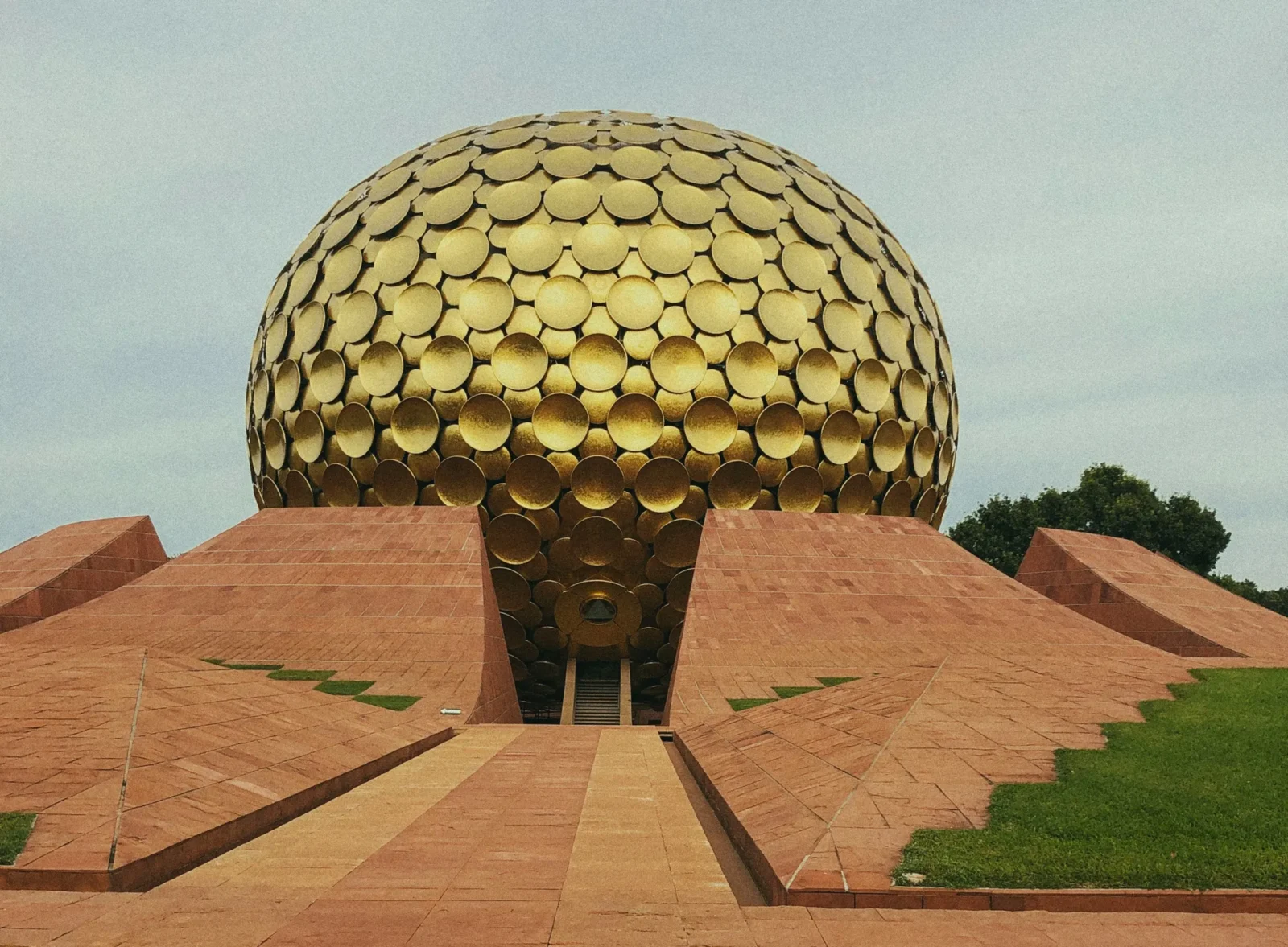
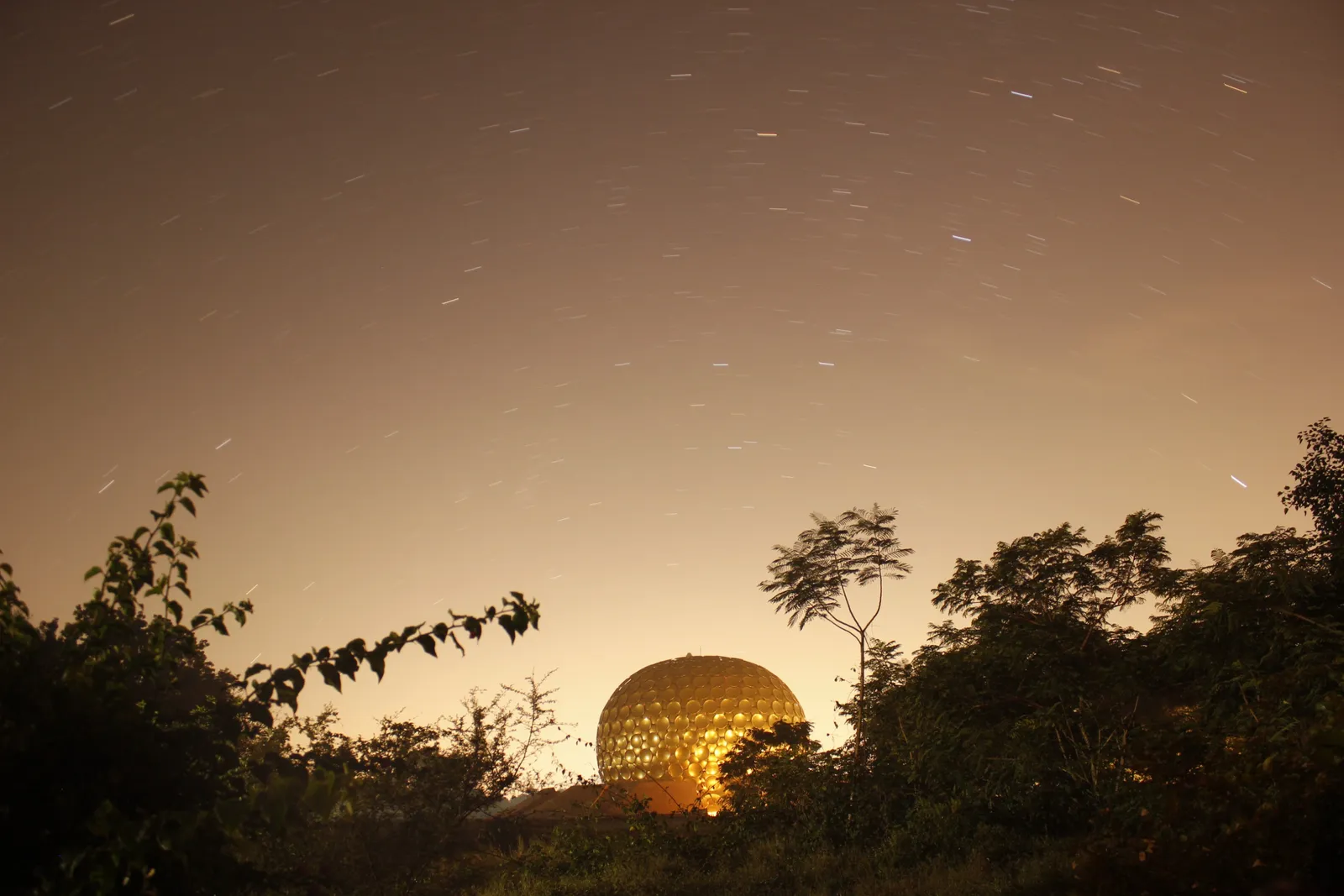
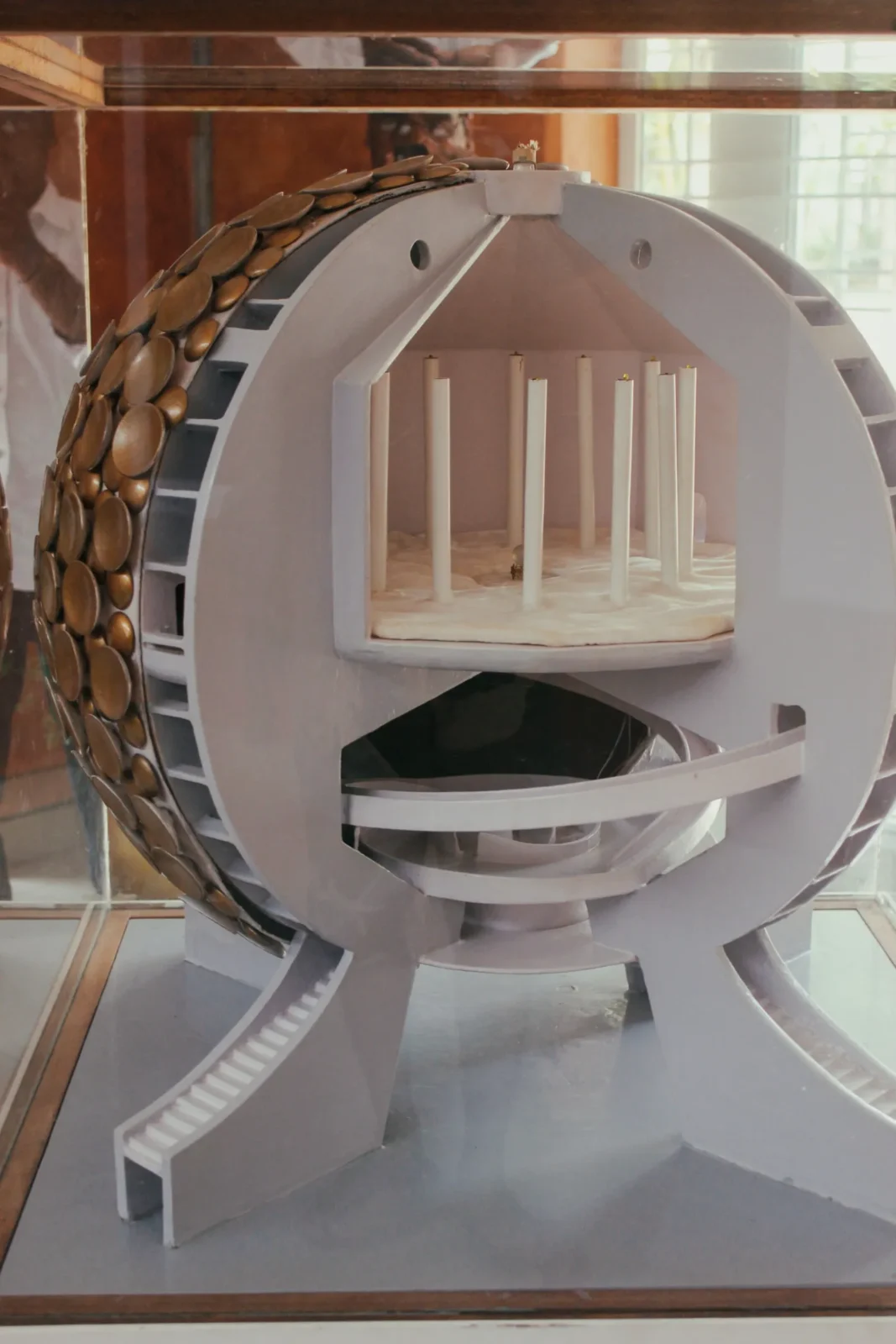
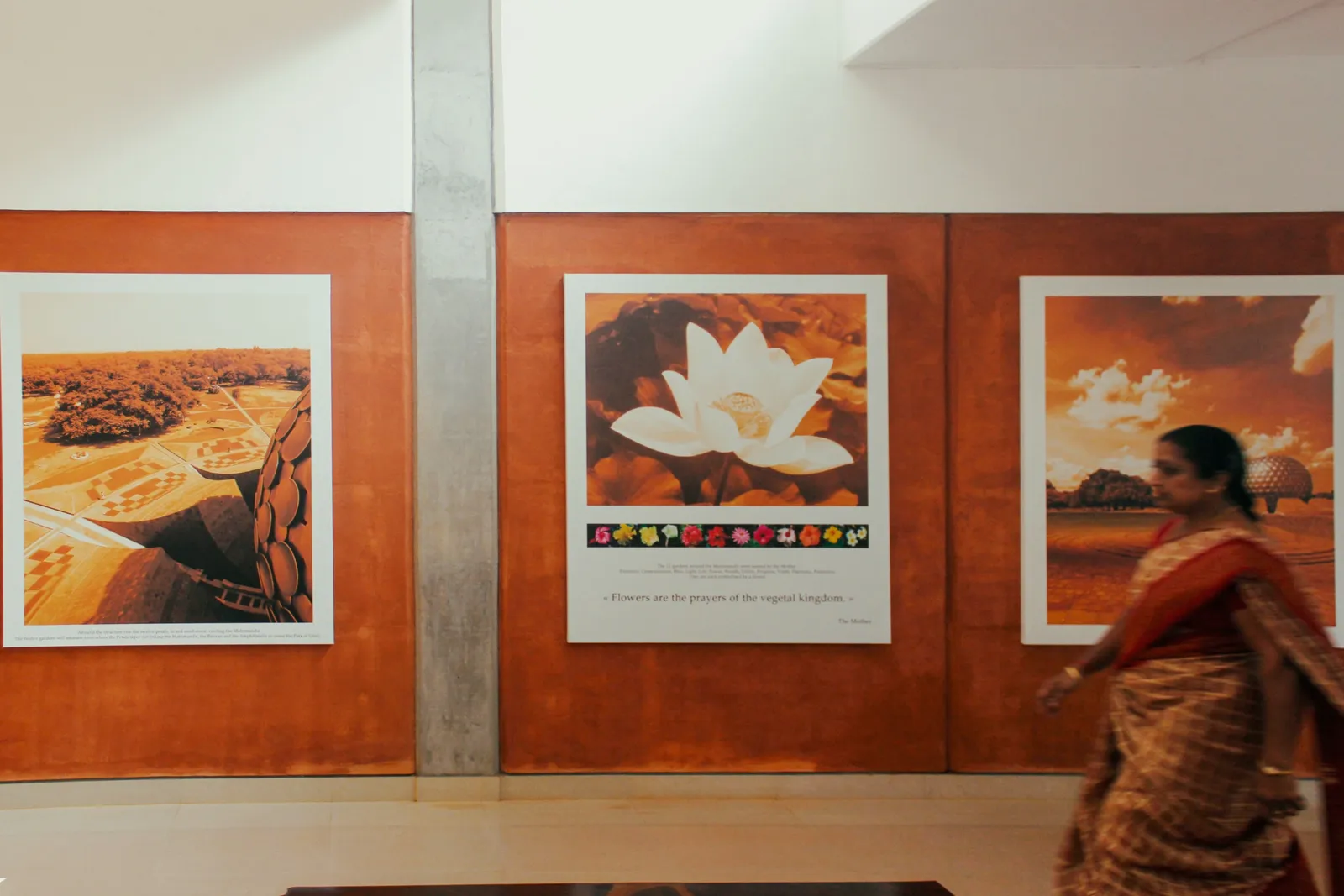
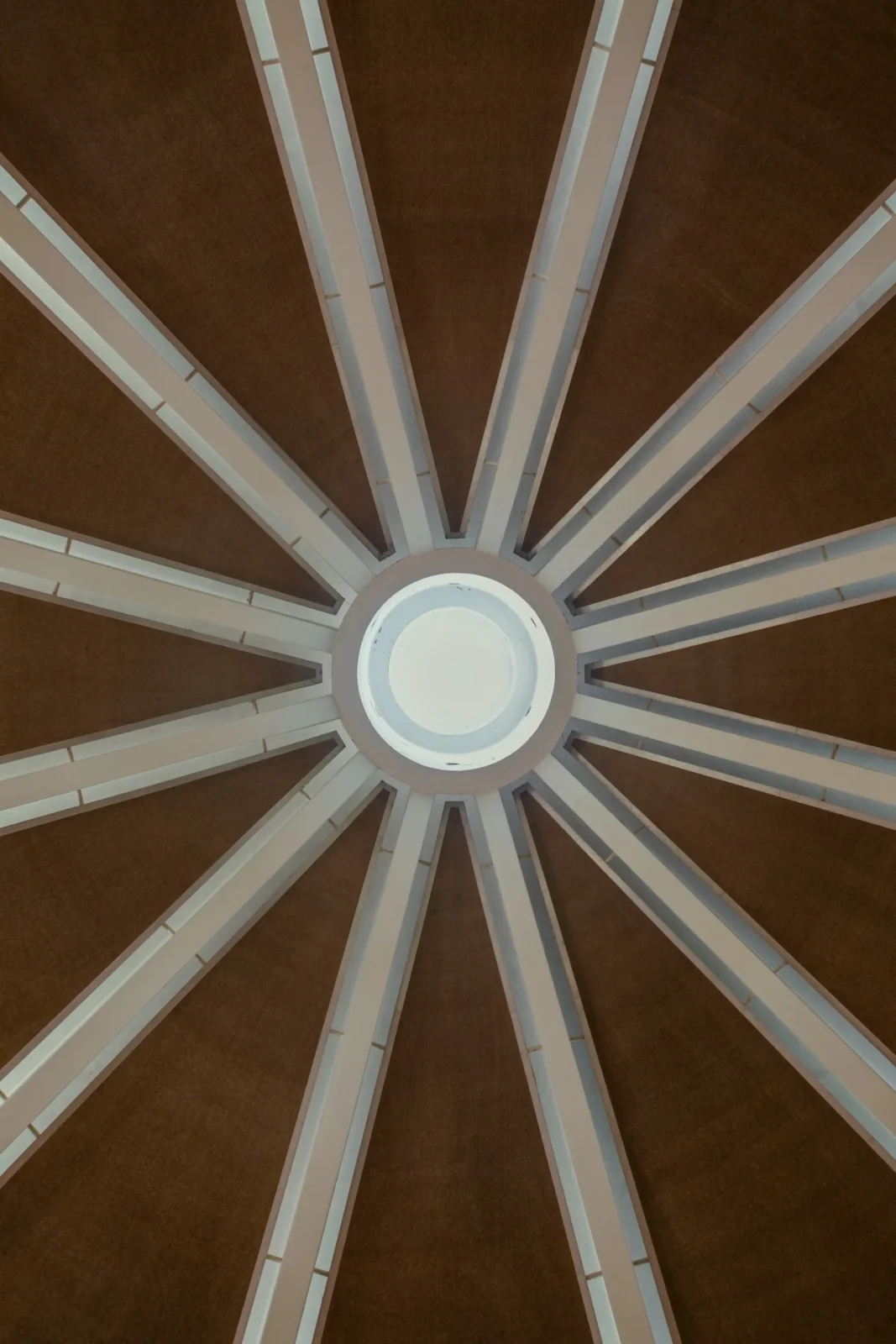
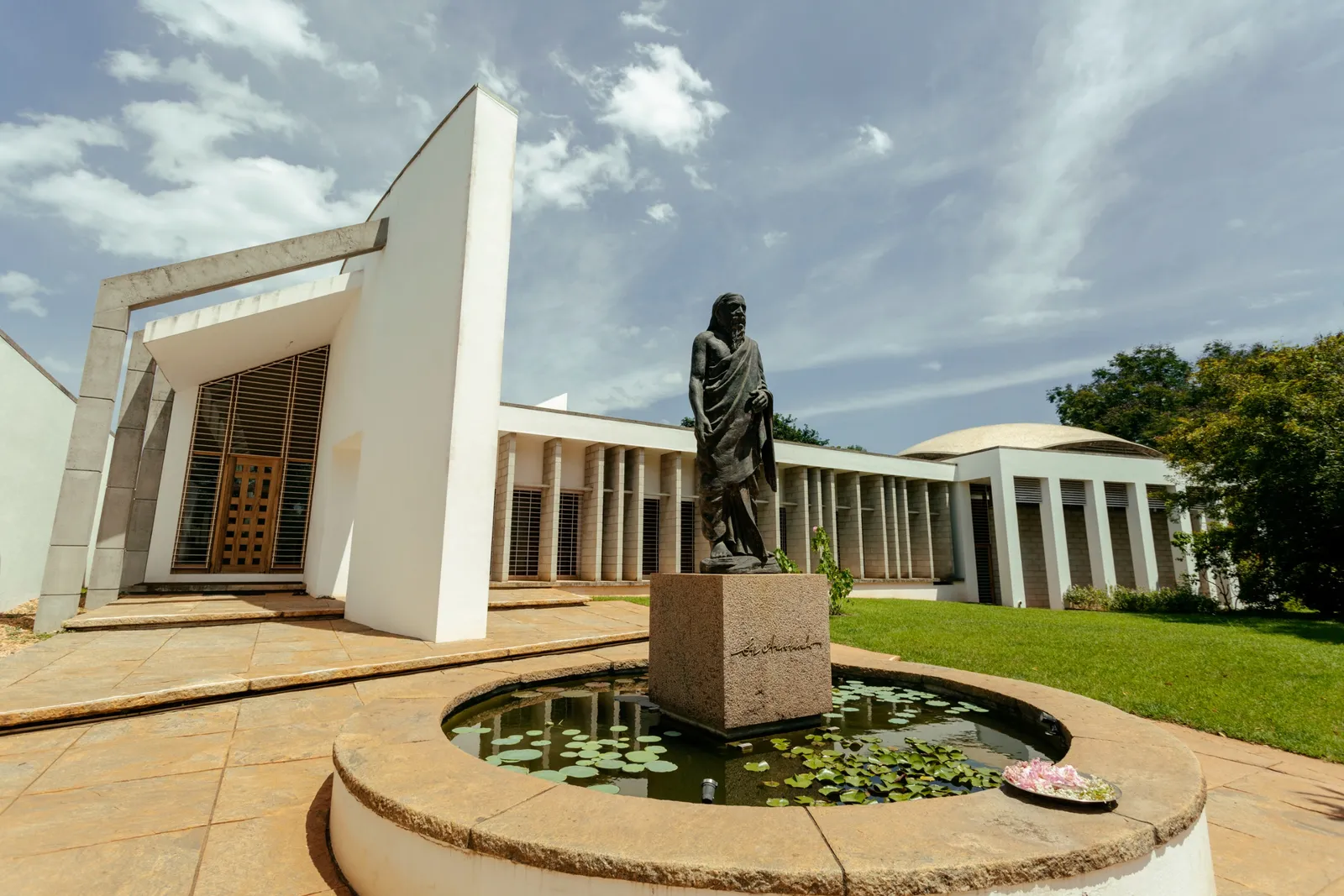
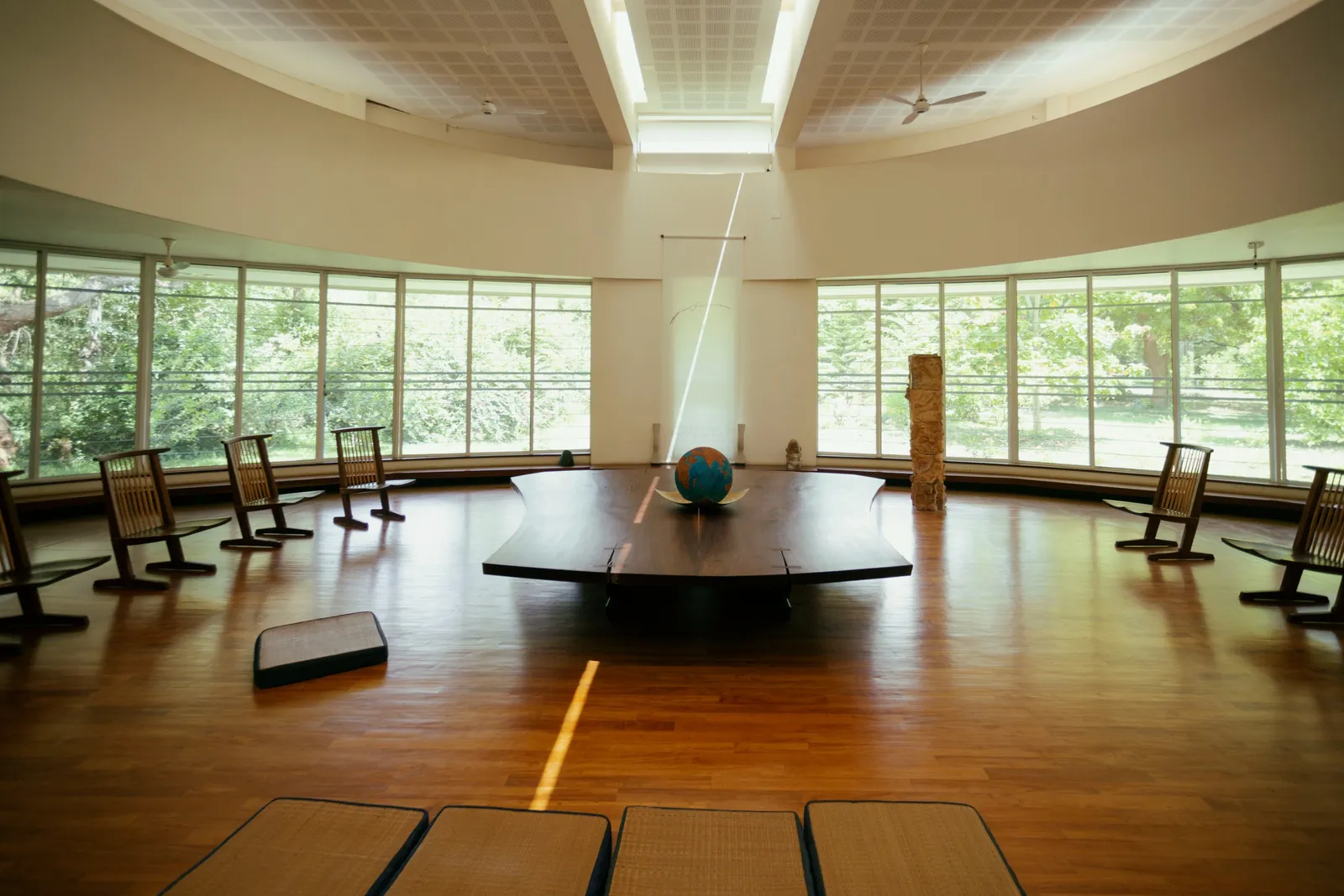
The Matrimandir is where the drawing turned solid first, and slowly. Its foundation stone went down in February 1971, and the gold-disc sphere was finished in 2008, the year Anger died. At the center of its inner chamber sits a 70-centimeter crystal globe that arrived in 1991 and is lit by a single beam of sunlight, guided by a rooftop heliostat. Around it, by the township’s own account, residents spent decades planting a forest on dry, arid land and restoring the water table.
one
Prabhakar works between Delhi and Bhopal as a photographer, writer and community architect. He studied architecture in Bhopal, won the Berkeley Essay Prize in 2014, and spent 2019 and 2020 as a South Asia fellow at Cornell University, where he worked on a photo essay about Nepal’s doors. In 2021 he founded Dhammada Collective, a small design and research group in Bhopal built around participatory design, mostly outside the big cities.
Since 2015 he has also been working on a long photo project called “what happens when architects leave,” which started when he documented a post-riot settlement in Muzaffarnagar designed by the Hunnarshala Foundation, where he was interning, and kept returning as residents changed it. He later photographed the buildings of the late Charles Correa across India to see how they had aged and been altered. In a 2025 interview he called that internship the point where architecture stopped looking like something handed down and started looking like something communities shape themselves. The question sits neatly over Auroville, where Anger died in 2008 and his 1968 drawing is now being built out, in places, under a governing board appointed by the central government. Some architects did stay: Anupama Kundoo arrived around 1990, worked with Anger on the Town Hall complex, and built her own Wall House there between 1997 and 2000, a project MoMA holds in its collection as a section drawing.
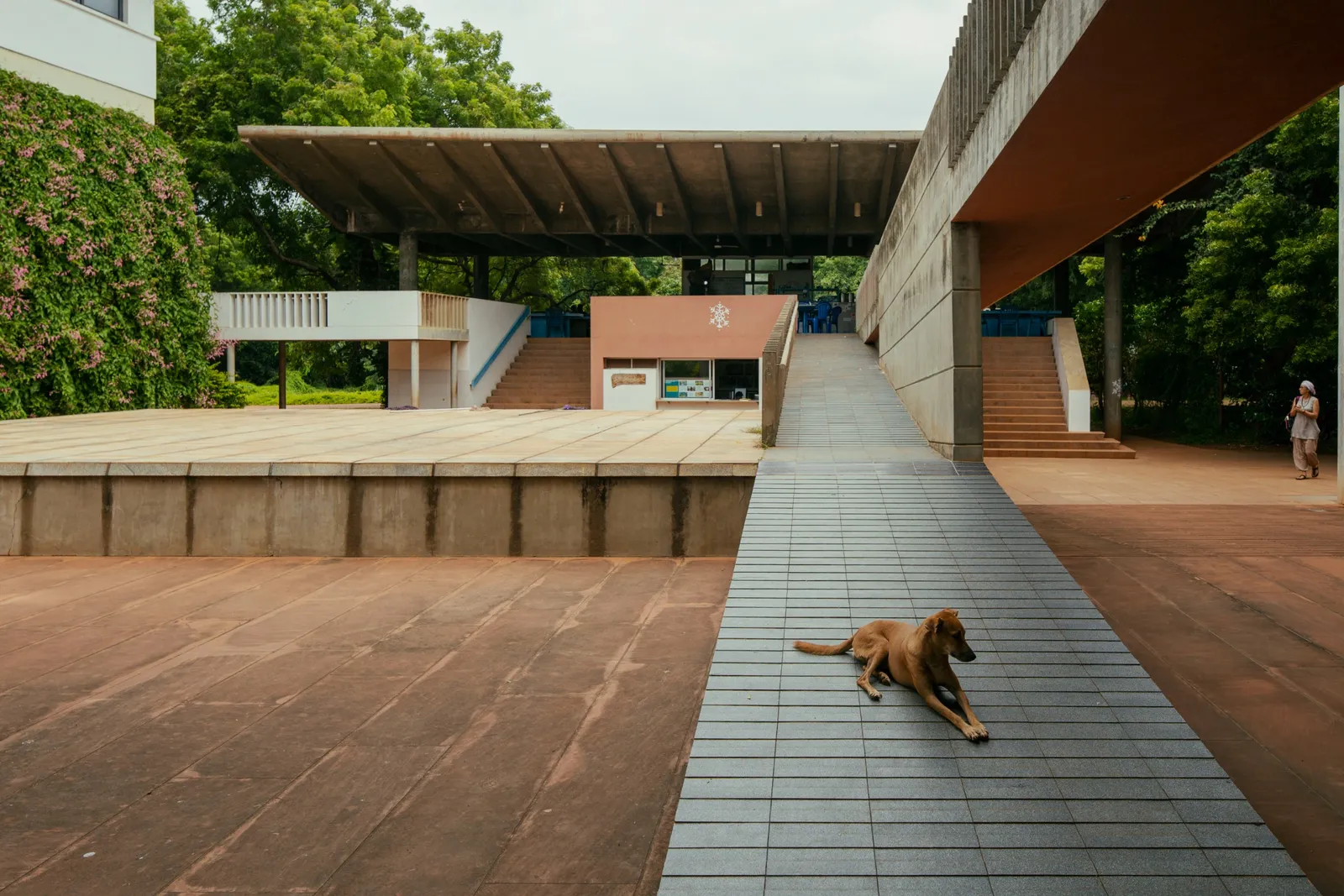
His tour treats the township as an ecosystem: a day spent moving between buildings, forest and infrastructure. Two habits run through it. He likes buildings that have to work in public, and singles out the Visitors’ Centre because, as he notes, thousands of people pass through it every day, so the experiment has to function as an ordinary public building. And he sorts Auroville’s ideas into the ones that became useful technologies and the ones that stayed experiments, observing that the place has always allowed both.
more
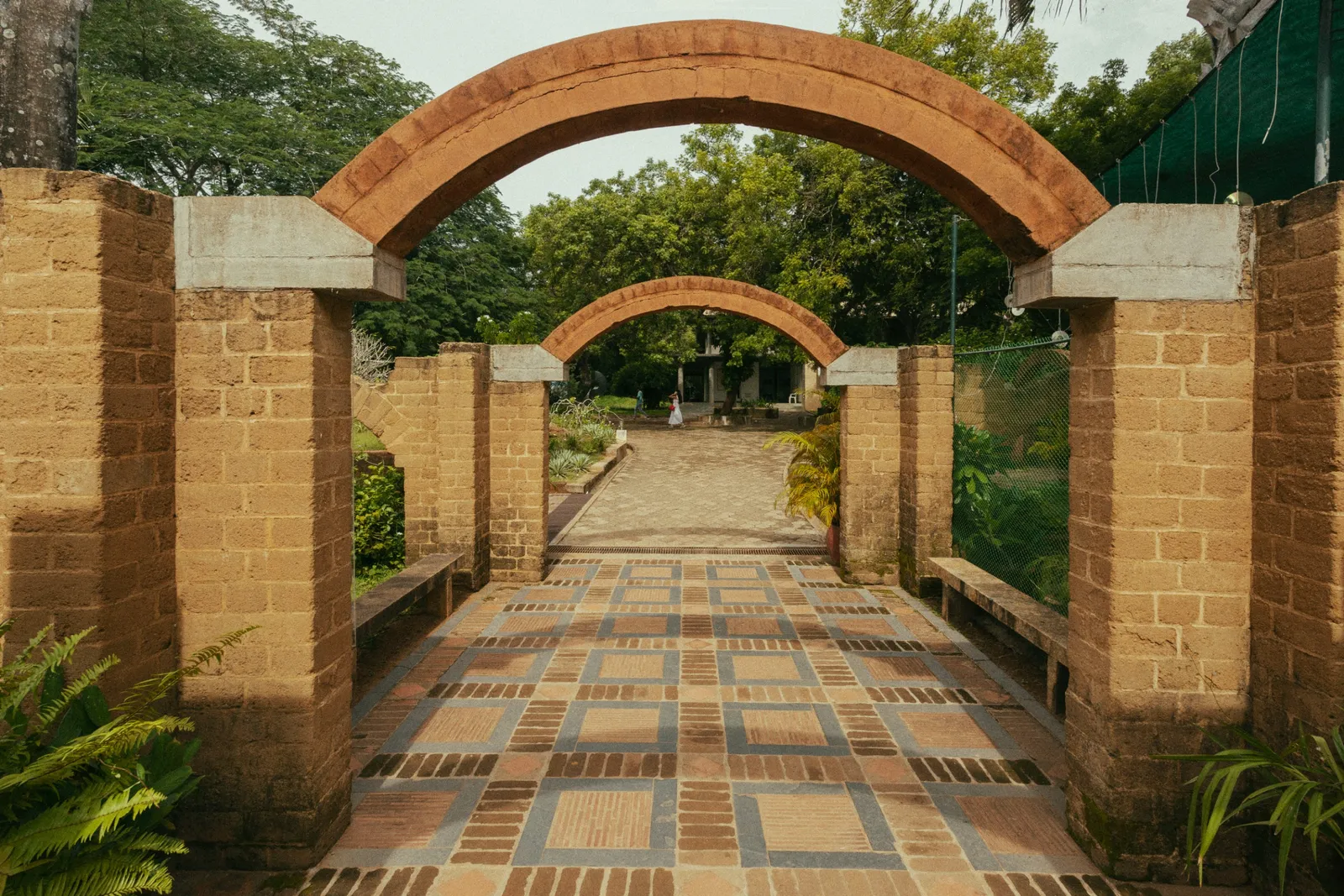
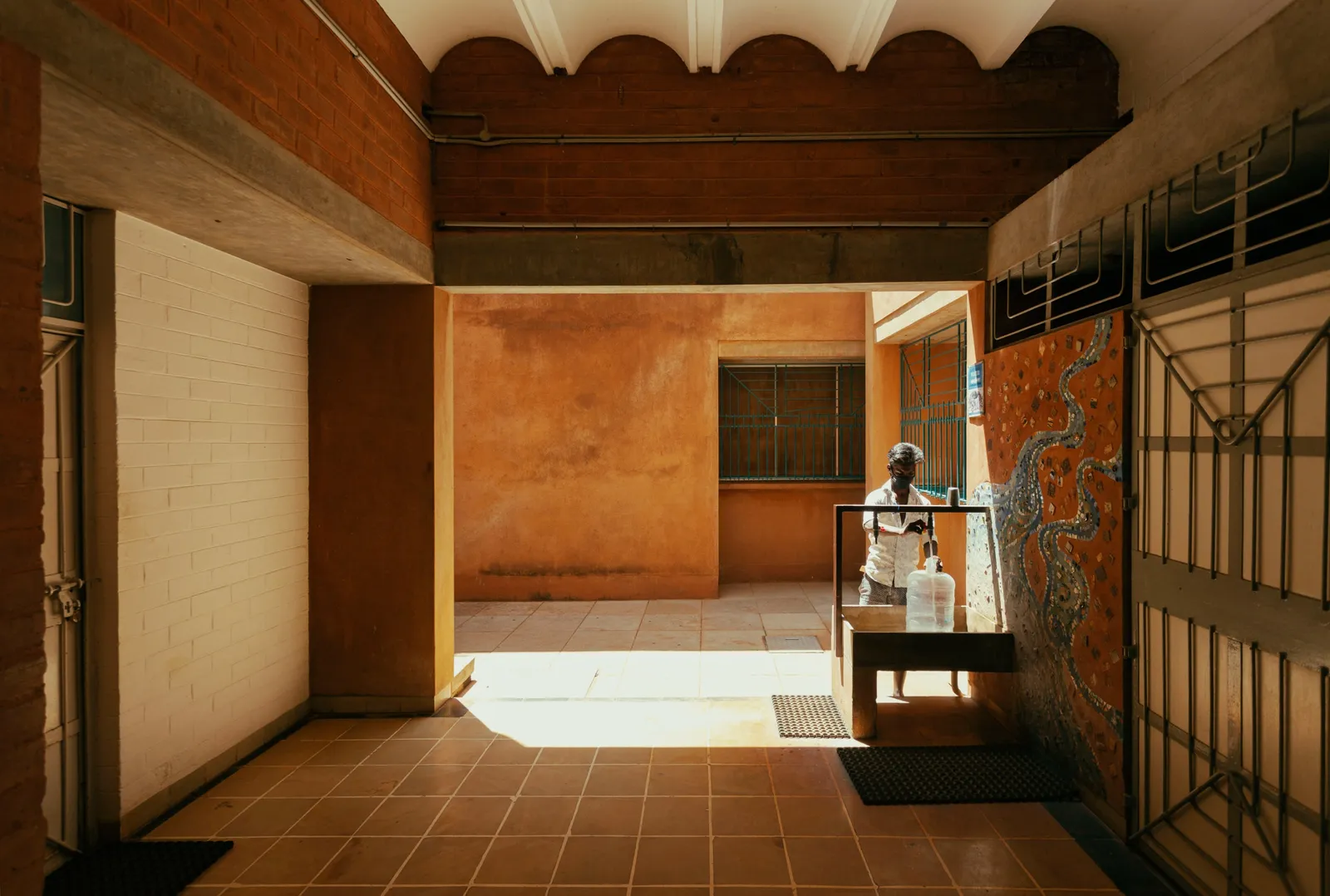
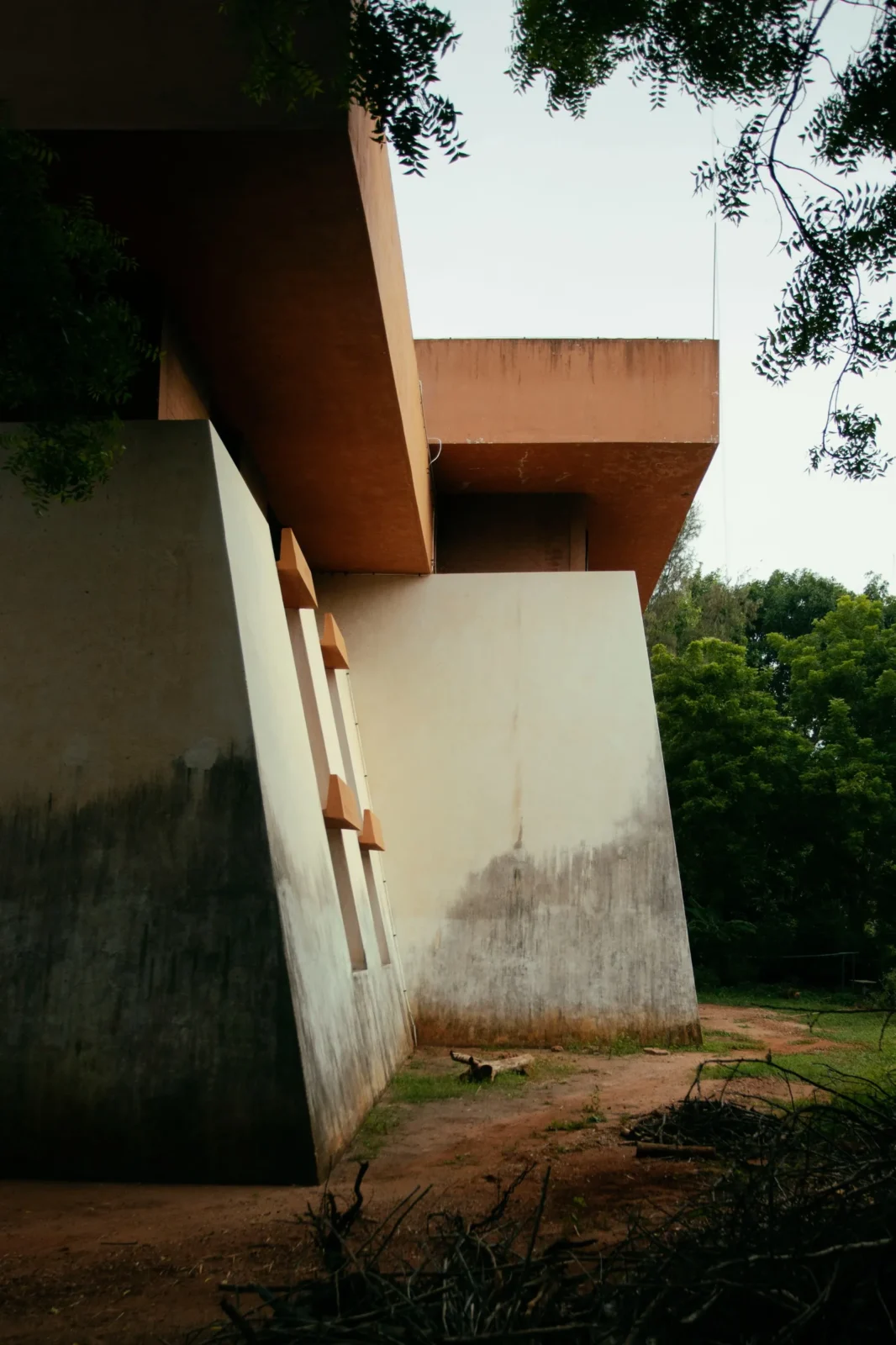
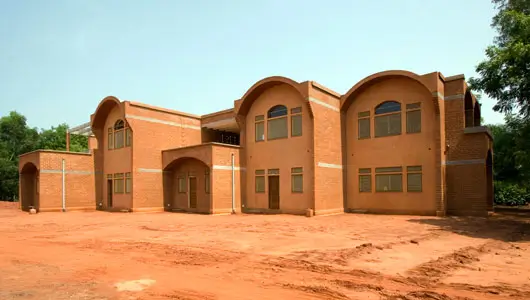
The record supports the sorting, and it starts with that visitors’ building. In 1989 a grant from a government housing agency paid for a training center and a showcase visitors’ center in Auroville, and Auroville architects including Suhasini Ayer invited the French earth-building specialist Satprem Maïni to help, according to Auroville Today. The Visitors Centre, credited to Ayer-Guigan and Maïni, went up between 1989 and 1992 from compressed stabilized earth blocks laid into arches, vaults and domes, and it shared a 1992 Hassan Fathy Award for architecture for the poor. The same job launched the Auroville Earth Institute, which had taught more than 13,000 students by 2019.
The Terracotta Monolith: A Study in Earth and Arch
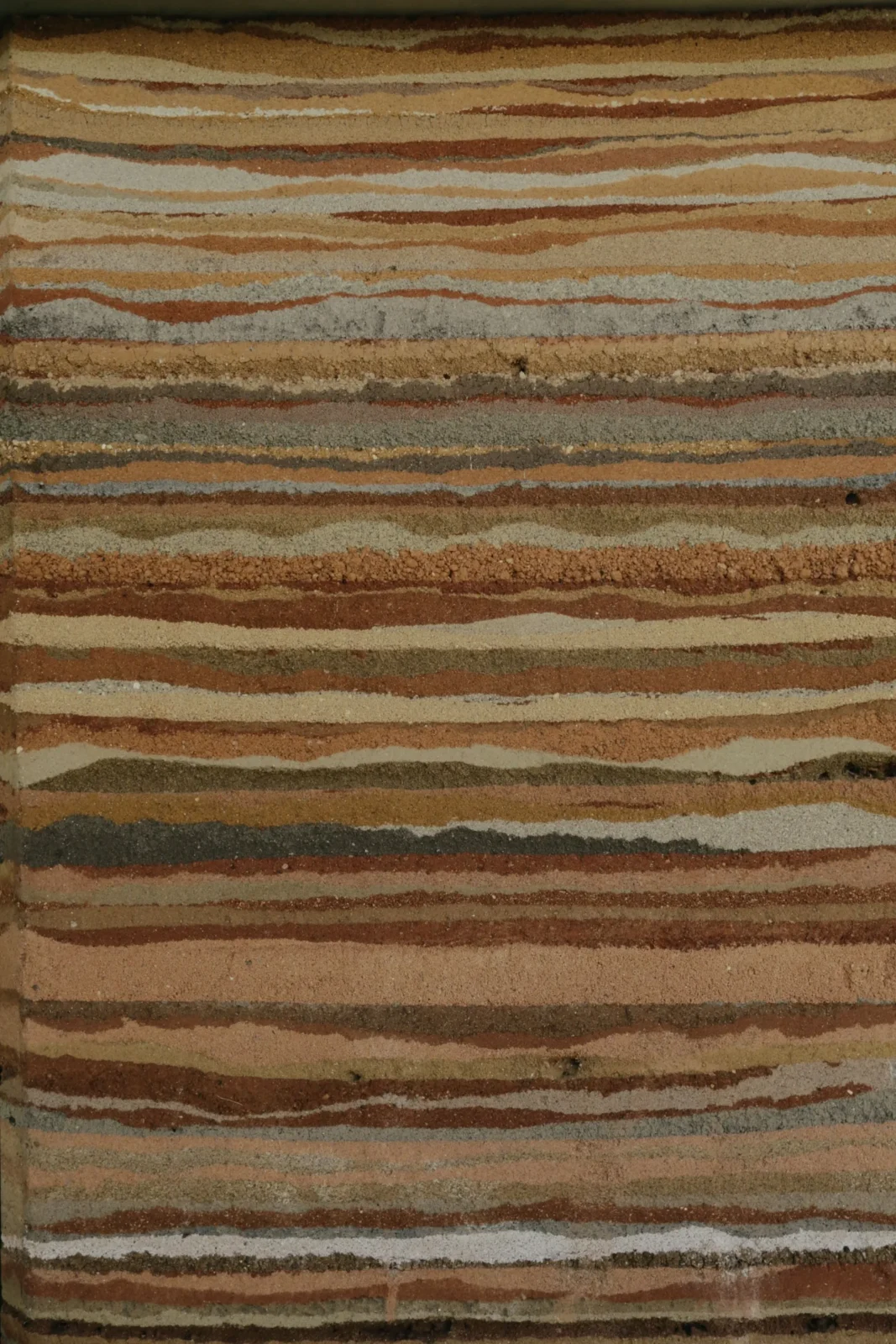
The workhorse of that effort is the compressed stabilized earth block: soil dug from the building site, a small share of cement, pressed and cured rather than fired. Auroville Today put the institute’s figures at roughly ten times less embodied energy and thirteen times less carbon than country-fired brick, with load-bearing walls possible up to four storeys and a manual press, the Auram Press 3000, that a crew of seven can push to 850 to 1,000 blocks a day. The thin cement shells of ferrocement that appear on Auroville’s roofs, doors and overhangs arrived by another route: Anger introduced the material to the township.
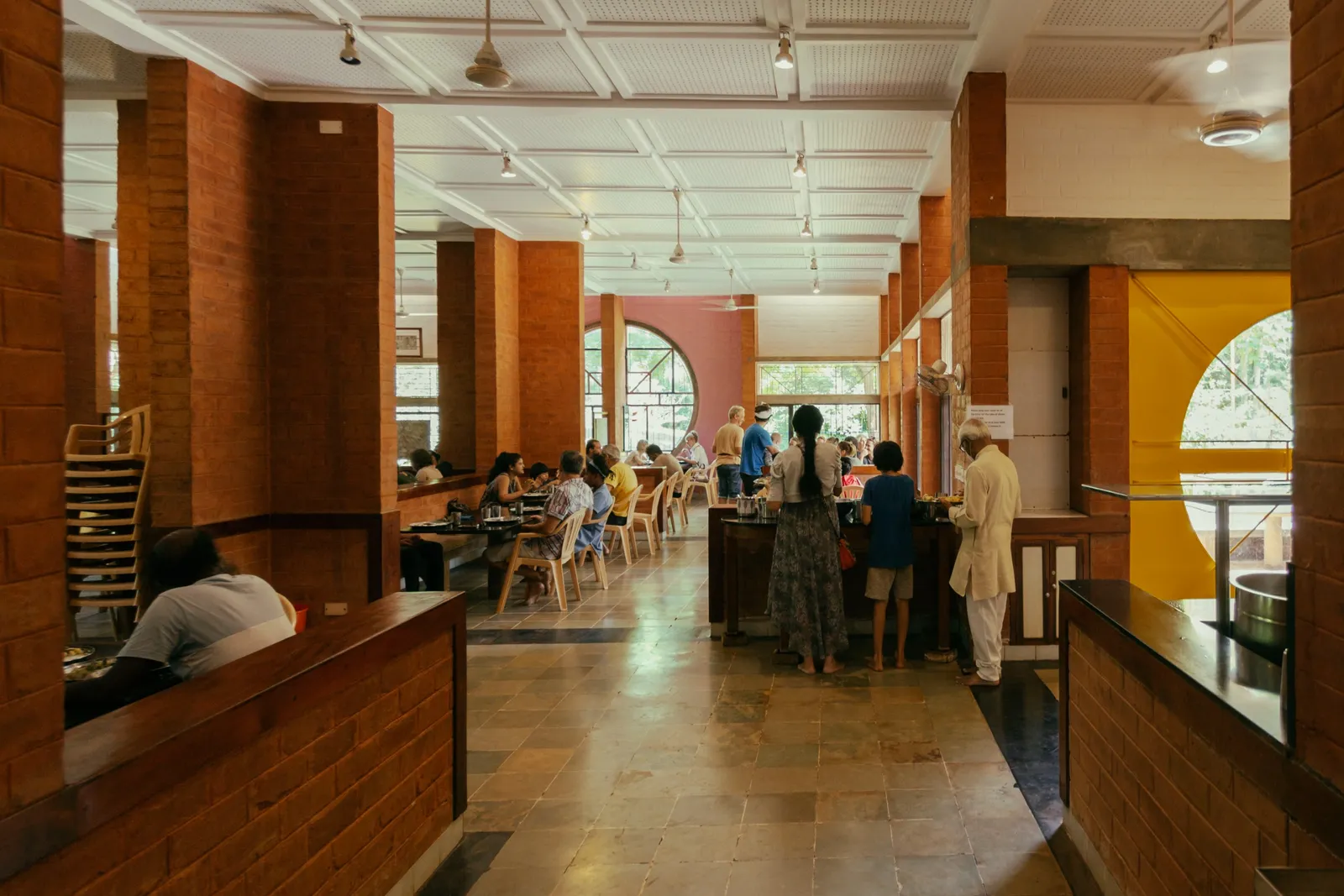
The Solar Kitchen is where ferrocement gets ambitious. A fixed spherical concentrator on its roof, assembled from prefabricated ferrocement segments and lined with about 11,000 mirror facets, focuses sunlight on a moving boiler to raise steam for a kitchen designed to serve up to 1,000 meals a day, with a diesel boiler as backup. Ayer told The Better India that the aim was a working demonstration of solar thermal energy inside a solar building, and that sticking to earth blocks trimmed project costs by 10 to 15 percent.

The Sun’s Table: A Study in Slow Alchemy
Nothing in Auroville has settled into a standard, though. Auroville Today noted in 2019 that despite the enthusiasm for earth blocks in the 1990s and early 2000s, most of the township’s buildings were once again being made with conventional materials. Maïni blamed a few badly designed earthen buildings for a lingering reputation problem, along with poor-quality blocks from independent yards. His co-director T. Ayyappan pointed instead to bias against earthen housing in parts of the local establishment.
extend
Not every experiment survived its own results, and Prabhakar counts the abandoned ones as part of the record. American potter Ray Meeker, who cofounded Golden Bridge Pottery in Pondicherry with Deborah Smith in 1971, spent fourteen years from 1985 developing fired houses: mud-brick buildings that doubled as kilns, loaded with other bricks and tiles and fired until the structure itself hardened into fired clay. According to Meeker’s CV on his gallery’s site, Agni Jata in Auroville was the first. Prabhakar puts the eventual total at around twenty buildings and says the technique stopped because the energy it demanded made it hard to defend as sustainable; both the count and the reason come from his account alone.
EcoService sits at the other end of the glamour scale. The waste unit, initiated in 1992, collects from about two thirds of the township and sorts at a shed in Kottakarai, and by its own figures roughly 72 percent of what it collects is recycled and 28 percent landfilled. The unit is small: by its own listing, four executives, a coordinator, a driver, two collectors and six sorters. Prabhakar highlights one of its shh tricks: shredding thermocol, the local name for expanded polystyrene, mixing it with cement and casting non-load-bearing partition blocks for buildings elsewhere in the township, so the waste stream feeds the construction stream. A 2017 write-up of a visit by the Venture Center describes the same partition blocks. Prabhakar adds that the whole system depends on residents separating waste at the source, and that bags marked plastic routinely arrive holding metal, cloth and food.
fin
No stop on the route carries as much argument as the Crown. In Anger’s Galaxy plan it is a ring around the center, halfway between the banyan tree beside the Matrimandir and the edge of the city area; the Auroville Archives describe a circular road with a row of buildings along its inner edge, meant as the township’s main street and the backbone of its non-motorized traffic. Auroville’s own Galaxy page recalls the Mother’s expectation that pedal power and slow electric vehicles, not petrol cars, would move people within the ring roads. For decades it was mostly a line on a drawing.
That ended in December 2021, when the Auroville Foundation began clearing buildings and trees along its path. Two residents, Navroz Kersasp Mody and Sandeep Vinod Sarah, went to the National Green Tribunal, which granted an interim stay on the felling within days; Disegno Journal, drawing on The Guardian’s reporting, describes bulldozers razing a 25-year-old youth center. In April 2022 the tribunal let the road continue under the watch of a joint committee tasked with limiting tree loss and stayed other construction until a township plan and environmental clearance were in place. The Supreme Court stayed those directions in December 2023 and set them aside on March 17, 2025, finding the tribunal had no jurisdiction and noting that the master plan, approved in 2001 and notified in 2010, carried statutory approval. A companion ruling held that the Residents’ Assembly has an advisory role and no right to seats on the Governing Board’s committees. The Foundation said afterward that it would resume pending infrastructure tied to the plan, the Crown Road included.
Each side reads the outcome differently. The Foundation’s secretary, Jayanti Ravi, describes the current push as corrective governance and says the ruling confirmed the Governing Board’s mandate to build the plan, according to The Week, which lists the board’s other headline projects as a first phase of a 1,000-bed residential complex, a tram line and a sustainability campus with IIT Madras. Residents opposed to the approach, including the group Stand For Auroville Unity, argue that the Galaxy is an evolving concept, that the master plan is a policy framework rather than a construction drawing, and that wide circular roads should not come before land acquisition and consultation with neighboring villagers. Landscape architect Prashant Hedao, who has worked on Auroville’s bioregional planning, told Disegno for a 2023 feature that the shared ground is simple: a road linking the four zones is needed, and the quarrel is over how and when it gets built.
On the ground, Prabhakar reports, most of the ring now exists, with mature trees along parts of it cleared and replaced by lawns and ornamental planting. A residents’ media group, Auroville Media Liaison, describes the same substitution between Kalpana and Santé in its summary of October 2025 to January 2026, while the Foundation’s spokesperson, quoted by Auroville Today on earlier felling along the ring in January 2024, said the work complied with the law and the master plan. The plan itself lays the township across 2,000 hectares in a circle, and the Foundation’s master plan page still lists about 850 of them as acquired.
Related Articles

Jaeger-LeCoultre Put An Integrated Bracelet On Master Control And Asked For More Days On The Wrist
Master Control Chronometre. Date at 38 mm and 8.4 mm. QP and power reserve at […]