DRIFT AUDIO
Listen to this story
Choose a voice, then press play.
In This Story
- The End of an Era
- Why the Cayman Couldn’t Carry GT4 Forward
- Meet the 911 GT4 R
- Under the Skin: Engine, Drivetrain, Chassis
- Climbing Porsche’s Customer Racing Ladder
- Pricing, Timeline, and Where It Will Race
- What This Means for Cayman and Boxster’s Future
- Fin
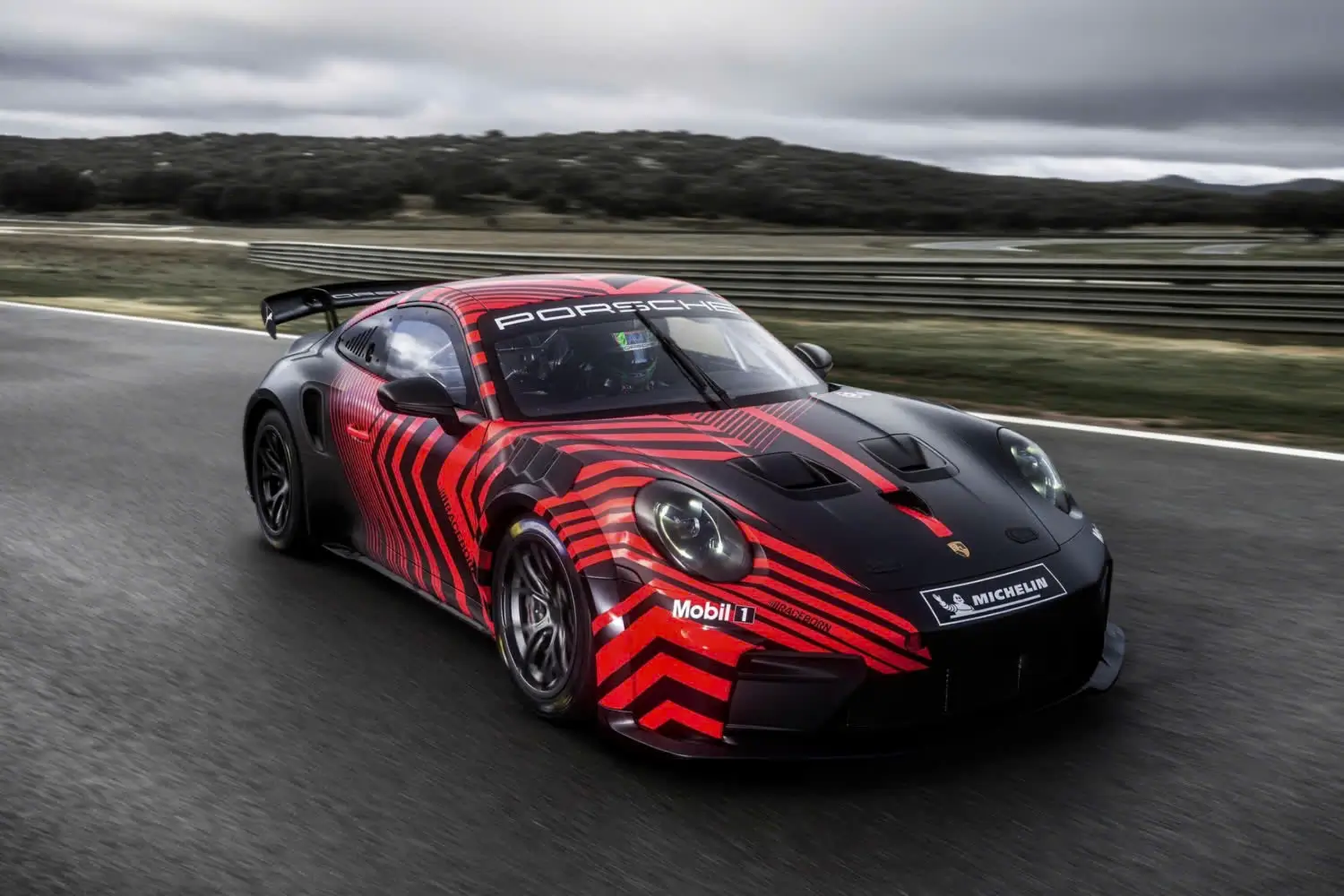
For nearly a decade, “GT4” has meant one car at Porsche: the Cayman, mid-engined, compact, and built to be the brand’s accessible entry point into serious customer racing. That math just changed. With production of the gas-powered 718 Cayman wound down for good, Porsche has done something it has never done in the GT4 category’s history — handed the badge to a 911. The new 911 GT4 R is the car taking over for the Cayman GT4 Clubsport, and the swap says as much about where Porsche’s motorsport program is headed as it does about what’s ending.
stir
For understood the reason a 911 is suddenly wearing a Cayman-coded name, you have to start with what just disappeared. Porsche has officially closed out production of the combustion-engined 718 Boxster and Cayman after a 29-year run that stretched back to the 986-gen Boxster’s debut in the 1990s — a car that, by most accounts, helped save Porsche from a genuinely rough financial period at the time. The 718 line went out on a high note rather than a shh one: the Cayman GT4 RS, revealed a few years back with a 9,000-rpm, naturally aspirated flat-six borrowed from the 911 GT3’s playbook, stands as one of the most complete drivers’ cars Porsche has built at that price point, full stop.
But Porsche’s plan for the next-gen Boxster and Cayman has reportedly centered on an EV-first platform, with gas power treated as an open question rather than a guarantee. Whatever comes next for the 718 nameplate, it isn’t here yet — and Porsche’s GT4 customer racing program couldn’t simply pause and wait to find out. The Cayman GT4 Clubsport needed a successor immediately, and for the first time, there was no new combustion Cayman sitting in the wings to take the assignment.
View this post on Instagram
flow
This wasn’t a small program getting quietly retired. Since Porsche entered the GT4 class in 2016, more than 1,500 Cayman-based GT4 race cars have been built and sold to customer teams worldwide. The Cayman GT4 Clubsport became one of the most successful one-make and customer-racing products in Porsche’s modern history, anchoring grids across international GT4 competition and feeding drivers into the brand’s broader motorsport ladder. It wasn’t a side project Porsche could afford to let lapse, which is exactly why the brand moved quickly to find a replacement rather than leave a gap in its lineup.
With no new Cayman GT4 available to underpin that replacement, Porsche Motorsport made the call to shift the GT4 program onto the 911 platform instead — specifically, onto the same architecture underpinning the current 992.2-generation 911 Cup car. It’s a pragmatic decision dressed up as a historic one: rather than develop an entirely new mid-engine racer from scratch with an uncertain future, Porsche leaned on a chassis it had already spent years refining for its top-tier one-make series.
There’s also a timing problem that made waiting impractical. Customer teams plan their seasons, budgets, and driver lineups years in advance, and a multi-year gap in available GT4 hardware would have meant ceding grid space to rival manufacturers — Audi, McLaren, Aston Martin, and others all field their own GT4-class cars, and an empty Porsche slot on the grid doesn’t stay empty for long. Rather than risk losing ground in a class it had spent a decade building into one of its strongest customer-racing products, Porsche opted to keep the lights on with whatever platform could be made race-ready fastest. That happened to be the 911.
meet
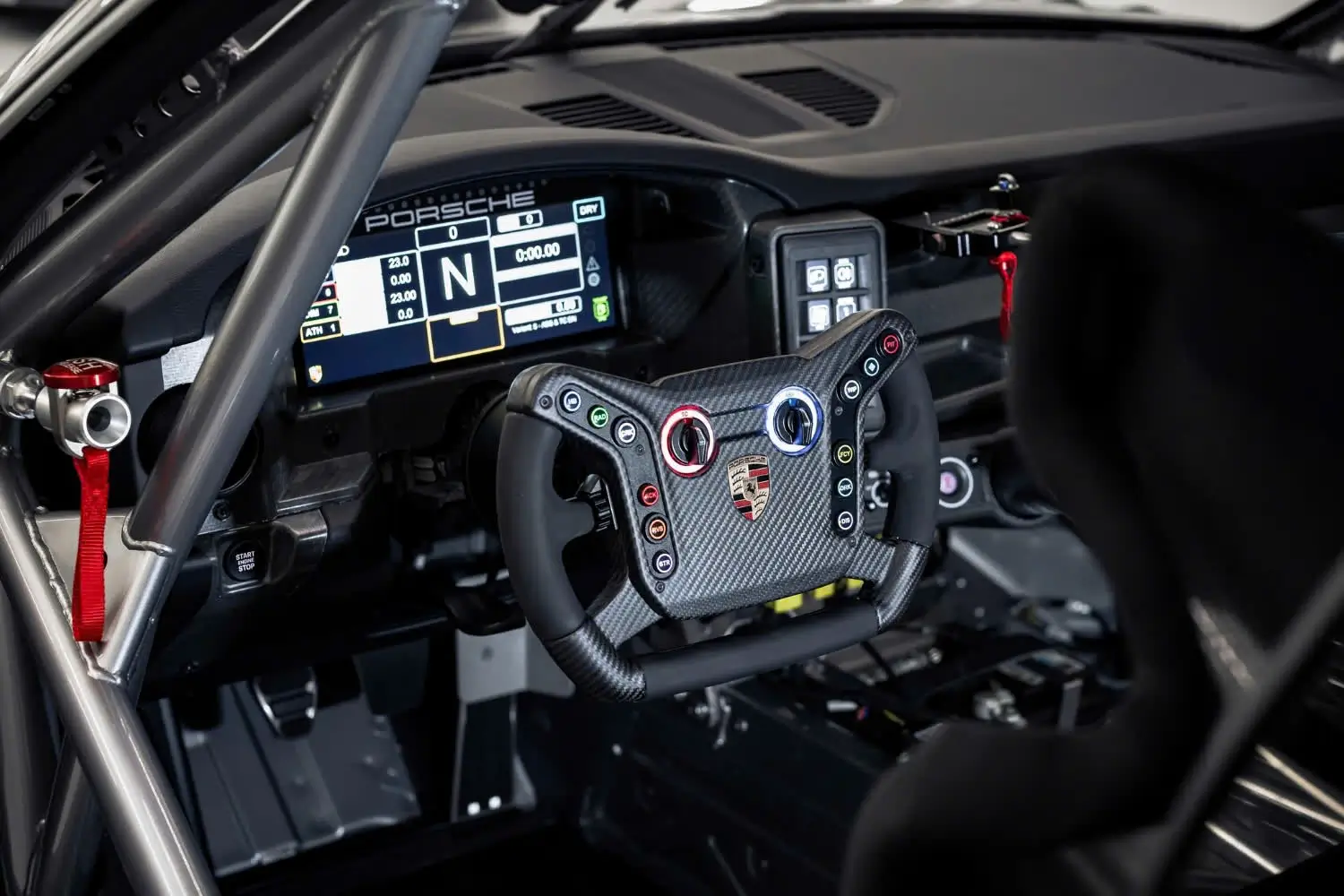
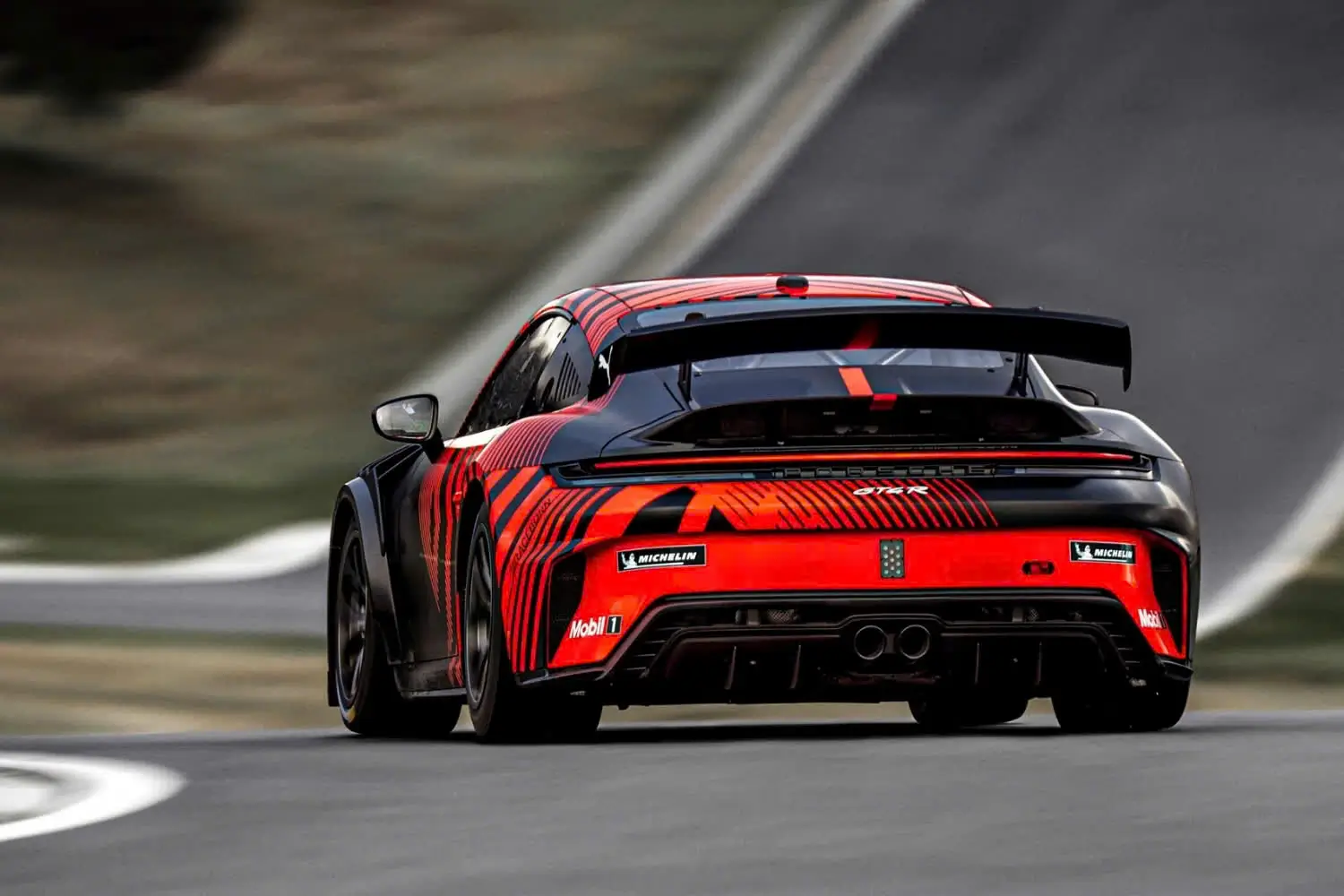
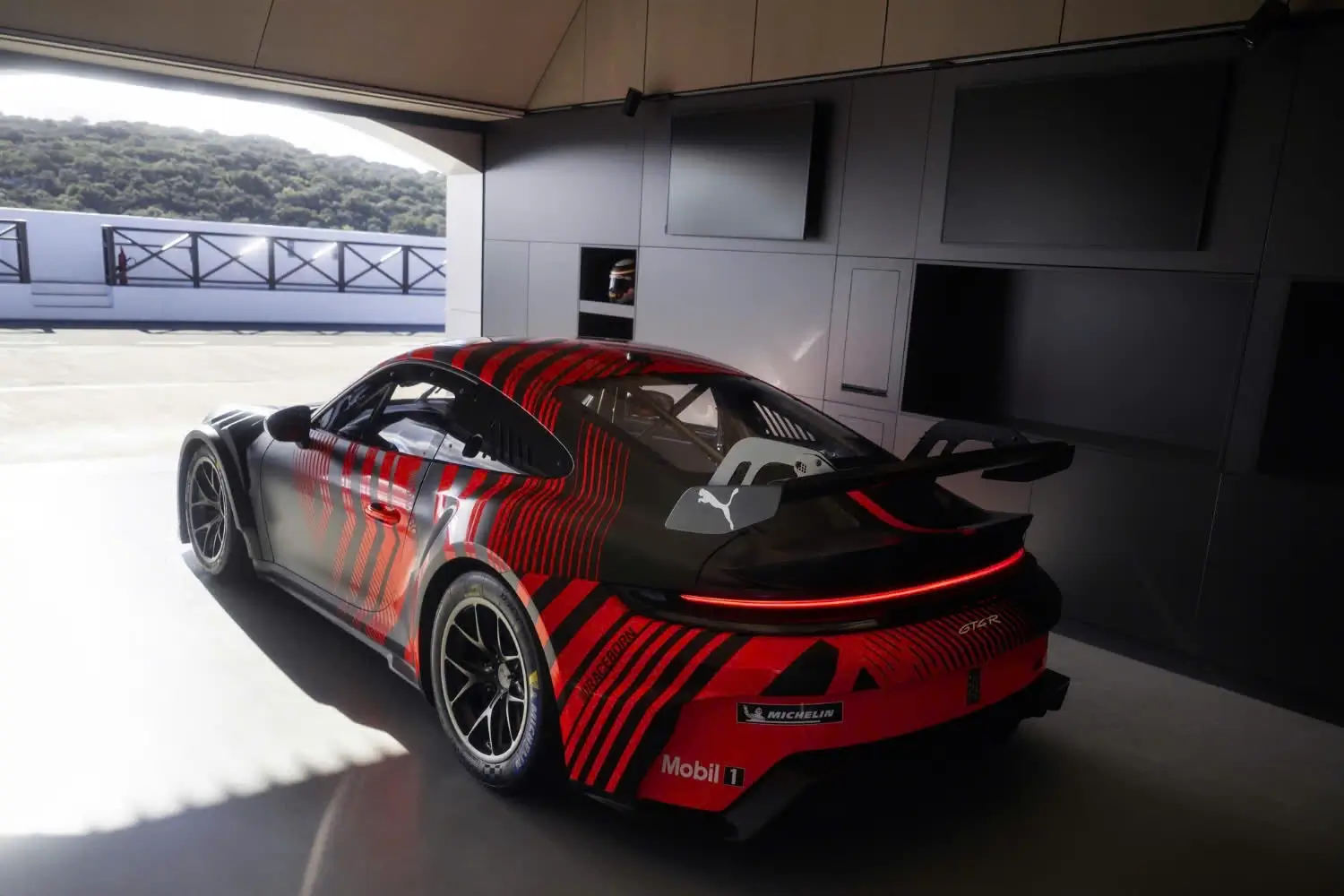
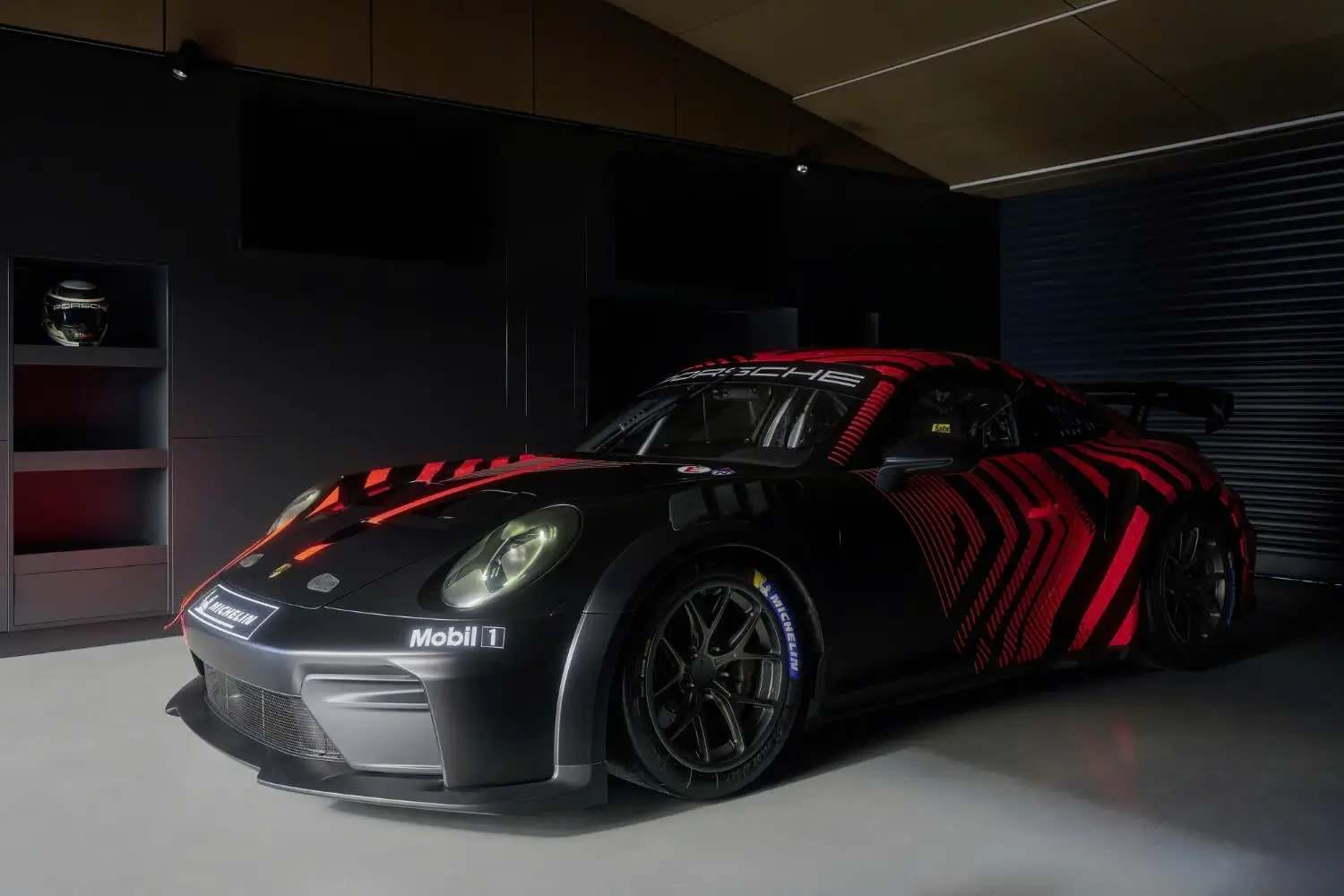
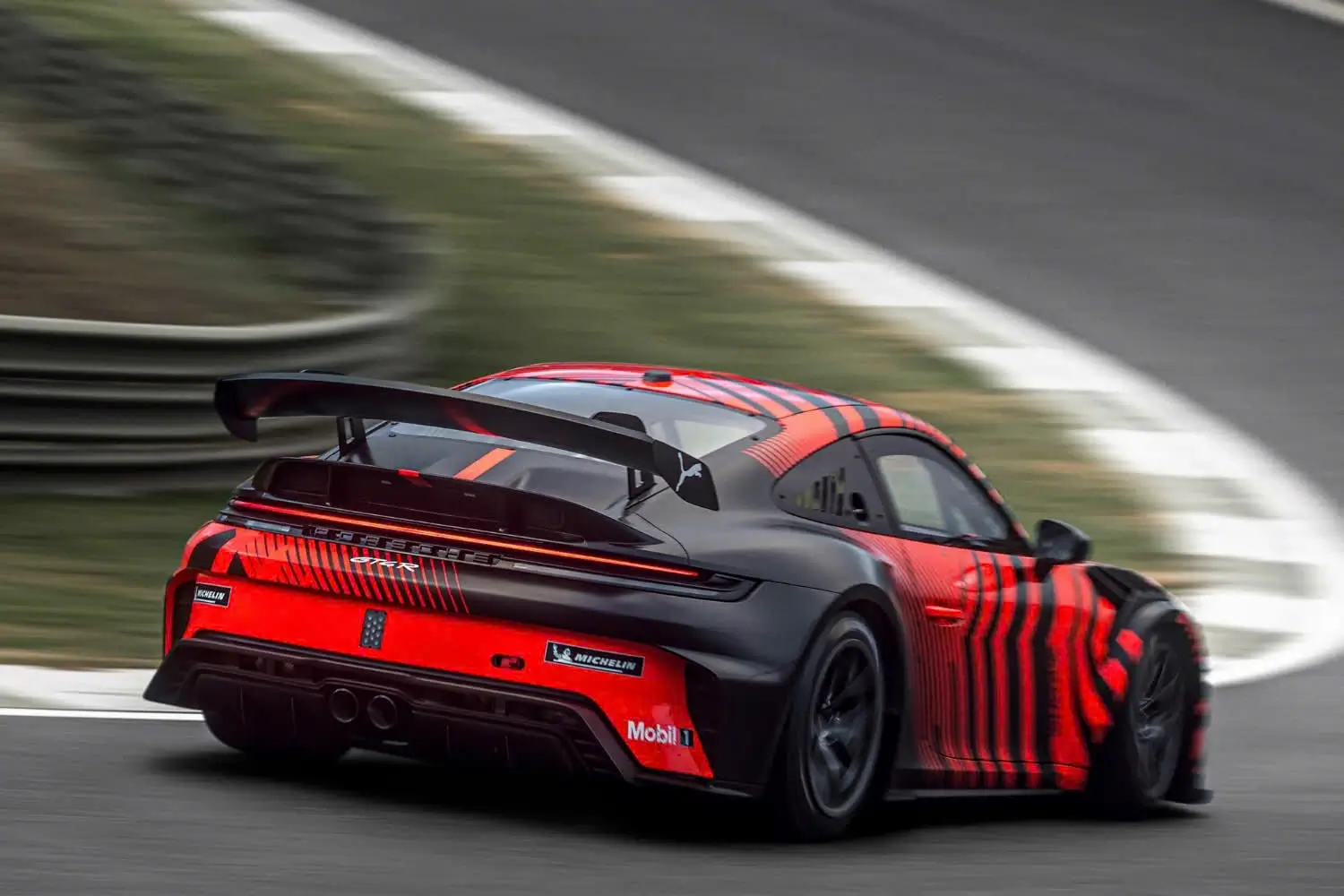
The result is a car that looks like a 911 because, mechanically, that’s exactly what it is. The 911 GT4 R borrows heavily from the 911 Cup car’s bodywork and aerodynamic package, including a manually adjustable rear wing offering eleven distinct settings for teams to dial in depending on the circuit. The chassis retains the Cup car’s steel structure and integrated roll cage, modified to meet GT4-specific regulations rather than the stricter Cup ruleset.
View and structure, it sits closer to Porsche’s GT3-adjacent race cars than to anything the Cayman GT4 Clubsport offered, which is the point. Porsche Motorsport vice president Thomas Laudenbach framed the move as a reflection of where the category itself has gone, noting that GT4 has evolved well beyond an entry-level class into a genuinely competitive, globally relevant racing platform in its own right. Putting the 911 badge on that platform is Porsche’s way of signaling that GT4 now deserves the same pedigree the brand reserves for its flagship racing nameplate.
in
The spec sheet is where the shift from Cayman to 911 becomes most obvious. Where the outgoing Cayman GT4 Clubsport ran a 3.8-liter mid-mounted flat-six paired with a six-speed PDK dual-clutch transmission, the 911 GT4 R swaps in the high-revving 4.0-liter naturally aspirated flat-six shared with the 911 GT3 road car, tuned through Porsche’s Cup development program. In unrestricted form, the engine produces roughly 520 PS (about 513 horsepower) at 8,400 rpm and 470 Nm of torque at 6,150 rpm, with a redline stretching to 8,750 rpm.
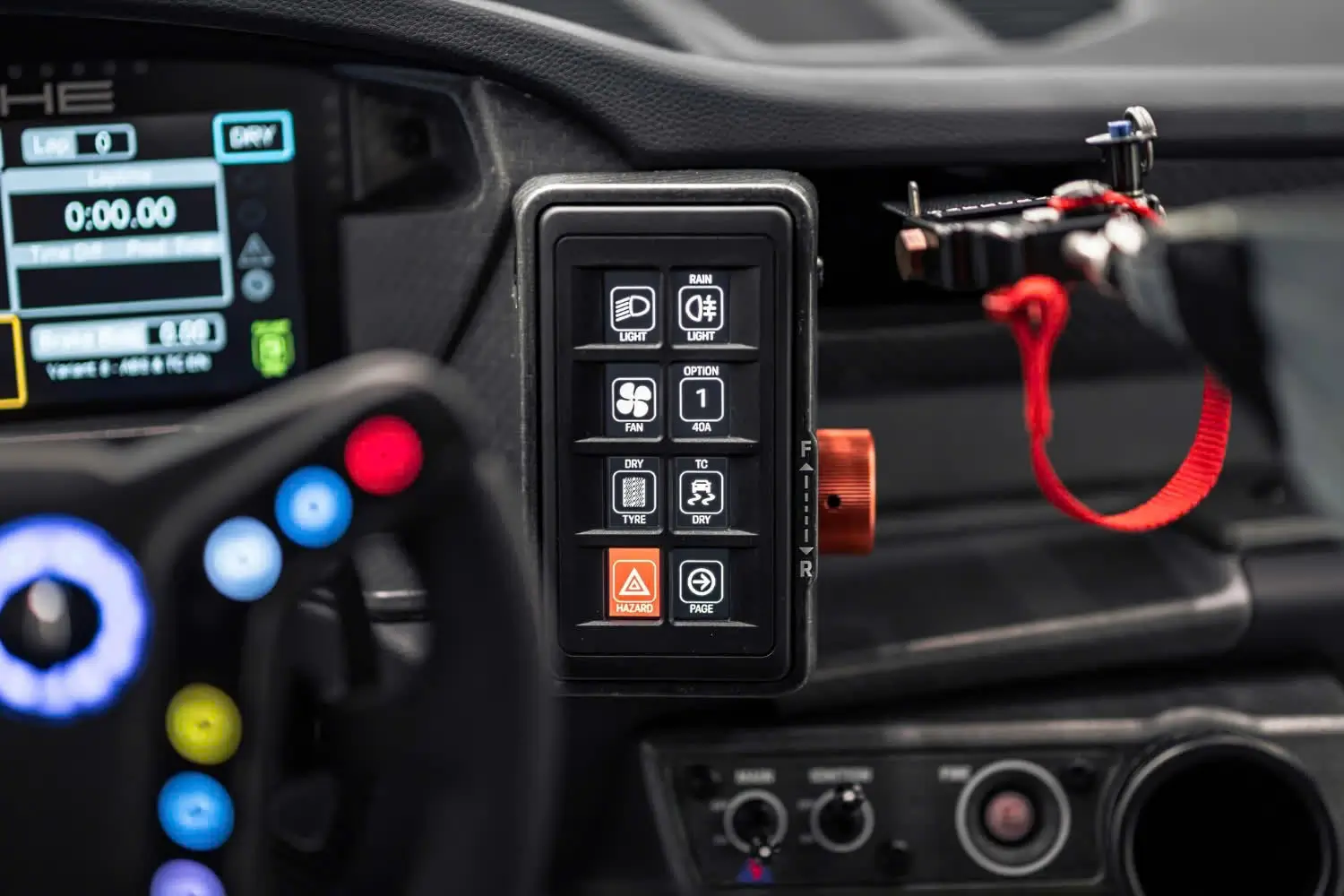
That output doesn’t carry over unfiltered into competition, though — as with every GT4 entrant, series regulations bring the number back down. Fitted with the mandated 53.7mm air restrictors for GT4 competition, the 911 GT4 R’s power drops to roughly 426–430 PS, depending on the specific series and ballast tables in play. Power reaches the rear wheels through a six-speed sequential dog-ring gearbox operated via paddle shift, backed by a four-disc racing clutch and a limited-slip differential — a notably different drivetrain character than the Cayman’s PDK setup, and one that should feel considerably more old-school motorsport in the way it shifts and delivers power.
For teams already running 911 Cup cars, the overlap is the real selling point. Porsche has built the GT4 R to share a meaningful amount of parts, setup knowledge, and development history with the Cup platform, which should translate into lower running costs and a faster learning curve for crews stepping between the two cars — or moving up from one to the other.
climb
That shared DNA is central to why Porsche made this move in the first place. The brand has spent years building out a customer-racing ladder designed to take a driver from entry-level one-make competition all the way to factory-adjacent GT3 programs, and the 911 GT4 R slots neatly into the middle of that structure. Instead of asking drivers to learn a mid-engine Cayman’s handling characteristics in GT4 before relearning a completely different rear-engine 911 layout in GT3, Porsche can now offer a single continuous platform language from Cup racing through GT4 and up into GT3 R territory.
It’s a logical evolution of a ladder system that already existed, but the badge change makes the philosophy explicit in a way the Cayman GT4 Clubsport’s name never could. The wider track, increased power ceiling, and rear-engine balance the 911 platform brings to GT4 competition are being framed internally not just as performance upgrades, but as continuity upgrades — fewer surprises for a driver moving up the ranks, and a deeper shared parts bin for the teams supporting them.
For privateer teams, that continuity has real financial weight. Running multiple race cars across a season already means juggling separate inventories of spare parts, separate setup notebooks, and separate mechanics with platform-specific expertise. Collapsing GT4 and Cup onto a shared 911 architecture means a team running both classes can pool spares, cross-train crew, and carry knowledge from one program directly into the other — something that simply wasn’t possible when the Cayman GT4 Clubsport and the 911 Cup car were built around fundamentally different layouts. It’s the kind of behind-the-scenes efficiency that doesn’t show up on a spec sheet but matters enormously to the teams writing the checks.
straddle
Porsche has priced the 911 GT4 R at $375,500 in the United States including delivery, with UK pricing listed separately at £228,386 plus VAT — figures that sit well above the outgoing Cayman GT4 Clubsport’s positioning, reflecting both the more sophisticated 911 Cup-derived underpinnings and the car’s closer relationship to Porsche’s factory racing programs. Deliveries to customer teams are slated to begin in late 2026, giving squads a runway to test and set up cars ahead of competition.
The car’s official competition debut is targeted for the 2027 season, where Porsche intends to field it across a broad swath of its global GT4 commitments: the IMSA Michelin Pilot Challenge’s Grand Sport class in North America, the SRO Pirelli GT4 America championship, and Porsche’s own one-make ladder series including the Porsche Carrera Cup North America and Sprint Challenge programs. That’s effectively the same competitive footprint the Cayman GT4 Clubsport held, transplanted wholesale onto the new platform — Porsche isn’t shrinking its GT4 ambitions, just changing which car carries them.
That timeline also gives existing Cayman GT4 Clubsport owners a meaningful runway before they need to make a decision about their own equipment. Cars already in service aren’t being pulled off grids overnight; most GT4 series allow multi-year homologation windows, so current Cayman entrants should be able to keep racing through at least part of the transition while new 911 GT4 R deliveries ramp up. How long that overlap lasts will likely depend on individual series’ own rulebooks rather than anything Porsche dictates directly, since sanctioning bodies — not manufacturers — ultimately decide when an outgoing model loses its eligible.
extent
None of this necessarily closes the book on a Cayman GT4 down the line. Porsche’s next-generation Boxster and Cayman are reportedly being developed as EV-first platforms, with industry reporting suggesting the brand may still explore a combustion variant at some point rather than ruling it out entirely. If that ever happens, there’s no structural reason a future Cayman couldn’t reclaim GT4 duty, or sit alongside the 911 GT4 R as a second option within the class.
It’s worth noting that an electric Cayman would face real hurdles getting back into GT4 competition even if Porsche wanted it there. Most GT4 series, including the ones the 911 GT4 R is built to contest, are still written around internal-combustion regulations — weight limits, fuel-flow rules, and noise restrictions that simply don’t map cleanly onto a battery-electric platform yet. Until sanctioning bodies like the SRO and IMSA build out a credible EV pathway within GT4 or a comparable class, an electric Cayman’s most natural home in motorsport may end up looking very different from a Clubsport-style GT4 program, regardless of what Porsche eventually builds for the road.
For now, though, the message from Porsche Motorsport is unambiguous: GT4 customer racing isn’t going on pause while the 718 lineup figures out its next chapter. The category matters too much to the brand’s racing pipeline and its revenue from customer teams to leave dormant, and the 911 platform was sitting right there, already developed, already proven, and already wearing a badge with more motorsport weight than the Cayman ever carried. Porsche essentially borrowed against its most valuable nameplate to keep a program running smoothly through a generational gap.
sum
There’s something almost contradictory about a 911 wearing a name built around the idea of an accessible, mid-engine alternative to it — and Porsche clearly knows it. But the 911 GT4 R isn’t really a statement about what GT4 should be philosophically; it’s a practical fix dressed in historic clothing, built to keep more than a decade of customer-racing momentum from stalling out while the Cayman and Boxster sort out their electrified next act. Whether that next act ever brings a combustion Cayman back into the GT4 conversation is genuinely unclear. What is clear is that for the first time in the category’s history, the car wearing the GT4 badge has the 911’s gravity behind it — and Porsche’s customer-racing ladder now reads a little more like a single connected story than two separate ones.
Related Articles

B&B Italia’s Outdoor Icons Face the Australian Sun
Jamie Green and Joseph Gardner set five B&B Italia outdoor designs against bright Australian summer light for Vogue Living's "Sun Seeker" story.