DRIFT AUDIO
Listen to this story
Choose a voice, then press play.
the return
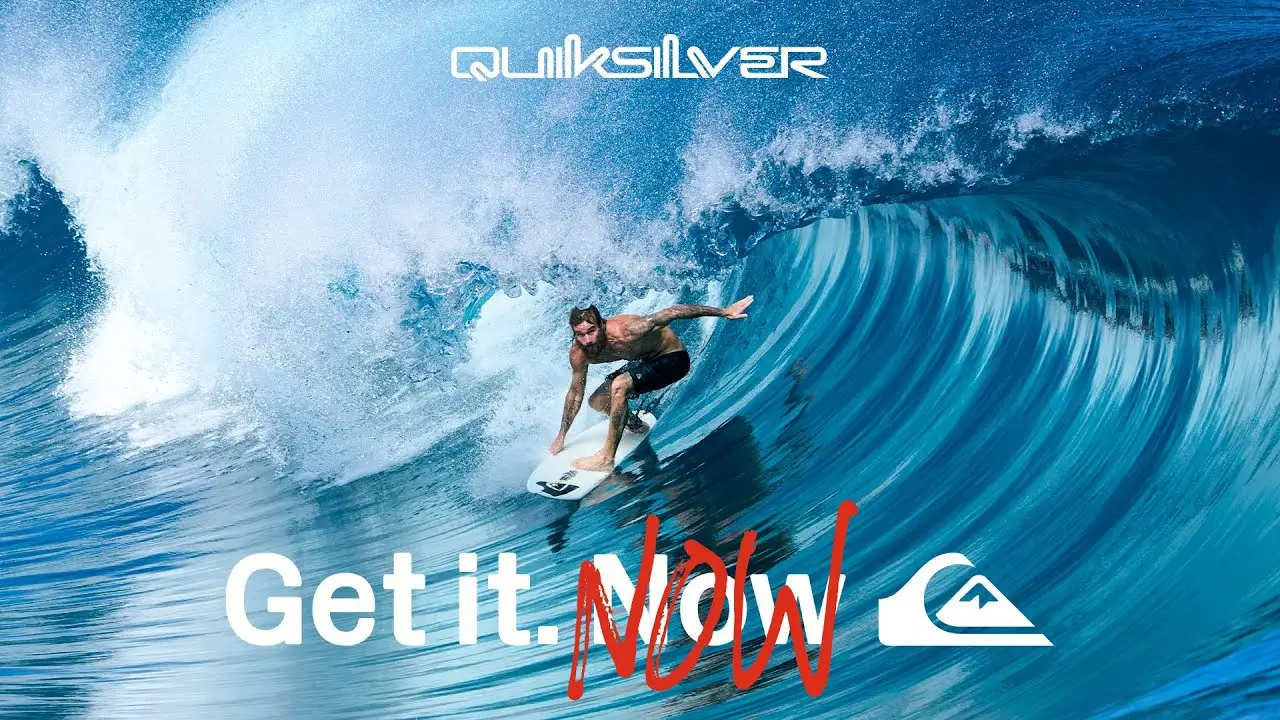
In the dynamic realm of action sports, few brands embody the seamless blend of mountain and wave quite like Quiksilver. Their iconic slogan and ethos, “The Mountain and the Wave,” captures the spirit of riders who conquer snow-capped peaks in winter and barreling oceans in summer. Now, in 2026, Quiksilver is resurrecting a legendary franchise with Young Guns, a fresh surf team movie that is not simply a reboot but a vibrant celebration of the next generation of talent. Featuring some of the brand’s strongest representatives from both disciplines, the project promises high-energy action, raw progression, and the kind of camaraderie that has long defined Quiksilver’s identity.
Premiering globally with screenings rolling out from Australia to the U.S. East Coast and Europe, the film arrives with substantial anticipation already surrounding it. The production updates the original formula for a modern audience raised on Instagram edits, TikTok pacing, cinematic drone footage, and immersive digital storytelling.
View this post on Instagram
imagine
To fully know the significance of the new Young Guns, it helps to revisit the original franchise that emerged in 2005 during a pivotal period for professional surfing. At the time, Kelly Slater had just reclaimed dominance with his seventh world title, ending Andy Irons’ celebrated reign. Quiksilver capitalized on that momentum by introducing a new generation of surfers through a Mentawai-shot team film that became foundational viewing within surf culture.
The original films featured names such as Dane Reynolds, Jeremy Flores, and Ry Craike, all framed against the then-still-mythical backdrop of Indonesia’s Mentawai Islands. Distributed through DVDs, magazines, and surf shops, those films became artifacts of a golden-age surf media ecosystem.
The 2026 version embraces that nostalgia without becoming trapped by it. Rather than leaning on a singular superstar centerpiece, the new iteration functions as a collective statement from Quiksilver’s current roster. The energy feels intentionally democratic — a stacked ensemble of CT competitors, progressive freesurfers, and emerging talents all sharing the same cinematic space.
gen
The updated Young Guns lineup reflects Quiksilver’s global reach and evolving view of contemporary surfing. Leading the cast is Griffin Colapinto, whose combination of technical power and fluid style has positioned him as one of the defining American surfers of his era. His sections reportedly deliver heavy rail work alongside committed aerial surfing across flawless Indonesian reef setups.
Joining him is Kanoa Igarashi, the Japanese Olympic medalist whose explosive backhand approach and competitive precision translate naturally into high-perform freesurfing.
The film also highlights rising talents such as Alan Cleland Jr. and Marco Mignot, whose inclusion underscores Quiksilver’s commitment to youth progression and international representation. Cleland brings raw energy and unpredictability, while Mignot’s aerial approach symbolizes the increasingly technical future of surfing.
Local Indonesian standout Rio Waida adds another dimension entirely. His familiarity with Indo reef passes elicits the film to ground itself within the geography it celebrates, blending local knowledge with world-tour-caliber performance surfing.
Meanwhile, Mikey Wright provides the film’s unpredictable edge. Known for a fearless freesurf style built on heavy tube riding and aggressive airs, Wright’s sections are positioned as some of the project’s most explosive moments.
The youngest presence belongs to Hughie Vaughan, who represents the newest layer of Quiksilver’s future-facing identity. His inclusion reflects the enduring importance of mentorship and continuity within action sports culture.

cin
The film’s production returns to the Mentawai Islands, preserving the spiritual geography that helped define the original franchise. Yet technologically, the 2026 version exists in an entirely different world. Advanced drone cinematography, stabilized water housings, helicopter sequences, and modern editing techniques elevate the viewing experience into something far more immersive and cinematic.
Quiksilver reportedly confined the team aboard a boat while moving between remote reef passes and private-island staging areas, creating a focused environment centered entirely around surfing progression and collective energy.
The resulting footage reportedly balances polished cinematic sequences with authentic moments of downtime, spontaneity, and experimentation. That balance matters deeply within surf filmmaking, where audiences increasingly demand both aspirational visuals and believable human chemistry.
know
Although Young Guns primarily functions as a surf film, the broader “Mountain and the Wave” philosophy remains central to Quiksilver’s identity. Snow athletes such as Travis Rice, Sammy Carlson, and Miles Fallon embody the same progression-oriented mindset that defines the surf roster.
This cross-disciplinary identity is part of what has historically separated Quiksilver from more narrowly focused competitors. Surfing and snowboarding are treated not as separate categories but as interconnected expressions of movement, risk, travel, and environmental immersion.
That acknowledge feels increasingly relevant today as action sports culture moves away from rigid specialization. Athletes increasingly cross between surf trips, mountain training, foil riding, endurance conditioning, and digital content creation. Quiksilver’s ecosystem appears designed precisely for that modern fluidity.
influ
Another significant layer within the project is its visual identity. Legendary artist Natas Kaupas reportedly created the “Impaired” logo tied to the accompanying apparel collection, giving the film a distinctly vintage-meets-modern aesthetic language.
That detail is important because modern surf films increasingly operate as multimedia brand ecosystems rather than standalone projects. Apparel capsules, social campaigns, premiere tours, collectible graphics, and immersive events all extend the lifespan of the release far beyond the film itself.
The “Impaired” collection reportedly blends archival references with contemporary styling, reinforcing the project’s broader balancing act between heritage and future progression.
roll
Quiksilver’s premiere schedule intentionally emphasizes community-building through grassroots screenings and regional events. Stops include the Gold Coast in Australia, New York City, Atlantic City, Asbury Park, Virginia Beach, and several European surf hubs including Capbreton, Ericeira, and Newquay.
These screenings reportedly include signings, parties, and apparel activations that reconnect local surf communities with the collective ritual of watching surf cinema together — something increasingly rare within algorithm-driven digital culture.
The full public release is expected later in August 2026 across Quiksilver’s official platforms and associated surf media channels.
why
The return of Young Guns arrives during a particularly transitional period for surfing itself. Competitive formats continue evolving, wave pools increasingly influence training culture, and social media has transformed how young surfers build visibility and careers. Against that backdrop, a project centered on real ocean exploration and authentic travel carries renewed weight.
The film reaffirms the enduring emotional core of surfing: friends chasing swell, progression unfolding organically, and landscapes that still feel capable of mystery despite constant digital exposure.
It also functions as a statement about long-term brand investment. Quiksilver’s roster depth — reportedly spanning more than 70 riders globally — demonstrates an infrastructure designed around continuity rather than short-term viral relevance.
Projects like this historically shape future stars. The original Young Guns helped elevate surfers who later defined entire eras. The 2026 edition appears positioned to do the same for another generation.
straddle
One of the project’s more fascinating dimensions is how intentionally it bridges old and new media ecosystems. Classic surf films emphasized long-form storytelling and cinematic immersion. Modern audiences often consume surfing through fragmented clips optimized for reels and feeds.
Young Guns appears designed to satisfy both formats simultaneously.
That hybrid strategy may ultimately define the future of action sports storytelling itself: theater-worthy production paired with endlessly shareable digital moments.
In that sense, Quiksilver is not merely reviving a franchise. It is attempting to preserve the emotional mythology of surf cinema while adapting it to entirely new viewing behaviors and cultural expectations.
sum
Quiksilver’s Young Guns revival feels larger than nostalgia. It represents a broader reaffirmation of what the brand still believes action sports culture can be: communal, exploratory, cinematic, aspirational, and deeply tied to nature itself.
The Mountain and the Wave know continues evolving, but its emotional core remains intact. Even if through surfing remote Indonesian reef passes or riding untouched mountain terrain, the pursuit remains the same — chasing moments that feel larger than ordinary life.
And in 2026, Young Guns appears ready to introduce that pursuit to another gen entirely.
From the DRIFT archive: Dunkin’ Revisits the Munchkins’ Origin Story in a Tender, Holiday-Bright Animated Tale