DRIFT

When Hulu debuted The Handmaid’s Tale in 2017, it was immediately clear the streaming platform had struck a cultural nerve. Adapted from Margaret Atwood’s 1985 novel, the series was an unflinching dive into dystopia, anchored by bold performances and stark visuals. As Hulu’s first show to win a Primetime Emmy for Outstanding Drama Series, it wasn’t just a success—it was a turning point for streaming television.

Eight years on, The Handmaid’s Tale remains a monumental work in serialized storytelling. As it builds toward its final season, the show continues to provoke debate, inspire protest aesthetics, and shape how television reflects political fear, female resistance, and authoritarian critique. This is more than just a drama series. It’s a cultural landmark.

The Premise: Gilead’s Chilling Order

Set in the near future, The Handmaid’s Tale imagines a world where fertility has plummeted, and a theocratic regime known as Gilead seizes control of the United States. In this society, women are divided into rigid castes—Marthas, Wives, Aunts, and most iconically, Handmaids: fertile women forced into reproductive servitude.

At the center is June Osborne (Elisabeth Moss), renamed Offred, who is forced to bear children for a high-ranking Commander and his wife. June becomes both a witness and resister, embodying the push-pull between survival and rebellion in a world designed to crush individuality.

The Visual Language: Red, White, and Gilead

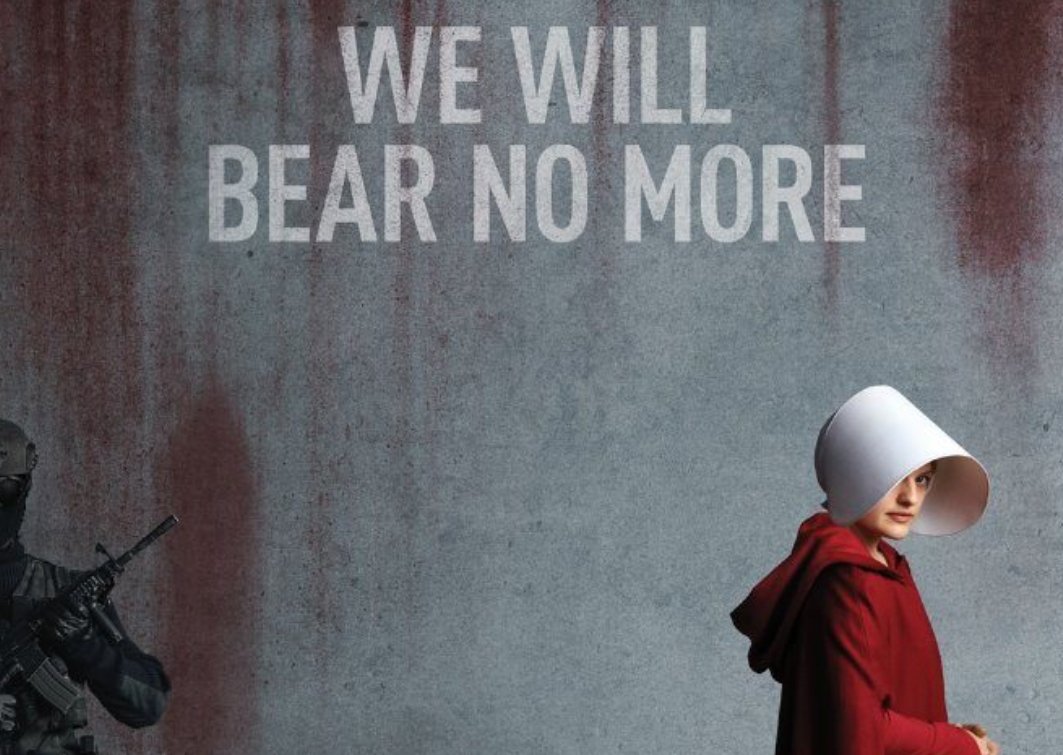
What sets The Handmaid’s Tale apart from other dystopian dramas is its singular aesthetic. The costuming, designed by Ane Crabtree in the early seasons, has become iconic and symbolic, with Handmaids in red robes and white bonnets now synonymous with resistance.

The imagery has leapt from the screen into real-world protests, where women have donned the attire to protest anti-abortion legislation and reproductive rights rollbacks. In this way, Hulu’s adaptation does more than entertain—it activates.

Director Reed Morano, along with Bruce Miller (showrunner), crafted a world that feels both futuristic and ancient. The sepia tones, chilling silences, and slow pans create a mood of suffocating tension. Gilead is not a sci-fi spectacle—it’s eerily plausible, grounded in familiar histories and uncomfortable truths.

Elisabeth Moss: A Performance for the Ages

If The Handmaid’s Tale is Hulu’s flagship drama, then Elisabeth Moss is its mast. Her portrayal of June Osborne is not only emotionally shattering—it’s also a masterclass in restraint, rage, and revolution.

Across five seasons, Moss has navigated every conceivable emotional landscape: trauma, defiance, guilt, hope, vengeance. Her performances, often centered in long, unbroken close-ups, elevate June from a literary archetype to a fully embodied figure of modern resistance.

Moss also serves as executive producer, shaping the direction of the story and its feminist messaging. Her control of character and collaboration with directors has helped ensure The Handmaid’s Tale remains urgent, vital, and unpredictable.

Themes That Bleed Into Reality

When the show first aired, many viewers called it “timely.” But over the years, that phrase has evolved into something more ominous. As reproductive rights and bodily autonomy face mounting legal attacks in the U.S. and abroad, The Handmaid’s Tale has become eerily prophetic.

Its exploration of state control over women’s bodies, the weaponization of faith, and the slow normalization of cruelty has struck a chord across political divides. The show doesn’t offer comfort—it offers clarity, showing how rights can be eroded not in an explosion, but in a whisper.

Beyond reproductive themes, The Handmaid’s Tale interrogates power, complicity, motherhood, trauma, and survival. It asks its characters—and its audience—how far they’ll go to stay human in an inhuman world.

Expansion of the World: From Book to Universe

Margaret Atwood’s original novel was a standalone work, but Hulu’s series expanded the narrative far beyond its source. With Atwood’s blessing, the show introduced new characters, subplots, and geopolitical dynamics—especially through later seasons that explore life outside Gilead, in Canada and beyond.

Characters like Serena Joy (Yvonne Strahovski) and Aunt Lydia (Ann Dowd) have been given rich arcs, transforming from flat antagonists into morally complex figures. Serena’s slow unraveling from Gilead architect to imprisoned mother is especially compelling, revealing the dangers of complicity and the fragility of privilege.

Atwood later published The Testaments (2019), a sequel to the original novel that informs the show’s endgame. Hulu has confirmed a spin-off series based on The Testaments is in development, suggesting Gilead’s dark legacy will continue long after June’s final chapter.

Accolades and Legacy

The show’s critical acclaim is hard to overstate. It has won 15 Emmy Awards to date, including acting honors for Moss, Dowd, Bradley Whitford, and Samira Wiley. It also garnered multiple Golden Globes, Peabody Awards, and critical praise for its unflinching depiction of trauma and resistance.

But beyond awards, the show’s legacy lies in how it has reshaped genre storytelling. The Handmaid’s Tale helped establish Hulu as a legitimate competitor in the prestige streaming war, paving the way for hits like The Dropout, Dopesick, and Only Murders in the Building.

It also showed that genre television—especially dystopian fiction—can be emotionally resonant, politically relevant, and artistically fearless.

Sound Design and Music: The Auditory Resistance

A crucial part of the series’ DNA is its sound design and musical choices. Sparse scores, punctuated by unnerving strings and haunting silences, amplify the show’s unease. But it’s the needle drops—unexpected pop and rock songs—that jolt viewers.

From June’s infamous use of “You Don’t Own Me” to the emotionally devastating finale set to “Mad World,” music in The Handmaid’s Tale isn’t just a background element—it’s a defiant voice in a silenced world.

Cultural Impact: Beyond the Screen

Few shows of the streaming era have had such tangible, real-world impact. The Handmaid’s red robe has become a symbol of reproductive justice, worn in protests at courthouses, capitols, and rallies. Activists from Poland to Texas have adopted the imagery.

Universities have hosted symposia on the show’s themes. Feminist publications continue to unpack its evolving moral complexity. And even as debates rage over the portrayal of violence against women, the show’s defenders argue that it forces necessary confrontation—not glorification.

It has inspired think pieces, artwork, costume design trends, and perhaps most crucially, intergenerational dialogue. Younger viewers encounter dystopia not as fantasy, but as warning. Older viewers recognize echoes of real struggles fought and not yet won.

The Final Season: What Comes Next

Hulu has confirmed that the upcoming sixth season will be The Handmaid’s Tale’s last. But rather than a quiet end, expectations are high for a culminating act of rebellion, reckoning, and redemption.

How will June’s story conclude? Can Gilead fall? Will Serena change? Will Lydia answer for her crimes? These questions burn brightly as the writers craft the show’s finale, one that promises not closure, but a call to vigilance.

The Power of Storytelling as Resistance

In a landscape overflowing with content, The Handmaid’s Tale has endured—not because it’s easy to watch, but because it refuses to look away. It challenges, confronts, and compels. Through its bleakness, it offers a defiant kind of hope: that awareness can lead to action, that silence can be broken, that even in the darkest moments, resistance lives on.

As Hulu prepares to close the curtain on this iconic series, its legacy is already clear: The Handmaid’s Tale wasn’t just a dystopia. It was a mirror, a megaphone, and a movement.

Related Articles

Modern data center facility with a solar-panel-clad exterior, bright green administrative offices, and secure perimeter fencing, showcasing sustainable digital infrastructure and renewable energy integration

Lombardy’s Data Center Boom: Balancing Digital Ambition with Environmental Responsible

Lombardy has emerged as Italy’s primary hub for new digital infrastructures, particularly data centers—vast complexes […]

In a highly anticipated reunion after 24 years, Adidas Originals and Coca-Cola have joined forces once again to celebrate the FIFA World Cup 2026™. The collaboration revives their iconic 2002 partnership from the Japan-South Korea tournament, now reimagined for the biggest global sporting event of 2026, co-hosted by the United States, Canada, and Mexico. Set to launch on June 6, 2026, this collection masterfully blends Adidas' streetwear heritage with Coca-Cola's timeless branding, creating a vibrant fusion of football culture, nostalgia, and modern style. The drop arrives at a perfect moment. With the World Cup kicking off on June 11, 2026, fans worldwide are gearing up for a summer of football excitement. This collaboration isn't just merch—it's a cultural statement that merges two legendary brands under the banner of "Originals are the Real Thing," a clever twist on Coca-Cola's famous slogan. Historical Context: A Reunion 24 Years in the Making Adidas and Coca-Cola first collaborated during the 2002 FIFA World Cup, producing limited-edition pieces that captured the era's energy. That partnership helped define early 2000s football-streetwear crossover culture. Fast-forward to 2026, and the brands are back with fresh energy, leveraging Adidas' deep FIFA ties (as an official partner) and Coca-Cola's long-standing sponsorship of the tournament. The 2026 edition promises to be historic as the first 48-team World Cup, spanning three countries and generating unprecedented global hype. This collab taps into that momentum, offering fans wearable pieces that celebrate both brands' legacies while looking forward to the future of football fashion. Collection Overview and Design Philosophy The Adidas Originals x Coca-Cola collection fuses 2000s street style with classic sporting aesthetics. Expect bold reds, creams, whites, and silver accents inspired by Coca-Cola's iconic packaging—think classic script logos, droplet detailing, and can-inspired motifs. The lineup spans footwear, apparel, and accessories, divided into two visual directions: one logo-heavy and graphic-forward, the other drawing from vintage advertising aesthetics. Designs pay homage to Coca-Cola's visual language while staying true to Adidas Originals' archival roots. High-quality materials, attention to detail, and versatile silhouettes make these pieces suitable for both match-day wear and everyday street style. The campaign, featuring young football star Lamine Yamal and a diverse cast in everyday scenes building anticipation for the tournament, reinforces themes of originality and shared cultural moments. Footwear Highlights Footwear takes center stage in this collaboration, with reimagined takes on iconic 2000s Adidas silhouettes: Samba and Superstar Models: These classics get Coca-Cola treatment with white/cream/red colorways and prominent script branding. The Samba blends street heritage with football roots, while the Superstar II features weathered bases and bold side panels. Expected pricing around $110–$130. Adistar Control 5: A standout with droplet detailing mimicking condensation on a cold Coke can. This model brings performance-inspired design into lifestyle territory. Predator Sala: Indoor/hybrid style with silver-and-red accents, nodding to predatory precision on the pitch and Coca-Cola's bold energy. Climacool 1: Revived with breathable tech and Coke-inspired graphics, perfect for warm summer days. Megaride F50: A highlight paying tribute to the iconic Coca-Cola glass bottle, with unique contours and refreshing design cues. Each pair incorporates thoughtful details like embroidered logos, custom insoles, and packaging that mimics vintage Coke crates or cans. These shoes are built for durability and comfort, appealing to sneakerheads, football fans, and casual wearers alike. Apparel and Accessories Beyond kicks, the collection offers a full lifestyle range: Track Tops and Jerseys: Standout jerseys fuse retro Coca-Cola advertising from different eras into cohesive football designs. Track jackets feature signature three stripes alongside Coke branding, in vibrant reds and classic whites. Shorts and T-Shirts: Relaxed fits with graphic prints, ideal for casual wear or layering. Expect motivational football motifs blended with refreshing beverage references. Accessories: A bright red airliner bag stands out as a functional statement piece. Additional items may include caps, socks, and tote bags carrying the collaborative spirit. The apparel emphasizes comfort with premium cotton blends, mesh panels for breathability, and oversized silhouettes popular in contemporary streetwear. Unisex sizing and inclusive fits make the collection accessible to a broad audience. Cultural Impact and Fan Appeal This collaboration resonates on multiple levels. For football fans, it represents national pride and global unity ahead of the 2026 tournament. Sneaker enthusiasts will appreciate the nostalgic 2000s revival mixed with modern execution. Streetwear collectors see it as a prime example of how heritage brands can innovate through partnerships. In an era where sports and fashion increasingly intersect, Adidas and Coca-Cola deliver pieces that transcend the pitch. Wear them to watch matches at home, attend watch parties, or hit the streets in any host city—New York, Los Angeles, Toronto, or beyond. The designs are versatile enough for gym sessions, festivals, or daily commutes. The timing aligns perfectly with rising interest in football in North America, boosted by the co-hosting nations. Young talents like Lamine Yamal in the campaign help bridge generational gaps, attracting newer fans while satisfying longtime supporters. Where to Buy and Release Details The collection launches globally on June 6, 2026, via: Adidas CONFIRMED app (for early access and raffles) Adidas.com Select retailers and flagship stores worldwide Some regions may see staggered drops, with Japan and other markets getting early access. Prices are expected to range from $50–$150 depending on the item, making it relatively accessible compared to ultra-limited drops. Pro Tips for Copping: Enable notifications on the CONFIRMED app. Check local stock at Adidas stores in major cities. Monitor resale platforms post-drop for exclusive colorways, but be wary of markups. Size up slightly for oversized apparel fits. Given the World Cup hype, popular items like the Sambas and jerseys are likely to sell out quickly. International shipping is available, but factor in potential customs delays. Styling Suggestions Match Day Look: Pair a collaborative jersey with classic black shorts and Samba sneakers for effortless fan style. Streetwear Rotation: Layer a track top over a graphic tee with wide-leg pants and the Megaride F50 for a bold urban ensemble. Casual Summer: White Superstar with denim shorts and the airliner bag for a refreshing, vacation-ready vibe. These pieces mix seamlessly with existing Adidas or neutral wardrobes, maximizing versatility. Broader Context in 2026 Fashion and Sports The Adidas x Coca-Cola drop is part of a larger wave of high-profile collaborations tied to the World Cup. Adidas continues its dominance in football kit design, while Coca-Cola leverages its sponsorship with collectibles, bottles, and experiential activations like the Trophy Tour. In the sneaker industry, this collab exemplifies the ongoing trend of lifestyle reinterpretations of performance silhouettes. It also highlights how global brands use major events to drive cultural conversations around unity, originality, and joy—core values for both companies. Sustainability notes (based on Adidas' broader initiatives) suggest some pieces may incorporate recycled materials, aligning with modern consumer expectations. Looking Forward: Legacy and Excitement As the countdown to kickoff continues, this collection serves as the perfect prelude to an unforgettable summer of football. Whether you're a die-hard supporter, a fashion-forward collector, or someone seeking motivation through style, the Adidas Originals x Coca-Cola FIFA World Cup 2026 lineup delivers. Expect potential restocks, special event exclusives in host cities, and continued campaign content featuring more athletes. This isn't just clothing—it's a ticket to participate in the global celebration of the beautiful game. Mark your calendars for June 6, 2026. Refresh your wardrobe, lace up those Sambas, and get ready to cheer on your team in style. The "Real Thing" meets the Originals in what promises to be one of the most talked-about releases of the year. This collaboration captures the essence of football's universal appeal: bringing people together through shared passion, iconic brands, and unforgettable moments. As the world prepares for 2026's expanded tournament, Adidas and Coca-Cola remind us that some partnerships are truly timeless.

Adidas Originals x Coca-Cola Collection: FIFA World Cup 2026

In a highly anticipated reunion after 24 years, Adidas Originals and Coca-Cola have joined forces […]

Loewe shoulder bag crafted in brown and black leather with minimalist lion face detailing and a matching fur tail charm

180 Years Unfolded: The Full Story Behind Loewe’s New Campaign

The year was 1846. Queen Victoria was on the British throne and the telephone, the […]