Reimagining a Legacy: The Franklin Institute’s Baldwin 60000 Locomotive in a New Light

September 24, 2024
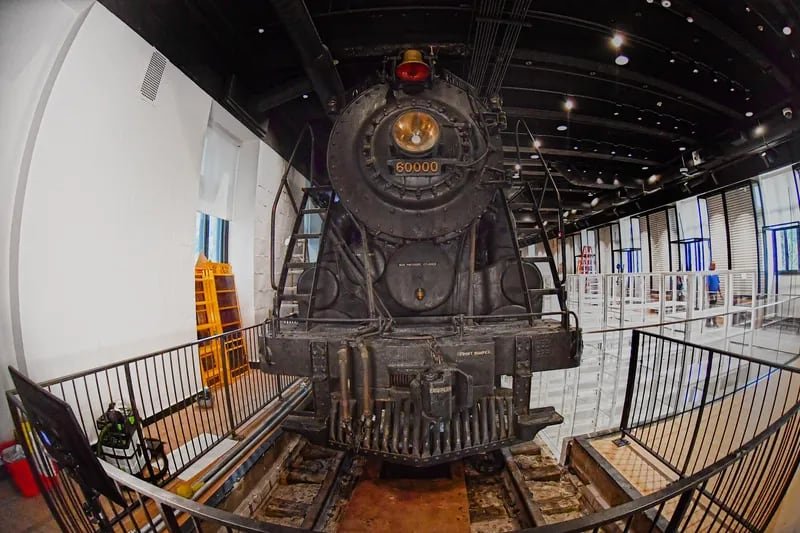
The Franklin Institute’s Baldwin 60000 locomotive, one of the most iconic artifacts housed within the museum’s halls, holds a special place in both American industrial history and the museum’s own legacy. This mighty steam engine, which hasn’t moved under its own power in nearly a century, recently received a new setting within the museum, bringing a fresh focus to its grandeur, craftsmanship, and historical significance. While the Baldwin 60000 remains stationary, its role as a symbol of the great advancements of the early 20th century continues to resonate deeply with visitors. This revitalized display is not just about honoring the past but also about connecting new generations with a pivotal moment in technological innovation.
The History of the Baldwin 60000 Locomotive
The Baldwin 60000, built in 1926 by the Baldwin Locomotive Works of Philadelphia, represents the pinnacle of steam locomotive design. It was the 60,000th locomotive produced by the Baldwin company, hence its name. Baldwin was one of the largest and most significant manufacturers of steam locomotives in the United States, and the 60000 was intended to be a showpiece—an embodiment of everything the company had learned and accomplished over its long history.
The Baldwin 60000 is a 4-10-2 locomotive, meaning it has a four-wheeled leading truck, ten driving wheels, and two trailing wheels under the cab. What set it apart was not only its impressive size and power but also its use of innovative technology, such as a water-tube firebox and superheating elements. It was an experimental locomotive, designed to explore ways of improving the efficiency of steam power, even as diesel-electric technology was on the horizon and beginning to eclipse steam.
At the time of its creation, steam engines were still the backbone of American railroads. The Baldwin 60000 represented one of the final chapters in the development of steam technology, coming at a time when the rail industry was at a crossroads. The locomotive was a marvel of engineering, capable of producing 4,500 horsepower and achieving speeds of up to 60 miles per hour. However, despite its technological advancements, it never saw regular service. After brief demonstrations, the 60000 was ultimately retired and donated to The Franklin Institute, where it became a central exhibit.
The Legacy at The Franklin Institute
Since its installation at The Franklin Institute in 1933, the Baldwin 60000 has been a centerpiece of the museum’s offerings. Over the decades, it has captured the imaginations of millions of visitors, many of whom are struck by its sheer size and mechanical complexity. The locomotive is a reminder of the time when railroads were a vital artery of the country, fueling both commerce and westward expansion.
However, the display of such a large and immobile artifact has its challenges. The Baldwin 60000, weighing in at 350 tons and stretching over 95 feet, occupies a significant amount of space within the museum. Over time, its surroundings became somewhat outdated and static, lacking the dynamic energy necessary to engage a modern audience.
Recognizing this, The Franklin Institute embarked on a project to recontextualize the locomotive, aiming to enhance its visual and educational impact. The goal was to provide a more immersive and informative experience, highlighting not just the technical details of the locomotive but also its broader implications for industry, transportation, and society.
A New Setting for the Baldwin 60000
The recent reimagining of the Baldwin 60000’s display is a testament to The Franklin Institute’s commitment to merging history with modern interpretive techniques. The locomotive may remain stationary, but its new setting allows it to tell a more comprehensive story.
The refreshed exhibit has expanded its educational scope, utilizing interactive elements to engage visitors in a hands-on exploration of the history and technology behind steam locomotives. State-of-the-art lighting now accentuates the locomotive’s imposing size and intricate details, while multimedia displays provide context about the era in which it was built, the significance of Baldwin Locomotive Works, and the rapid technological changes of the 20th century.
One of the standout features of the new setting is the addition of digital and mechanical simulations, allowing visitors to see how the various parts of the Baldwin 60000 would have operated in real time. These simulations include detailed explanations of the firebox, steam engine dynamics, and the complex system of valves and pistons that powered the locomotive. The exhibit also introduces younger audiences to basic concepts of physics and engineering, using the Baldwin 60000 as a massive, real-world example of steam power in action.
Moreover, the exhibit contextualizes the Baldwin 60000 within the broader history of American railroads and industrialization. While the locomotive itself never entered regular service, it stands as a symbol of a transformative era in U.S. history. The display now includes information about the rise and fall of the steam engine, the competition between different forms of energy (coal, oil, and eventually electricity), and the role of railroads in shaping the economic landscape of the country.
The Evolution of Museum Curation: Blending History with Interactive Learning
The Franklin Institute’s decision to reimagine the Baldwin 60000 exhibit is part of a broader trend in museum curation, one that emphasizes interactive and immersive experiences over static displays. In the past, museums often focused on showcasing artifacts in a passive manner, relying on placards and brochures to convey information. Today, however, institutions are increasingly adopting new technologies to engage visitors in more dynamic and memorable ways.
For the Baldwin 60000, this approach means not just looking at the locomotive but also understanding the context in which it was built, how it worked, and why it mattered. The use of augmented reality (AR) and virtual reality (VR) in museum exhibits is growing, and though The Franklin Institute’s display does not go so far as to employ VR, it does incorporate elements of AR through interactive screens and mobile-friendly content. These technologies allow visitors to delve into the inner workings of the locomotive, explore historical timelines, and even engage in games that simulate driving a steam engine.
Additionally, the museum has incorporated real-world sensory elements to further immerse visitors. The exhibit features soundscapes of steam engines in motion, the clanging of metal, and the hiss of escaping steam. These auditory cues help recreate the environment of a working locomotive yard, making the Baldwin 60000 feel more alive despite its stationary presence.
Through these updates, The Franklin Institute is able to appeal to a broad audience. Younger visitors, in particular, benefit from the hands-on learning opportunities, while older generations can appreciate the nostalgia and historical significance of the exhibit. In this way, the Baldwin 60000’s new setting is not just an aesthetic update—it’s a way to ensure the locomotive remains relevant in the 21st century.
The Symbolism of Steam Locomotives in American History
The Baldwin 60000 is more than just a piece of machinery—it represents the ethos of American industrial power and ingenuity. The steam locomotive was a symbol of progress in the 19th and early 20th centuries, driving economic expansion and connecting previously isolated regions of the country. It’s no exaggeration to say that without the railroad, the United States would not have developed into the nation it is today.
In the context of the Baldwin 60000, this symbolism takes on additional layers. The locomotive was built at a time when the world was on the cusp of significant technological change. Just as it was being completed, diesel-electric engines were beginning to supplant steam power, marking the end of an era. Baldwin Locomotive Works, once a dominant force in the industry, would soon be overtaken by companies specializing in newer technologies.
By placing the Baldwin 60000 on display, The Franklin Institute invites visitors to reflect on this pivotal moment in history. The locomotive serves as a reminder of the rapid pace of technological change and the importance of innovation. At the same time, it evokes nostalgia for a bygone era when steam engines ruled the rails and the world felt a little larger.
The Future of the Baldwin 60000 Exhibit
The revitalization of the Baldwin 60000’s display is not the end of the story—it’s the beginning of a new chapter. The Franklin Institute plans to continue expanding and updating the exhibit, incorporating more interactive elements and possibly adding rotating displays that focus on different aspects of railroad history. The locomotive itself will remain the centerpiece, but the surrounding exhibits may evolve to highlight other technological innovations of the early 20th century, such as the rise of aviation and automobiles.
There’s also potential for the Baldwin 60000 exhibit to become a focal point for special events and educational programs. Already, the museum has begun hosting workshops and demonstrations that use the locomotive as a teaching tool. These programs not only educate visitors about the mechanics of steam engines but also encourage critical thinking about the ways in which technology shapes society.
As technology continues to advance, The Franklin Institute is well-positioned to keep the Baldwin 60000 relevant for future generations. The museum’s emphasis on interactive learning, combined with the timeless appeal of the steam locomotive, ensures that this piece of American history will continue to captivate audiences for years to come.
A Timeless Symbol of Innovation
The Baldwin 60000 may no longer move under its own power, but its significance has not diminished. Through its new setting at The Franklin Institute, the locomotive continues to inspire awe and curiosity, inviting visitors to explore the history of American industry and the impact of technological change. The revitalized exhibit not only showcases the engineering marvel that is the Baldwin 60000 but also connects that legacy to broader themes of progress, innovation, and the role of technology in shaping the future.
By blending historical storytelling with modern interactive elements, The Franklin Institute has ensured that the Baldwin 60000 remains a dynamic and engaging part of its collection. For those who love history, engineering, or simply the magic of great machines, the Baldwin 60000’s new display offers a window into a world of steam, steel, and innovation.
Related Articles

France Just Banned Social Media for Kids Under 15, and the Fight Over Anonymity Is Only Getting Started
France becomes the first EU nation to bar under 15s from social platforms, and critics […]