DRIFT AUDIO
Listen to this story
Choose a voice, then press play.
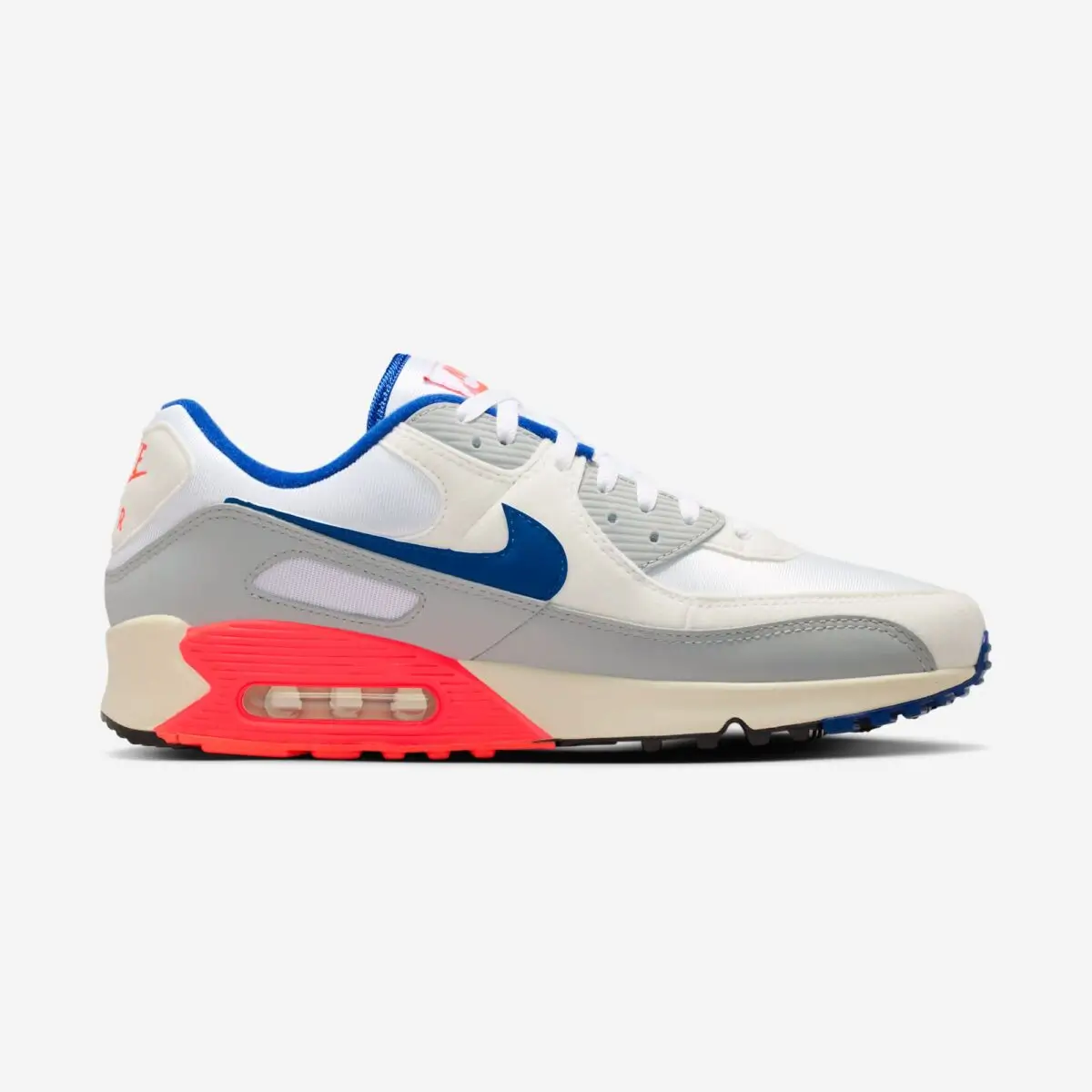
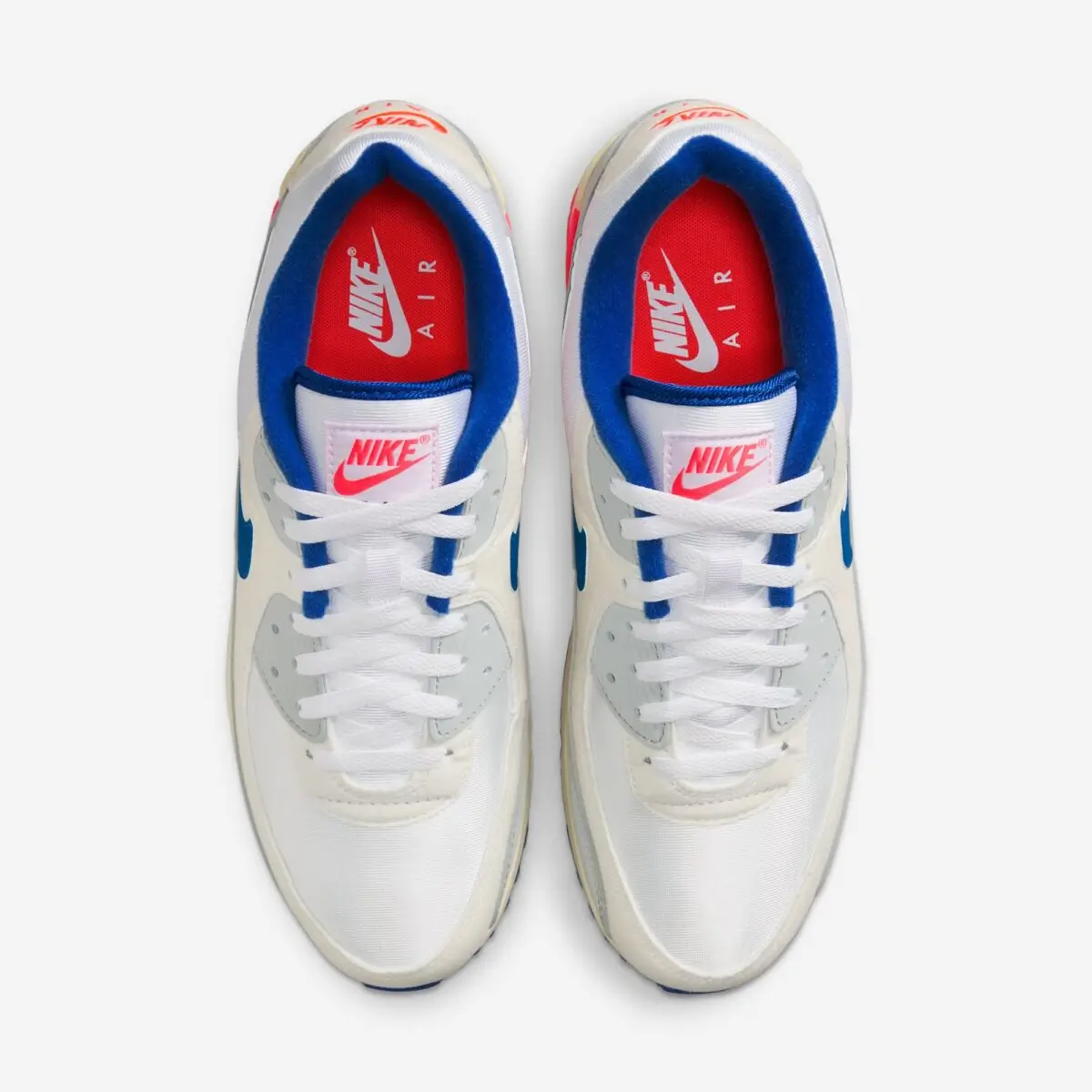
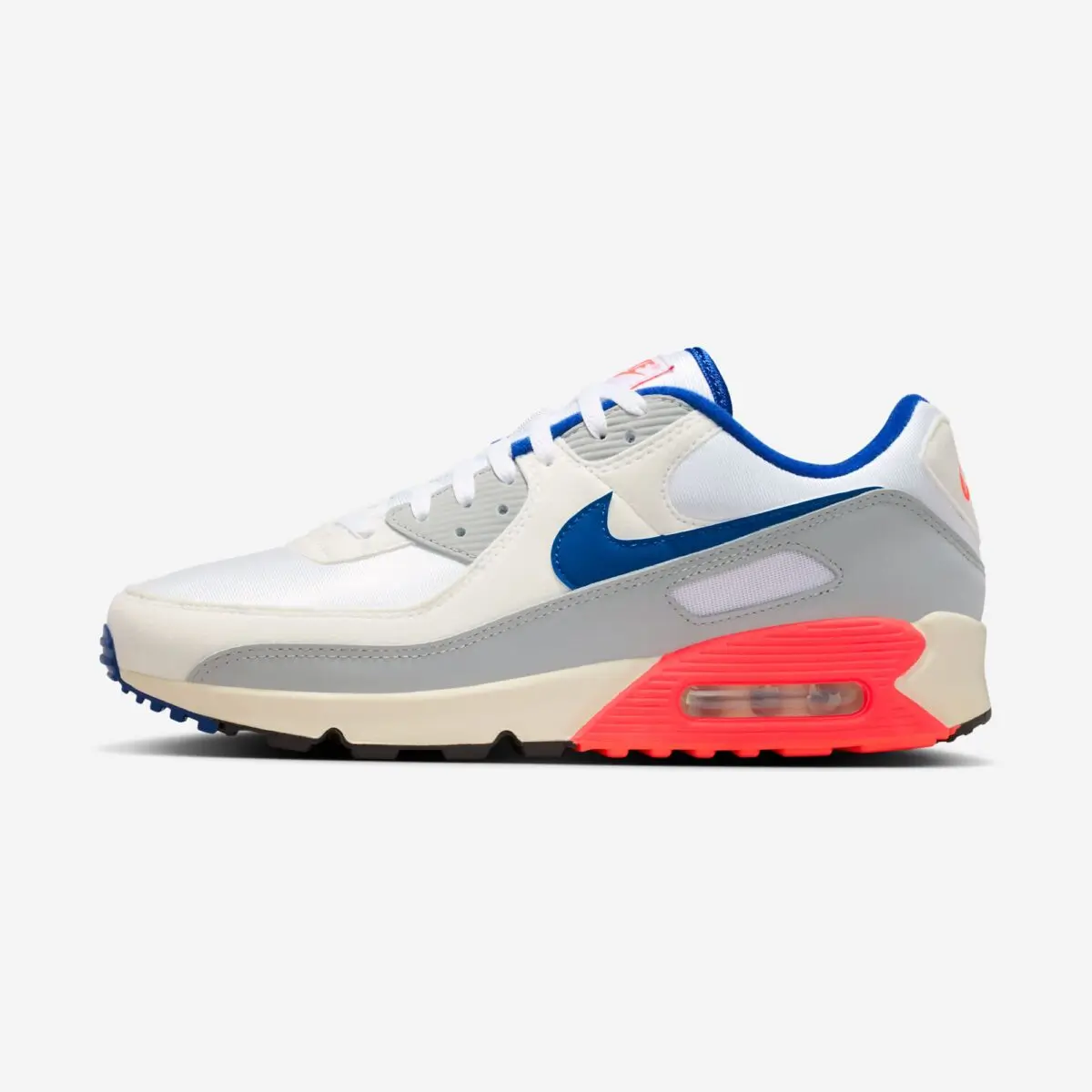
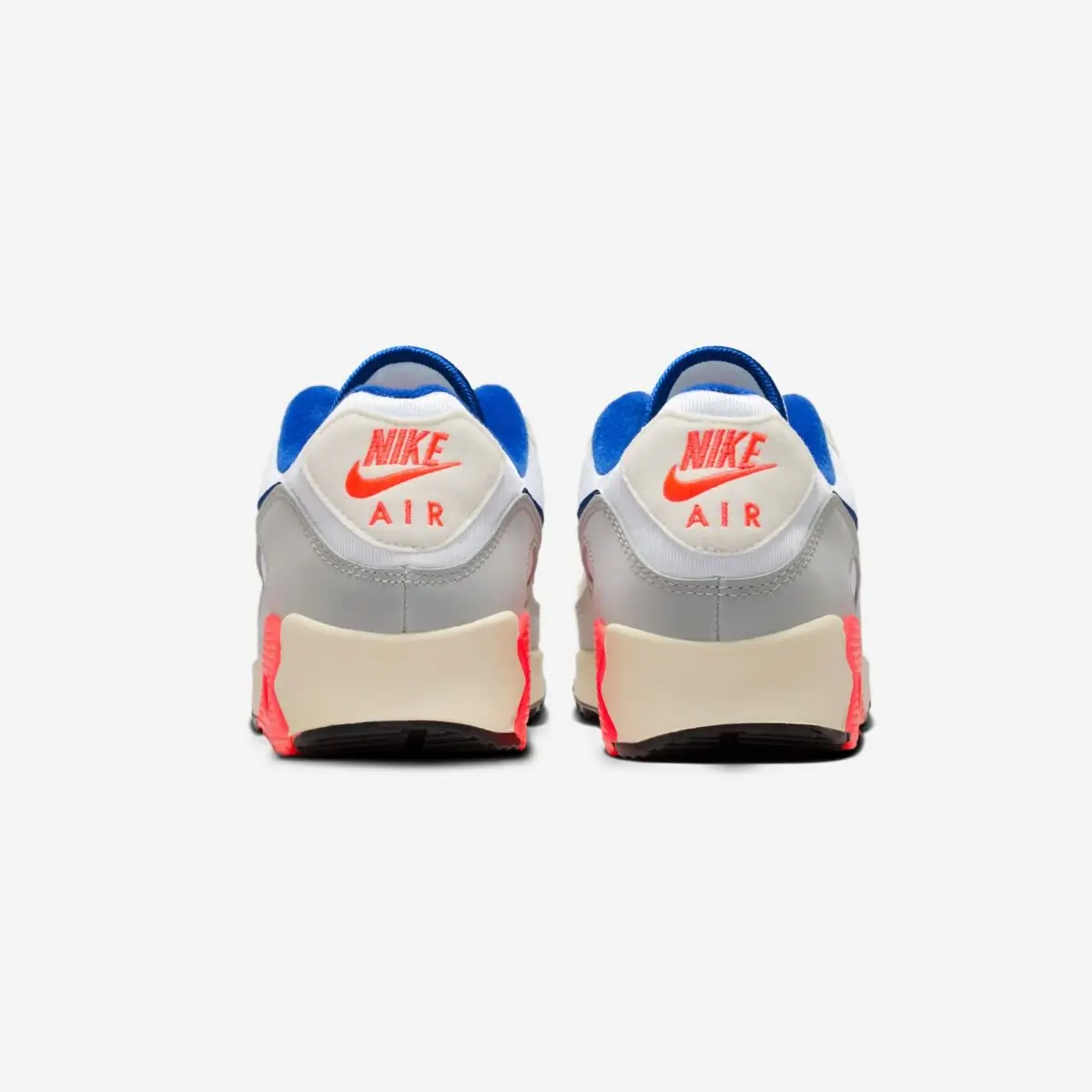
The Nike Air Max 90 Ultramarine doesn’t shout; it calibrates. First introduced in 1990 as part of the early lineage of visible Air, the Ultramarine colorway has always been about proportion—white, blue, and red arranged not for excess, but for balance.
Its reintroduction in contemporary cycles isn’t nostalgia for nostalgia’s sake. It’s a reassertion of design discipline. In a market flooded with maximalist palettes and aggressive reinterpretations, Ultramarine arrives almost as a correction: a reminder that restraint, when executed with precision, carries more longevity than noise.
stir
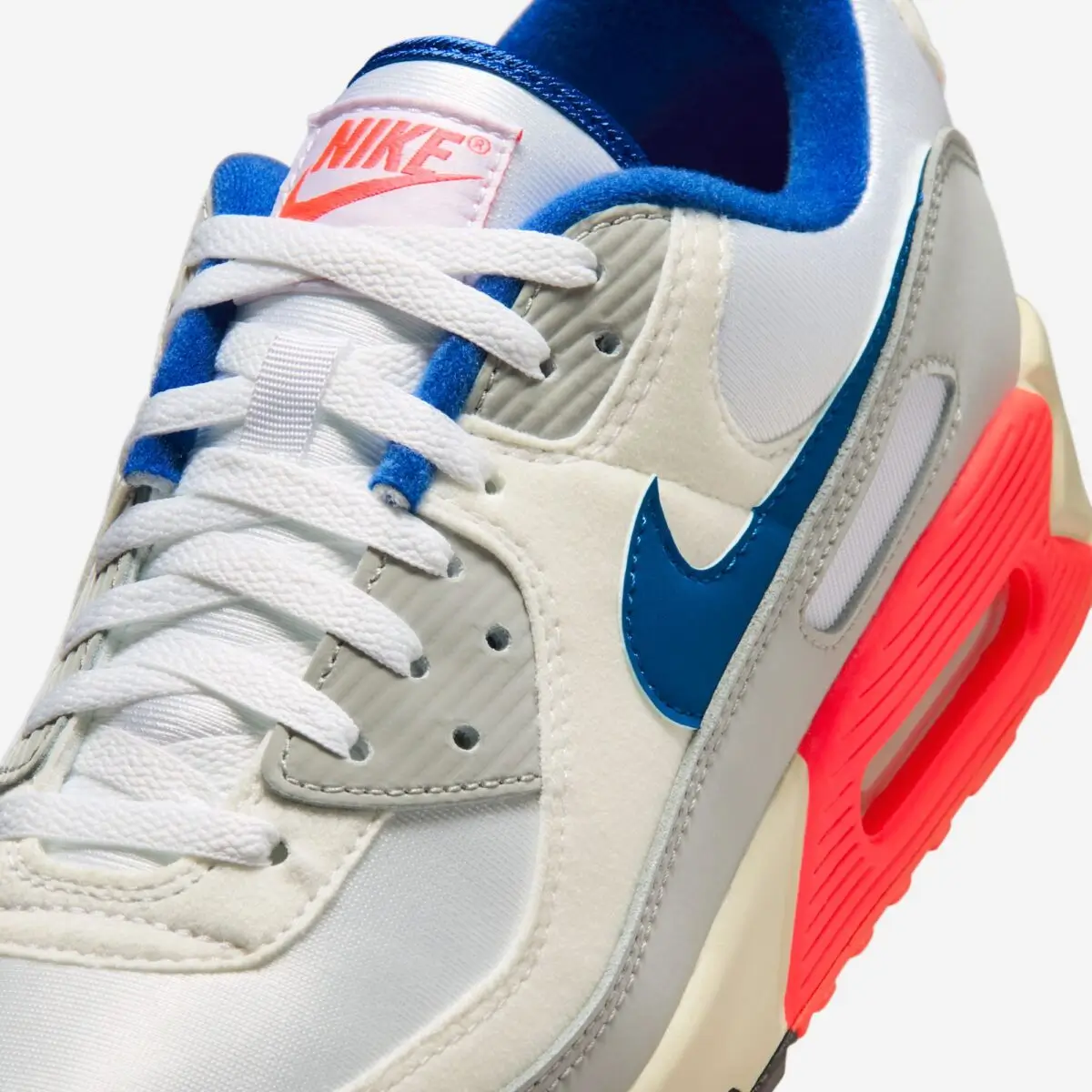
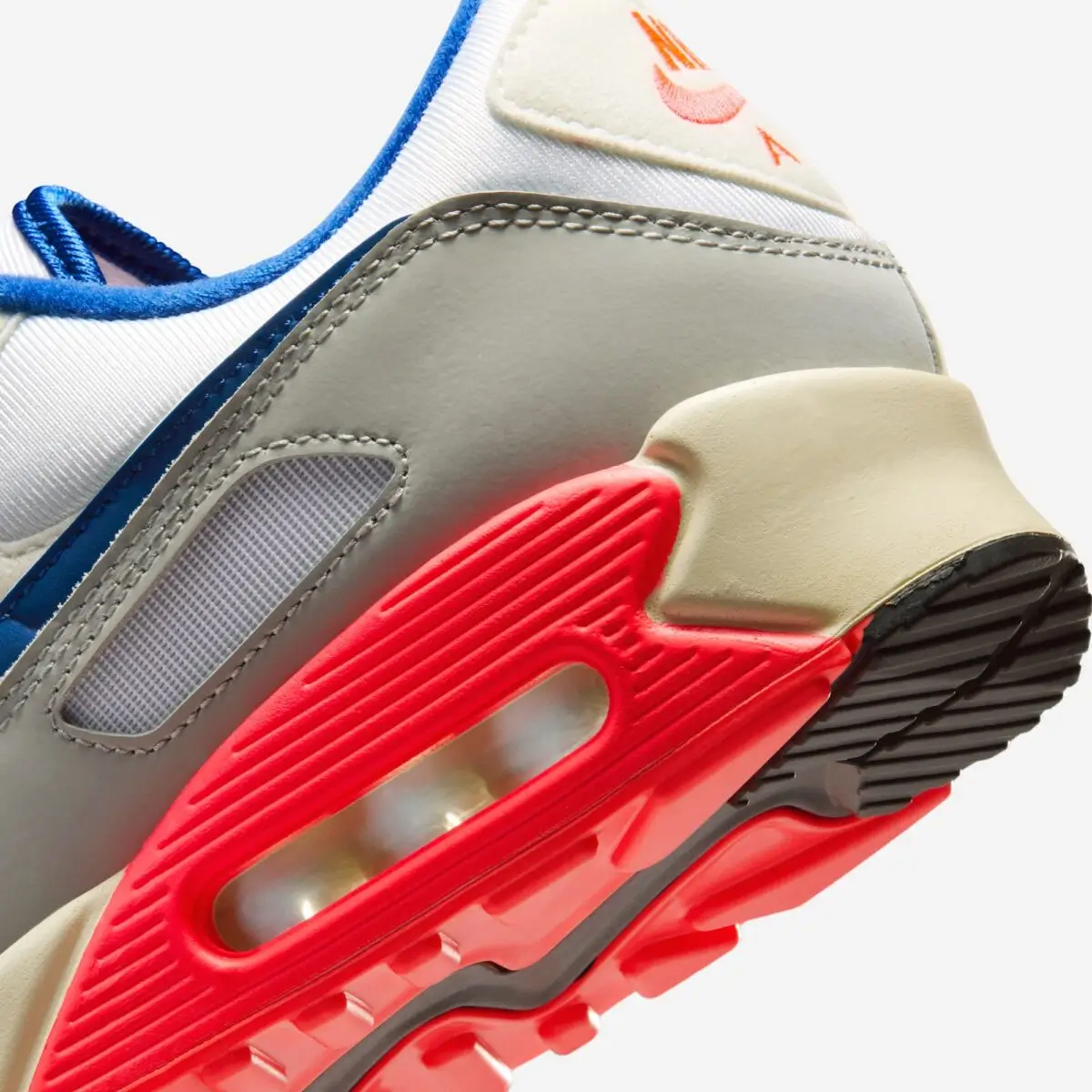
What defines Ultramarine is not just its palette, but how that palette behaves across the shoe’s architecture. A clean white mesh base establishes breathability and lightness, while layered leather panels introduce structure without overwhelming the silhouette. The blue—cool, controlled—frames the upper through eyestays and mudguards, while the red accents punctuate key moments: lace loops, branding hits, the Air unit window.
This isn’t color blocking in the conventional sense. It’s sequencing.
Each tone exists in dialogue with the next, never overpowering, always reinforcing. The Ultramarine blue doesn’t compete with the white; it anchors it. The red doesn’t dominate; it activates. Together, they form a triadic system that feels engineered rather than styled.
flow
The Air Max 90—originally the Air Max III—was designed by Tinker Hatfield, a figure whose influence extends far beyond footwear into architecture, performance, and cultural design thinking. With this model, Hatfield pushed the concept of visible Air further, making it not just a feature, but a focal point.
Ultramarine, in particular, reinforces that philosophy. The red accent around the Air unit isn’t incidental—it’s directive. It draws the eye exactly where Hatfield intended: to the technology itself. In doing so, the shoe communicates its function visually, a hallmark of late 20th-century industrial design.
Decades later, that language still reads clearly. No reinterpretation necessary.
mundane
Recent iterations of the Ultramarine maintain fidelity to the original while subtly refining execution. Mesh panels feel slightly more resilient, leather overlays more consistent in grain and finish. The midsole retains its classic density, offering the same firm-yet-cushioned ride that defined early Air Max models.
There’s no overcorrection here—no exaggerated tooling, no experimental materials disrupting the form. Instead, Nike opts for continuity. The updates are almost invisible unless you’re looking for them, which is precisely the point.
The Nike approach with Ultramarine is clear: preserve the silhouette, refine the feel, and let the design speak as it always has.
idea
The Air Max 90 has always occupied a unique space—equally at home in performance contexts and urban environments. Ultramarine amplifies that duality. Its palette feels athletic, almost uniform-like, yet its composition lends itself effortlessly to everyday wear.
In the early 1990s, Air Max models became synonymous with emerging street cultures, particularly in Europe, where they were adopted as markers of identity and taste. Ultramarine, while not as aggressively bold as some of its counterparts, offered a cleaner, more considered alternative.
Today, that positioning holds. It doesn’t chase trends; it sidesteps them. Whether paired with technical outerwear, relaxed tailoring, or denim, the shoe adapts without losing its core identity.
firsts
There’s a tendency in contemporary sneaker culture to equate value with rarity—limited releases, collaborations, artificial scarcity. Ultramarine resists that logic. Its strength lies in its accessibility and its consistency.
This is not a shoe that needs reinterpretation through external voices. It doesn’t require co-signs or narrative overlays. Its story is already complete.
That doesn’t mean it lacks relevance—quite the opposite. In an era where design often feels overdetermined, Ultramarine’s clarity becomes its advantage. It offers something increasingly rare: a fully resolved idea.
show
Worn, the Air Max 90 Ultramarine delivers exactly what its design promises. The fit is structured but forgiving, with enough room in the forefoot to accommodate varied foot shapes. The Air unit provides a subtle lift—not exaggerated, but noticeable over time.
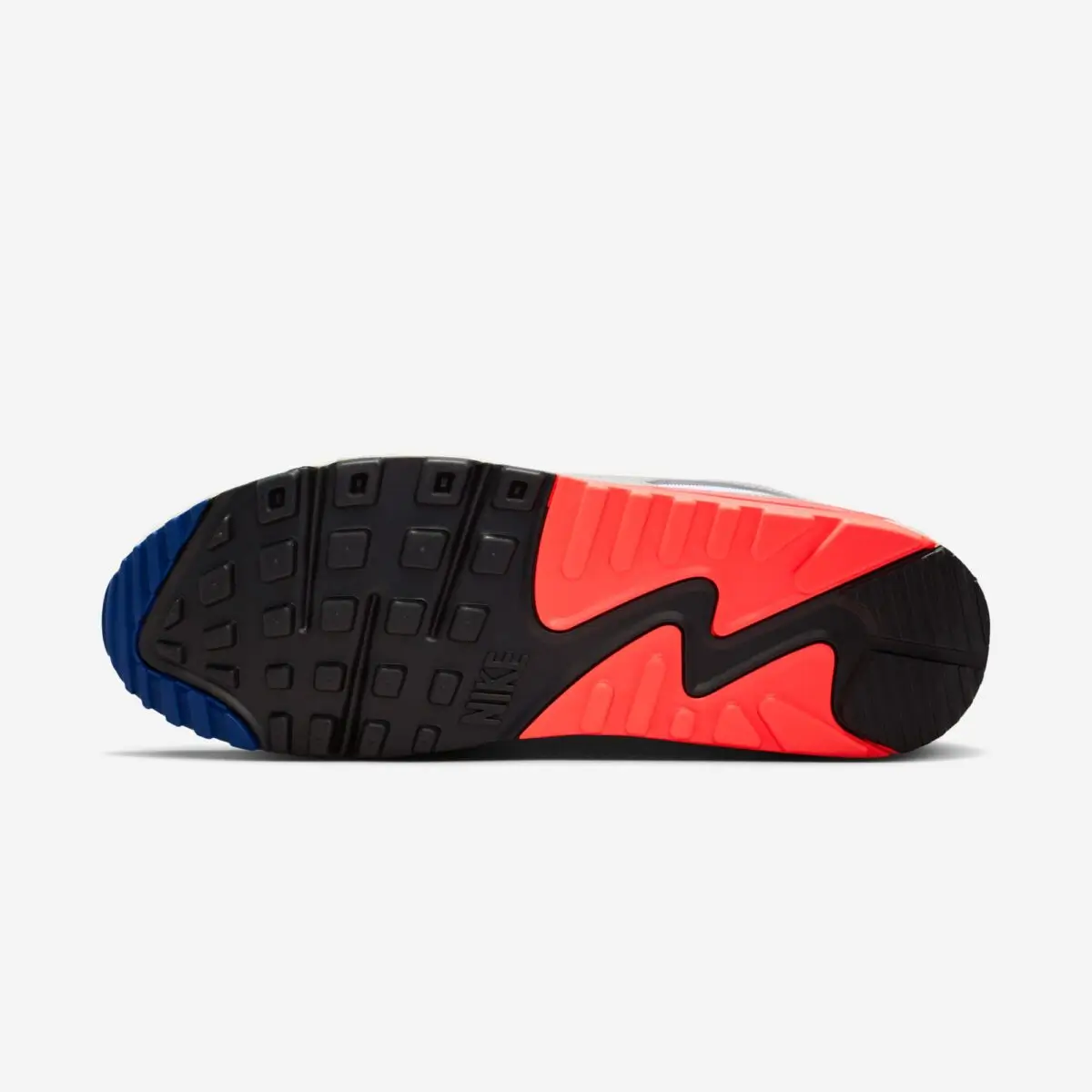
Traction remains dependable, thanks to the waffle outsole pattern that has become synonymous with Nike’s heritage models. It’s not built for extreme performance scenarios, but it doesn’t need to be. Its strength is in everyday reliability.
There’s also a visual effect that only becomes apparent in motion. The interplay of white, blue, and red shifts with each step, creating a dynamic that static images can’t fully capture. It’s understated, but intentional.
a stay
In 2026, the shoe landscape is saturated with reinterpretations—archive models stretched, distorted, hybridized. Against that backdrop, Ultramarine feels almost radical in its refusal to change.
It’s a reminder that innovation doesn’t always mean reinvention. Sometimes, it means recognizing when a design has already reached equilibrium.
For collectors, it represents continuity—a throughline connecting past and present. For new consumers, it offers an entry point into a lineage that doesn’t require explanation.
fin
The Nike Air Max 90 “Ultramarine” isn’t trying to redefine anything. It doesn’t need to. Its power lies in its exactness—its ability to remain consistent across decades without losing relevance.
It’s a shoe built on decisions that have already been made, and made well.
In a market driven by acceleration, Ultramarine holds its pace. Not slower—just steadier.
From the DRIFT archive: The Nike Sabrina 3 “Flowers” Blooms With Precision, Personality, And Patterned Performance
Related Articles
Shell, Floral Print, Gold Lace Lock
Air Foamposite One Floral/Black. AA3963-002. 11 December 2026. $240. Black nubuck eyestay, mesh tongue, metallic gold Swoosh dubrae.