Sam Neill, Who Made Wonder Look Effortless, Passes

July 14, 2026
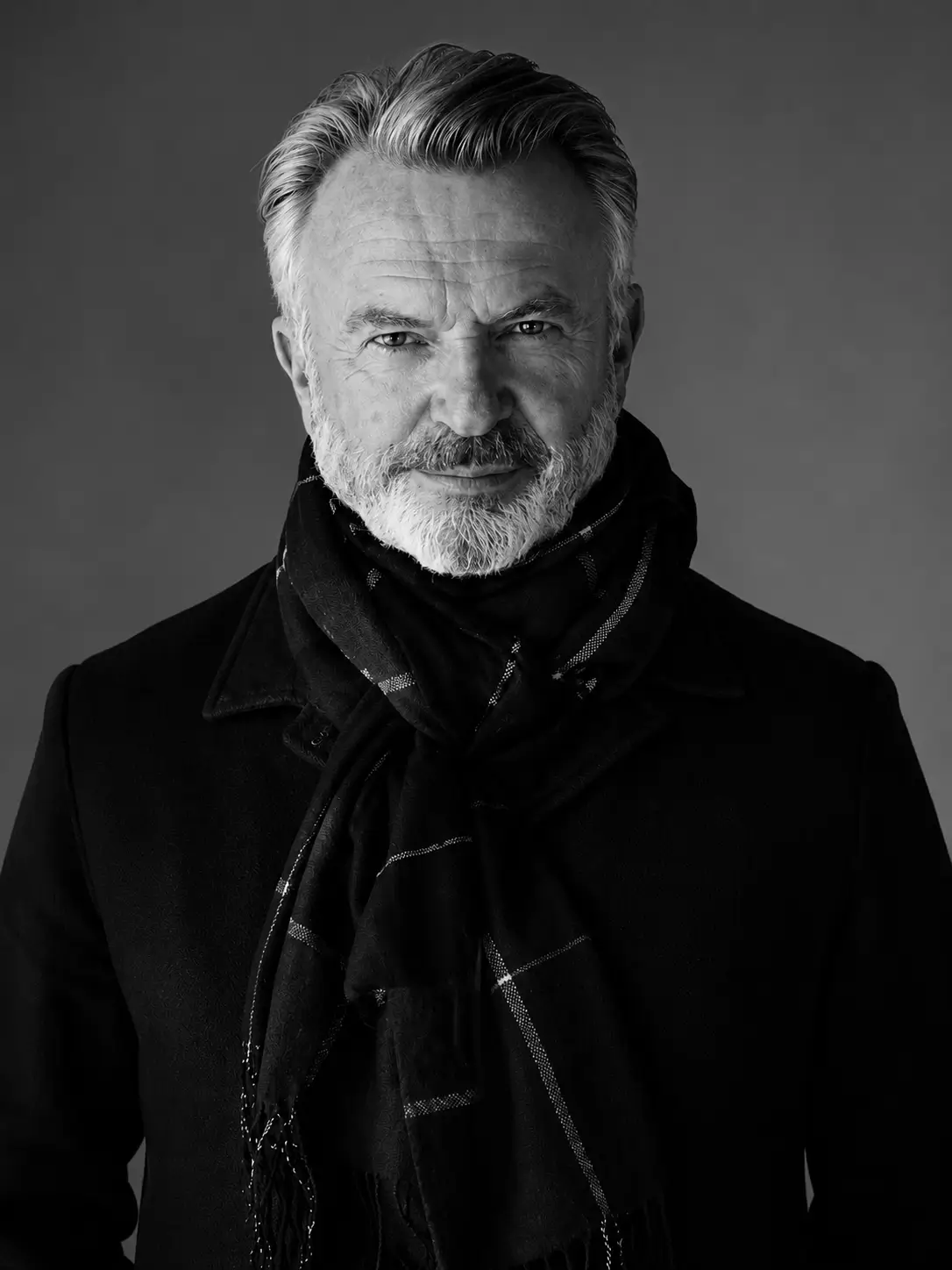
The New Zealand-raised actor turned five decades of shh intensity, from Jurassic Park to a Central Otago vineyard, into a singular career.
recall
- A Sudden Loss in Sydney
- From Omagh to Christchurch
- The New Wave Years
- Hollywood Takes Notice
- A Career-Defining Decade
- Jurassic Park and the Weight of a Legacy
- A Second Life in the Vineyard
- Later Roles and a Public Battle
- Tributes and What Remains
Neill’s family confirmed his death in a statement posted to his Instagram account on Monday, July 13, using the Māori word “whānau” to describe the family sharing the news. The statement described the loss as sudden and unexpected, noted that Neill had remained cancer free at the time, and thanked staff at St Vincent’s Private Hospital in Sydney for their care. The family asked for privacy while they process the loss and said further details would follow in time.
Neill had spent much of the past several years managing a diagnosis of stage 3 angioimmunoblastic T-cell lymphoma, a rare and aggressive blood cancer he revealed publicly after finishing work on Jurassic World Dominion in 2022. He announced in April that he was in remission, a detail his family repeated in Monday’s statement as a small mercy inside a devastating week.
View this post on Instagram
stir
He was born Nigel John Dermot Neill in Omagh, County Tyrone, in Northern Ireland, the son of an army family with roots in the wine and spirits trade. At seven, he emigrated with his parents to Christchurch on New Zealand’s South Island, a move that would define his cultural identity far more than his birthplace ever did. He took to calling himself Sam early on, and the name stuck for the remaining seven decades of his life.
Neill did not set out to become an actor. He has said in past interviews that a childhood stutter kept him largely silent through his early teenage years, and that the stammer only began to loosen once he reached fifteen. He studied English at the University of Canterbury, where he first stepped on a stage almost by accident, before away into New Zealand television and short film work in the years that followed.
flow
New Zealand’s film industry barely existed in a commercial sense when Neill got his start. He appeared in Roger Donaldson‘s 1977 crime thriller “Sleeping Dogs,” the first feature shot on 35mm film in the country, a technical milestone as much as a creative one. Two years later he took a lead role opposite Judy Davis in Gillian Armstrong‘s directorial debut “My Brilliant Career,” a film that helped announce the Australian New Wave to audiences well beyond the region and put both its stars on international radars.
The early 1980s brought a pair of horror credits that showed a different register: the satanic-heir sequel “Omen III: The Final Conflict,” his first major Hollywood role, and Polish director Andrzej Żuławski‘s “Possession,” an unhinged body horror piece that paired him with a Cannes-winning Isabelle Adjani. In 1983 he earned a Golden Globe nomination playing the real British agent Sidney Reilly in the miniseries “Reilly: Ace of Spies,” a role widely believed to have put him in contention to succeed Roger Moore as James Bond before the part went to Timothy Dalton.
catch
The back half of the 1980s saw Neill paired twice with Meryl Streep. In Fred Schepisi’s “Plenty” he played a British intelligence officer reconnecting with a former resistance fighter, and in Schepisi’s “A Cry in the Dark,” drawn from a real Australian trial, he and Streep portrayed a pastor and his wife accused in their infant daughter’s disappearance. He closed the decade opposite Nicole Kidman in Phillip Noyce’s open-water thriller “Dead Calm.”
In 1990 he joined a genuine global hit for the first time, playing a Soviet submarine officer in “The Hunt for Red October,” the debut screen adaptation of a Tom Clancy novel, alongside Sean Connery and Alec Baldwin. The film cleared $200 million worldwide, a scale of success Neill had not previously worked at. It was followed by two much rockier outings: Wim Wenders’ “Until the End of the World,” recut heavily after release, and John Carpenter’s Chevy Chase comedy “Memoirs of an Invisible Man.”
decadent
Nothing in Neill’s filmography compares to what happened across 1993. He first starred in Jane Campion‘s “The Piano,” playing the rigid husband of a mute woman, played by Holly Hunter, who arrives in colonial New Zealand with her young daughter. The film grossed roughly $140 million and won Oscars for Hunter, for Anna Paquin, and for Campion’s screenplay.
Weeks later came Steven Spielberg‘s “Jurassic Park,” adapted from Michael Crichton’s novel, which introduced the role Neill would return to twice more and would remain most associated with for the rest of his life: paleontologist Dr. Alan Grant. The film earned more than $900 million on its initial release and reshaped what a summer blockbuster could look like.
leg
Neill reprised Grant in “Jurassic Park III” in 2001 and again in “Jurassic World Dominion” in 2022, closing a second trilogy nearly thirty years after the character’s debut. In an interview he gave while promoting Dominion, he compared playing Grant to an old comfortable pair of boots that have seen better days but are impossible to give up, and argued that the franchise had never really been about dinosaurs so much as ordinary people placed in extraordinary danger.
He carried that thread through work with Taika Waititi, playing a memorable foster uncle in 2016’s “Hunt for the Wilderpeople” before taking supporting roles in Waititi’s “Thor: Ragnarok” and “Thor: Love and Thunder.” He also spent several seasons on the BBC‘s “Peaky Blinders” and, more recently, appeared in Netflix‘s “Untamed,” among his final screen credits.
flow
Away from film sets, Neill spent more than three decades building Two Paddocks, an organic pinot noir estate in New Zealand’s Central Otago region that he founded in 1993, the same year “Jurassic Park” was released. What began as a small five-acre planting near Gibbston grew into a multi-vineyard operation across the Earnscleugh and Alexandra districts, with Neill listed as its proprietor right up to his death. He was known to name farm animals on the property after actor friends, a habit that turned into a recurring, lightly self-mocking bit on his social channels.
The winery gave Neill a public identity distinct from the one built by dinosaurs and prestige drama, closer to a working farmer with a very famous side career than a movie star with a hobby vineyard. It also gave him a platform for occasional activism, including a short documentary released in early 2026 opposing a proposed industrial goldmine near his Central Otago land.
challenge
Neill’s later career ran in parallel with a serious health fight. After completing “Jurassic World Dominion,” he disclosed a stage 3 blood cancer diagnosis and began chemotherapy he expected to continue indefinitely. He wrote about the experience in his 2023 memoir, “Did I Ever Tell You This?,” completed quickly after his diagnosis, and spoke candidly about treatment in press interviews tied to the book’s release. By April of this year he had told fans and press that he was cancer free, a reprieve his family referenced directly in Monday’s statement.
Even while managing treatment, Neill kept working, taking small roles in major franchise films alongside continued Australian and New Zealand television and voice work. He received honors across his career including an Officer of the Order of the British Empire in 1991, a Distinguished Companion of the New Zealand Order of Merit in 2007, and a knighthood accepted in 2022.
trib
Reaction to Neill’s death arrived quickly from collaborators across his career. Fellow New Zealand actor Karl Urban called him an inspiration to performers who followed his path, while “Jurassic Park” co-star Laura Dern described him as a beloved lifetime friend and a true, noble gentleman. Industry bodies in Australia also weighed in, with Screen Producers Australia crediting him with enriching countless productions across both Australian and New Zealand screen culture.
Neill was twice divorced. He is survived by his son Tim, from his marriage to actress Lisa Harrow, and his daughter Elena, from his marriage to makeup artist Noriko Watanabe, along with a son from an earlier relationship whom Neill reunited with in 1994 after the son had been placed for adoption in his youth. He also helped raise Watanabe’s daughter from her first marriage.
Related Articles

Justin Bieber’s SKYLRK Turns a Meatpacking District Storefront Into a Five-Day Waiting Room
A limited pop-up, a speaker rel at Target, and a World Cup halftime slot line […]