DRIFT AUDIO
Listen to this story
Choose a voice, then press play.
In the quiet corners of homes, temples, and studios, the presence of incense has long served as an invisible thread tying together ritual, reflection, and sensory elevation. Yet the object that bears it—the incense holder—is too often treated as incidental. In recent years, however, the glass incense holder has emerged not merely as a utilitarian accessory but as a sculptural centerpiece, a design object that fuses ephemeral fragrance with enduring form.
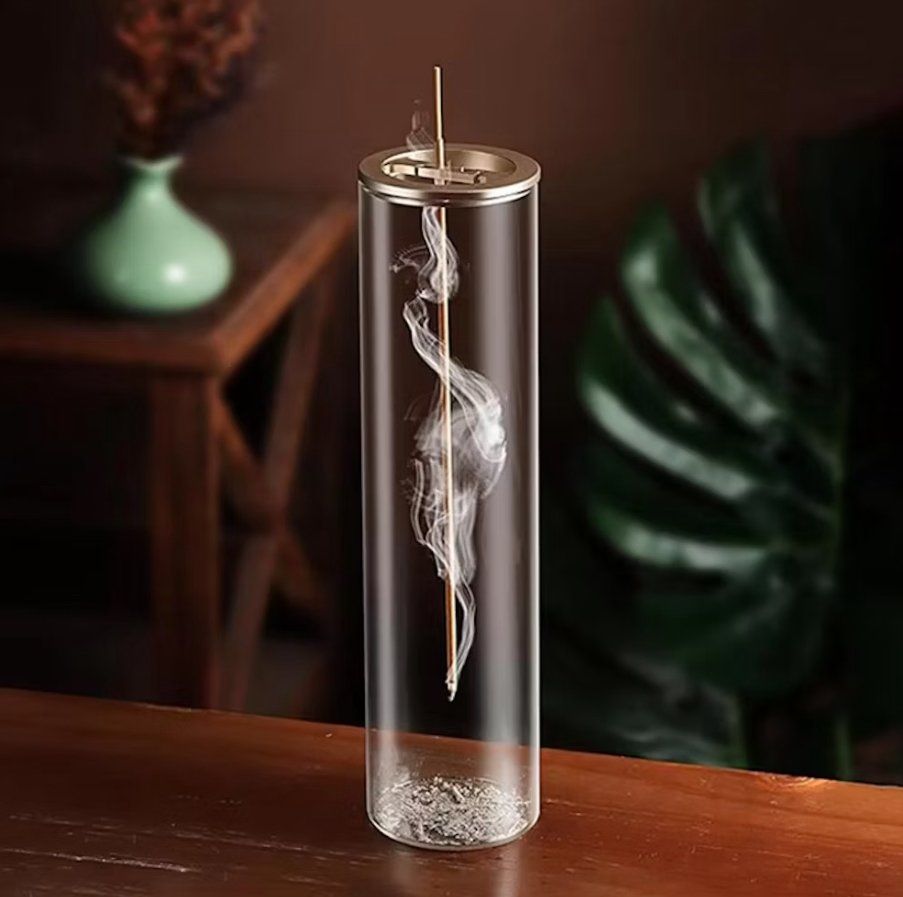
At once transparent and eternal, glass as a medium introduces a level of aesthetic clarity to the incense ritual. Unlike wood or ceramic, which emphasize tactile earthiness, glass communicates precision and lightness. It refracts the burning incense into a kind of private mirage—ash suspended midair, smoke spiraling in luminous rhythm. This dance between fire and fragility brings the ceremonial act closer to art, and the holder becomes not just a tool but a stage.
Designers from Tokyo to Stockholm have leaned into this resurgence, experimenting with borosilicate structures, prism-cut trays, and handblown forms. Some borrow from Bauhaus minimalism, offering a single horizontal rod suspended on a circular base; others lean into baroque ornamentation, with colored glass in smoky ambers and translucent sapphires that echo stained church windows. These holders serve both function and symbolism: holding burning incense while anchoring the sacred nature of pause.
The appeal of glass lies partly in its material paradox—delicate yet durable, sterile yet sensual. A well-made glass incense holder resists heat, collects ash without staining, and maintains its silhouette over time. Unlike porous stone or organic wood, glass ages without decay, preserving the purity of each incense session. The scent may dissipate, but the memory—etched in smoke trails and crystalline residue—remains visible in reflection.
Culturally, this revival of glass incense holders speaks to a larger aesthetic movement: the reclamation of meditative materialism. As consumers seek refuge from overstimulation, the presence of curated silence has grown more valuable. The glass holder becomes a symbol of this pursuit—an altar piece for modern mindfulness, unintrusive yet illuminating. Whether resting atop a marble tray or tucked within a shelf of scent oils and matchbooks, it functions as both artifact and atmosphere.
Moreover, its versatility transcends tradition. The same object that holds a sandalwood stick in Kyoto might cradle palo santo in Brooklyn or a local herb bundle in Marrakech. Glass absorbs no history—it reflects what it is given. In a world increasingly fixated on heritage and sustainability, this neutrality offers a refreshing blank canvas.
In sum, the glass incense holder is not just a decorative element; it is a reflection of how ritual and design can coalesce. Through transparency and form, it provides a still point amid the turning of modern life—subtle, luminous, and serene. As interiors evolve and the sacred continues to take on new shapes, this crystalline vessel remains a quiet companion to the fire of intention.
Related Articles
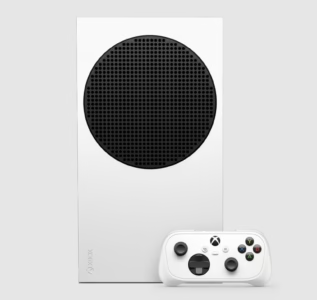
Pocket-sized Xbox Ctrl
Xbox Nano Controller. Announced 14 October 2026 by James Hunter. $49.99. Rechargeable battery. Programmable Action Button. Xbox Wireless and Bluetooth.