
DRIFT AUDIO
Listen to this story
Choose a voice, then press play.
Sephora is piloting a new TikTok Shop format called the Drop Shop, trading its usual full catalog for curated monthly brand spotlights starting September 19.
Sephora is done waiting for TikTok to come to it. The beauty retailer confirmed this week that it’s launching on TikTok Shop, piloting in the United States from September 19 with a new format called the Sephora Drop Shop, and the format itself says more about where retail is heading than the launch date does. It’s a notably different move from how Sephora has typically expanded into new channels, trading its usual full-catalog, always-on approach for something closer to a scheduled event.
stir
The Drop Shop won’t try to replicate a Sephora store or even a typical Sephora.com visit. Rather than stocking its TikTok storefront with everything on its shelves, Sephora will rel a curated selection of products through monthly drops, each one built around a different partner brand getting what the company is calling a dedicated moment to bring its products to life, tell its story and connect with new audiences.
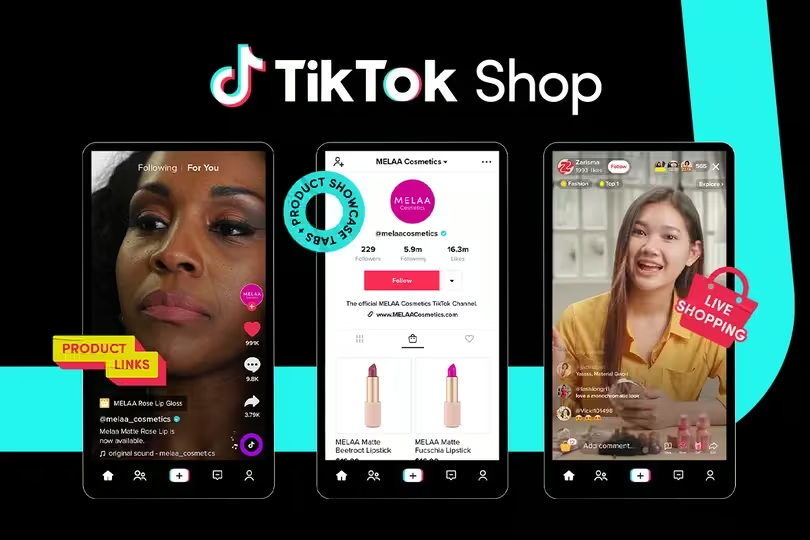
Each drop follows a set rhythm. Teaser content, interactive experiences and creator-led videos roll out first, encouraging TikTok users to guess which brand is about to be spotlighted before anything is officially revealed, a format built to reward the kind of speculative comment-section engagement TikTok already generates organically around anticipated launches. The reveal itself happens during an official TikTok LIVE, where a celebrity host joins brand founders and creators to unveil the featured products, answer audience questions and engage with viewers in real time. Everything shown during the LIVE is shoppable on the spot through TikTok Shop, collapsing the usual gap between seeing a product demonstrated and being able to buy it into a single scrolling screen. Sephora has framed the format as a way to turn a traditional one-way product launch into an ongoing conversation with customers, while giving its brand partners a new route to build direct relationships with TikTok’s beauty audience rather than relying on Sephora alone to tell their story.
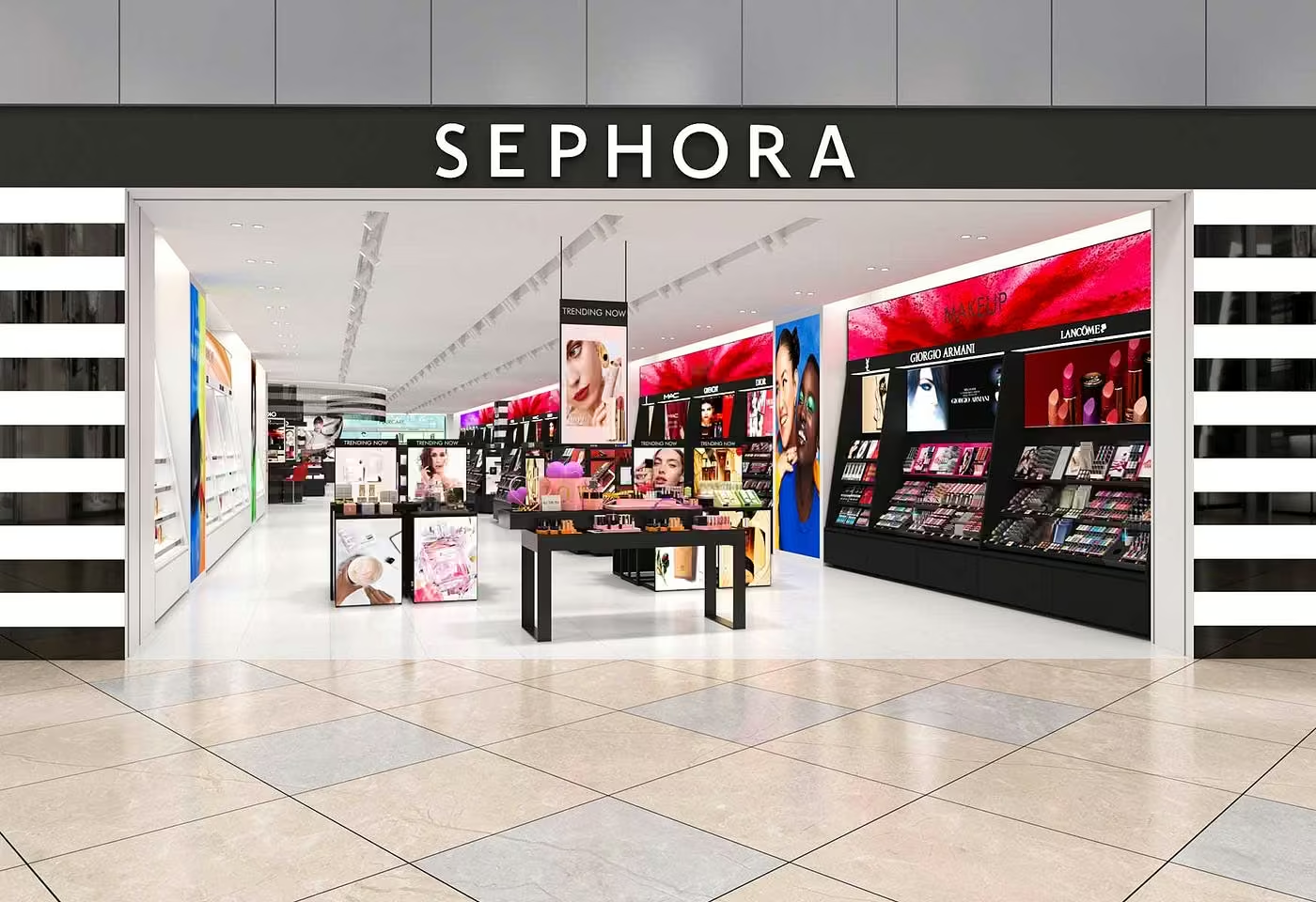
The brightly lit storefront of a Sephora cosmetics store in a shopping mall, featuring a black and white striped facade and product displays inside.
<div> <div style=”max-width:100%;margin:40px 0;padding:12px;background:rgba(255,255,255,0.14);border:1px solid rgba(255,255,255,0.28);border-radius:22px;box-shadow:0 20px 45px rgba(0,0,0,0.20);backdrop-filter:blur(14px);-webkit-backdrop-filter:blur(14px);”> <img src=”” alt=”Interior of a Sephora beauty store showing curated product displays” style=”border-radius:14px;opacity:0.94;width:100%;”> <p style=”text-align:center;font-style:italic;color:rgba(85,85,85,0.85);”><strong>Sephora’s Drop Shop trades the retailer’s usual full-catalog approach for curated monthly spotlights.</strong></p> </div> </div>
flow
The products featured in each monthly drop will launch exclusively through Sephora’s TikTok Shop before going anywhere else. Select items will eventually make their way to Sephora.com, into selected Sephora stores, or through other retail partners, but only after their TikTok Shop window has run its course. During that exclusive stretch, customers will still be able to preview the products on Sephora’s own site, though not purchase them there until the wider rollout begins. It’s a structure that mirrors the exclusivity windows some independent beauty brands have already been testing directly on TikTok Shop, where new launches sometimes stay platform-exclusive for two to three months before reaching bigger retailers at all, except here it’s Sephora itself setting the terms rather than a smaller brand angling for a foothold in her stores.
The “brand founders” set to appear on Sephora’s TikTok LIVEs aren’t a hypothetical detail either. Sephora runs its own incubator for emerging beauty brands, Sephora Accelerate, now in its tenth year, which selects a new cohort of founders each summer for a six month curriculum of mentorship, merchandising support and funding access, with many past participants going on to launch permanently at Sephora. The program has partnered with TikTok before in a smaller capacity, matching Accelerate founders with content creators back in 2023, well before this kind of full retail integration was on the table. The Drop Shop gives that existing pipeline of founders a considerably bigger stage: rather than a single creator video, a founder can now walk a national TikTok audience through their brand live, backed by Sephora’s own curation and marketing muscle.
why
Beauty is TikTok’s single most searched category, generating over a billion beauty-related searches on the platform every month, which is the kind of number that makes a curated exclusive drop format worth the operational lift. Sephora has described the move as a natural progression in how it continues to lead and innovate in beauty retail, and the company’s own language around the launch leans heavily on a test-and-learn framing rather than a full-scale rollout. Nadine Graham, senior vice president and general manager of e-commerce at Sephora North America, told WWD the company is approaching social commerce in “test and learn mode,” treating the Drop Shop as a pilot that will inform how Sephora expands its digital strategy globally rather than a finished playbook.
That cautious framing tracks with a pattern Sephora has leaned into over the past several months. In August, the retailer launched a curated selection of Olive Young’s K-beauty picks for US customers, another exclusive, tightly edited assortment rather than a full catalog dump, arriving through Sephora’s own channels ahead of the TikTok Shop pilot. Between the two moves, Sephora appears to be testing a broader shift away from stocking everything everywhere toward smaller, more editorial drops that create urgency and a reason to check back, a shift the TikTok Shop format takes even further by adding a live, real-time event on top of the curation itself. Sephora has also been experimenting with AI-driven shopping tools this year, including making its product catalog available inside OpenAI’s ChatGPT, another sign that the retailer is treating discovery and distribution as two separate problems worth solving on their own terms rather than assuming its own stores and website will keep capturing that first moment of interest indefinitely.
Sephora is also entering a corner of TikTok Shop that most major US retailers have avoided so far. According to Fashionista’s reporting on the launch, Sephora is joining QVC as one of the only large American retailers using TikTok Shop to sell a broad assortment of third-party brands, rather than just running ads or driving traffic back to their own sites. That distinction matters: most beauty brands on TikTok Shop are selling their own products directly, while Sephora is positioning itself as a curator and retailer within TikTok’s own commerce infrastructure, which is a meaningfully different bet than simply having a TikTok presence.
The timing isn’t incidental either. Sephora’s launch arrives less than eight months after TikTok’s own ownership status in the US was finally settled. TikTok’s Chinese parent company, ByteDance, spent much of 2025 under pressure from a federal law requiring it to divest the app’s US operations or risk a ban, a saga that ended when a new joint venture, majority owned by an investor group led by Oracle alongside Silver Lake and Abu Dhabi’s MGX, closed on January 22, 2026. That resolution gave major US retailers a firmer footing to build on than they had a year earlier, when committing marketing budget and product exclusivity to TikTok Shop carried the added risk of the platform’s American future being genuinely uncertain. Sephora’s decision to pilot something as structurally involved as a recurring, retailer-branded drop format suggests that risk no longer factors meaningfully into how a company of its size thinks about the platform.
behind
Sephora was founded in France in 1969 by Dominique Mandonnaud, who built the chain’s identity around what became known as assisted self-service, letting customers test products freely rather than shopping from behind a counter, a genuinely disruptive idea in cosmetics retail at the time. LVMH acquired the company in 1997 and expanded it into the global operation it is today, with more than 2,600 stores across roughly 35 countries, revenue estimated in the billions of dollars annually, and a US presence that dates back to a SoHo flagship opened in 1998. The company now carries close to 340 brands across its physical and digital shelves alongside its own Sephora Collection private label, a scale that makes the idea of a tightly curated, single-brand monthly spotlight a genuine departure from how the retailer typically presents itself.
Artemis Patrick, President and CEO of Sephora North America, framed the TikTok Shop launch as part of that same expansionist instinct, saying the retailer already has an active beauty community on the platform and is looking to extend its reach to a highly immersed audience it hasn’t fully tapped through its existing channels. Patrick oversees Sephora’s entire North American business, spanning its store network, e-commerce operations and merchandising strategy, which puts the Drop Shop launch squarely inside her broader mandate to keep growing the retailer’s reach beyond its physical footprint rather than treating it as a side experiment run by a smaller digital team.
Behind Patrick, the launch is also being framed as a data-gathering exercise for Sephora’s global digital strategy. Anca Marola, Sephora’s Global Chief Digital Officer, has positioned TikTok Shop as an extension of the company’s broader digital push and its effort to meet customers wherever they already discover beauty products, with the US pilot expected to generate insights that could inform how Sephora approaches similar launches across its international markets down the line. That framing suggests the Drop Shop isn’t just a marketing stunt tied to one launch window, but a live test of a retail model Sephora could eventually roll out well beyond the United States if the pilot performs the way the company hopes. It also means the September 19 debut will likely be watched closely inside Sephora’s own leadership as much as by outside retail analysts, given how directly its outcome could shape decisions the company makes about markets far outside the US pilot.
View this post on Instagram
sum
TikTok Shop itself launched in the US in September 2023, and beauty has been its dominant category from close to the very start. Health and beauty products now make up the large majority of everything sold through the platform, with annual sales in that category exceeding $1.3 billion and TikTok Shop climbing as high as fourth place among US health and beauty retailers during last year’s Black Friday period, up from well outside the top twenty retailers when the platform first launched. Buyer counts on the platform have grown sharply since launch, and brands including Rare Beauty, Rhode, Huda Beauty, Youth to the People, e.l.f. and NYX have all built a visible presence there, some of them using the same kind of short exclusivity windows Sephora is now borrowing for its own drops. TikTok Shop’s own affiliate and creator programs have played a large role in that growth, giving individual creators a direct financial incentive to drive sales toward specific products rather than simply reviewing them, a mechanic that live shopping events like Sephora’s planned TikTok LIVEs are built to take advantage of directly.
Bianca Sing, TikTok Shop’s Global Head of Strategic Brand Partnerships, framed the Sephora deal as a combination of two different strengths: Sephora’s reputation for curation and beauty discovery paired with TikTok Shop’s ability to connect brands to audiences through entertainment and creator culture rather than a static storefront. For TikTok Shop, landing a retailer with Sephora’s scale and prestige positioning is a meaningful validation of its beauty ambitions beyond the smaller, often lower-priced brands that built the platform’s early beauty sales numbers. For Sephora, it’s a bet that the same curation and storytelling that built its physical stores can translate into a format built entirely around video, live events and a single scrolling feed.
Whether the pilot expands past its first few months will likely come down to how the September 19 debut performs, and how much of that “test and learn” lang turns into a permanent fixture on Sephora’s site and app rather than a one-off experiment. Sephora has not said how many drops it plans to run during the pilot phase, which specific brands will headline the earliest activations, or who its first celebrity host will be, all details that will presumably surface as September 19 approaches. For now, the company has committed to exactly one thing on the record: a monthly cycle of curated drops, revealed live, exclusive to TikTok Shop before they’re exclusive to anywhere else.
Related Articles
Eric Haze Stitches a Nineties Friend Into TOKYO Capsule
Five pieces carry Eric Haze's embroidered tagging for TOKYO No.1 SOUL SET, sold online and in Osaka around the band's Oct 25 BAYCREW'S FESTIVAL set.