DRIFT AUDIO
Listen to this story
Choose a voice, then press play.
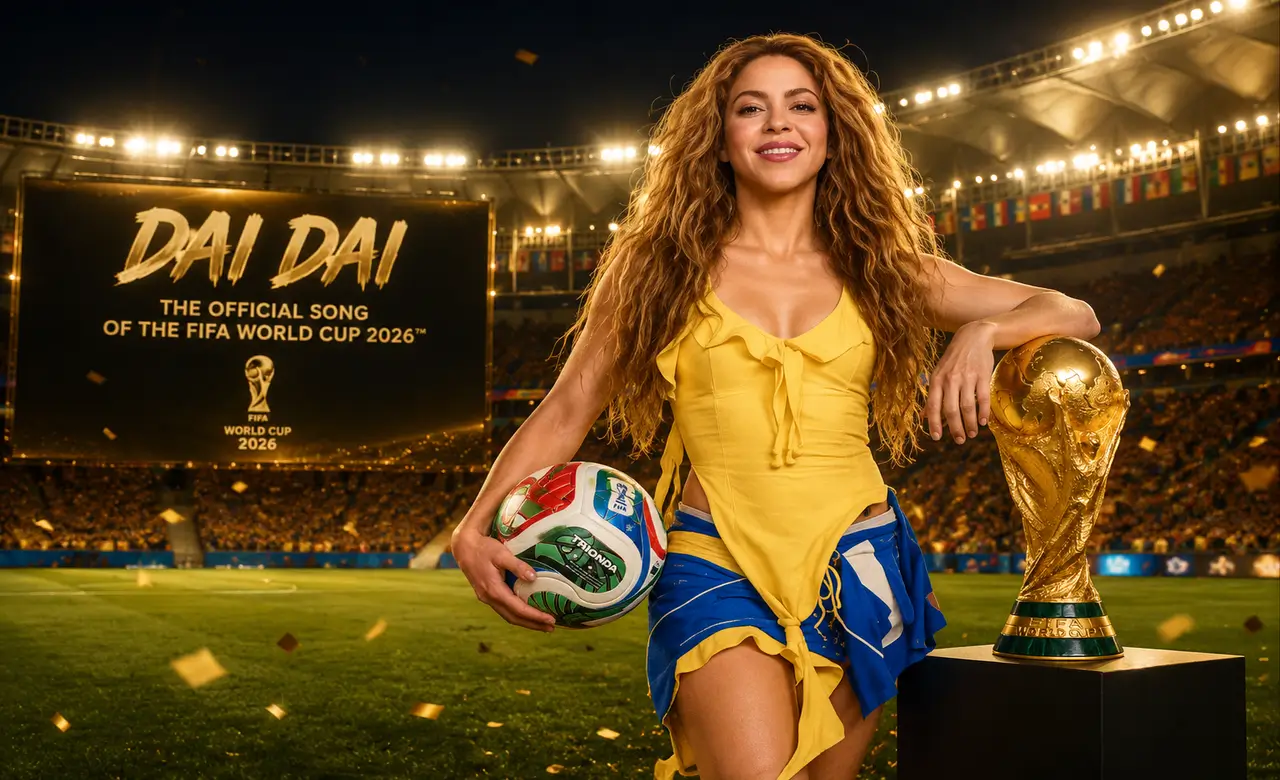
On May 7, 2026, Colombian superstar Shakira dropped a one-minute teaser for “Dai Dai,” the official anthem of the FIFA World Cup 2026, featuring Nigerian Afrobeats icon Burna Boy. Filmed at Brazil’s legendary Maracanã Stadium, the clip immediately ignited social media, football forums, and music platforms worldwide. The full track is set for release on May 14, 2026—just weeks before the tournament kicks off on June 11 across the United States, Canada, and Mexico.
This marks Shakira’s triumphant return to World Cup music, 16 years after her iconic “Waka Waka (This Time for Africa)” dominated 2010. At 49, she continues to embody timeless energy, cultural fusion, and stadium-ready vibes. The teaser blends Latin pop, reggaeton rhythms, and vibrant Afrobeats, creating an upbeat, multilingual celebration that screams global unity. Hooks like “Dai Dai,” “Iko,” “Dale,” “Allez,” and “Let’s go” aim to unite fans from every continent.
The announcement comes at a pivotal moment. Earlier 2026 anthem efforts, including tracks like “Lighter” featuring Jelly Roll and Carin León, drew mixed or lukewarm reactions for lacking the high-energy, danceable essence fans crave from World Cup anthems. Shakira’s entry has been widely framed as a rescue mission—FIFA correcting course to deliver a true party starter.
View this post on Instagram
leg
Shakira’s connection to the World Cup runs deep. In 2006, she performed “Hips Don’t Lie” with Wyclef Jean during Germany’s festivities. Then came “Waka Waka,” which became a global phenomenon, selling millions and embedding itself in football culture. She also contributed to 2014 with “La La La.” No other artist matches her track record for delivering anthems that transcend sports into mainstream pop dominance.
“Waka Waka” wasn’t just a song—it was a cultural moment. It captured African rhythms, South American passion, and universal joy. Fans still chant it in stadiums. “Dai Dai” positions itself as a spiritual successor: reggaeton-tinged Afrobeats with motivational lyrics about resilience (“What broke you once, made you strong”) and a closing “We’re ready” that builds tournament anticipation.
Burna Boy’s involvement adds massive weight. The Grammy-winning artist brings authentic African energy, bridging continents in a way that mirrors the World Cup’s ethos. This is their first collaboration, and early snippets suggest seamless chemistry—Shakira’s fiery vocals complementing Burna’s commanding flow.
charisma
From the teaser: Expect high-energy production perfect for stadiums, TikTok dances, and summer playlists. It fuses Latin percussion, Afrobeats grooves, and pop accessibility. Dancers in reworked national jerseys (including Brazil’s iconic yellow) perform choreography that feels both street-party energetic and professionally polished. Shakira appears vibrant and commanding on the pitch, holding a football amid fireworks and crowd energy.
Critics and fans describe it as “catchy reggaetón-tinged Afrobeats” that perfectly blends both artists’ worlds. It evokes the spirit of past hits while sounding fresh for 2026’s multicultural North American host nations. Multilingual elements make it accessible: Spanish, English, and global call-outs encourage sing-alongs from diverse crowds.
Production likely involves top-tier teams experienced in crossover anthems. The Maracanã setting nods to football’s heritage—home to iconic moments like the 1950 “Maracanazo” and Brazil’s triumphs—while signaling Latin American pride in a U.S.-hosted tournament.
flow
As of May 10, 2026, “Dai Dai” dominates trends. The teaser has racked up millions of views across Instagram, YouTube, TikTok, and X. Hashtags like #DaiDai, #ShakiraWorldCup2026, and #BurnaBoyShakira trend regionally and globally. Fan edits, dance challenges, and reaction videos proliferate.
On X (formerly Twitter), posts praise its energy: users call it “the rhythm of the summer” and share clips of impromptu dances. Spanish-language conversations highlight national pride, while African and diaspora communities celebrate Burna Boy’s spotlight. English-speaking football fans express relief: “Shakira saved the World Cup.”
TikTok sees thousands of videos—kids mimicking choreography, football fans syncing training drills to the beat, and influencers predicting it will rival “Waka Waka” in legacy. YouTube reactions (e.g., JasonTheWeen) garner tens of thousands of views, with comments like “She saved us from disaster” and “How is she not aged?”
Instagram Reels and Stories amplify the hype. FIFA and Global Citizen’s joint posts drive engagement. Early data suggests massive pre-save numbers on Spotify and Apple Music, positioning “Dai Dai” for a strong debut.
rx
The dominant narrative is gratitude and excitement. Common refrains include:
“Shakira stepping in like one of The Avengers.”
“Nobody besides Shakira should ever make the World Cup song.”
“Give her a lifetime pension for all future anthems.”
“This sounds so good… we should already crown it.”
Fans contrast it favorably with prior attempts, crediting Shakira for restoring “real World Cup vibe”—uplifting, unifying, danceable energy missing from softer or country-infused tracks.
Nostalgia plays huge: References to “Waka Waka” abound, with predictions it could become equally embedded in stadium culture. Burna Boy fans appreciate the Afrobeats elevation, broadening appeal across Africa and the diaspora. Latin American communities feel represented, especially with Colombia’s qualification and the song’s roots.
Minor divisions exist. Some prefer earlier tracks like “Lighter” for different vibes, calling the new one “divisive” until the full version drops. A few critique the teaser’s brevity, wanting more lyrics or verses. Overall, these are outliers—the sway is decisively positive, with excitement outweighing skepticism.
Celebrity and influencer reactions amplify this. Football personalities and musicians share support. Global media (ESPN, AP, Billboard) frame it as a major event, boosting legitimacy.
impression
“Dai Dai” transcends music. It promotes unity in a politically charged era, using football as a common language. Multilingual hooks foster inclusivity for hosts (U.S., Canada, Mexico) and global viewers. Afrobeats + Latin fusion reflects modern migration and cultural exchange.
Economically, expect boosts: streaming revenue, merch, tourism tie-ins. Shakira’s involvement elevates the tournament’s cultural profile, potentially increasing viewership and sponsorship interest. For Burna Boy, it expands his U.S./Latin reach.
Socially, it inspires youth—dance challenges promote fitness and joy. Shakira’s enduring appeal challenges ageism in pop, showing vitality at any stage. Her history of philanthropy via the Barefoot Foundation adds depth; this anthem aligns with empowerment themes.
Potential challenges remain around FIFA’s commercial ecosystem and broader geopolitical conversations surrounding the tournament, yet the song’s feel-good energy positions it primarily as a unifying force.
next
The full release on May 14 is expected to become a global event, likely accompanied by an official music video, live performances, and integrated FIFA campaigns. Expectations already point toward chart dominance across Spotify and Billboard, viral TikTok choreography, stadium chants by June, and potential opening ceremony performances featuring both artists.
Analysts predict “Dai Dai” will become one of summer 2026’s defining crossover records, especially once tournament momentum accelerates. Brand partnerships with companies like Coca-Cola or Adidas also feel inevitable given the anthem’s global reach and commercial scale.
fin
Shakira’s “Dai Dai” arrives as more than another FIFA anthem—it feels positioned as a cultural reset. After earlier rollout misfires, the teaser delivers exactly what audiences wanted: vibrant rhythm, emotional unity, multilingual energy, and unmistakable stadium euphoria. The momentum is already massive, and anticipation continues building toward what could become one of the defining musical moments of the 2026 World Cup.
As the teaser itself promises: “We’re ready.” Football fans around the world seem to agree. Whether inside stadiums across North America or through dance floors and social feeds globally, “Dai Dai” appears ready to soundtrack a summer built around celebration, resilience, and collective joy. Shakira once again proves why she remains the undisputed queen of the modern World Cup anthem.