Bobby Cox’s Legacy Lives Beyond Baseball and the Atlanta Braves Dynasty

May 10, 2026
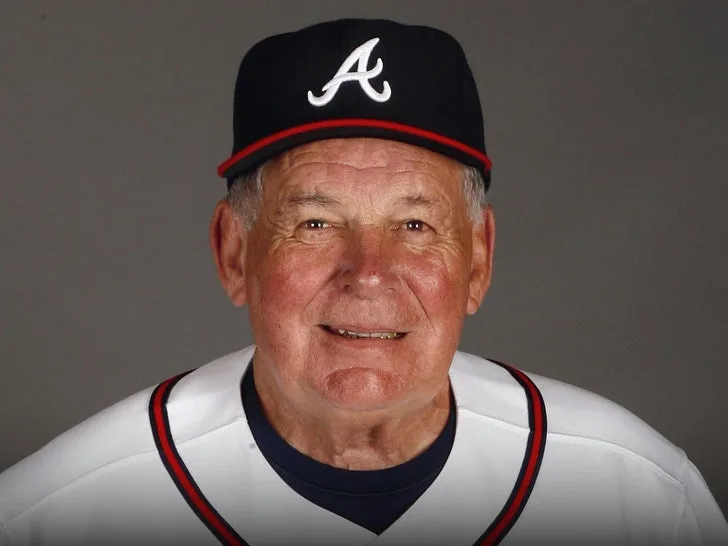
Bobby Cox wasn’t just a baseball manager. He was the steady pulse of the Atlanta Braves for decades, a father figure to generations of players, and one of the most respected leaders the game has ever known. When he passed away on May 9, 2026, at the age of 84 in Marietta, Georgia, baseball lost one of its true giants. His 2,504 career wins rank fourth all-time. He led the Braves to 14 consecutive division titles (1991–2005), five National League pennants, and the 1995 World Series championship—the city’s first major professional sports title. Yet his legacy runs far deeper than numbers. It lives in the respect he commanded, the loyalty he inspired, and the way he defended his players with fiery passion.
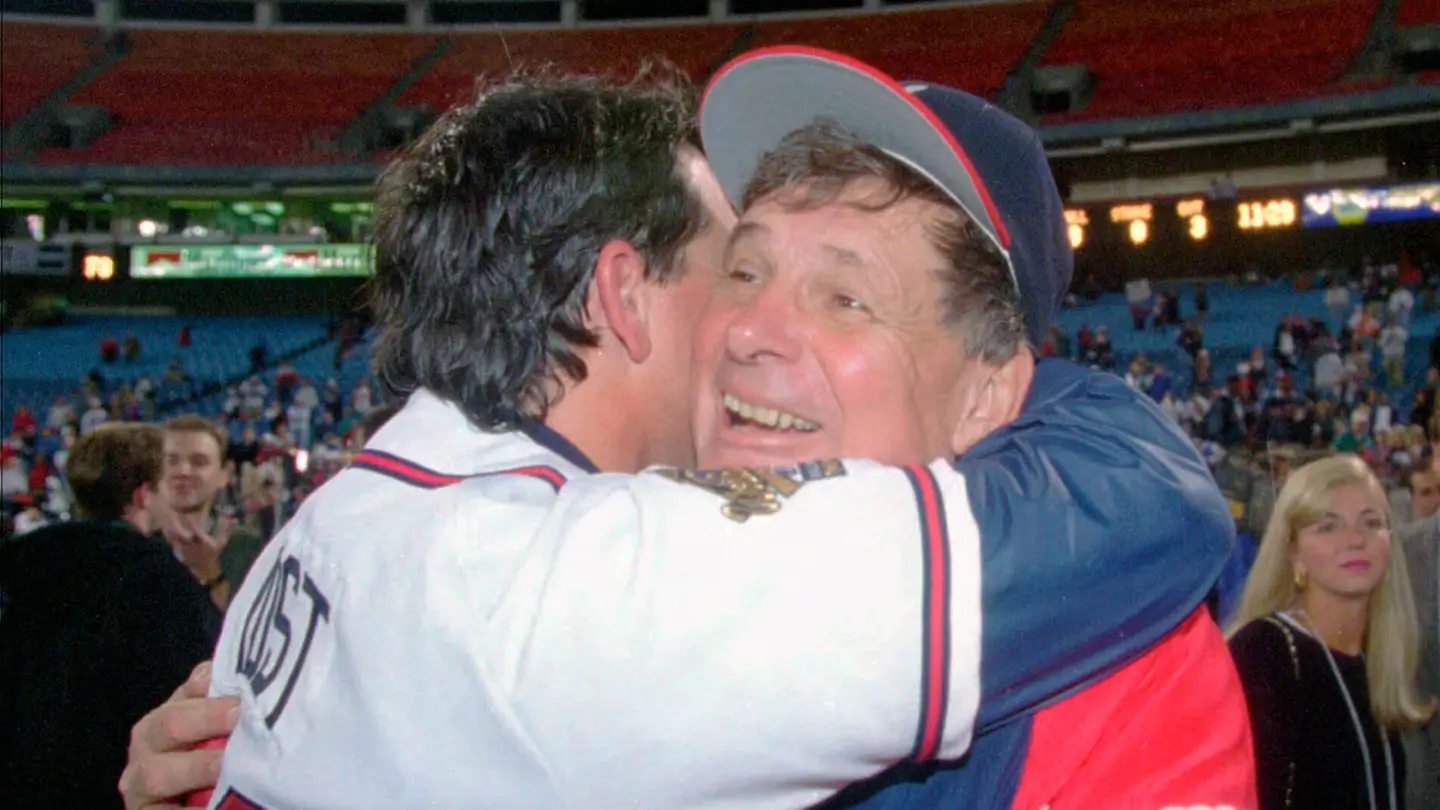
)In this Oct. 28, 1995, file photo, Atlanta Braves manger Bobby Cox, right, hugs bullpen coach Ned Yost after the Braves’ 1-0 victory over the Cleveland Indians in Game 6)
— Atlanta Braves (@Braves) May 9, 2026
stir
Robert Joseph Cox was born on May 21, 1941, in Tulsa, Oklahoma, but grew up in Selma, California. Baseball ran deep in his family. His father made his first pair of spikes from old shoes, and his extended family helped form the first Little League and Babe Ruth leagues in their hometown. Young Bobby dreamed of playing in the majors. A promising third baseman, he signed with the Los Angeles Dodgers organization but suffered an elbow injury that derailed his senior year of high school.
He made it to the big leagues anyway, debuting with the New York Yankees in 1968 at age 26. In two seasons, he appeared in 85 games, hitting .225 with 2 home runs. His playing career was modest, but it planted the seeds for something greater. After retiring as a player, he coached for the Yankees in 1977 (part of their World Series-winning team) before stepping into managing.
stint
Cox began his managerial career with the Atlanta Braves in 1978. The team was struggling, but he instilled discipline and competitiveness. After four seasons, he moved to the Toronto Blue Jays (1982–1985), where he won the AL East in 1985 and earned his first Manager of the Year award. That success brought him back to Atlanta in 1986—this time as general manager.
In that front-office role, Cox laid the foundation for a dynasty. He drafted Chipper Jones, traded for John Smoltz, and helped build the core that would dominate the 1990s. By 1990, he returned to the dugout as manager, a dual role he handled with quiet brilliance.
accomplishment
From 1991 to 2005, the Braves won an unprecedented 14 consecutive division titles under Cox. In an era of free agency and parity, this run stands as one of the most remarkable achievements in sports history. The Braves reached the World Series in 1991, 1992, 1995, 1996, and 1999, winning it all in 1995 against the Cleveland Indians.
That 1995 team—featuring Greg Maddux, Tom Glavine, John Smoltz, Chipper Jones, and Andruw Jones—embodied Cox’s philosophy: pitching, defense, and smart, fundamental baseball. Cox trusted his players, kept the clubhouse calm, and made everyone feel valued. Hall of Famer Tom Glavine later said Cox treated players “like men” with few rules beyond showing up ready to play the game the right way.
Cox won Manager of the Year four times (1985, 1991, 2004, 2005), becoming the first to win it in both leagues and the first to win it in back-to-back seasons. His career winning percentage sat at .556 over 29 seasons. He managed 4,508 games, a testament to endurance and consistency.
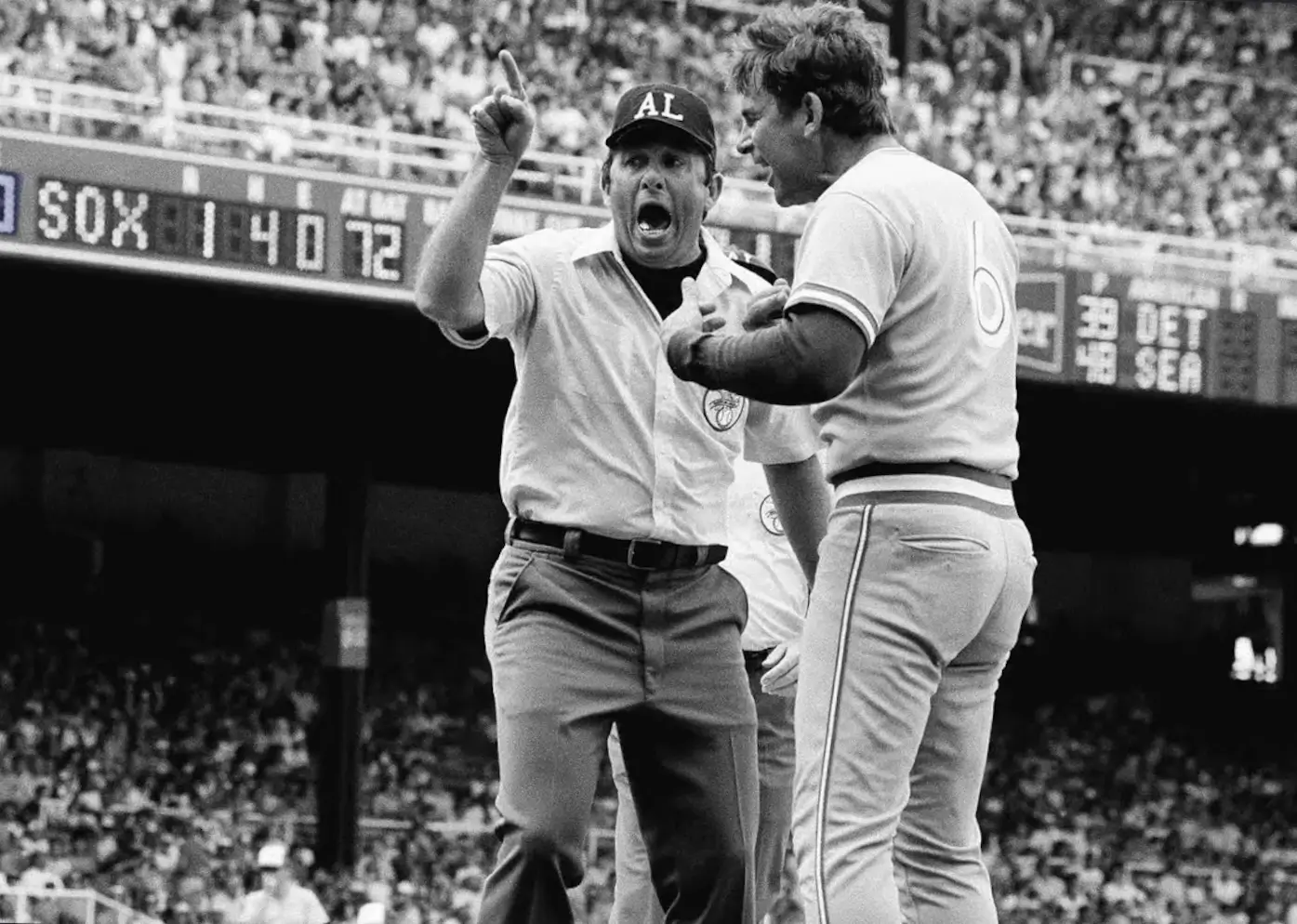
(Toronto Blue Jays’ manager Bobby Cox gets the heave-ho from first base umpire Dave Phillips during the game against the White Sox in Chicago, July 17, 1983)
challenge
Bobby Cox holds the all-time record with 162 ejections (including postseason). He broke John McGraw’s mark in 2007 and kept going. Those ejections weren’t outbursts of ego—they were acts of protection. Cox stood between umpires and his players, absorbing the heat so his team could focus on winning.
Players loved him for it. John Smoltz said a small part of Bobby Cox changed you as a player, and twenty years with him changed your life. Andruw Jones called him a “second father.” Greg Maddux noted that the first word that came to mind when describing Cox was “respect.” Cox famously said, “If I were on the field, I’d want the manager sticking up for me.” He lived that belief every day.
steward
Cox wasn’t a screamer in the clubhouse. He led with calm authority, dry humor, and genuine care. He rarely took credit, always pointing to his players. In his 2014 Hall of Fame induction speech, he thanked everyone but himself—family, coaches, players, even the fans. He introduced his wife Pam and children, emphasizing the sacrifices they made during long seasons.
He excelled at player development. Many of his stars credited him with shaping not just their games but their characters. Ozzie Guillén, who played for him briefly, later thanked Cox for guidance when transitioning to managing. Cox bridged eras—from Mickey Mantle’s Yankees to the steroid era and beyond—always emphasizing fundamentals and integrity.
forward
Cox retired after the 2010 season. The Braves retired his No. 6 in 2011. He was inducted into the National Baseball Hall of Fame and Museum in 2014 alongside Maddux, Glavine, and others. In Cooperstown, he reflected on his “great ride,” joking about his ejections and crediting his roots in Selma.
Even after retirement, he remained a beloved figure in Atlanta. He dealt with health challenges—a stroke in 2019 and heart issues—but stayed connected to the game and his extended baseball family.
trib
Upon his passing, tributes poured in from across baseball.
The Atlanta Braves called him “the best manager to ever wear a Braves uniform.”
Chipper Jones and countless former players described him as a father figure.
Fans, politicians, broadcasters, and fellow managers remembered his humility, fire, and humanity.
Freddie Freeman and others shared stories of his kindness and wisdom, while Georgia governor Brian Kemp highlighted Cox’s enduring impact on the state itself.
fin
Bobby Cox won more than games. He built a culture of excellence, loyalty, and joy in the game. In an era increasingly shaped by analytics and pressure, he reminded baseball that the sport remains human at its core—played by people who need belief, protection, patience, and trust.
His 1995 World Series ring symbolized Atlanta’s breakthrough, but his real legacy lives in the hundreds of players, coaches, and fans whose lives he touched. He proved that fierce competitiveness and deep humanity can coexist. He proved that consistency over decades matters more than spectacle. And he proved that one man’s steady leadership could elevate an entire franchise and city.
Thank you, Bobby. For the titles, the fire, the dugout hugs, the arguments with umpires, and the way you made everyone around you better. Baseball is better because you were in it.
Rest in peace, Skipper. Your legacy—etched across 14 straight Octobers and generations of lives—will endure forever.
Related Articles

Inside Zhou Guanyu’s Road From Shanghai Karting to Formula 1 and Fashion’s Front Row – Tommy Hilfiger
Zhou Guanyu spent over a decade fighting to become China’s first Formula 1 driver. Now […]