DRIFT AUDIO
Listen to this story
Choose a voice, then press play.
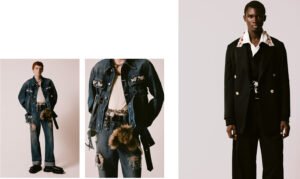
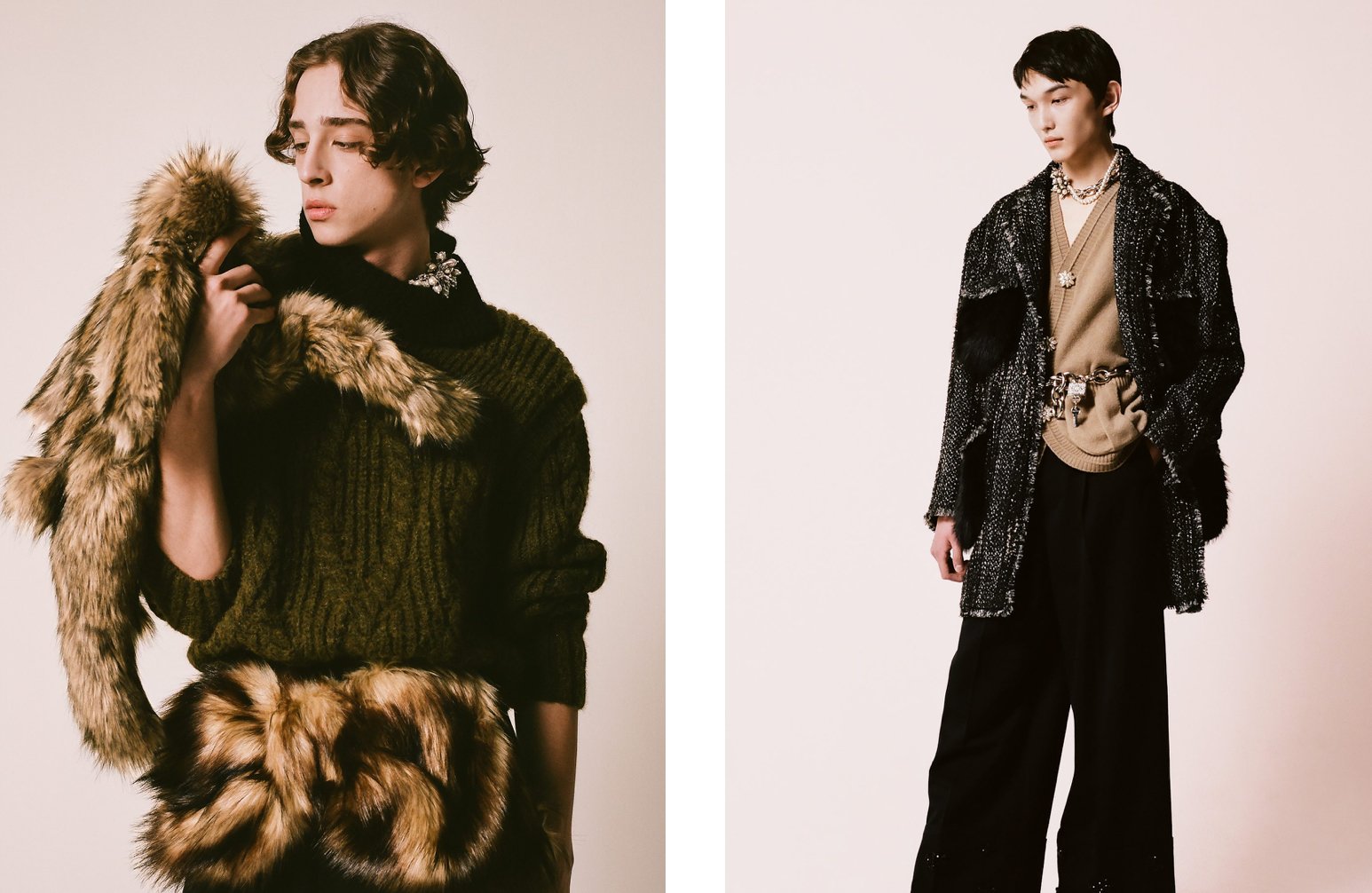
With her signature fusion of romance and rebellion, Simone Rocha continues to sculpt a distinctive presence in the landscape of contemporary menswear. For Fall/Winter 2025, Rocha leans deeper into her narrative-driven aesthetic, producing a collection that is as emotionally resonant as it is visually arresting. Captured by photographer Eimear Lynch and styled with conceptual precision by Robbie Spencer, the collection merges historical references, subversive tailoring, and tactile storytelling.
This season, Rocha reinforces her aptitude for crafting garments that read like heirlooms of a poetic past—only now they are stitched with a stark, modern urgency. The Fall/Winter 2025 menswear line marks an evolution for the brand: at once meditative and confrontational, restrained and ornamental.
Sculpting Sentiment: Rocha’s Vision of Modern Masculinity
Simone Rocha’s approach to menswear doesn’t simply mirror her womenswear vocabulary—it converses with it. Her vision of masculinity is expansive, and in this latest collection, she invites vulnerability, delicacy, and theatricality into the male silhouette.
Silhouettes were slightly oversized yet impeccably structured. Tapered pants with volume at the hip, military-inspired overcoats with sculptural pleating, and tailored blazers adorned with tulle or lace offered a new kind of strength—not born from rigidity, but from emotional complexity. Rocha’s designs blur the lines between traditional masculine armor and feminine flourish.
Knitted vests and sheer blouses were styled with pearl embellishments, rosettes, and even lace trim—elements typically reserved for bridalwear or couture eveningwear, now purposefully repositioned on menswear pieces. Rather than feel ironic or performative, the styling choices felt deliberate and reverent—hallmarks of Rocha’s sensibility.
Color Story and Textile Alchemy
Rocha’s palette this season was restrained but full of emotional weight. Black anchored the collection, giving it a gothic, monastic quality, while dusty pinks, icy blues, antique cream, and oxblood red softened the impact. Occasional injections of metallic gold and silver thread evoked religious tapestries, elevating the garments into relic-like status.
Textile manipulation remains Rocha’s signature skill. Satin duchesse mingled with crinkled organza. Tartan wool clashed beautifully with sheer mesh. The push-and-pull between hard and soft, dense and transparent, continued throughout. Embroidered florals appeared scorched at the edges, and lace overlays gave way to exposed seams and unfinished hems. It was clothing on the brink—of unraveling, of transformation.
The Show’s Structure: Stillness in Motion
Though not staged as a runway presentation, the lookbook—shot by Eimear Lynch—captured models in atmospheric interiors, standing in stark, chiaroscuro-lit rooms reminiscent of a Caravaggio painting. The absence of movement underscored Rocha’s desire for the garments to speak without distraction. Each photograph functioned like a portrait: intimate, moody, and ceremonial.
Robbie Spencer’s styling added nuance to the narrative. Satin opera gloves were layered with oversized outerwear, while delicate netting peeked from beneath trench coats. Accessories—oversized brooches, pearl-studded socks, and miniature handbags—played with scale and gender coding. In one look, a male model wore a puff-sleeved bolero jacket adorned with mourning lace over loose, pleated trousers. In another, a sleek pinstripe suit was punctuated with a corsage of crushed velvet roses.
Historical Echoes, Modern Reverberations
Simone Rocha has always drawn inspiration from her heritage—both Irish and Chinese—and historical references continue to echo through her work. This season evoked Victorian mourning dress, Edwardian silhouettes, and even ecclesiastical robes. Yet the result never felt like costume. Instead, Rocha folds history into the now, infusing every piece with layers of cultural memory.
One standout look—a sheer black tunic layered over embroidered trousers—felt like a meditation on grief, while another ensemble, featuring a velvet cape and pearl-tethered collar, channeled a kind of aristocratic fragility. These are clothes that don’t just dress the body—they dress the psyche.
The Emotional Architecture of Clothes
What sets Simone Rocha apart from many of her contemporaries is her ability to tell stories through texture, proportion, and detail. Her work is deeply cinematic—each garment feels like a character in an unfolding drama. For Fall/Winter 2025, that drama is interior, personal, and hauntingly beautiful.
Rocha’s menswear isn’t simply about shifting what men wear—it’s about expanding the emotional vocabulary of menswear. Her silhouettes propose new modes of vulnerability. Her detailing proposes new forms of armor. Her vision proposes that masculinity can hold contradiction without collapsing under the weight.
Reception & Impression
In a fashion climate where streetwear remains dominant and minimalism continues to trend, Rocha’s ornate, emotionally-charged designs offer a powerful counterpoint. Critics and buyers alike are likely to embrace this collection not only for its craft but for its courage. In creating space for softness, Simone Rocha isn’t just designing clothing—she’s designing cultural shifts.
Retailers will likely focus on key pieces with high editorial value: pearl-encrusted jackets, lace-trimmed coats, and satin shirting. Yet the more minimal offerings—wool trousers with unexpected pleats, outerwear lined with embroidered silk—offer commercial potential for those looking to ease into Rocha’s aesthetic.
A Romantic Rebellion
Simone Rocha’s Fall/Winter 2025 menswear collection stands as a bold reminder that fashion is not just about garments—it is about emotion, identity, and storytelling. Her ability to translate poetic ideas into wearable art makes this one of her most compelling menswear outings yet.
In a season where many designers played it safe, Rocha delivered something far more valuable: a romantic rebellion. Not through grand gestures, but through careful construction, material memory, and emotional clarity. In doing so, she continues to reshape not just what men wear—but what it means to wear something that feels.
Read Drift’s related feature, Simone Rocha Crossbody Bag.
Related Articles
Modigliani’s Limestone ‘Tête’
Carved from a single block of limestone in Montparnasse more than a century ago, one of Modigliani's rare stone heads goes to auction for the first time…