DRIFT AUDIO
Listen to this story
Choose a voice, then press play.
This structural shift has hammered late-night television particularly hard. What was once a nightly culture ritual—families and individuals tuning in at 11:35 p.m. for monologues, sketches, and celebrity interviews—has fragmented into YouTube clips, TikTok highlights, podcasts, and streaming binges. Total viewership for the major late-night shows has eroded significantly since the mid-2010s. NBC’s The Tonight Show Starring Jimmy Fallon has seen some of the steepest drops, while ABC’s Jimmy Kimmel Live! and CBS’s The Late Show with Stephen Colbert have held on more resiliently in total viewers but still lost ground, especially in the advertiser-coveted 18-49 demographic.
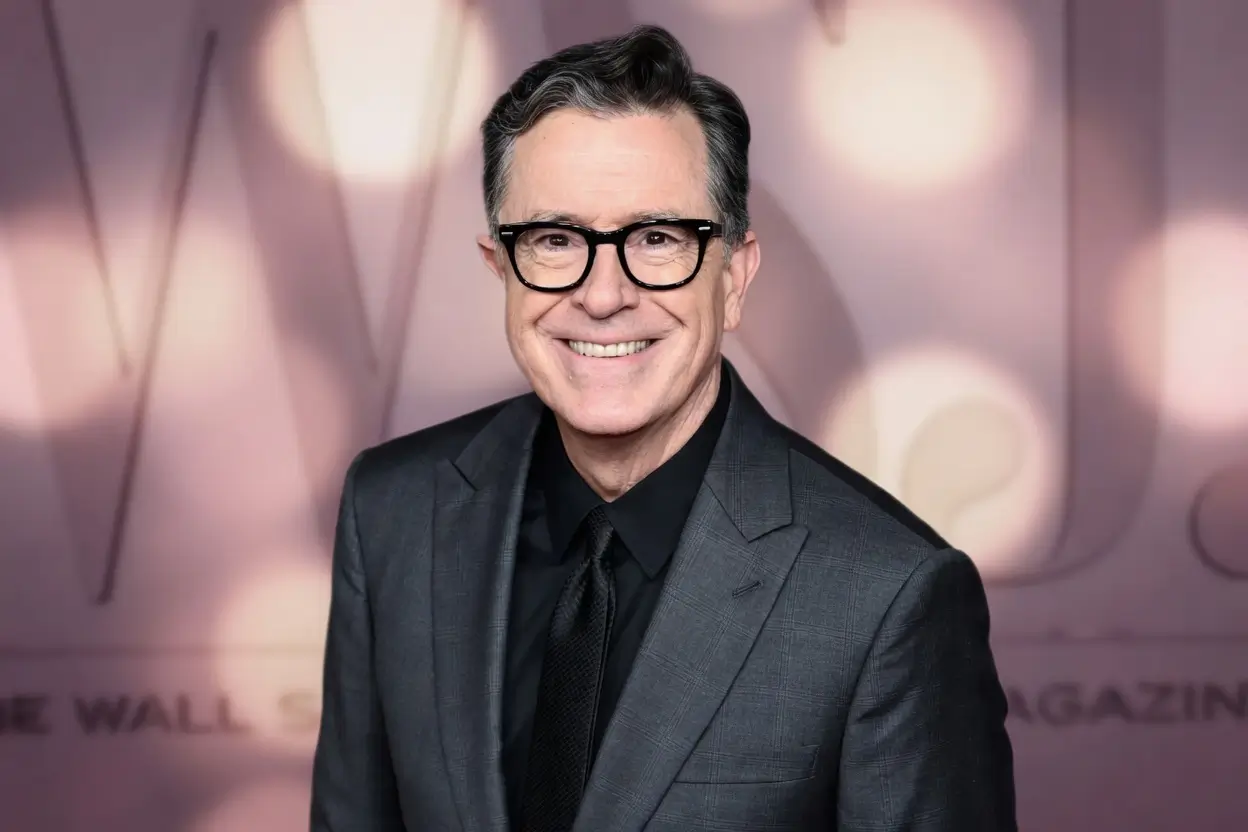
For Colbert, who took over The Late Show in 2015 following David Letterman’s retirement, the numbers told a story of resilience amid decline. His show often led in total viewers (averaging around 2.4-2.7 million in recent quarters), but the broader trend was unmistakable. CBS announced in July 2025 that the franchise would end in May 2026 upon the expiration of Colbert’s contract, citing financial realities in a fractured media landscape. The final episode aired on May 21, 2026.
This marks the end of an 11-year run for Colbert in the Late Show chair and, effectively, the retirement of the Late Show brand after more than three decades. Yet Colbert, at 62, is far from finished. His next chapter is already taking shape in one of Hollywood’s most ambitious franchises: a new Lord of the Rings film for Warner Bros. This passion project aligns perfectly with his well-documented lifelong fandom of J.R.R. Tolkien, offering a creative pivot that sidesteps the grind of daily television while leveraging his writing talents and cultural cachet.
stir
To absorb circumference of Colbert’s transition, one must grasp the larger industry headwinds. Linear TV viewership has plummeted across the board as cord-cutting accelerates and attention migrates to digital platforms. Younger viewers, in particular, consume content on-demand via smartphones and laptops. A full 30- or 60-minute episode competes poorly against bite-sized clips that can be watched anytime. Networks struggle to monetize these clips effectively because platforms like YouTube capture much of the ad revenue.
Late-night shows adapted by posting segments online aggressively, but this created a cannibalization effect: why stay up late or set a DVR when the best bits are available instantly for free? Production costs remained high—salaries for hosts, writers, staff, sets, and guests—while ad revenue shrank. Data from the past decade shows consistent erosion. Colbert’s show, for instance, maintained a lead in total viewers into 2025-2026 but saw demo declines that mirrored industry trends.
Critics and insiders point to broader culture shifts too. Polarization made satire trickier; audiences fragmented along ideological lines, with some tuning out perceived “preachy” monologues. Streaming giants like Netflix and YouTube offered alternatives that felt fresher or less formulaic. Fox News’s Gutfeld!, airing earlier, sometimes outperformed traditional late-night in certain demos among viewers seeking different tones.
Despite these challenges, Colbert thrived creatively. He evolved from his Colbert Report persona—a satirical conservative blowhard—into a more earnest, improvisational host with sharp political commentary, musical bits, and heartfelt interviews. The show won Emmys, including for writing and variety, and maintained a loyal (if aging) audience. Guests ranged from world leaders to pop stars, and segments like “The Late Show’s” election coverage or COVID-era broadcasts demonstrated its relevance. Yet the format’s limitations in a post-linear world became insurmountable for CBS’s bottom line.
transition
Colbert’s announcement in March 2026 that he would co-write The Lord of the Rings: Shadow of the Past (working title) for Warner Bros. and New Line Cinema was met with excitement from fans. The project, developed with his son Peter McGee (a screenwriter) and veteran LOTR scribe Philippa Boyens, draws from six early chapters in The Fellowship of the Ring largely omitted from Peter Jackson’s 2001 film—specifically sections like “Three Is Company” through “Fog on the Barrow-downs.”
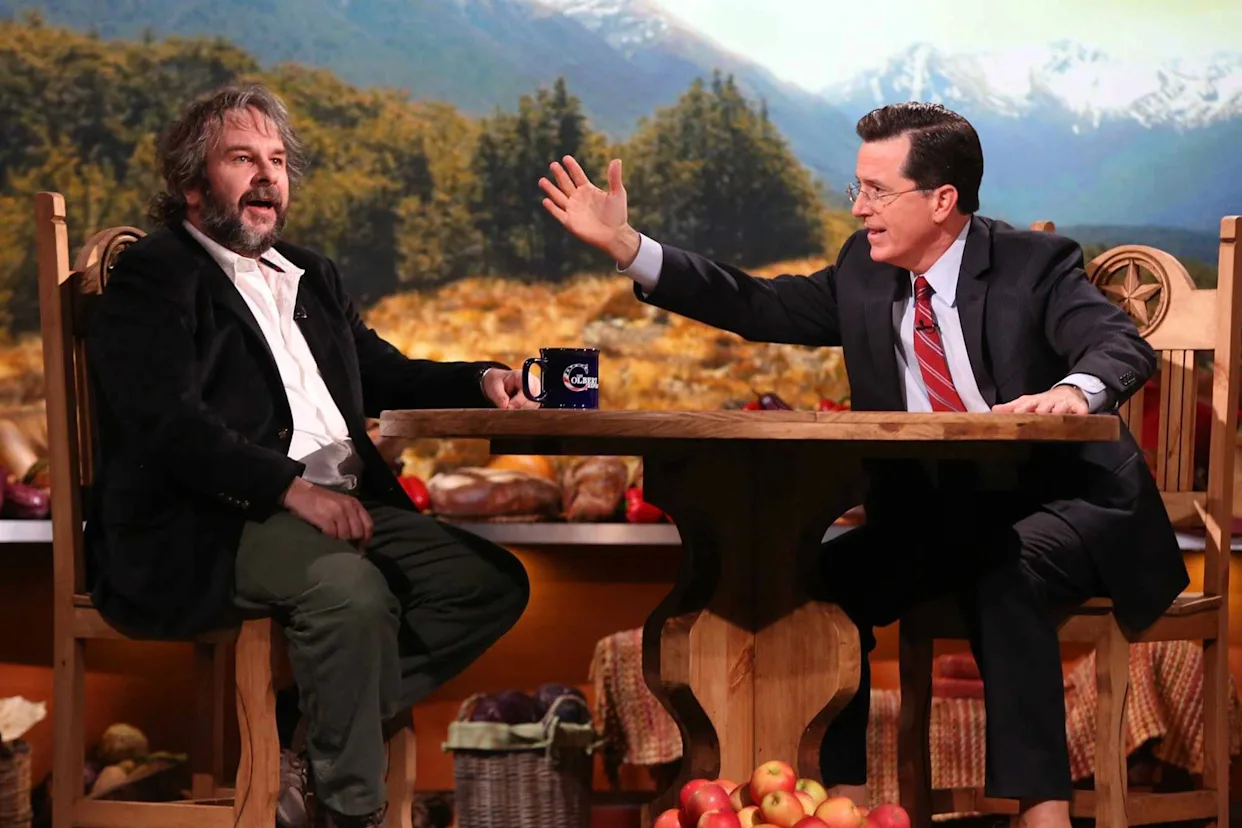
This is no opportunistic celebrity attachment. Colbert is a genuine Tolkien scholar. He has spoken extensively about the books’ themes of friendship, resilience, language, and mythology. He even had a cameo in Jackson’s The Hobbit: The Desolation of Smaug (2013) as a Lake-town guard. Peter Jackson himself noted that Colbert pitched the idea a year before the Late Show cancellation, proving it was a passion project long in gestation. Jackson praised Colbert’s deep knowledge: “I’ve never met anyone who knows more about Tolkien.”
The film slots in as part of Warner Bros.’ strategy to keep the LOTR rights active, following Andy Serkis’s The Hunt for Gollum. It promises a more faithful adaptation of those “road” chapters, emphasizing the hobbits’ journey, the Barrow-wights, and the growing shadow of Sauron—elements that add texture and lore without retreading the main trilogy’s epic battles. For a “Tolkien nerd” like Colbert, this represents creative fulfillment after years of nightly topical comedy.
Writing a major studio film with heavyweights like Boyens and Jackson’s WingNut Films is a significant step up in scope. It allows Colbert to collaborate, build worlds, and engage with timeless storytelling—contrasting sharply with the ephemeral nature of daily monologues. Production is expected to ramp up post-May 2026, potentially filming in New Zealand. Success here could open doors to directing, producing, or further franchise work, positioning Colbert as a multifaceted creator rather than just a TV personality.
tease
Despite fan speculation and his history of political satire—including a 2008 satirical presidential run on The Colbert Report—Colbert has repeatedly shut down ideas of entering real politics. In a May 2026 appearance with former President Barack Obama, Colbert joked about people urging him to run for president. Obama quipped about Colbert having “the look” and “the hair,” but Colbert called the idea “stupid” and sought confirmation it wasn’t an endorsement. Obama replied, “It was not.”
This exchange encapsulated Colbert’s stance: playful acknowledgment of the meme, firm rejection of the reality. He has told interviewers he has zero interest in public office, preferring the freedom of entertainment. His satire has always been from the outsider’s perspective—skewering power rather than wielding it. Post-Late Show, he is more likely to channel any political instincts into creative projects or occasional guest spots than campaigns.
flow
Colbert has kept options open beyond Middle-earth. In interviews, he expressed interest in “creating another show” but without specifics on format—perhaps something less daily, more like a limited series, podcast evolution, or streaming project. He loves collaboration and has fielded offers for scripts and roles immediately after the cancellation news. He ruled out a traditional stand-up tour, noting his roots in improv and ensemble work.
Short-term plans include family time: his son John’s Yale graduation and his brother Tommy’s wedding in Washington, D.C., right after the finale. Long-term, expect Colbert to “reenter show business” thoughtfully. Possibilities include producing, voice work (he has done plenty of animation), books, or even a return to acting in dramatic or comedic roles. His Strike Force Five podcast collaborations with Kimmel, Fallon, Meyers, and Oliver hint at continued camaraderie in the comedy world.
Financially secure after years at the top, Colbert can afford selectivity. CBS’s decision, while disappointing to fans and Letterman (who called out the network), frees him from the relentless pace. As he told outlets, the show “takes all my time.” Stepping back allows space for bigger swings.
fin
Colbert leaves a substantial legacy. He helped keep The Late Show culturally vital during turbulent times—Trump era, pandemic, elections—blending humor with empathy and intellect. His evolution from character comedian to sincere host broadened late-night’s appeal. While the format fades, his influence persists in how digital creators and streamers handle topical comedy.
The industry’s challenges won’t vanish. Networks may pivot to cheaper formats, more affiliate-friendly slots, or hybrid digital-linear models. Byron Allen’s Allen Media Group is reportedly taking over the Late Show time slot via a time-buy deal, signaling further fragmentation.
For Colbert personally, the Lord of the Rings project feels like a fitting capstone and launchpad. It honors his nerdy passions while showcasing writing chops honed over decades. In an era where traditional TV contracts bind less tightly, talents like him can chase dreams across mediums. Whether Shadow of the Past becomes a blockbuster or a niche delight, it underscores a truth: creativity outlasts any single platform.
As audiences continue shifting, Colbert’s path suggests adaptability. He won’t chase fading appointment viewing; instead, he’ll build worlds that endure—like Tolkien’s. Fans can look forward to hobbits, ringwraiths, and perhaps a few satirical asides woven into epic fantasy. After 11 years of nightly relevance, Stephen Colbert is ready for his next adventure—one where the road goes ever on.
From the DRIFT archive: Jodie Foster Narrates Morgan Neville’s Breakdown: 1975: A Cultural Autopsy of the Most Radical Year in American Cinema · Fashionably Late, Perfectly On Time: XO’s Arrival Shakes Up UK Pop
Related Articles

Pocket-sized Xbox Ctrl
Xbox Nano Controller. Announced 14 October 2026 by James Hunter. $49.99. Rechargeable battery. Programmable Action Button. Xbox Wireless and Bluetooth.