DRIFT AUDIO
Listen to this story
Choose a voice, then press play.
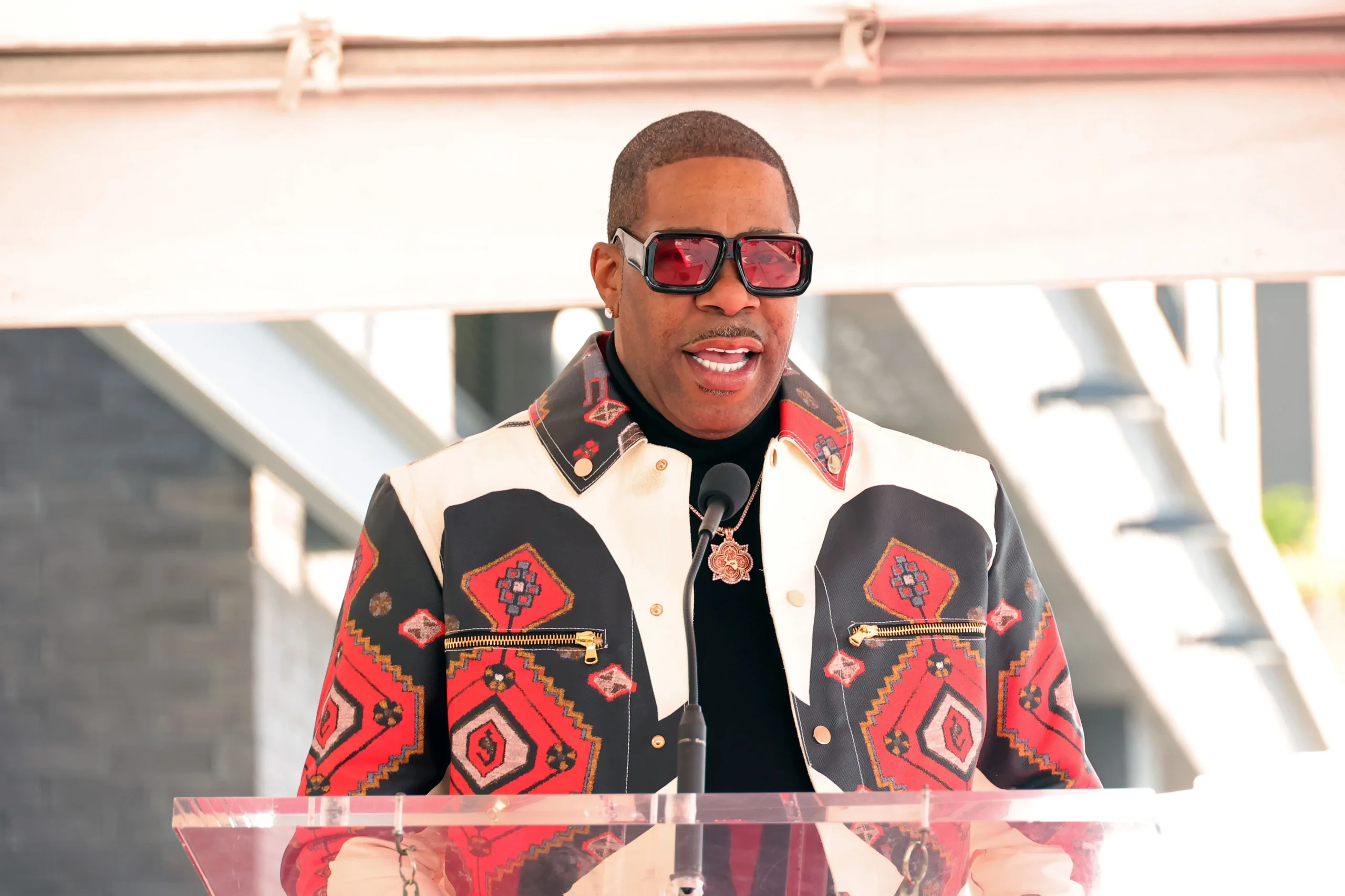
In an industry that often reduces rappers to flow, charisma, and viral moments, Busta Rhymes has always stood apart as a songwriter first. His classics — from the explosive “Woo Hah!! Got You All in Check” to the intricate, sample-heavy “Gimme Some More” — aren’t just showcases of rapid-fire delivery and larger-than-life personality. They are meticulously crafted compositions that blend rhythm, melody, storytelling, and cultural commentary with unmatched precision. On June 8, 2026, the Brooklyn-born icon will be formally recognized for that craft when Anti Social Camp, the world’s largest songwriting festival, presents him with its annual ICON Award during its kickoff event in New York City.
The announcement, reported first by Rolling Stone, underscores a growing appreciation for the architectural side of hip-hop artistry — the hooks, structures, bridges, and conceptual frameworks that turn raw talent into timeless records. Busta, born Trevor George Smith Jr. on May 20, 1972, has spent three decades proving that rap can be as compositionally sophisticated as any genre. His acceptance of the award at Anti Social Camp, an event explicitly built to celebrate and foster songwriting community, feels like a full-circle moment for both the artist and the city that shaped him.
View this post on Instagram
stir
Anti Social Camp (ASC) was founded in 2021 by songwriter, producer, and Berklee NYC professor Danny Ross amid the isolation of the pandemic. What began as a Zoom-based gathering for New York producers evolved into a sprawling, in-person festival that now claims the title of the world’s largest songwriting camp. Held annually in June, the 2026 edition runs June 8–12 across dozens of iconic NYC studios and venues, hosting over 200 recording sessions, public events, panels, and showcases. It is completely free for accepted creators, with applications handled via Groover.
Ross, who also founded the Anti Social Producers Club, envisioned ASC as a community-first antidote to the often solitary and competitive nature of modern music-making. “The brilliant people behind our favorite songs need a sense of community as much as anyone,” he said. The event has been featured in The New Yorker, Forbes, and Billboard, and previous participants read like a who’s who of contemporary music: Nile Rodgers, PinkPantheress, Jacob Collier, Glass Animals, Miranda Lambert, Moby, Cigarettes After Sex, Ava Max, JP Saxe, and many more.
Unlike traditional songwriting camps that are invitation-only and closed-door, ASC functions as a “front-facing festival” — part collaborative creation engine, part public culture celebration. Days are filled with curated recording sessions in places like Chelsea Studios, Berklee NYC’s Power Station at Flux, and others. Evenings feature writers’ rounds, industry showcases, galas, and playback parties where new tracks premiere. The 2026 schedule includes an iHeartRadio-backed Music Conference on June 8, a Spotify Industry Showcase, a YouTube Songwriters Writers Round, a Republic Records evening, a Recording Academy Gala, and a TIDAL Playback Party.
Partners for 2026 include Tidal, TikTok, Suno, Jack Daniel’s, BMI, ASCAP, UnitedMasters, and the New York City Mayor’s Office of Media and Entertainment, integrating ASC into New York Music Month. A London edition launched in 2025, with another planned, signaling global ambitions.
Busta Rhymes will receive the ICON Award and participate in a live interview on songwriting at the June 8 conference, held at NYU Steinhardt’s Frederick Loewe Theater (free with registration). Past ICON recipients include Ava Max, Cigarettes After Sex, and others, highlighting ASC’s commitment to honoring both mainstream stars and deep-cut contributors.
flow
Let’s revisit his catalog. Emerging from Leaders of the New School in the early 1990s, Busta broke solo with The Coming (1996). The lead single “Woo Hah!! Got You All in Check” wasn’t just a hit — it was a structural marvel. Its stuttering, onomatopoeic hook, layered ad-libs, and dynamic shifts between calm verses and explosive choruses demonstrated songcraft that transcended typical rap formats. The track peaked in the Top 10, helped the album go gold, and announced a new archetype: the theatrical, hyper-kinetic MC whose records felt like events.
Subsequent albums like When Disaster Strikes (1997), Extinction Level Event: The Final World Front (1998), and Genesis (2001) refined this approach. “Gimme Some More” sampled Bernard Herrmann’s Psycho theme and turned it into a manic, syllable-twisting banger with a chorus that burrowed into the brain. “Put Your Hands Where My Eyes Could See” blended reggae influences with boom-bap. “Break Ya Neck” (produced by Dr. Dre’s Aftermath) featured one of the most relentless flows in rap history, yet its pre-chorus build and anthemic energy made it radio gold.
Busta’s guest verses often elevated songs through structural awareness. On Chris Brown’s “Look At Me Now” (2011), his verse is a clinic in pacing, rhyme density, and contrast. Collaborations like “I Know What You Want” with Mariah Carey or features for everyone from Janet Jackson to The Fugees showcase his adaptability without sacrificing identity. He has over 1,000 songwriting credits, including production work dating back to his LONS days.
In a 2026 statement for the award, Busta reflected: “Songwriting is such an important part of this business and of how we, as artists, express what we are feeling and the messages we hope to share with listeners. What I’ve learned about Anti Social Camp is that it creates a safe and inspiring space for songwriters to do exactly that.”
His recent output — Extinction Level Event 2: The Wrath of God (2020), Blockbusta (2023), and 2025’s Dragon Season: The Awakening — continues to prioritize concept albums and high-concept singles. The 2025 Rock the Bells Visionary Award at the VMAs further cements his legacy as an innovator.
why
Hip-hop has long been undervalued in traditional songwriting circles. Organizations like the Grammys have faced criticism for how they categorize rap, and songwriting awards often skew toward pop, country, or rock. ASC’s decision to honor Busta signals a broadening recognition that rap’s complexity — internal rhymes, multisyllabic schemes, rhythmic innovation, and cultural layering — constitutes elite songwriting.
For New York City, the event reinforces its status as a creative hub. From Harlem’s jazz and doo-wop roots to the Bronx’s birth of hip-hop, to Williamsburg’s indie explosion, NYC has always thrived on cross-pollination. ASC brings hundreds of creators together in the same studios where legends once worked, fostering the kind of serendipity that produced classics.
The festival’s free model for artists, backed by industry heavyweights, democratizes access in an era of algorithm-driven isolation. TikTok lounges, mentorship sessions, and student programs (via the Education Summit) extend its impact beyond professionals.
fin
Expect Busta’s appearance to be a highlight, likely featuring stories from his career, insights on collaboration (he’s worked with everyone from Dre to Q-Tip), and perhaps a performance. The full lineup includes serpentwithfeet, Erick the Architect of Flatbush Zombies, Pom Pom Squad, and hundreds more.
Public events at Music Hall of Williamsburg, Public Records, and others will draw fans. The Playback Party on June 12 will premiere dozens of new tracks born during the week — a testament to ASC’s mission of not just celebrating but creating music.
For aspiring songwriters, the message is clear: community, craft, and persistence still matter. Busta Rhymes, a product of NYC’s streets and studios, embodies that ethos. His ICON Award isn’t just retrospective; it’s an invitation for the next generation to approach their art with the same rigor and joy.
As the city pulses with summer energy in June 2026, Anti Social Camp will once again prove that songwriting isn’t solitary — it’s communal, chaotic, and profoundly human. And few embody that spirit better than Busta Rhymes. Woo hah! Indeed.
From the DRIFT archive: Eddie Murphy to Receive the AFI Life Achievement Award in 2026