Tamara de Lempicka’s Young Woman in Green: An Art Deco Icon

October 23, 2024
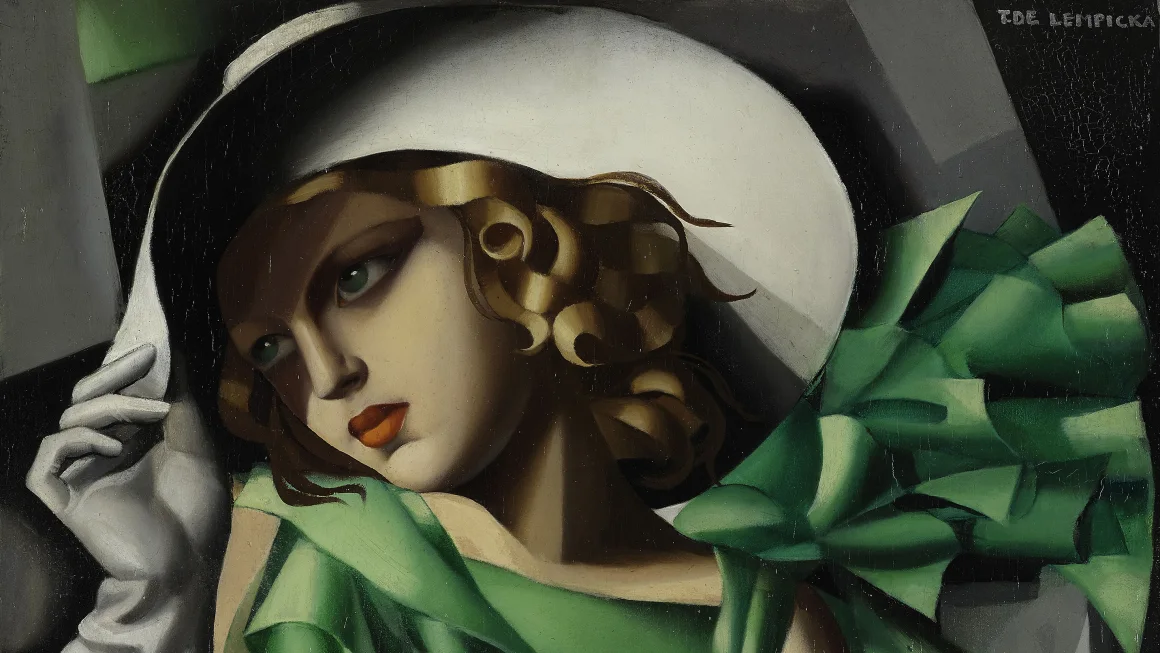
Tamara de Lempicka’s “Young Woman in Green” (1927–1930) is a quintessential example of the Art Deco movement, known for its elegance, modernism, and celebration of luxury. Lempicka’s distinct style, characterized by sharp lines, geometric forms, and a sleek, polished finish, is on full display in this work. The painting portrays a glamorous woman dressed in a rich green gown, her figure sculpted with angular precision, which reflects the industrial aesthetics of the time. Lempicka’s mastery of light and shadow gives the painting a sense of depth and sophistication, emphasizing the woman’s sensuality and independence.
This work captures the essence of the 1920s and 1930s, a period marked by significant social and cultural change, particularly in the role of women. The woman in “Young Woman in Green” embodies the image of the modern, liberated woman—confident, self-possessed, and fashion-forward. The strong, almost metallic quality of the painting, combined with the figure’s cool, detached expression, reinforces the allure and mystique that Lempicka’s portraits are known for.
In recent decades, Tamara de Lempicka’s art has experienced a resurgence in popularity, with her work being celebrated for its unique blend of avant-garde modernism and classical portraiture. Her portrayal of the female form, often seen through the lens of power and autonomy, resonates with contemporary audiences and art collectors. “Young Woman in Green” is a defining work in Lempicka’s oeuvre, capturing the sleek, glamorous aesthetics of the Art Deco era while also contributing to the ongoing conversation about modern womanhood and identity.
The painting, now part of major exhibitions like those at the Centre Pompidou, continues to attract scholarly and public interest, making Lempicka one of the key figures in 20th-century art whose legacy endures in both art history and popular culture. The meticulous documentation of this piece, as seen through Bertrand Prévost’s involvement and its exhibition history, underscores its significance in global collections.
Related Articles
Chasing the Sort Sol: Inside Søren Solkær’s Six Year Pursuit of Europe’s Starling Clouds
A Danish portrait photographer spent six years following a bird nobody photographs on purpose, and […]