DRIFT

As artificial intelligence reshapes every seam of the fashion industry—from design to modeling to marketing—a new aesthetic age is dawning. But with innovation comes complexity. The future of fashion demands a reckoning with ethics, identity, and the value of human creativity.

For centuries, fashion has thrived as a celebration of human creativity. From draped silks in ancient courts to couture-clad runways in Paris, this industry has always been powered by people: designers sketching visions, models embodying beauty, photographers capturing fleeting moments, stylists constructing identity through texture and form. Technology served as a faithful assistant—supporting the craft through software, logistics, and e-commerce—but it never led the creative charge.

That paradigm, however, is beginning to unravel.

Today, fashion is entering an accelerated phase of technological disruption, led by artificial intelligence (AI). No longer relegated to background tasks, AI is now assuming central creative roles. It’s not just tracking trends or managing supply chains—it’s designing garments, selecting color palettes, writing product descriptions, and even replacing human models. These shifts are not theoretical or distant; they are already reshaping the industry from the inside out.

Stradivarius and the New Synthetic Vision

A signal moment arrived with Stradivarius, a brand under the Inditex empire, which launched its Spring/Summer 2023 campaign with an unapologetically futuristic twist. Instead of traditional backdrops and live photoshoots, the campaign featured dreamlike landscapes and synthetic models—all created using AI. The clothes were real. Everything else—the faces, the lighting, the settings—existed only in code.

This leap offered more than just cost or time savings. It posed a provocative creative question: If you could design reality from scratch, what would beauty look like? In Stradivarius’s case, the answer was ethereal, hyperreal, and frictionless. Their campaign demonstrated how AI can extend artistic vision beyond physical and temporal limits, allowing brands to sculpt visual worlds with digital brushstrokes.

A New Face of Fashion: AI Models on the Rise

But beneath the glamour of digital innovation lies a deeper, more contentious transformation—one that touches the very identity of the modeling industry. AI-generated models are beginning to populate the fashion landscape, and their arrival has sparked both excitement and anxiety.

Take Levi’s, for example. In 2023, the iconic American denim brand collaborated with Lalaland.ai, a digital modeling agency specializing in hyper-realistic AI avatars. Unlike traditional models, these figures don’t need breaks, don’t age, and can be endlessly customized to reflect any body type or ethnicity. According to Levi’s, the partnership wasn’t about slashing costs. It was about diversity—showing consumers a broader range of bodies, identities, and representations.

The logic is clear: in an era obsessed with personalization, why not allow each shopper to see how jeans might look on their body shape, skin tone, or height? Yet even this progressive intent stirred debate. Critics questioned whether simulated inclusivity could truly replace the nuance and lived experience of real representation. When does diversity become a digital façade?

H&M and the Ethical Edge of Innovation

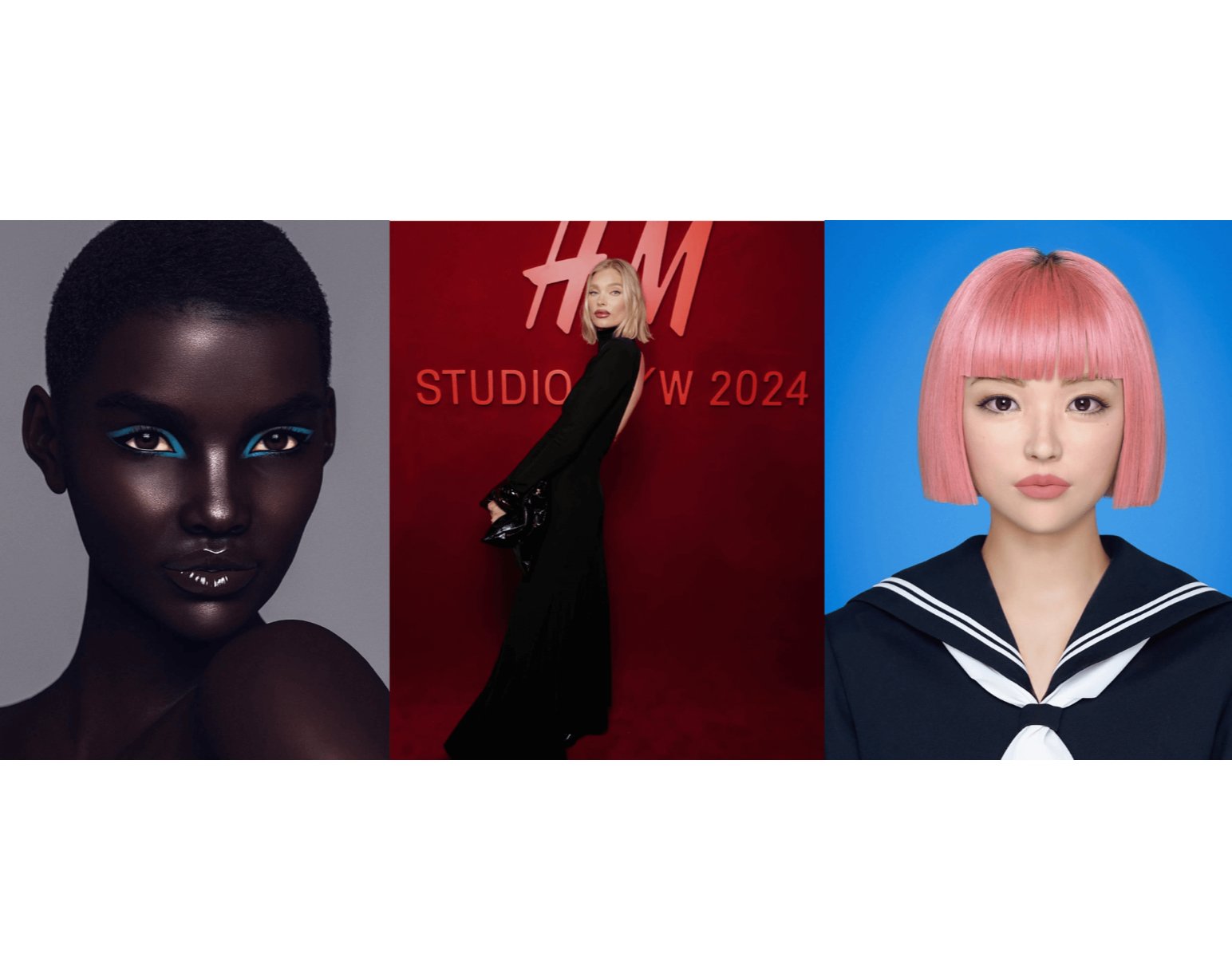
H&M upped the ante in 2024 by unveiling digital replicas of 30 real-life models. This initiative—billed as a tool for faster campaign creation and global consistency—raised both eyebrows and ethical concerns. These avatars weren’t simply static images; they moved, emoted, and posed like their human counterparts, powered by motion-capture technology and generative AI.

The brand was quick to emphasize that models retained rights over their digital doubles, deciding how and when they would be used. This detail proved essential. Without such protections, the creation of a digital twin could easily slip into exploitation, allowing brands to repurpose a model’s likeness indefinitely and independently of their consent.

Yet for the creative workforce—makeup artists, photographers, lighting techs, even set designers—the alarm bells were deafening. If digital avatars and AI-rendered environments replace physical shoots, what happens to the thousands of professionals who bring a photoshoot to life? The fear is not unfounded. As automation accelerates, the question shifts from what AI can do to what should be left to humans.

Virtual Stars with Real-World Influence

If Stradivarius, Levi’s, and H&M reveal how brands are embracing AI, then digital models like Shudu and Imma show how these virtual creations are becoming stars in their own right.

Shudu, often referred to as the world’s first digital supermodel, was created in 2017 by photographer Cameron-James Wilson. Her elegance and strikingly real features earned her collaborations with Balmain, Fenty Beauty, and more. She dazzled the public—but also drew backlash. As a white male creator profiting from a dark-skinned female avatar, Wilson was accused of co-opting Black beauty while avoiding the systemic issues faced by real Black models.

Imma, a Japanese virtual influencer developed by Aww Inc., takes a different route. With neon-pink hair and futuristic fashion sense, Imma has modeled for Dior, Porsche, and Valentino. She’s amassed a massive following on social media, acting like a digital celebrity who never sleeps. For many brands, she’s the ideal ambassador: consistent, malleable, and controversy-free—until questions of authenticity arise.

These figures—crafted from pixels, not DNA—may not breathe, but they influence. They set trends. They redefine beauty. And they challenge our very understanding of what it means to be “real” in an era where digital perfection often outshines human imperfection.

The Consumer’s Dilemma: Perception and Impact

With AI-generated visuals now indistinguishable from real photography, the psychological impact on consumers—especially young, impressionable audiences—is a rising concern.

What happens when the dominant beauty archetype is no longer human? Digital models, by design, can be optimized to perfection. No pores, no asymmetry, no aging. If these avatars become the new standard, how will that affect people’s self-image, especially in a world already shaped by filters, FaceTune, and hyper-curated social media personas?

Research into social comparison suggests that unrealistic images—AI or otherwise—can negatively impact mental health, fueling body dysmorphia, eating disorders, and depression. In response, some activists argue for labeling AI-created images or setting clear ethical guidelines for digital models. The fashion world must ask itself: is it ready to prioritize well-being over engagement metrics?

Owning the Future: Rights, Identity, and Regulation

H&M’s promise to give human models control over their digital twins marks an important shift. As more creators digitize their bodies, faces, and voices, legal frameworks must evolve to protect ownership and usage rights. The fashion industry could become a test case for broader discussions about virtual identity—who owns a likeness? Who profits from it? Who decides how it is used?

AI brings opportunities, yes—but without regulation, it also invites exploitation. Just as the music industry had to adapt to streaming and digital sampling, fashion must now confront the complexities of content ownership in the age of virtual replication.

Human Creativity, Reimagined

Despite the dystopian narratives, AI is not inherently destructive. In fact, it could usher in a golden age of augmented creativity. For designers, tools like DALL·E, Midjourney, or Clo3D can generate mood boards, simulate textures, or render 3D prototypes in minutes. AI can help brands test sustainability models, reduce textile waste, and tailor clothes to individual body scans. With the right intentions, it’s a partner—not a rival.

The challenge, then, is not about resisting AI but about embedding it within a human-centered value system. Let AI enhance what humans imagine—not replace it. Let it amplify creativity—not flatten it into algorithmic sameness.

Impression

Fashion has always been a mirror of society—its hopes, its contradictions, its dreams. And now, as technology transforms what we wear and how we see ourselves, that mirror reflects a critical choice. Will we use AI to democratize beauty, expand inclusion, and foster innovation? Or will we let it deepen inequality, erase human labor, and standardize self-expression?

Only then can we stitch together a smarter, more inclusive, and sustainable industry—one pixel, one thread, and one decision at a time.

Related Articles

In a highly anticipated reunion after 24 years, Adidas Originals and Coca-Cola have joined forces once again to celebrate the FIFA World Cup 2026™. The collaboration revives their iconic 2002 partnership from the Japan-South Korea tournament, now reimagined for the biggest global sporting event of 2026, co-hosted by the United States, Canada, and Mexico. Set to launch on June 6, 2026, this collection masterfully blends Adidas' streetwear heritage with Coca-Cola's timeless branding, creating a vibrant fusion of football culture, nostalgia, and modern style. The drop arrives at a perfect moment. With the World Cup kicking off on June 11, 2026, fans worldwide are gearing up for a summer of football excitement. This collaboration isn't just merch—it's a cultural statement that merges two legendary brands under the banner of "Originals are the Real Thing," a clever twist on Coca-Cola's famous slogan. Historical Context: A Reunion 24 Years in the Making Adidas and Coca-Cola first collaborated during the 2002 FIFA World Cup, producing limited-edition pieces that captured the era's energy. That partnership helped define early 2000s football-streetwear crossover culture. Fast-forward to 2026, and the brands are back with fresh energy, leveraging Adidas' deep FIFA ties (as an official partner) and Coca-Cola's long-standing sponsorship of the tournament. The 2026 edition promises to be historic as the first 48-team World Cup, spanning three countries and generating unprecedented global hype. This collab taps into that momentum, offering fans wearable pieces that celebrate both brands' legacies while looking forward to the future of football fashion. Collection Overview and Design Philosophy The Adidas Originals x Coca-Cola collection fuses 2000s street style with classic sporting aesthetics. Expect bold reds, creams, whites, and silver accents inspired by Coca-Cola's iconic packaging—think classic script logos, droplet detailing, and can-inspired motifs. The lineup spans footwear, apparel, and accessories, divided into two visual directions: one logo-heavy and graphic-forward, the other drawing from vintage advertising aesthetics. Designs pay homage to Coca-Cola's visual language while staying true to Adidas Originals' archival roots. High-quality materials, attention to detail, and versatile silhouettes make these pieces suitable for both match-day wear and everyday street style. The campaign, featuring young football star Lamine Yamal and a diverse cast in everyday scenes building anticipation for the tournament, reinforces themes of originality and shared cultural moments. Footwear Highlights Footwear takes center stage in this collaboration, with reimagined takes on iconic 2000s Adidas silhouettes: Samba and Superstar Models: These classics get Coca-Cola treatment with white/cream/red colorways and prominent script branding. The Samba blends street heritage with football roots, while the Superstar II features weathered bases and bold side panels. Expected pricing around $110–$130. Adistar Control 5: A standout with droplet detailing mimicking condensation on a cold Coke can. This model brings performance-inspired design into lifestyle territory. Predator Sala: Indoor/hybrid style with silver-and-red accents, nodding to predatory precision on the pitch and Coca-Cola's bold energy. Climacool 1: Revived with breathable tech and Coke-inspired graphics, perfect for warm summer days. Megaride F50: A highlight paying tribute to the iconic Coca-Cola glass bottle, with unique contours and refreshing design cues. Each pair incorporates thoughtful details like embroidered logos, custom insoles, and packaging that mimics vintage Coke crates or cans. These shoes are built for durability and comfort, appealing to sneakerheads, football fans, and casual wearers alike. Apparel and Accessories Beyond kicks, the collection offers a full lifestyle range: Track Tops and Jerseys: Standout jerseys fuse retro Coca-Cola advertising from different eras into cohesive football designs. Track jackets feature signature three stripes alongside Coke branding, in vibrant reds and classic whites. Shorts and T-Shirts: Relaxed fits with graphic prints, ideal for casual wear or layering. Expect motivational football motifs blended with refreshing beverage references. Accessories: A bright red airliner bag stands out as a functional statement piece. Additional items may include caps, socks, and tote bags carrying the collaborative spirit. The apparel emphasizes comfort with premium cotton blends, mesh panels for breathability, and oversized silhouettes popular in contemporary streetwear. Unisex sizing and inclusive fits make the collection accessible to a broad audience. Cultural Impact and Fan Appeal This collaboration resonates on multiple levels. For football fans, it represents national pride and global unity ahead of the 2026 tournament. Sneaker enthusiasts will appreciate the nostalgic 2000s revival mixed with modern execution. Streetwear collectors see it as a prime example of how heritage brands can innovate through partnerships. In an era where sports and fashion increasingly intersect, Adidas and Coca-Cola deliver pieces that transcend the pitch. Wear them to watch matches at home, attend watch parties, or hit the streets in any host city—New York, Los Angeles, Toronto, or beyond. The designs are versatile enough for gym sessions, festivals, or daily commutes. The timing aligns perfectly with rising interest in football in North America, boosted by the co-hosting nations. Young talents like Lamine Yamal in the campaign help bridge generational gaps, attracting newer fans while satisfying longtime supporters. Where to Buy and Release Details The collection launches globally on June 6, 2026, via: Adidas CONFIRMED app (for early access and raffles) Adidas.com Select retailers and flagship stores worldwide Some regions may see staggered drops, with Japan and other markets getting early access. Prices are expected to range from $50–$150 depending on the item, making it relatively accessible compared to ultra-limited drops. Pro Tips for Copping: Enable notifications on the CONFIRMED app. Check local stock at Adidas stores in major cities. Monitor resale platforms post-drop for exclusive colorways, but be wary of markups. Size up slightly for oversized apparel fits. Given the World Cup hype, popular items like the Sambas and jerseys are likely to sell out quickly. International shipping is available, but factor in potential customs delays. Styling Suggestions Match Day Look: Pair a collaborative jersey with classic black shorts and Samba sneakers for effortless fan style. Streetwear Rotation: Layer a track top over a graphic tee with wide-leg pants and the Megaride F50 for a bold urban ensemble. Casual Summer: White Superstar with denim shorts and the airliner bag for a refreshing, vacation-ready vibe. These pieces mix seamlessly with existing Adidas or neutral wardrobes, maximizing versatility. Broader Context in 2026 Fashion and Sports The Adidas x Coca-Cola drop is part of a larger wave of high-profile collaborations tied to the World Cup. Adidas continues its dominance in football kit design, while Coca-Cola leverages its sponsorship with collectibles, bottles, and experiential activations like the Trophy Tour. In the sneaker industry, this collab exemplifies the ongoing trend of lifestyle reinterpretations of performance silhouettes. It also highlights how global brands use major events to drive cultural conversations around unity, originality, and joy—core values for both companies. Sustainability notes (based on Adidas' broader initiatives) suggest some pieces may incorporate recycled materials, aligning with modern consumer expectations. Looking Forward: Legacy and Excitement As the countdown to kickoff continues, this collection serves as the perfect prelude to an unforgettable summer of football. Whether you're a die-hard supporter, a fashion-forward collector, or someone seeking motivation through style, the Adidas Originals x Coca-Cola FIFA World Cup 2026 lineup delivers. Expect potential restocks, special event exclusives in host cities, and continued campaign content featuring more athletes. This isn't just clothing—it's a ticket to participate in the global celebration of the beautiful game. Mark your calendars for June 6, 2026. Refresh your wardrobe, lace up those Sambas, and get ready to cheer on your team in style. The "Real Thing" meets the Originals in what promises to be one of the most talked-about releases of the year. This collaboration captures the essence of football's universal appeal: bringing people together through shared passion, iconic brands, and unforgettable moments. As the world prepares for 2026's expanded tournament, Adidas and Coca-Cola remind us that some partnerships are truly timeless.

Adidas Originals x Coca-Cola Collection: FIFA World Cup 2026

In a highly anticipated reunion after 24 years, Adidas Originals and Coca-Cola have joined forces […]

Loewe shoulder bag crafted in brown and black leather with minimalist lion face detailing and a matching fur tail charm

180 Years Unfolded: The Full Story Behind Loewe’s New Campaign

The year was 1846. Queen Victoria was on the British throne and the telephone, the […]

Interior view of H.Lorenzo’s new West Hollywood flagship illuminated in vivid green lighting, featuring sculptural metal display structures, minimalist furnishings, and an immersive futuristic retail environment

H.Lorenzo Opens a New Flagship in West Hollywood, Uniting Four Decades of Avant-Garde Fashion Under One Roof

For more than four decades, H.Lorenzo has occupied a singular and irreplaceable position within the […]