

DRIFT AUDIO
Listen to this story
Choose a voice, then press play.
The world of high-performance cars is a fascinating blend of engineering prowess, technological innovation, and a relentless pursuit of speed and power. From their humble beginnings to the modern marvels that grace our roads today, these vehicles have continually pushed the boundaries of what is possible.
This forward realms into the origins of high-performance cars, their achievements in racing, and the gradual trends that have shaped their evolution into the prevailing events of today.
The story of high-performance cars begins in the early 20th century, a time when the automobile itself was a novel invention. The desire for speed and power was evident even then, as manufacturers and enthusiasts sought to push the limits of these new machines. The emanations of high-performance cars can be traced back to the pioneering efforts of brands like Bugatti, Ferrari, and Mercedes-Benz, which were among the first to recognize the potential of combining engineering excellence with the thrill of speed.
In the 1920s and 1930s, these manufacturers began producing vehicles specifically designed for racing, laying the groundwork for what would become the high-performance car industry. The Bugatti Type35, for example, became one of the most successful racing cars of its time, dominating the Grand Prix circuit with its lightweight design and powerful engine. This era marked the beginning of a long-standing relationship between high-performance cars and motorsport.
Achievements in Racing
Racing has always been a crucial arena for the development and testing of high-performance cars. The demands of the racetrack push vehicles to their limits, driving innovation and technological advancements. Throughout the mid-20th century, racing achievements played a significant role in shaping the high-performance car landscape.
The 24-Hours of Le Mans, one of the most prestigious endurance races in the world, became a proving ground for manufacturers. Brands like Ferrari, Porsche, and Ford used the race to showcase their engineering capabilities. The Ford GT40’s victory at Le Mans in the 1960s, ending Ferrari’s dominance, was a testament to the power of American engineering and marked a pivotal moment in racing history.
Formula1, the pinnacle of motorsport, has also been instrumental in advancing high-performance car technology. Innovations such as aerodynamics, turbocharging, and hybrid powertrains were often first developed for F1 cars before making their way into production vehicles. The fierce competition and high stakes of racing have consistently driven manufacturers to push the boundaries of what is possible.
Gradual Trends in High-Performance Cars
As the decades progressed, high-performance cars continued to evolve, influenced by technological advancements, changing consumer preferences, and environmental considerations. The 1980s and 1990s saw the rise of the supercar, a category defined by extreme performance, cutting-edge technology, and exclusivity. Iconic models like the Ferrari F40, Lamborghini Countach, and McLaren F1 captured the imagination of enthusiasts worldwide.
The trend towards more powerful and technologically advanced vehicles continued into the 21st century. The introduction of the Bugatti Veyron in 2005 marked a new era in high-performance cars, as it became the first production car to exceed 1,000 horsepower and achieve speeds over 250 mph. This achievement was a testament to the relentless pursuit of power and speed that has always defined the industry.
In recent years, the focus has shifted towards sustainability and efficiency, leading to the rise of hybrid and electric high-performance cars. Manufacturers like Tesla, Rimac, and Porsche have demonstrated that electrification does not mean compromising on performance. The Tesla Model S Plaid, for example, boasts acceleration figures that rival traditional supercars, while the Rimac C_Two promises to redefine electric hypercar performance.
Prevailing Events and Beyond
Today, the high-performance car industry stands at a crossroads, balancing the pursuit of speed and power with the need for sustainability and environmental responsibility. The shift towards electrification is reshaping the landscape, with manufacturers investing heavily in electric and hybrid technologies.
The rise of electric vehicles (EVs) has introduced new players into the high-performance arena. Companies like Rimac and Lucid Motors are challenging traditional manufacturers with their cutting-edge electric hypercars. These vehicles offer not only blistering performance but also the promise of a more sustainable future.
Moreover, the integration of advanced technologies such as autonomous driving and connectivity is transforming the high-performance car experience. Manufacturers are exploring ways to enhance driver engagement and safety through innovative features and systems.
Related Articles
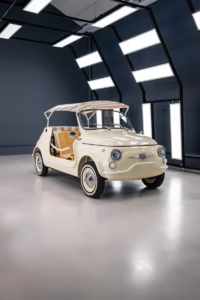
Garage Italia’s Electric Spiaggina Puts the Fiat 500’s Riviera Years on Battery Power
Ten kilowatts, rattan seats and a €85,000 starting price: Garage Italia's 500 Spiaggina rebuilds Ghia's 1958 beach car for the yacht crowd.