DRIFT AUDIO
Listen to this story
Choose a voice, then press play.
Seven photographers, chosen from over 108,000 entries across 160 countries, take the 2026 Hasselblad Masters title with images that reward slow looking over quick reads.
In This Story
- A Theater in Nevada
- The Seven Winners
- What the Jury Was Looking For
- The Scale of the Competition
- Why This Class of Images Matters
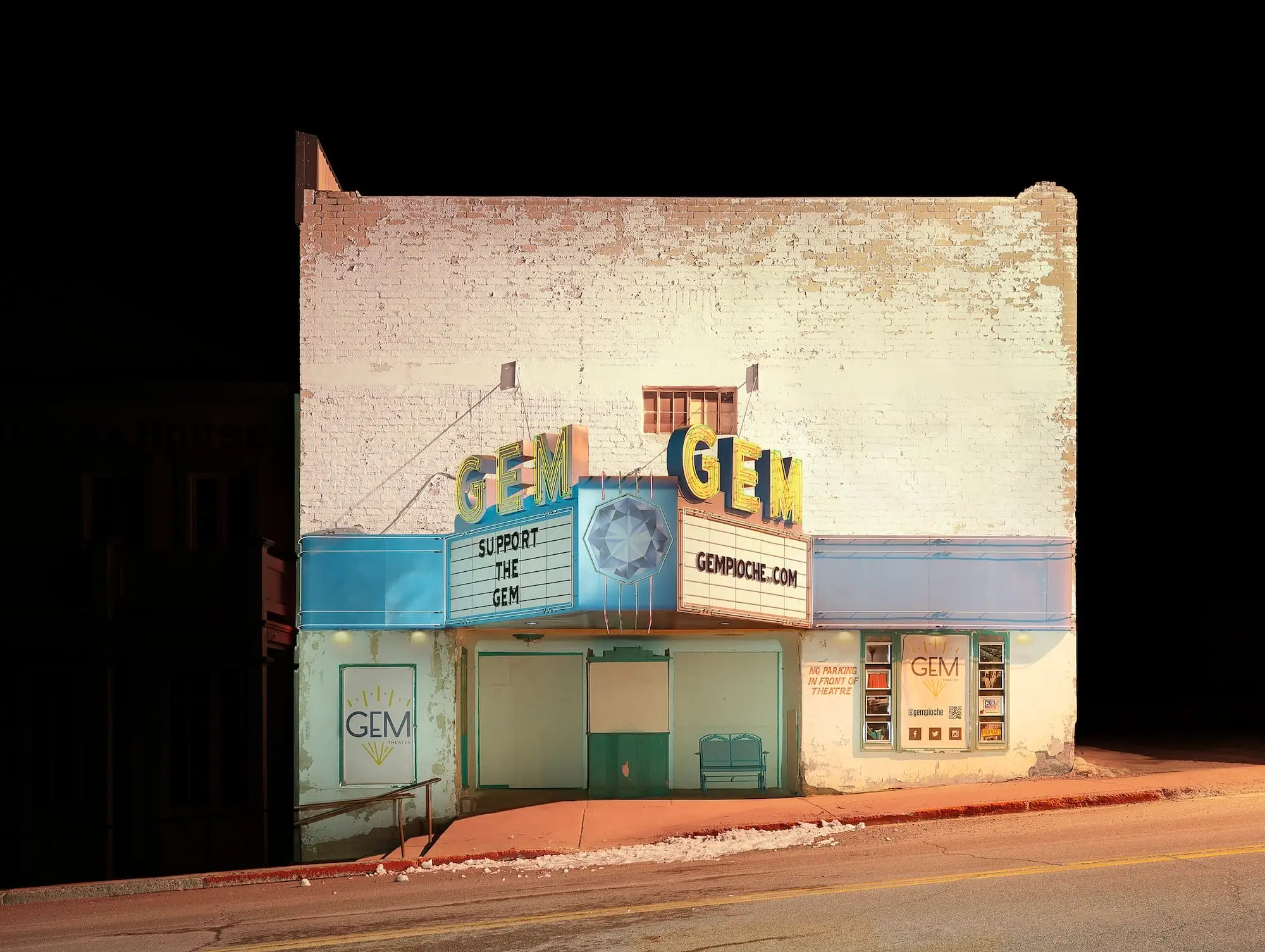
In Pioche, Nevada, a movie theater built in 1937 stands as a record of nearly a century of technological and stylistic change, currently mid-rehabilitation as part of ongoing preservation efforts. Canadian photographer Kevin Boylephotographed the building against black, producing a portrait that holds both the physical structure and the memory of a mid-20th-century small-town ritual: the evening at the movies. The image belongs to Boyle’s ongoing series DaySleeper | Movieland, which won the Architecture category in this year’s Hasselblad Masters 2026 competition.
The series carries personal weight. Boyle grew up in the Canadian prairies, and after his father passed away, he returned to the region he was raised in and found that many of the gathering places he remembered — halls, theaters, small civic buildings — had been shuttered or abandoned. For more than a decade since, he has traveled across small communities in the United States and Canada photographing that disappearing architecture. Technically, the images are composites: Boyle lights each building by hand with a flashlight across multiple exposures, then stitches the results together in post-production so the structure appears lit from within, as though still occupied.
Magnum Photos education director Sonia Jeunet, one of the competition’s jurors, noted that the compositional choice to leave the buildings empty of people does deliberate work, pulling viewers back toward an era when these spaces would have been full of neighbors gathering for evening entertainment.
Boyle’s win is one of seven category victories announced this year, alongside Wildlife, Landscape, Art, Portrait, Street, and Project//21 — the last of which is reserved for photographers 21 years old or younger. Entrants from 160 countries submitted more than 108,000 images this year, narrowed first to 70 finalists before the Grand Jury and public vote determined the seven category winners.
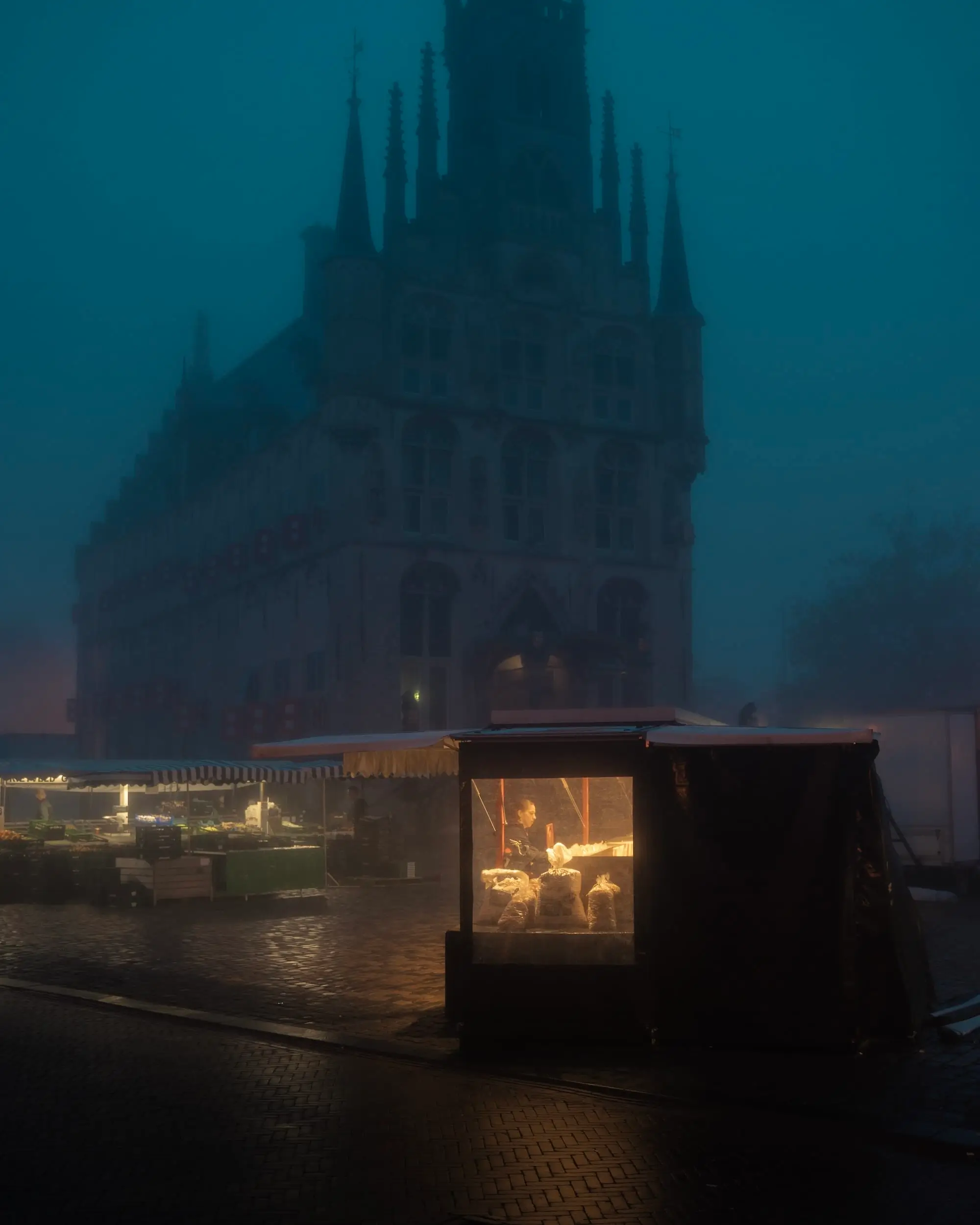
A solitary market stall glows warmly beneath the silhouette of a Gothic church, where dense morning fog and rain-darkened cobblestones create a quiet, atmospheric cityscape.
The Seven Winners
Architecture — Kevin Boyle (Canada), DaySleeper | Movieland
Boyle’s composite photographs of abandoned small-town architecture across North America explore how buildings hold collective memory long after the communities around them have thinned out.
Art — Yudha Kusuma Putera (Indonesia), Waste Colonialism (Sapi-Sapi Piyungan)
Shot at the Piyungan landfill outside Yogyakarta, the winning series depicts cows grazing on a mountain of sorted trash, their forms echoing the shape of the waste beneath them. The project examines how developed nations export waste to developing countries where labor and disposal costs are lower, using the animals as an unsettling visual proxy for the systems built around consumption and disposal.
Portrait — Svetlana Jovanovic (Netherlands), Otherness
Jovanovic, whose background is in psychology, built a long-term portrait project around identical twins, using carefully composed dual portraits to surface the small, accumulating differences that separate two people who might otherwise appear interchangeable. The series treats identity as something built rather than given, using the twin as a formal device for examining individuality itself.
Landscape — Rohan Reilly (Ireland), Ephemeral Visions
Reilly’s long-exposure images turn a row of poplar trees planted as flood defenses along Italy’s River Po into something closer to reverie than documentation — still water, restrained color, and soft light producing landscapes that read as meditative rather than descriptive.
Street — Gosse Bouma (Netherlands), Morning Ritual
Bouma’s street series captures the small, repeated choreography of daily public life, observed with the kind of patience that turns routine gestures into something worth stopping for.
Wildlife — Alfred Minnaar (South Africa), The Forest I Roam
Minnaar’s winning wildlife series centers on a small goby living among coral, using the tiny fish as a point of reference for scale rather than the primary subject — an approach National Geographic’s Alex Pollack singled out for using the reef itself as the real subject, with the fish standing in as a way to imagine the vastness of an ecosystem from its smallest resident’s point of view.
Project//21 — Panitbhand Paribatra Na Ayudhya (Thailand), Dwellers of the Night
The youngest winner this year at 14 years old, Ayudhya shot a blackwater series in Anilao, Philippines — a globally known site for photographing pelagic and larval marine life that migrates up from the depths after dark. Using slow shutter speeds and deliberately colored lighting, the series captures marine creatures few people ever encounter, rendering them as strange and delicate against pure black.
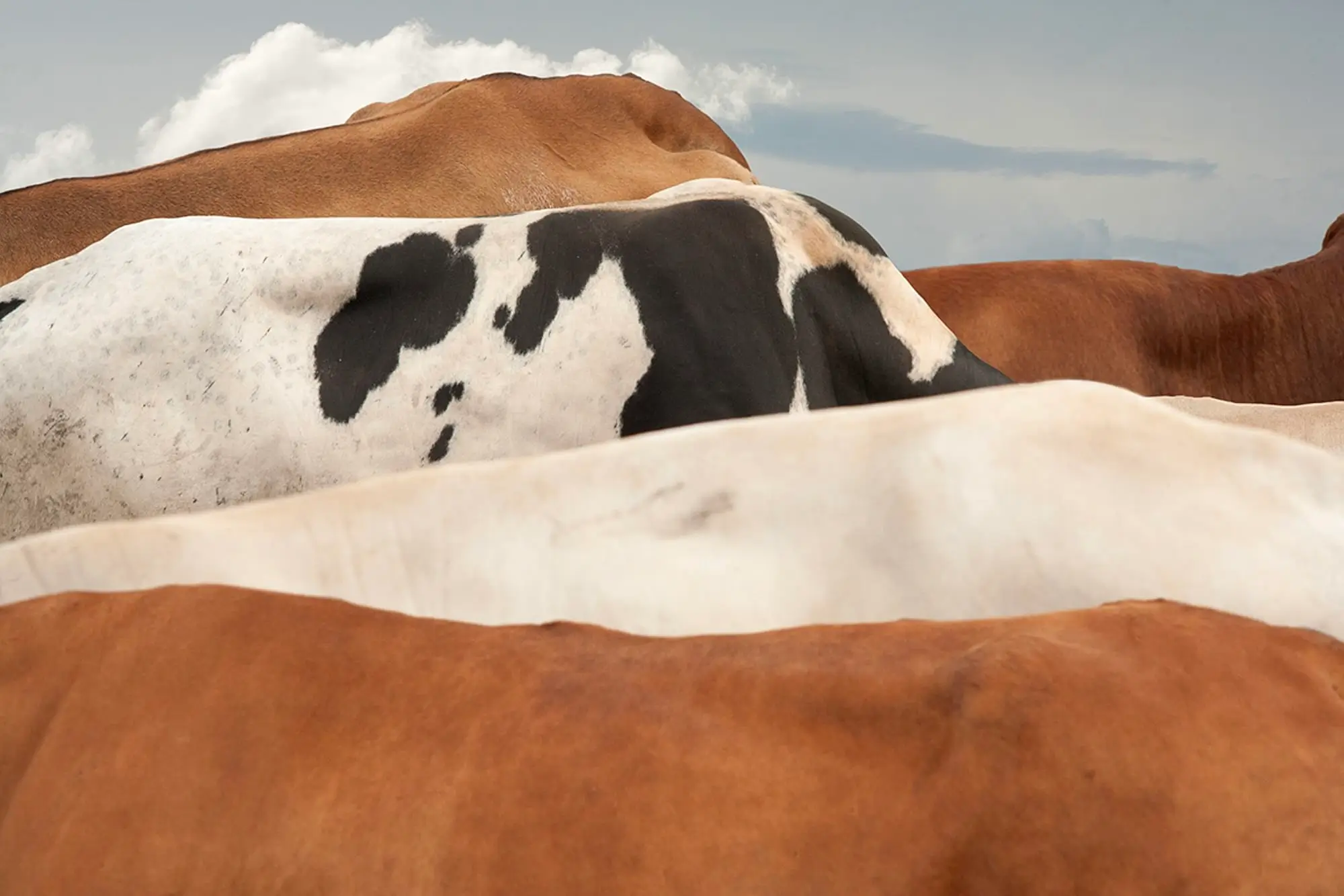
A tightly framed composition of cattle emphasizes the natural patterns, textures, and contrasting colors of their hides, transforming an everyday rural scene into an abstract visual study.
huh
This year’s Grand Jury drew from major institutions across photography’s editorial, curatorial, and fine-art worlds: Kalle Sanner (Executive Director, Hasselblad Foundation, and Jury Chair), Alex Pollack (Director of Photography, National Geographic), Aya Musa (Senior Curator, Foam), Paul Lachenauer (Managing Photographer, The Metropolitan Museum of Art), Rebecca Swift (Senior Vice President, Creative, Getty Images), RongRong (Co-founder and Artistic Director, Three Shadows Photography Art Centre), Sonia Jeunet (Photography Consultant and Education, Magnum Photos), and Zack Hatfield (Managing Editor, Aperture Magazine).
Sanner’s summary of what set the winning work apart pointed toward a specific quality: images built to be constructed rather than simply recorded, holding up under sustained attention rather than resolving on first look. That throughline is visible across the winners — Putera’s cows-on-trash images that only reveal their full weight once a viewer registers what the animals are actually standing on; Boyle’s flashlight-lit composites that look like a single exposure but are built from dozens; Minnaar’s goby that only matters in relation to the reef surrounding it.
The competition also had a notable disqualification this cycle: one shortlisted photographer was removed from the finalist pool after Hasselblad confirmed the entry included AI-generated elements, in violation of competition rules, with a new finalist selected to replace them — a detail that speaks to how seriously the Hasselblad Masters is currently policing the line between photographic craft and generative image-making.
held
Established in 2001, the Hasselblad Masters runs on a biennial rather than annual cycle, with the prior edition held in 2023. Each of the seven category winners receives the title of Hasselblad Master, a Hasselblad X2D II 100C medium-format camera, two XCD lenses of their choice, and a €5,000 creative fund. Beyond the prize package, winners are invited to collaborate with Hasselblad on new work for the brand’s commemorative Hasselblad Masters book, with selected images also featured across Hasselblad’s global channels.
Entrants submitted portfolios of up to three images per category, with the option to enter multiple categories. The 2026 competition ran from mid-December 2025 through the end of February 2026 for entries, with finalists announced in late April alongside a public vote that ran concurrently with Grand Jury deliberation, before the seven winners were revealed on June 30, 2026.
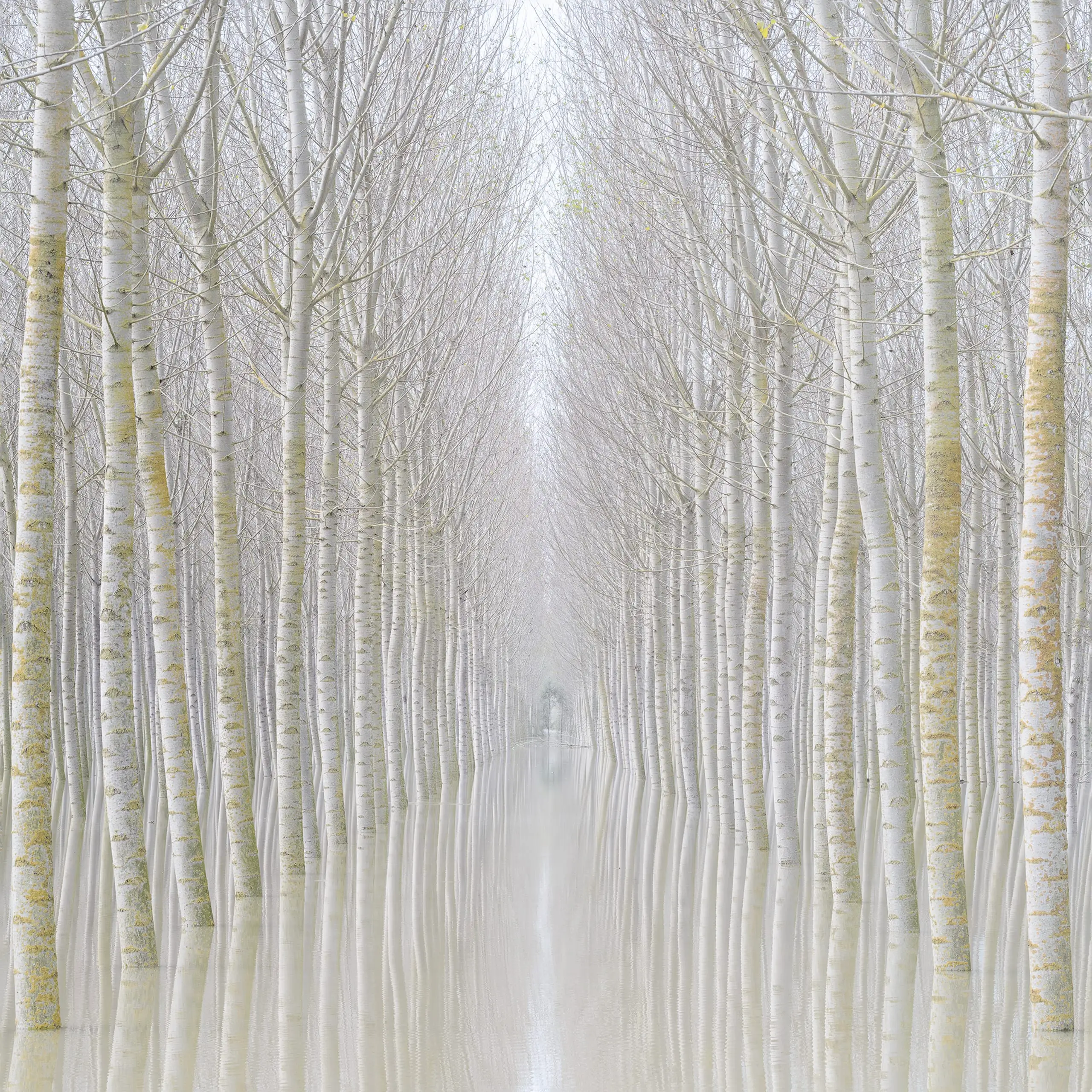
A tranquil grove of white poplar trees stands in shallow floodwater, where perfectly mirrored reflections and soft mist create a serene, symmetrical landscape.
fin
What ties this year’s seven winners together isn’t a shared visual style — Boyle’s staged theatrical composites have almost nothing formally in common with Reilly’s quiet long-exposure landscapes or Ayudhya’s blackwater macro work. What connects them is a resistance to being fully explained by a caption. Putera’s landfill cows look, at a glance, like a straightforward pastoral image before the context reorients the entire read. Jovanovic’s twin portraits invite a game of spot-the-difference that becomes, on longer viewing, a meditation on how identity actually forms. Boyle’s empty movie theaters ask viewers to supply the crowd that isn’t there.
For a competition built around a medium-format camera brand best known for documenting the first steps on the Moon, the 2026 Hasselblad Masters winners suggest the most interesting contemporary work in the category isn’t chasing technical spectacle for its own sake — it’s using that technical command in service of images built to be lived with rather than glanced at.
From the DRIFT archive: Scott Listfield: The Astronaut in C.R.E.A.M. — Street Memory, Pop Iconography, and the Architecture of Nostalgia
Related Articles
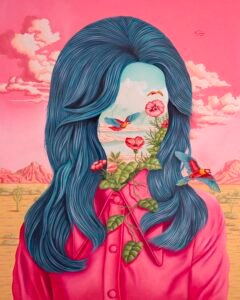
Where the Face Should Be, Rafael Silveira Paints Open Sky
A pink shirt, shoulder-length hair, then no face at all: in “Surprise,” Rafael Silveira lets flowers and a clear blue sky stand in for the person.