DRIFT AUDIO
Listen to this story
Choose a voice, then press play.
A withdrawn accommodation offer, a last-minute security scramble, and a family left off the itinerary — two very different accounts of the same week.
In This Story
- A Homecoming Built Around Invictus Games 2027
- The Security Decision That Changed the Trip
- Two Accounts of One Offer
- The Palace’s Version of Events
- A Familiar Pattern of Public Friction
- Why Tuesday’s Court Ruling Matters
- What Comes Next
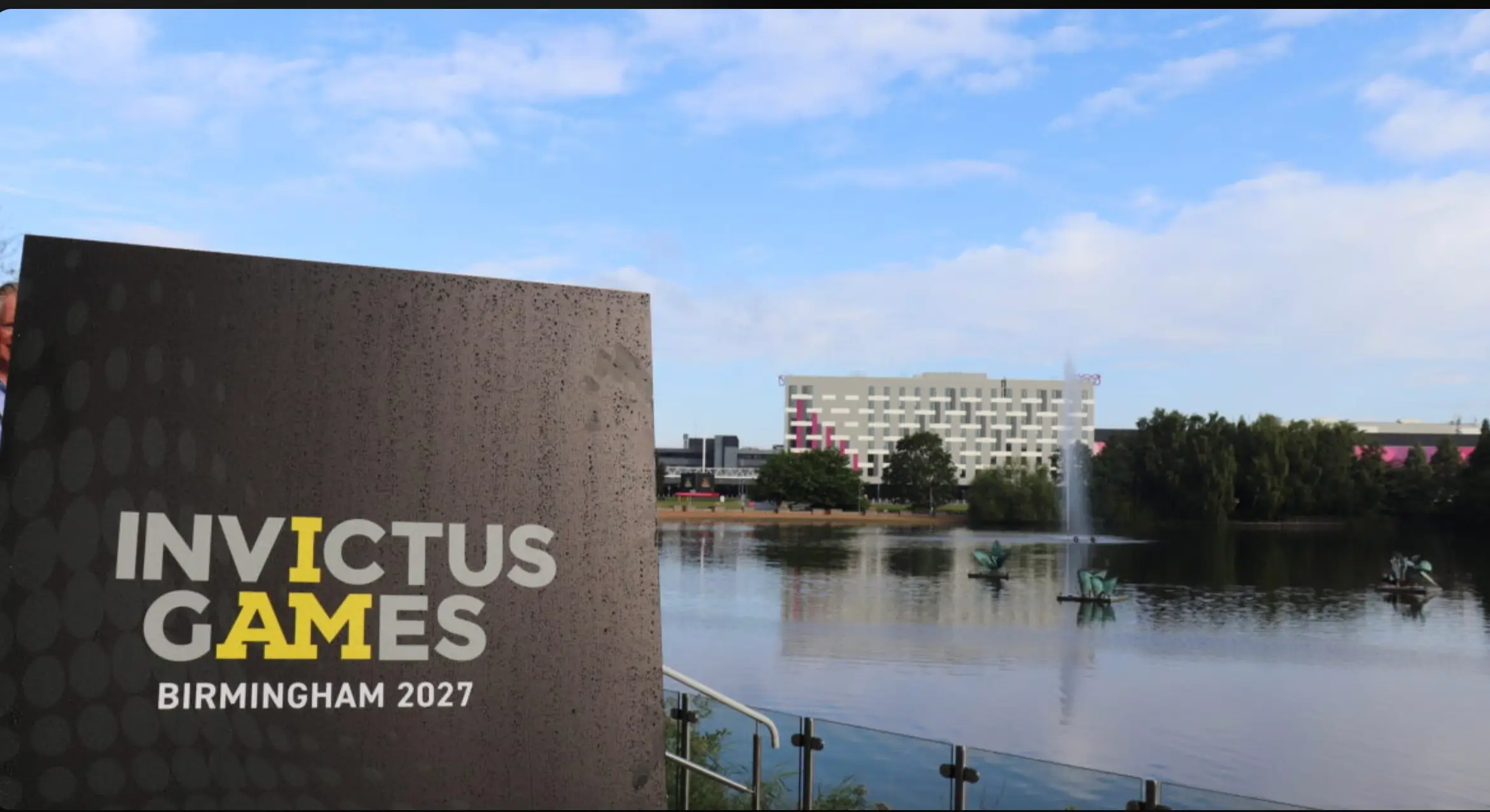
Prince Harry is due back in London this week for engagements tied to the one-year countdown to Invictus Games Birmingham 2027, the adaptive-sport competition he founded in 2014 after visiting the U.S. Warrior Games and deciding Britain needed an international equivalent for wounded, injured, and sick servicemembers. The Games have since traveled to Orlando, Toronto, Sydney, The Hague, Düsseldorf, and Vancouver-Whistler, growing each cycle. Birmingham 2027 is set to run July 10–17, 2027, and will bring roughly 550 competitors to the city across twelve adaptive sports, including the debut of esports, laser run, and pickleball.
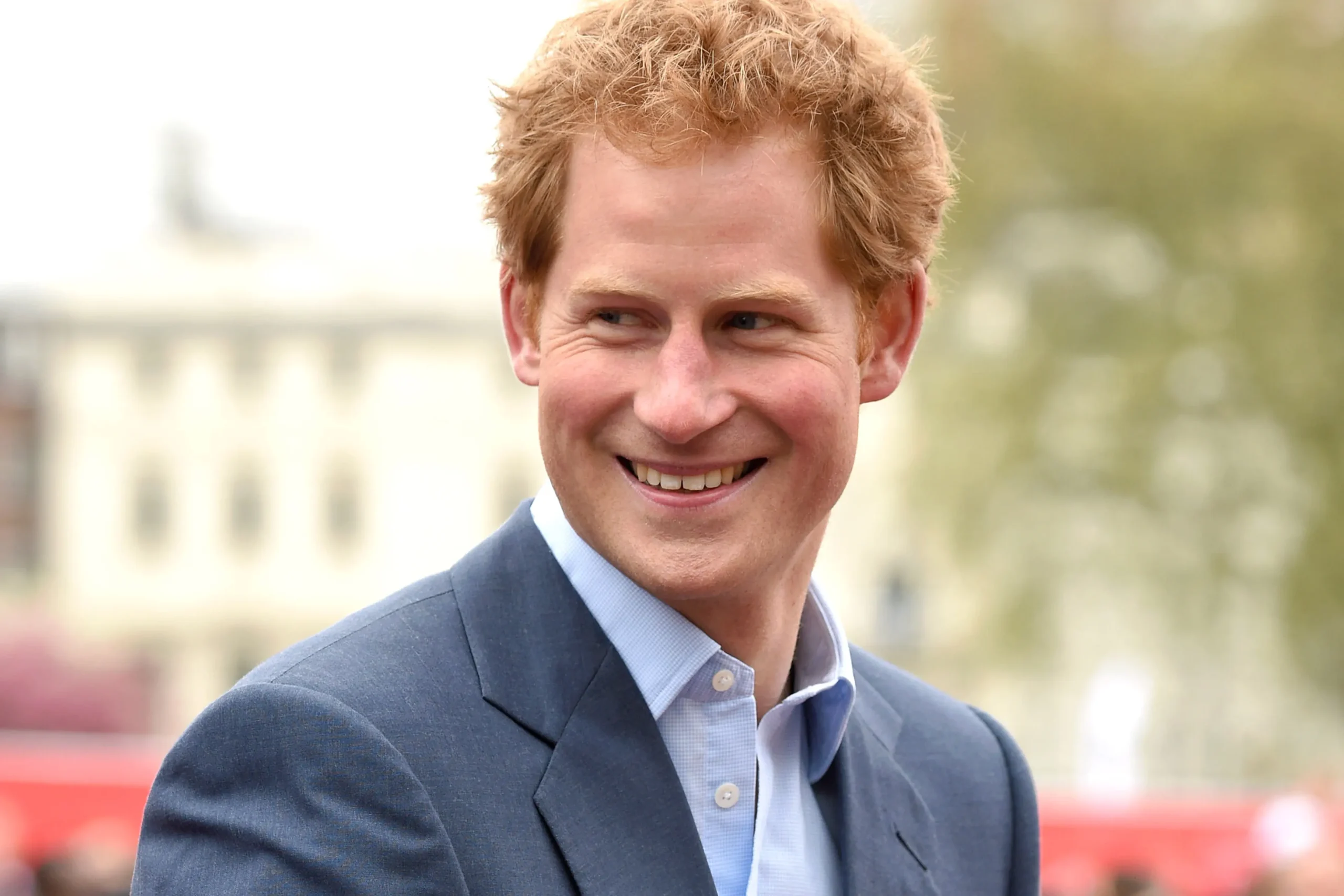
Prince Harry addresses the public during a formal event, highlighting his continued involvement with the Invictus Games amid renewed discussions surrounding security arrangements and future visits to the United Kingdom.
The trip was originally shaping up as something more personal than a standard round of charity engagements. According to reporting reviewed for this piece, Harry had hoped to bring wife Meghan Markle and their two children to the United Kingdom for the first time since 2022, when the family last appeared together in Britain for Queen Elizabeth II’s Platinum Jubilee. The visit was framed as a chance for Prince Archie, 7, and Princess Lilibet, 5, to see the country where their father grew up, and potentially spend time with their grandfather, King Charles, amid years of visible distance between father and son.
That plan did not survive contact with the one issue that has shadowed nearly every Sussex visit to Britain since 2020: security.
decision
The dispute over protection is not new. The UK’s Executive Committee for the Protection of Royalty and Public Figures, gen known by its acronym RAVEC, decided in February 2020 that Harry would lose his automatic entitlement to taxpayer-funded police protection once he and Meghan stepped back from full-time royal duties and moved to the United States. In the years since, Harry has fought that decision through nearly every level of the British courts, arguing RAVEC failed to properly assess his risk before downgrading his status. The High Court dismissed his challenge in February 2024, and the Court of Appeal rejected his subsequent appeal in May 2025, leaving his security in Britain to be assessed case by case, the same basis afforded to other high-profile visitors rather than working royals. Harry has said publicly that the fight over security has strained his relationship with his father to the point where the two have gone extended intervals without speaking.
For this trip, RAVEC again declined to extend additional police protection to Harry’s family for the duration of their stay, rather than only while on royal property. That distinction proved decisive. Once it became clear his wife and children would not have consistent protection outside palace grounds, Harry made the call that they would not travel to London with him. Meghan, Archie, and Lilibet are no longer expected to join the London leg of the visit — a decision consistent with Harry’s past statements that he cannot picture bringing his family back to Britain without adequate security in place.
Harry’s team says the Duke then spent much of the following week arranging private security on his own, separate from anything RAVEC would provide — itself notable, given that a British court previously rejected his bid to privately fund armed Metropolitan Police officers, on the grounds that officers should not act as personal bodyguards for a private citizen. It was only once alternative, non-police arrangements were finalized, according to his spokesperson, that Harry formally accepted King Charles’s offer of accommodation for himself at a royal residence.
That single sequence of events — RAVEC’s decision, the scramble for private security, and the eventual acceptance of the King’s offer — is roughly the one point on which both sides agree. Everything that arrived after it is in dispute.
View this post on Instagram
two
On Monday, July 6, Harry’s spokesperson said the offer to stay at Buckingham Palace during the visit had been withdrawn — after the Duke had already formally accepted it. The statement framed the timing as hard to square with the palace’s own knowledge of the case, noting that the offer’s withdrawal came only after security arrangements had finally been settled and the acceptance sent through.
The spokesperson’s statement went further than a simple complaint about scheduling. It expressed pointed frustration that an offer already accepted could be pulled back at what it called the last possible moment, with the explanation for the withdrawal centering on the timing of an unrelated court judgment. Coverage of the statement described Harry’s team as having gone unusually forceful in response, a marked shift from the more measured tone his office has generally used in prior public statements about the family’s dealings with the palace. The sequence also produced some same-day confusion: an early report Monday morning indicated Harry would in fact be staying at Buckingham Palace, only for the palace to issue a correction shortly afterward stating the offer had already lapsed — a detail that added to the sense of a fast-moving, chaotic morning rather than a clean, single announcement.
verse
Buckingham Palace sources dispute nearly every element of that timeline. Their account holds that the offer of accommodation remained open through the end of the previous week, and that repeated requests were made for clarity on either Harry intended to accept it. No formal acceptance arrived before the deadline the Household says it needed in order to prepare staffing and hospitality for the Duke’s stay.
According to the palace’s version, a message arrived Saturday morning that formally declined the King’s offer outright. A subsequent request to stay for a shorter period followed — but by then, palace sources say, the necessary arrangements could no longer be pulled together on short notice. The Household has stressed that accommodation at a royal residence remains available to Harry and his family for a future visit, suggesting the door is not permanently closed, even as this particular stay fell through.
Where the two camps diverge most sharply is on intent. Harry’s team frames the withdrawal as a deliberate and disappointing reversal, timed to a legal matter it argues the palace could have planned around. The palace frames it as a straightforward consequence of a missed deadline, compounded by a separate and more sensitive complication tied to Harry’s ongoing litigation. Both versions describe the other side as having had ample opportunity to communicate more clearly — which is, in effect, the entire dispute in miniature.
challenge
This is not the first time a Sussex visit to Britain has become a story about logistics and optics rather than the occasion itself. Disputes over where Harry and Meghan would stay, what security they would receive, and how visible they would appear alongside working royals have surfaced repeatedly since the couple’s 2020 step back — from arrangements around Queen Elizabeth II’s funeral in 2022, to the King’s 2023 coronation, which Harry attended alone and only briefly. What distinguishes this latest episode is the degree to which both sides have now put competing, on-the-record statements into public circulation, rather than allowing the disagreement to play out through anonymous briefings alone. That shift itself has become part of the story, read by royal watchers as a sign of how much trust remains in short supply between the Sussex camp and the Household.
issuance
Tuesday, July 7, brought the expected judgment in Harry’s long-running case against Associated Newspapers, the publisher of the Daily Mail and the Mail on Sunday. The case is separate from the security fight and centers on allegations of unlawful information-gathering by the publisher; Harry originally also pursued a related libel claim against the company over a 2022 article, though he withdrew that specific claim in January 2024 while continuing to press the broader unlawful information-gathering allegations toward trial. It is one of several publisher lawsuits Harry has pursued since leaving royal life, alongside a settled case against News Group Newspapers and a 2023 courtroom win against Mirror Group Newspapers, where he became the first senior royal to testify in a UK court in more than a century.
Palace sources say the proximity of Tuesday’s ruling to Harry’s proposed stay at Buckingham Palace created what they describe as a constitutional consideration: with litigation involving the King’s younger son still active, the Household did not want the King’s position to appear compromised by hosting Harry at the palace at the moment the judgment landed. Harry’s team has pushed back on that explanation specifically, arguing that the palace had known the ruling was imminent for days beforehand — long enough, in their view, that it should not have factored into a last-minute withdrawal of an already-accepted offer. Both statements agree the court case is central to the disagreement; they simply disagree on whether it justified the outcome.
fin
Despite the back-and-forth, Harry’s public itinerary is reportedly unchanged. He is expected to proceed with his Invictus Games-related engagements in London this week regardless of where he ultimately stays. Meghan, Archie, and Lilibet remain off the schedule for this leg of the trip, though the palace’s suggestion that a future family stay remains possible leaves that question open for later in the year.
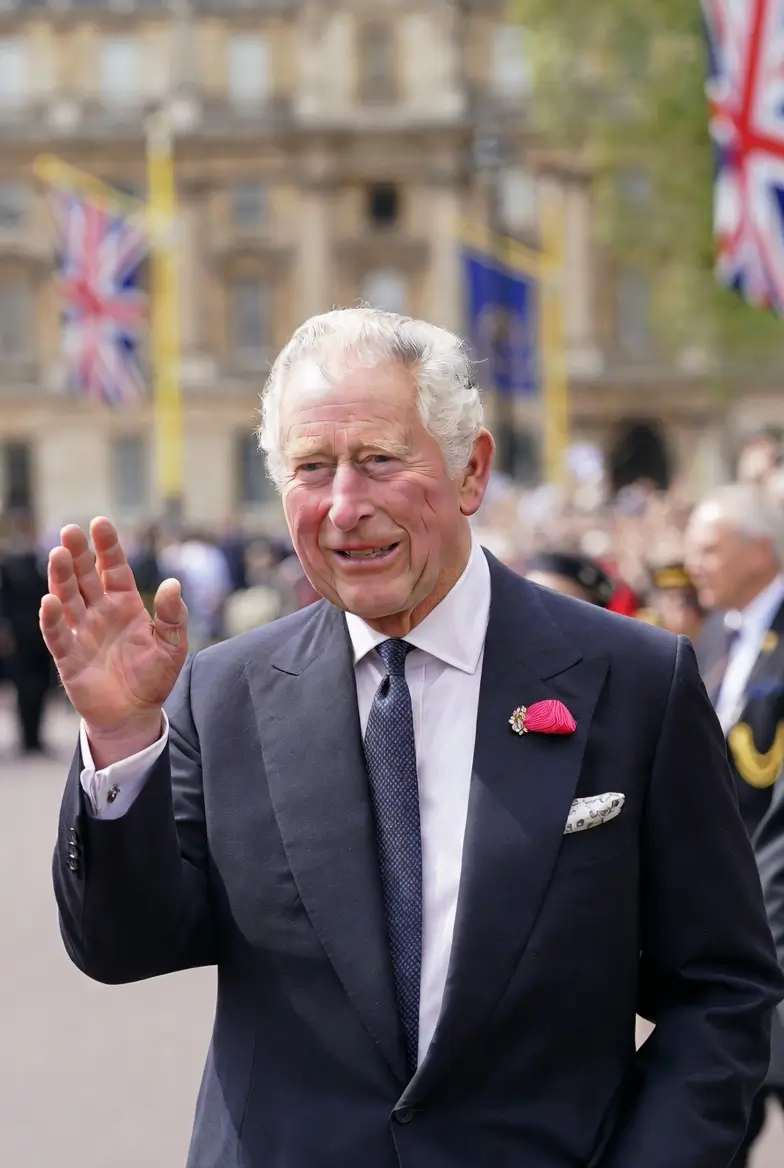
King Charles acknowledges spectators with a wave during a ceremonial procession, framed by Union Jack flags, historic architecture, and a crowd gathered for the public occasion.
The dispute lands against a backdrop that gives it extra weight: King Charles was diagnosed with cancer in February 2024, and Harry has said publicly that he does not know how much longer his father has and would welcome reconciliation despite their ongoing legal disagreements. Seen against that context, a withdrawn offer of a room at Buckingham Palace is not simply a logistics dispute — it’s a view marker of how far apart father and son still are, even as both sides describe wanting to move past it.
There is also a practical dimension worth watching beyond this single week. Invictus Games Birmingham 2027 is still a year out, meaning Harry is likely to make further UK trips between now and the opening ceremony — for venue visits, athlete send-offs, and fundraising events tied to the Games. Each of those future visits will carry the same underlying questions this one did: what security his family can expect, either Meghan and the children will travel with him, and if any stay at a royal residence goes more smoothly the next time an offer is on the table. How the palace and the Sussex team handle those recurring logistical questions may end up shaping the broader narrative around Harry and Charles’s relationship more than any single statement issued this week.
For now, the standoff stands as a rare instance of the palace and a working member of the extended royal family trading public, on-the-record accounts of the same private negotiation, with reconciliation still an open question rather than a settled outcome. Both sides have left the door open to a different result next time — whether that happens will likely depend on how much either party is willing to communicate before, rather than after, the next deadline arrives.
Related Articles
American Horror Story Opens the Vault for a Thirteen-Episode Reunion of Its Own Ghosts
Three half-hour episodes land September 24 on FX and Hulu, with Jessica Lange, Sarah Paulson […]