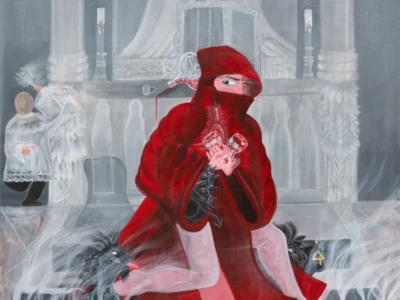
The Laughing Geisha: Tracing the Japanese Spirit Through Layers of Myth, Art, and Defiance

June 3, 2025
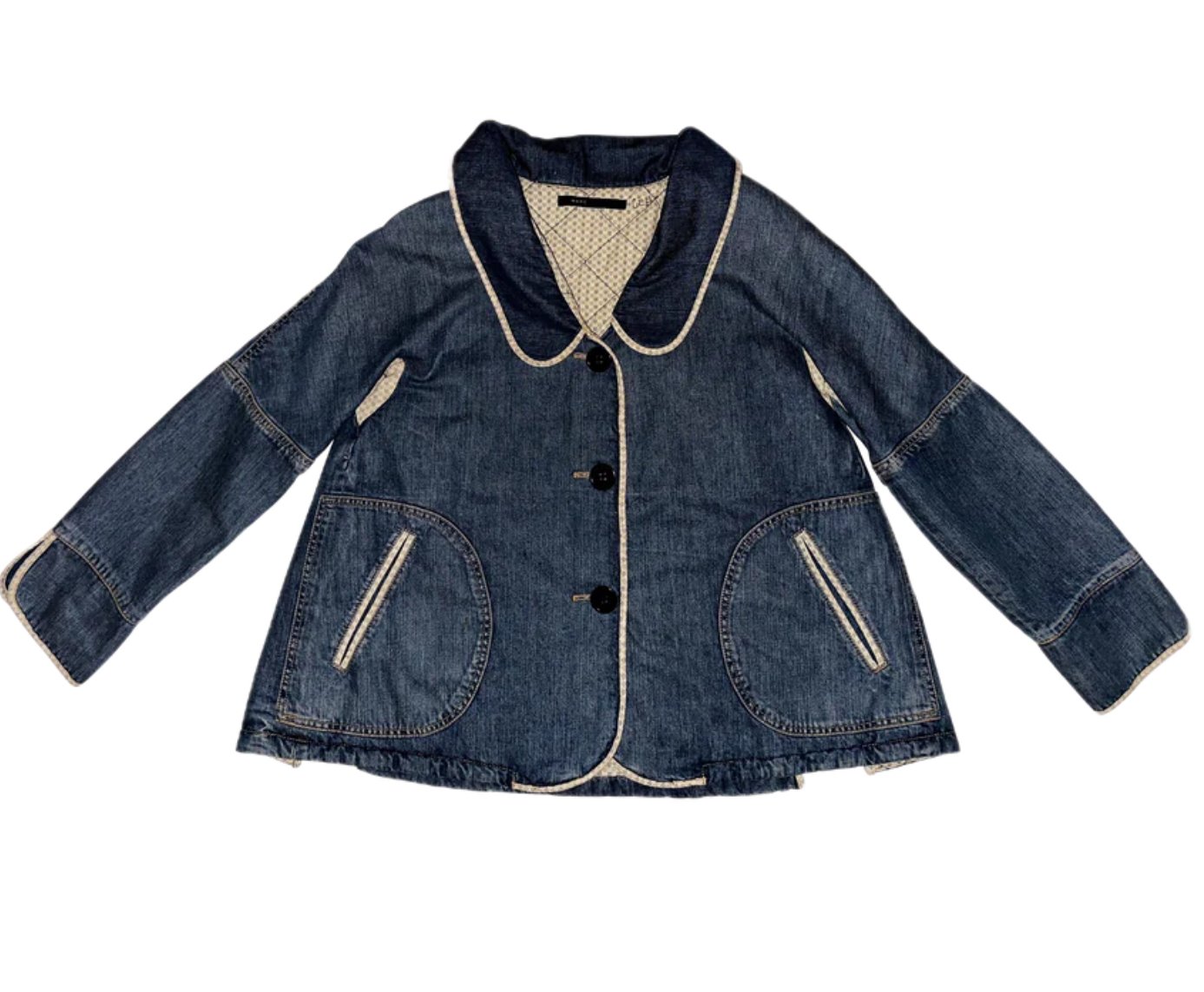
In the midst of Kyoto’s Gion district, a quiet alley splits the ancient city into realms of now and then. Tourists with phones held high tread over cobblestones worn down by centuries of wooden geta. Somewhere between the modern lenses and old-world charm walks a figure in white makeup and a patterned kimono—poised, serene, timeless. This is the geisha. But in this story, she’s not silent. She’s laughing.
Welcome to the world of The Laughing Geisha, a living metaphor that defies the assumptions the West has long held about Japanese identity. She’s not just a figure of beauty or grace. She’s the embodiment of resilience, duality, and the complex spirit of Japan itself—a spirit that balances ritual with rebellion, elegance with edge, past with perpetual reinvention.
Myth and Misunderstanding: Unpacking the Geisha Myth
To understand The Laughing Geisha, one must first recognize the distance between the Western gaze and the Japanese truth. For decades, the geisha was miscast in foreign media—lumped with courtesans, exoticized as submissive fantasy, or framed as tragic relics of a dying tradition.
But geisha are none of those things. They are artisans, performers, and cultural custodians. The term “gei-sha” translates directly as “art person,” and their entire identity is built around honed skill, not passive beauty.
They master traditional dance, musical instruments like the shamisen, conversational arts, and the meticulous codes of kimono dress and makeup. In Edo-period Japan, geisha were trendsetters, entertainers, and in some cases, political actors. They had their own agency, networks, and financial autonomy.
And yet, there’s something about the image of a geisha laughing that challenges the archetype entirely. We’re conditioned to imagine them serene, composed, even ghostlike. A laugh cracks that porcelain mask. It suggests mischief, knowingness—an inner life far richer than the silent frame they’ve been boxed into.
The laughing geisha becomes a metaphor for Japan itself: a country often viewed through the lens of precision, ceremony, and restraint—yet one that contains intense energy, irreverence, and humor beneath the surface.
The Duality of the Japanese Spirit: Wabi-Sabi vs. Punk Zen
To understand the Japanese spirit is to embrace contradiction. Japan reveres imperfection (wabi-sabi) and order (shibui) while also producing surreal pop culture, avant-garde fashion, and hyper-modern architecture.
One side worships cherry blossoms that fall in perfect, tragic silence. The other side hosts noise music festivals in underground Tokyo basements. One side bows. The other side rages.
The Laughing Geisha stands at the crossroads of these extremes. She may dress in patterns centuries old, but her smile—sardonic, disruptive—pulls her out of history and into now. She’s the visual fusion of tea ceremony and Harajuku streetwear. She doesn’t erase Japan’s past; she reframes it.
This is Japan’s trick: never fully letting go of the old, even as it rockets toward the new. The laughing geisha doesn’t deny tradition; she exposes its elasticity. She’s a spirit of transformation disguised as heritage.
Art and Protest: When Laughter Becomes Subversion
Throughout history, the act of laughing—especially by women—has been political. In rigid societies, laughter can signal refusal, irreverence, rebellion.
In Edo-period Japan, geisha were often scapegoated or censored for being “too modern,” “too free,” or “too visible.” But their power was precisely in their ability to perform femininity on their own terms. To master grace without surrendering autonomy. To make men feel important while pulling the strings backstage.
In modern Japanese art and literature, the image of a geisha has been reappropriated many times. Yukio Mishima staged them as symbols of vanishing beauty. Photographer Nobuyoshi Araki captured them with raw, often controversial eroticism. Contemporary artist Miwa Yanagi took it a step further, photographing futuristic geisha as mechanical, clone-like beings—both satire and prophecy.
But the laughing geisha disrupts even that. Her laughter is unforced. It’s not seductive. It’s human, unruly, maybe even loud. She laughs with knowledge, not for someone else’s entertainment. It’s not a performance—it’s a glitch in the matrix of control.
In this way, she becomes a subversive icon. A cultural virus inside the shell of cultural preservation.
The Ghost in the Kimono: National Identity and Cultural Amnesia
Modern Japan grapples with memory. It is a country of museums and megacities, of ancestral altars and Shibuya crosswalks. It has both preserved and digitized its history. And yet, in the rush to modernize—especially post-WWII—it also compartmentalized parts of its past.
The geisha tradition survives, but it’s shrinking. Apprenticeship is long, expensive, and grueling. Fewer young women enter the path. And for some, geisha culture represents a Japan that feels out of step with gender equality.
But that’s exactly why The Laughing Geisha matters now. She’s not about restoring the old world. She’s about carrying its essence forward—on her own terms. She’s a reminder that cultural identity isn’t static. It mutates, rebels, reinvents.
She’s not a ghost. She’s a virus. Not an echo. A remix.
Contemporary Echoes: From Kabuki to Cyberspace
Look at Japan’s creative exports today: anime, fashion, music, design. The spirit of the geisha—discipline wrapped in fantasy, performance powered by skill—lives on in countless forms.
- In Anime: Characters like Sailor Moon or Jujutsu Kaisen’s Nobara take ancient archetypes and infuse them with agency, sarcasm, and fight.
- In Fashion: Designers like Rei Kawakubo and Yohji Yamamoto often reference traditional silhouettes, but fracture them into bold, asymmetrical statements.
- In Technology: Even the AI assistants like Gatebox’s virtual wives borrow from the visual language of the geisha—perfect, polite, responsive—except now in code.
But where is the laughter? It’s in the memes. In the underground comedy scenes of Osaka. In viral dances. In surreal TV ads where samurai drink Pepsi in space.
That laughter isn’t trivial. It’s the release valve of a pressure cooker society. It’s the joke that survives after the mask falls.
Branding and Commodification: Danger and Opportunity
Of course, The Laughing Geisha is also at risk. In branding culture, she’s vulnerable to flattening—turned into a logo, an aesthetic, a tattoo without context. You’ve seen her face on handbags, posters, perfume bottles. But without the laugh, without the humanity, she becomes what Western culture always wanted her to be: silent again.
That’s the danger. But also the opportunity.
Used responsibly, the image of The Laughing Geisha can spark dialogue. She can be the icon of modern Japan not because she resists change, but because she contains it.
She tells us that elegance doesn’t have to be stiff. That tradition doesn’t have to be obedient. That beauty can also be fierce, strange, joyful, loud.
The Future of the Laughing Geisha: A Spirit Reborn
We live in a world that demands reinvention. Identities are no longer fixed. Cultures remix and mutate daily. The laughing geisha is not a symbol of nostalgia, but a map for moving forward.
She invites Japan—and anyone watching—to laugh at rigidity, to rewrite the script, to turn the stage into a playground. Her laughter is not mockery. It’s release. It’s resistance. It’s joy that refuses to die.
In an era obsessed with speed, filters, and surface, the laughing geisha is a slow burn. She’s not trying to be viral. She’s trying to be real.
And maybe that’s what the Japanese spirit has always been about: balance with bite, poise with play, grace with guts.
Related Articles
Inside the Red: What Jonathan Yeo’s Portrait of Charles III Actually Argues
Jonathan Yeo spent three years painting a king who was still a prince when the […]