DRIFT AUDIO
Listen to this story
Choose a voice, then press play.
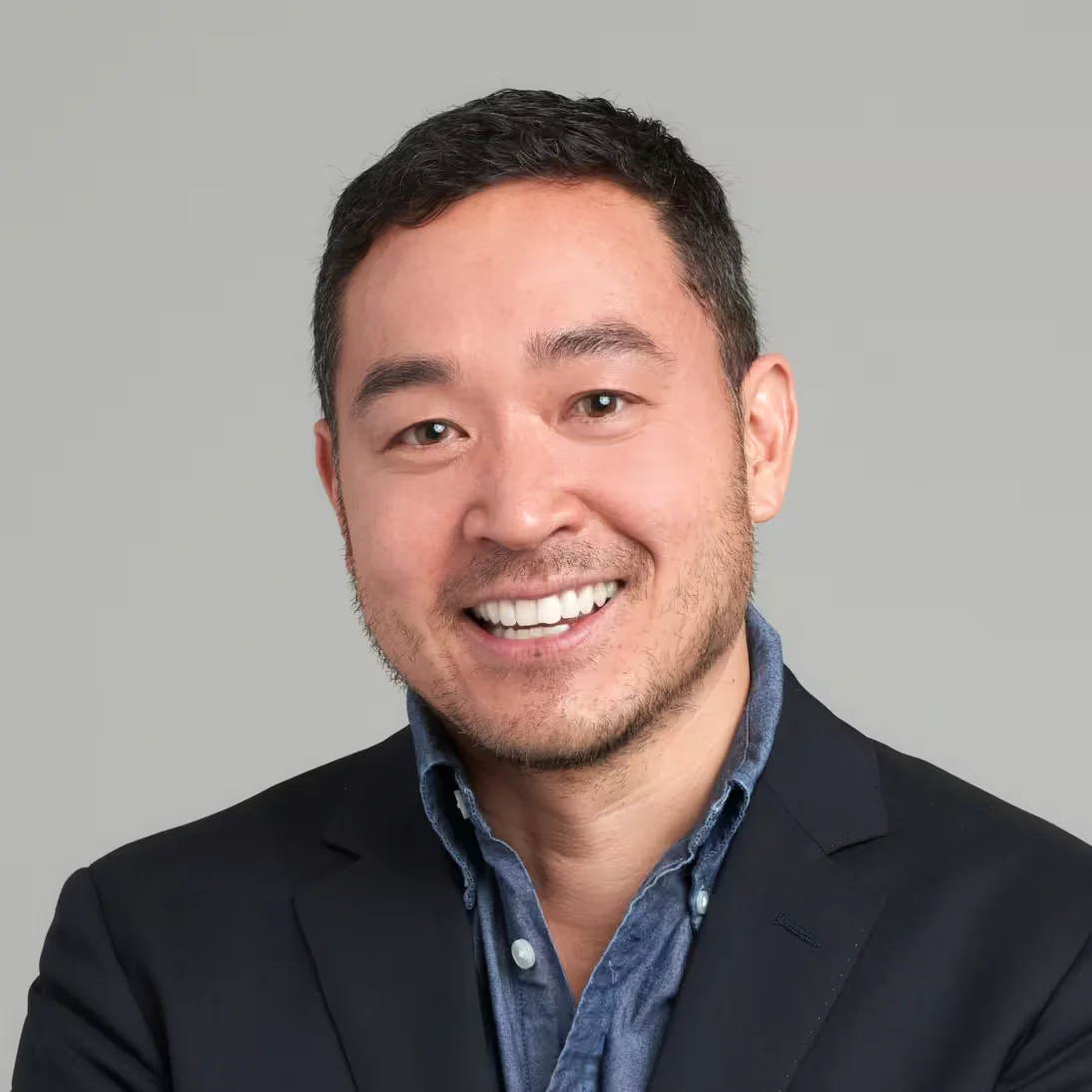
In his first week running Brooks Brothers, sales at its New York stores had fallen 70 percent and Ken Ohashi was already back in front of the board.
Brooks Brothers filed for Chapter 11 protection on July 8, 2020, the pandemic having done to a 202 year old formalwear company what two world wars and the death of the necktie never quite managed. The retailer had generated more than $991 million in sales the year before, roughly a fifth of it online, and it had already marked 51 of its roughly 250 North American stores for closure before the filing was even made public. A bankruptcy court in Delaware fielded the auction that followed. Simon Property Group and Authentic Brands Group, operating jointly as SPARC Group, won it with a $325 million bid, committing to keep at least 125 Brooks Brothers stores open against the roughly 250 the company had run before the pandemic. The sale closed at the end of August 2020.
Ken Ohashi arrived that fall, about two months after the filing. The company he inherited was still absorbing the shock. In his first week, New York stores were down 70 percent and he was back before the board days later asking for an additional $50 million just to keep the operation funded through the reopening. There was no honeymoon period and no cushion for a slow start. The company’s three domestic factories, idled during the bankruptcy proceedings, did not reopen under the new ownership.
Brooks Brothers Flagship Shop
stir
Ohashi’s résumé does not read like a fashion executive’s. He trained as a certified public accountant at Arthur Andersen, the accounting firm that collapsed alongside Enron in the early 2000s, before a recruiter’s cold call pulled him toward retail. He spent 14 years at Aéropostale, helping steer the teen retailer through its transition from privately held to publicly traded and eventually rising to senior vice president of international and global licensing. When Authentic Brands Group acquired Aéropostale in 2016, Ohashi moved into ABG’s orbit with it, and within a few years he had become the company’s president of international and global retail, a role in which he managed a $4 billion portfolio of brands outside the United States and helped stand up SPARC Group itself, the joint venture with Simon Property Group that now runs more than 4,000 retail doors and generates close to $4.7 billion in annual global sales.
He is the son of Japanese immigrants, a first generation college student who worked full time through school with little in the way of a roadmap. That background shows up in how he describes his own arrival at Brooks Brothers:
“I didn’t feel entitled to be in the room.”
It is a notably unglamorous origin story for the executive now credited with saving one of the oldest names in American retail, and Ohashi tends to lean into that rather than smooth it over.
idea
The first moves were not creative. They were accounting moves, which tracks given who was making them. Brooks Brothers marked down 50 to 70 percent of its aged inventory, including a women’s collection that had been underperforming for years, and used the resulting cash and shelf space to fund a harder pivot into sportswear, which grew from roughly 20 percent of sales to 40 percent under his watch. About half of the company’s corporate staff turned over in the process, with new hiring concentrated in product development, branding, digital and creative roles rather than the finance and operations functions that had historically dominated the org chart.
None of this was handled grimly. Early on, according to a colleague’s account published in MR Magazine, Ohashi bought a frozen margarita machine for the office and the team celebrated every small win it could find during a stretch when, as the same account put it, nobody was buying suits and nobody was sure the company would still exist in a year. His stated leadership philosophy, framed and hung near the entrance to his own office according to Axios, fits the tone: “Work hard and be nice to people.”
bet
Rather than modernize Brooks Brothers into something unrecognizable, Ohashi’s team went the other direction, digging into the company’s own 200 plus years of archives to figure out what had actually made the brand distinctive before deciding what to change. The label’s long running Golden Fleece suiting line, its historic top tier designation for fine tailoring, moved back toward the center of the assortment rather than getting phased out in favor of something trendier.
Ohashi also made a specific call on who would translate that archive into new product. He brought in Michael Bastian, a New York designer known for a clean, codified take on preppy American sportswear, to help shape the brand’s direction rather than handing the job to someone chasing an unrelated aesthetic.
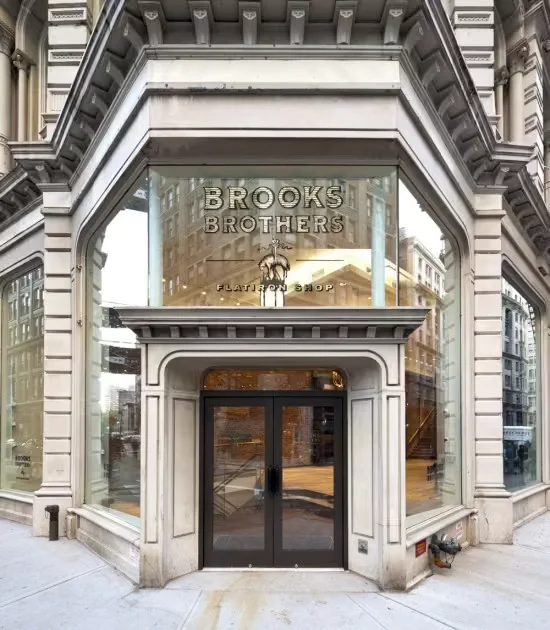
That instinct culminated in June 2025, when Brooks Brothers reopened a flagship in Manhattan’s Financial District, close to where the company operated in its earliest decades. The store includes a rotating display of artifacts from the brand’s own archive: a replica of the coat Abraham Lincoln wore to his inauguration, a nineteenth century store mirror, and personal items that belonged to founder Henry Sands Brooks and his son. Ohashi framed the opening around the numbers as much as the nostalgia: “Since 2021, Brooks Brothers has experienced impressive, consistent growth year over year.”
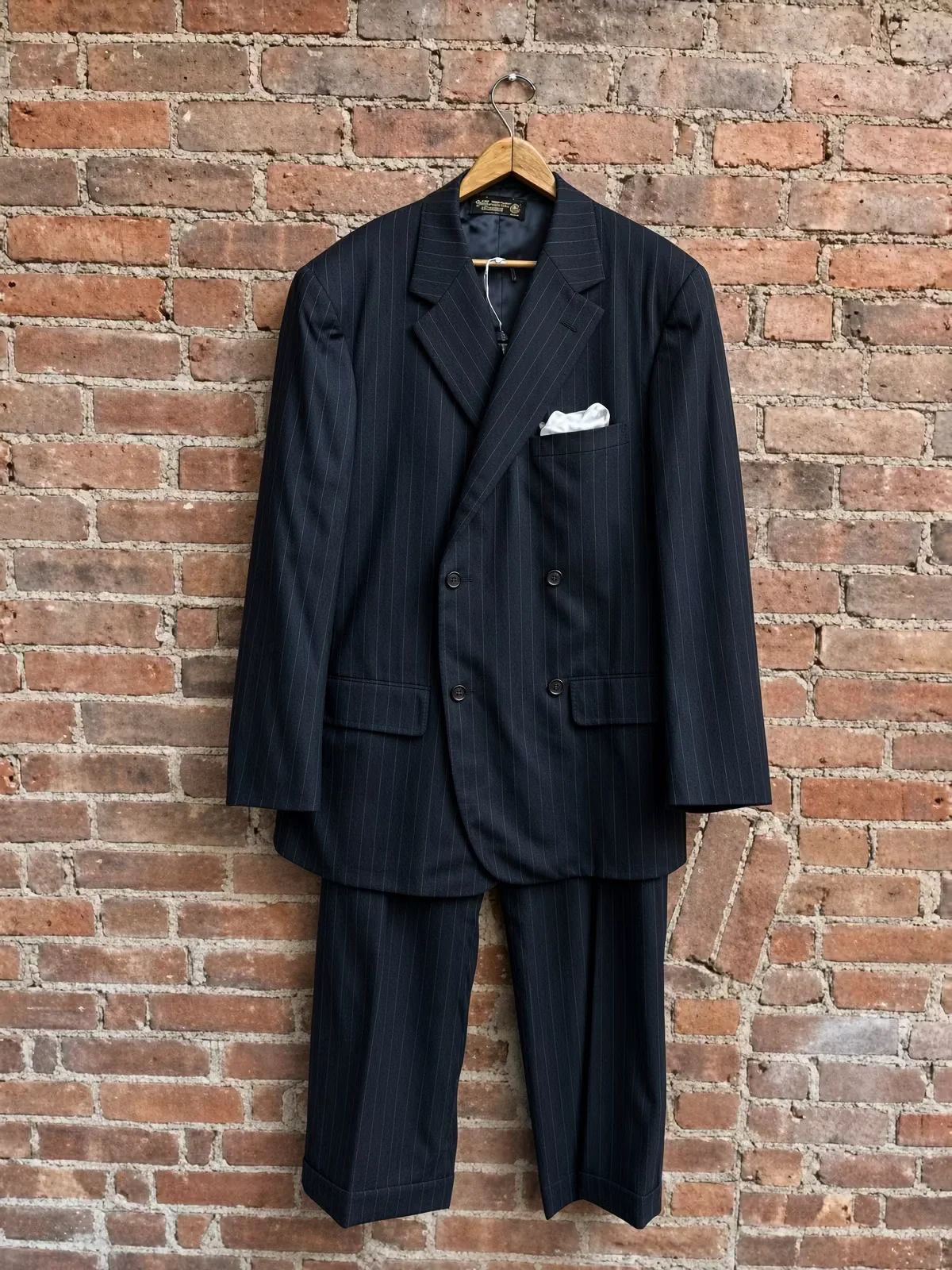
Golden Fleece, the brand’s historic designation for its finest tailoring, returned to the center of the collection under Ohashi.
let
The archive strategy did not mean standing still. In 2024 and 2025, Brooks Brothers partnered with Los Angeles label Brain Dead on a line called Brooks Brothers California, its first real streetwear collaboration since a Supreme link-up more than a decade earlier. The first drop reworked the oxford button-down, the shirt Brooks Brothers is credited with inventing, and the second collection, released for spring and summer 2025, expanded into a full wardrobe: a co-branded two-piece suit, striped ringer tees, sweatsuits, and a wool hat carrying a logo that fuses Brain Dead’s head mark with the Brooks Brothers sheep.
At a Parsons School of Design fireside chat hosted by the Gromek Institute for Fashion Business, a student asked Ohashi directly whether a collaboration that radical risked diluting more than two centuries of tailoring history. His answer wasn’t defensive. He described the fit as something that emerged naturally between the two brands rather than something forced onto the collection from outside, a distinction he seems to apply to most of the changes made under his tenure.
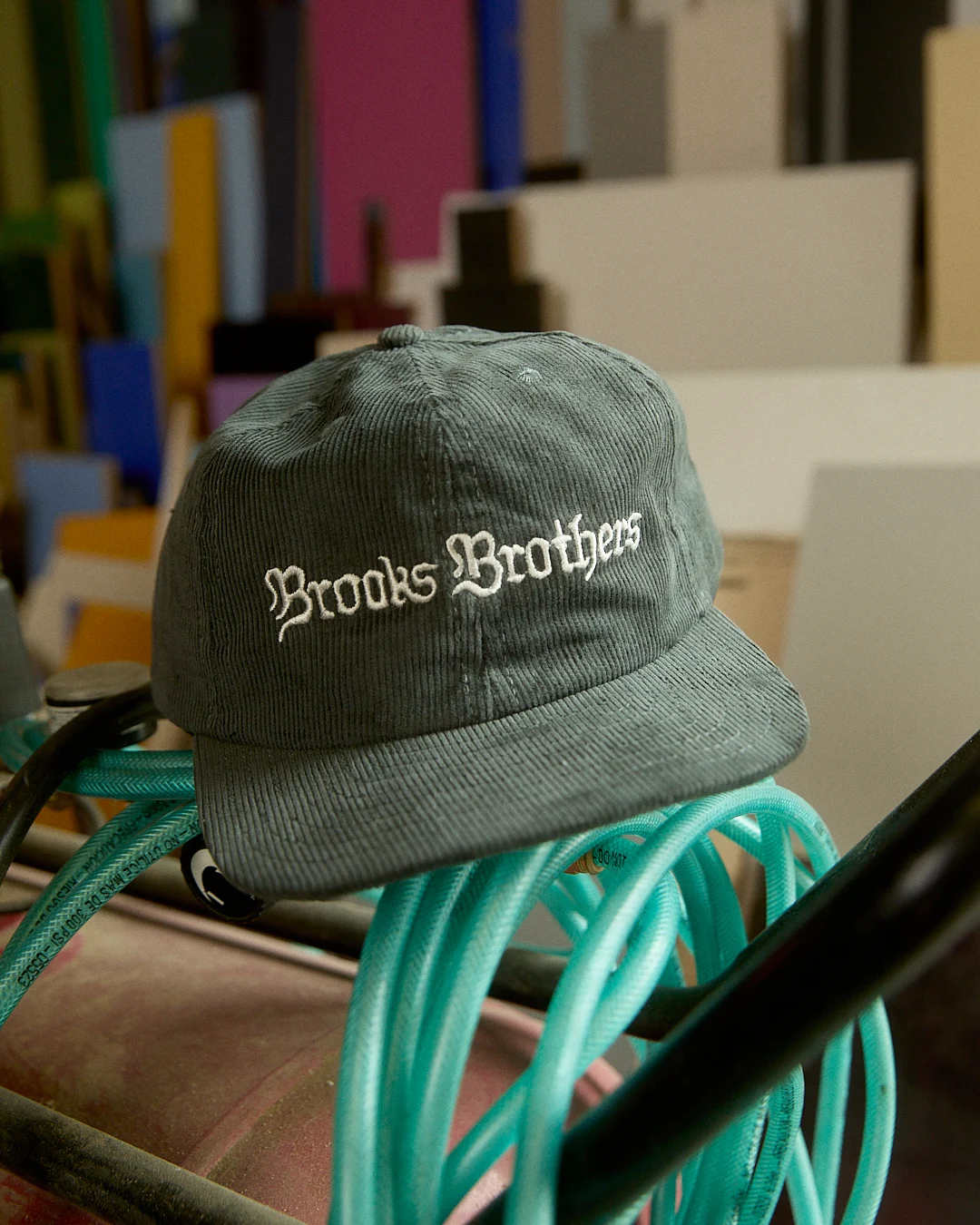
Brain Dead x Brooks Brothers Corduroy Cap
show
Some of the boldest calls weren’t about product at all. In May 2023, Brooks Brothers launched a Father’s Day campaign that featured two gay dads for the first time in the brand’s history, styled in the same oxford shirts and madras tuxedos the label had been selling since well before either man was born. The decision landed in the middle of a broader retail backlash cycle against LGBTQ-inclusive marketing, and Ohashi didn’t hedge the brand’s position to avoid it.
The company’s philanthropic partnerships point in the same direction. Brooks Brothers has backed Braven, an organization that helps first-gen college students build career readiness skills, a cause that lines up closely with Ohashi’s own background, along with GLSEN, which works to keep LGBTQ+ students safe in schools. Ohashi is also active in YPO’s LGBTQ+ CEO network, a peer group for chief executives under 45, and lives in Brooklyn with his husband and their two children.
That stance has followed him individually as much as it has followed the brand. He has been named to Fortune’s LGBTQ+ Leaders list, included on Gold House’s A100 List of Asian Pacific leaders, and ranked first on Outstanding’s LGBTQ+ Executive Role Model list in 2022. None of it reads as incidental to the business strategy. Ohashi has described the retail turnaround itself as an exercise in first rebuilding a values system inside the company before expecting the market to notice any of it from the outside.
extend
The company’s own promotional bios put global sales at roughly $800 million in the spring of 2023, across the same 600-plus doors it operates today. By the end of that year, Brooks Brothers’ global sales had climbed to nearly $1 billion, a figure Ohashi has described with characteristic understatement rather than triumphalism: “It was a moment of both excitement and probably sheer terror.” Two years later, the company’s own leadership bio and outside profiles put global sales at more than $1 billion across upwards of 600 retail doors worldwide, a round number that has become shorthand for the turnaround itself even though the more interesting story sits in the decisions that produced it rather than the total.
In June 2026, Ohashi discussed that rebound directly with Andrew Ross Sorkin at the CNBC CEO Council Summit in Washington, D.C., a fairly unusual stage for a menswear executive and a sign of how far the story had traveled outside the trade press that covered the bankruptcy back in 2020.
look
The corporate structure underneath Brooks Brothers changed again in January 2025, when SPARC Group merged with JCPenney to form Catalyst Brands, a new holding entity covering six banners: JCPenney, Aéropostale, Brooks Brothers, Eddie Bauer, Lucky Brand, and Nautica. Former JCPenney chief executive Marc Rosen took over as Catalyst Brands’ CEO, with a handful of brand level chief executives reporting to him. Ohashi kept Brooks Brothers and initially added Eddie Bauer to his responsibilities.
In January 2026, his remit shifted again. He was named brand chief executive officer of Nautica as well, tasked with applying a version of the same playbook to a 1983 lifestyle label that has its own, considerably shorter, history to work with. He now runs both brands under Catalyst Brands, reporting to Rosen, five years into a job that started with a 70 percent sales drop and an emergency ask for $50 million.
Related Articles
Sandra Choi Spent Three Decades Building Jimmy Choo, Now She’s the One Being Honored
On November 30, Sandra Choi will collect the Special Recognition Award at the Royal Albert […]