DRIFT AUDIO
Listen to this story
Choose a voice, then press play.
Twenty-two years after her first television role, Olivia Wilde has an acting credit and a directing credit both moving through theaters in the same year.
Olivia Wilde spent four seasons on House diagnosing patients who nearly died from something rare, then spent most of the 2020s directing other people’s actors instead of sharing scenes with them. This year she went back to doing both, and both films trace back to the same festival. I Want Your Sex, Gregg Araki‘s erotic thriller, premiered at Sundance in January and opened in theaters on July 31 with Wilde playing a domineering visual artist opposite Cooper Hoffman. The Invite, the third feature she has directed, premiered at Sundance one day earlier and put her on the other side of her own camera, playing one half of a marriage unraveling next to Seth Rogen, Penélope Cruz and Edward Norton. Neither film needed the other to work, but landing in theaters six weeks apart says something about where her career actually sits right now: not pivoting from actress to director, just doing both at the same time.
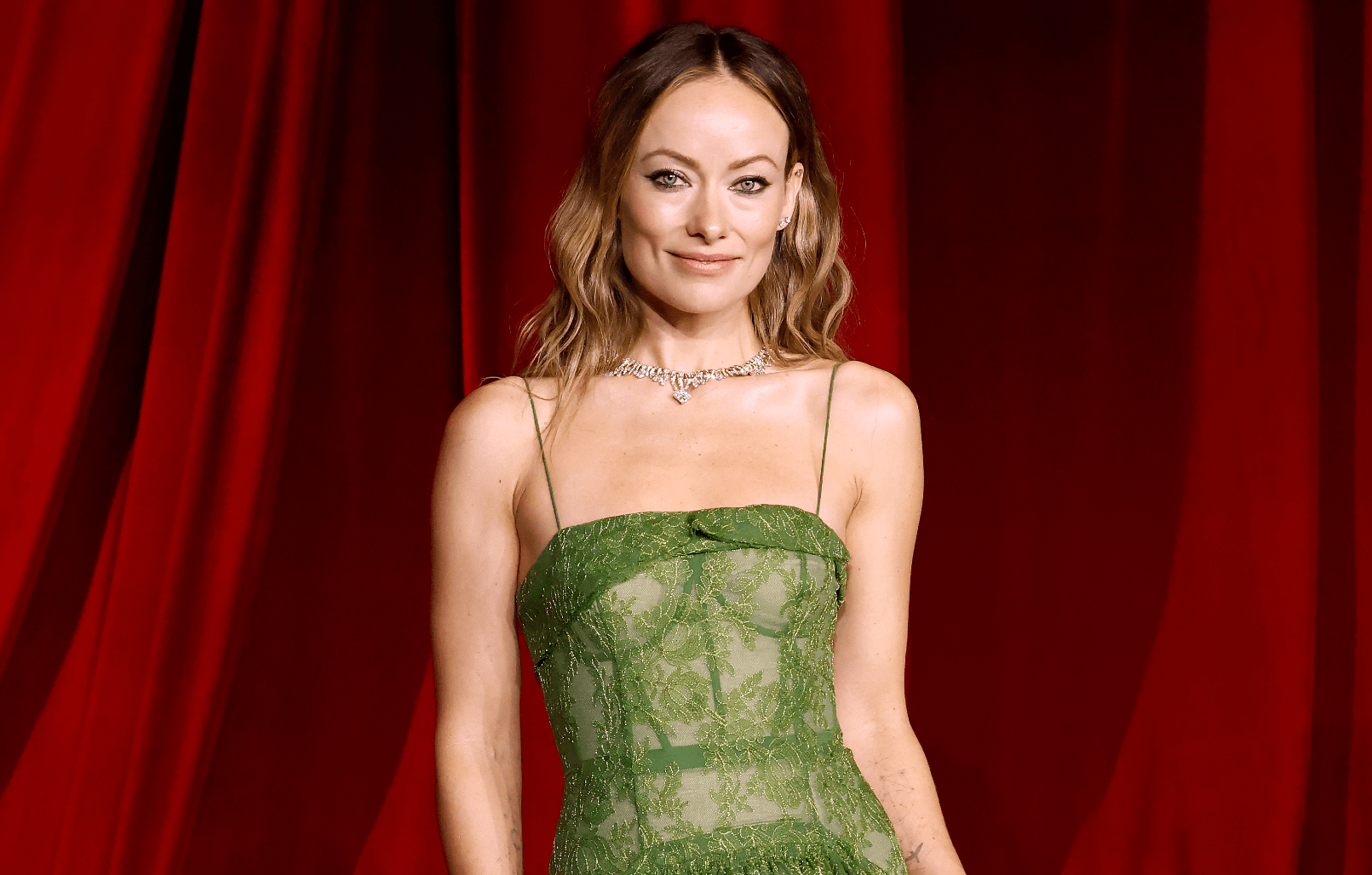
Olivia Wilde
to
Wilde’s first recurring television role came in 2003, a year before The O.C. would turn Josh Schwartz into a franchise-builder. Before that, she had a short-lived role on the Fox drama Skin, canceled after three episodes, and made her feature film debut the same year in a small part in The Girl Next Door, opposite Elisha Cuthbert. On The O.C., she played Alex Kelly, the bisexual manager of a club called the Bait Shop, for seven episodes across the show’s second season, a supporting part with more edge than most of the cast around her. The show itself became a cultural touchstone for mid-2000s teen television despite a cast that skewed overwhelmingly white for the Orange County it was set in, a criticism that has followed it in retrospective coverage since. By 2007 Wilde had moved into a much bigger commitment: four seasons as Dr. Remy Hadley, known on House as Thirteen, opposite Hugh Laurie’s Gregory House on the Fox medical drama. Thirteen was written as guarded and secretive in ways that mirrored Alex Kelly more than the network probably intended, a doctor with a genetic condition she initially hid from her colleagues and a habit of keeping her personal life walled off from the diagnostic team around her. Wilde left before the show’s final season to focus on film work, then returned to television once more in 2016 for Vinyl, the short-lived HBO drama co-created by Martin Scorsese, Mick Jagger, Terence Winter and Rich Cohen about the record industry in the 1970s, playing the increasingly sidelined wife of a music executive in creative freefall. The show was canceled after one season.
show
Wilde began her entertainment career off camera, working briefly as an assistant casting director before her own acting work took over. Alongside television, she then built a film career that resisted typecasting by simply refusing to repeat herself. She appeared in Nick Cassavetes’ Alpha Dog in 2006, a drama based on a real Southern California kidnapping and murder case, then spent the next decade moving between science fiction, comedy and drama without settling into any of them. She played a bartender opposite Russell Crowe in Paul Haggis’s thriller The Next Three Days in 2010, then went straight from that grounded drama into Tron: Legacy, playing a security program inside a digital grid opposite Jeff Bridges. The following year she starred in Andrew Niccol’s In Time, playing Justin Timberlake’s mother in a world where aging stops at twenty-five, and then in Jon Favreau’s western and alien hybrid Cowboys & Aliens opposite Daniel Craig and Harrison Ford. 2013 alone had her playing model Suzy Miller opposite Chris Hemsworth’s James Hunt in Ron Howard’s Formula One drama Rush, a magician’s assistant in the comedy The Incredible Burt Wonderstone, a bartender opposite Anna Kendrick and Jake Johnson in the low-budget, largely improvised Drinking Buddies, and the confused blind date of a man falling in love with an operating system in Spike Jonze’s Her, opposite a voice performance from Scarlett Johansson. The independent drama Meadowland, about a couple grieving a missing child, followed in 2015, the same year as the horror film The Lazarus Effect. Her last major screen role before turning to directing full time was Clint Eastwood’s Richard Jewell in 2019, where she played journalist Kathy Scruggs investigating the 1996 Centennial Olympic Park bombing, the same attack for which the film’s title subject, a security guard, was wrongly suspected before being cleared. The film’s depiction of Scruggs trading sex for a tip drew criticism from press advocates and a threatened lawsuit from her former newspaper, the Atlanta Journal-Constitution, since no such exchange was documented in Scruggs’s actual reporting.
flow
None of this happened under the name she was born with. Wilde was born Olivia Jane Cockburn in New York City in 1984, into a family of journalists on both sides: her father Andrew Cockburn and mother Leslie Cockburn both worked as reporters, and her paternal grandfather Claud Cockburn wrote under the pen name James Helvick after being blacklisted for an anti-fascist newsletter in the 1930s, and her mother went on to spend years as a producer for 60 Minutes. Pseudonyms ran in the family. While a student at Phillips Academy in Andover, Massachusetts, she was cast as Gwendolen in a school production of The Importance of Being Earnest and, at her mother’s suggestion, adopted a stage surname to give herself an identity separate from her family’s byline. She chose Wilde, after the play’s author, Oscar Wilde. She and Oscar Wilde are not related. She was accepted to Bard College but deferred enrollment three times before abandoning it altogether, choosing instead to study briefly at the Gaiety School of Acting in Dublin before moving to Los Angeles to pursue acting full time. The choice of surname has occasionally been mistaken for an actual family connection, helped along by her dual American and Irish citizenship and the summers she spent as a child in Ireland, but by her own account it was closer to picking a name off a book jacket that meant something to her at seventeen.
turn
Wilde’s move into directing began with smaller work: a 2011 short film called Free Hugs, then music videos, including one for the Red Hot Chili Peppers’ 2016 single “Dark Necessities.” Her first feature, Booksmart, arrived in 2019 to strong reviews for its portrait of two overachieving best friends, played by Kaitlyn Dever and Beanie Feldstein, trying to cram four years of teenage rule-breaking into one night before graduation. Feldstein earned a Golden Globe nomination for the role, and critics frequently placed the film alongside Superbad as a spiritual successor with the genders reversed. Booksmart won the Independent Spirit Award for best first feature and drew frequent comparisons to Greta Gerwig’s Lady Bird for its specificity about adolescence. Wilde’s second feature, the 1950s-set psychological thriller Don’t Worry Darling, took a more troubled path to release in 2022. The film starred Florence Pugh, Chris Pine and Gemma Chan alongside Harry Styles, who replaced Shia LaBeouf in the male lead after LaBeouf departed the production. Wilde has said she first noticed Styles in Christopher Nolan’s Dunkirk. The two began a relationship during filming and split in November 2023. The film’s press tour drew nearly as much coverage as the movie itself, amid widely reported tension on set that the cast and Wilde have both since downplayed. That relationship followed Wilde’s own separation from actor Jason Sudeikis, her former fiance and the father of her two children, Otis and Daisy, whom she never married; the couple’s custody arrangement became a matter of public record in 2022 after a process server delivered papers to Wilde on stage while she was presenting Don’t Worry Darling footage at CinemaCon.

Olivia Wilde as Quorra in Tron: Legacy
two
The Invite and I Want Your Sex could not be more different in tone, and both trace back to the same January weekend at Sundance. I Want Your Sex is Araki’s first feature since 2014’s White Bird in a Blizzard, a twelve-year gap he spent directing television, including Now Apocalypse and episodes of 13 Reasons Why and Dahmer, Monster: The Jeffrey Dahmer Story. The script itself predates White Bird, originally written with a gender-swapped premise in the early 2010s before the project fell apart and was later revived for Wilde and Hoffman. In the finished film, Wilde plays Erika Tracy, a visual artist who takes on Hoffman’s character as her sexual muse, produced by Black Bear and picked up by Magnolia Pictures in a seven-figure bidding war out of the festival. It opened in theaters on July 31, with a supporting cast that includes Charli XCX, Mason Gooding, Chase Sui Wonders, Johnny Knoxville and Margaret Cho. The Invite premiered a day earlier at the same festival. Its script draws from Cesc Gay’s 2020 Spanish comedy Sentimental, itself adapted from his own play and released internationally as The People Upstairs; the property has already spawned French, Italian, Swiss, Russian, Czech and South Korean versions, making Wilde’s English-language take at least the seventh time the same dinner-party premise has been remade. It became Wilde’s third feature as a director and her first time directing herself in a lead role. She plays Angela, one half of a couple whose dinner party with their neighbors, played by Penélope Cruz and Edward Norton, spirals somewhere neither guest expected, opposite Seth Rogen as her husband Joe. A24 won its own bidding war for the film, against Focus Features, Neon, Netflix, Apple and Searchlight, and released it on June 26, weeks ahead of I Want Your Sex reaching theaters. Reviews for both films were largely positive: critics singled out Wilde’s show in I Want Your Sex as a career high point, and praised her handling of a four-person ensemble in The Invite, even as some reviews found the back half of Araki’s film less assured than its opening act.
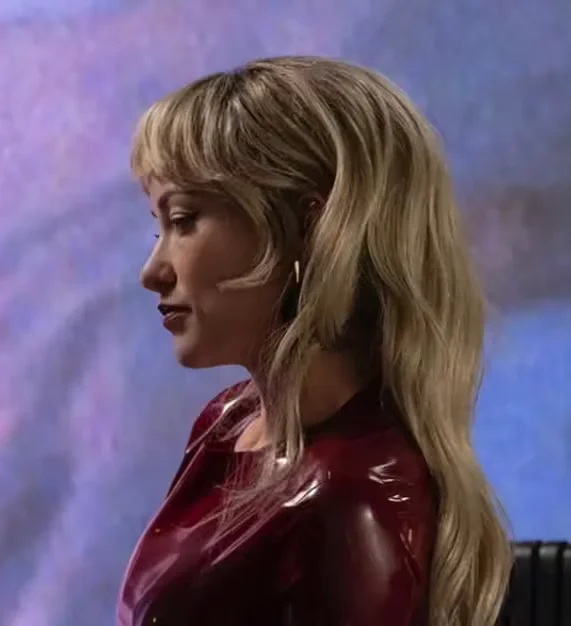
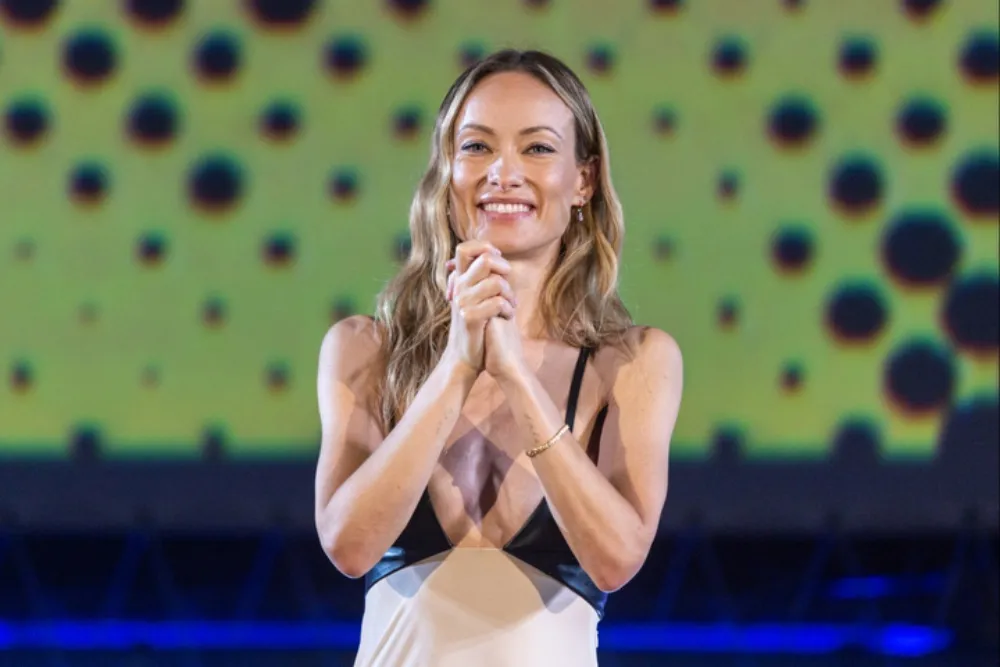
Olivia Wilde in I Want Your Sex
fin
Wilde’s next two projects are already in motion. Naughty, a Christmas comedy for Universal Pictures, will be her fourth feature as a director, built around a divorced mother, played by Jennifer Aniston, trying to get Santa Claus, played by Peter Dinklage, to testify at her custody hearing. The screenplay comes from Jimmy Warden, the writer behind Cocaine Bear, and the project has circulated informally as an R-rated holiday comedy in the vein of Bridesmaids. The film is produced by LuckyChap Entertainment, the company run by Margot Robbie, and is scheduled for release on November 5, 2027, after beginning production in August 2026. Robbie and Wilde are also attached to Avengelyne at Warner Bros., an adaptation of Rob Liefeld‘s 1995 comic book character, a fallen angel serving out a penance on Earth by battling demons. Robbie is producing through LuckyChap and has been reported as the studio’s pick to play the title role, subject to a finished script from Tony McNamara, the Oscar-nominated Poor Things screenwriter; X-Men producer Simon Kinberg is also attached to produce. Warner Bros. closed the rights deal in 2024, not long after LuckyChap’s Barbie became one of the highest-grossing films in the studio’s history, and neither Avengelyne nor Wilde’s own shooting schedule has a confirmed start date. Off screen, Wilde has spent much of the past decade attached to reproductive rights and voter registration efforts, including work with Planned Parenthood and the ACLU, and was an early, visible member of the Time’s Up movement following its 2018 founding. That advocacy has run in parallel with, rather than in place of, an acting and directing career that has taken her from a nightclub manager on a teen drama to directing four features and starring in a fifth, all before her career’s third decade is over.
Related Articles
Sandra Choi Spent Three Decades Building Jimmy Choo, Now She’s the One Being Honored
On November 30, Sandra Choi will collect the Special Recognition Award at the Royal Albert […]