DRIFT AUDIO
Listen to this story
Choose a voice, then press play.
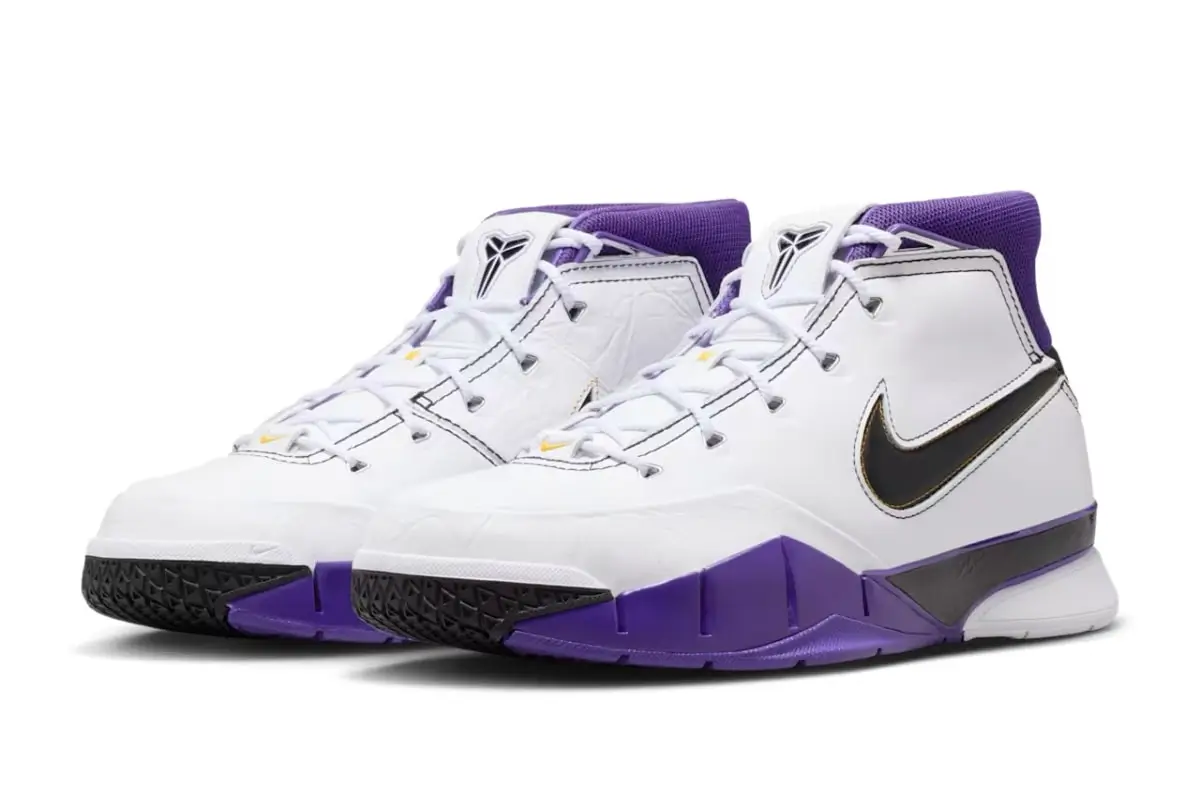
Mamba Day arrives with a familiar tension—celebration braided with absence, energy sharpened by memory. Across courts, timelines, and storefronts, the name Kobe Bryant still operates less like nostalgia and more like a system: repeatable, exacting, forward-moving. In 2026, that system finds one of its clearest expressions in footwear. Not as tribute alone, but as continuation—design thinking that still asks for precision, still demands response.
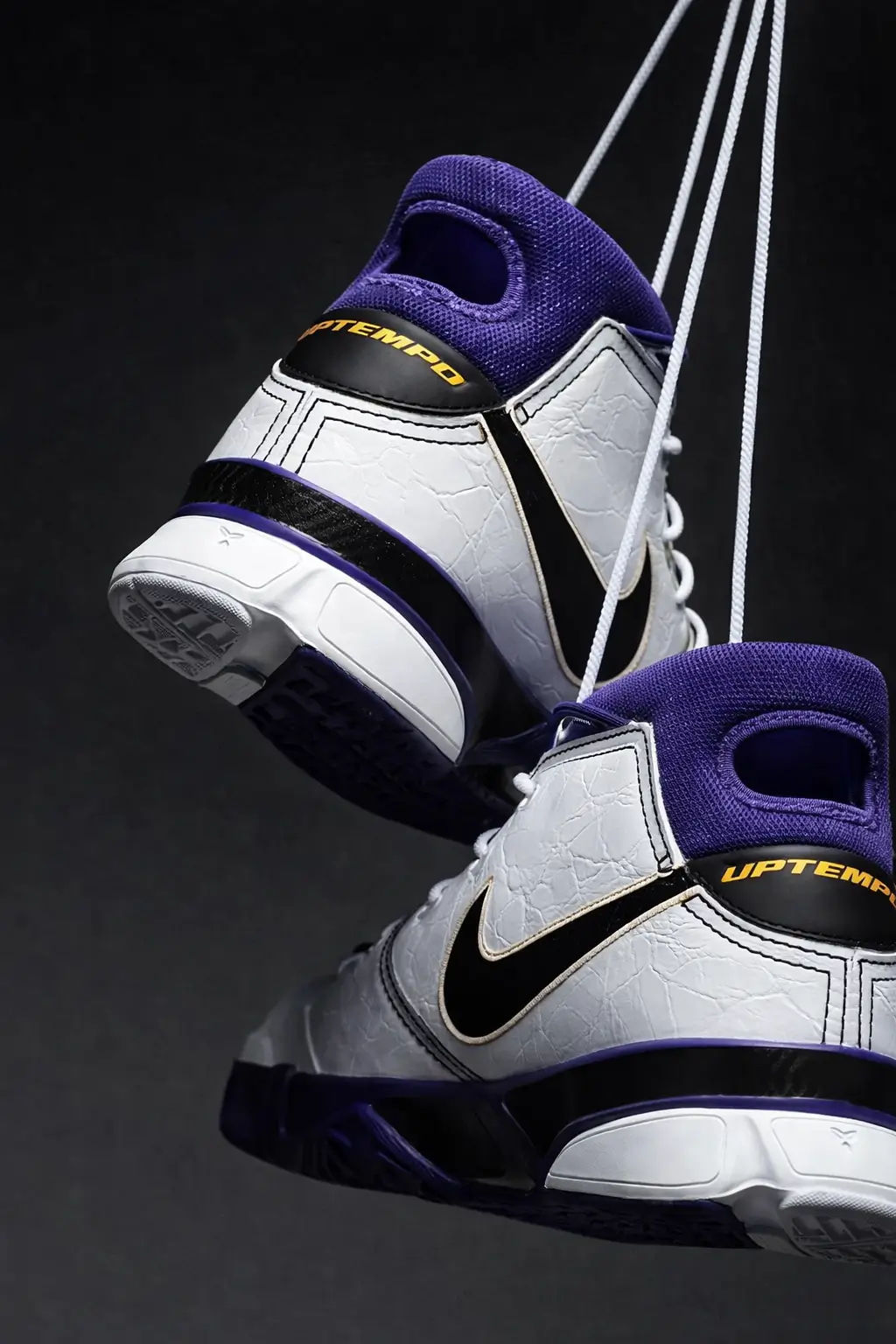
At the center is Nike, the long-term collaborator that translated Bryant’s on-court logic into material language. What began in 2003 as a signature line has evolved into something closer to an archive in motion. Every reissue, every Protro update, is less about revisiting the past than recalibrating it—tuning familiar silhouettes for the tempo of the present.
signature
Bryant’s relationship with Nike was never ornamental. It was iterative, almost architectural. Each model in the Kobe lineage introduced adjustments that mirrored his own game: lighter builds, lower profiles, sharper transitions. The shift toward low-top basketball shoes—now standard across the league—was once a departure. For Bryant, it was necessity. Speed required freedom. Precision required feel.
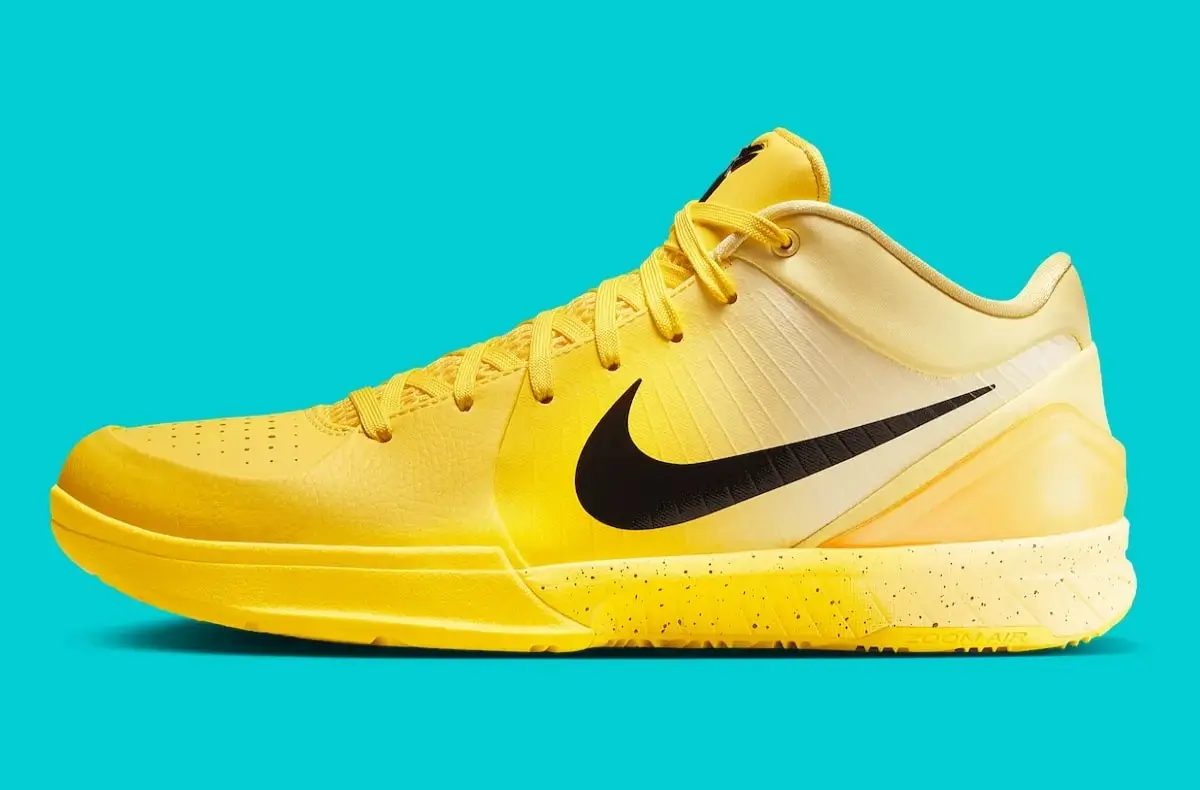
That ethos runs through the entire line. The Kobe 4 normalized minimalism. The Kobe 5 refined it. By the time the Kobe 6 arrived, the silhouette had become something else entirely—an extension of instinct. Scaled textures, aggressive traction, a form that felt closer to movement than object. These weren’t just shoes; they were responses to a specific way of playing.
show
The Protro concept—performance retro—sits at the center of the current moment. Rather than simple reissues, these models re-engineer legacy designs with contemporary technology. Cushioning systems are updated, materials recalibrated, weight reduced. The goal is not preservation but usability: making past innovation functional for the present game.
In this framework, the Kobe line becomes cyclical. Old forms re-enter circulation, but altered—more responsive, more durable, more precise. Zoom Air units feel sharper underfoot. Uppers flex with less resistance. Everything is tuned for immediacy. For players, this matters. For collectors, it reframes value. These aren’t artifacts; they’re tools, still capable of performance at the highest level.
“grinch” effect
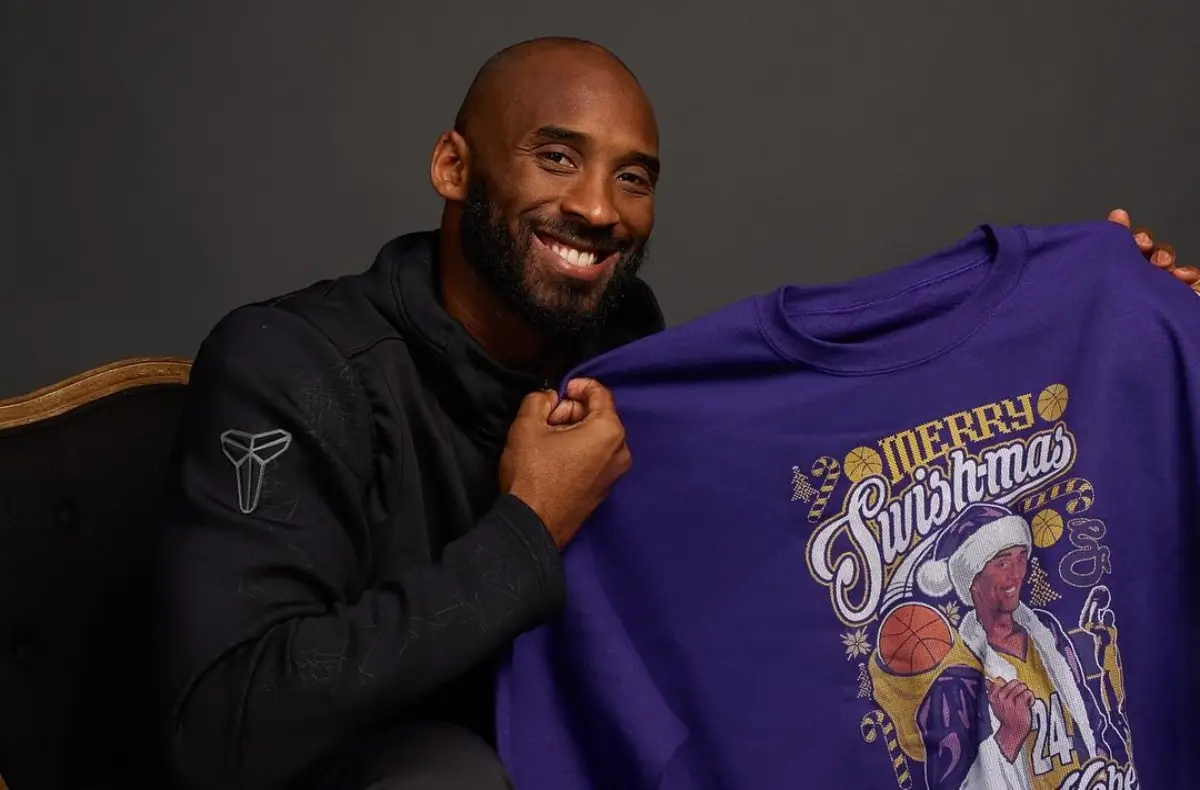
Few shoes have maintained the visual and cultural intensity of the Kobe 6 Protro “Grinch.” Its neon green upper, punctuated by red accents, resists subtlety. It was never designed to disappear. On-court, it functioned as a visual statement. Off-court, it became shorthand for a specific kind of confidence—high-spirited, but controlled.
Over time, the “Grinch” has shifted from seasonal novelty to perennial icon. Its continued reappearance in Protro form only reinforces its status. It’s a reminder that boldness, when executed with clarity, doesn’t age. It recalibrates.
flow
Where the “Grinch” leans expressive, the Kobe 5 Protro “All-Star” operates with restraint. Clean lines, refined materials, and a palette that references Bryant’s championship legacy without overstating it. It’s a quieter form of recognition—less about spectacle, more about accumulation.
Five titles. Two decades. A career built on repetition and adjustment. The “All-Star” iteration captures that rhythm. It doesn’t need to announce itself loudly. Its significance is already understood.
a capture
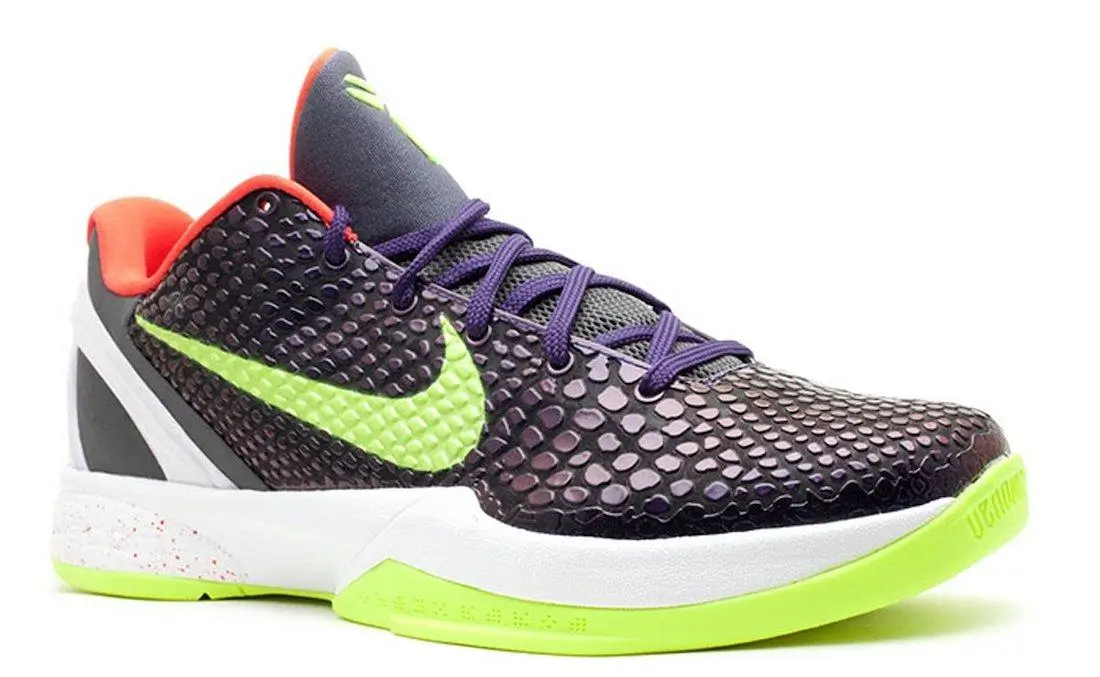
If one model encapsulates Bryant’s philosophy most directly, it might be the Kobe 9 Elite “Chaos.” High-cut, structurally ambitious, visually unpredictable. The colorway pulls from disorder—layered tones, shifting contrasts—but the execution is controlled. Chaos, in this context, is not randomness. It’s pressure. It’s the moment before resolution.
The Elite construction added another dimension: a knit upper that wrapped the foot like a second layer, paired with a stability system that allowed for explosive movement without loss of control. It was a risk when first introduced. Now, it reads as precedent.
moreover
Bryant’s influence extends well beyond his own models. It operates across collections and adjacent design movements, shaping how sneakers are conceptualized and consumed. While not direct Kobe products, projects like the Nike x Sacai LDWaffle reflect a similar willingness to disrupt form—layering, doubling, recontextualizing familiar shapes into something new.
The same applies to the Nike x Travis Scott Air Force 1. Its reversed Swoosh, modular details, and experimental construction signal a shift toward narrative-driven design. Sneakers are no longer static objects; they carry stories, identities, alternate readings. This is a space Bryant helped open—not through direct collaboration, but through the precedent of constant reinvention.
Then there’s The Ten, curated by Virgil Abloh. Deconstruction, exposure, transparency. Materials are revealed, processes made visible. It’s a design language that aligns with Bryant’s own approach: nothing hidden, everything earned.
live
What distinguishes the Kobe line is its refusal to separate performance from culture. The shoes are engineered for elite play, but they resonate far beyond the court. They move through fashion, music, design—absorbed into a broader visual language that values precision and individuality.
Platforms like SNKRDUNK have amplified this reach, creating ecosystems where access, rarity, and narrative intersect. Releases are no longer isolated events; they’re nodes in a larger network of demand and storytelling. For Kobe products, this network reinforces legacy. Each drop becomes a moment of re-engagement, a chance to revisit and reinterpret.
craft
There’s a tactile dimension to this legacy that often goes unspoken. The feel of Zoom Air underfoot. The grip of a well-designed outsole. The way a low-profile upper allows for sharper cuts. These are sensory details, but they accumulate into something larger: memory stored in material.
For players who grew up watching Bryant—or studying him—the act of wearing a Kobe shoe carries a specific weight. It’s not symbolic in a distant sense. It’s immediate. The design demands something. It asks for attention, for discipline, for repetition. In that way, the shoes extend the know.
frame
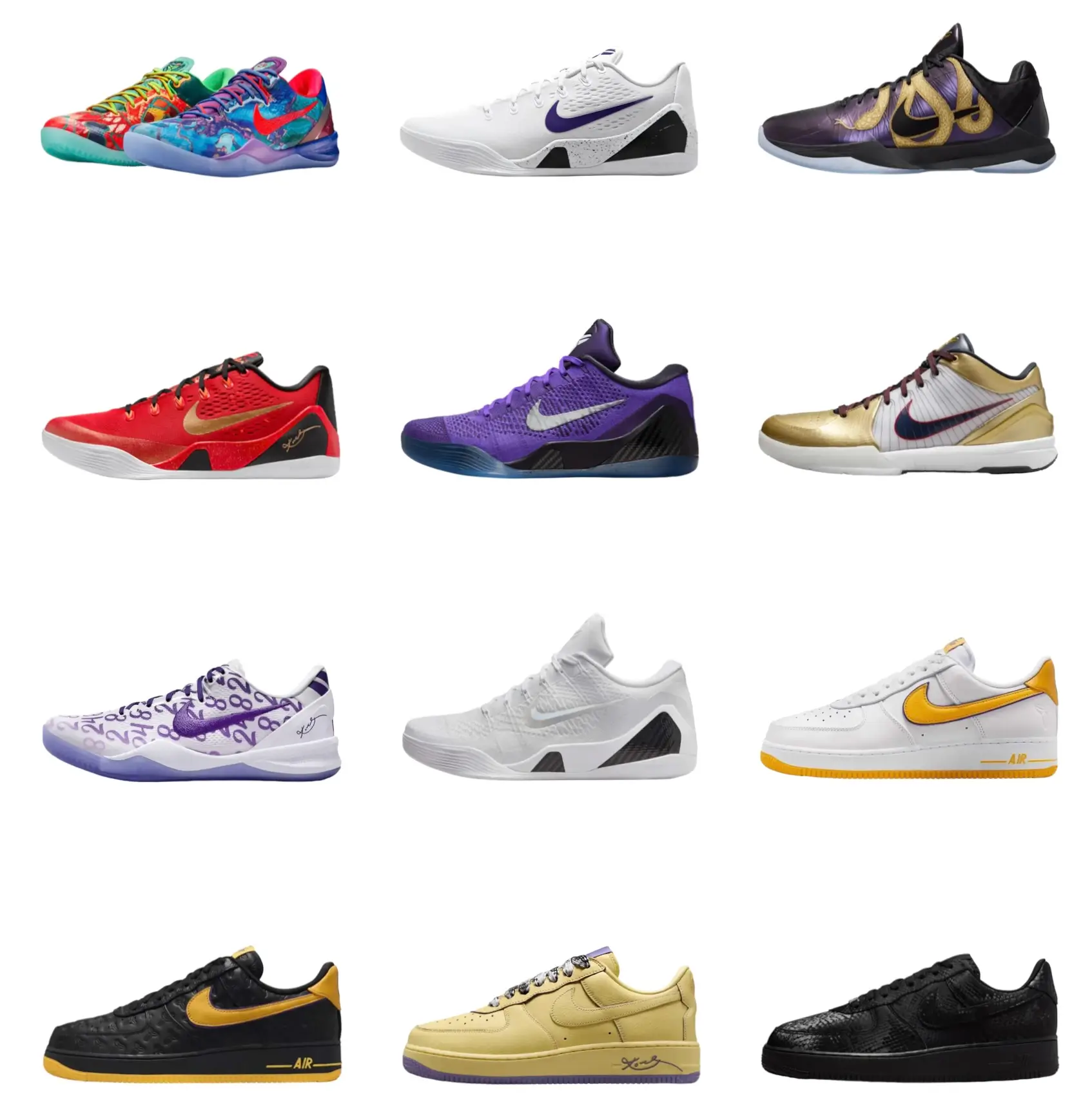
Mamba Day in 2026 doesn’t operate as a singular event. It’s distributed—across releases, across conversations, across individual acts of remembrance. Sneakers play a central role because they offer a point of contact. Something to hold, to wear, to test.
The Protro line, the reissued icons, the ongoing collaborations—they don’t close the narrative. They keep it open. Each pair enters circulation with the same underlying question: how do you move forward while carrying what came before?
clue
Bryant’s legacy resists stillness. It’s not preserved behind glass. It’s active, iterative, constantly reinterpreted. The footwear reflects that. Designs evolve, technologies update, contexts shift—but the core remains intact: precision, discipline, clarity.
In a market saturated with retros and reissues, the Kobe line stands apart because it refuses to settle into nostalgia. It insists on relevance. On performance. On the idea that memory, when handled correctly, can still produce movement.
Mamba Day, then, is less about looking back and more about recognizing continuity. The line hasn’t ended. It has adapted. And in every updated sole, every recalibrated upper, the message remains consistent: evolve, or fall behind.
From the DRIFT archive: Palace x Nike Air Max DN8 “Safety Orange”: High-Visibility Energy Meets London Street Logic · Jalen Brunson x Nike Kobe 6 Protro “Statue of Liberty”
Related Articles
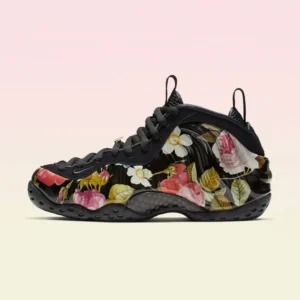
Shell, Floral Print, Gold Lace Lock
Air Foamposite One Floral/Black. AA3963-002. 11 December 2026. $240. Black nubuck eyestay, mesh tongue, metallic gold Swoosh dubrae.