DRIFT AUDIO
Listen to this story
Choose a voice, then press play.
Leather first. Then thread. Then the quiet interruption of something unexpected—crochet against stripe, pony hair against rubber, a floral bloom across a field once reserved for numbers and names. Six years into her ongoing conversation with adidas Originals, Grace Wales Bonner no longer approaches design as assembly. She approaches it as atmosphere. Spring/Summer 2026 arrives not as a declaration, but as a condition—one that settles somewhere between sport and memory, just as the world begins to tilt toward the spectacle of the FIFA World Cup.
But nothing here performs loudly. The collection resists that instinct. It moves instead through touch.
View this post on Instagram
stir
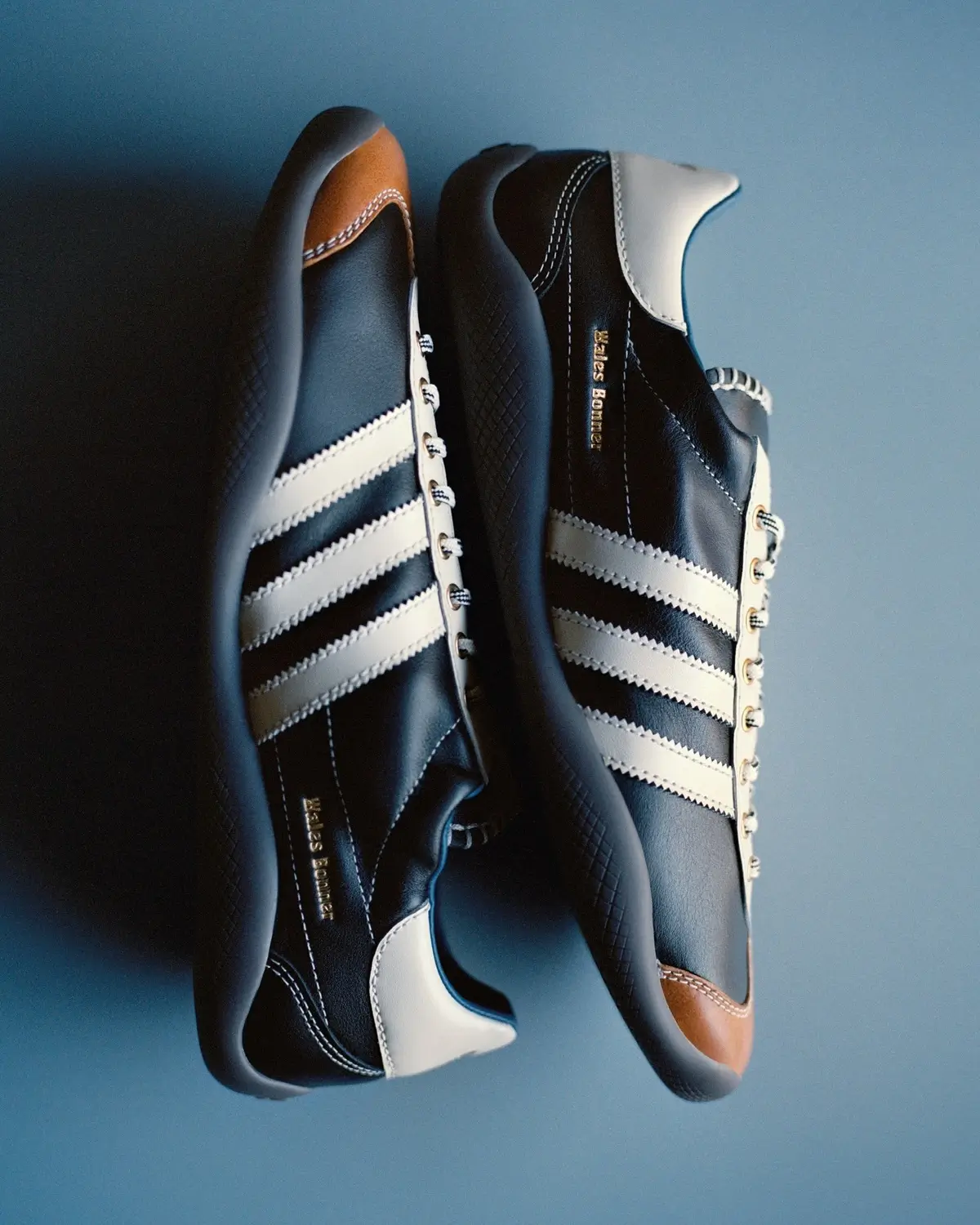
The Karintha returns, but not as a repetition. It feels aged—deliberately, carefully, as though it has passed through hands before arriving here. Black dissolves into white; white absorbs black. The distinction is less about contrast and more about orientation, like looking at the same object under different light.
A soft, light-brown leather appears along the T-toe and lace system, interrupting the monochrome with warmth. It reads almost like patina, though nothing has aged yet. That’s the gesture: to suggest time without relying on it.
Inside, a deep blue lining rests quietly, unseen until the shoe opens in motion. Beneath, a brown cupsole anchors everything back to earth. Nothing floats.
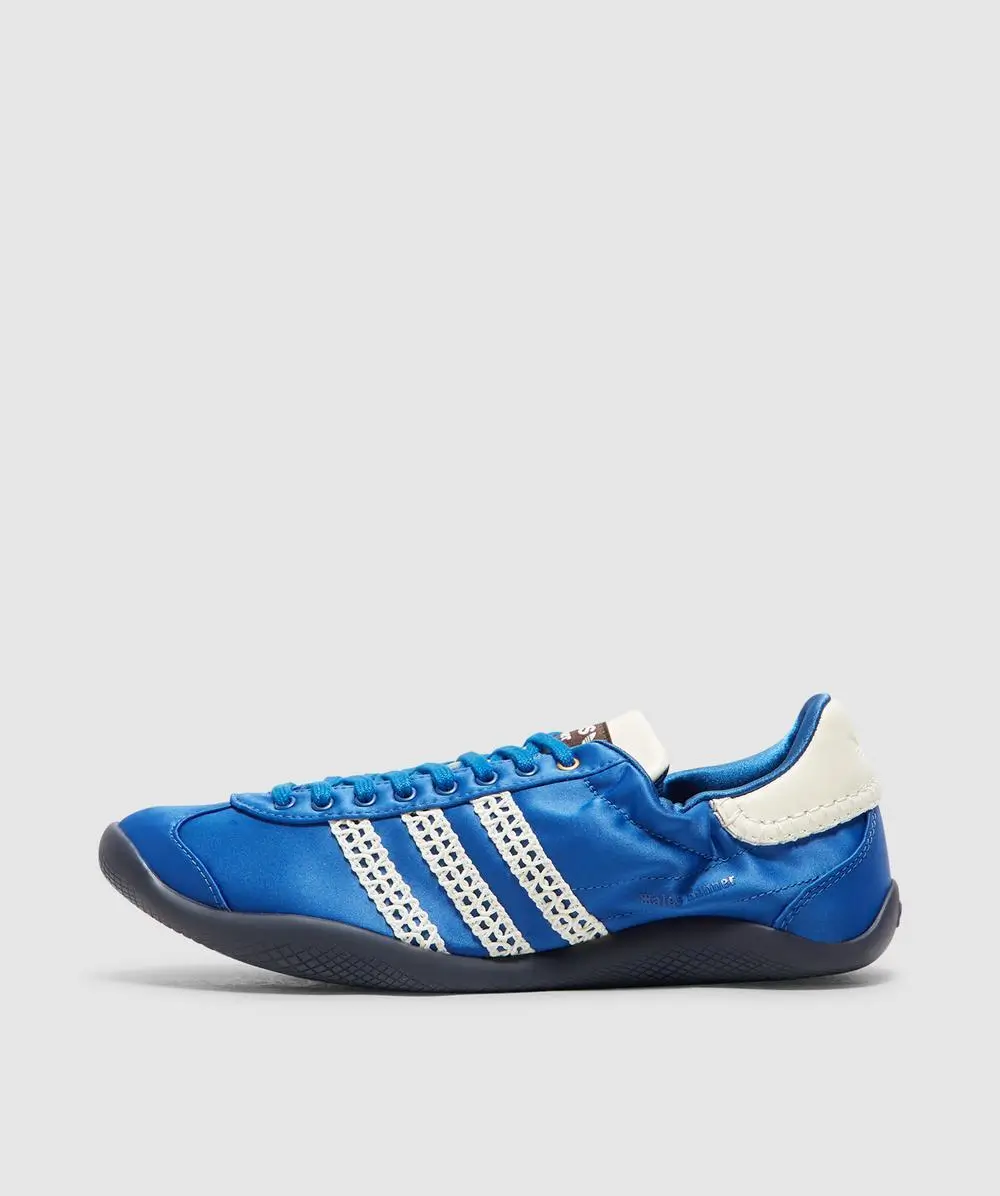
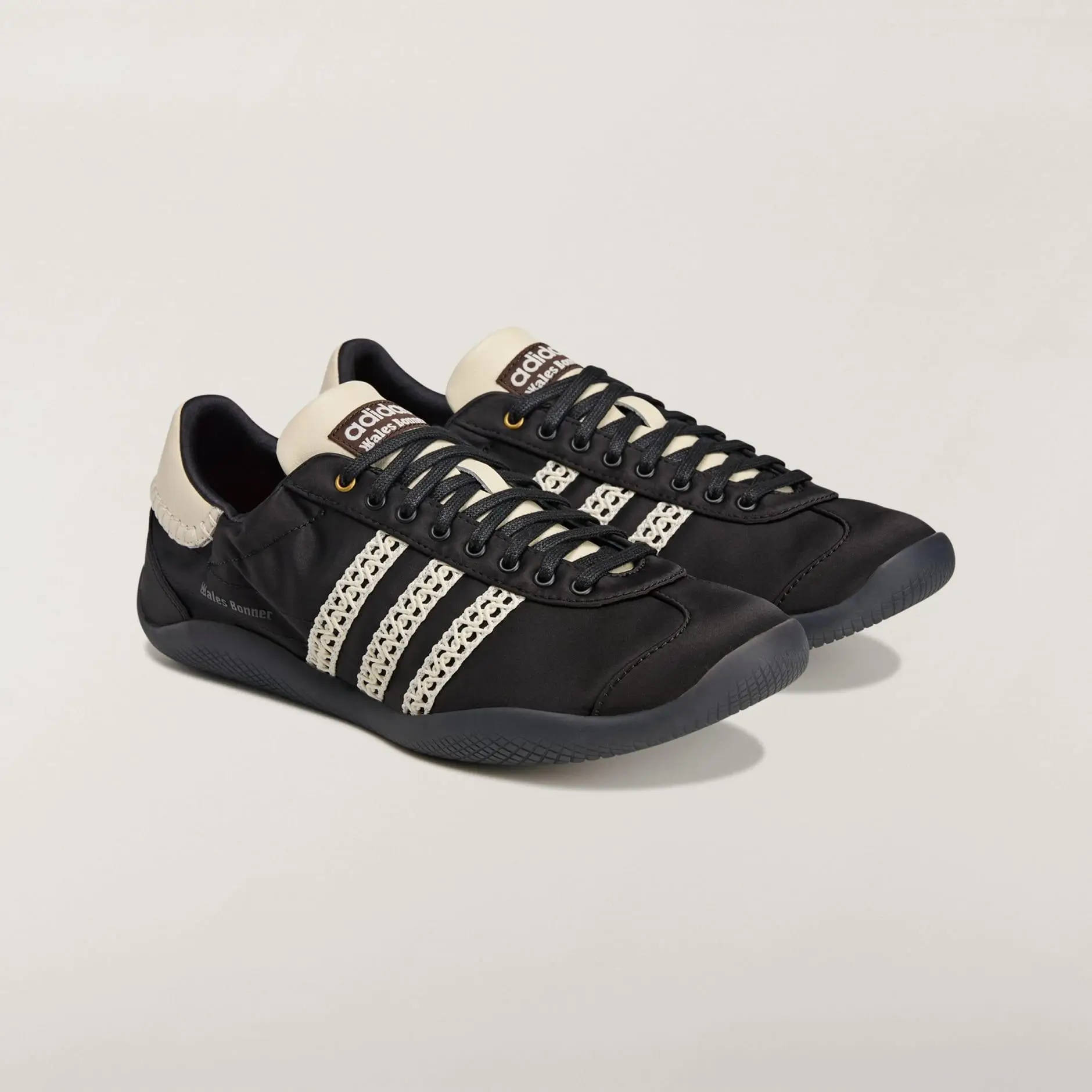
And then the stripes—still three, still familiar—but threaded through with crochet. Not perfectly even, not machine-flat. A hand is implied, if not present. The icon shifts. It becomes something closer to fabric than symbol.
The Karintha doesn’t announce itself. It settles in.
idea
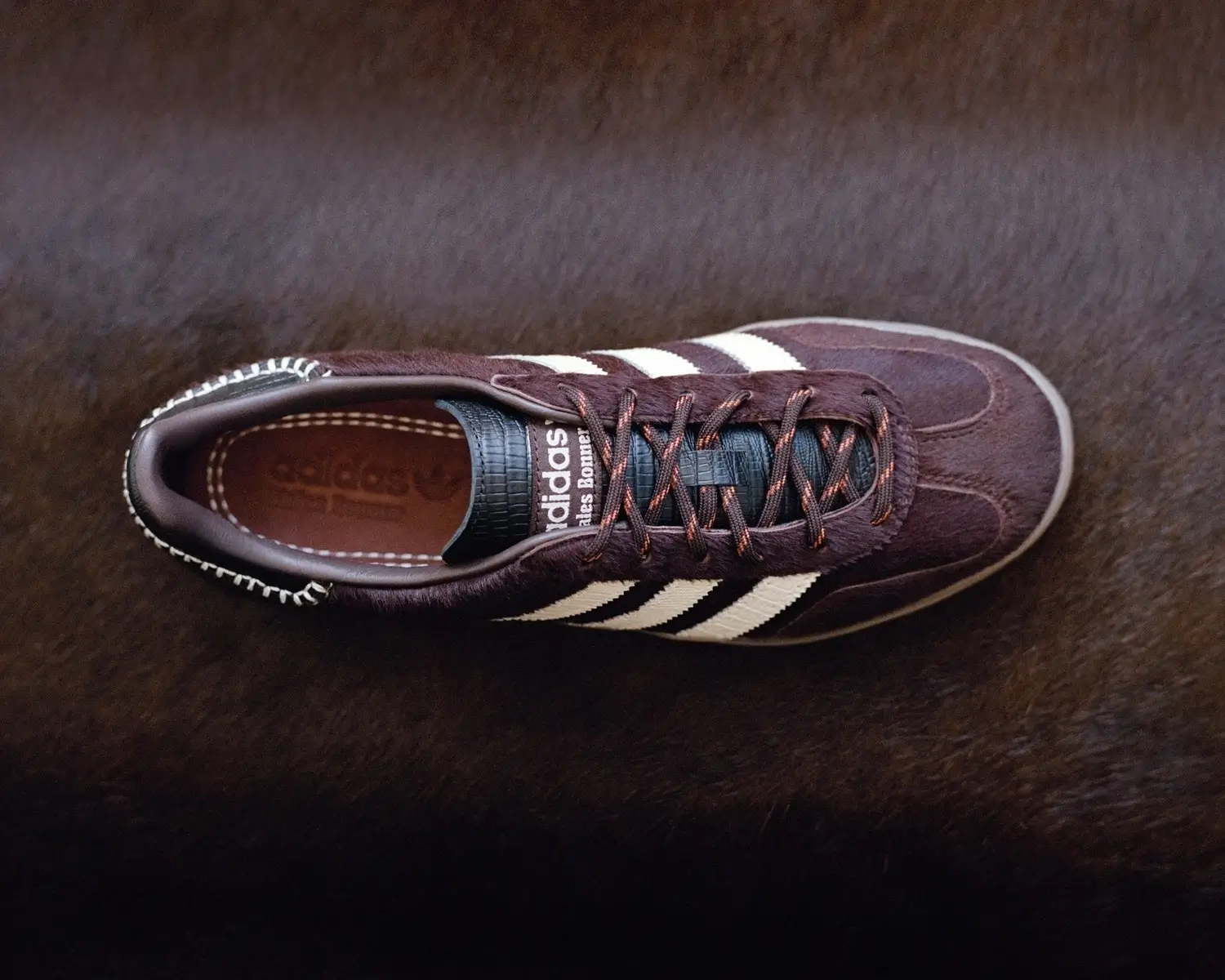
The Gazelle Indoor “Rattlesnake” does the opposite—it moves before you do.
Not through speed, but through surface. Pony hair covers the upper in a dense, dark brown, absorbing light in uneven ways. It feels alive in its stillness. Beneath it, a snakeskin pattern emerges—not loud, not graphic, but precise enough to disturb the softness above it.
Two textures, not blended but layered. Held in tension.
The same light-brown leather returns here, framing the toe and eyestays, stabilizing the composition. Darker tones carve out the overlays. And again, the stripes carry crochet—thread crossing leather, a small insistence that something human remains within the system.
The shoe becomes less about how it looks from a distance and more about what happens when you come closer. It asks for proximity. For attention. For touch.
move
Then there is motion.
The Adizero Adios enters almost quietly, its presence marked not by disruption but by shift. Auburn moves into cream, cream into aqua. The palette carries energy, but it doesn’t push. It glides.
Released in the shadow of the World Cup, it could have leaned into velocity, into performance spectacle. Instead, it recalibrates it. The lines remain aerodynamic, the structure intact, but the expression softens. It becomes a shoe that exists in motion without needing to declare it.
Speed, here, is internal.
flow
The apparel follows the same logic—not as extension, but as atmosphere.
A football jersey appears first, but something interrupts it. A hibiscus bloom stretches across the surface, softening the rigidity of the form. It doesn’t erase the jersey’s identity; it reframes it. The collar remains structured, the silhouette familiar. But the feeling shifts.
Then the track jacket—hibiscus pink, but not synthetic in its intensity. It reads more like something botanical, something dyed rather than manufactured. Constructed from recycled cotton twill and merino wool, it carries weight without heaviness. It moves, but slowly.
There is restraint in the branding. An embroidered Trefoil. A quiet script. Nothing insists.
Paired with espresso-toned trousers, the palette deepens. Brown not as neutral, but as substance—something closer to earth, to bark, to something that has grown rather than been produced.
And then, almost as an afterthought, transparency. A semi-sheer track set that doesn’t reveal so much as it layers. The body becomes part of the garment, not separate from it.
an embark
The timing is not incidental.
The FIFA World Cup hums in the background of this collection, but it never overtakes it. There are no flags, no overt references, no attempt to capture the spectacle. Instead, the influence is quieter—felt in the jersey’s structure, in the rhythm of the silhouettes, in the sense of global movement that underpins everything.
Bonner doesn’t design for the moment. She designs alongside it.
The result is something that exists in parallel to the event rather than inside it. A collection that acknowledges the world without trying to mirror it.
shape
Time, in this partnership, has not led to expansion. It has led to reduction.
Elements repeat—leather, crochet, tonal palettes—but each time they return, they shift slightly. Refined. Repositioned. Made more precise. The collaboration has moved past the need to prove itself. It now operates with confidence, with clarity.
What remains is essential.
The Karintha holds restraint. The Gazelle holds contrast. The Adizero holds motion. The apparel holds atmosphere. Together, they form something cohesive without being uniform.
fin
In the end, nothing here relies on narrative in the traditional sense. There is no single story being told, no linear progression from past to present. Instead, there is accumulation.
Texture becomes memory. Material becomes language. The act of wearing becomes the act of understanding.
This is where Grace Wales Bonner has arrived after six years with adidas Originals—not at a conclusion, but at a condition. One where fashion and sport no longer need to negotiate their differences. They simply exist together, quietly, precisely, within the same space.
And in that space, nothing needs to be loud to be felt.
Related Articles
adidas Originals Lines Up a Velour Zip-Up in Black, Navy and Burgundy
Three colors, one plush knit and no date yet. A velour zip-up sweatshirt is heading […]