The Plein Hotel: Milan’s Next Big Stage for Fashion-Led Hospitality

October 13, 2025
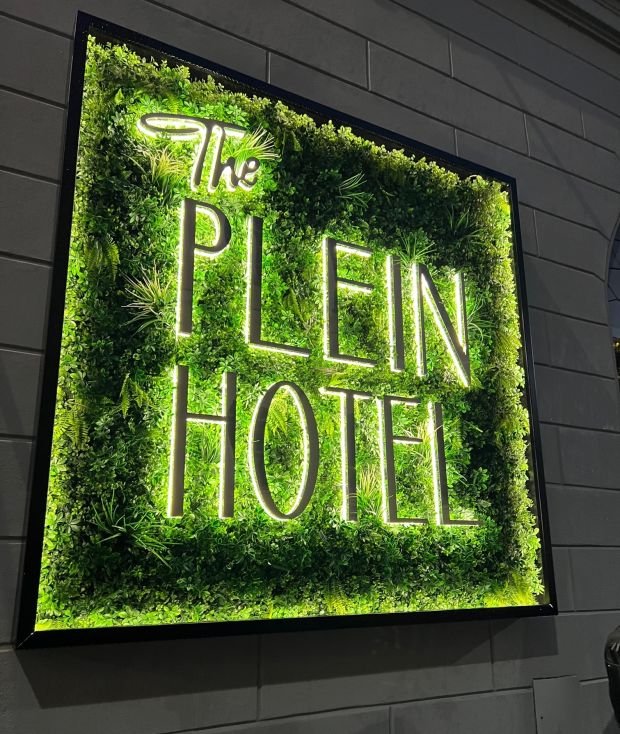
Milan has never been shy about spectacle. This is the city that made the runway a rite of urban life and taught the world that haute is a culture, not a category. Into that milieu arrives The Plein Hotel—the first hospitality venture by entrepreneur and fashion designer Philipp Plein—positioned as a five-star “haute entertainment property” in the historic center, with a “your hotel, your rules” ethos and a cluster of destination venues under one roof. The hotel has already been teased in dramatic fashion: previewed to the industry during the spring/summer 2025 show and rolling out in phases around Milan Fashion Week, it embodies the city’s appetite for hybrid spaces where dining, nightlife, fashion, wellness, and hospitality converge.
What makes The Plein Hotel noteworthy isn’t only the celebrity of its founder. It’s the way it crystallizes several macro-trends reshaping haute hospitality: the rise of fashion-backed hotels as total brand worlds; the shift from “quiet haute” to theatrical, camera-ready design; the re-centring of F&B and nightlife as primary reasons to go to a hotel even if you’re not sleeping there; and the return of small, highly curated room counts that privilege privacy, personalization, and access over scale. In Milan—a market crowded with blue-chip names—the project reads as a manifesto for entertainment-driven luxury, unapologetically flamboyant and intent on being a scene.
a historic address recast
The address matters. The Plein Hotel takes up residence in a storied palazzo on Via Daniele Manin—once the headquarters of Italian designer Krizia—placing the property within Milan’s fashion DNA. That lineage does double duty: it lends gravitas to a new hospitality brand and situates the experience within the city’s established circuits of shows, salons, and soirées. Glossy reported that the building houses a boutique-scale hotel accompanied by multiple restaurants and bars—the total concept previewed during Plein’s SS25 runway show—while CPP-Luxury detailed the insider opening, the multi-year build, and the capital investment that turned a nightclub idea into an “urban resort.” The through-line is intention: this was never meant to be merely a place to stay; it was conceived as an engine for programming, parties, and pop-ups.
The numbers vary by source—and that’s typical in early phases of a launch. Glossy referenced around 20 rooms; CPP-Haute cited 16 rooms and suites. Either way, the boutique footprint is the point: fewer keys, more control, and the latitude to tailor suites with gym and spa elements, personal saunas, and saturated brand codes (hexagon motifs, monograms, skull iconography) that turn each room into a stage set. This scale supports a membership-club sensibility: the hotel reads less like a conventional 100- to 200-key Milanese palace and more like a curated clubhouse with sleeping quarters.
View this post on Instagram
the entertainment-first mix
From its own site language, The Plein Hotel sets out a programmatic thesis: “Luxury. Entertainment. Property.” That trinity is unusually explicit. The official site and collateral describe a campus of venues—a signature Italian restaurant and club (Philipp’s), a Japanese concept (The Sukaru Ba), an all-day vegan-leaning brasserie (La Jungle De Plein), and a rooftop “Crystal Beach” with pool, palms, cabanas, Korean grill, and sunset ritual energy—each designed as distinct worlds that can flex from dining to dancing and back again. In effect, the property is a micro-district for “destination hospitality,” where the room is only one of several reasons to book.
This is strategically aligned with how Milanese opulent behaves. Fashion houses and hospitality groups have long collaborated on halo experiences—think Bulgari’s hotel village in Brera, Armani’s brand-steeped property on Via Manzoni, or Dior-branded spa interventions. The Plein model pushes the dial toward nightlife as a pillar: there’s a nightclub logic embedded within the restaurant programming, with DJ-led nights, lighting packages, and party-forward choreography. For a generation that spends more on experiences than objects—and values the social graph’s pre- and post-purchase moments—this is not a side dish; it’s the meal. Glossy underscored the brand’s plan to keep the hotel active between fashion events with a cadence of one-offs and activations—proof that the calendar is content.
built for the night
If the past decade lauded hushed minimalism, the present is a bit louder—especially where posts, stories, and reels function as the hotel’s secondary lobby. The Plein aesthetic, already famous for maximalist theatre on the runway, translates here as baroque-meets-neon: mirrored surfaces, dramatic chandeliers, floral ceilings, black-and-marble geometries, and brand signatures deployed unabashedly. It’s the visual rhetoric of a place that wants to be photographed and broadcast—a deliberate “Instagrammability” that serves as both marketing and memory. Italian and trade coverage of the opening highlighted the flamboyance, the theatre of service (from caviar to champagne-pizza gestures), and the set-piece interiors of venues like The Sukaru Ba and La Jungle De Plein.
Importantly, the design doesn’t confuse spectacle with sameness. Each venue is authored with its own palette and choreography: The Sukaru Ba fuses Japanese craft references with gilded, skull-studded fantasy; the vegan-centric Jungle warms the camera with pinks and florals; “Crystal Beach” exports the European beach-club formula to a rooftop in Milan. This segmentation answers a social reality: people don’t go to “a hotel” so much as they go to a bar, a scene, a party, a room, a photo moment. Designing to those micro-destinations is how hotels win dwell time—and repeat visits—either guests are sleeping upstairs or not.
re-rise of the supper-club
The old hotel pecking order—rooms first, restaurants second—has been inverted in many urban luxury projects; F&B often leads the brand story. The Plein Hotel embraces this completely. Italian dining is the flagship via Philipp’s, with a culinary voice associated with Michelin-level craft in Milan and a room that transforms into a club after hours. The Sukaru Ba expands the city’s Japanese spectrum (already rich with omakase and izakaya) into a high-gloss, mixology-driven chamber, while the all-day offer answers a younger, plant-forward palate. That rooftop “Crystal Beach” is the clincher: soundtracked days that roll into DJ sunsets, a live-fire Korean grill, and the irresistible draw of a pool as social magnet. Collectively, the venues place the property at the center of Milan’s ongoing supper-club revival—where dinner, performance, and dance are one continuous experience.
This tracks with a broader trend that industry watchers have mapped since late 2023: haute hotels reclaiming nightlife, and nightlife groups entering hotels. For a brand like Plein—whose runway shows were famously engineered as parties—the translation is natural. The entertainment spine isn’t an amenity; it’s the thesis.
functional decorum
Boutique counts (16–20 rooms depending on source) aren’t just about exclusivity; they’re operationally strategic. With fewer keys, The Plein Hotel can deliver personalisation at the performance-art level: butler-style service, in-room wellness, and tailored programming that would be impractical at scale. It also allows suites to be more theatrical, with signature materials—marble, glass, crystal, mirrors—emphasizing immersion. CPP-Haute mentions private spa and gym components in suites; the hotel site frames the overall offer as “your call,” reinforcing the bespoke mood. For high-spend travelers who now treat Milan as a long weekend rather than a business slog, that level of private staging is an upsell in itself.
why a fashion house builds a hotel
Philipp Plein’s expansion into hospitality has been on the horizon for several seasons, spake in interviews about brand adjacency beyond apparel and accelerated by the brand’s broader lifestyle portfolio (fragrance, eyewear, home, even crypto experiments). The logic is straightforward: hotels are the ultimate brand environment. They turn mood boards into 24-hour realities, creating touchpoints—sound, scent, service rituals—that retail can’t sustain. They also diversify revenue while keeping the brand visible between fashion cycles. Coverage of Plein’s business trajectory notes a willingness to test new categories and a preference for control—virtues (and risks) that fit hotel development’s long timelines.
The Plein Hotel, importantly, isn’t cast as a one-off. Trade reports over the last year describe plans for additional properties and serviced apartments, including a signed project in Tirana with local partners and a 2030 opening target—evidence of a pipeline rather than a passion project. If Milan is the prototype, subsequent properties will export the “luxury entertainment” blueprint to markets where beach-club culture, nightlife tourism, and fashion-driven dining are already ascendant.
Because the hotel’s debut has been phased—industry previews, partial venue activations, and then broader public opening—the language around timing has oscillated. Reports during and after the SS25 season spoke of an insider reveal with public opening by November; subsequent signals—from the brand’s social channels to channel listings—indicate that the property has continued to come online through 2025. This staggered approach is increasingly common for city hotels with complex F&B stacks: opening venues in sequence builds narrative and allows operations to settle before the full-house reveal. The upside is sustained attention; the risk is confusion around “are you open yet?”—a communication challenge the brand can manage by treating each venue launch like a micro-premiere.
Related Articles

The Heart Association Just Told Millions of Coffee Drinkers to Relax a Little
New guidance from the American Heart Association says up to five cups a day is […]