DRIFT

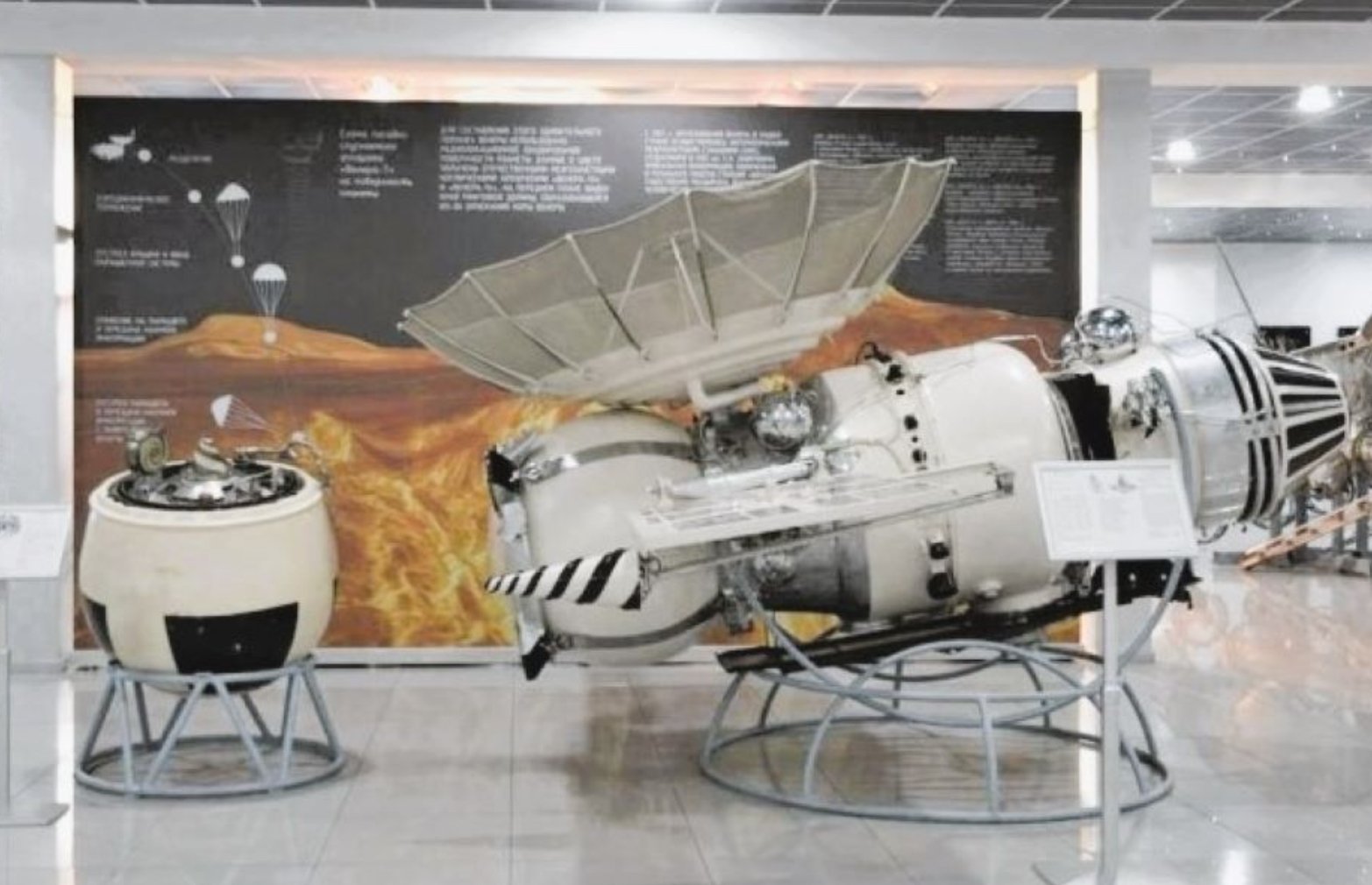
In the vast symphony of human exploration, there are grand crescendos—moon landings, Martian rovers, the James Webb Space Telescope—and there are forgotten notes, lost missions that float in silence for decades. One such note, Kosmos 482, is poised to reenter Earth’s atmosphere in spectacular, if unpredictable, fashion. Launched more than half a century ago by the Soviet Union, this half-ton relic from the Cold War era has spent the last 53 years orbiting the planet in mute defiance of its original purpose: a journey to Venus that never came to pass.

Now, in an ironic twist worthy of science fiction, Kosmos 482 is falling back to Earth—its trajectory unknown, its timeline uncertain, and its landing site somewhere between the poles of anxiety and probability. Though it’s likely to incinerate upon reentry or splash harmlessly into a remote ocean, its descent reminds us not only of the dangers of space debris, but of the strange historical detritus that still circles our skies.

This is a story of failure, legacy, and the enduring consequences of ambition.

Kosmos 482: An Orphan of the Venusian Dream

On March 31, 1972, amid a feverish Cold War race to conquer the solar system, the Soviet Union launched Kosmos 482, a probe intended to study Venus. It was part of the Venera program, a bold series of missions aimed at exploring the hottest planet in our solar system—a place of crushing atmospheric pressure, acid clouds, and hellish temperatures.

But something went wrong. Shortly after launch from the Baikonur Cosmodrome, the booster tasked with propelling the probe from Earth orbit to Venus failed. Instead of leaving Earth’s gravitational pull, the spacecraft remained trapped in a low orbit, misclassified under the catch-all “Kosmos” designation used for failed or ambiguous missions.

Its twin probe, Venera 8, launched just days later and completed its mission with stunning success, transmitting data from Venus’s surface for 50 minutes before succumbing to the planet’s hostile conditions. Kosmos 482, however, became a ghost—a remnant of missed opportunity.

Half a century later, that ghost is knocking once again.

Falling from Grace: Why Kosmos 482 Is Crashing Now

Though it may seem odd that an object launched in 1972 is only now reentering the atmosphere, the spacecraft’s long orbital life can be attributed to its unusual mass and design. Kosmos 482 was equipped with a hardened descent module, a durable capsule designed to survive the brutal descent through Venus’s atmosphere. Ironically, that same ruggedness has allowed it to resist atmospheric drag and solar radiation pressure for more than five decades.

Over time, the satellite’s orbit has slowly decayed, and now its final plunge is imminent. Experts predict it will reenter Earth’s atmosphere sometime within the next 24 to 72 hours, though that timeline remains fluid. Equally uncertain is the location of its landing: projections cover a wide swath of the globe, anywhere between 52° north and 52° south latitude—a region that encompasses virtually all populated areas of the planet.

What does this mean for the average person? In probability terms: not much. In symbolic terms: a great deal.

Will It Hit Me? The Statistics of Space Junk Reentry

The visceral image of a Soviet spacecraft crashing through your roof may animate headlines, but the reality is far more mundane. Despite being approximately 500 kilograms (over 1,100 pounds), Kosmos 482 is unlikely to survive reentry in its entirety. The majority of space debris incinerates during the high-speed friction of atmospheric entry, with only the most heat-resistant components—often made of titanium or carbon composites—making it to the surface.

Still, those remnants can and do reach Earth. In 1978, Kosmos 954, another Soviet satellite, famously crashed into Canada, scattering radioactive debris from its onboard nuclear reactor. More recently, China’s Long March 5B booster made headlines with uncontrolled reentries in 2021 and 2022, spurring international outcry over space safety norms.

Yet according to NASA and the European Space Agency, there has never been a documented human fatality due to falling space debris. The chance of being struck by a piece of Kosmos 482 is estimated at less than one in a billion—orders of magnitude less likely than being struck by lightning, winning the lottery, or being bitten by a shark.

In short: you can still enjoy your barbecue.

Kosmos 482 and the Legacy of the Cold War in Orbit

While Kosmos 482’s return might read like a quirky blip on a slow news cycle, it speaks to broader truths about space debris, neglected orbits, and the geopolitical history still circling overhead.

The Soviet Union and the United States launched thousands of missions during the 1960s and 1970s. Many were successful, but many others were not—and they left a trail of hardware in low-Earth orbit (LEO), medium-Earth orbit (MEO), and beyond. These objects, whether they’re dead satellites, spent boosters, or mission fragments, now form a growing cloud of debris that poses risks to active spacecraft and astronauts alike.

Kosmos 482 is one of many. It just happens to be one that’s coming home.

In that sense, its descent is less an isolated event than a reminder: space has a memory. It does not forget the things we leave behind.

The Ethics and Urgency of Space Debris Management

As global space activity accelerates—with new missions from the U.S., China, India, private companies like SpaceX, and dozens of smaller nations—the issue of orbital debris has become increasingly urgent. Today, the U.S. Space Surveillance Network tracks over 27,000 pieces of space debris, some as small as a softball, many traveling at speeds exceeding 17,000 mph.

Even tiny fragments can cause catastrophic damage. In 2009, an active Iridium communications satellite collided with a defunct Russian satellite, creating thousands of new debris fragments in an instant.

In response, space agencies have implemented stricter guidelines for “end-of-life disposal”, including protocols for controlled deorbiting, relocation to “graveyard” orbits, or disintegration planning. But older spacecraft like Kosmos 482 predate these standards—they are the ticking clocks of the pre-regulation era.

Which raises a moral question: What responsibility do we have for the debris of past ambitions? And more critically: What happens when the sky gets too crowded to ignore?

Cultural Memory: From Monument to Specter

It’s easy to romanticize space exploration. The sleek lines of rockets, the heroics of astronauts, the poetry of the infinite. But the truth is that much of space’s legacy is neither clean nor noble. It is cluttered, contested, and materially unresolved.

Kosmos 482, in its strange second life, becomes a symbol of technological hubris. A monument launched toward Venus, now circling the Earth in failure and finally crashing down—not in flames of triumph, but in ambiguous descent. Its fall serves as a metaphor for the unintended consequences of progress, the afterlife of bold ideas unmoored from practical stewardship.

And yet, there’s something poignant in its return. After half a century, it reenters the atmosphere not as a machine of conquest, but as a falling star of lost potential.

When the Sky Falls, Will We Notice?

In a world saturated with breaking news and digital stimuli, one wonders: if Kosmos 482 crashes in the Pacific and no one sees it, does it make a sound?

The answer, in pragmatic terms, is no. But in cultural and ecological terms, its fall echoes.

It challenges us to rethink our relationship with the upper atmosphere—not as a void, but as a space we inhabit, affect, and must care for. It forces us to consider space not only as a frontier, but as a domain of responsibility.

As humanity prepares for new eras of lunar bases, Mars missions, and space tourism, we are no longer innocent. The reentry of Kosmos 482 is not a danger. It is a message.

One last transmission from a spacecraft that never spoke.

Related Articles

Modern data center facility with a solar-panel-clad exterior, bright green administrative offices, and secure perimeter fencing, showcasing sustainable digital infrastructure and renewable energy integration

Lombardy’s Data Center Boom: Balancing Digital Ambition with Environmental Responsible

Lombardy has emerged as Italy’s primary hub for new digital infrastructures, particularly data centers—vast complexes […]

In a highly anticipated reunion after 24 years, Adidas Originals and Coca-Cola have joined forces once again to celebrate the FIFA World Cup 2026™. The collaboration revives their iconic 2002 partnership from the Japan-South Korea tournament, now reimagined for the biggest global sporting event of 2026, co-hosted by the United States, Canada, and Mexico. Set to launch on June 6, 2026, this collection masterfully blends Adidas' streetwear heritage with Coca-Cola's timeless branding, creating a vibrant fusion of football culture, nostalgia, and modern style. The drop arrives at a perfect moment. With the World Cup kicking off on June 11, 2026, fans worldwide are gearing up for a summer of football excitement. This collaboration isn't just merch—it's a cultural statement that merges two legendary brands under the banner of "Originals are the Real Thing," a clever twist on Coca-Cola's famous slogan. Historical Context: A Reunion 24 Years in the Making Adidas and Coca-Cola first collaborated during the 2002 FIFA World Cup, producing limited-edition pieces that captured the era's energy. That partnership helped define early 2000s football-streetwear crossover culture. Fast-forward to 2026, and the brands are back with fresh energy, leveraging Adidas' deep FIFA ties (as an official partner) and Coca-Cola's long-standing sponsorship of the tournament. The 2026 edition promises to be historic as the first 48-team World Cup, spanning three countries and generating unprecedented global hype. This collab taps into that momentum, offering fans wearable pieces that celebrate both brands' legacies while looking forward to the future of football fashion. Collection Overview and Design Philosophy The Adidas Originals x Coca-Cola collection fuses 2000s street style with classic sporting aesthetics. Expect bold reds, creams, whites, and silver accents inspired by Coca-Cola's iconic packaging—think classic script logos, droplet detailing, and can-inspired motifs. The lineup spans footwear, apparel, and accessories, divided into two visual directions: one logo-heavy and graphic-forward, the other drawing from vintage advertising aesthetics. Designs pay homage to Coca-Cola's visual language while staying true to Adidas Originals' archival roots. High-quality materials, attention to detail, and versatile silhouettes make these pieces suitable for both match-day wear and everyday street style. The campaign, featuring young football star Lamine Yamal and a diverse cast in everyday scenes building anticipation for the tournament, reinforces themes of originality and shared cultural moments. Footwear Highlights Footwear takes center stage in this collaboration, with reimagined takes on iconic 2000s Adidas silhouettes: Samba and Superstar Models: These classics get Coca-Cola treatment with white/cream/red colorways and prominent script branding. The Samba blends street heritage with football roots, while the Superstar II features weathered bases and bold side panels. Expected pricing around $110–$130. Adistar Control 5: A standout with droplet detailing mimicking condensation on a cold Coke can. This model brings performance-inspired design into lifestyle territory. Predator Sala: Indoor/hybrid style with silver-and-red accents, nodding to predatory precision on the pitch and Coca-Cola's bold energy. Climacool 1: Revived with breathable tech and Coke-inspired graphics, perfect for warm summer days. Megaride F50: A highlight paying tribute to the iconic Coca-Cola glass bottle, with unique contours and refreshing design cues. Each pair incorporates thoughtful details like embroidered logos, custom insoles, and packaging that mimics vintage Coke crates or cans. These shoes are built for durability and comfort, appealing to sneakerheads, football fans, and casual wearers alike. Apparel and Accessories Beyond kicks, the collection offers a full lifestyle range: Track Tops and Jerseys: Standout jerseys fuse retro Coca-Cola advertising from different eras into cohesive football designs. Track jackets feature signature three stripes alongside Coke branding, in vibrant reds and classic whites. Shorts and T-Shirts: Relaxed fits with graphic prints, ideal for casual wear or layering. Expect motivational football motifs blended with refreshing beverage references. Accessories: A bright red airliner bag stands out as a functional statement piece. Additional items may include caps, socks, and tote bags carrying the collaborative spirit. The apparel emphasizes comfort with premium cotton blends, mesh panels for breathability, and oversized silhouettes popular in contemporary streetwear. Unisex sizing and inclusive fits make the collection accessible to a broad audience. Cultural Impact and Fan Appeal This collaboration resonates on multiple levels. For football fans, it represents national pride and global unity ahead of the 2026 tournament. Sneaker enthusiasts will appreciate the nostalgic 2000s revival mixed with modern execution. Streetwear collectors see it as a prime example of how heritage brands can innovate through partnerships. In an era where sports and fashion increasingly intersect, Adidas and Coca-Cola deliver pieces that transcend the pitch. Wear them to watch matches at home, attend watch parties, or hit the streets in any host city—New York, Los Angeles, Toronto, or beyond. The designs are versatile enough for gym sessions, festivals, or daily commutes. The timing aligns perfectly with rising interest in football in North America, boosted by the co-hosting nations. Young talents like Lamine Yamal in the campaign help bridge generational gaps, attracting newer fans while satisfying longtime supporters. Where to Buy and Release Details The collection launches globally on June 6, 2026, via: Adidas CONFIRMED app (for early access and raffles) Adidas.com Select retailers and flagship stores worldwide Some regions may see staggered drops, with Japan and other markets getting early access. Prices are expected to range from $50–$150 depending on the item, making it relatively accessible compared to ultra-limited drops. Pro Tips for Copping: Enable notifications on the CONFIRMED app. Check local stock at Adidas stores in major cities. Monitor resale platforms post-drop for exclusive colorways, but be wary of markups. Size up slightly for oversized apparel fits. Given the World Cup hype, popular items like the Sambas and jerseys are likely to sell out quickly. International shipping is available, but factor in potential customs delays. Styling Suggestions Match Day Look: Pair a collaborative jersey with classic black shorts and Samba sneakers for effortless fan style. Streetwear Rotation: Layer a track top over a graphic tee with wide-leg pants and the Megaride F50 for a bold urban ensemble. Casual Summer: White Superstar with denim shorts and the airliner bag for a refreshing, vacation-ready vibe. These pieces mix seamlessly with existing Adidas or neutral wardrobes, maximizing versatility. Broader Context in 2026 Fashion and Sports The Adidas x Coca-Cola drop is part of a larger wave of high-profile collaborations tied to the World Cup. Adidas continues its dominance in football kit design, while Coca-Cola leverages its sponsorship with collectibles, bottles, and experiential activations like the Trophy Tour. In the sneaker industry, this collab exemplifies the ongoing trend of lifestyle reinterpretations of performance silhouettes. It also highlights how global brands use major events to drive cultural conversations around unity, originality, and joy—core values for both companies. Sustainability notes (based on Adidas' broader initiatives) suggest some pieces may incorporate recycled materials, aligning with modern consumer expectations. Looking Forward: Legacy and Excitement As the countdown to kickoff continues, this collection serves as the perfect prelude to an unforgettable summer of football. Whether you're a die-hard supporter, a fashion-forward collector, or someone seeking motivation through style, the Adidas Originals x Coca-Cola FIFA World Cup 2026 lineup delivers. Expect potential restocks, special event exclusives in host cities, and continued campaign content featuring more athletes. This isn't just clothing—it's a ticket to participate in the global celebration of the beautiful game. Mark your calendars for June 6, 2026. Refresh your wardrobe, lace up those Sambas, and get ready to cheer on your team in style. The "Real Thing" meets the Originals in what promises to be one of the most talked-about releases of the year. This collaboration captures the essence of football's universal appeal: bringing people together through shared passion, iconic brands, and unforgettable moments. As the world prepares for 2026's expanded tournament, Adidas and Coca-Cola remind us that some partnerships are truly timeless.

Adidas Originals x Coca-Cola Collection: FIFA World Cup 2026

In a highly anticipated reunion after 24 years, Adidas Originals and Coca-Cola have joined forces […]

Loewe shoulder bag crafted in brown and black leather with minimalist lion face detailing and a matching fur tail charm

180 Years Unfolded: The Full Story Behind Loewe’s New Campaign

The year was 1846. Queen Victoria was on the British throne and the telephone, the […]