DRIFT AUDIO
Listen to this story
Choose a voice, then press play.
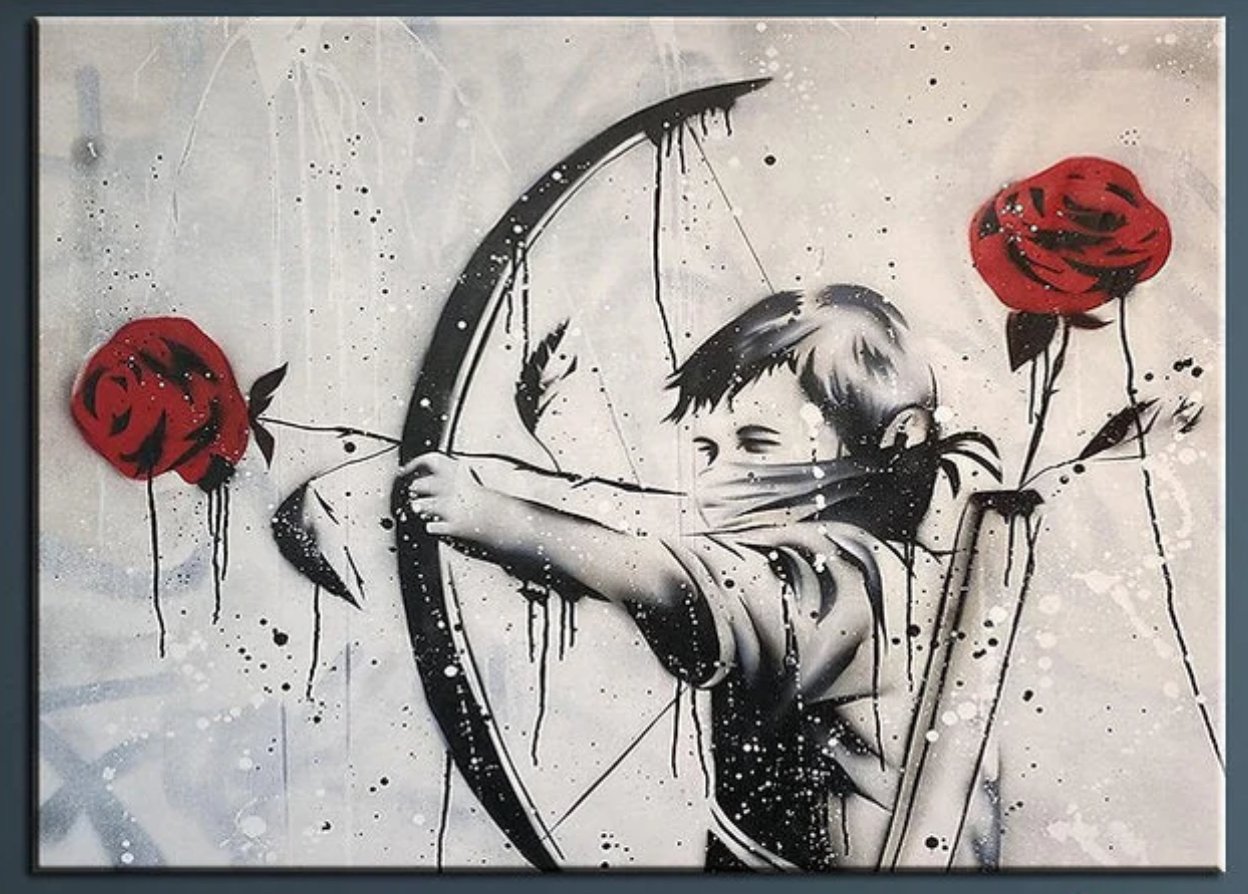
Banksy, the renowned anonymous street artist, has captivated the world with thought-provoking and emotionally charged artwork. Among his most iconic pieces, the image of a boy shooting a rose arrow with a bow has become a powerful symbol of love, resistance, and the potential for change. This piece, often referred to as “The Rose Evolution,” exemplifies Banksy’s ability to address critical social issues and inspire meaningful conversations through his unique artistic style.
The Visual Elements
In “The Rose Evolution,” Banksy depicts a young boy wielding a bow, with a rose serving as the arrow. The boy’s posture conveys determination and focus, suggesting a clear intent to send a message of love and peace amidst adversity. The contrast between the soft rose and the bow, typically associated with combat, highlights the tension between conflict and the potential for transformation.
Symbolism and Interpretations
The rose arrow in Banksy’s artwork serves as a poignant metaphor for the power of love to overcome violence and aggression. By replacing a traditional arrow with a rose, Banksy challenges conventional notions of confrontation and presents a more compassionate alternative. This visual juxtaposition encourages viewers to contemplate the impact of love and empathy as forces for change.
The young boy in the image can be seen as a representation of hope and innocence in the face of conflict. He symbolizes the potential for future generations to embrace peaceful solutions and choose love over violence. This message is particularly relevant in contemporary society, as people grapple with ongoing political, social, and environmental challenges.
Impression
“The Rose Evolution” is a compelling example of Banksy’s ability to use street art as a platform for social commentary and reflection. By exploring themes of love, resistance, and transformation, the piece invites viewers to consider their role in shaping a more compassionate and peaceful world.
As Banksy’s iconic artwork continues to resonate with audiences worldwide, its impact on contemporary culture and the discourse surrounding critical issues will only grow stronger.
Related Articles
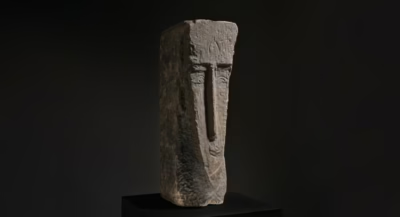
Modigliani’s Limestone ‘Tête’
Carved from a single block of limestone in Montparnasse more than a century ago, one of Modigliani's rare stone heads goes to auction for the first time…