DRIFT AUDIO
Listen to this story
Choose a voice, then press play.
The Universal Product Code (UPC) is one of the most significant inventions in the history of retail, revolutionizing how goods are sold and tracked across the globe. Introduced in 1973, the UPC transformed the grocery industry, providing a standardized method of identifying and pricing items at checkout. But as technology advances, the UPC faces a new challenger: the QR code. Originally developed in Japan in the 1990s for the automotive industry, QR codes are now rapidly becoming a staple in retail and beyond, leading many to speculate whether they might eventually replace the UPC altogether. This blog will critically examine the UPC’s history, its impact on commerce, and the potential for QR codes to succeed it in the digital age.
The Inception of the Universal Product Code
The UPC was the brainchild of George J. Laurer, an engineer at IBM. In the early 1970s, the National Association of Food Chains in the U.S. recognized the need for a standardized system to speed up the checkout process and improve inventory management. At the time, grocery store clerks had to manually input prices, a labor-intensive process prone to human error. The idea of a machine-readable code that could automatically identify products was revolutionary.
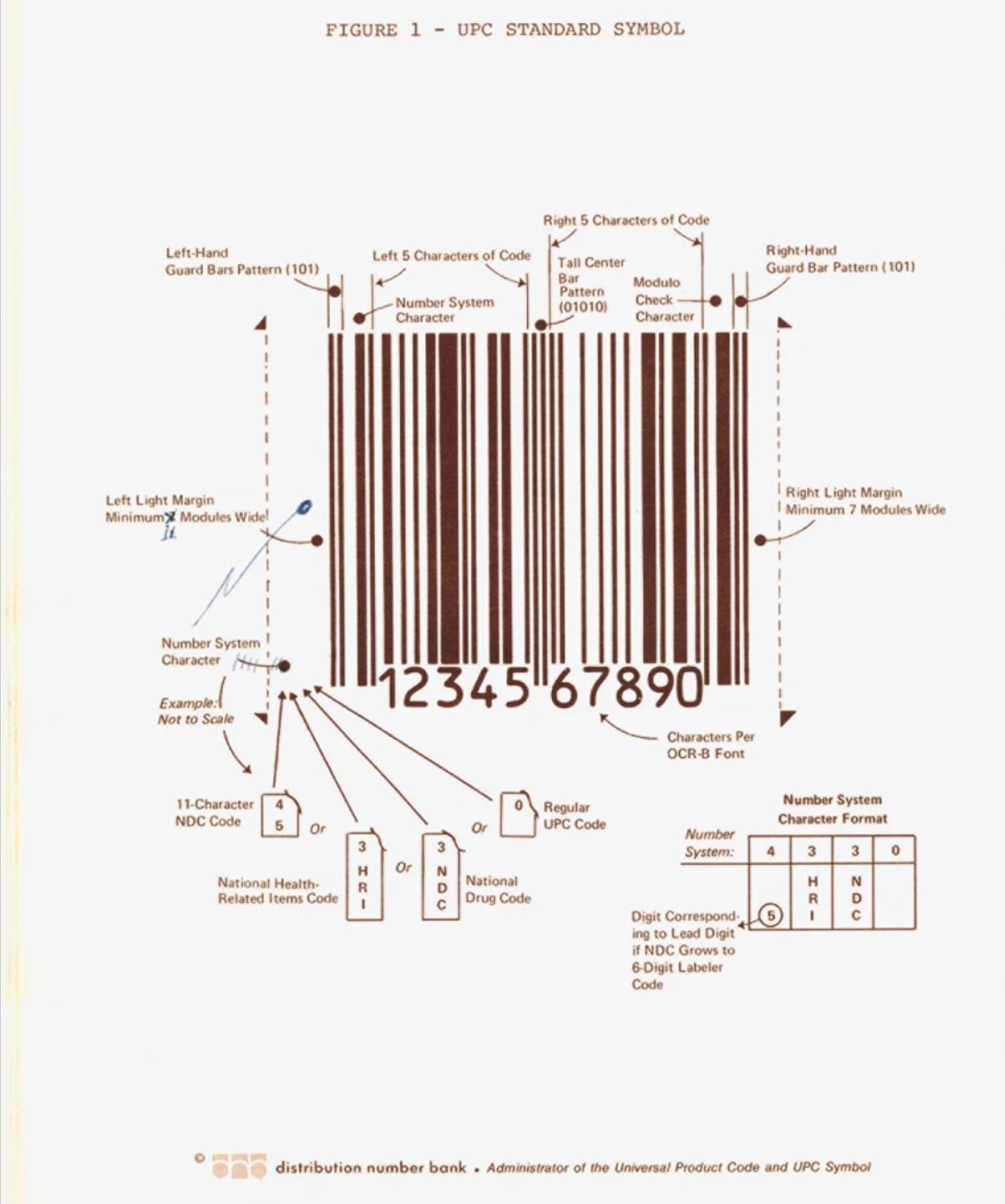
Laurer’s design involved a pattern of black bars and white spaces that could be read by optical scanners. Each UPC consists of a series of numbers encoded in a unique pattern, allowing for the identification of the product’s manufacturer and the specific item. The first UPC was scanned on June 26, 1974, at a Marsh Supermarket in Troy, Ohio, on a pack of Wrigley’s chewing gum—a moment that marked the beginning of a new era in retail.
The implementation of the UPC system was transformative. It allowed for faster checkout processes, reduced human error, and improved inventory tracking. Retailers could now manage their stock more efficiently, leading to better supply chain management and reduced costs. The benefits of the UPC quickly became apparent, and within a few years, it became the standard for grocery stores across North America.
The Impact of UPC on Global Commerce
The success of the UPC in the United States soon led to its adoption in other countries. By the 1980s, the barcode system had spread to Europe, Asia, and beyond. The International Article Number (EAN) system, a superset of the UPC, was developed to accommodate international trade. Today, barcodes are ubiquitous, found on virtually every product sold in retail environments worldwide.
The impact of the UPC on global commerce cannot be overstated. It has enabled the rise of large-scale retail chains by simplifying the management of vast inventories. Companies like Walmart and Carrefour have built their empires on the back of efficient logistics and inventory systems, made possible by the UPC. The system also paved the way for the development of point-of-sale (POS) systems, which integrated inventory management with sales data, providing retailers with real-time insights into their operations.
Beyond retail, the UPC has found applications in a variety of industries. It is used in healthcare for tracking medical supplies and pharmaceuticals, in manufacturing for managing parts and components, and even in libraries for cataloging books. The versatility of the UPC has made it an indispensable tool in modern business.
The Rise of QR Codes
While the UPC has dominated retail for decades, the rise of QR (Quick Response) codes in recent years represents a significant shift in how information is encoded and accessed. Developed in 1994 by Denso Wave, a subsidiary of Toyota, QR codes were initially designed to track vehicles and parts during the manufacturing process. Unlike UPCs, which are one-dimensional barcodes, QR codes are two-dimensional, allowing them to store much more information.
The design of the QR code is simple yet powerful. It consists of black squares arranged on a white grid, with each pattern encoding data that can be read by a scanner or smartphone camera. The advantage of QR codes over traditional barcodes is their capacity to store not just numeric information but also alphanumeric characters, URLs, and even multimedia data. This versatility has led to their adoption in a wide range of applications, from marketing and advertising to payments and logistics.
One of the key factors driving the adoption of QR codes is the proliferation of smartphones. With nearly every smartphone equipped with a camera and QR code scanning capabilities, accessing information via QR codes has become seamless and intuitive. This ease of use has made QR codes particularly popular in countries like Japan and China, where they are used for everything from purchasing train tickets to making payments in stores.
QR Codes vs. UPC: A Comparative Analysis
The question now arises: will QR codes eventually replace the UPC as the standard for product identification in retail? To answer this, it is essential to compare the two systems across several dimensions, including data capacity, flexibility, ease of use, and cost.
Data Capacity and Flexibility:
One of the most significant advantages of QR codes over UPCs is their data capacity. A typical UPC can store up to 12 numeric digits, sufficient for identifying a product and its manufacturer. In contrast, a QR code can store up to 7,089 characters of numeric data or 4,296 alphanumeric characters. This increased capacity allows QR codes to encode much more information, such as detailed product descriptions, nutritional information, or links to promotional content.
Moreover, the flexibility of QR codes means they can be used in a variety of contexts beyond product identification. They can be scanned from screens, printed materials, or even clothing, making them ideal for marketing campaigns, mobile payments, and interactive experiences. This versatility is one of the reasons why QR codes have seen widespread adoption in recent years.
Ease of Use:
While QR codes offer more functionality than UPCs, their adoption in retail settings is not without challenges. One of the main issues is ease of use. UPCs are incredibly simple to scan—point-of-sale systems in stores worldwide are equipped with laser scanners that can quickly and accurately read UPC barcodes. QR codes, on the other hand, require imaging scanners or smartphone cameras, which can be slower and less reliable in some environments.
Additionally, the widespread use of UPCs means that they are deeply ingrained in the retail infrastructure. Switching to a new system like QR codes would require significant investment in new hardware and software, as well as retraining for employees. While some retailers have begun to experiment with QR codes, the cost and effort required to replace the existing UPC system make it unlikely that QR codes will completely replace UPCs in the near future.
Cost:
Cost is another critical factor in the adoption of new technologies. The cost of implementing and maintaining a UPC system is relatively low, thanks to the widespread availability of barcode printers, scanners, and point-of-sale systems. In contrast, the implementation of a QR code system, particularly in a retail environment, would require investment in new scanning equipment and potentially significant changes to existing POS systems.
Furthermore, the cost of printing QR codes is generally higher than that of printing UPCs. QR codes require more space and higher print quality to ensure they can be accurately scanned, which could increase packaging costs. For retailers and manufacturers operating on thin margins, these additional costs could be a significant barrier to the adoption of QR codes as a replacement for UPCs.
Security and Privacy:
Another area where QR codes have the potential to outshine UPCs is in security and privacy. Because QR codes can store a significant amount of data, they can be used to implement more sophisticated security features. For example, QR codes can be used to store encrypted information, making them harder to counterfeit than traditional UPCs. This feature is particularly useful in industries like pharmaceuticals, where counterfeiting is a significant concern.
However, the increased data capacity of QR codes also raises privacy concerns. QR codes can be used to track user behavior, store personal information, and link to potentially malicious websites. While UPCs are limited to product identification, the flexibility of QR codes means they can be used for a wide range of purposes, not all of which are benign. As QR codes become more prevalent, ensuring that they are used in a secure and privacy-conscious manner will be critical.
The Future of Product Identification: Integration or Replacement
As we look to the future, the question is not necessarily whether QR codes will replace UPCs, but rather how the two systems might coexist or integrate. There are several scenarios in which both UPCs and QR codes could continue to play a role in retail and other industries.
One possibility is that UPCs will remain the standard for basic product identification, while QR codes are used to provide additional information and services. For example, a product could feature both a UPC and a QR code, with the UPC used at the point of sale and the QR code used by consumers to access more detailed information about the product. This dual-system approach would allow retailers and manufacturers to leverage the strengths of both technologies.
Another possibility is the gradual phasing out of UPCs in favor of QR codes, driven by advances in scanning technology and the increasing integration of digital and physical retail experiences. As more consumers use their smartphones to shop and interact with brands, the demand for more versatile and interactive product codes may increase. In this scenario, QR codes could eventually become the dominant standard for product identification, particularly in markets where digital shopping and mobile payments are prevalent.
However, for QR codes to fully replace UPCs, several challenges would need to be addressed. These include improving the speed and reliability of QR code scanning, reducing the cost of implementation, and addressing security and privacy concerns. Additionally, the widespread adoption of QR codes would require a coordinated effort from retailers, manufacturers, and technology providers to ensure a smooth transition from the current UPC system.
The Universal Product Code has had a profound impact on global commerce, transforming how products are sold, tracked, and managed. For nearly five decades, the UPC has been the cornerstone of retail operations, enabling the rise of modern supply chains and large-scale retail operations. However, as technology evolves, so too does the need for more versatile
Related Articles

Garage Italia’s Electric Spiaggina Puts the Fiat 500’s Riviera Years on Battery Power
Ten kilowatts, rattan seats and a €85,000 starting price: Garage Italia's 500 Spiaggina rebuilds Ghia's 1958 beach car for the yacht crowd.