

DRIFT AUDIO
Listen to this story
Choose a voice, then press play.
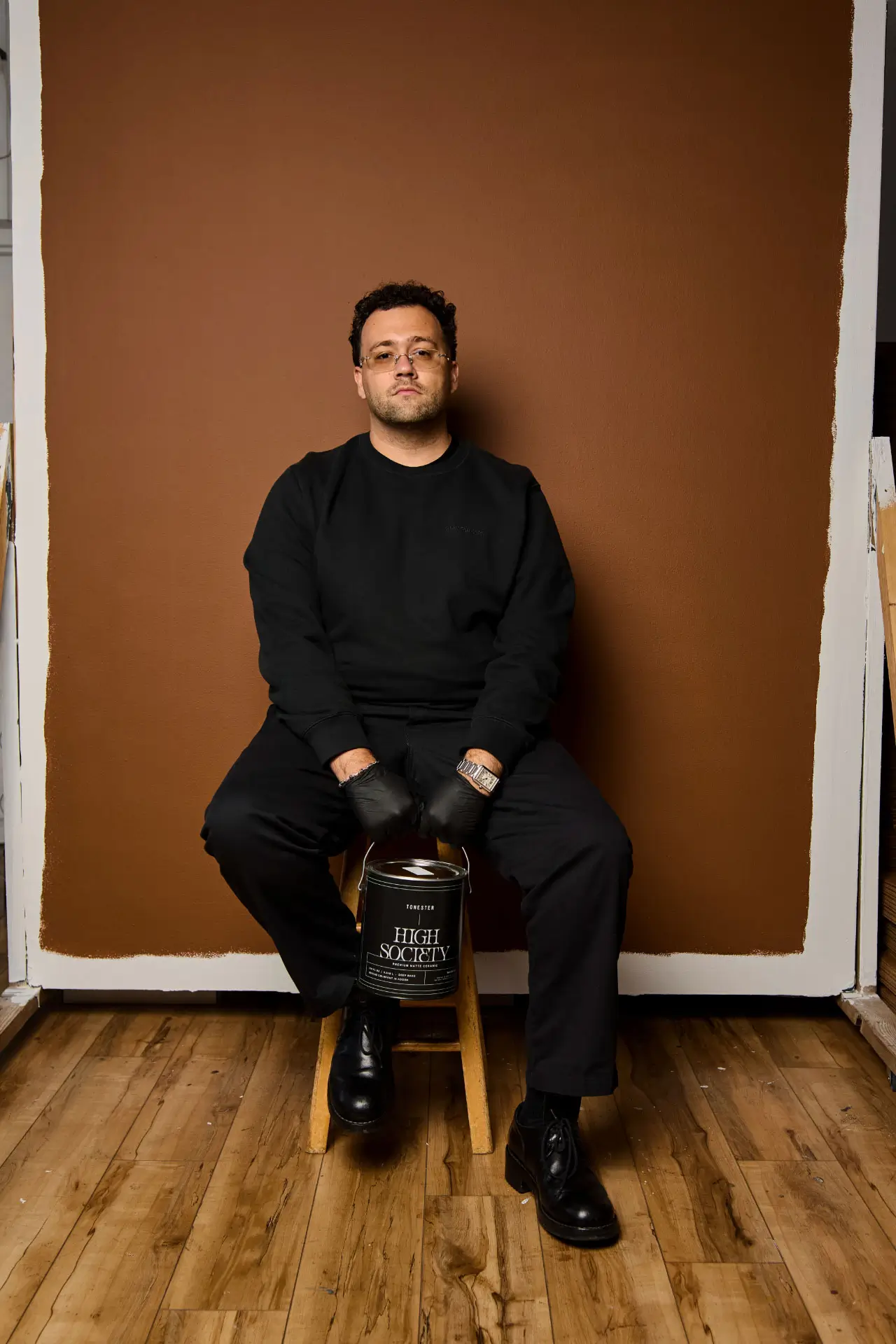
Tony Piloseno’s journey from employee to entrepreneur was hardly typical. While in college, the Ohio native worked as an associate at a Sherwin-Williams store. Between mixing custom colors for customers and ringing up gallons of eggshell and semi-gloss, he began sharing short videos of himself tinting paint on TikTok. By the sixth post, he went viral. Millions watched as neutral bases transformed into rich, story-filled hues under his practiced hand. Viewers were drawn to the satisfying process, the unexpected reveals, and Piloseno’s genuine enthusiasm. The company, however, was less enthused. He was eventually fired.
Even with offers from other firms, Piloseno chose to strike out on his own. In 2021, he founded Tonester Paints. Starting from the ground up was stressful, especially in the early years. “I was barely able to support myself with the small number of paint orders we had each week,” he recalls. The early days were defined by scale and repetition—mixing colors in a small Orlando facility, fulfilling orders himself, and pouring every spare moment into content creation. But the persistence held. What began as a side-hustle born from a setback has evolved into a global brand known for emotionally resonant, high-quality interior paints that move beyond mere wall coverage.
Piloseno remained committed, convinced he could turn his passion into something purpose-driven. From the beginning, his focus extended beyond sales. He showed customers how to build their own interiors—from selecting the right shade to executing DIY projects. The tinctures he develops do more than cover surfaces; they carry narrative weight. Midwest Cowboy, for example, reads as a black-caramel tone that evokes an upscale ranch at golden hour. Brooklyn Vogue sits at the opposite end—a deep blue-gray referencing the borough’s layered sophistication and grit.
Now based in Florida, Tonester Paints is recognized globally within design circles, yet Piloseno still produces all social content himself. He remains active across Instagram, TikTok, and YouTube, constantly observing emerging creators in the interior design space. Ideas are captured quickly, without strict organization. “It is all extremely unorganized, but I use the iPhone Notes app every time,” he says. That approach—raw, immediate, unfiltered—mirrors the brand’s ethos: approachable haute grounded in real passion rather than corporate polish.
Today, Tony Piloseno enters an extended Friday Five conversation, expanded here to explore his creative process, business evolution, and the intersections of color, culture, and community…

flow
Collecting watches has been a personal pursuit for Piloseno since entering the worlds of business and design. The craftsmanship and intention behind each piece continue to resonate. “As someone who loves meeting new people, I’ve learned that most individuals have a strong personal story tied to the watch they wear—shaped by their own taste and experience. It becomes a natural entry point for conversation.”
This affinity recently translated into a collaboration. In partnership with Italian watchmaker D1 Milano, Tonester introduced a limited-edition series of four timepieces derived from its Milan Design Week 2025 palette. Each piece reflects a different moment within the city—oxblood tones, deep jades, layered blues capturing architecture and shifting light. The collaboration extended the logic of paint from walls to wrists: color as wearable narrative.
For Piloseno, watches represent more than accessories. They symbolize precision and legacy within a fast-moving digital landscape. Much like mixing the right paint formula, assembling a timepiece requires patience, expertise, and an understanding of subtle detail. This parallel informs his approach to color—layered, tested under varying conditions, refined until it feels complete.

gear
As a brand owner, Piloseno is drawn to the intensity of streetwear culture. Few categories generate the same level of community. “I love the excitement of drops that sell out, the resale research, the demand—it’s all incredibly high energy.”
That energy translates into Tonester’s model. Limited color releases, seasonal palettes, and collaborative projects generate anticipation. Customers do not simply purchase paint—they enter a conversation around mood, identity, and memory. The resale dialogue surrounding rare streetwear pieces mirrors how designers and enthusiasts discuss discontinued Tonester hues or custom blends.
Streetwear’s influence extends into the product itself. Graphics, layering, and cultural references appear in naming and presentation. A color titled Street Art might reference urban expression, while collaborative releases bring fashion-adjacent thinking into materiality. The result is a brand that feels current without chasing cycles—grounded instead in cultural awareness.

move
Growing up in Cleveland, Hip-Hop and Rap played a defining role in Piloseno’s environment. The storytelling, the persistence, the sense of forward motion—all carried into his early life and continue to influence his work.
The genre’s narrative of resilience parallels his own trajectory. From viral attention to losing his job, to building a brand independently, the arc aligns with the underdog-to-builder progression found in the music. Even structurally, there is overlap. Layered production mirrors the process of color mixing—base tones adjusted, stacked, and refined into something distinct.
Music remains present in the process. Either in the studio or on-site, playlists run continuously, adding rhythm to long sessions of formulation and production. Hip-Hop’s view language—album covers, styling, set design—also informs spatial thinking. Tincture becomes the connective element, tying a room together the way a beat anchors a track.

amb
New York remains a consistent source of energy. Each visit leaves Piloseno with renewed creative momentum. The density of the city—architectural, cultural, social—offers constant input.
Walking through neighborhoods like SoHo, Brooklyn, or the Lower East Side presents a continuous study in contrast: brick against steel, reflections across glass, movement layered over structure. These observations translate into future palettes. The city becomes both reference and catalyst.
It also functions as a network. Conversations at events, galleries, or even chance encounters open pathways for collaboration. For a self-built brand, NYC represents expansion—not just geographically, but conceptually.

social
Social media remains central—not incidental—to Tonester’s identity. Platforms like Instagram, TikTok, and YouTube continue to drive both inspiration and connection.
Piloseno still creates all content himself. He observes emerging creators, engages directly, and remains embedded in the same ecosystem that initially propelled his work. Raw videos—paint mixing, tincture reveals, process documentation—continue to outperform polished campaigns because they build trust.
Followers participate actively. They share their own spaces, tag the brand, and contribute to an evolving view dialogue. The content is not one-directional—it is collab.
The approach prioritizes authenticity. Imperfect lighting, unedited sequences, candid moments—these become strengths rather than flaws. In a saturated digital landscape, that clarity of intent resonates.
fin
At its core, Tonester is built on the idea that color is never arbitrary. Each shade undergoes technical testing—lightfastness, durability, environmental responsibility—but also emotional calibration. The goal is not simply coverage, but activation.
By 2023, the brand had shipped thousands of gallons, expanding through word-of-mouth, press, and partnerships. Yet the structure remains personal. Piloseno continues to mix prototypes, film content, and maintain direct engagement with his audience.
Looking forward, the vision extends beyond paint—into a broader ecosystem of objects, materials, and environments connected by tincture intelligence. The direction remains consistent: helping individuals shape spaces that reflect their own narratives.
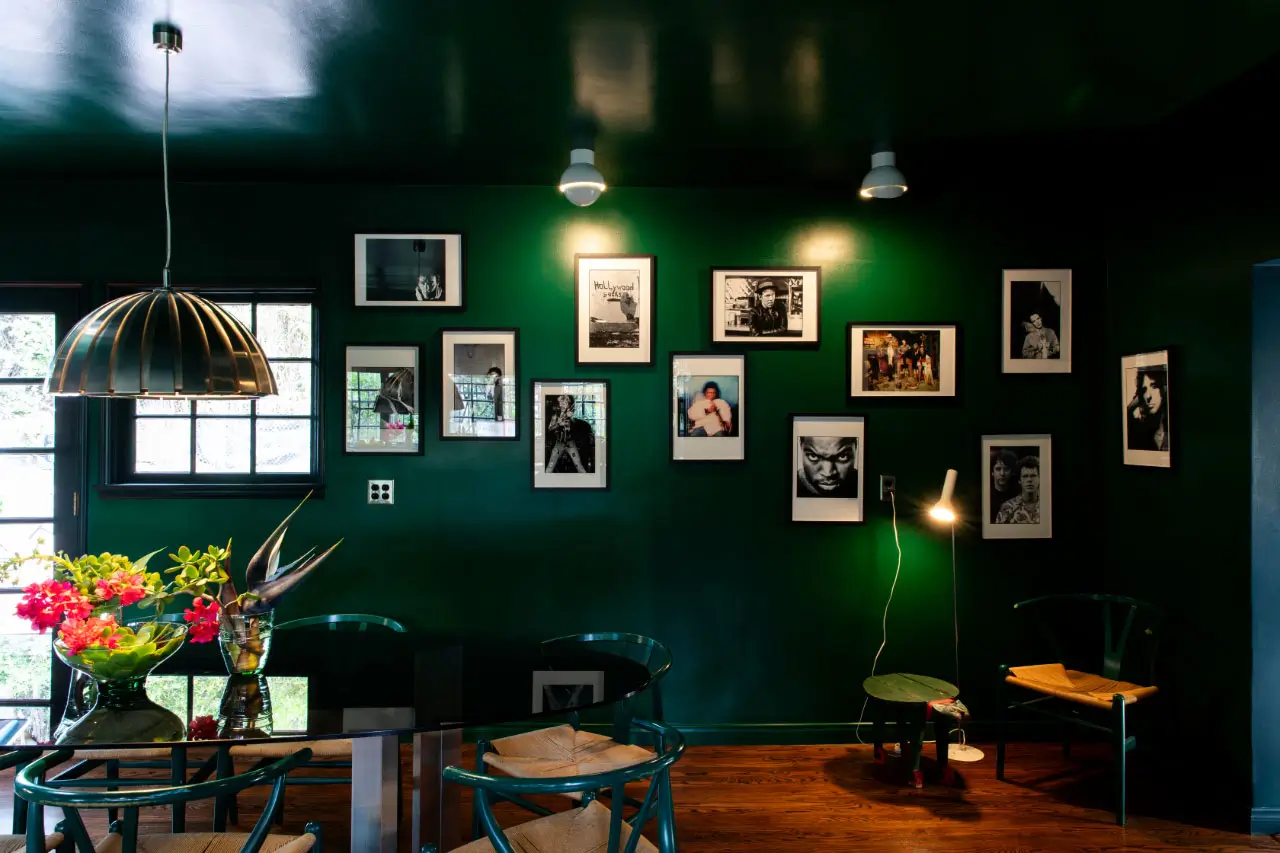
In a landscape defined by speed and repetition, Piloseno offers something more deliberate. Tincture with character. Built through experience rather than abstraction. From a Sherwin-Williams aisle to Milan installations and Hollywood Hills projects, the trajectory reflects not a linear plan, but a continuous process of refinement.
What emerges is a simple but enduring idea: the most impactful work begins with authenticity—and the willingness to let tincture carry meaning beyond the surface.
n
From the DRIFT archive: Cornell Team Develops Ultrablack: The “Darkest Fabric Ever” That Reflects Close to No Light · PANTONE’s 2026 Color of the Year Takes Shape With Play-Doh and Post-It Editions
Related Articles

BAPE Opened An iPhone 18 Order Window And Put Camo On The New Last
Four cases. Shark with a magnetic mini pouch. Glow solid camo. City camo. Color camo. […]