DRIFT AUDIO
Listen to this story
Choose a voice, then press play.
In the rarefied realm of lunar exploration—where engineering precision meets the flow of human ambition—a diminutive sphere no larger than a baseball quietly rewrote expectations. Launched as part of Japan’s Smart Lander for Investigating Moon (SLIM) mission, SORA-Q (Lunar Excursion Vehicle 2, or LEV-2) wasn’t just another mechanical envoy to our celestial neighbor. Conceived through an unlikely alliance between the Japan Aerospace Exploration Agency (JAXA), toy giant Takara Tomy (the architects behind Transformers), Sony, and Doshisha University, this palm-sized rover embodied a radical design know: what if the coltish mechanics of childhood toys could conquer the unforgiving vacuum of space?
Two years after its January 2024 touchdown, a comprehensive study published in Science Robotics has finally illuminated the full arc of SORA-Q’s brief but revelatory lunar sojourn. The findings affirm a compelling truth: in an era of escalating space ambitions, miniaturization and biomimetic ingenuity aren’t mere novelties—they are the vanguard of sustainable, adaptable exploration. For design enthusiasts, technologists, and culture observers alike, SORA-Q stands as a masterclass in cross-pollination between pop culture, consumer engineering, and frontier science.
[Press Release]
Launch Schedule of H3 Launch Vehicle flight No.6, 30 configuration Test Vehicle [Rescheduled]https://t.co/ipkbVmGQJC
— JAXA(Japan Aerospace Exploration Agency) (@JAXA_en) June 9, 2026
stir
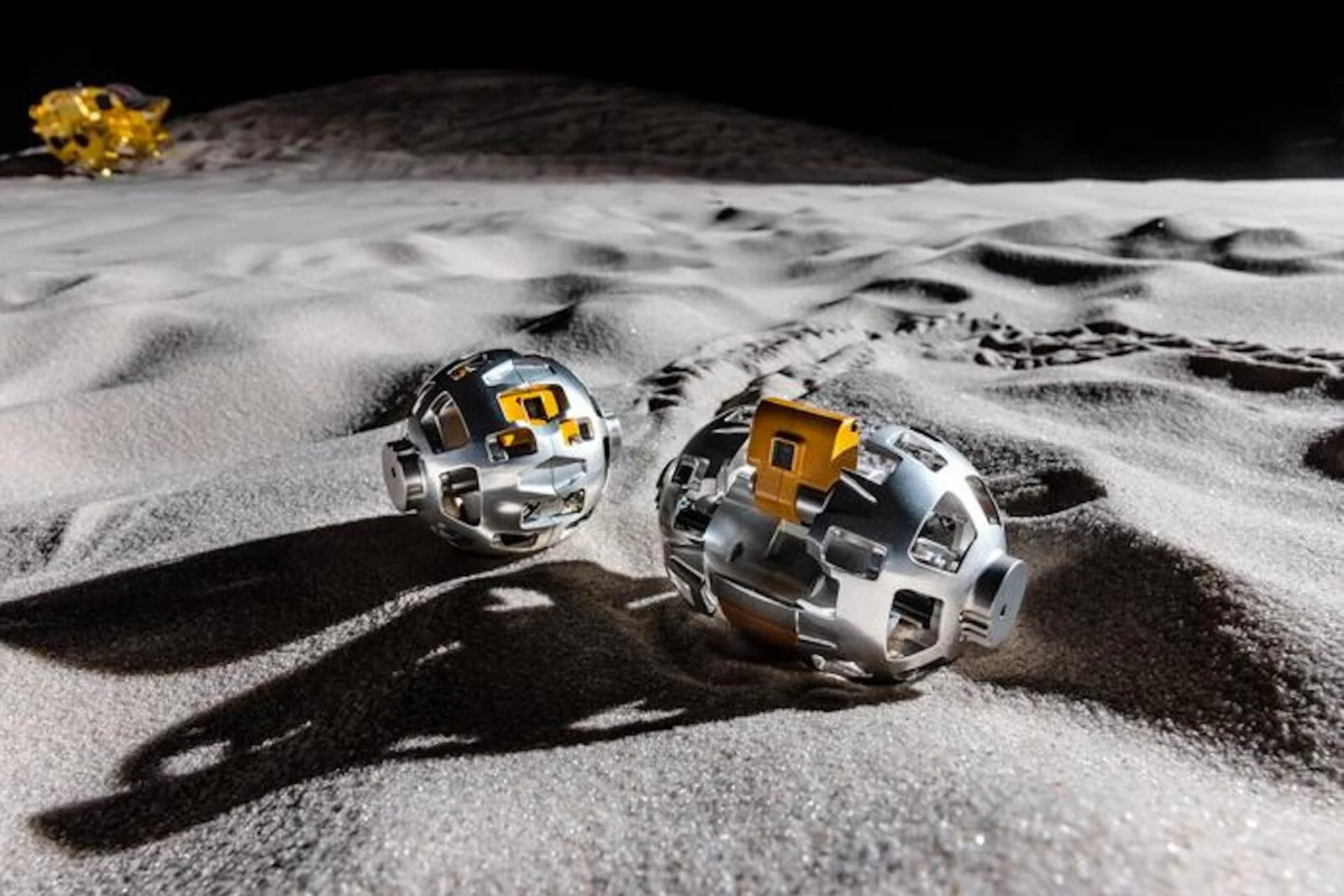
The story begins not in sterile cleanrooms but in the imaginative workshops of Takara Tomy. Since the 1980s, the company has enchanted gens with transforming robots that blur the line between object and character. When JAXA sought innovative partners through its Space Exploration Innovation Hub in 2016, Takara Tomy’s expertise in compact, durable, transformable mechanisms proved an inspired match. Joined later by Sony’s sensor and processing prowess (leveraging Spresense technology) and Doshisha University’s robotics research, the team birthed SORA-Q: an 80mm-diameter, 250-gram marvel that launches as a rugged sphere and unfurls into a two-wheeled rover upon lunar arrival.
This transformation—splitting along its axis to expose cameras and repurpose its hemispheres as wheels—draws explicit inspiration from Transformers like Optimus Prime, but also from nature’s own shape-shifters: frogs and sea turtles. The locomotion allows it to “run” for about two hours, navigating regolith with off-center wheel rotations that echo toy-car agility while withstanding extreme temperature swings, radiation, and abrasive dust.
In view, SORA-Q evokes a futuristic artifact—its crosshatched, metallic shell hinting at both industrial robustness and playful accessibility. Prototypes tested everything from non-slip surfaces to autonomous recovery protocols, blending toy-grade reliability with space-hardened electronics. It wasn’t merely functional; it was designed to inspire. Replicas now grace schools, sparking curiosity in the next gen of engineers and dreamers.
This toy-to-tech pipeline resonates deeply in contemporary design discourse. Much like how streetwear brands repurpose athletic heritage or luxury houses mine archival motifs for modern relevance, SORA-Q demonstrates how “low” culture forms—children’s toys—can elevate “high” scientific endeavor. It’s a reminder that innovation thrives at intersections: heritage craftsmanship meeting cutting-edge computation.
mission
SORA-Q’s journey was tethered to SLIM, a pioneering effort in pinpoint lunar landing technology. After an initial hitch with the failed Hakuto-R Mission 1 in 2022, the rover found its home on the 2023 SLIM launch. On January 19-20, 2024 (UTC), SLIM achieved a historic soft landing near Shioli Crater—within meters of its target—demonstrating Japan’s advanced guidance systems. However, a thruster anomaly left the lander tipped nose-down, its solar panels misoriented and power critically limited.
Enter SORA-Q and its companion LEV-1 (a hopping rover). Deployed just before touchdown, the tiny duo performed the first synchronized Japanese lunar surface exploration. SORA-Q autonomously transformed, rolled across the regolith, and captured vital imagery of the stricken SLIM lander. These photos—transmitted via LEV-1—provided immediate diagnostic insights, confirming the lander’s orientation and condition.
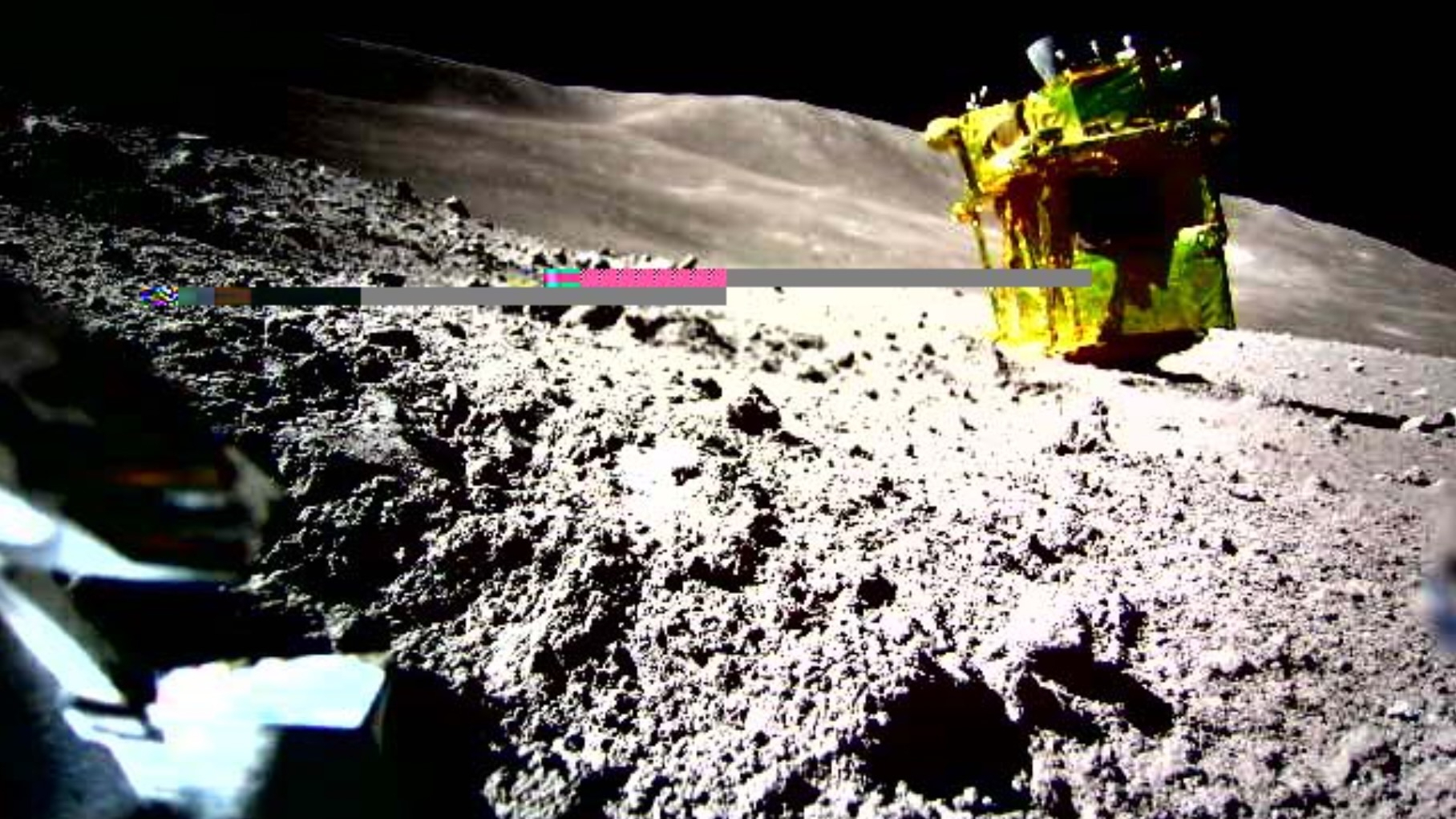
One iconic frame shows SLIM tilted against the stark lunar backdrop, its golden thermal blankets gleaming under the unfiltered sun. SORA-Q snapped a dozen high-resolution images in total, documenting its surroundings and post-landing state. It operated for roughly 100 minutes (close to its designed endurance), showcasing autonomous navigation, anomaly detection, and image processing—all orchestrated with minimal onboard compute due to its size constraints.
The mission’s success, despite SLIM’s partial impairment, underscored SORA-Q’s resilience. As the world’s smallest and lightest lunar rover at the time, and the first Japanese robot to traverse and image the surface, it punched far above its weight class.
flow
The recent Science Robotics paper peels back the layers on operational realities. While SORA-Q excelled in transformation, mobility, and imaging, challenges emerged. Partial data loss occurred during transmission. Battery depletion ultimately severed contact with LEV-1. Lunar dust and terrain variability tested its wheels, and the extreme environment imposed tight thermal and power budgets.
Yet these hurdles yielded profound insights. Small rovers like SORA-Q excel as “sidekicks” to larger assets—scouting cramped craters, vents, or shadowed regions inaccessible to bulkier vehicles like NASA’s Perseverance. Their low mass and cost enable swarm deployments, multiplying data collection while reducing mission risk. Autonomous features, honed from toy mechanics and advanced sensors, point toward more self-reliant explorers for Mars, asteroids, or sustained lunar bases.
From a design perspective, SORA-Q validates modularity and biomimicry. Its spherical launch form minimizes volume and protects internals during transit—echoing efficient packaging in consumer electronics or sustainable fashion (think compact, multi-use garments). The transformable chassis highlights elegant engineering: fewer parts, dual-purpose components, and conjure yet purposeful aesthetics.
Sony’s contribution—adapting consumer-grade processing for space—further blurs lines between earthly innovation and extraterrestrial application. It suggests a future where everyday tech ecosystems scale to cosmic challenges, much like how premium materials from automotive or apparel industries find new life in high-performance gear.
reason
Beyond the technical, SORA-Q captures the culture zeitgeist. In an age of AI, digital fatigue, and renewed space optimism, it bridges nostalgia and futurism. Takara Tomy’s CEO highlighted its potential to ignite children’s interest in science, echoing broader themes of inspiration and agency. Replicas in classrooms transform abstract space exploration into tangible wonder.
This aligns with Invent Blog’s explorations of design as cultural catalyst—whether in streetwear collabs, horological innovation, or art-tech fusions. SORA-Q embodies “heritage innovation”: Takara Tomy’s 100+ years of toy-making repurposed for humanity’s next frontier. It’s not dissimilar to how contemporary designers revisit archival silhouettes or musicians sample golden-era tracks to create something forward-looking.
In the broader narrative of lunar return—Artemis, private landers, international partnerships—SORA-Q symbolizes democratized exploration. Tiny, affordable, and clever robots lower barriers, inviting more players (and more diverse perspectives) into the cosmos. They foster a vision of space not as elite domain but shared human endeavor, emphasizing sustainability, creativity, and resilience.
extent
The study envisions fleets of SORA-Q successors: lightweight companions to heavy lifters, equipped with enhanced sensors, better power systems (perhaps leveraging future solar or radioisotope tech), and improved autonomy via AI. Imagine swarms mapping lava tubes for habitats, or scouting resources for in-situ manufacturing—key to long-term presence.
Design-wise, opportunities abound. Future iterations could incorporate adaptive materials that change properties on demand, or aesthetic elements that communicate status (glowing indicators, modular shells). Crossovers with fashion and product design—durable textiles for dust resistance, ergonomic yet cosmic forms—could yield spin-offs for terrestrial use, from disaster response to consumer robotics.
SORA-Q also prompts reflection on ethics and narrative in space tech. How do we design not just for function but for meaning? By drawing from Transformers, the team infused personality into engineering, making the rover approachable rather than intimidating. In a world grappling with technological alienation, such human-scale wonder matters.
fin
Two years on, SORA-Q rests silent on the Moon—a sentinel of ingenuity. Its 100 minutes of operation delivered outsized returns: proof of concept for transformable micro-rovers, critical data for SLIM analysis, and a blueprint for future missions. It was the first fully autonomous lunar surface explorer in its class, achieving synchronized ops with LEV-1 and etching Japan’s name in extraterrestrial robotics history.
SORA-Q offers rich terrain. It exemplifies how constraints breed creativity—tiny size demanding maximal elegance. It celebrates interdisciplinary collaboration: toy makers, sensor experts, academics, and space engineers united by curiosity. And it reaffirms that big ideas often arrive in small packages.
As we stand on the cusp of a multi-planetary future, SORA-Q reminds us that exploration is as much about reimagining tools as reaching destinations. Tiny robots, inspired by childhood play, achieving lunar feats. In that alchemy lies profound hope—for discovery, for sustainability, and for the enduring human impulse to transform, adapt, and dream beyond horizons.
n
From the DRIFT archive: Dyson x PORTER: Engineering Meets Urban Craft in the OnTrac Limited Edition · PANTONE’s 2026 Color of the Year Takes Shape With Play-Doh and Post-It Editions
Related Articles

Stormind Walked Around Etna And Put The Villa In The Last Remothered
Red Nun’s Legacy. Trilogy close. Acireale studio. Abandoned house on the volcano. Unreal Engine 5. […]