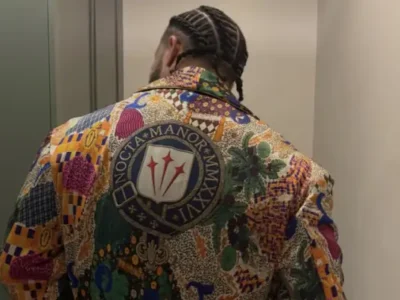
Wakanda Has Its Prince: David Jonsson Steps Into the Panther’s Mantle

July 27, 2026
Marvel just handed its most symbolically loaded role in a decade to a 32 year old actor from Custom House who was expelled from school at 14.
San Diego Comic Con’s Hall H has hosted plenty of surprise reveals, but few landed with the specific weight of what happened there on July 25, 2026. Ryan Coogler walked onstage, said that Marvel had introduced a character at the end of its last Wakanda film, a boy who was the son of the character Chadwick Boseman had played, and then told a packed crowd that the boy was grown now, and that a specific actor would be playing him.
That actor is David Jonsson. He’ll play T’Challa’s son in what is now officially titled Black Panther 3, arriving in theaters on December 15, 2028, with Coogler back in the director’s chair for a third time. The crowd, by multiple accounts, did not hold back. Sections of Hall H reportedly broke into Wakanda chants before Jonsson had said a single word.
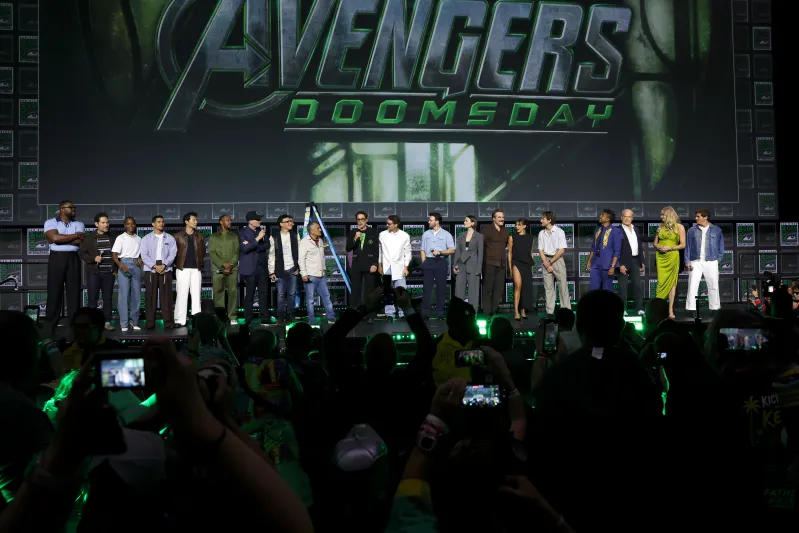
Marvel Studios introduced the ensemble cast of Avengers: Doomsday during its Hall H presentation at San Diego Comic-Con, bringing together returning stars and new additions for one of the franchise’s most anticipated crossover films. The onstage reveal underscored the scale of the project as it continues to expand the Marvel Cinematic Universe.
When Jonsson finally spoke, he kept it brief. “Thank you to this amazing family that I have the honor and the privilege and the blessing to join,” he told the room, adding that he didn’t want to say too much because he wanted to “let this screen do the talking.” It’s a restrained answer for an actor who just inherited one of the most scrutinized roles in modern franchise filmmaking, and restraint is not typically the mode Comic Con news cycles reward. But restraint has become something of a Jonsson signature.
to
Jonsson’s route to Wakanda did not run through drama school ambition from age six. He was born on September 4, 1993, and grew up in Custom House, in London’s East End Docklands. His father worked in IT at Heathrow Airport and had also worked for the Metropolitan Police. Jonsson himself has said acting wasn’t even a thought for him until he was expelled from school at 14 after a fight, landing at an alternative school surrounded by kids, in his words, who had done far worse. Youth theater became the outlet. He later trained at RADA, graduating in 2016, and made his stage debut at Islington’s Almeida Theatre in 2018.
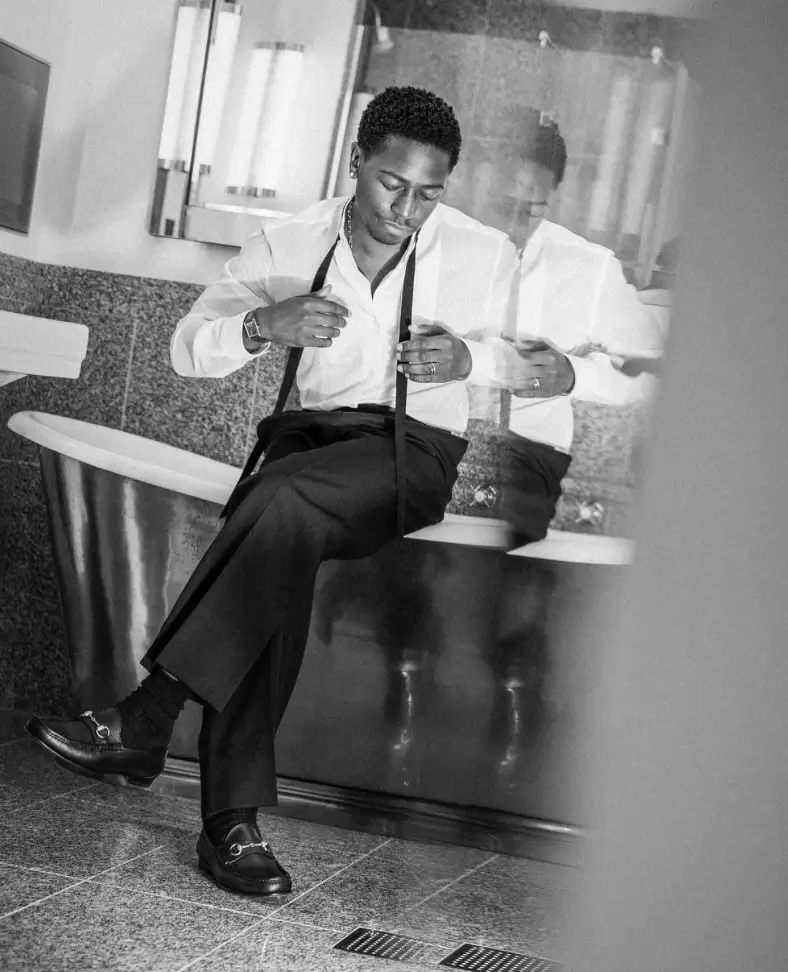
British actor David Jonsonn is photographed in an intimate black-and-white editorial portrait, pairing timeless tailoring with a relaxed behind-the-scenes moment. The minimalist composition and reflective framing highlight his understated approach to contemporary formalwear.
The breakout, when it came, arrived through television. Jonsson played Gus McDowell, a wolfishly ambitious young banker, across the first two seasons of Industry, the HBO and BBC Two finance drama that has functioned as something of a talent pipeline for British actors in recent years. He left the show to chase film work, a decision that quickly justified itself. In 2023 he starred opposite Vivian Oparah in the Sundance to BAFTA romcom Rye Lane, playing a heartbroken south Londoner named Dom with an easy, disarming warmth that made the film’s small budget feel irrelevant.
Then came Andy. In 2024’s Alien: Romulus, Jonsson played a synthetic whose loyalty programming gets rewritten midway through the film, effectively giving him two performances stitched into one character. Fans and critics singled him out specifically; one widely shared reaction called him “the heart of the film,” and the role won him the 2025 BAFTA Rising Star Award. He reportedly took a facehugger prop to the eye during filming and suffered a detached retina for his trouble, a detail that has followed him into most profiles since. He’s expected to return for the Romulus sequel.
2025 brought The Long Walk, the long gestating Stephen King adaptation, where Jonsson played Peter McVries opposite Cooper Hoffman. Coogler specifically cited that performance when he introduced Jonsson to the Hall H crowd, a detail worth sitting with: the director chose to frame his new Black Panther not through the Marvel connective tissue of Alien or Industry, but through a small, punishing survival drama about endurance and friendship. It suggests something about what Coogler is looking for in the role, and it isn’t spectacle.
His upcoming slate includes Wasteman, a prison drama he also produced, plus a role as Sammy Davis Jr. opposite Sydney Sweeney’s Kim Novak in the Colman Domingo directed biopic Scandalous, and Chaperones, a road movie reteaming him with Long Walk co-star Cooper Hoffman and Paul Dano.
who
To know why this casting carries the charge it does, it helps to go back to 2022’s Black Panther: Wakanda Forever, the film Coogler made in the aftermath of Boseman’s death. That film ended with a quiet coda: Nakia, played by Lupita Nyong’o, revealing to Shuri that she has been raising T’Challa’s young son, Toussaint, away from the pressures of the Wakandan throne. The boy appeared on screen for barely a scene, but the implication was unmistakable. Somewhere down the line, Marvel had planted the seed for a Black Panther who was T’Challa’s actual heir.
Black Panther 3 will follow that boy, now grown, as Prince T’Challa II comes of age with, as Coogler put it onstage, “eyes on the crown of Wakanda.” Given that Toussaint was a small child in 2022, some form of time jump within the story is expected to bridge the gap, though Marvel hasn’t detailed the mechanics yet.
It’s worth being precise about what did not happen here. Letitia Wright’s Shuri, who took up the Black Panther mantle at the close of Wakanda Forever following T’Challa’s death, is not being replaced by Jonsson’s character in some competitive sense. Wright is confirmed to return for the third film, and she’s also part of the sprawling Avengers: Doomsday cast. What’s happening instead is closer to succession within the same royal line: Boseman’s T’Challa, then Wright’s Shuri as interim protector, and now T’Challa’s own son stepping toward the throne his father once held.
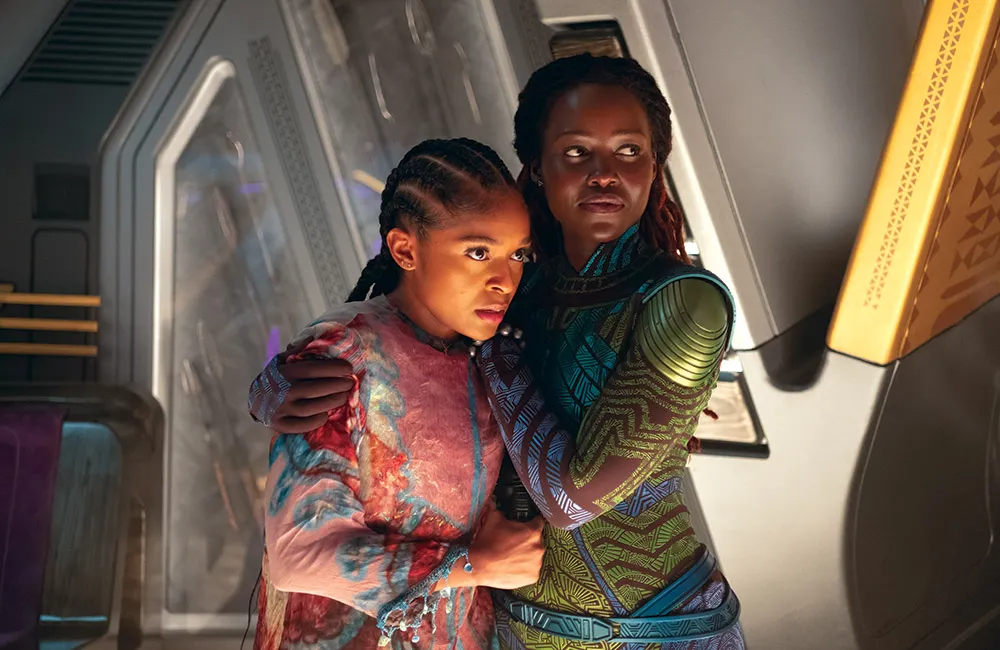
A pivotal moment from Black Panther: Wakanda Forever captures Nakia and her son, Prince Toussaint, whose introduction expands the royal lineage of Wakanda and shapes the future of Marvel Studios’ Black Panther saga.
return
Coogler wasn’t a guaranteed lock to return for a third installment, and his presence changes the calculus of how seriously to take this project. He’s the filmmaker who built the entire Wakanda universe from the original 2018 Black Panther onward, and he’s arrived at this third chapter fresh off directing Sinners, which cemented his standing as one of the more format obsessed directors working inside a studio system. That obsession shows up immediately in the production details Marvel released alongside the casting news: Black Panther 3 will reportedly be shot entirely on 70mm celluloid, a first for the Marvel Cinematic Universe, where digital capture has been the standard for years.
That’s not a small technical footnote. Large format film changes how a movie looks and, more subtly, how it’s paced and blocked, since 70mm cameras are heavier and less forgiving than digital rigs. Choosing that format for a franchise entry signals an intent to make Black Panther 3 feel like an event on the scale of the original, not a maintenance sequel keeping a franchise warm.
There’s also a scheduling wrinkle worth noting. Coogler wrote and directed the pilot for a reboot of The X-Files, starring Danielle Deadwyler and Himesh Patel, which had just wrapped production around the same period as the Comic Con announcement. Writing and directing a pilot doesn’t obligate a filmmaker to every subsequent episode if a series gets picked up, so the two projects likely aren’t in direct conflict, but the timing underlines how much Coogler currently has in motion.
show
Jonsson wasn’t alone onstage. Wright and Winston Duke, who plays M’Baku, joined Coogler and Marvel Studios head Kevin Feige for the announcement, and Duke later described a brief backstage exchange with Jonsson to Deadline. He said he wanted to extend Jonsson the same grace he’d been given when Black Panther was his own first film, offering support rather than pressure as Jonsson steps into a franchise with this much history attached to it.
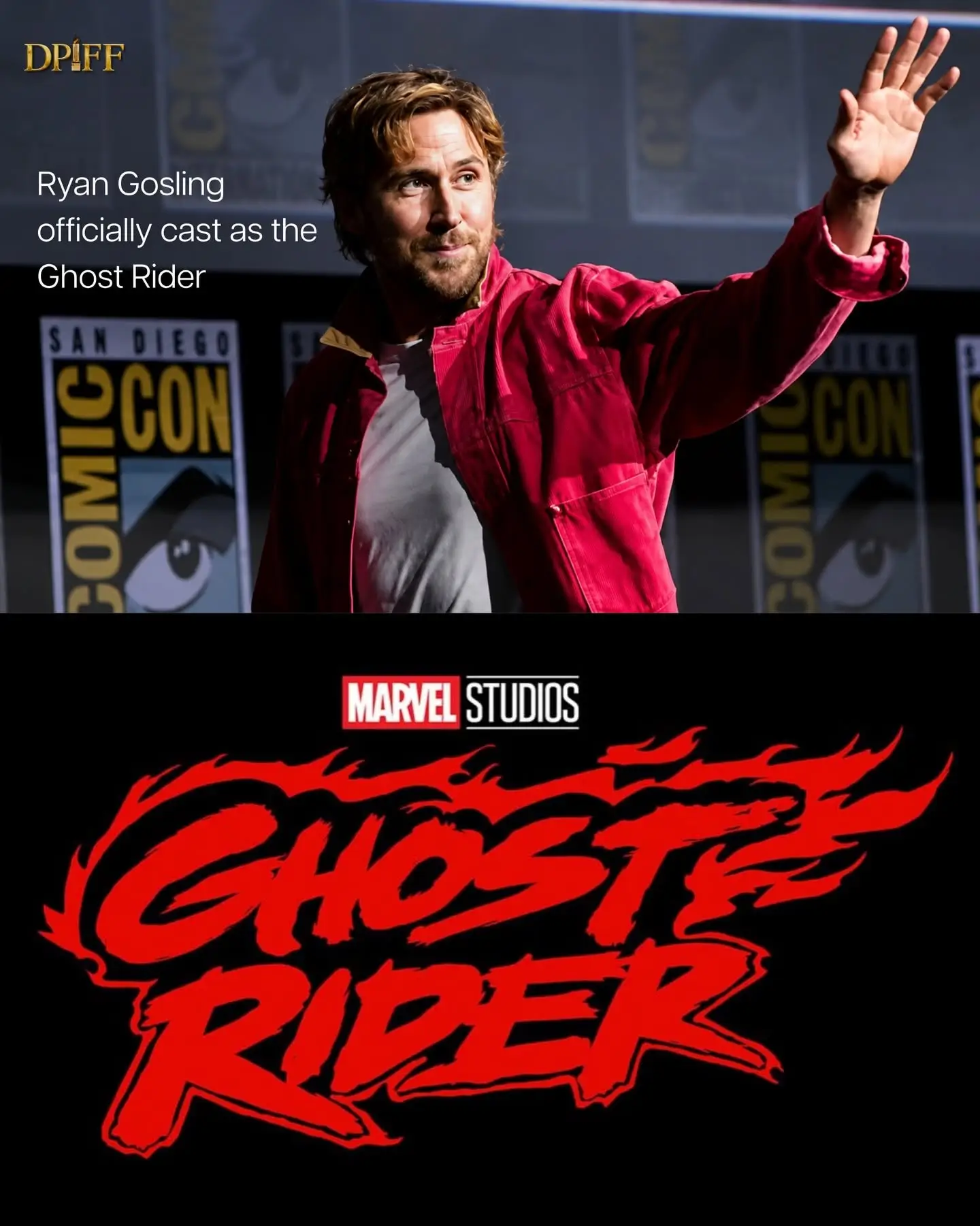
This fan-made composite pairs an image of Ryan Gosling at San Diego Comic-Con with a Marvel Studios Ghost Rider logo and on-image text claiming an official casting announcement. The graphic is promotional in style and should not be interpreted as confirmation of casting on its own.
Denzel Washington has also been previously confirmed as part of the Black Panther 3 cast, adding another significant name to a project that already carries the returning presence of Wright and Duke. Full plot and casting specifics beyond these confirmations have not been detailed publicly as of this piece.
name
It’s difficult to separate this casting news from the man the role still, in some sense, belongs to. Chadwick Boseman originated T’Challa in 2018’s Black Panther, a film that grossed 1.3 billion dollars worldwide, won three Oscars, and became the first superhero film to earn a Best Picture nomination. Boseman died of colon cancer in August 2020, at age 43, while Coogler was already deep into developing what became Wakanda Forever. That film’s ending, built around grief that the filmmakers were processing in real time alongside their audience, is the direct emotional ancestor of the Toussaint reveal that now sets up Jonsson’s casting.
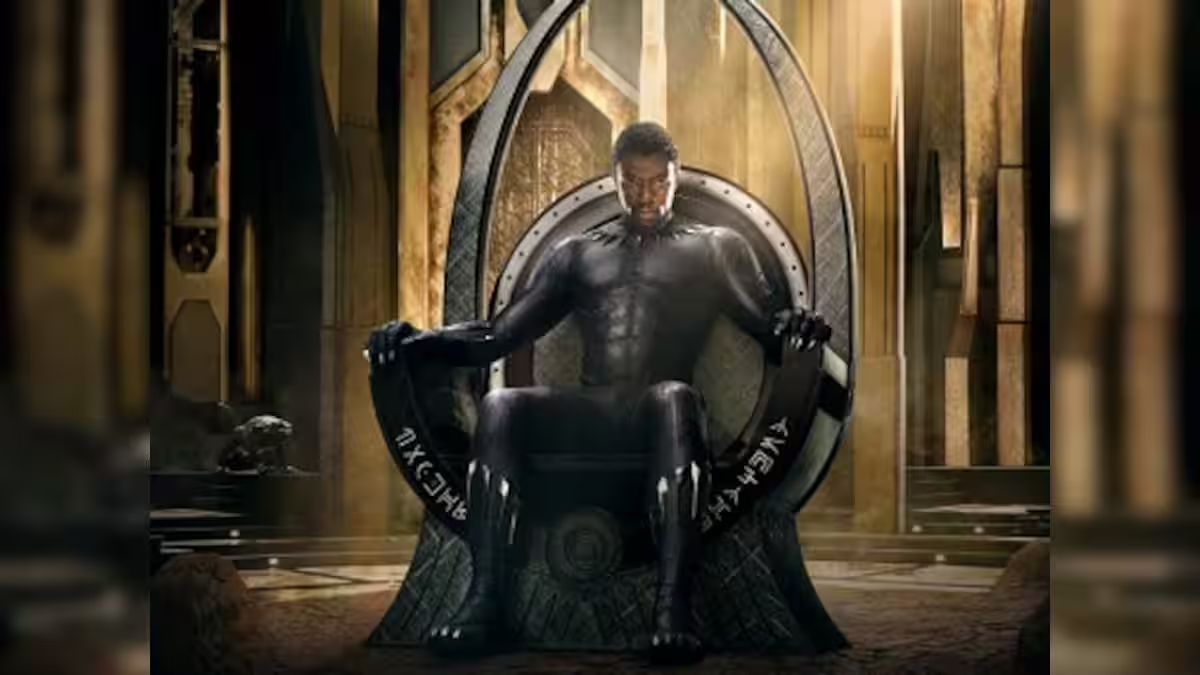
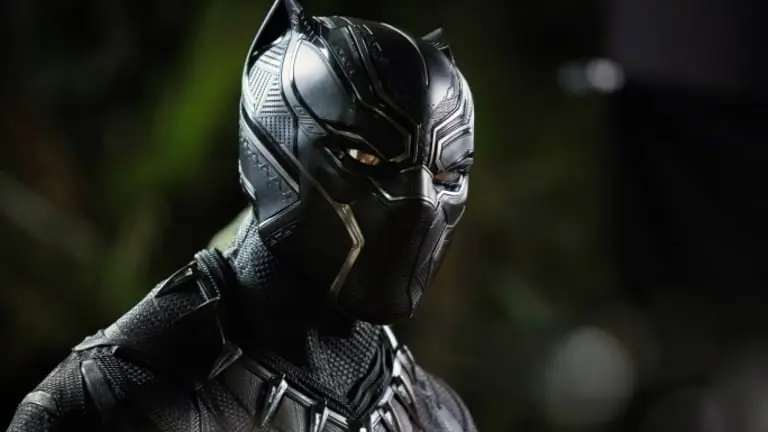
The Black Panther seated upon the Wakandan throne symbolizes the dual responsibilities of monarch and superhero. The iconic image reflects the character’s leadership, cultural legacy, and enduring place within Marvel Studios’ cinematic universe.
Jonsson isn’t replacing Boseman on screen, since Wright’s Shuri already carried that transition once. What he’s inheriting is something closer to a legacy character within a story that has always, since Wakanda Forever, been explicitly about succession and what a nation does with grief. Coogler seems aware of the sensitivity here. Introducing a new actor as T’Challa’s literal son, rather than recasting T’Challa outright, is a way of honoring continuity without asking Jonsson to stand in Boseman’s exact sil.
fin
Black Panther 3’s December 15, 2028 release date places it after Avengers: Secret Wars, meaning whatever happens in that team up event will likely ripple into Wakanda’s next chapter. Marvel has not detailed how directly the two projects connect. Wakanda Forever, for context, opened to 331 million dollars worldwide and finished its run near 859 million, numbers that gave Marvel confidence the Wakanda set could carry a franchise past its founding star. Angela Bassett’s supporting actress Oscar nomination for that film marked the first time an actor in a Marvel movie had been recognized by the Academy, a detail that speaks to how much critical goodwill the Wakanda corner of the MCU has built independent of any single lead performer.
For Jonsson, the casting arrives at a specific inflection point in his own career. He’s coming off a BAFTA win, a Stephen King adaptation, a self produced prison drama, and a run of upcoming projects that already includes a Sydney Sweeney co lead and a reunion with Paul Dano. Black Panther 3 doesn’t launch him. It arrives after a fairly deliberate climb through British theater, prestige television, and increasingly large film roles. What it does is put a name that industry watchers have been tracking for two years in front of the widest audience he’s ever had, attached to a character whose story is already, structure, about what a young man does when a crown he didn’t ask for lands on him anyway.
Related Articles
Amazon Just Hid a Whole Game Library Inside Your Remote Control
Prime members with a Fire TV can now open the games they already paid for, […]