

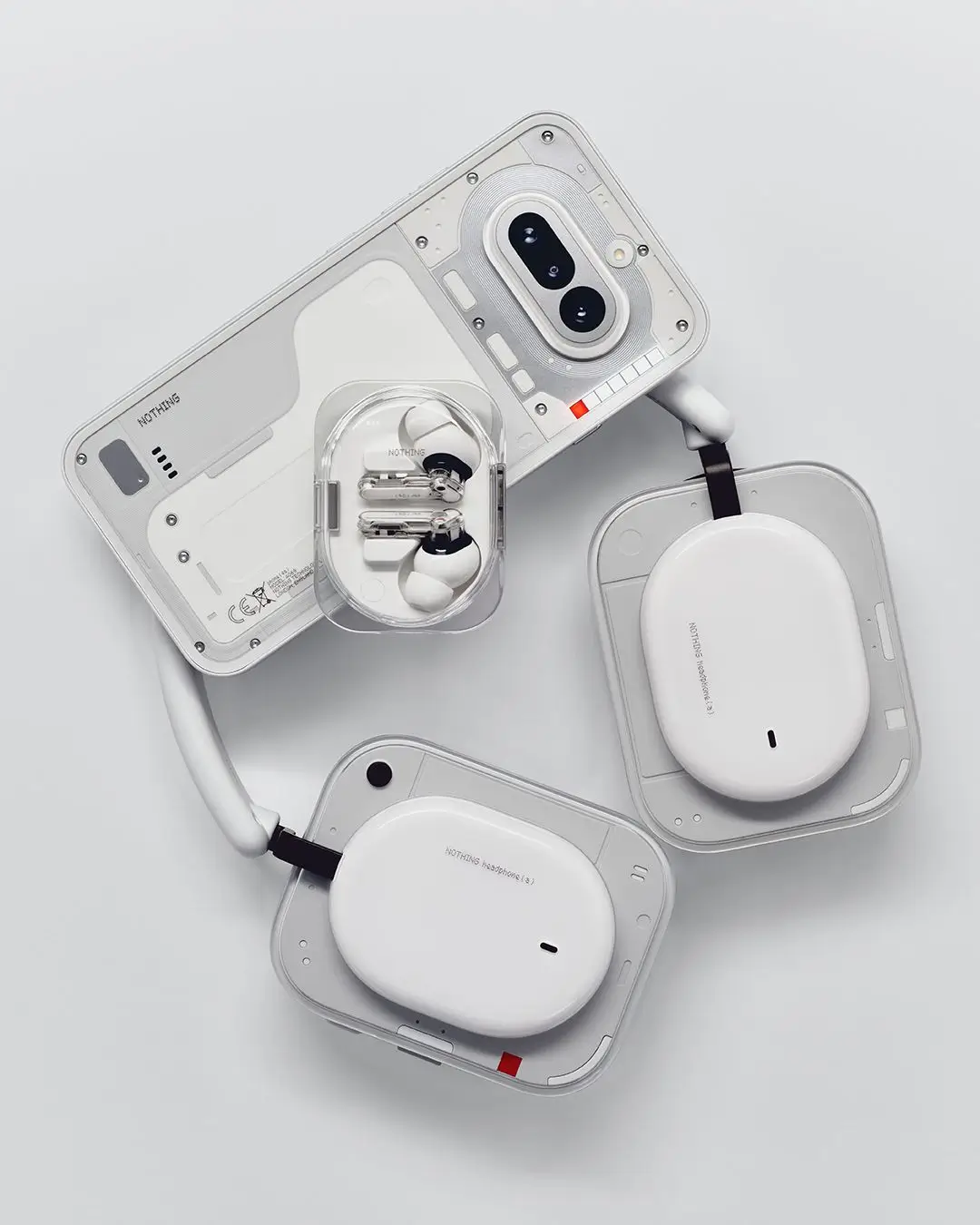
DRIFT AUDIO
Listen to this story
Choose a voice, then press play.
Ear (3a) arrives at $99 with a party attitude, a pinch controlled recorder and the boldest colourway Nothing has put on an entry level product.
Nothing has never treated its cheapest products like afterthoughts, and the Ear (3a) makes that plain within seconds of picking one out of the case. The London design house built its name on see through plastic and dot matrix type, and its entry level audio line has quietly become one of the more interesting corners of a category that mostly ships in matte black. The original Ear (a) landed in 2024 as the value option beneath the numbered flagship line, and it sold well enough that Nothing has now rebuilt it almost from scratch rather than giving it a light refresh.
View this post on Instagram
The Ear (3a) launched on July 7, 2026, alongside the budget focused Nothing Phone (4b), and it holds the line at $99, the same opening price the Ear (a) carried two years earlier. That alone is worth pausing on. Component costs have not gotten cheaper since 2024, and most of the industry has shh nudged prices upward at every tier. Nothing chose to eat that cost instead of passing it along, which either says something about margin on the case and packaging or something about how much the company wants this price point defended.
What it gets for that money is a genuinely different feature set from the outgoing model, not just a spec bump. A new 12mm dynamic driver, a wider active noise cancellation range, LDAC hi res streaming support, and a feature nobody else at this price is even attempting: onboard audio recording, built directly into the earbuds rather than the case.
stir
The headline addition is something Nothing calls Audio Snapshot, and it is worth being precise about what it captures, because the marketing shorthand invites confusion. It is not a hidden microphone feature for recording ambient conversation. It captures playback audio, meaning music, podcasts, lectures or anything else routed through the earbuds, and it does so with a continuous ring buffer built into 32MB of onboard flash storage split across both buds.
The mechanic is simple enough that it barely needs explaining twice. Pinch both earbuds at the same time and the Ear (3a) saves a clip of whatever is currently playing, including a stretch of audio from before the pinch happened, since the buffer is already holding roughly the last thirty seconds at all times. Users can configure how much runs before and after the trigger point, up to a combined minute, and the result syncs automatically to the Nothing X app the next time the phone is in range. From there a clip can be replayed, trimmed, transcribed or turned into a shareable quote card.
There is a second half to the feature that is arguably more useful day to day: call recording. Anyone who has ever needed to remember exactly what was said on a work call, or wanted a record of a landlord conversation, can now trigger a recording without opening an app or fumbling for a second device, and calls can run up to roughly two hours before syncing over. Nothing has built in an audible chime that plays for every participant on the line the moment recording starts, which sidesteps at least some of the obvious consent questions that come with a feature like this. Transcription happens through three tiers inside Nothing X, two of them free and on device, with a paid cloud option adding speaker identification and topic summaries.
None of this is unprecedented in the audio world broadly. Plenty of dictaphones and some higher end earbuds have offered recording in one form or another. What is new is finding it built into the earbuds themselves, rather than the charging case, at a price that undercuts almost everything else claiming similar tricks.
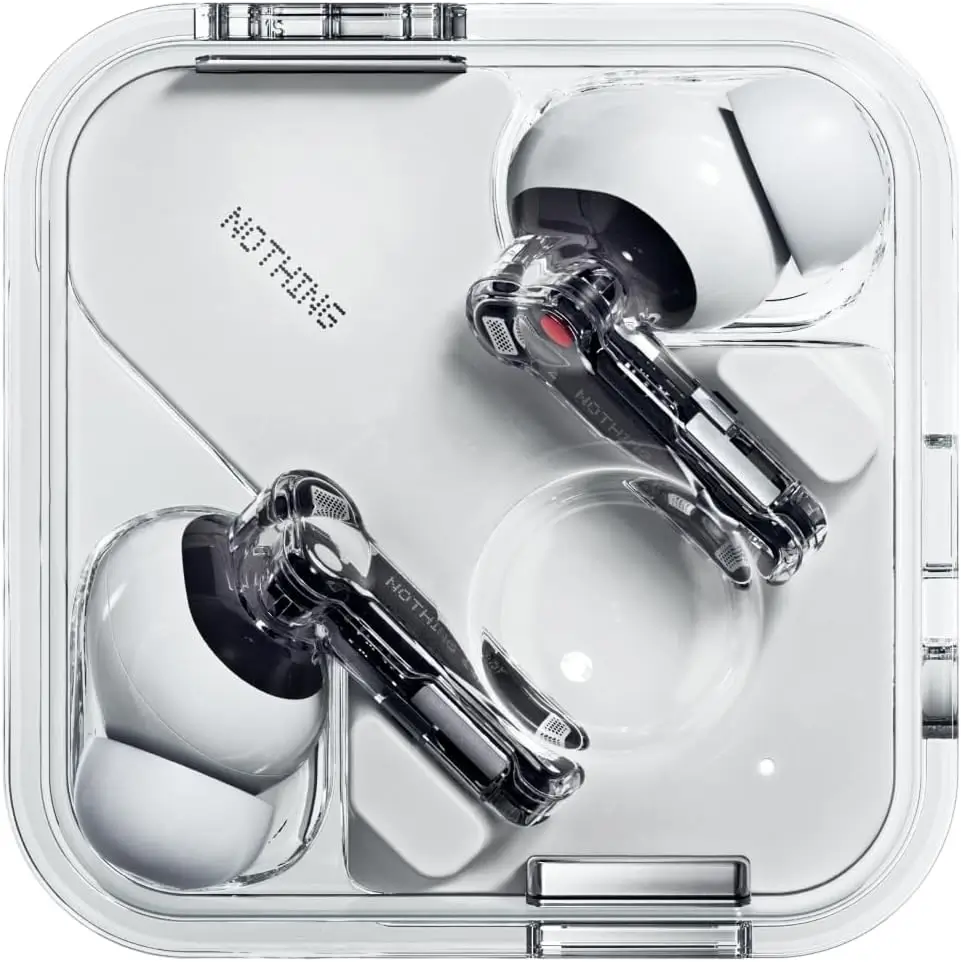
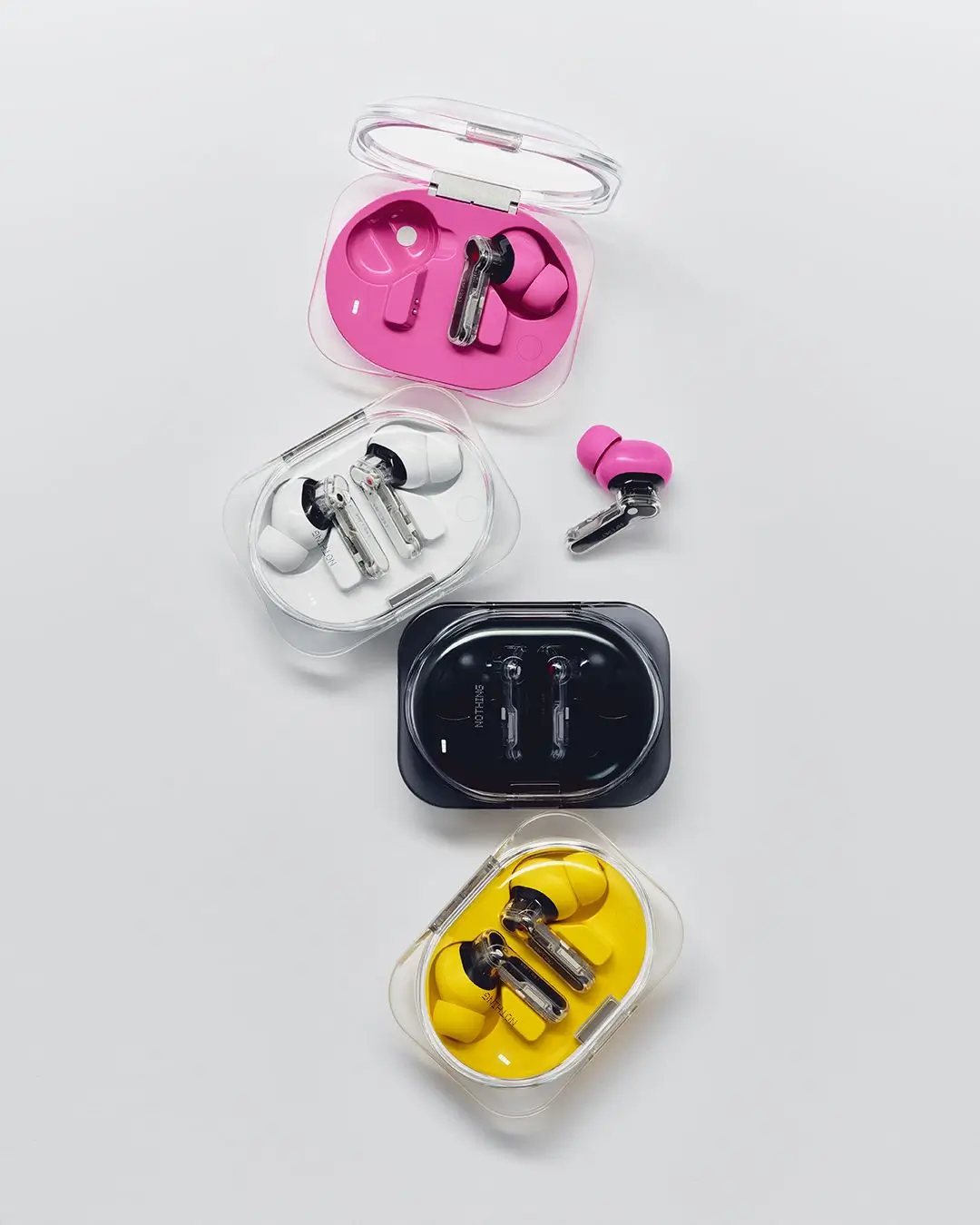
The white Nothing Ear (3a) earbuds shown inside their transparent charging case, emphasizing the brand’s signature see-through aesthetic and exposed engineering details.
It is also worth sitting with what this means once the feature leaves a controlled demo room and enters ordinary life. Call recording laws vary by state and by country, and plenty of places require every party on a line to consent before a recording is legal, not just the person holding the earbuds. Nothing’s audible notification helps here, since it gives the other participant a chance to object in the moment rather than finding out after the fact, but the responsibility for knowing the local rules still sits with whoever presses record. The same logic applies to Audio Snapshot in shared spaces such as a lecture hall or an open plan office, where the clip being captured is playback audio rather than the room itself, but the pinch gesture is discreet enough that people nearby would have no obvious way of knowing a recording had started at all. None of that makes the feature reckless, but it does make it worth using with the same basic judgment anyone would apply to a phone’s own voice memo app.
grow
Nothing has historically treated its (a) line as the value option in every sense, including audio show, and that gap has view narrowed with this release. The new 12mm dynamic driver replaces the unit from the Ear (a) and is paired with what Nothing describes as an aerospace grade diaphragm, lang that sounds like marketing until it is measured against the actual output: reviewers who tested the earbuds against their predecessor have logged around 5dB more bass and noticeably better separation across the midrange.
Active noise cancellation climbs to 45dB, which Nothing says represents roughly a 17 percent improvement in coverage over the outgoing model, concentrated in the 400Hz to 2,000Hz band where footsteps, chatter and most everyday office noise actually lives. An adaptive mode adjusts isolation automatically depending on the environment, and a dedicated transparency mode lets ambient sound back in without pulling a bud out. Six microphones split duty between call clarity and the noise cancellation system itself.
The more interesting addition for anyone who cares about format is LDAC support, Sony’s hi res Bluetooth codec, which brings 24 bit, 96kHz wireless transmission to a product that costs less than a tenth of what many audiophile focused earbuds ask for. Paired with an eight band equaliser inside Nothing X and a new Advanced EQ mode that was conspicuously missing from the previous generation, the Ear (3a) gives listeners more room to shape their own sound than the (a) line has ever offered before.
huh
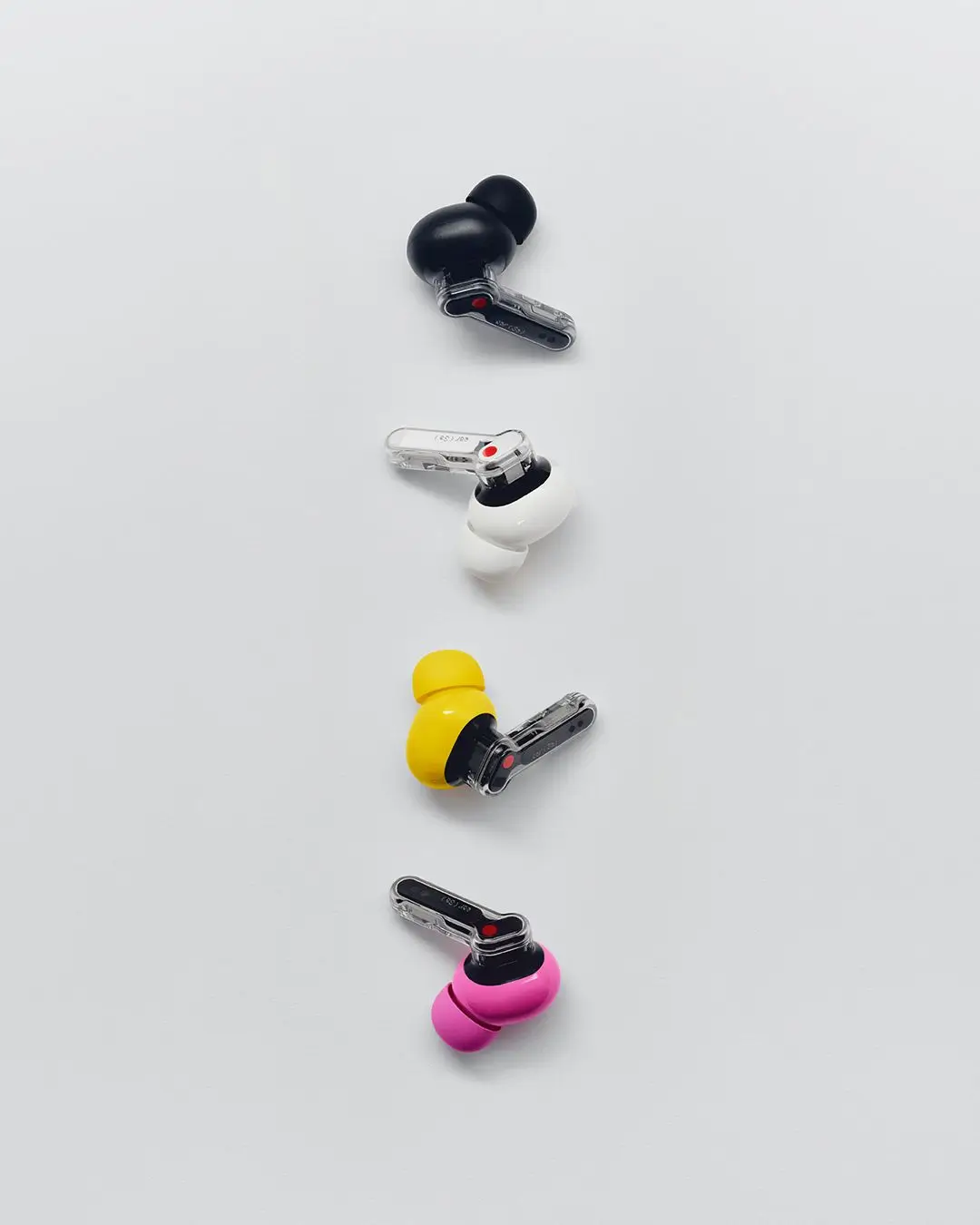
Design has always been the thing Nothing leads with rather than buries in a spec sheet, and the Ear (3a) continues that instinct with four colourways: white, black, a returning yellow, and a brand new pink that marks the first time this shade has appeared anywhere in the (a) range. The case has been reshaped into a rounder, more pocketable silhouette with a revised three stage LED strip for battery status, and Nothing has widened the range of included ear tips, adding an extra small size that the outgoing model lacked.

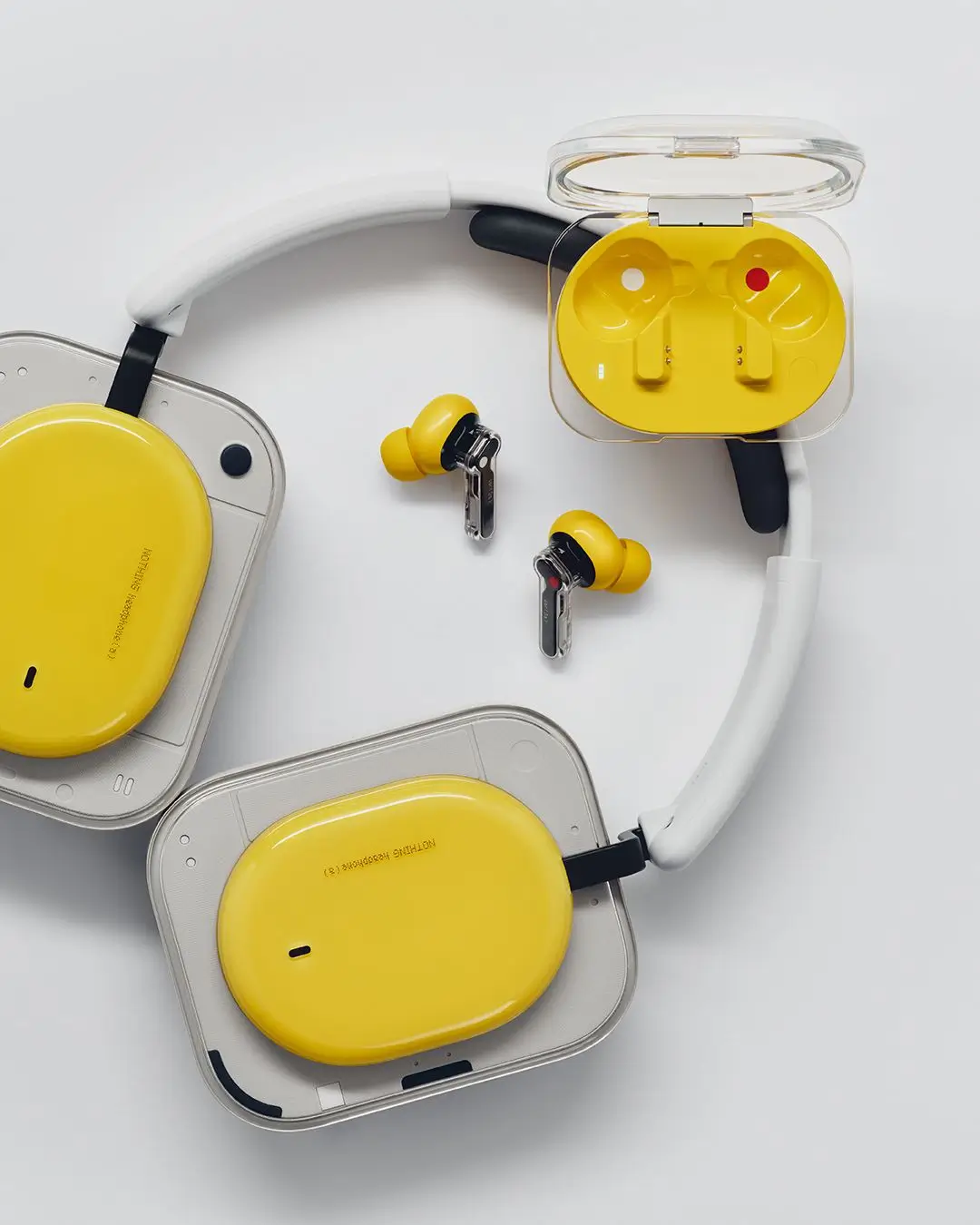
The yellow Nothing Ear (3a) earbuds shown in a lifestyle campaign, highlighting the transparent industrial design alongside the matching charging case.
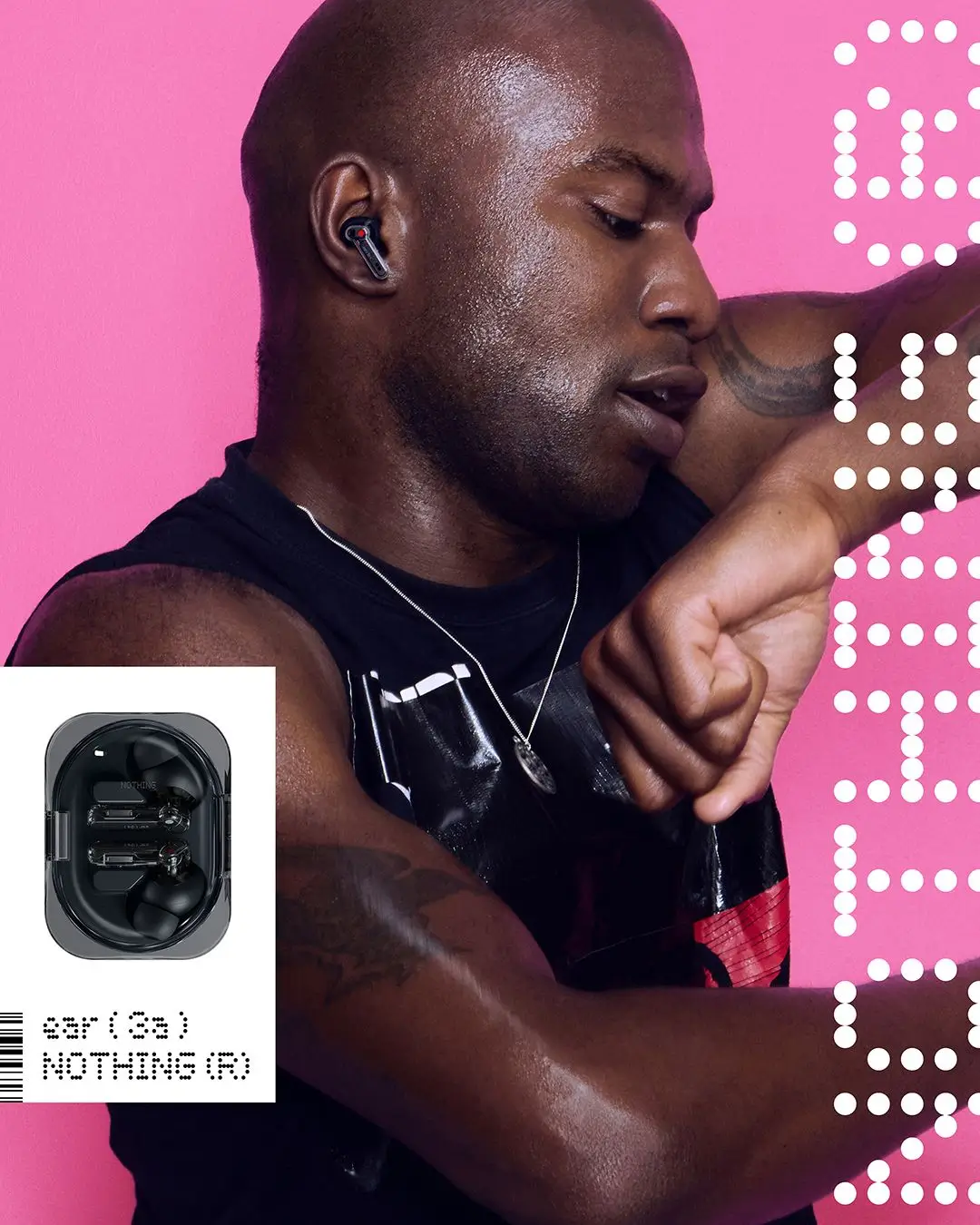
The launch campaign leaned hard into a nightclub and festival mood, all glossy surfaces, water droplets and the kind of neon lighting usually reserved for a DJ booth rather than a product photo. It fits the brief Nothing gave itself: sell an earbud on the idea of intensity, more colour, more volume, more value, and let the design double as an invitation to actually go somewhere loud and use it. The official product page frames it plainly, describing the Ear (3a) as arriving with everything needed to party, at a better price than an actual night out would cost.
That framing only works because the hardware backs it up. A transparent shell that shows off internal components has been part of Nothing’s visual identity since its very first earbud in 2021, and the yellow and pink finishes here push that signature further into territory that photographs well under club lighting, which appears to have been the entire point.
It is a different creative path than the one Nothing chose for its pricier Ear (3), which leaned into aluminium, controlled studio lighting and a restrain grey palette the brand has described internally as technical warmth, the idea that engineering precision and human emotion can share the same object without one crowding out the other. The Ear (3a) campaign flips that mood entirely, trading soft light boxes for something closer to a warehouse party at 2 a.m. It is a reminder that Nothing treats its budget tier not as a diluted version of the flagship line but as its own distinct creative brief, aimed at a younger, louder audience that the grey and aluminium aesthetic was never really built to reach in the first place. The dot matrix typography carries over regardless of price tier, which is the one constant thread tying every product in the catalogue back to the same design lang.
straddle
The numbers are straightforward and competitive rather than category defining. With ANC switched off, the earbuds alone manage roughly 10 hours of playback, stretching to about 42 hours total once the case is factored in. Switch ANC on and those figures drop to around 6 hours per charge and 25 hours total, still a respectable spread for a feature that historically hits battery life the hardest. A five minute fast charge is rated to return about an hour of listening.
Connectivity runs on Bluetooth 6.0 with dual device pairing, so switching between a laptop and a phone mid call does not require digging through settings menus. An IP54 rating covers dust and light splash resistance, enough for a commute or a gym session without inviting disaster.
Set against the rest of the sub $100 field, that is a strong hand. Budget names like Soundcore and EarFun cover the fundamentals well but rarely bundle hi res codec support, and Nothing’s own pricier Ear (3) still commands a noticeably higher price for its Super Mic case and premium materials. The Ear (3a) borrows just enough from that flagship, the recording concept chief among it, to make the gap between the two models harder to justify unless a buyer specifically wants the metal build or the case mounted microphone array.
fin
The Ear (3a) is available now in all four colours through Nothing’s own store and through major retail partners, priced at $99 in the United States and €99 across much of Europe. It sits inside a wider product push this year that has already included the Phone (4a) series, the Headphone (a) over ears, and now the Phone (4b), all built around the same idea that Nothing’s most affordable tier should not feel like a compromise.
What stands out most, a few weeks after launch, is how specific the Audio Snapshot feature is. It solves one particular problem, catching a moment of audio before a listener has time to reach for a phone, rather than trying to be everything to everyone. That kind of restraint is unusual in a market that tends to pile on features until a spec sheet reads like a grocery list, and it is the clearest sign yet that Nothing’s design team is still willing to bet on a single good idea over a dozen mediocre ones.