DRIFT AUDIO
Listen to this story
Choose a voice, then press play.
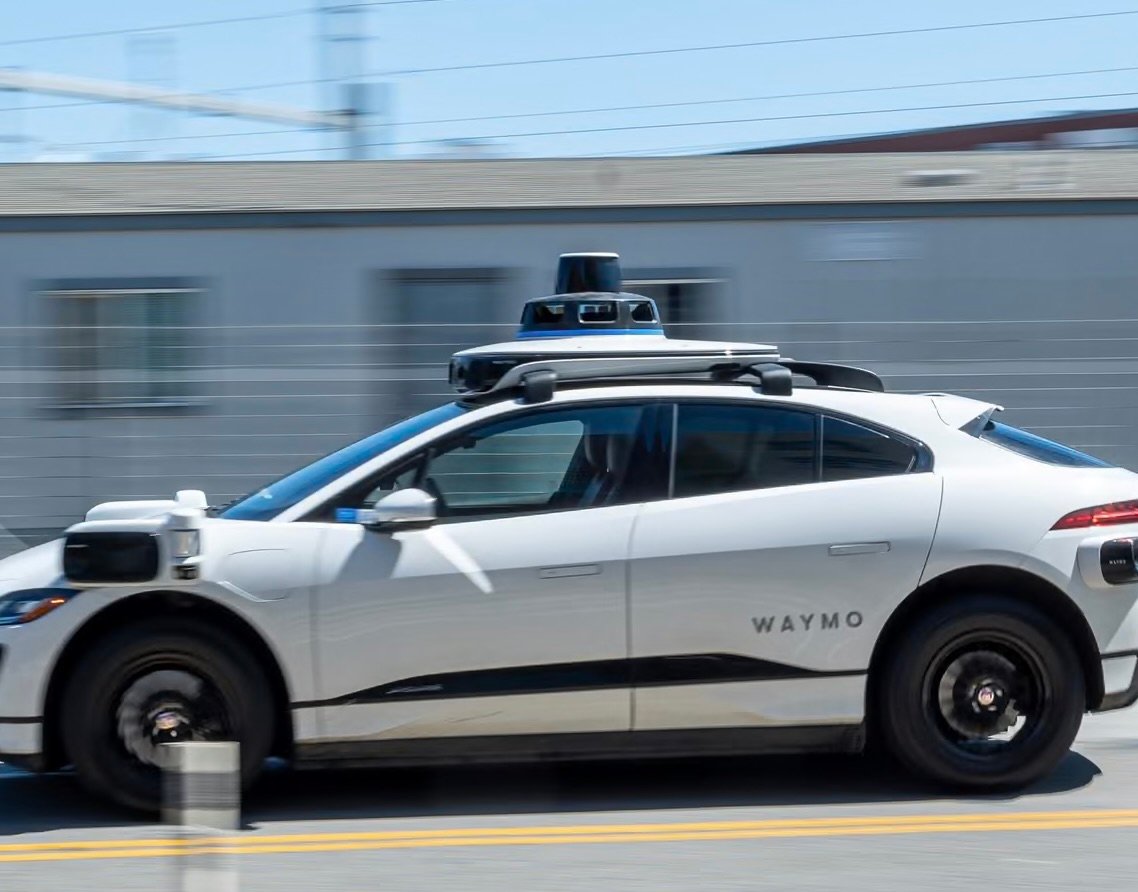
By 2026, the streets of London could host something straight out of science fiction—driverless taxis quietly gliding through Soho, picking up riders in Canary Wharf, and navigating the chaos of Piccadilly Circus without a human hand on the wheel. The company behind it? Waymo, Alphabet Inc.’s autonomous-vehicle arm, and arguably the world’s most advanced self-driving operator.
For nearly a decade, Waymo has been fine-tuning autonomy in American cities like Phoenix and San Francisco. But London represents a far greater challenge—one of density, history, and unpredictable human behavior. This isn’t a city of wide desert boulevards; it’s a labyrinth of 17th-century streets, double-deckers, and cyclists carving lanes where none exist. Yet that’s exactly what makes it the next frontier in Waymo’s global ambitions.
a billion-pound bet on autonomy
Waymo’s move into London isn’t just a geographic expansion; it’s a strategic declaration. The global urban mobility market—projected to surpass $1.3 trillion by 2030—is shifting toward electric, shared, and autonomous solutions. For Alphabet, getting there first in Europe’s most influential city could mean decades of leadership in AI-driven transport.
Industry analysts estimate that fully autonomous ride-hailing could reduce operating costs by 70% compared to traditional taxis. The promise: safer, cheaper, more efficient rides—and an entirely new category of digital infrastructure.
“London is a perfect storm for mobility innovation,” says Dr. Marcus Eldridge, a transport-tech analyst at Deloitte UK. “It has congestion, high ride-share demand, strong environmental policy, and political incentive to reduce private car use. If autonomy can thrive anywhere in Europe, it’s here.”
from phoenix to piccadilly
Waymo’s path to the British capital began years ago. After launching the Waymo One service in Phoenix in 2020—where customers could hail fully driverless rides via app—the company expanded to San Francisco, Los Angeles, and Austin. These weren’t experimental tests; they were functioning, paid public services.
In early 2025, Waymo announced plans to double its U.S. fleet, building tens of thousands of electric vehicles equipped with its Waymo Driver Gen6, a software-hardware platform that connects radar, lidar, camera vision, and neural-network-based prediction models. It’s the culmination of over 20 million miles of on-road autonomous driving and 25 billion miles in simulation.
London, then, is the first major step abroad—a test not just of technology, but of diplomacy, regulation, and trust.
london: the ultimate test
No city presents a more intricate urban challenge than London. Its streets evolved from medieval paths, its weather alternates between drizzle and fog, and its traffic laws are an alphabet soup of zones and exemptions. For a self-driving car, this isn’t just navigation; it’s an AI endurance trial.
Mapping the Maze
Before a single passenger boards, Waymo’s fleet will spend months mapping every curb, light, and crosswalk in excruciating detail. Each vehicle continuously re-scans its environment, creating a dynamic model that updates in real time to account for construction, diversions, or even a misplaced traffic cone.
Driving on the Left
Switching from right-hand to left-hand driving is no trivial matter for autonomy. Every perception model—pedestrian prediction, lane detection, sign recognition—must be retrained and localized. Even human psychology changes: pedestrians look right instead of left when crossing. Waymo’s AI must unlearn and relearn instinct.
The Weather Variable
In Phoenix, sunlight rarely falters. In London, drizzle can distort lidar readings, headlights blur into reflections, and puddles confuse object segmentation. Weatherproofing autonomy may be as hard as solving autonomy itself.
the legal road ahead
Waymo’s expansion dovetails neatly with the UK’s push to become a global hub for autonomous vehicle innovation. In 2025, Parliament passed the Automated Vehicles Act, creating a framework for self-driving cars to operate on public roads by 2026—under the condition that they meet safety standards “as high as a competent human driver.”
Transport for London (TfL) will oversee licensing, route permissions, and operational safety. In practice, that means Waymo’s first year will likely include:
Mapping and supervised tests with safety drivers.
Limited geofenced routes, possibly around Canary Wharf, King’s Cross, and Heathrow.
Gradual removal of safety drivers once data confirms reliability.
Commercial pilot rollout through the Waymo app by late 2026.
It’s autonomy’s version of a learner’s permit—a slow, deliberate process designed to keep public trust intact.
the human factor
Perhaps the greatest obstacle isn’t technical but psychological. Brits are famously skeptical of automation on the roads. A 2024 YouGov poll found that 62% of Londoners wouldn’t trust a driverless taxi—yet.
That “yet” is critical. Trust is earned incrementally. Just as elevators once had human operators and airplanes once required three pilots, the idea of a machine navigating without human control feels uncanny—until it becomes ordinary.
Waymo’s task will be to humanize the inhuman: sleek design, calming interfaces, transparent safety reporting, and clear communication when errors occur. Each ride must feel less like a lab test and more like a glimpse of a safer, saner urban future.
competitors on the horizon
Waymo won’t land in London uncontested. British startup Wayve, founded in Cambridge and backed by Microsoft, is developing “end-to-end” self-driving AI that learns directly from camera inputs rather than pre-mapped routes. Wayve has already partnered with Uber, planning its own robotaxi pilots for London in 2026.
Then there’s Oxa (formerly Oxbotica), which focuses on autonomous logistics but could pivot to ride-sharing. Tesla, meanwhile, continues to tease a global robotaxi fleet for 2026—though its vision-only approach and regulatory hurdles in Europe make that uncertain.
Competition could benefit Londoners. With multiple operators vying to prove safety and reliability, innovation will accelerate—and fares could fall.
why 2026 matters
The year 2026 isn’t arbitrary. It’s the first window where global conditions align for large-scale autonomous deployment:
Legislation: The UK’s Automated Vehicles Act comes into effect.
Infrastructure: EV charging and smart-traffic integration reach critical mass.
Technology maturity: AI perception, compute power, and real-time simulation have reached practical thresholds.
Public readiness: After years of incremental exposure—assisted driving, parking automation, adaptive cruise—people are accustomed to machine-assisted mobility.
Waymo’s London launch will thus serve as a litmus test for the decade to come. If it succeeds, other European capitals—Paris, Berlin, Madrid—will follow suit. If it stumbles, regulators worldwide may pause their enthusiasm.
what’s at stake for alphabet
For Alphabet, Waymo is more than a moonshot. It’s the company’s bet that artificial intelligence can extend beyond the screen into physical reality—a hardware manifestation of Google’s information dominance.
Each robotaxi isn’t just a car; it’s a data-collecting supercomputer on wheels. Every meter driven feeds machine-learning loops that refine perception models, which in turn can inform logistics, delivery, mapping, and even smart-city planning.
Moreover, autonomy represents a potential new advertising and services ecosystem. Riders could receive curated route-based recommendations, interactive entertainment, or localized Google Maps extensions—all while Alphabet earns recurring revenue from mobility instead of one-time search ads.
In that sense, the London rollout isn’t just a transport story—it’s the next chapter of Google’s physical world empire.
the economics of no driver
Removing the human driver changes everything. Labor accounts for 60–70% of a traditional ride-hail fare. Once eliminated, the economic logic flips: robotaxi rides could cost half of today’s Uber prices, or even less once scaled.
Fleet operation becomes a software problem: uptime optimization, predictive maintenance, and route efficiency. Waymo’s electric vehicles, charged off-peak, will also reduce fuel costs and emissions.
Critics argue that cheap, driverless rides might increase congestion, as more people opt for robotaxis instead of public transport. That’s a valid concern—but it’s also why TfL will likely impose per-mile congestion fees and data-sharing requirements to balance efficiency and sustainability.
culture
Waymo’s arrival will ignite a philosophical debate as much as an economic one. London’s iconic black cab isn’t just a vehicle—it’s cultural heritage. Its drivers undergo “The Knowledge,” memorizing tens of thousands of streets and landmarks. Replacing that with an algorithm could feel like replacing craftsmanship with code.
Yet, as many cabbies near retirement and younger generations seek flexible gig-economy work, the profession’s future is uncertain regardless of AI. Some analysts even envision a hybrid model: human-supervised fleets where drivers manage remote intervention centers, guiding autonomous vehicles only when needed.
Autonomy doesn’t necessarily erase human work; it reshapes it.
building public trust
Waymo’s playbook for acceptance is clear from the U.S.: radical transparency. In San Francisco, the company released monthly safety reports detailing disengagement rates and minor collisions. It collaborated with first responders to create emergency protocols. It invited journalists and regulators for supervised rides.
Londoners can expect the same. Waymo will likely:
Partner with Transport for London on pilot routes.
Share anonymized safety data with regulators.
Offer free public demo rides for press and policymakers.
Integrate with accessibility initiatives (wheelchair-friendly models, audio cues for visually impaired passengers).
Each step converts skepticism into experience—and experience into trust.
the broader ecosystem
London’s robotaxi rollout will interact with multiple parallel revolutions:
Electrification: 2030 marks the UK’s ban on new petrol cars. All robotaxis will be electric by default.
Smart infrastructure: Sensors, 5G, and adaptive lights will communicate directly with vehicles.
Urban planning: Congestion pricing, car-free zones, and shared mobility lanes could reshape city design.
Insurance innovation: Traditional driver liability models will shift toward manufacturer responsibility.
This confluence makes the 2026 launch more than a business experiment—it’s a blueprint for how cities themselves evolve.
challenges ahead
Despite optimism, the road will be rough. London’s weather remains an unresolved variable. Heavy rain can scatter lidar signals; fog confuses depth perception. Waymo has mitigated similar issues in San Francisco, but scaling to the UK climate will test redundancy systems.
Regulation may shift with politics. If a safety incident sparks public backlash, Parliament could impose stricter restrictions or slow expansion.
Competition could undercut margins. If Uber-Wayve launches first, Waymo might face narrative disadvantage—appearing as the American invader rather than the innovator.
Ethics and privacy also loom large. Data gathered from city streets raises surveillance concerns, especially under Europe’s stringent GDPR laws. Alphabet will need to tread carefully to avoid the perception of “Google cars watching everything.”
what success could imagine
By late 2026, a successful scenario might look like this:
A fleet of 500–1,000 Waymo vehicles operating fully driverless in defined central zones.
Average wait times under five minutes, fares 40% cheaper than Uber.
Zero fatalities and minimal minor incidents.
Integration with TfL’s Oyster card or mobility apps.
Public trust steadily rising, with satisfaction scores above 80%.
In that world, London would become the first European city with a large-scale driverless taxi service, placing it alongside Phoenix and San Francisco as a global AV hub.
the global ripple
If London succeeds, ripple effects could be immediate:
Paris and Berlin would invite pilots ahead of the 2028 Olympics and Euro Cup, respectively.
Asian megacities like Singapore and Tokyo would adopt similar AI safety frameworks.
Insurance and fleet models worldwide would update for machine-driven risk.
Urban design would shift toward shared drop-off zones instead of parking.
Waymo’s London experiment could thus redefine not just transport but how cities breathe.
the skeptic’s view
Of course, not everyone is convinced. Critics argue that autonomous driving still hasn’t proven profitability, and Waymo continues to burn billions annually. They question whether cities need robotaxis when public transit already provides lower-emission, higher-capacity solutions.
But technology rarely waits for consensus. The smartphone was “unnecessary” until it wasn’t. The same may soon be said of self-driving cars.
the road to 2026
In the coming year, Londoners will begin spotting unfamiliar electric vehicles roaming their streets—quiet, unassuming, bristling with sensors. Behind the glass, no driver. Just a promise: that machines can make mobility safer, cleaner, and smarter.
Whether that promise becomes reality depends on cooperation between engineers, regulators, and the public. But make no mistake—2026 will mark a turning point.
For centuries, London defined how the world moved—horse-drawn carriages, steam locomotives, double-deckers, black cabs. Now, it may define what movement without drivers looks like.
And when that first Waymo silently glides down The Strand, headlights reflecting off the Thames, it will carry more than passengers. It will carry a vision of the 21st-century city—one built not just on asphalt, but on algorithms.
Related Articles

Garage Italia’s Electric Spiaggina Puts the Fiat 500’s Riviera Years on Battery Power
Ten kilowatts, rattan seats and a €85,000 starting price: Garage Italia's 500 Spiaggina rebuilds Ghia's 1958 beach car for the yacht crowd.