
DRIFT AUDIO
Listen to this story
Choose a voice, then press play.
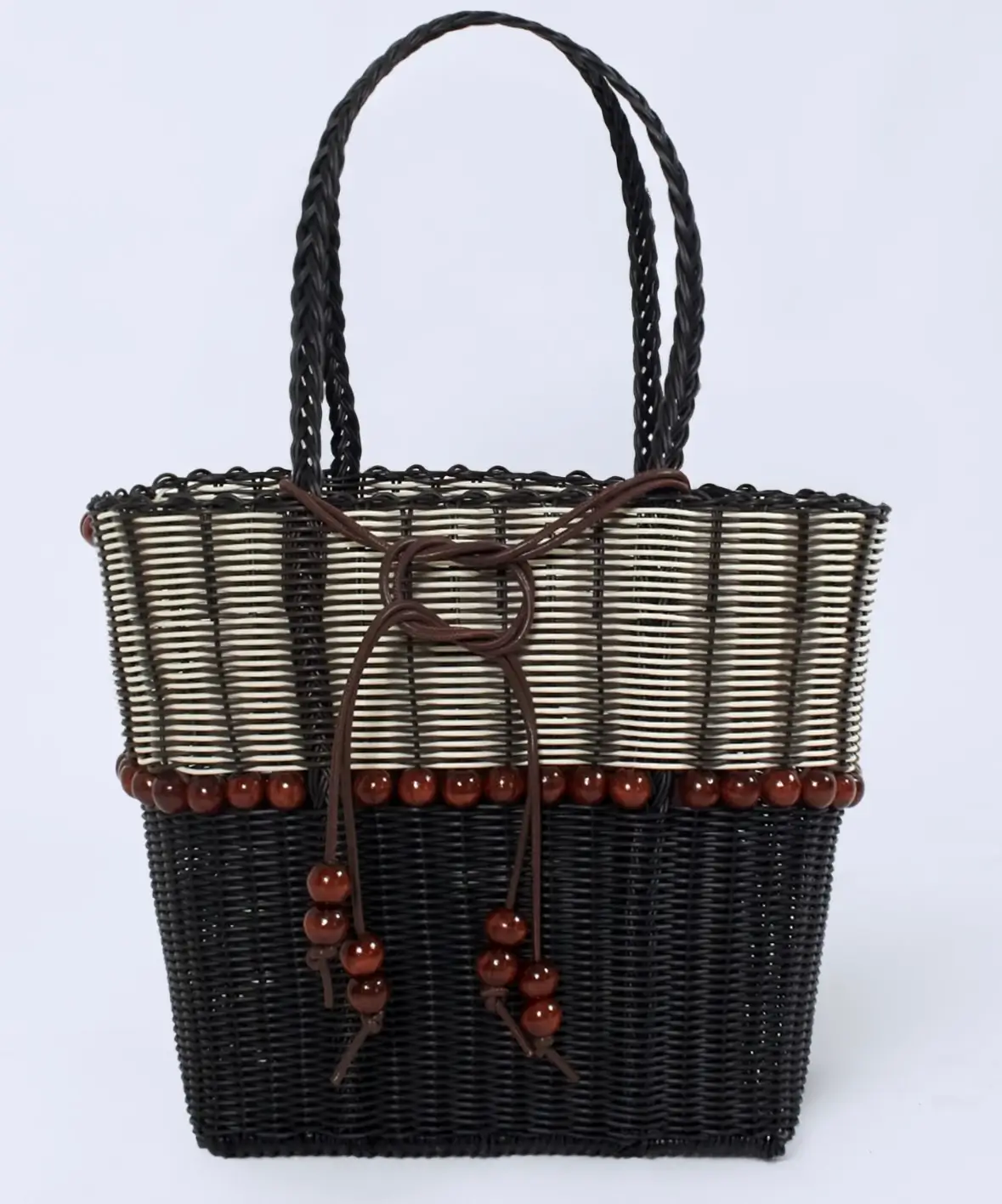
In the evolving landscape of modern fashion, few labels balance heritage, craftsmanship, and relevance in the manner of Wynn Hamlyn. The label’s work sits between the quiet rhythm of artisanal design and the sharp tempo of modern utility — a duality embodied perfectly in pieces like the hand-woven structured tote pictured above. Defined by woven construction and beaded detailing, this bag exemplifies the label’s aesthetic language: considered, organic, and steeped in subtle complexity.
flow
Wynn Crawshaw established Wynn Hamlyn in 2015. The Auckland label combines technical knitwear, tailoring and handcrafted details, according to its official designer profile.
The discussion below is a visual interpretation of the tote, not a hands-on test or a record of the designer’s stated intentions. Its specific materials, manufacturing origin and environmental certifications have not been independently established.
craft
The bag’s appeal lies in the relationship between its woven structure and beaded detailing. That visual contrast leaves room for an editorial reading of craft and ornament; its exact material composition and manufacturing provenance require product-specific documentation.
The beads act as punctuation within the woven surface. Their appearance can suggest a contrast between ornament and utility without establishing a particular wood species or cultural origin.
The label’s woven accessories, like his garments, are not nostalgic replicas of folk craft. They are dialogues: between urban polish and rural method, between the digital tempo of global fashion and the slow rhythm of the handmade. In doing so, Wynn Hamlyn reinserts emotion into structure — a kind of fashion that feels “lived in,” even when brand new.
design
In Wynn Hamlyn’s universe, line and form do more than flatter; they narrate. The label’s pieces often reveal construction as decoration — visible seams, hand-crocheted joints, macramé ties. The woven bag continues that principle in object form. Its silhouette is deceptively simple: rectangular base, slightly flared opening, braided handles. Yet within that simplicity lies compositional harmony.
The bag’s structure is divided into visual thirds — dark base, beaded midline, pale upper. This ratio mimics architectural grounding: stability at the bottom, openness at the top. The braided handles, rather than stitched leather straps, reinforce an appreciation for tactile continuity. They rise organically from the body of the basket, as if grown from it.
Even the spacing between weaves matters. The slightly uneven tension gives texture — evidence of craftsmanship that transforms a utilitarian object into sculpture. It’s the same design thinking behind Crawshaw’s clothing, where elastic cords gather wool dresses or metallic clasps cinch knit tops. Every detail, visible or concealed, is purposeful.
new zealand
Wynn Hamlyn’s Auckland base provides a concrete geographical context. The visual associations with landscape discussed here are DRIFT’s interpretation, not a claim about local sourcing or the designer’s biography.
The tote can be read as a bridge between a decorative object and an everyday accessory. Whether it suits a particular setting remains a question of personal use, rather than evidence of its distribution or commercial reception.
show
A craft-led appearance does not, by itself, establish sustainability. Claims about renewable fibres, FSC-certified wood, vegetable-tanned leather or plant-based polymers require a product specification or other supporting documentation. We have not verified those claims for this tote.
The case for keeping an accessory over time is distinct from a verified environmental assessment. Durability, production waste and sourcing cannot be concluded from a photograph.
theme
Holding a Wynn Hamlyn accessory evokes the same calm precision as viewing an architectural model or a Japanese ikebana arrangement. There’s a meditative quality in his proportional balance, an emotional tactility in his material pairings. The black and ivory weaves aren’t simply colour choices; they represent light and shadow, the eternal contrast of creation and erosion in nature.
The circular knot at the bag’s front — where the leather cord loops through itself — becomes a visual metaphor for continuity. It’s a gesture of unity, connecting two halves through tension. The beads dangling from the cords swing slightly as one walks, introducing subtle movement to an otherwise rigid form. This interplay of stillness and motion recurs throughout his collections: draped fabrics anchored by cords, fitted dresses with shifting pleats, textures that come alive in motion.
culture
In a cultural moment oversaturated with logo-driven identity, Wynn Hamlyn’s refusal to rely on branding is refreshing. His woven bag bears no visible emblem, yet its craftsmanship makes it instantly recognizable. It speaks to an emerging aesthetic of quiet confidence — where individuality is expressed not through ostentation but through intimacy with material.
The contrast of shadow, texture and form gives the bag editorial interest. This visual reading is not a wear test: weight, resilience and practical performance remain untested here.
fwd
This basket offers a way to consider contemporary craft through texture and proportion. No future materials, collaborations or accessories releases are confirmed by this article.
In the broader design conversation, Wynn Hamlyn stands as a reminder that progress doesn’t always mean futurism. Sometimes it means returning to touch, to patience, to the rhythm of the hand. His woven tote encapsulates that truth perfectly: a handmade object carrying modern life’s essentials, yet whispering the language of tradition.
impression
The Wynn Hamlyn woven tote is more than an accessory — it’s a thesis on contemporary craft. Each weave, bead, and knot encapsulates the brand’s ethos: merging artisanal intimacy with architectural clarity. It invites us to slow down, to appreciate the quiet drama of material and form, and to rediscover the beauty of things made with time rather than haste.
In an era defined by excess, the label’s restraint feels radical. The bag doesn’t shout; it hums — with texture, memory, and design intelligence. It is at once humble and luxurious, practical and poetic — a true emblem of twenty-first-century craftsmanship.
Correction — October 7, 2026: The founder’s name and founding year have been corrected to Wynn Crawshaw and 2015. Unsupported material, certification, production and future-collaboration claims have been removed or identified as unverified. The remaining design commentary is an interpretation, not a hands-on product test.
Related Articles

Garage Italia’s Electric Spiaggina Puts the Fiat 500’s Riviera Years on Battery Power
Ten kilowatts, rattan seats and a €85,000 starting price: Garage Italia's 500 Spiaggina rebuilds Ghia's 1958 beach car for the yacht crowd.