DRIFT AUDIO
Listen to this story
Choose a voice, then press play.
Twelve years after 22 Jump Street hit theaters in 2014, Sony Pictures is reviving the R-rated comedy franchise with its core trio—Jonah Hill as the neurotic Schmidt, Channing Tatum as the dimpled dynamo Jenko, and Ice Cube as the no-nonsense Captain Dickson—in talks to return. Directed by Rodney Rothman (co-writer of 22 Jump Street and visionary behind Spider-Man: Into the Spider-Verse), with a script co-penned by Rothman, Hill, and Meghan Malloy, this third installment promises to lean even harder into the series’ signature meta-humor while updating its irreverent take on undercover policing for a new decade.
The title itself is a cheeky continuation of the franchise’s running gag. As fans will recall, the first film riffed on the ’80s TV series 21 Jump Street, with the sequel skipping ahead numerically for comedic effect. “It took so long we had to skip one,” reads the tagline on early script materials shared by producer Neal H. Moritz, encapsulating the long development hell that plagued earlier attempts at a third film, including a stalled 23 Jump Street crossover with Men in Black.

This isn’t just another cash-grab sequel; it’s a testament to the enduring chemistry of its leads and the franchise’s uncanny ability to mirror societal shifts through absurdity.
show
Rewind to 2012. 21 Jump Street, directed by Phil Lord and Christopher Miller (who return as producers), reimagined the ’80s cop drama as a raucous, self-aware comedy. Jonah Hill and Channing Tatum, then unlikely on-screen partners, embodied the ultimate odd couple: Schmidt, the awkward overachiever turned undercover cop, and Jenko, the former high school jock riding on faded glory. Their assignment? Infiltrate a high school to bust a drug ring, leading to hilarious fish-out-of-water moments that doubled as sharp satire on teen culture, performative cool, and institutional absurdity.
22 Jump Street (2014) doubled down on the formula, sending the duo to college where the meta jokes escalated—poking fun at sequels themselves while delivering bigger set pieces and spring break excess. The film grossed over $331 million worldwide, cementing the pair’s bromance as box-office gold. Ice Cube’s Captain Dickson provided the perfect straight-man anchor, his deadpan authority grounding the chaos with authentic gravitas drawn from his own hip-hop roots and acting pedigree.
What made these films resonate wasn’t just the laughs. It was the way they captured the fluidity of identity in the 2010s—how we perform versions of ourselves to fit in, whether in high school cliques, college parties, or adult life. In 24 Jump Street, expect this exploration to evolve. With over a decade passed, Schmidt and Jenko are presumably navigating mid-life, social media scrutiny, and a world where “undercover” takes on new meanings in an era of influencers, cancel culture, and algorithmic policing of taste.
Rothman’s involvement is particularly exciting. His work on Spider-Verse showcased a boundary-pushing visual style and emotional depth, blending animation innovation with heartfelt storytelling. Translating that to live-action comedy suggests 24 Jump Street could feel dynamic and visually inventive, perhaps incorporating more layered, referential production design that nods to evolving street aesthetics.
straddle
The Jump Street series has always been a subtle showcase for fashion as character armor. Schmidt’s garish Hawaiian shirts, graphic tees (think the iconic “Party On” Puerto Mexico look), and clashing patterns screamed try-hard vulnerability. Jenko’s tank tops, shades, and athletic builds projected effortless jock swagger. These weren’t high-fashion statements but perfectly calibrated streetwear-infused costumes that amplified the comedy.
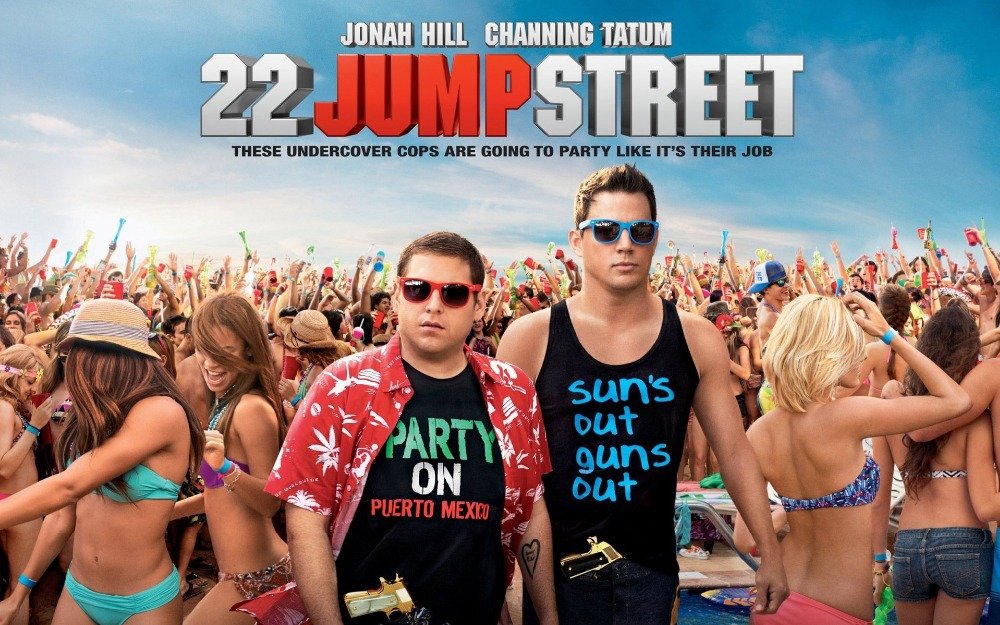
Hill’s on-screen wardrobe echoed his real-life evolution. Once known for oversized, casual layers, Hill has since embraced a more refined high-low mix—collaborations with Kith, tailored pieces paired with sneakers—mirroring Schmidt’s growth from insecure sidekick to confident lead. Tatum, the former model, brought physicality that translated to screen-ready athletic wear, later refining his off-screen style with input from friends like Hill and partner Zoë Kravitz toward relaxed, oversized silhouettes that feel contemporary yet timeless.
Ice Cube’s influence runs deeper into cultural history. His on-screen captaincy channels the West Coast hip-hop aesthetic he helped define: bomber jackets, baseball caps, bold layering that blends utility with attitude. Off-screen, Cube’s iconic Dodgers windbreaker and ’90s streetwear staples remain touchstones for generations of designers and tastemakers. In a revival, expect his character to embody steadfast authority amid chaotic trends, perhaps with updated wardrobe that nods to heritage streetwear while commenting on legacy versus reinvention.
For Invent Blog readers attuned to fashion’s cultural dialogues, 24 Jump Street positions itself as a lens on how style evolves—or stubbornly persists—across life stages. Imagine Schmidt attempting “mature” dad-core only to revert to ironic tees under pressure, or Jenko grappling with athleisure in a post-gym influencer world. The film’s production design could riff on current streetwear obsessions: vintage collabs, oversized fits, and the tension between authenticity and performance that defines Gen Z and millennial wardrobes alike.
length
The timing couldn’t be better. In an age of digital fatigue, polarized identities, and endless reboots, the Jump Street formula—undercover cops hilariously out of their depth—offers escapist catharsis. The buddy-cop dynamic between Hill and Tatum remains one of Hollywood’s most endearing, blending vulnerability, physical comedy, and genuine affection. Their real-life friendship has fueled the on-screen magic, with Hill often credited for pushing Tatum’s comedic range.
Broader themes abound: the franchise has lampooned police culture without preachiness, explored male friendship beyond toxic tropes, and celebrated misfits finding their groove. In 2026, with conversations around mental health, evolving gender norms, and cultural nostalgia at a peak, 24 Jump Street has potential to deliver “fair justifiable” commentary—evidence-based in its absurdity, thoughtful in its heart.
Rothman, Hill, and Malloy’s script will likely amp up the self-referential gags. Expect nods to the long development gap, celebrity culture, and perhaps fashion-world crossovers (given the stars’ orbits). Producers Lord, Miller, and Moritz bring continuity, ensuring the anarchic energy stays intact.
and
The original 21 Jump Street TV series, starring a young Johnny Depp, was itself a product of its era—gritty ’80s procedural with heart. The film reboot transformed it into something raucous and relevant. 24 Jump Street arrives at a moment when comedy is reclaiming space, balancing spectacle with sincerity.
Box office potential is high. The predecessors proved comedies can thrive with strong chemistry and word-of-mouth. With Tatum’s star power (post-Magic Mike and dramatic turns), Hill’s auteur credibility (The 40-Year-Old Virgin co-writer, acclaimed director), and Cube’s cultural icon status, this trio commands attention.
Beyond tickets, the film’s fashion ripple effects could be significant. Expect tie-in streetwear drops—graphic tees, connective shoe echoing on-screen looks—and red carpet moments that fuel editorial cycles. In the vein of Invent Blog’s coverage of collabs like Nike x Jacquemus or Human Made x Pokémon, 24 Jump Street bridges blockbuster entertainment with wearable culture.
end
Details remain under wraps, but early buzz points to high-energy set pieces, evolved character arcs, and the same irreverent spirit. Will Schmidt and Jenko tackle a university 2.0, a music festival, or something more zeitgeisty like social media scandals? Rothman’s visual flair suggests dynamic camerawork and inventive sequences.
Negotiations for Tatum are ongoing, but momentum is strong. Fans on platforms like Reddit are already theorizing crossovers, cameos (Dave Franco? Brie Larson?), and how the meta title will pay off.
In a fragmented media landscape, 24 Jump Street should reminds us of cinema’s power to unite through laughter. It celebrates the messy beauty of friendship, reinvention, and not taking oneself too seriously—values that transcend trends.
n
From the DRIFT archive: Wizdom 2025 at Cipriani Wall Street: An Experiential Moment in Cloud Culture · Running Man: Glen Powell Leads Edgar Wright’s Dystopian Vision
Related Articles

American Horror Story Opens the Vault for a Thirteen-Episode Reunion of Its Own Ghosts
Three half-hour episodes land September 24 on FX and Hulu, with Jessica Lange, Sarah Paulson […]