DRIFT AUDIO
Listen to this story
Choose a voice, then press play.
A graffiti-covered Tabi boot became the most expensive Margiela object ever sold, as 1,500 bidders from 41 countries chased down the designer’s hidden archive.
In This Story
- A Silence Broken on the Fringes of Couture Week
- Inside the Boot That Broke the Record
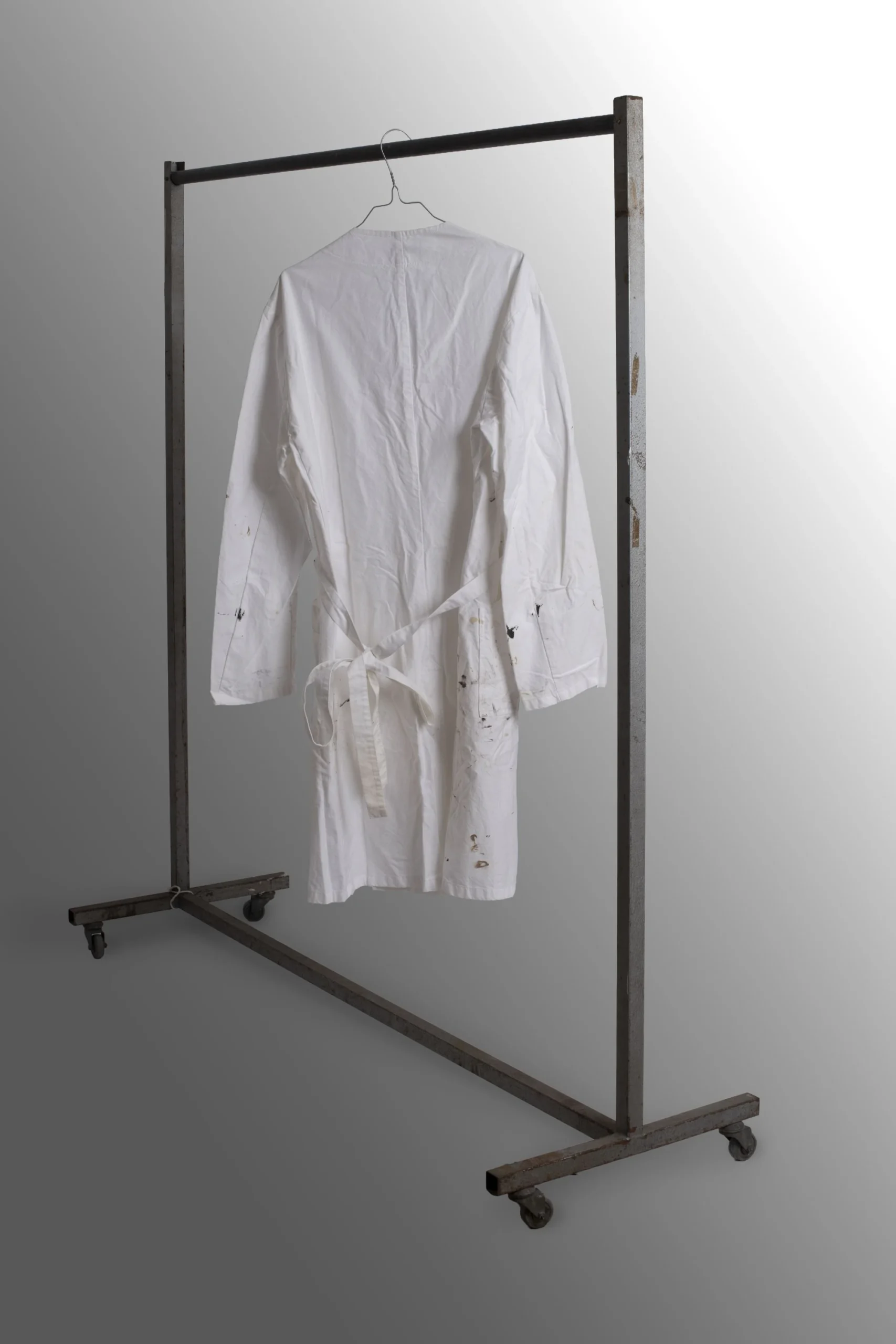
- Masks, Barbie Dolls, and a Mother’s Wardrobe
- Why the Room Filled With Bidders From Tokyo to Seoul
- What a Recluse’s Archive Says About His Legacy
Martin Margiela has not given an interview in decades. He stepped down from the maison that bears his name in 2009 and has spent the years since guarding his image with a discipline that borders on the monastic, refusing photographs and steering clear of the industry machinery he helped invent. On July 9, that discipline briefly gave way. A 195-lot sale of his personal archive, staged in Paris on the fringes of Haute Couture Week, brought in more than one million euros and produced a new world record for a single Margiela object.
The sale was organized by Maurice Auction in Paris, working in partnership with London’s Kerry Taylor Auctions, a house built specifically around vintage fashion and historic costume. The two auctioneers had already tested the appetite for Margiela ephemera in January 2025 with a sale devoted to his earliest years, and this second outing went further, drawing directly on material the designer had kept for himself rather than sold through the maison’s own archive.
A five day public exhibition preceded the sale, staged around the corner from Margiela’s old studio and curated by the designer’s longtime friend Bob Verhelst. Visitors moved through drawings, working documents, prototypes, and objects arranged to evoke the feel of a factory being unpacked crate by crate, an installation choice that mirrored the way Margiela himself often staged his own runway shows in disused or industrial spaces rather than conventional venues. By the time the gavel came down, more than 1,500 registered participants spanning 41 nationalities had taken part, a scale that turned what might have read as a niche archival sale into something closer to a global event.
View this post on Instagram
What made this particular sale unusual within the auction world is the source of the material itself. Most designer archive sales draw on stock a house has kept in its own institutional storage, material that eventually gets deaccessioned or sold off once a brand changes hands or a founder departs entirely. This collection came instead from Margiela’s own private holdings, items he had moved from location to location over the years and lent out periodically for museum retrospectives before deciding, at some point after nearly two decades out of the public eye, that the time had come to let a portion of it go. Organizers at both houses described it as the first instance of a still-living designer directly partnering with an auction house to disperse a personal archive of this scale, a distinction that added a layer of authenticity collectors are typically unable to access once a designer’s estate passes into other hands.
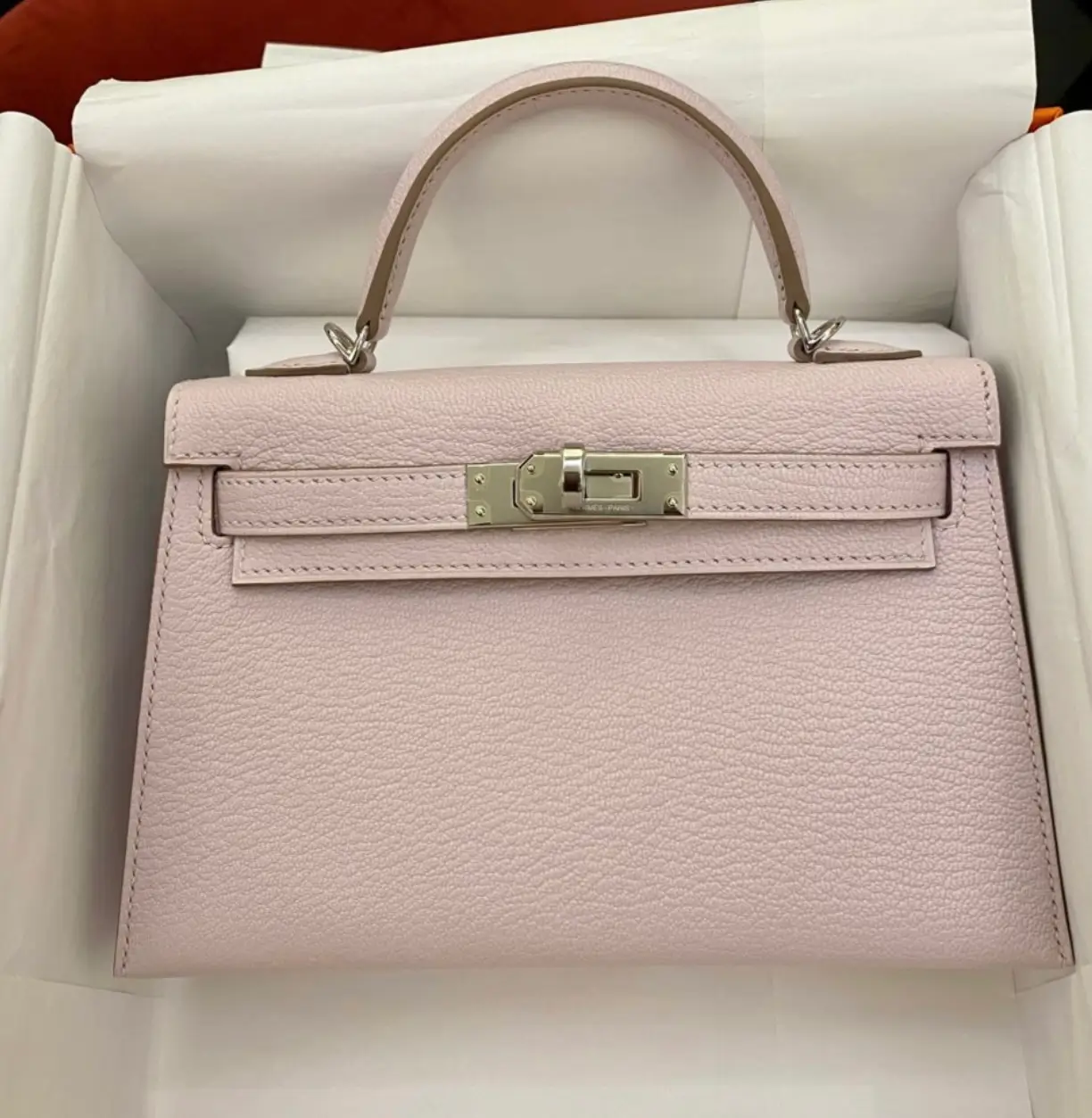
A pale pink Hermès Kelly handbag in grained leather with palladium hardware, photographed inside its signature orange presentation box before unboxing.
in
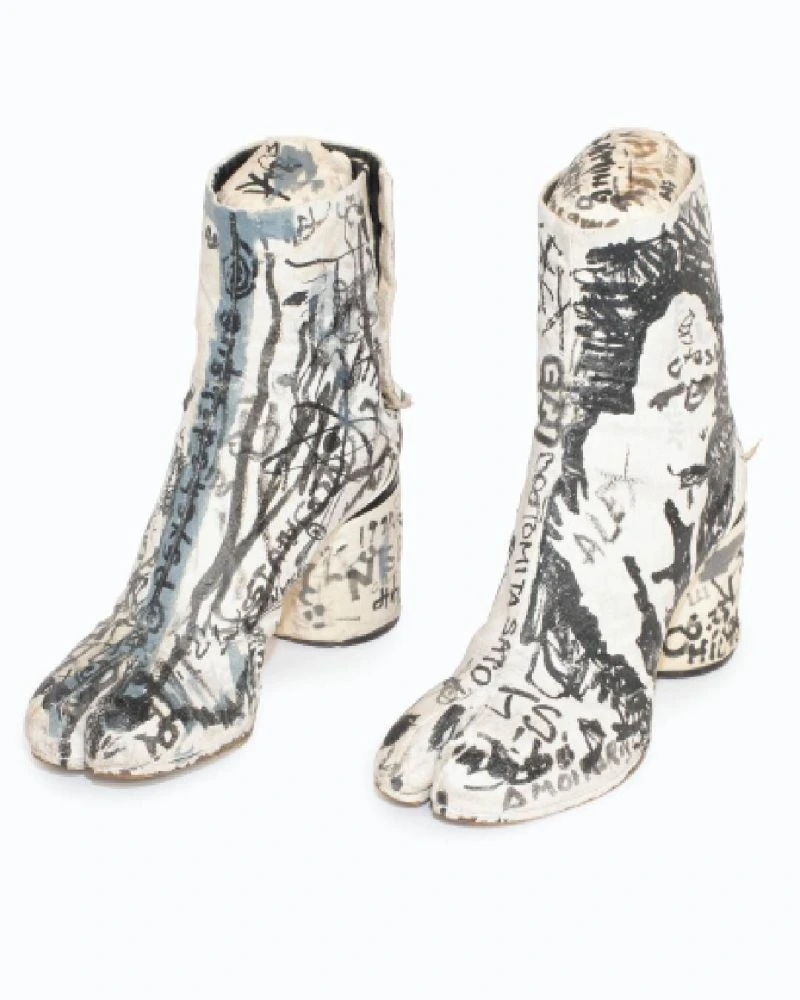
The single lot that defined the evening was a pair of Tabi ankle boots from 1991, created for an exhibition at the Palais Galliera titled Le Monde Selon ses Créateurs. Visitors to that show had been invited to leave handwritten messages on the gallery’s white walls and floor, and some carried their pens over onto the boots themselves, turning a functional prototype into a one of a kind relic covered in ink and scrawl. Margiela is said to have kept the piece precisely because the vandalism was unplanned, a spontaneous mark left by strangers on a shoe that had already become one of fashion’s most argued over silhouettes.
Estimated at somewhere between thirty and fifty thousand euros ahead of the sale, the boots blew past every projection and closed at €364,000, instantly becoming the most expensive Margiela object ever brought to market. The result reframes the split toed Tabi, a shoe the designer first developed from a Japanese jika-tabi work boot and unveiled on runways in the late 1980s, as something closer to a museum piece than a seasonal accessory, at least in its rarest, most storied form.
Below is the sold lot as photographed for the catalogue, before it left the exhibition space for its new owner.
The record also puts new pressure on how the wider secondary market prices Tabi related material generally, since a documented, exhibition-linked provenance now has a concrete benchmark attached to it rather than a vague sense that early pieces command a premium.
The Tabi itself has always occupied a strange position within Margiela’s output, functional footwear that also doubles as a piece of design theory. When the split toe silhouette first appeared on runways, critics and buyers alike struggled to categorize it: was it a shoe meant to be worn, or a statement about the body, about the way Western fashion had never bothered to separate the big toe from the rest of the foot the way traditional Japanese footwear does. That ambiguity is part of why the shoe has endured for nearly four decades largely unchanged in silhouette while everything built around it, from the brand’s ownership under the OTB Group to its creative leadership, has shifted repeatedly. A documented, one of a kind Tabi with a direct link to a landmark museum exhibition removes almost all of that ambiguity for a buyer, replacing it with a fixed, provable story, and the market responded to that certainty by bidding the piece to more than seven times its low estimate.
wardrobe
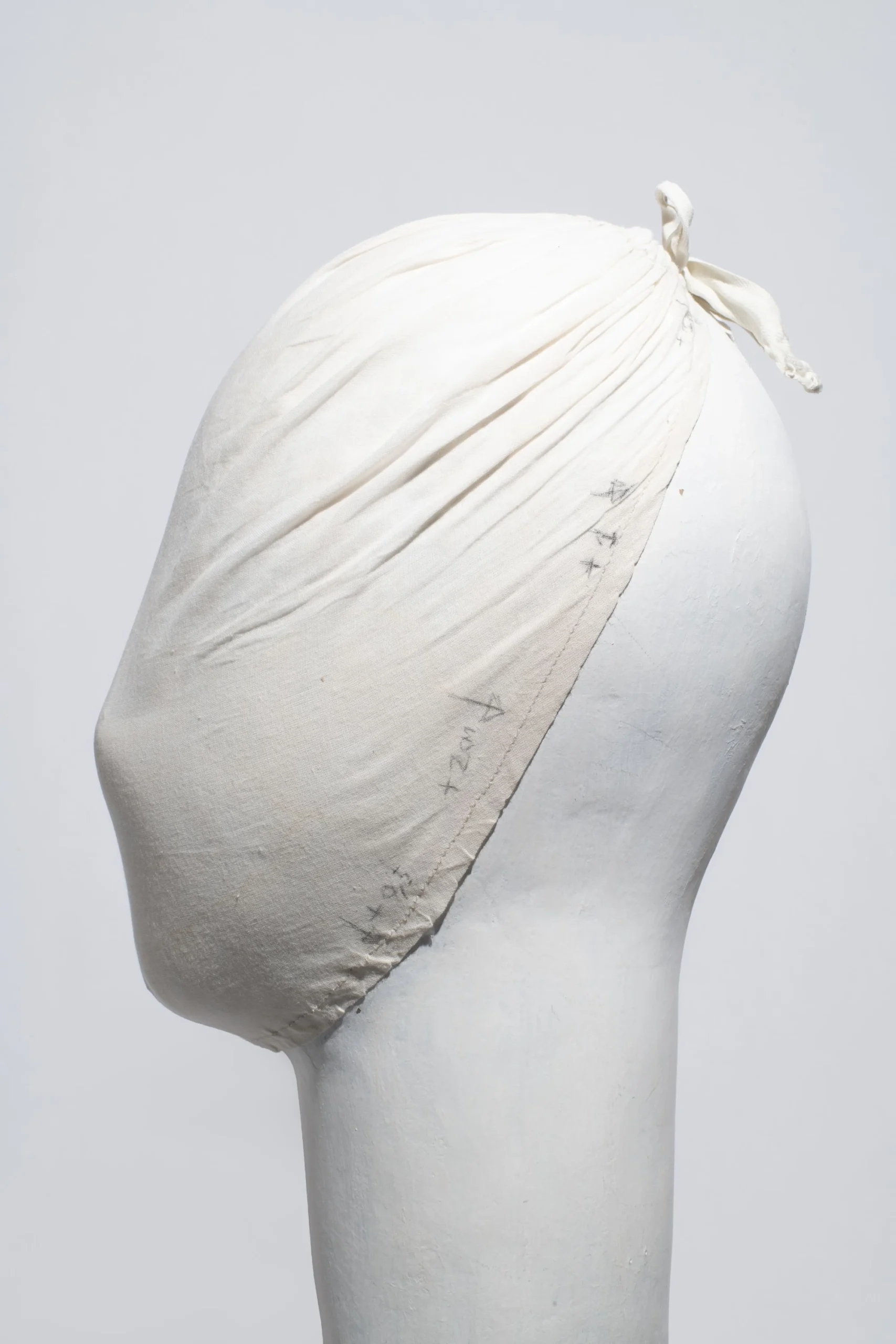
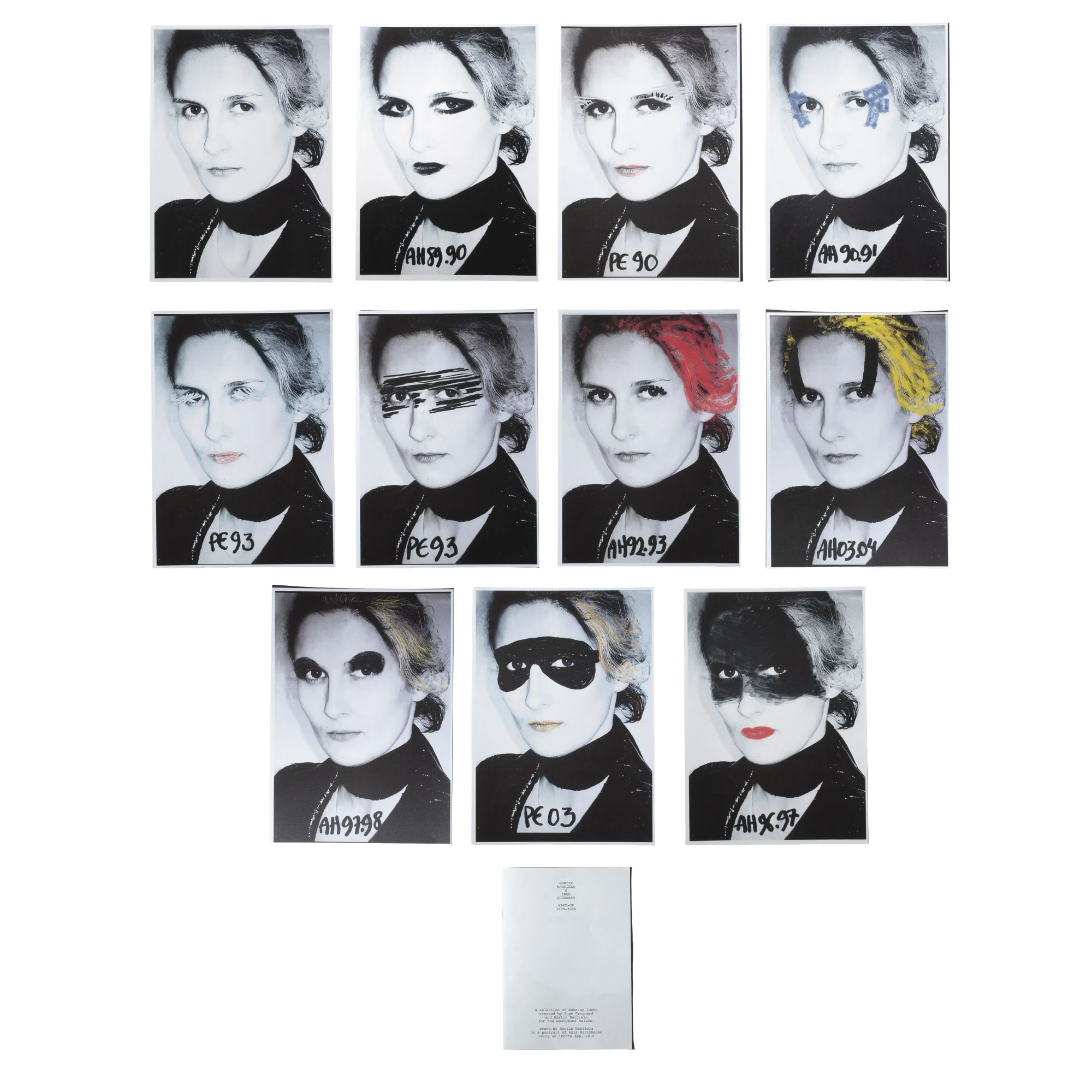
The Tabi boots were the headline, but the 195 lots on offer traced a far wider arc through Margiela’s working life, and much of the bidding energy in the room came from objects that had nothing to do with clothing at all. A prototype of the full face mask Margiela had his models wear during certain shows drew fierce competition. The masks were never a stylistic flourish; Margiela introduced them as a way of removing the model’s individual identity from the presentation entirely, forcing attention back onto construction and fabric rather than onto whichever face happened to be wearing the garment that season, a philosophy that ran directly counter to the star system building up around supermodels at the time.
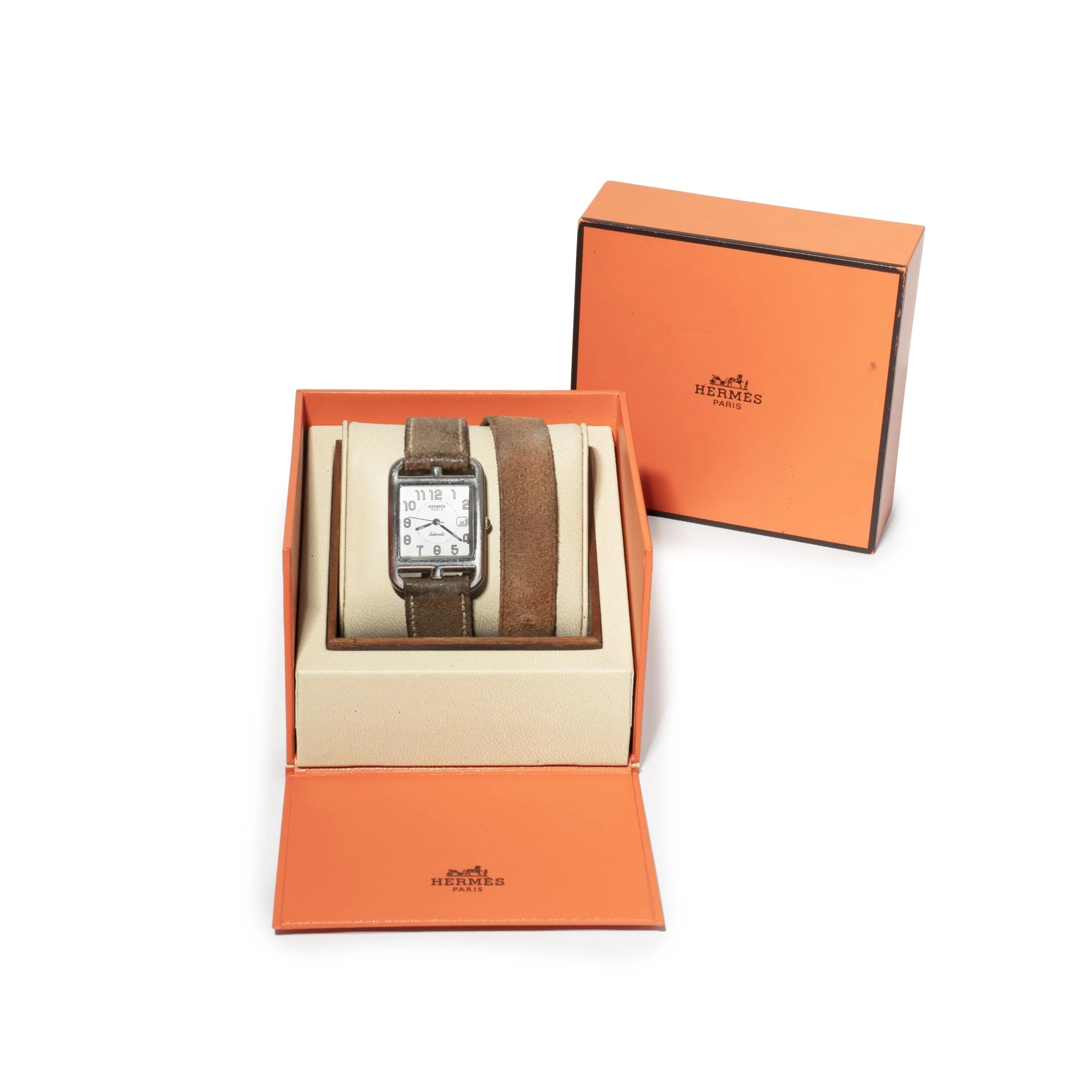
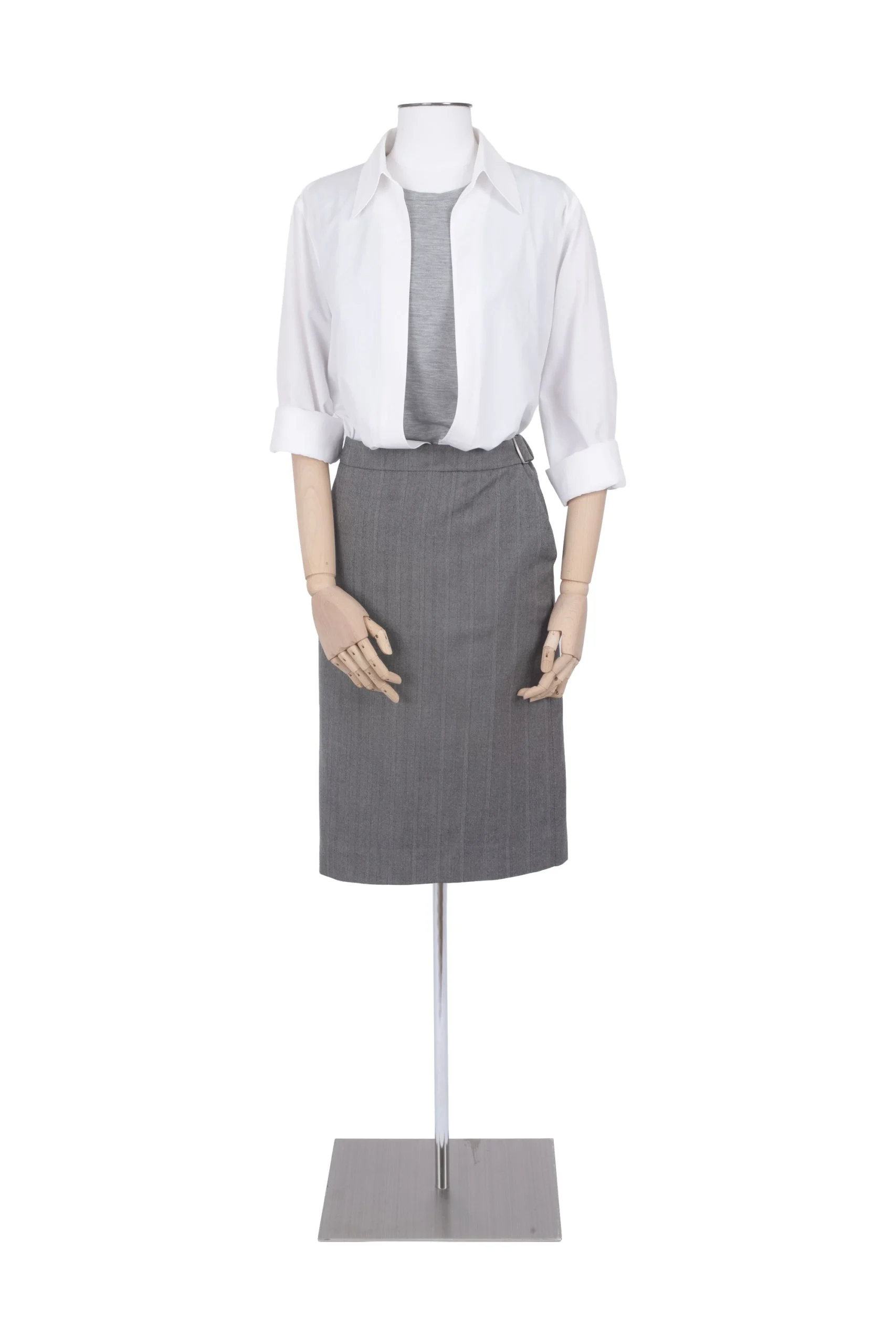
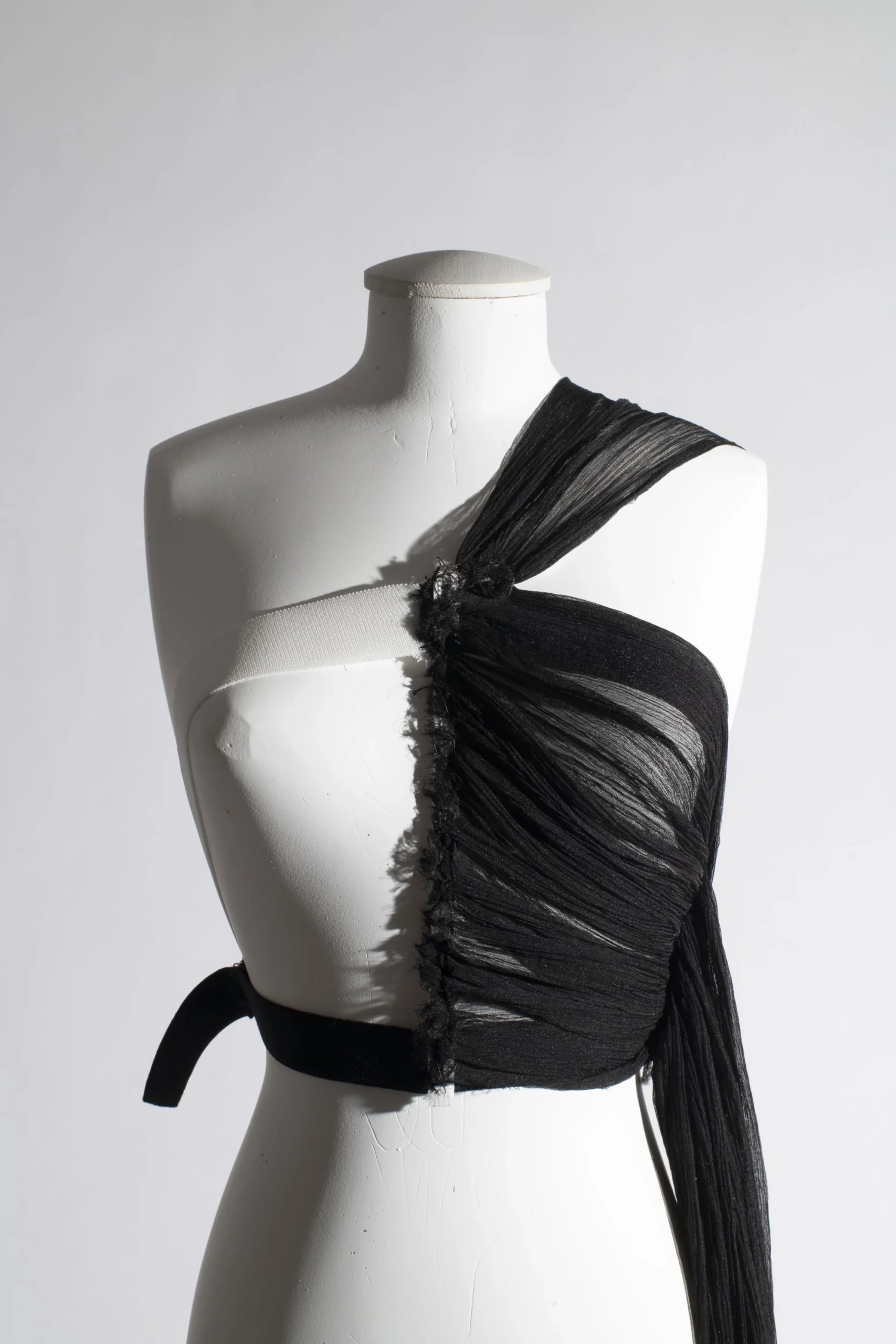
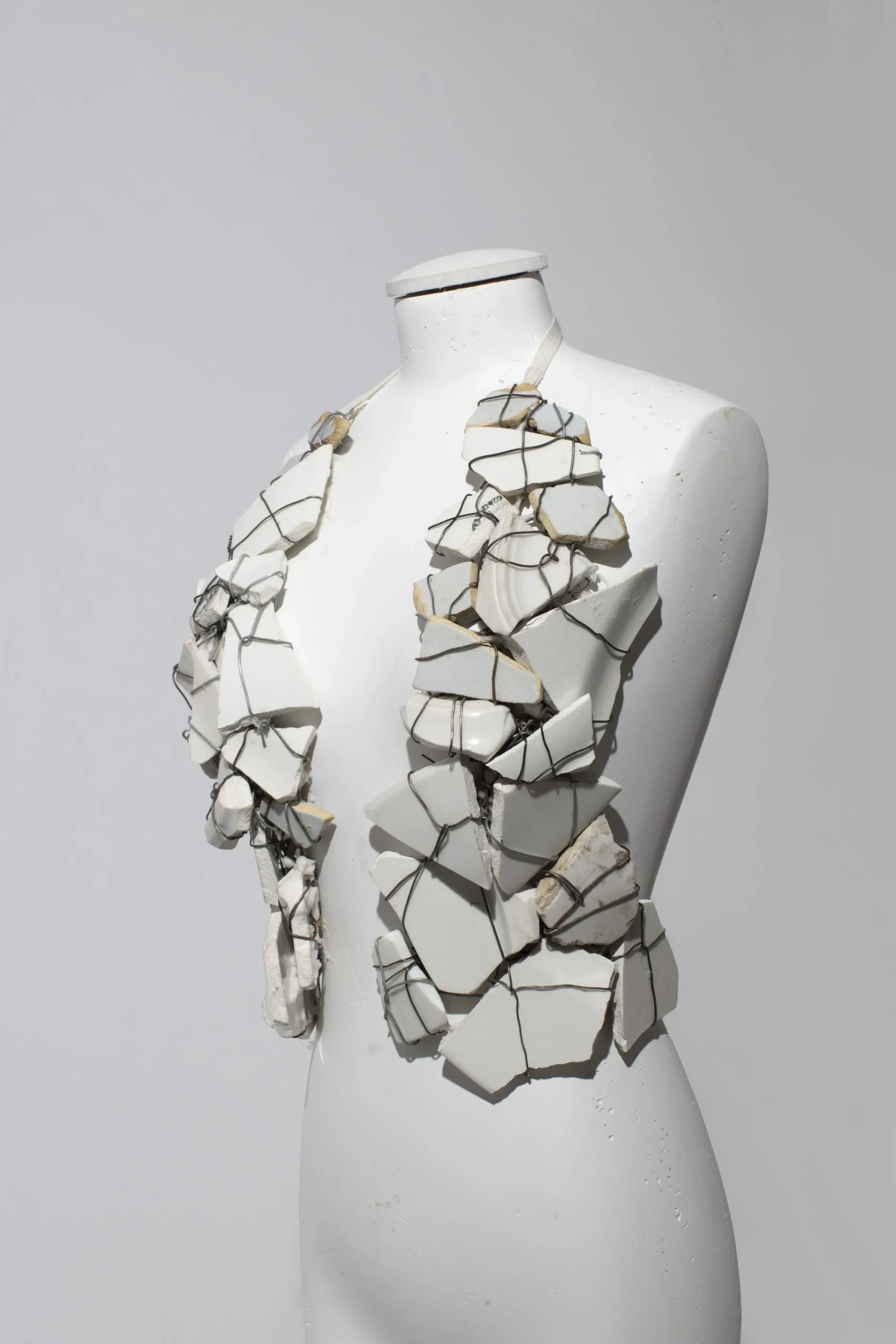
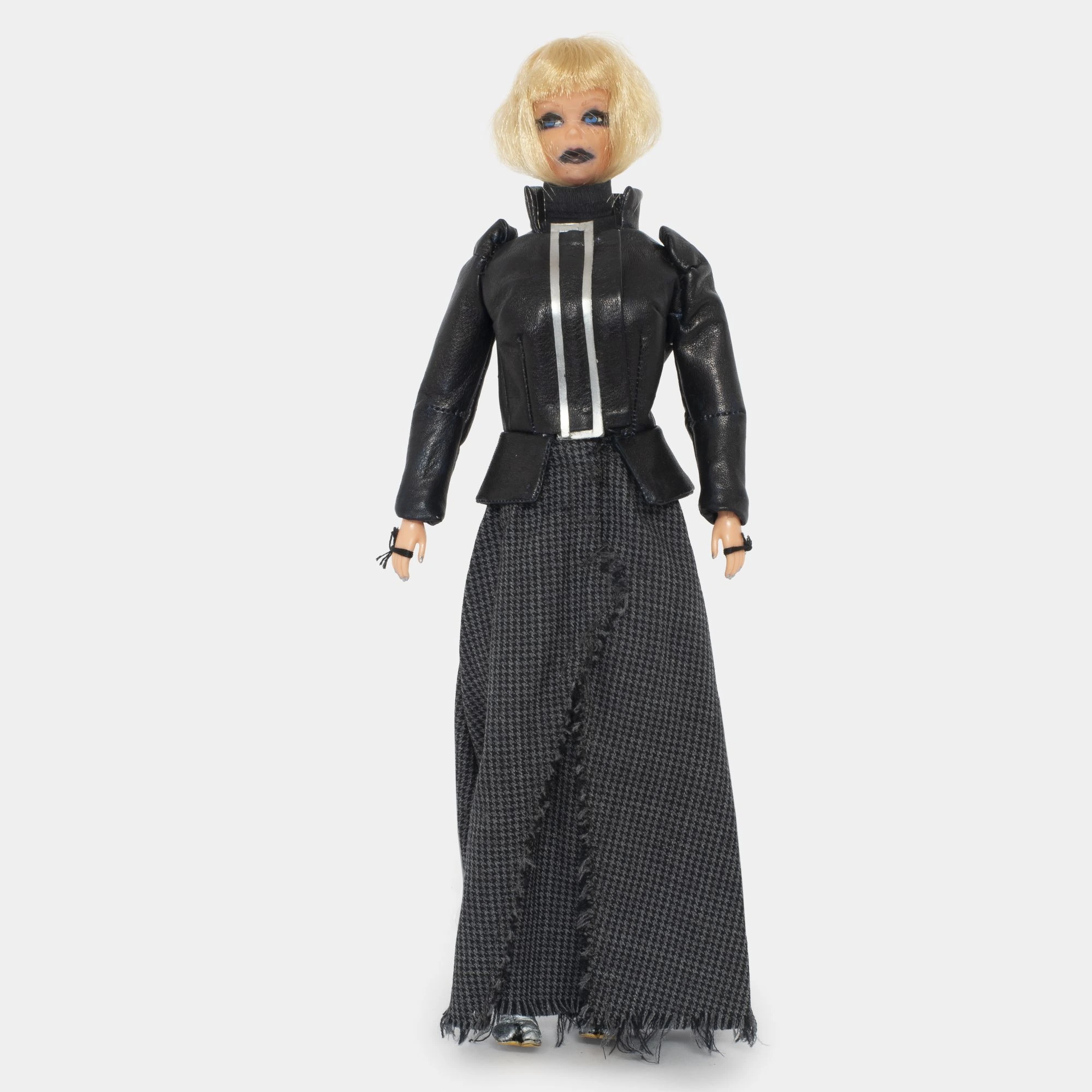
Elsewhere in the catalogue sat a set of Barbie dolls the designer had used as working mannequins, dressing them in miniature versions of pieces before scaling the ideas up to human size, a working method that turned mass produced toys into functioning design tools. A separate group of lots covered Margiela’s 1997 to 2003 tenure as creative director of womenswear at Hermès, a period during which he worked under the storied house’s then chairman Jean-Louis Dumas and produced ready-to-wear that was notably stripped down compared with his own line. Several of the Hermès pieces on offer had a more personal history still, having belonged to Léa Bouchet, the designer’s own mother, who wore garments and carried bags from her son’s tenure at the house.
Photographed here is one of the Hermès pieces from that period, representative of the leather goods produced during Margiela’s stint at the house.
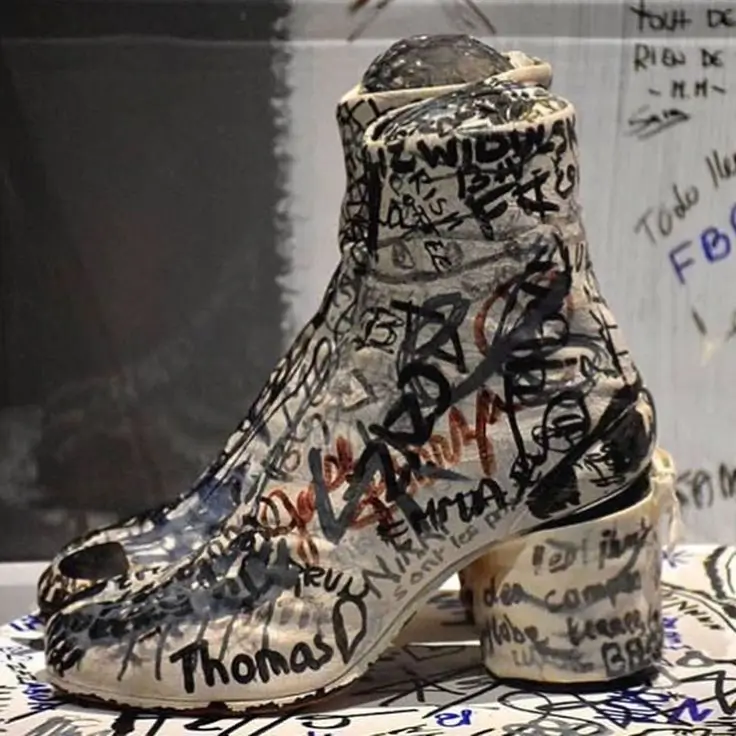
A hand-painted Maison Martin Margiela Tabi boot prototype from the designer’s personal archive, covered with handwritten annotations and studio sketches that reveal the creative process behind one of fashion’s most iconic silhouettes.
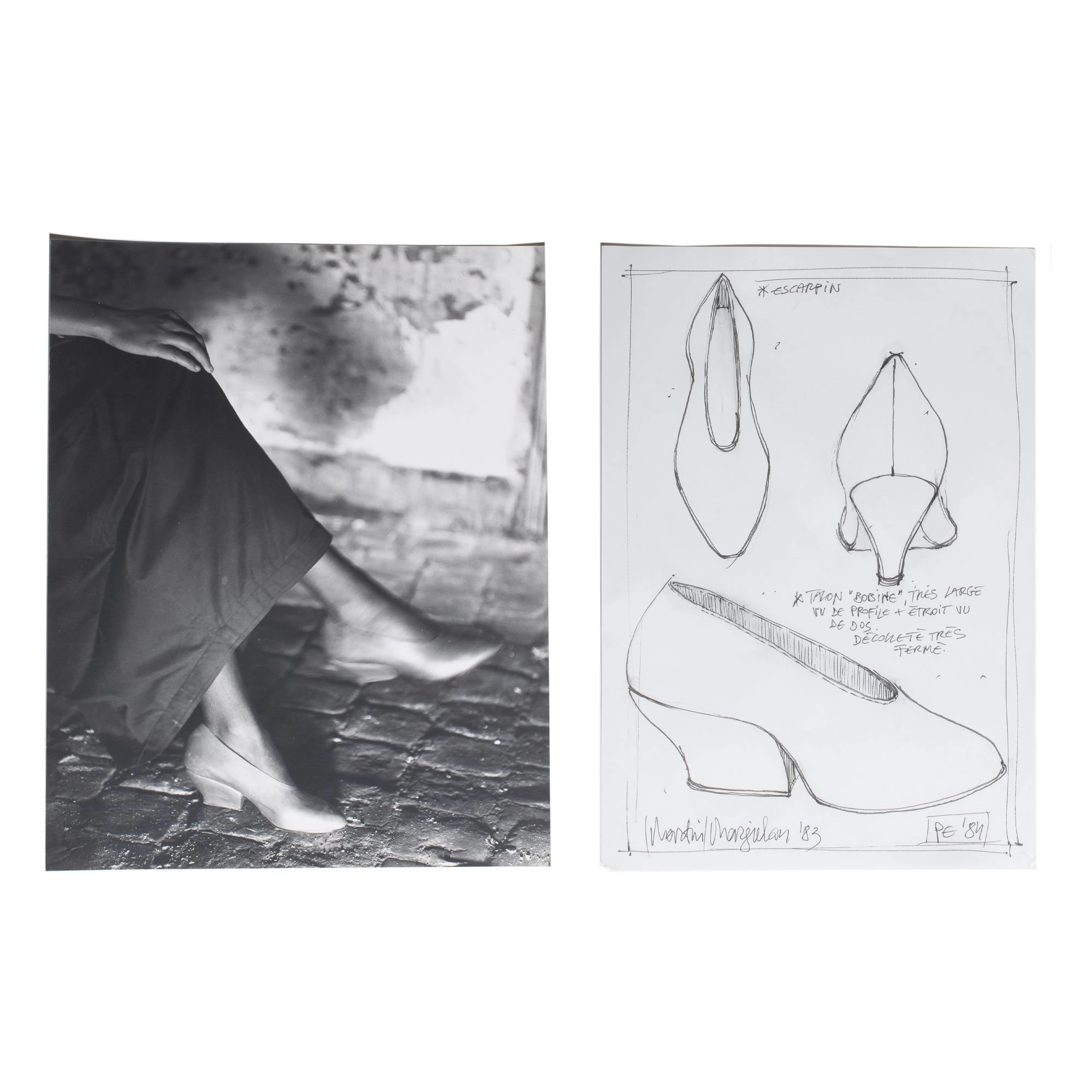
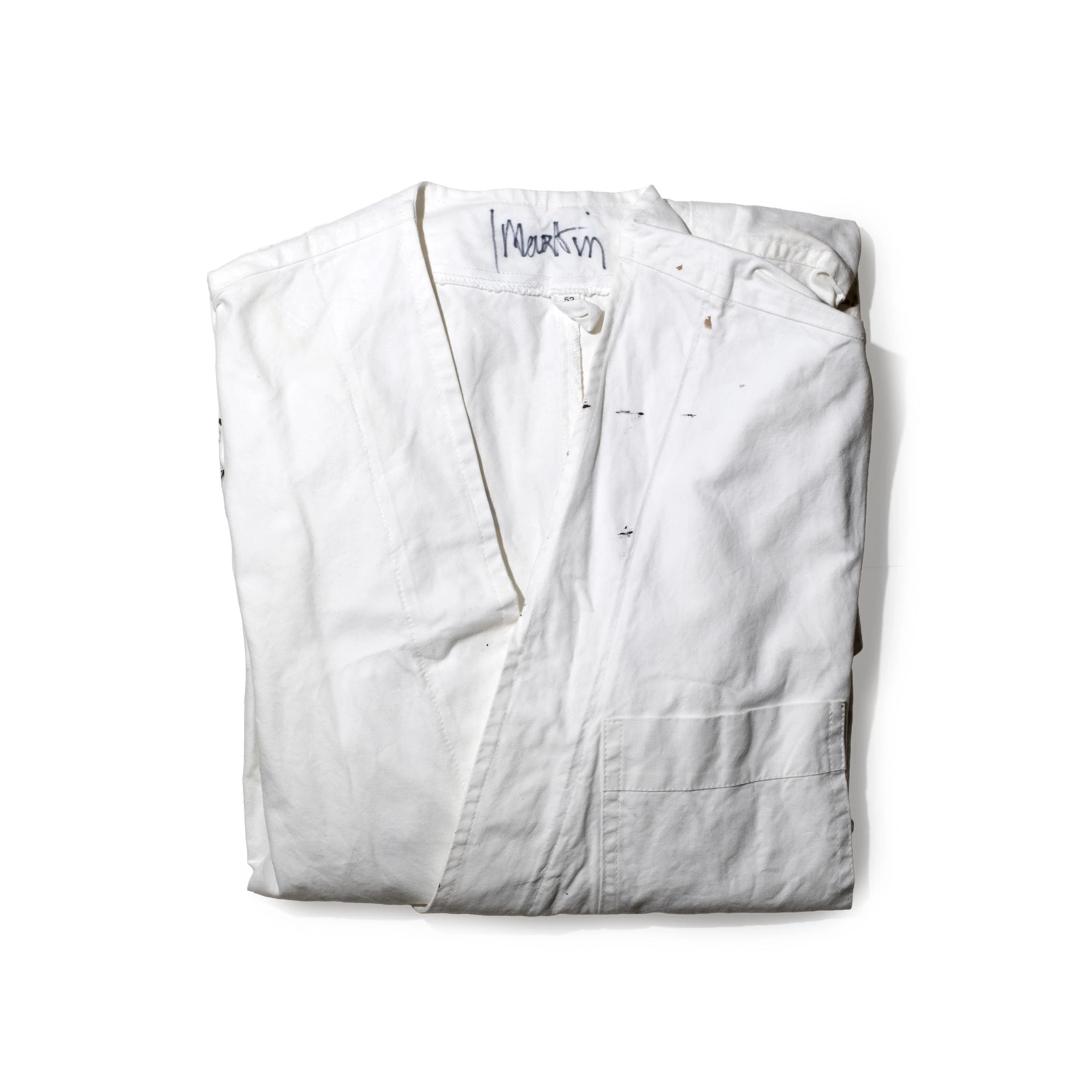
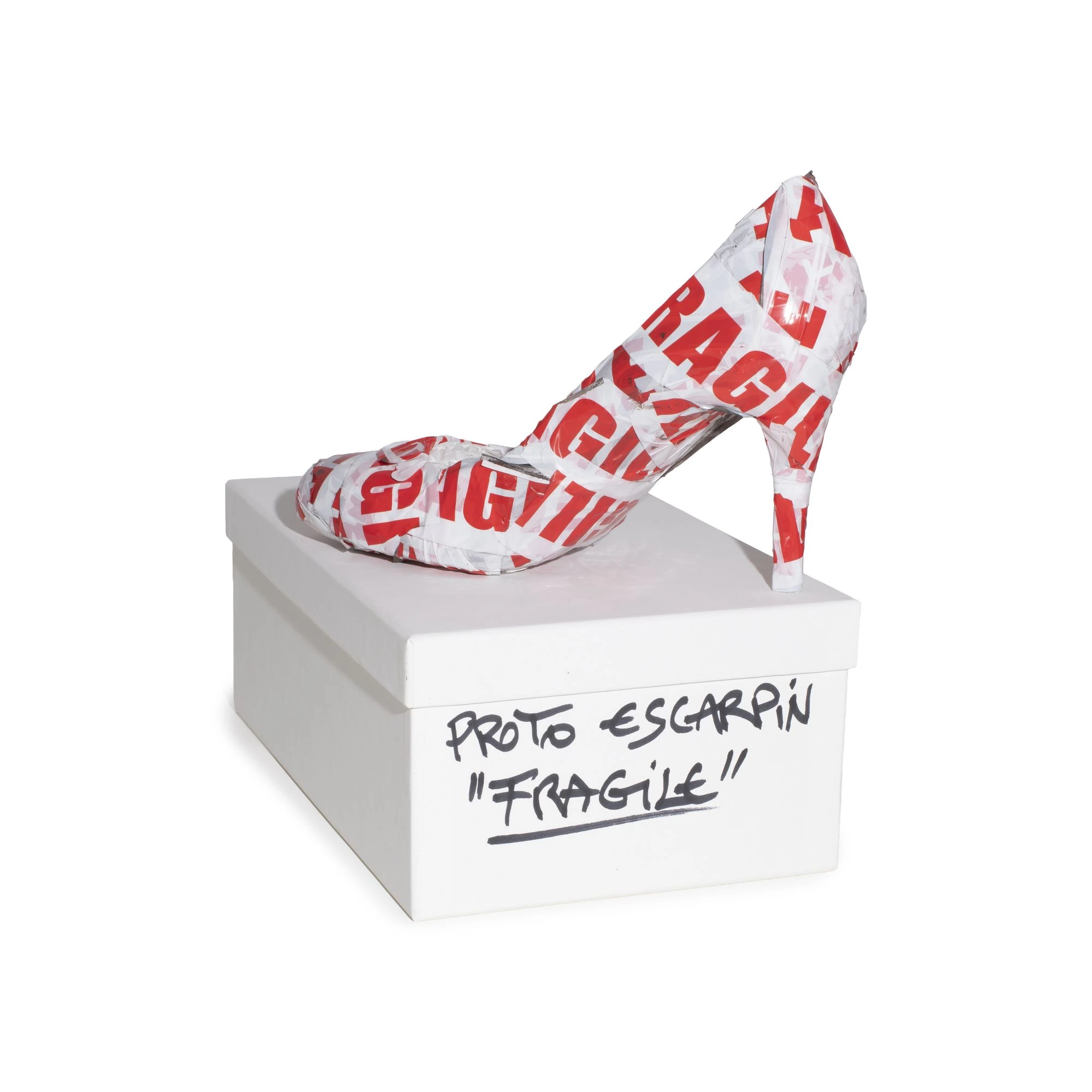
Working documents, sketches, and early photographs rounded out the sale, giving buyers a route into Margiela’s process that had simply never been available before, since the designer had spent nearly two decades declining to open his archive to institutions or collectors on anything like this scale.
The Hermès lots carried a particular weight for attendees who had followed the house’s history closely, since Margiela’s tenure there remains one of the more unlikely creative pairings in modern luxury. A designer known for exposed seams, deconstructed tailoring, and a studied refusal of polish took over womenswear at a house built almost entirely around discreet, generational craftsmanship, and the resulting collections were notably restrained compared with his own line, favoring quiet construction over any of the visible rebellion associated with his own maison. That contrast is part of what made the Léa Bouchet lots resonate beyond simple archival interest; buyers were not just acquiring Hermès leather goods from a specific era, they were acquiring pieces that had passed through Margiela’s own family before reaching the auction floor, adding a second layer of provenance on top of the first.
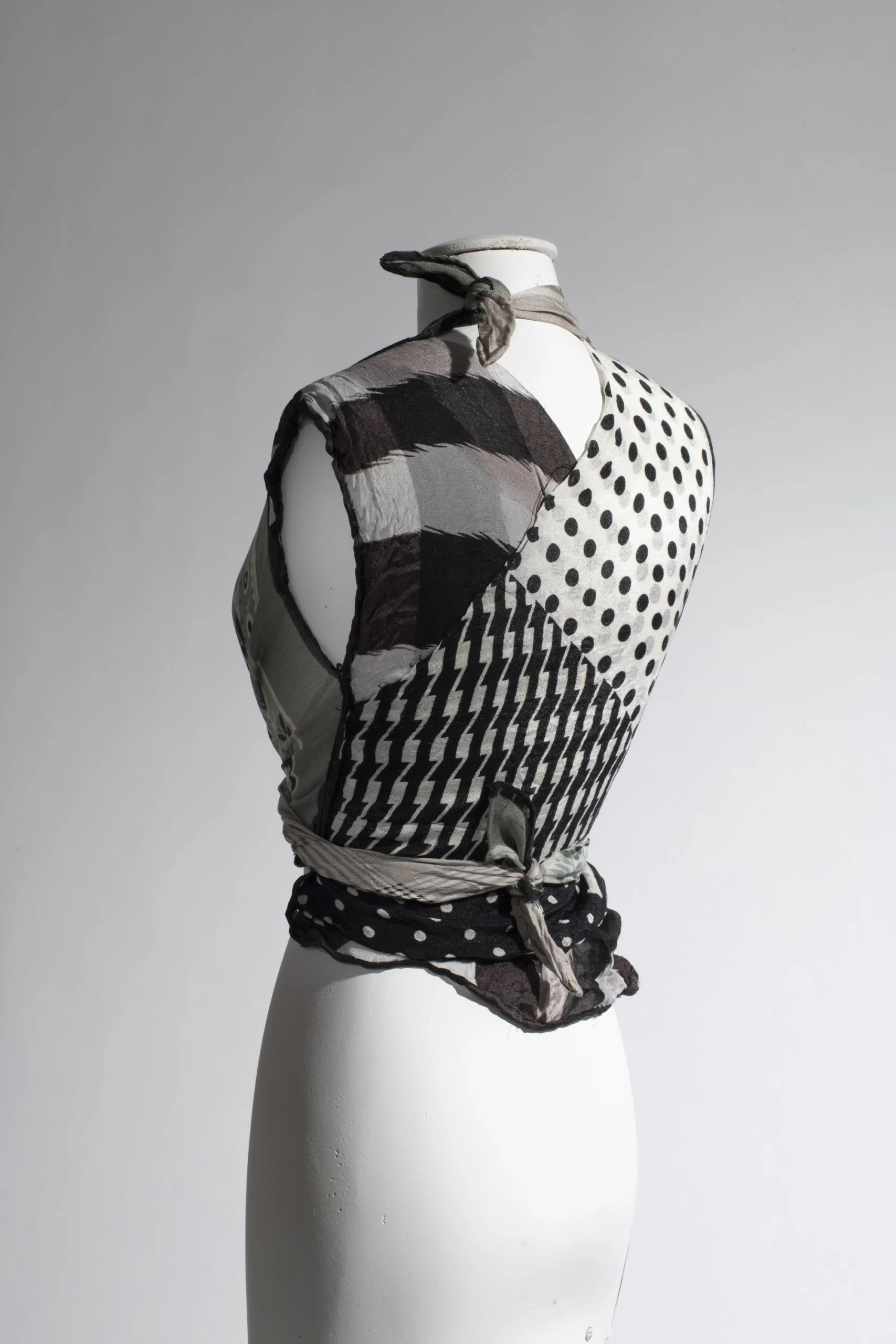
Earlier photographs and sketches in the sale traced Margiela’s path back even further, to his years assisting Jean Paul Gaultier in Paris during the mid 1980s and his formative period among the loose circle of Antwerp trained designers who reshaped Belgian fashion’s international reputation. Several lots documented his very first professional showings in Antwerp, material that predates the founding of his own house entirely and offered bidders a rare look at a designer’s development before the identity that would eventually make him famous had fully formed.
leg
Fashion auctions built around a single designer’s archive can be a hard sell outside a narrow circle of specialists, but this sale drew a bidder base that organizers described as genuinely global, with a particularly heavy showing from Asia. Buyers from Japan, South Korea, China, and Southeast Asia were credited with driving several of the sale’s top prices skyward, a pattern that tracks closely with the decades long reverence Japanese fashion consumers in particular have shown for Margiela’s early, deconstructionist output. Japanese retail and collector culture has long treated Margiela’s late 1980s and 1990s work as close to canonical, and the country’s resale and archive fashion market, concentrated in districts built around vintage and designer resale, has kept demand for his pieces unusually high relative to other designers of the same era.
View this post on Instagram
That Asian participation was not incidental to the sale’s final total. Auction houses working in the historic costume and textile space, including Kerry Taylor Auctions, have built businesses partly around the reality that provenance and rarity attract international interest regardless of where a sale physically takes place, and Maurice Auction’s decision to time this sale for Paris Haute Couture Week ensured that international buyers already flying in for the runway calendar had a reason to extend their trip toward Le Quartier Général, the venue hosting the exhibition and sale.
The result was a room that felt less like a specialist auction and more like a culture event, with museum curators standing alongside private collectors and, per organizers, plenty of people who had never bid at auction before but felt compelled to try given the rarity of the material on offer.
Japan’s relationship with Margiela in particular has always run deeper than simple retail demand. The country’s archive fashion scene, built around specialist resale shops and a collector culture that treats certain runway seasons the way record collectors treat first pressings, has kept Margiela’s late 1980s and 1990s output circulating at prices well above what comparable pieces from other designers of the same period command. That existing appetite meant Japanese bidders arrived at this sale already fluent in the difference between a standard production Tabi and a documented, one of a kind exhibition piece, and that fluency likely played a direct role in pushing the boot’s final price so far past its estimate.
fin
Margiela’s decision to release this material himself, rather than have it surface posthumously or through a third party, sets the sale apart from most designer archive auctions, which typically happen after a house’s founder has died or long since lost control of their own estate. By working directly with Maurice Auction and Kerry Taylor Auctions, Margiela retained a hand in how his own history reached the public, choosing what left his possession and, by extension, what story it would tell about his career.
That the sale crossed one million euros, anchored by a record breaking Tabi boot, says something about how far the designer’s reputation has traveled since he stepped away from public life. Seventeen years of near total silence did nothing to dampen demand; if anything, the scarcity of new material from Margiela himself appears to have sharpened collector appetite rather than let it fade. For a designer who spent his career trying to remove himself from the conversation entirely, the irony is not lost on anyone who watched the bidding climb past every estimate in the room: the less Margiela says, the more the market seems willing to pay to hear it anyway.
Related Articles

Eric Haze Stitches a Nineties Friend Into TOKYO Capsule
Five pieces carry Eric Haze's embroidered tagging for TOKYO No.1 SOUL SET, sold online and in Osaka around the band's Oct 25 BAYCREW'S FESTIVAL set.