Anthony Hopkins Spent Sixty Years Writing Music Nobody Heard. Now Decca Classics Is Releasing All of It

July 11, 2026
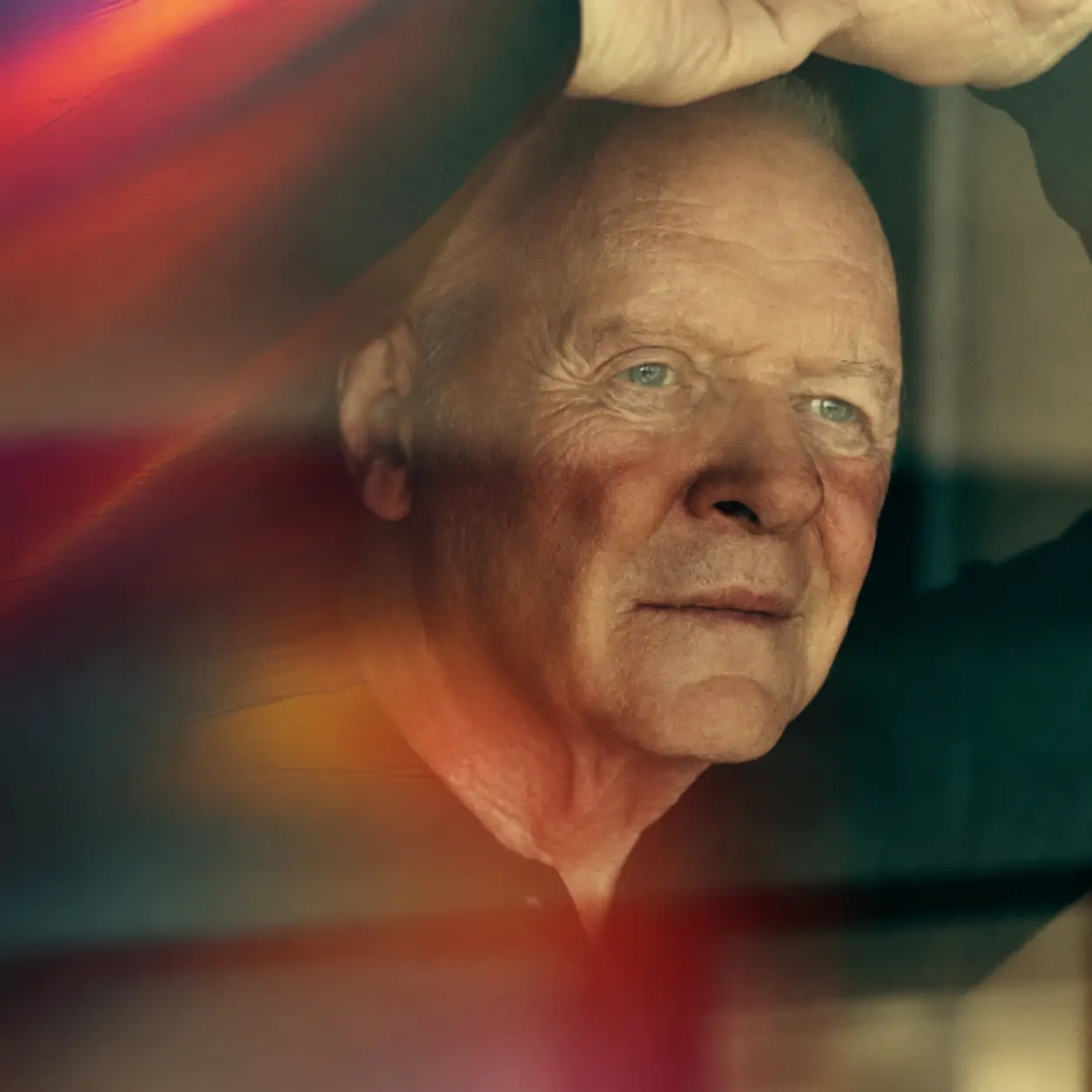
At 88, the two time Oscar winner has signed his first record deal, and the album traces a life he never talked about on screen.
recall
- A Piano Before the Fame
- The Song That Started at a Stage Door in Liverpool
- Decca Classics, Dudamel, and a Cast Nobody Expected
- What Life Is a Dream Actually Sounds Like
- Why This Isn’t a Vanity Project
- A Donation, and the Reason Behind It
- What Comes Next
Most people met Anthony Hopkins through Hannibal Lecter, the coldly precise voice behind the glass in The Silence of the Lambs, a performance so exact that it became shorthand for a certain kind of screen villainy. It is the role most casual fans still reach for first, even though it represents only a few minutes of screen time across a career built on far more range than that single part usually gets credit for.
But music came first. Long before Hannibal Lecter, before The Father earned him a second Academy Award at 83 (making him the oldest man ever to win Best Actor), before Thor and Westworld and a career that now stretches past sixty years, there was a four year old in Port Talbot, Wales, sitting at a piano and figuring out where the notes went on his own.
He has said as much himself. Not as a footnote for a press release, but plainly, in his own words: music was his first desire, his first wish, long before acting entered the picture at all. He kept composing quietly through his teenage years, writing scores for local theater productions in the 1950s while nobody outside of south Wales had any reason to notice.
It is worth sitting with that timeline for a second. A young Hopkins was writing music before he had a single professional acting credit to his name. The piano came first, in every sense: chronologically, emotionally, and apparently in terms of where his ambition actually pointed when he was a boy in Port Talbot with no reason yet to think a career in film was possible for someone from his background. Acting became the thing that paid the bills and eventually made him one of the most recognized faces in the world. Composing stayed the private habit underneath all of it, something he returned to between takes, between plays, between decades, without ever pushing it toward an audience.
That thread never broke. It just never had anywhere to go, at least not publicly, and not with anything close to the resources a project like this now has behind it. Until now.
flow
The first piece the world gets to hear from this project is called “Bracken Road,” and its origin story is the kind of detail that makes the whole album feel less like a marketing exercise and more like an actual archive of a life. Hopkins wrote it in 1963, when he was a young, mostly unknown actor working at the Liverpool Playhouse, the kind of regional theater where careers either start or quietly end. Before rehearsals, he would sit at a piano backstage and improvise, working through melodies that had nothing to do with the play he was about to perform in.
One of those melodies became “Bracken Road,” named for the landscape around his childhood home. Sixty two years later, it opens a professionally recorded orchestral album performed by one of the best ensembles in the world. That is not a small gap to close, and it is the part of this story that reads less like a celebrity side hustle and more like something that was simply waiting.
The track appears on what Hopkins is calling his “1947: Suite for Solo Piano and Orchestra,” and it will be the first single released from the full record.
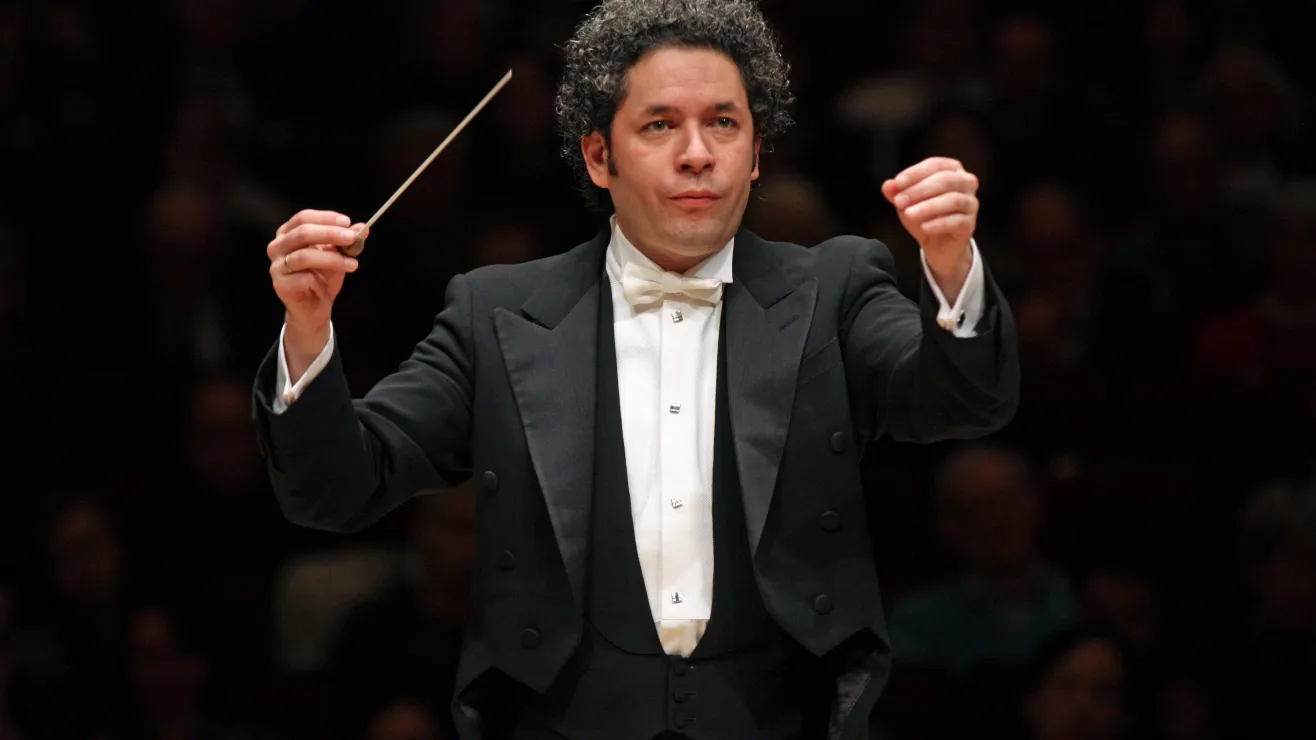
Gustavo Dudamel directs musicians with expressive gestures and baton in hand during a live symphony performance on stage before a packed audience.
scope
The label behind all of this is Decca Classics, one of the oldest and most respected classical imprints in the world, home over the decades to conductors and soloists who defined how orchestral music sounds on record. Signing an 88 year old actor as a debut composer is not a typical move for a label with that kind of pedigree, which says something about how seriously the finished recordings must have played once people actually heard them.
Conducting the sessions is Gustavo Dudamel, the Grammy winning maestro who has spent the last two decades as one of classical music’s most recognizable figures, currently stepping into the music director role at the New York Philharmonic after his long run leading the Los Angeles Philharmonic. Dudamel is not a conductor who takes on passion projects lightly, and his own comments about the sessions lean toward genuine admiration rather than professional courtesy. He has described Hopkins as an artist whose creative instincts translate directly from the screen to the page, someone who approaches composing with a storyteller’s patience rather than a hobbyist’s enthusiasm.
The orchestra itself is the Philharmonia Orchestra, recorded at Alexandra Palace in London back in April of this year. Joining them on individual pieces are pianist Sergio Tiempo and cellist Gregorio Nieto, along with vocal contributions from The Bach Choir and the Boy Choristers of Winchester Cathedral. It is, by any measure, a serious cast assembled for a serious recording, not a set of session musicians humoring a famous name.
Hopkins has been vocal about what that collide meant to him, describing the experience of hearing Dudamel shape his compositions as something close to watching his own memories take on a new, more precise kind of meaning. He has specifically pointed to the way Dudamel’s conducting gave each note a kind of weight he had not fully heard in his own head when he first wrote these pieces decades ago, alone, without an orchestra, without any real expectation that they would ever sound like this.
There is something worth noting in how deliberately Decca Classics has framed all of this too. Labels signing celebrity names for passion projects is not new, and it usually comes with a certain amount of skepticism baked into the coverage before anyone has heard a single note. What is different here is the seniority of everyone involved on the musical side. Dudamel did not need this record either. Neither did the Philharmonia, one of Britain’s most respected orchestras with a recording history stretching back gens, nor did Sergio Tiempo, a concert pianist with an international solo career of his own. Their presence functions almost like a form of vouching, the kind that tends to matter more in classical music than in most other corners of the industry, where reputations are built slowly and lent out carefully.
show
The album is called “Life Is a Dream,” and Decca Classics has described it as his most personal musical project to date, which given the subject matter tracks. This is not abstract orchestral writing. Nearly every piece on the record is tied to a specific place or person from Hopkins’ own life.
“My Fatherland” pays direct tribute to Wales, the country he left decades ago but has never really stopped writing about, whether on screen or off it. Other tracks lean even closer to home: a piece called “Stella Aria” written for his wife, and another named “Tara” for his niece. There are compositions inspired by his grandfather, by childhood memories of the cinema that first sparked his imagination, and by the people who have stayed closest to him across a career that has taken him a very long way from south Wales.
It is worth pausing on how unusual this is for someone at his level of fame. Plenty of actors dabble in music as a side interest, and plenty of those side interests never go further than a home studio. What makes this record different is the sheer span of time involved: these are not new compositions dressed up as a lifelong passion for the sake of a good story, they are literal decades old pieces, some written before Hopkins had appeared in a single major film, finally being performed by a world class orchestra with the same care a label might give any working composer’s debut.
Notably, the album is not his first brush with recognition in the music world either. Back in 2012, he picked up a Classic Brit Award for Album of the Year for his contribution to “And the Waltz Goes On,” a project with André Rieu and the Johann Strauss Orchestra. And in January of 2025, he made his live musical performance debut during Riyadh Season in Saudi Arabia, where a program also titled Life Is a Dream saw his original compositions performed by the Royal Philharmonic Orchestra at the Bakr Al Sheddi Theater, giving international audiences their first real introduction to Hopkins the composer, well before this record deal made it official.
reflect
There is a version of this story that would be easy to write cynically: aging movie star with money and connections gets an orchestra to play his old tunes, label puts a famous face on the cover, everyone moves on. That version does not really survive contact with the details.
For one, Hopkins did not need this. He has two Academy Awards, a knighthood, and a filmography that guarantees his place in film history regardless of what happens next. There is no career gap this fills, no comeback narrative this is patching over. The only real explanation on offer is the one Hopkins himself gives: that this music simply lived with him for decades, and he kept returning to it either or not anyone else ever would.
For another, the people involved do not typically attach themselves to projects that do not hold up musically. Dudamel and the Philharmonia are not in the business of charity recordings, and Decca Classics has built its reputation over a century by being extremely particular about what carries its name. Their public description of the compositions, that they reveal a level of emotional depth and storytelling consistent with his screen work, is the kind of language labels tend to reserve for artists whose work actually earns it.
benevolent
There is one more detail that separates this release from a standard celebrity vanity record: proceeds from physical sales of the “Life Is a Dream” CD and vinyl are being donated to the United Nations Development Fund, specifically to support people in Venezuela during what the label describes as a period of profound hardship in the country.
It is a quiet addition to the album’s rollout, mentioned almost in passing in most of the coverage so far, but it fits the broader tone of the project: a record built around memory, family, and the parts of a long life that do not usually make it into interviews, attached to a cause that has little to do with promoting a film or building a brand.
fin
“Life Is a Dream” is set for release on August 21, with “Bracken Road” already available as the album’s first single. The full tracklist includes pieces spanning Hopkins’ entire compositional life, among them the two part “Two Pieces for Orchestra,” subtitled “The Eagle” and “Samara,” alongside the Welsh tributes, the family portraits, and the piano and orchestra suite that gave the project its working title.
For an actor whose career has already produced two Best Actor wins six decades apart, an album built from music he wrote in the gaps between all of it might end up being the most unexpected addition to that record. Whether it becomes a genuine second act or a beautifully documented curiosity likely depends on how the finished recordings land once critics and audiences actually sit with them past the headline.
What already seems clear, even before a full review lands, is that this is not being treated as a novelty by the people closest to the actual music. A label with Decca Classics’ history, a conductor of Dudamel’s standing, and an orchestra with the Philharmonia’s pedigree do not typically lend their names to something they consider a curiosity. That alone puts “Life Is a Dream” in a different category than most late career celebrity music ventures, whatever people expect walking in.
Either way, at 88, Hopkins is finally letting people hear the thing he says he wanted to do first, sixty years after he started writing it down.
Related Articles

Max Holloway Turned Conor McGregor’s Collapse Into a Pitch for a Trilogy
A twenty-second main event still gave Max Holloway the last word on Conor McGregor’s comeback. […]