DRIFT AUDIO
Listen to this story
Choose a voice, then press play.
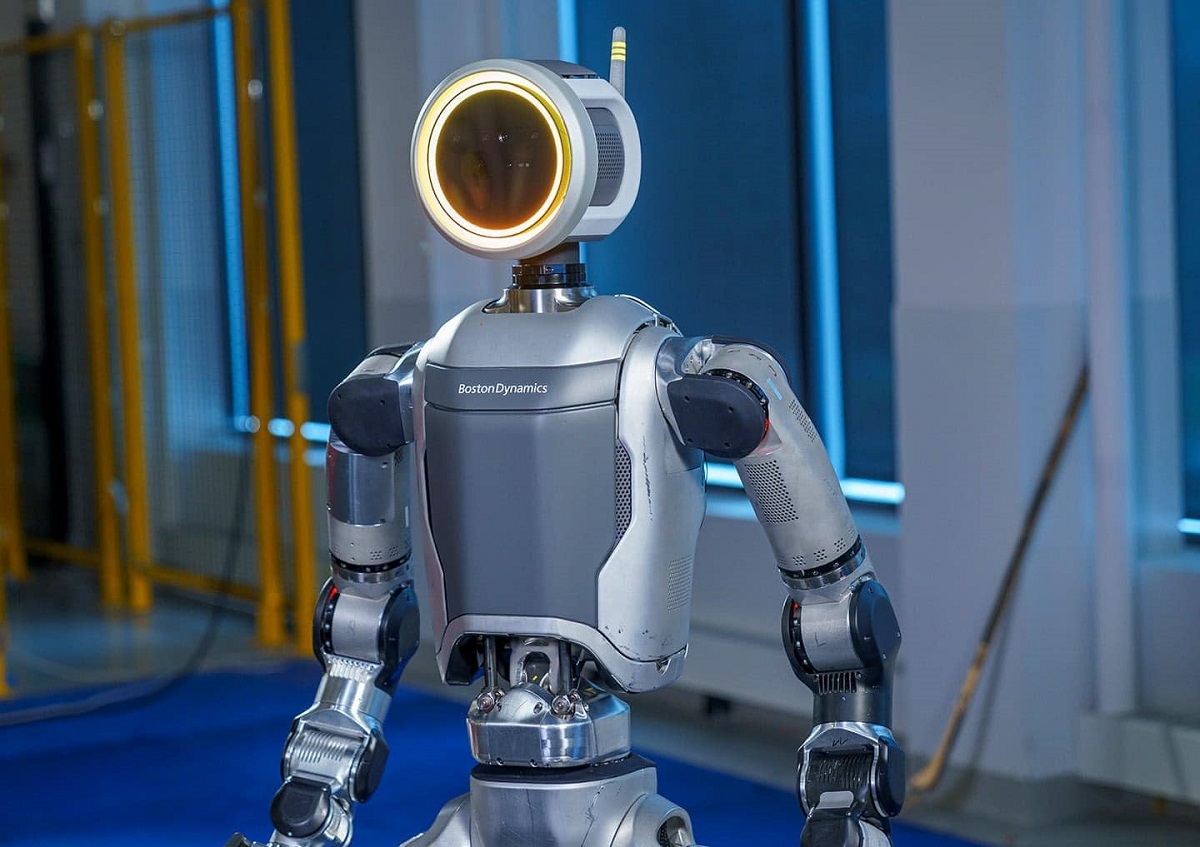
Boston Dynamics has long been at the forefront of robotics innovation, and their humanoid robot, Atlas, exemplifies this leadership. Initially introduced in 2013, Atlas has undergone significant transformations, evolving from a tethered prototype to a fully autonomous machine capable of complex tasks without human intervention. This article delves into Atlas’s journey, highlighting its development, technological advancements, and the implications of its newfound autonomy.
The Evolution of Atlas
Atlas was first unveiled in 2013 as a bipedal humanoid robot designed for search and rescue missions. Standing approximately 5 feet tall and weighing around 190 pounds, the initial version was hydraulically powered and required a tether for power and control. Its primary functions included navigating rough terrains and performing simple tasks, albeit with significant human oversight.
Over the years, Boston Dynamics focused on enhancing Atlas’s mobility and dexterity. By 2016, Atlas had achieved remarkable feats such as walking on uneven surfaces, recovering from impacts, and even performing backflips. These developments showcased the robot’s advanced balance and agility, setting the stage for more complex functionalities.
Transition to Full Autonomy
In a groundbreaking update released in October 2024, Boston Dynamics showcased Atlas operating entirely autonomously in a simulated industrial environment. The robot was tasked with moving engine covers between supplier containers and a mobile sequencing dolly. Equipped with advanced machine learning algorithms and upgraded sensors, Atlas could:
•Perceive its Environment: Utilizing vision, force, and proprioceptive sensors, Atlas detected and responded to environmental changes in real-time.
•Plan and Execute Tasks: Given a list of bin locations, Atlas autonomously identified the correct bins, grasped the engine covers, and placed them in designated areas without human guidance.
•Adapt to Challenges: When encountering obstacles, such as a part positioned too high, Atlas reassessed the situation, adjusted its approach, and successfully completed the task.
This demonstration marked a significant milestone, highlighting Atlas’s ability to perform complex tasks with minimal human intervention.
Technological Advancements
Several key innovations have enabled Atlas’s transition to full autonomy:
•Machine Learning Integration: Atlas employs machine learning models to interpret sensory data, allowing it to make informed decisions and adapt to new situations.
•Enhanced Sensor Suite: The robot’s array of sensors provides comprehensive environmental feedback, facilitating precise movements and interactions.
•Advanced Actuation Systems: Atlas’s actuators deliver swift and accurate movements, essential for tasks requiring high precision.
These advancements collectively contribute to Atlas’s sophisticated autonomy, enabling it to operate effectively in dynamic environments.
Implications and Future Prospects
Atlas’s autonomous capabilities have profound implications for various industries:
•Industrial Automation: Atlas can undertake tasks in hazardous or challenging environments, enhancing safety and efficiency in sectors like manufacturing and logistics.
•Search and Rescue: Its ability to navigate complex terrains and perform tasks autonomously makes Atlas a valuable asset in disaster response scenarios.
•Research and Development: Atlas serves as a platform for advancing robotics research, particularly in areas of mobility, perception, and machine learning.
However, challenges remain, including the high costs associated with such advanced robotics and the need for further refinement to ensure reliability in diverse real-world applications.
The evolution of Boston Dynamics’ Atlas from a tethered prototype to a fully autonomous humanoid robot represents a significant leap in robotics technology. Its advanced capabilities not only demonstrate the potential for autonomous machines in various sectors but also pave the way for future innovations in robotics and artificial intelligence.
For a visual demonstration of Atlas’s autonomous capabilities, you can watch the latest video released by Boston Dynamic:
Related Articles
Garage Italia’s Electric Spiaggina Puts the Fiat 500’s Riviera Years on Battery Power
Ten kilowatts, rattan seats and a €85,000 starting price: Garage Italia's 500 Spiaggina rebuilds Ghia's 1958 beach car for the yacht crowd.