DRIFT AUDIO
Listen to this story
Choose a voice, then press play.
Two rival aesthetics share a rack this season: dark rock bikers and shh Japanese stitching, both signed with the same silver ape face.
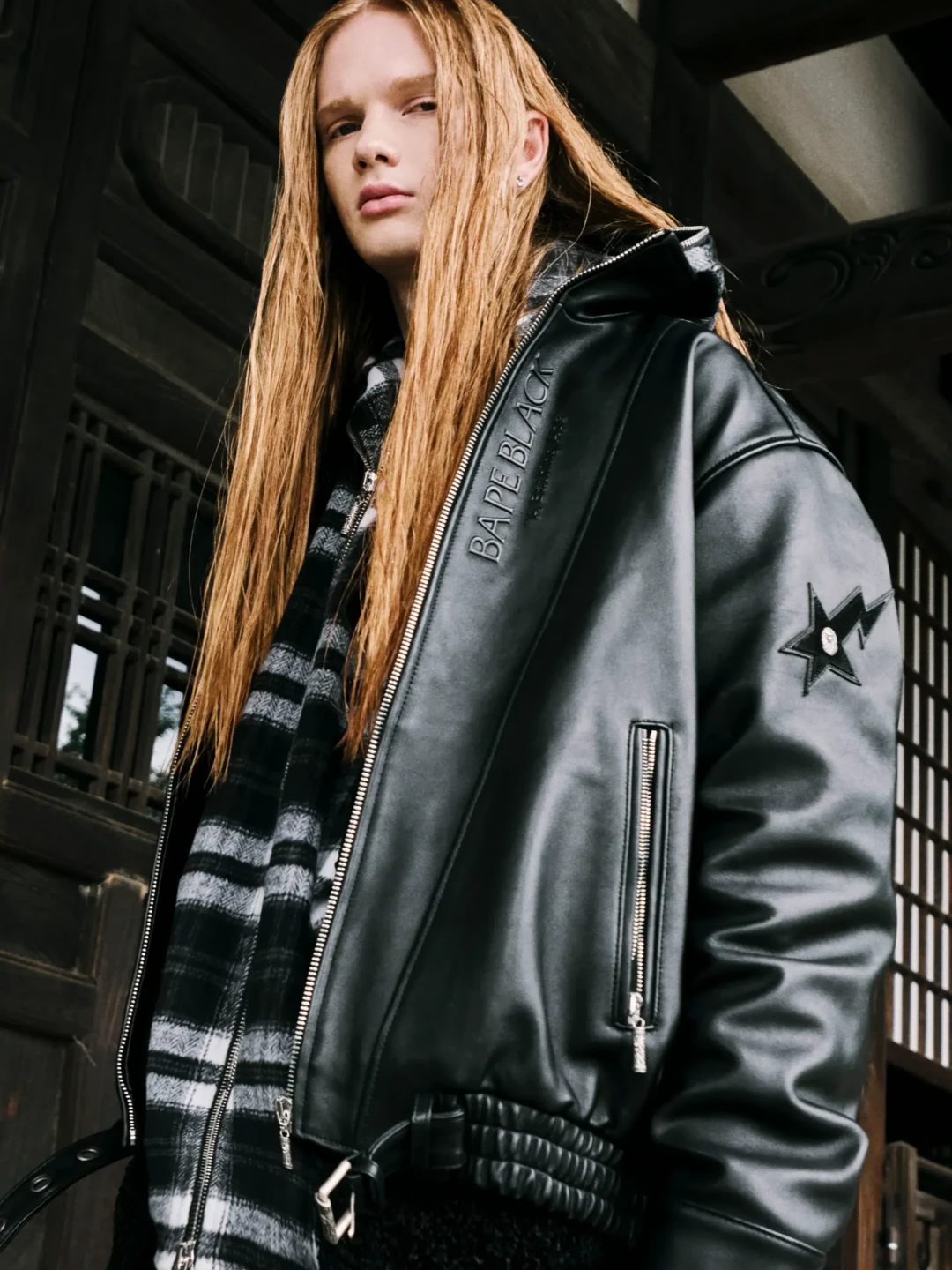
A ¥220,000 washed leather biker jacket and a ¥121,000 patchwork kimono are shipping under the same label this season. Both belong to the Fall/Winter 2026 collection from BAPE BLACK, the pricier, harder-edged line A BATHING APE has run since 2015 as a foil to its main label’s camo prints and ape-head graphics.
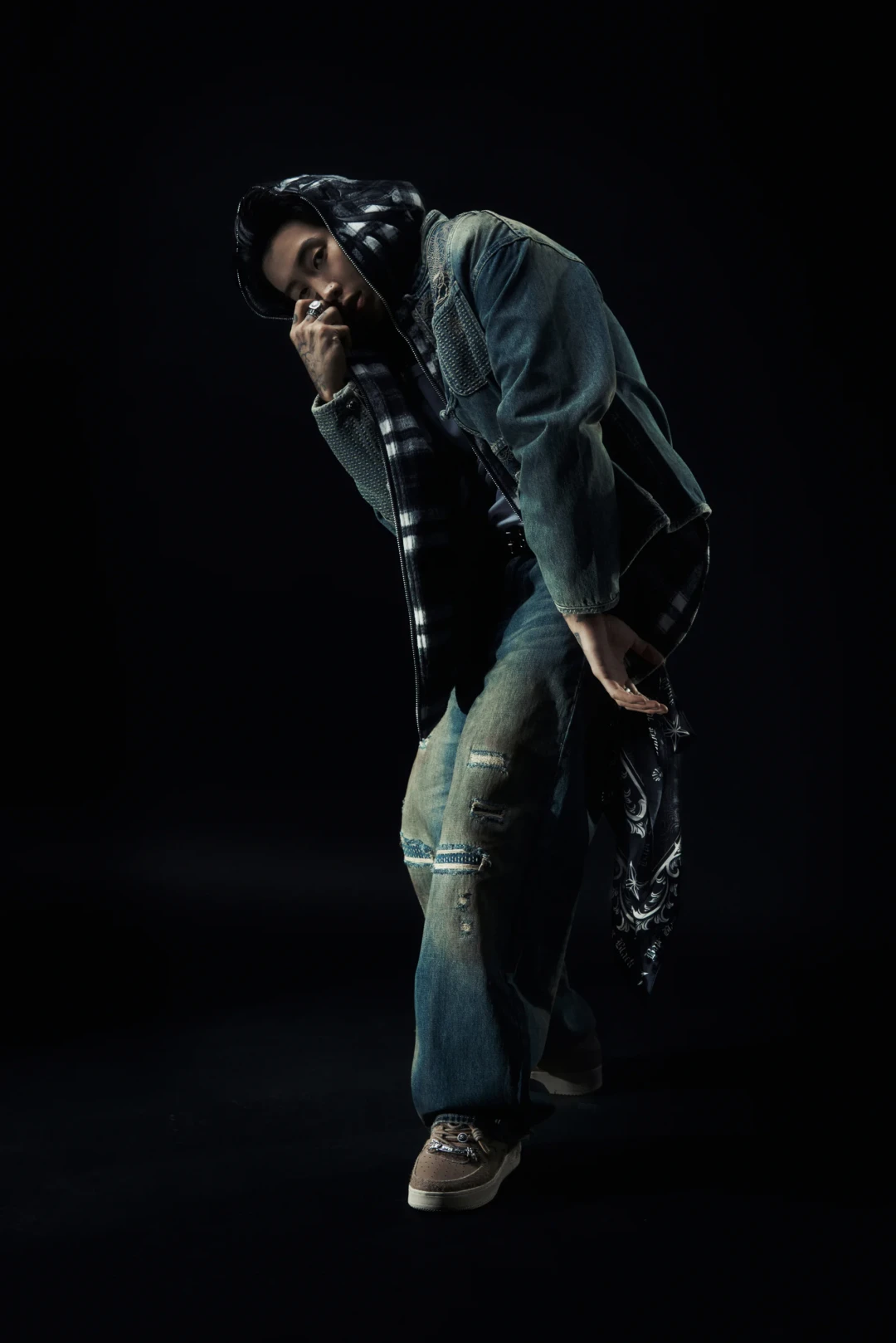
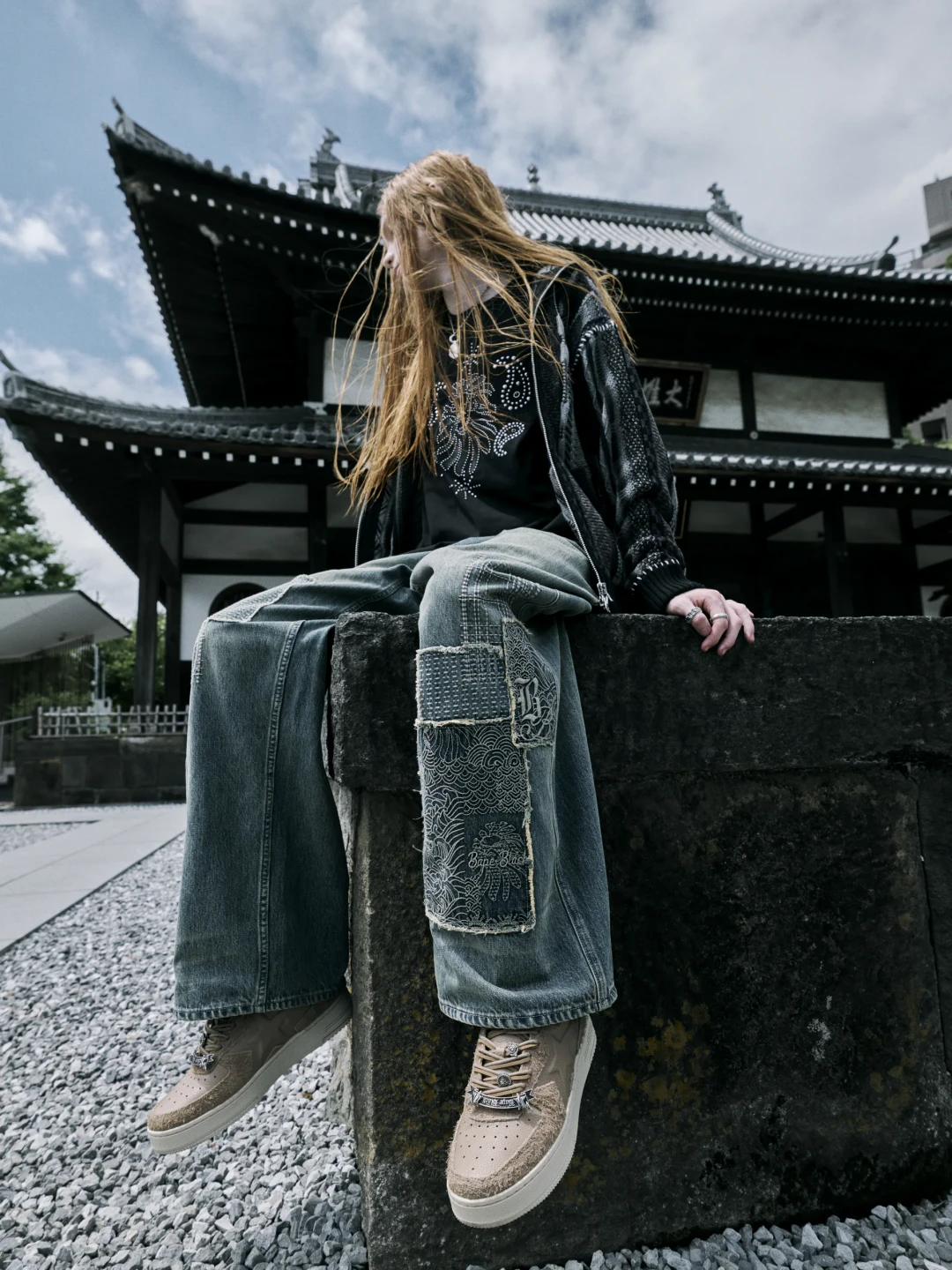
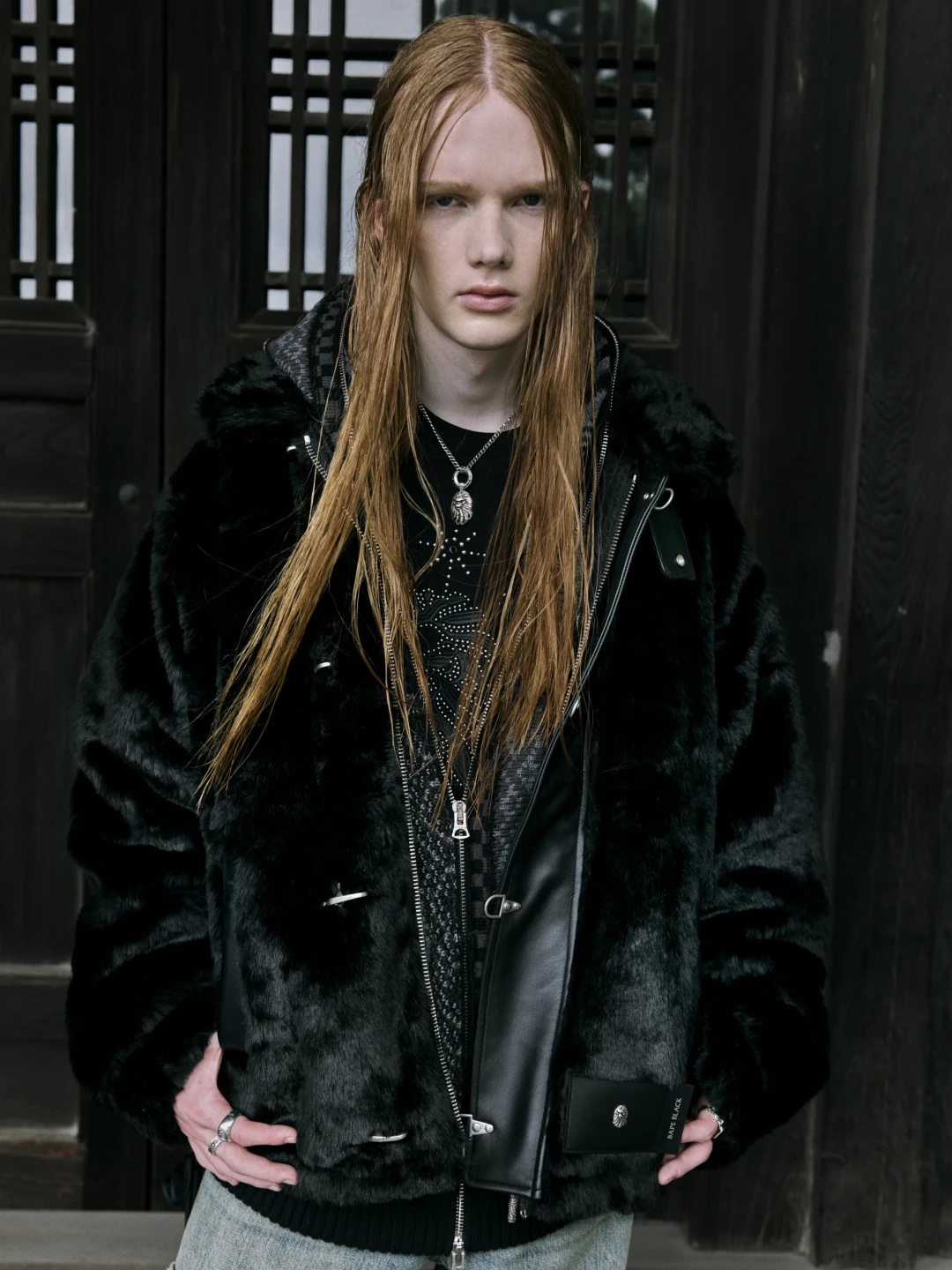
The season splits into two named directions. GOTHIC DUNE RIDER leans into dark rock and motorcycle codes: washed leathers, studded graphics, and tailored outerwear built for a rougher form. THE BLACK BORO ARTISAN goes the other way, working sashiko stitch and boro patchwork into kimono panels and denim. BAPE BLACK’s own framing describes the pairing as a study in contrast between an unpolished, fearless attitude and a more careful, inherited craft. Nineteen pieces make up the lineup at time of writing, spanning outerwear, denim, headwear, footwear, and a run of sterling silver jewelry, with the line’s signature MAD FACE motif turning up on nearly every piece in some form. Prices across the lineup run from a ¥27,500 cap to that ¥220,000 jacket, an eightfold spread that puts headwear and small jewelry at one end of the collection and the leather outerwear at the other.
View this post on Instagram
stir
A BATHING APE itself dates to 1993, when Nigo (born Tomoaki Nagao) opened the original shop in Ura-Harajuku, Shibuya. Hong Kong fashion conglomerate I.T, the group behind a string of Asia-market retail brands, bought the label in 2011 for roughly $2.8 million; Nigo stayed on as creative director for two more years before leaving the company entirely in 2013. BAPE BLACK arrived in 2015, already under I.T’s ownership, pitched from the start as the higher-priced, more adult read on a brand that had built its name on camouflage and the ape-head graphic. Nigo was also a member of the hip-hop group Teriyaki Boyz during his time running the brand, a music connection that makes it fitting, if likely unintentional, that BAPE BLACK’s own campaigns keep going to musicians rather than actors or athletes to front them. A BATHING APE now runs close to twenty stores across Japan alone, plus locations in Hong Kong, Taipei, and Beijing, a retail footprint BAPE BLACK’s own rollout rides on top of rather than duplicating. Where the mainline chases volume and archive nostalgia, BAPE BLACK has stuck to a tighter formula every season since: one theme built on rock and biker attitude, one theme built on Japanese textile craft, tied together by the same silver jewelry line.
flow
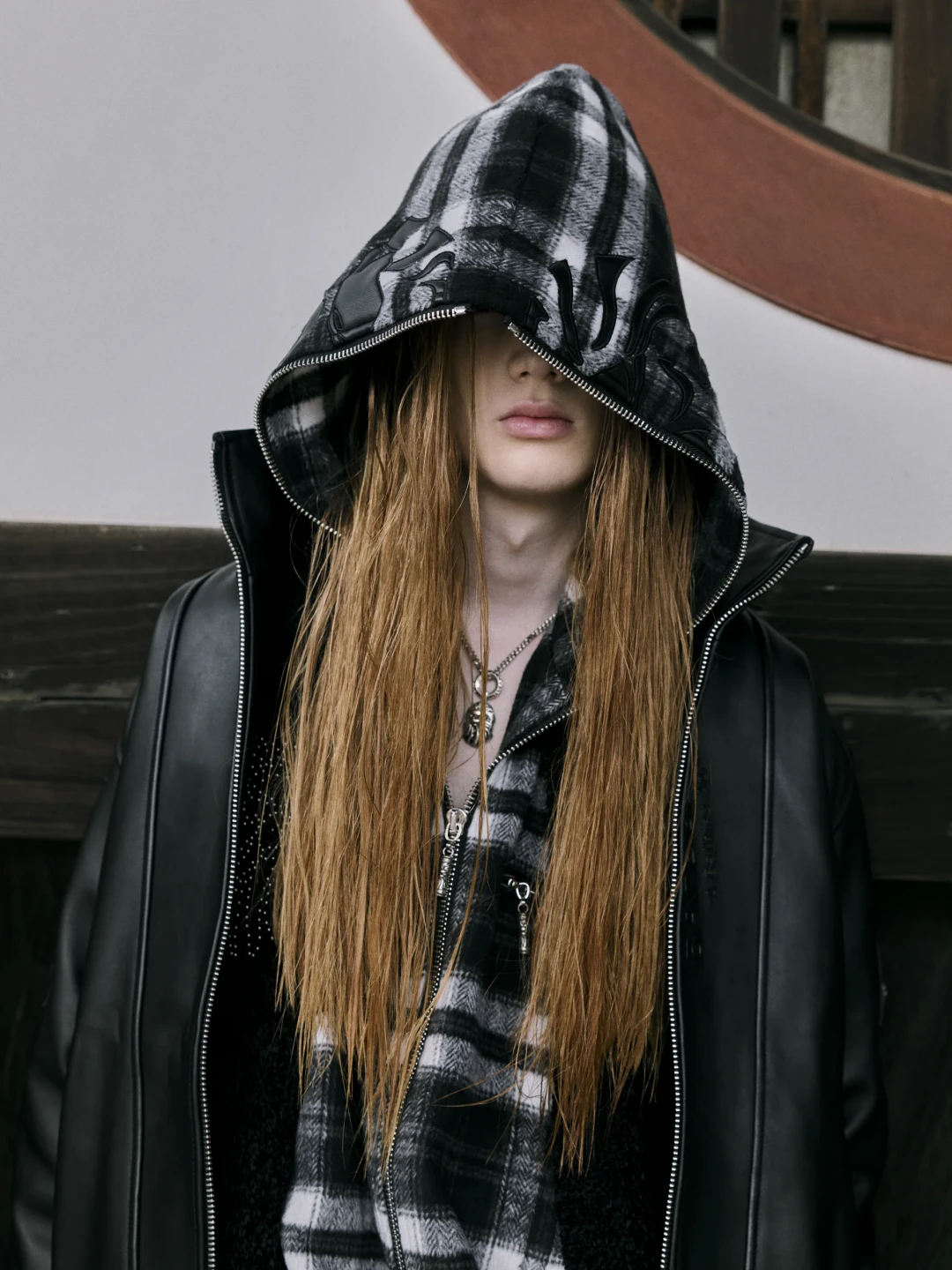
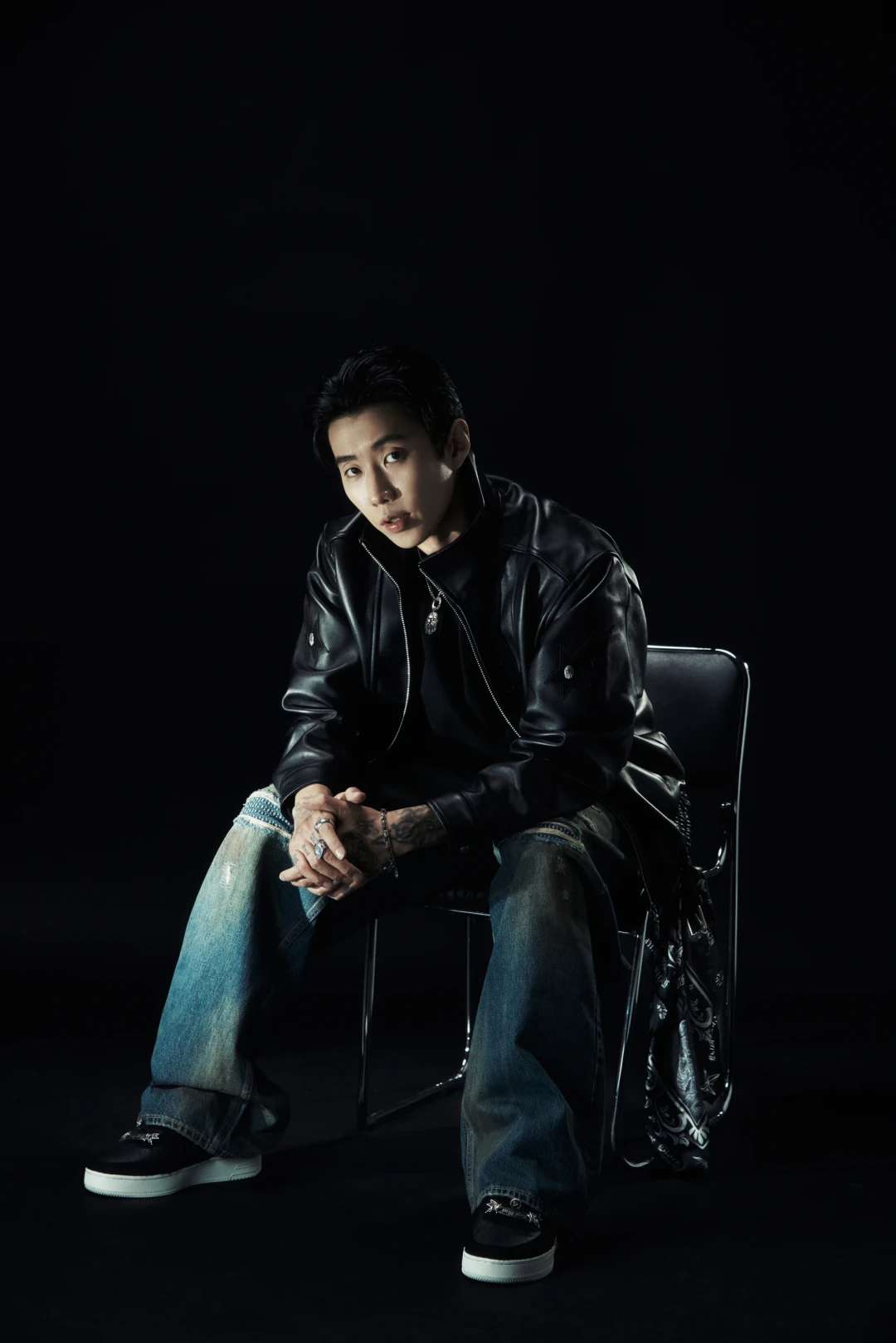
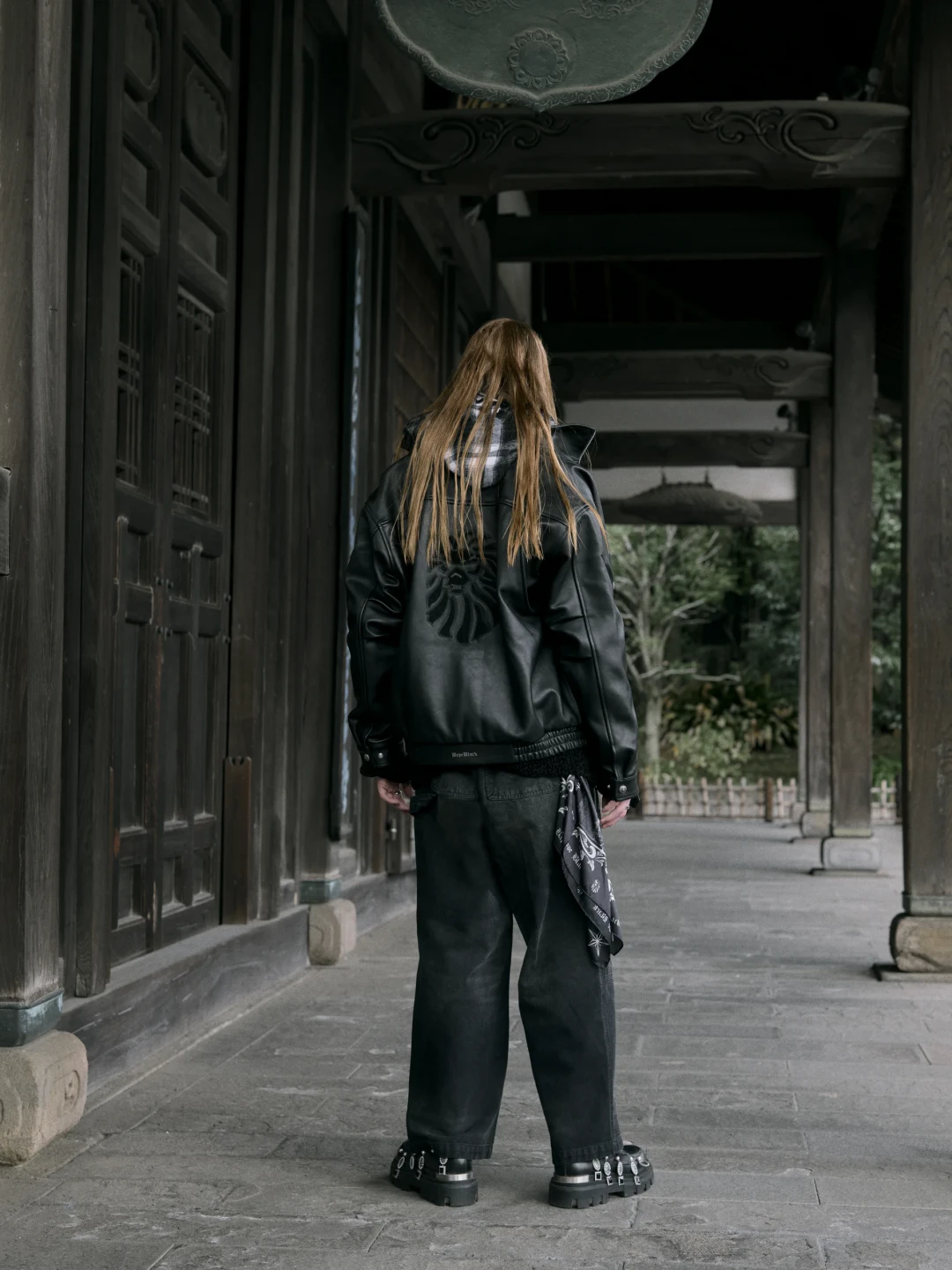
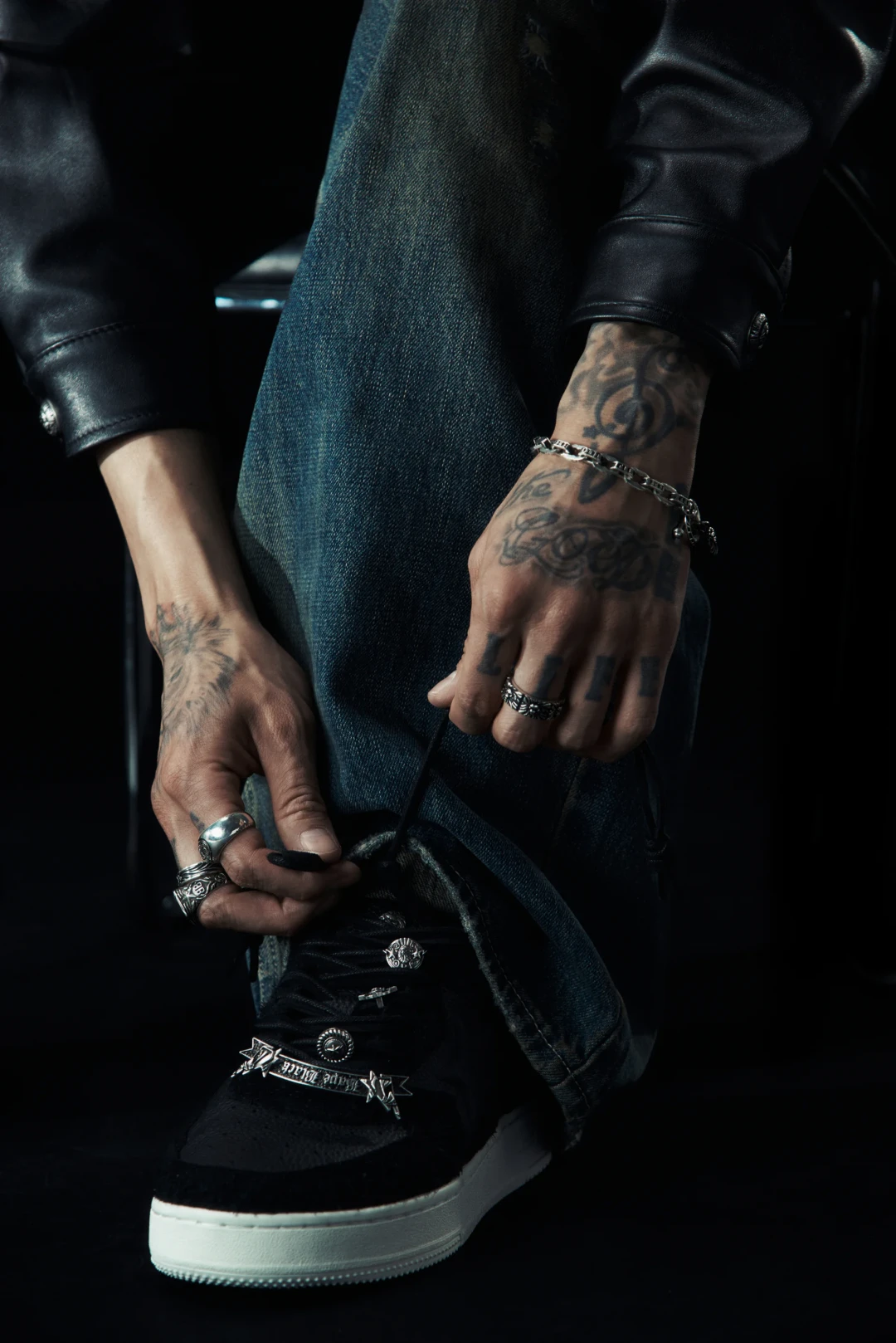
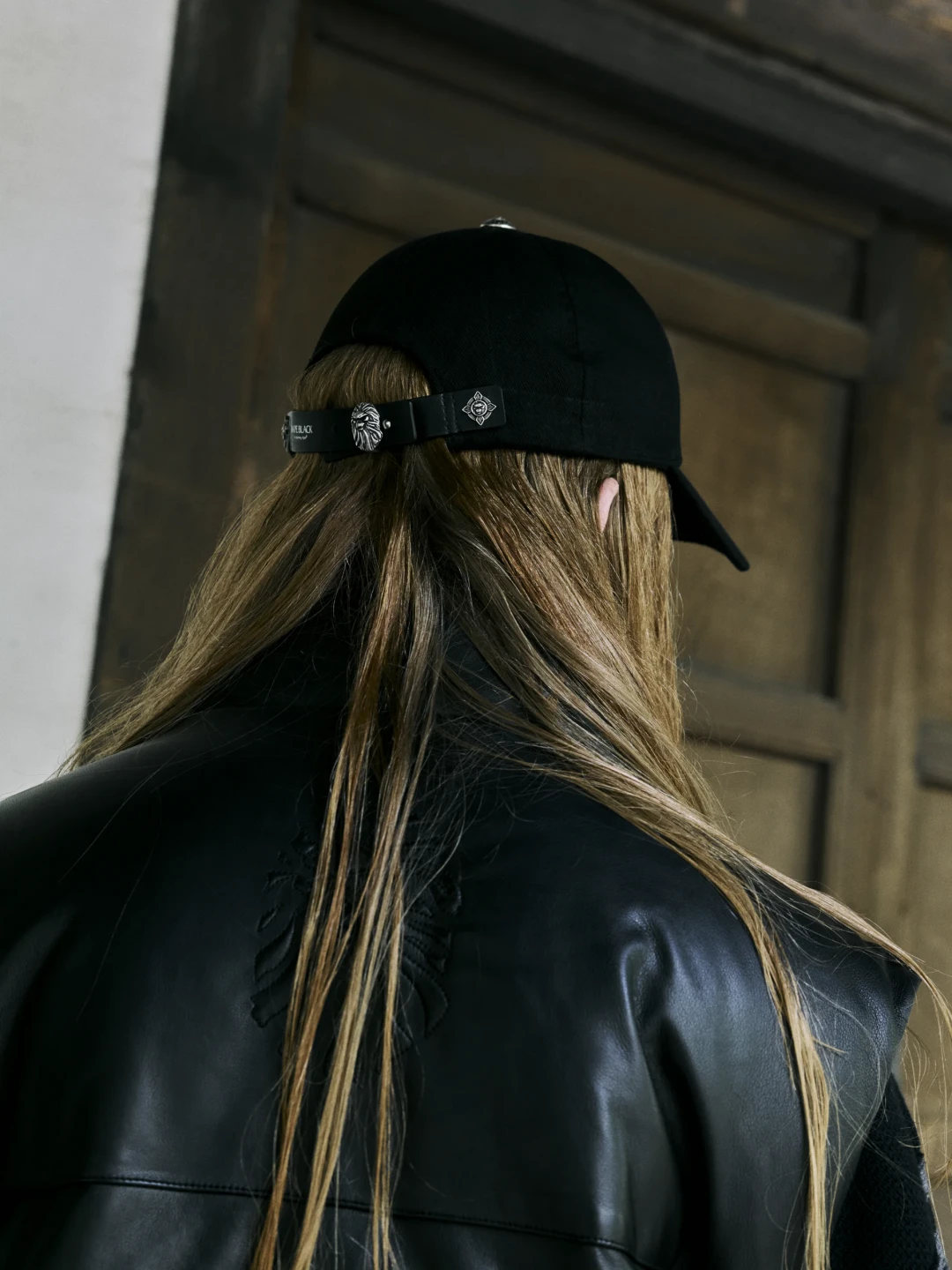
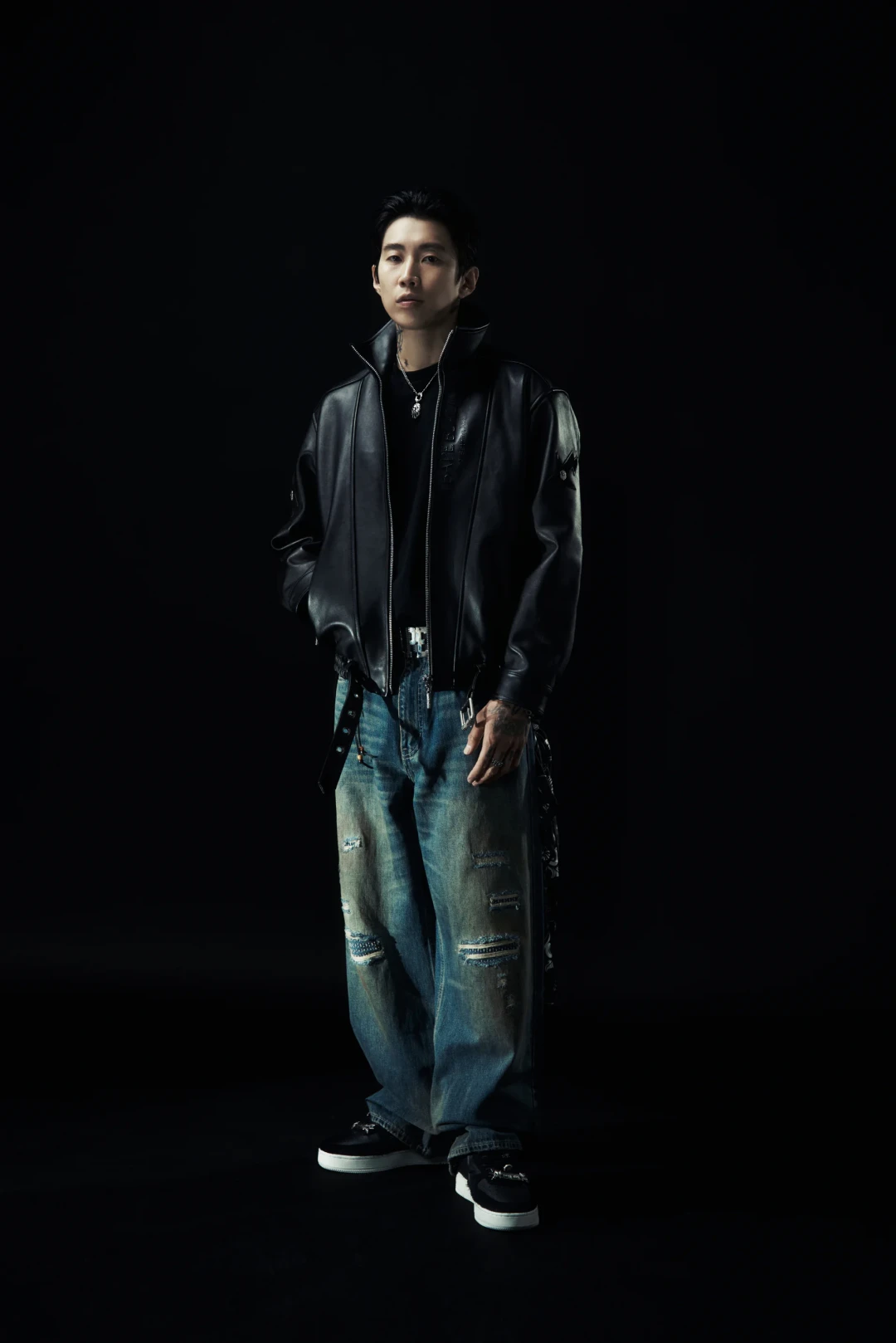
GOTHIC DUNE RIDER is where the collection spends its money. The theme draws on dark rock aesthetics, motorcycle culture, and luxury high-street tailoring, expressed through statement outerwear and heavy hardware meant to read as a fearless, unpolished attitude rather than a refined one. A belted leather biker jacket tops the range at ¥220,000, the single most expensive item in the lineup, cut with the same dark-rock hardware BAPE BLACK has leaned on since earlier seasons built around motorcycle culture. A heavy washed denim jacket runs ¥99,000, paired with washed chore work pants at ¥82,500 and a washed gothic cap at ¥27,500, the cheapest piece in the collection. Two graphic tees sit underneath the outerwear rather than standing alone: a studded BAPE tee at ¥36,300 and a plainer pocket tee at ¥33,000. Across the theme, the styling stays close to biker-jacket proportions even on pieces that aren’t jackets at all, with hardware, washing, and heavy graphic treatments doing the work of tying a cap and a pair of work pants to a six-figure-yen leather jacket.
Jay Park
scope
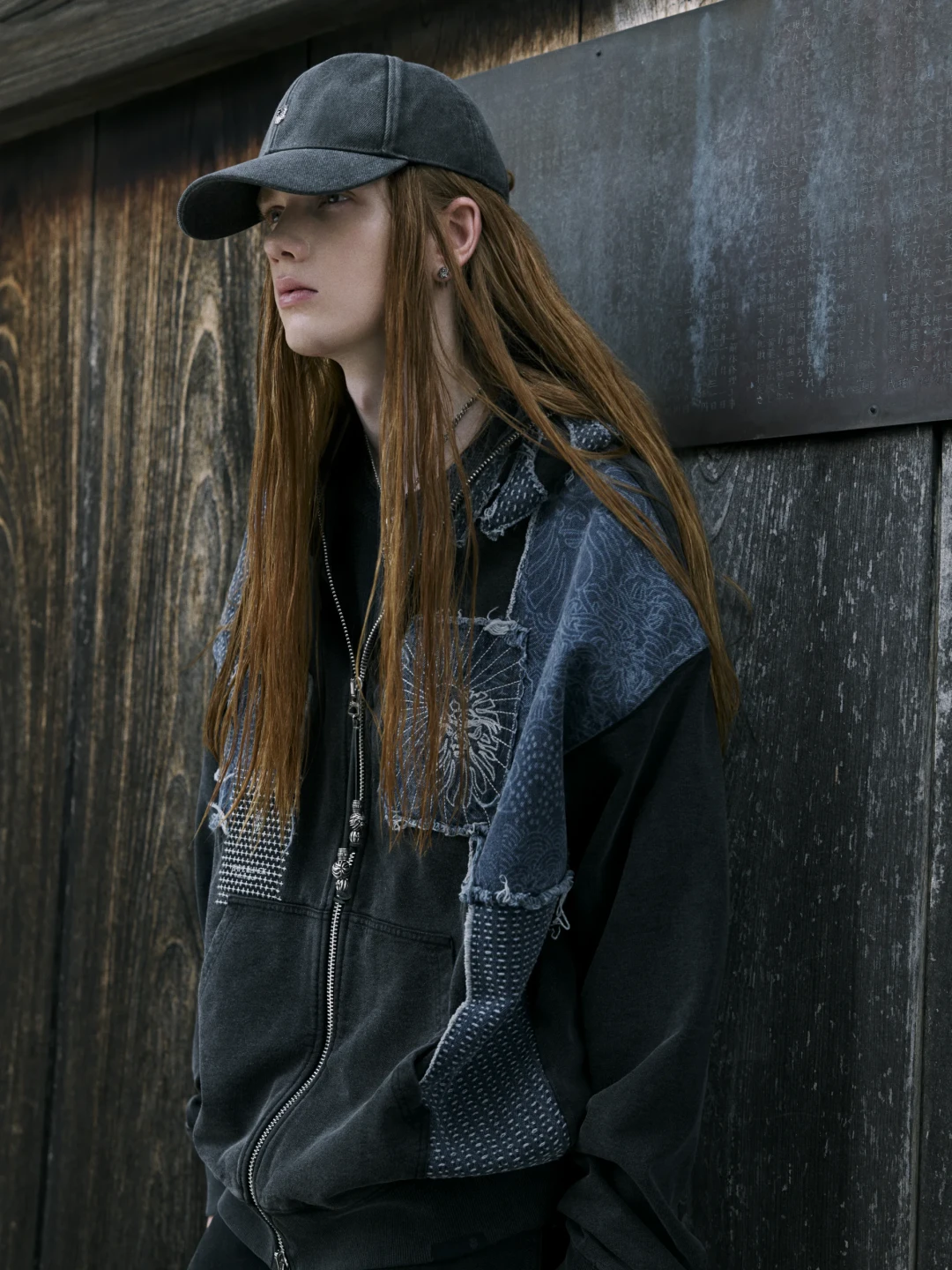
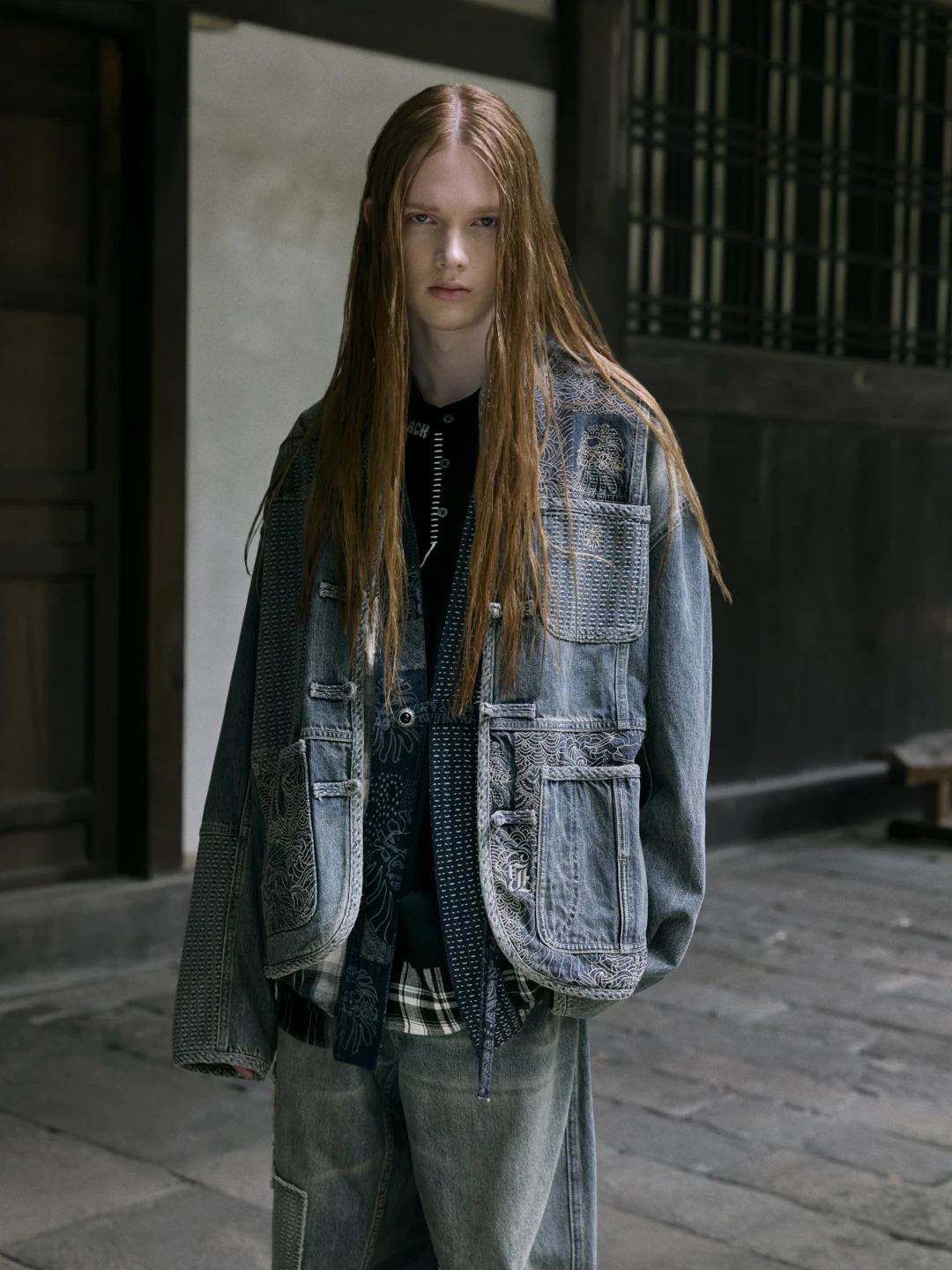
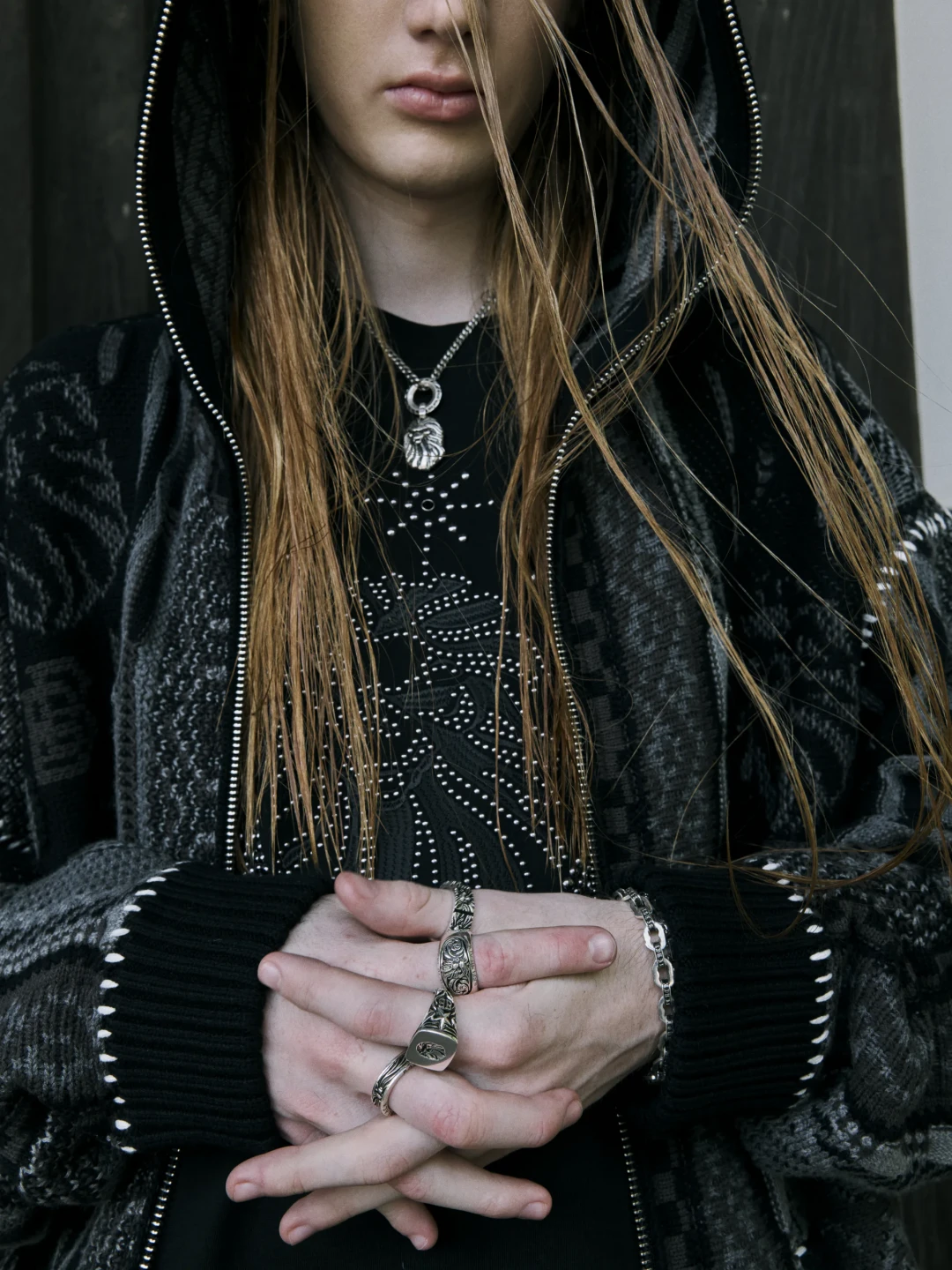
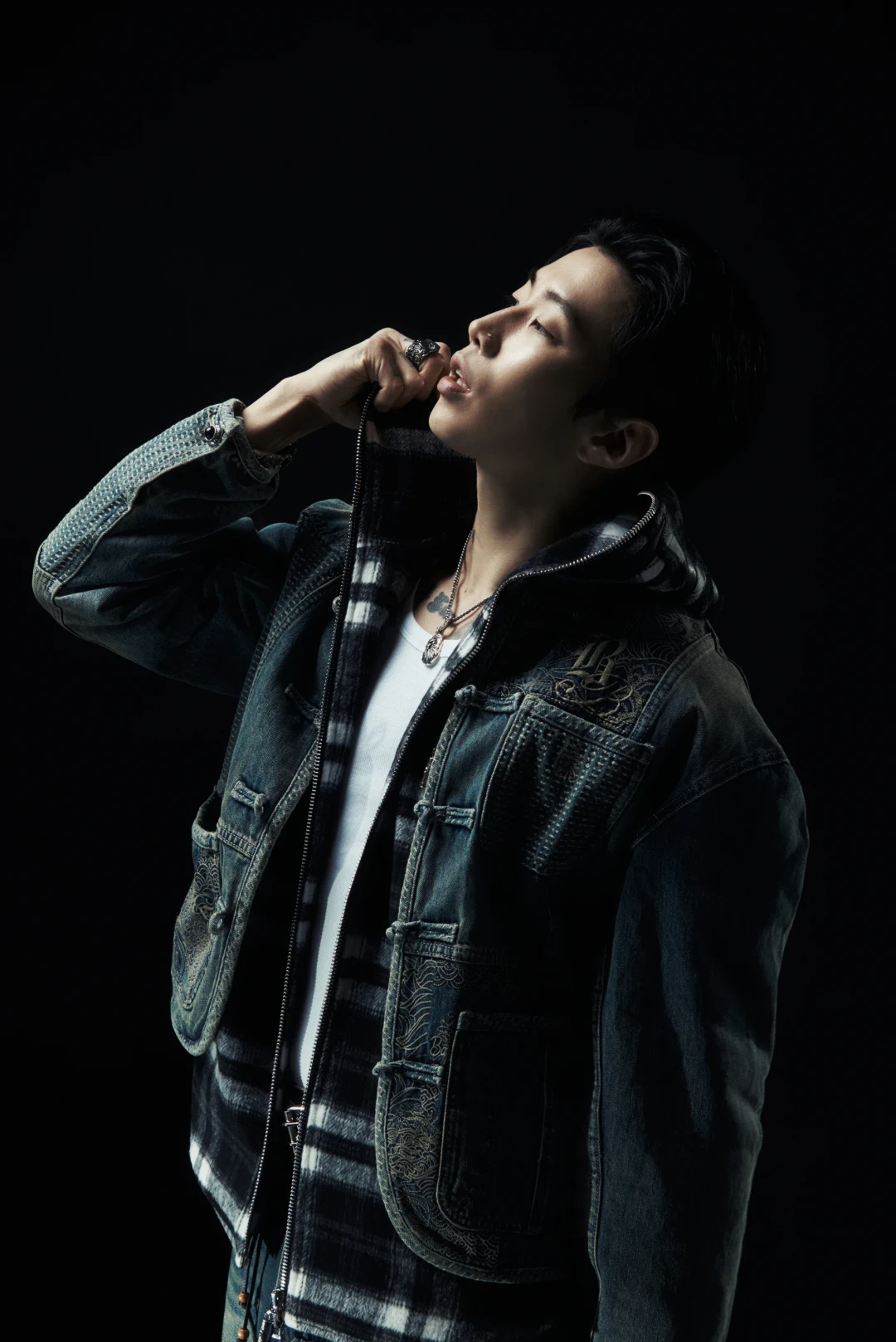
THE BLACK BORO ARTISAN works from an older set of instructions. Sashiko, the running-stitch technique Japanese farming and fishing households developed during the Edo period to reinforce worn cotton, and boro, the patchwork that resulted from mending the same cloth across generations, both started as necessity rather than style, born out of a scarcity of new fabric and sumptuary laws that limited common households to indigo-dyed cotton. BAPE BLACK’s fall lineup treats the two techniques as pure design language instead. A patchwork MAD FACE boro zip hoodie at ¥63,800 stitches mismatched panels together under the brand’s signature graphic, while a sashiko patchwork shirt (¥88,000) and sashiko patchwork jeans (¥77,000) wear their visible stitch lines as decoration rather than repair. The most expensive piece on this half of the collection is a hybrid kimono at ¥121,000, cutting a traditional silhouette from patched indigo panels instead of a single length of cloth, the exact reversal of what boro’s original practitioners were doing when they patched a kimono out of necessity rather than choice. Sashiko and boro have shown up across Japanese-influenced streetwear and menswear for years now on labels well beyond BAPE, but BAPE BLACK is one of the few putting the technique directly against a leather biker jacket in the same nineteen-piece drop rather than treating it as its own separate, quieter collection.
both
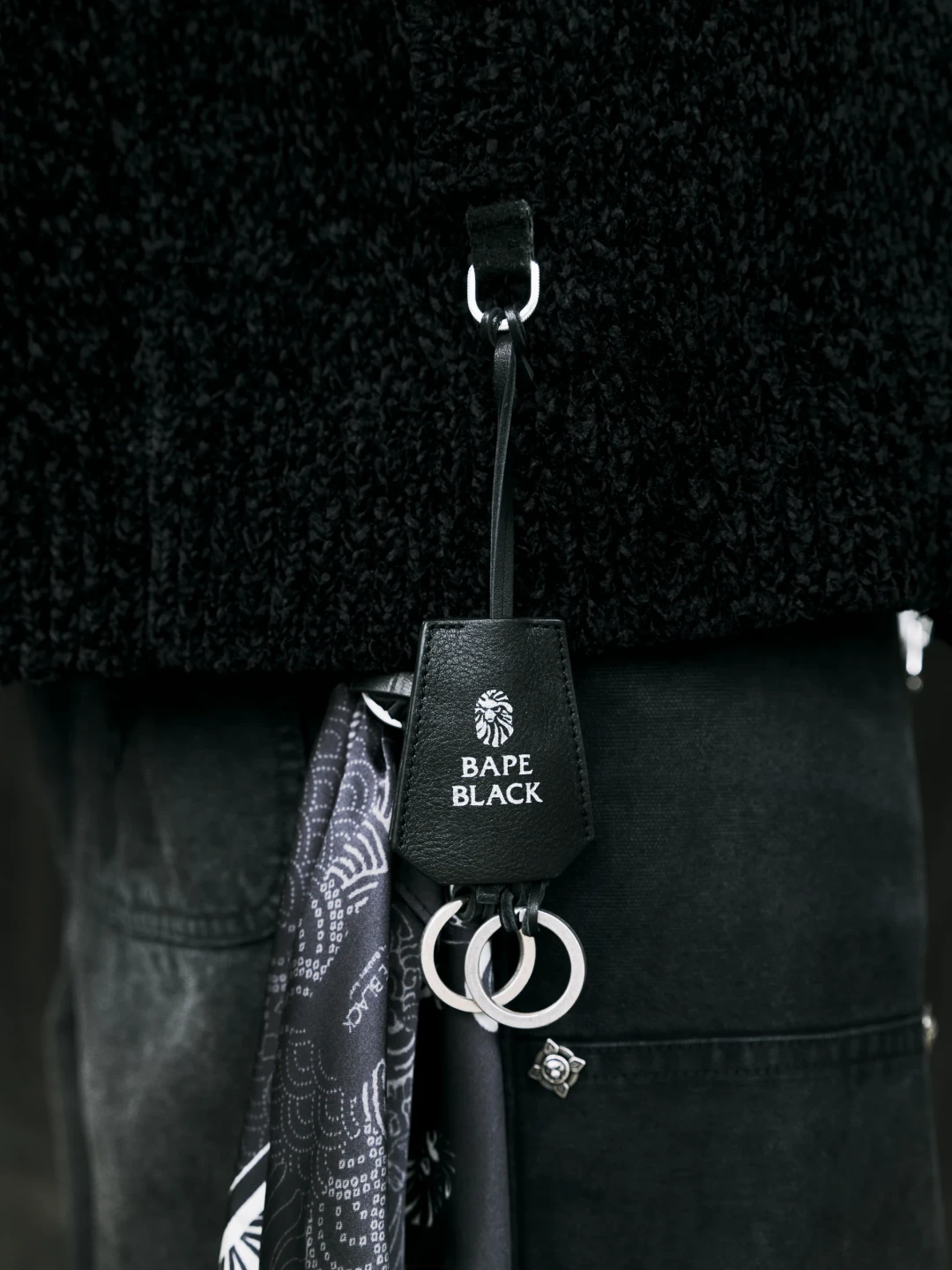
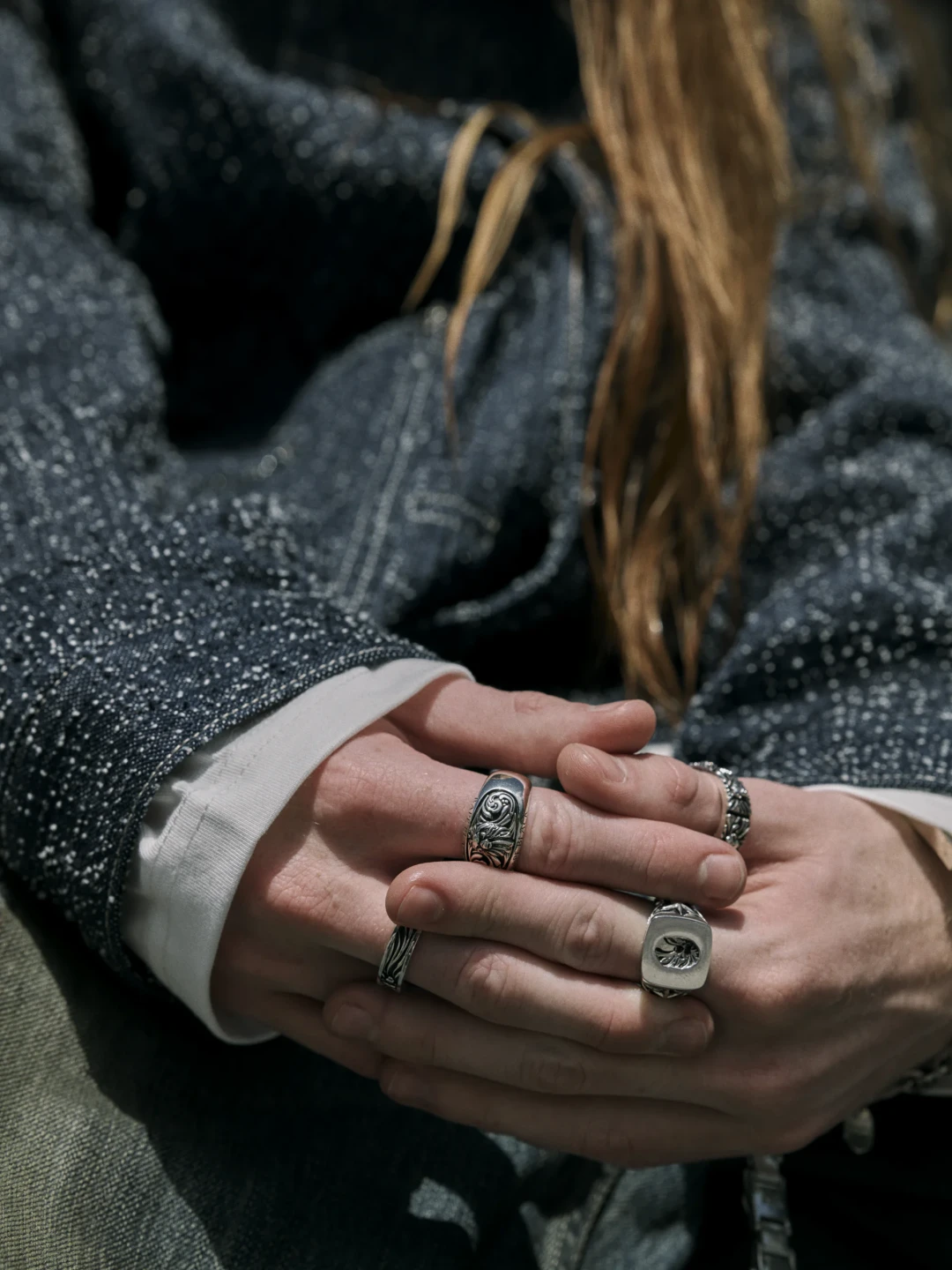
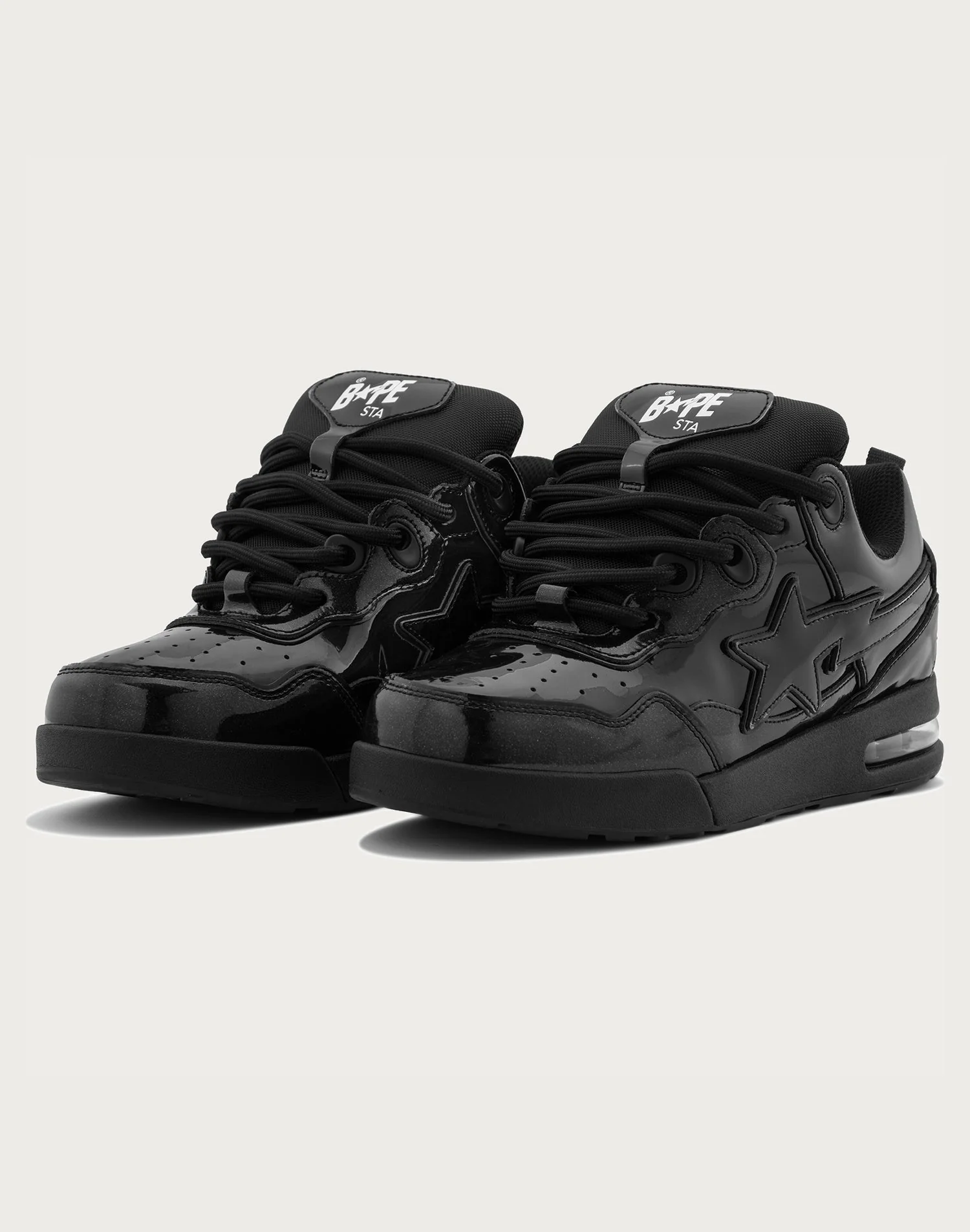
The jewelry line does the work of tying both halves together. Built from 925 sterling silver and stamped with BAPE‘s ape-face MAD FACE mark, the run includes a signet ring, a plain MAD FACE ring, a relief ring, and a logo ring, priced between ¥41,800 and ¥49,500. A MAD FACE pendant strung with a BAPE STA charm sells as a necklace for ¥110,000, and the same motif shows up on a relief bracelet (¥154,000, the priciest jewelry piece in the run), a plainer outline bracelet (¥110,000), and two earring styles, a stone-set single earring at ¥41,800 and a pair of studs at ¥38,500. Footwear is limited to one model this season: the BAPE STA™ ICON in black leather at ¥66,000, built on the low-top silhouette BAPE has run as its signature sneaker since the mid-2000s. It’s a quieter piece than the jewelry around it, but it’s the one item in the collection that carries the season’s two themes without needing either one spelled out on it. Across the four most recent BAPE BLACK seasons, this fine-silver line has been the one part of the collection that never changes format even when the two seasonal themes do, sometimes running plain sterling, sometimes set with stones, but always carrying the same MAD FACE engraving that anchors the rest of the collection.
BAPE STA
who
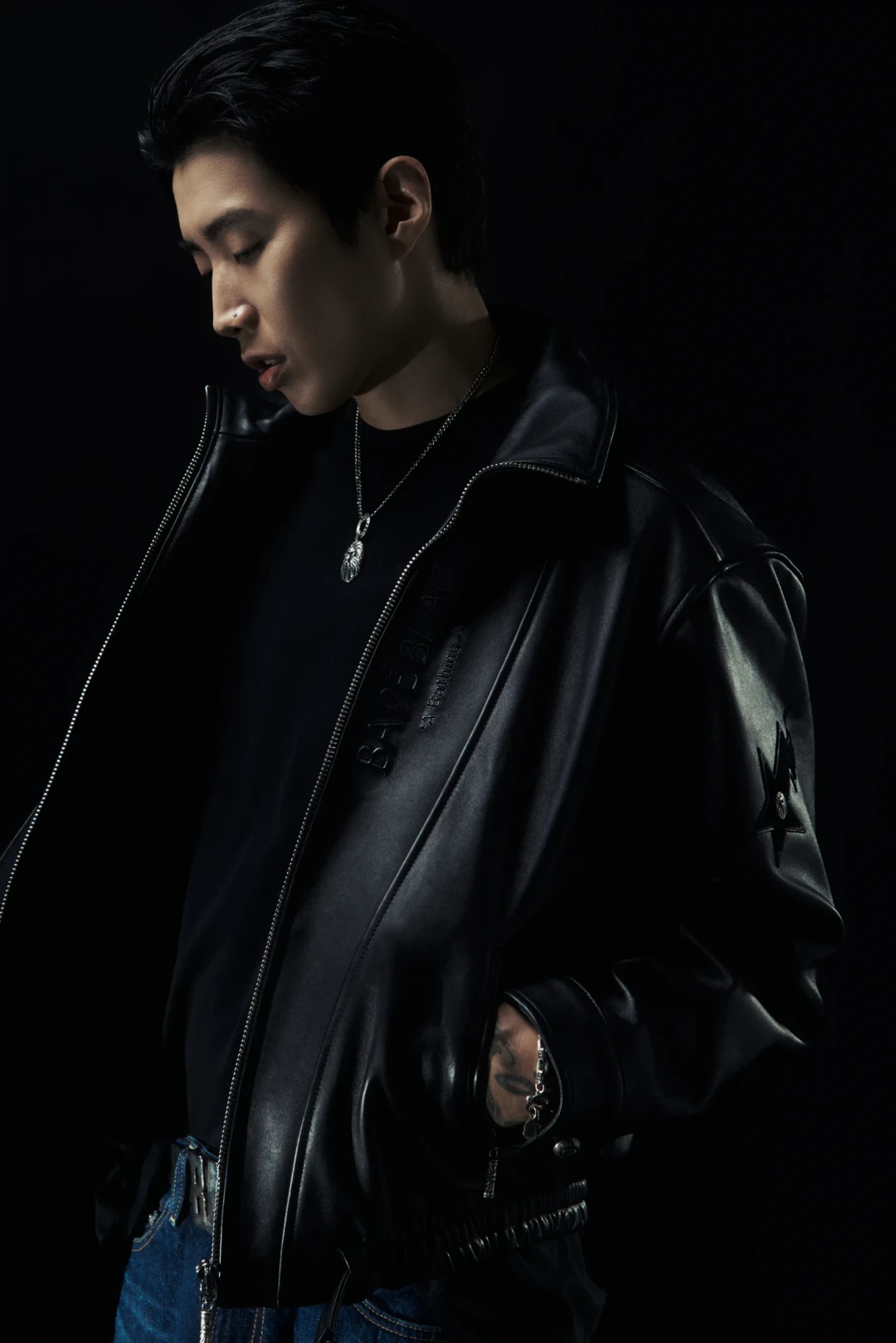
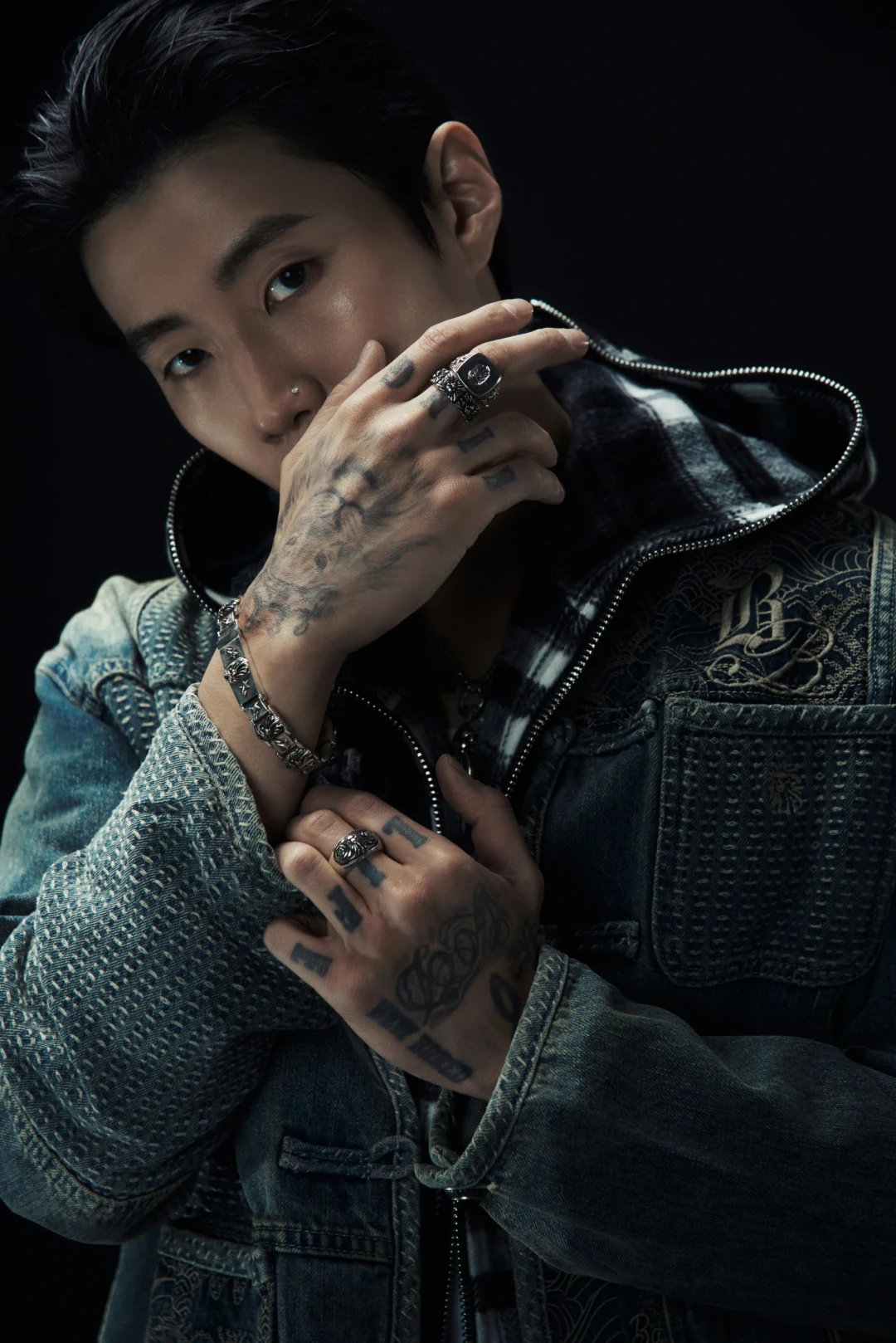
Jay Park, born Park Jae-beom in Seattle and now based in South Korea, is the face BAPE put on the campaign. Park spent his early career as a member of the Seattle b-boy crew Art of Movement before founding the hip-hop and R&B label AOMG in September 2013, launching it with a party in Seoul and Gray’s debut mini-album as its first release. The label has since built out a roster that’s included Gray, Loco, Elo, and Ugly Duck alongside Park himself. BAPE’s own social channels describe Park as embodying the collection’s duality between rebellion and refined craft, a fairly literal read of a rapper and label founder standing in for a line that spends half its energy on biker leather and the other half on centuries-old needlework.
That casting sits apart from A BATHING APE’s separate mainline Fall/Winter 2026 push, themed “Timeless Culture” and fronted by a different artist entirely: R&B singer JayDon, formerly credited as JD McCrary and known for voicing young Simba in Disney’s 2019 The Lion King. The two campaigns are running in the same season under the same parent brand, with two different musicians attached to two different lines, a distinction BAPE has kept clean across its own social accounts even as both collections lean on overlapping seasonal language about heritage colliding with rebellion.
esteem
BAPE BLACK’s Fall/Winter 2026 collection is landing alongside a separate, larger Fall/Winter 2026 push from the A BATHING APE mainline itself, themed “Timeless Culture.” Where BAPE BLACK splits its season into two named themes, the mainline collection is reportedly building its own season out in chapters, with the final one centered on art and craftsmanship, reworking traditional Japanese aesthetics through souvenir jackets and denim rather than the biker leather BAPE BLACK is leaning on. Both collections lean on the same general language, Japanese craftsmanship set against a harder, more American-inflected street code, without being the same collection or sharing a campaign face. It’s a structural echo more than a shared campaign: two lines under one house, telling a similar story about heritage and rebellion in slightly different vocabularies, in the same season.
View this post on Instagram
vib
Pairing a hard, rock-adjacent theme against a softer, craft-driven one has been BAPE BLACK‘s format for as long as the sub-label has run two-theme seasons, and each prior season fills that formula in with different specifics. The Fall/Winter 2024 collection ran “BLACK ROCK RIDER” opposite “JAPAN TRIBAL SASHIKO ART,” pairing washed leather biker jackets and faux fur pieces trimmed in MAD FACE metal hardware against a collarless tweed jacket finished with pearl embellishments. Fall/Winter 2025 followed with “The Luxe Motor Club,” built on washed leather biker jackets, tailored black suits, and MA-2 flight jackets trimmed in paisley knit, set against “The Zen Tribal Mountaineers,” which reworked the MAD FACE motif in carved jade and put kimono-patchwork corduroy jackets and a three-layer All-Terrain Utility Parka on the same rack as sherpa jackets and denim. Spring/Summer 2026 split into “The Luxe Grunge Rocker,” a grunge-and-biker theme running washed leather jackets against checked shark-hooded shirts and rope-stitched linen sets, and “The Zen Gardening Artisan,” which put Japanese-landscape embroidery and indigo denim patchwork on shirts and slogan tees, finished with a BAPE STA™ ICON in leather and suede.
GOTHIC DUNE RIDER and THE BLACK BORO ARTISAN continue that same two-theme structure almost exactly, trading grunge and motor-club language for a gothic, dune-adjacent read on the same biker silhouette, while the craft half narrows from mountains and gardens specifically toward boro’s patchwork. The one constant across all four seasons is the 925 silver jewelry line and the MAD FACE motif itself, rendered differently each time (plain sterling silver, carved jade, and now a straight silver read again) but present in some form no matter which two themes happen to be carrying it that season.
fin
BAPE BLACK’s Fall/Winter 2026 collection is rolling out the way its last several seasons have: a staggered release across A BATHING APE‘s authorized retailers rather than a single simultaneous drop. Prior BAPE BLACK seasons have opened with a short pre-sale window on the BAPE.COM web store, followed a day or two later by in-store availability at flagship locations including BAPE STORE Ginza and BAPE STORE Comme des Garçons Osaka, with some smaller locations sitting out individual items entirely. No specific pre-sale date or time for this collection had been published on BAPE’s own channels at time of writing. The rollout is expected to reach BAPE’s regular retail partners as it continues through the season, follow the same sequential pattern the sub-label has used every season since its 2015 debut. Past BAPE BLACK seasons have also noted that not every item lands at every store, meaning the fastest way to see the full nineteen-piece range in one place will likely stay the BAPE.COM web store rather than any single physical location.
Related Articles
Supreme and A.PRESSE Build Fall 2026 From the Fabric Up
Eleven pieces built on calfskin, cotton silk and sterling silver: Supreme’s Fall 2026 collaboration with […]