DRIFT AUDIO
Listen to this story
Choose a voice, then press play.
A four-piece capsule turns years of lunar BAPE rel into one continuous pulp sci-fi story, launching September 19 at ¥12,100 and up.
Four Tee and a single rocket ship: A BATHING APE® is opening a new chapter in its long-running lunar myth this September, dropping the MOON COLLECTION 2026 lineup on the 19th, six days ahead of the actual Mid-Autumn full moon. Past years’ capsules treated the moon mostly as a decorative motif, something to print on a chest and move on from. This one treats it as a destination with its own timeline, its own cast, and its own reason for being there in the first place, with four new pieces reading less like a scattered product drop and more like consecutive panels of a comic that never got printed.
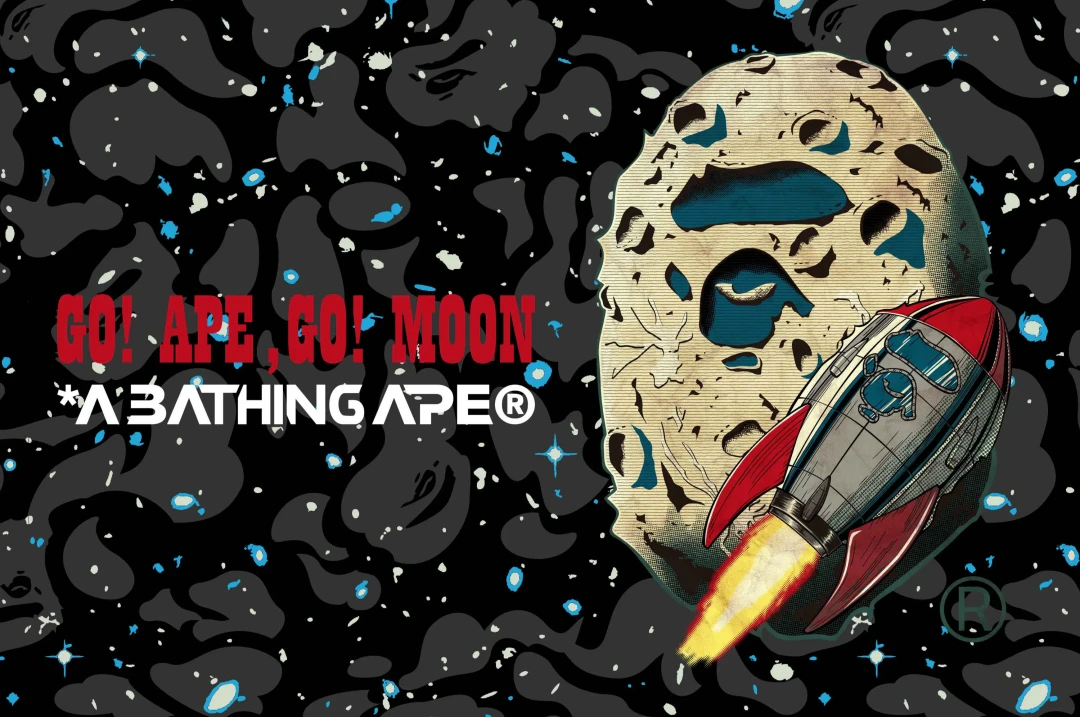
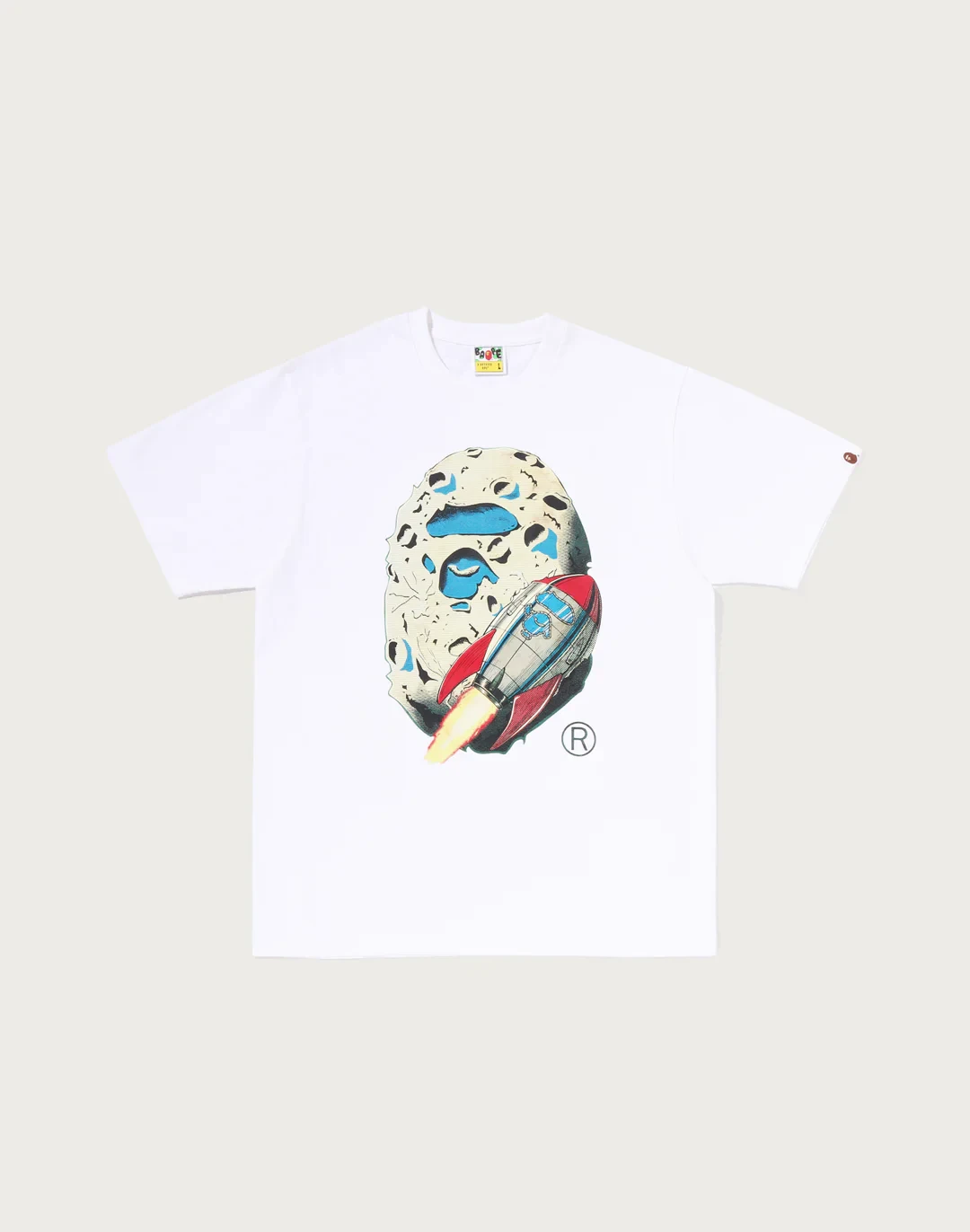
A BATHING APE® “GO! APE, GO! MOON” graphic featuring a rocket and an ape head-shaped moon.
four
BAPE calls this year’s concept “月面旅行,” or “moon trip,” and unlike prior editions’ looser mix of graphics, the four pieces (three short-sleeve tees and one long-sleeve) are sequenced to tell a single story from liftoff to landing.
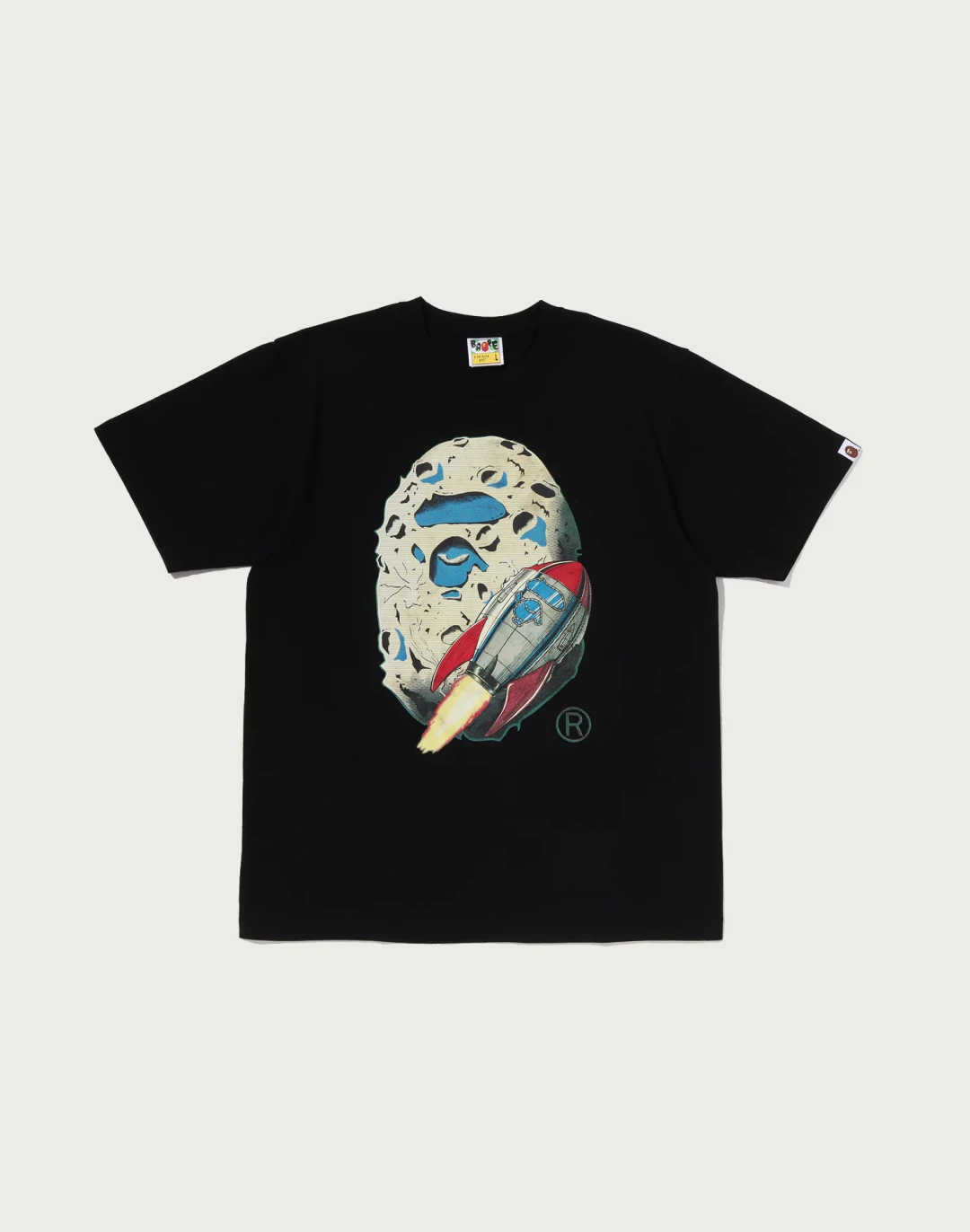
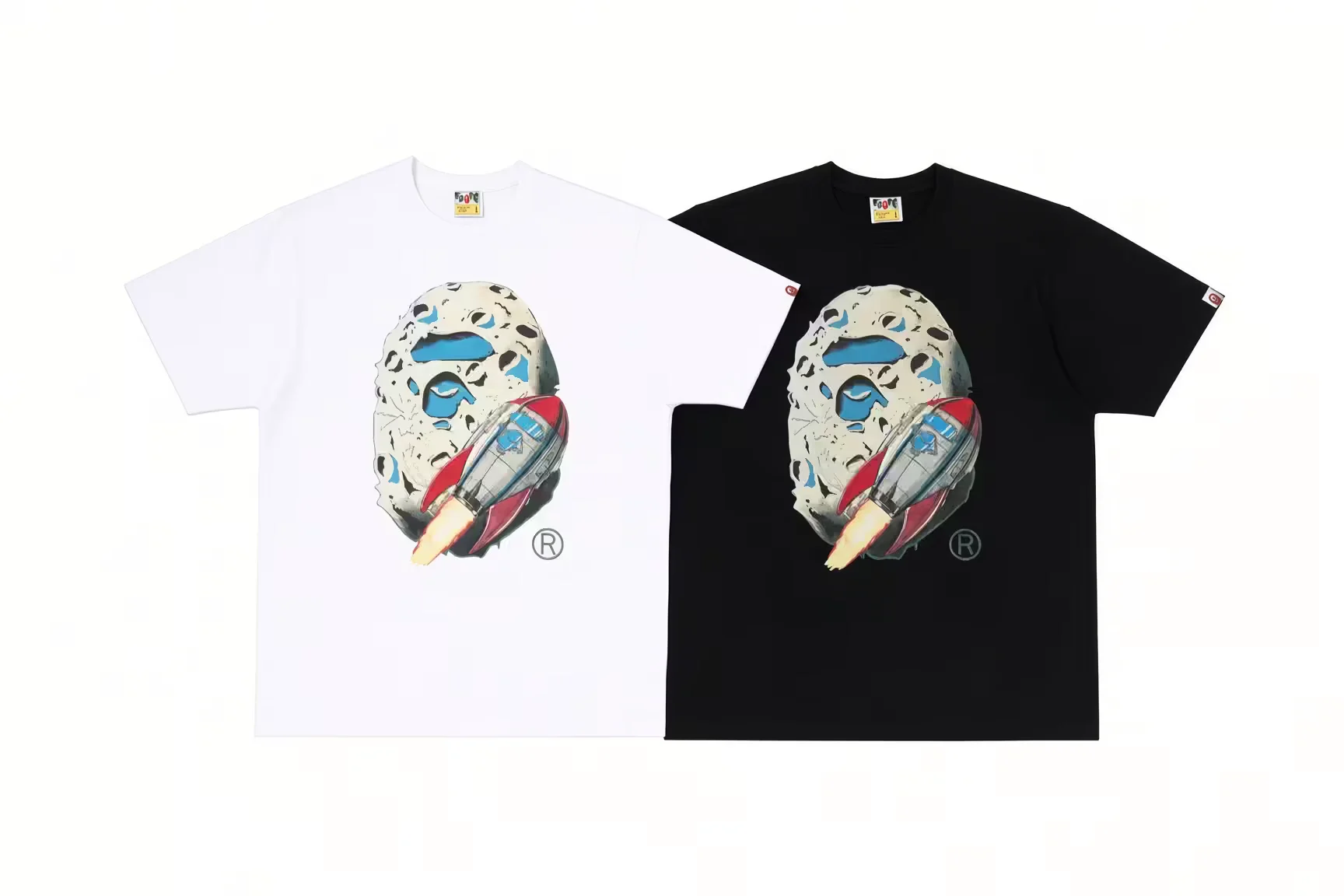
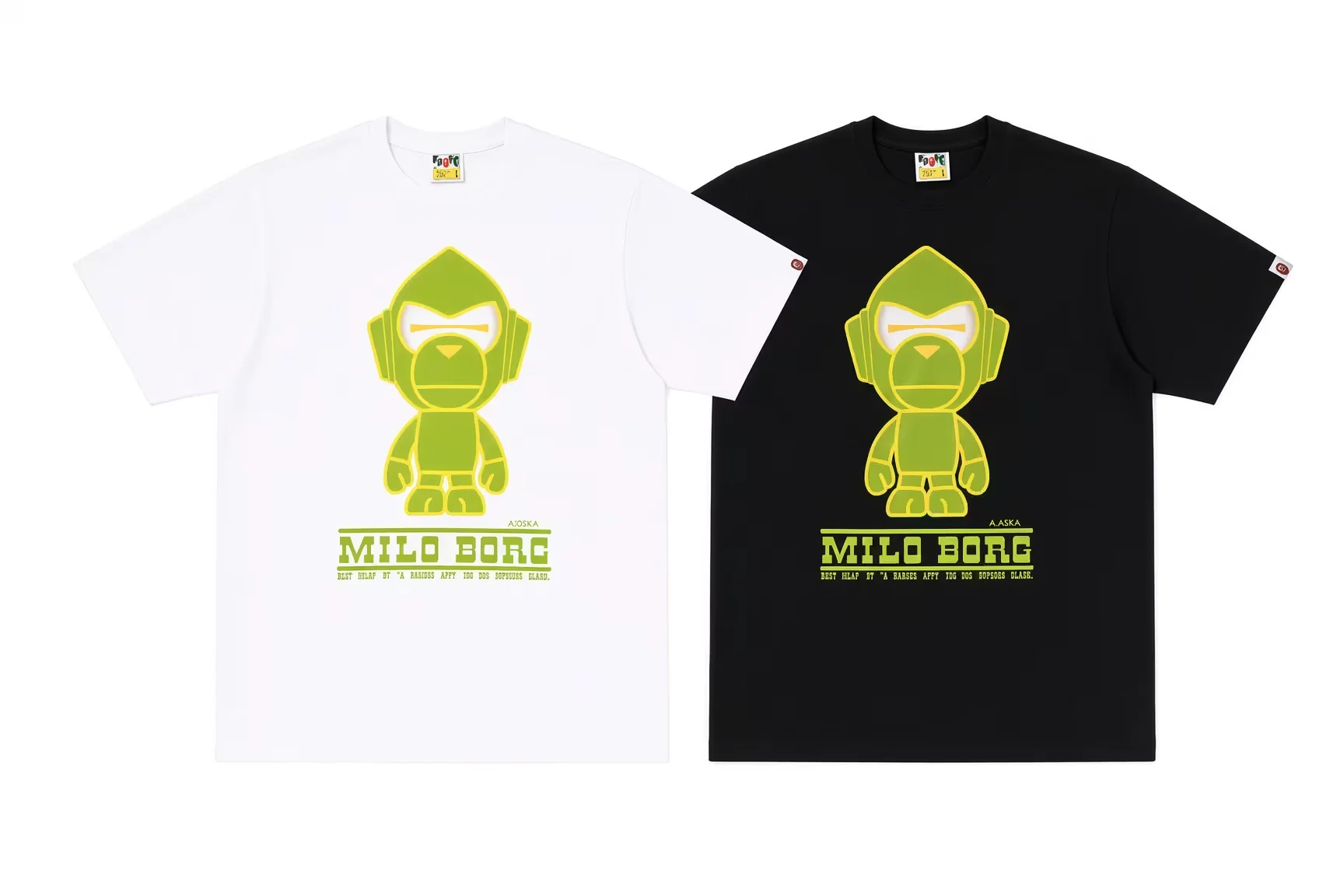
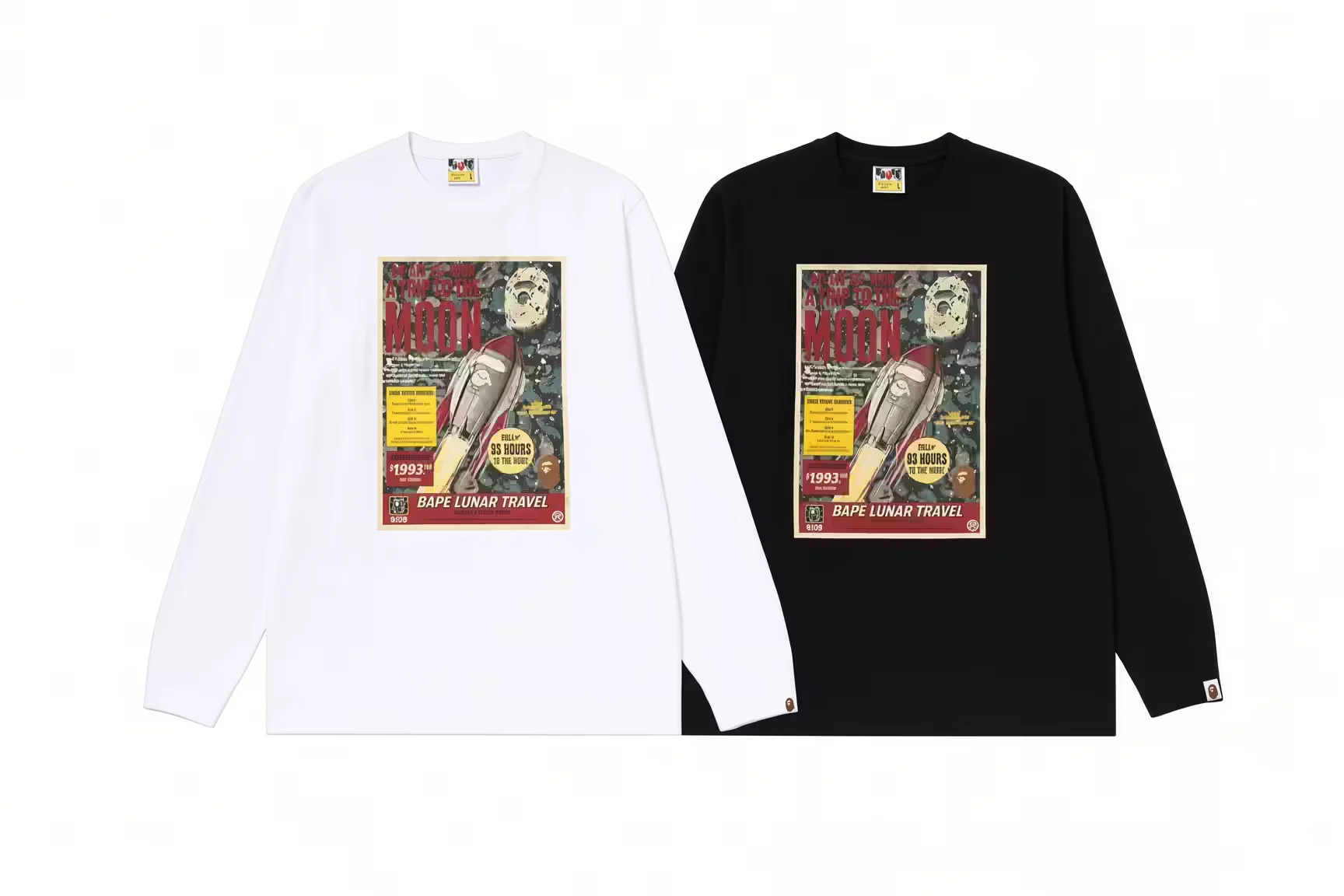
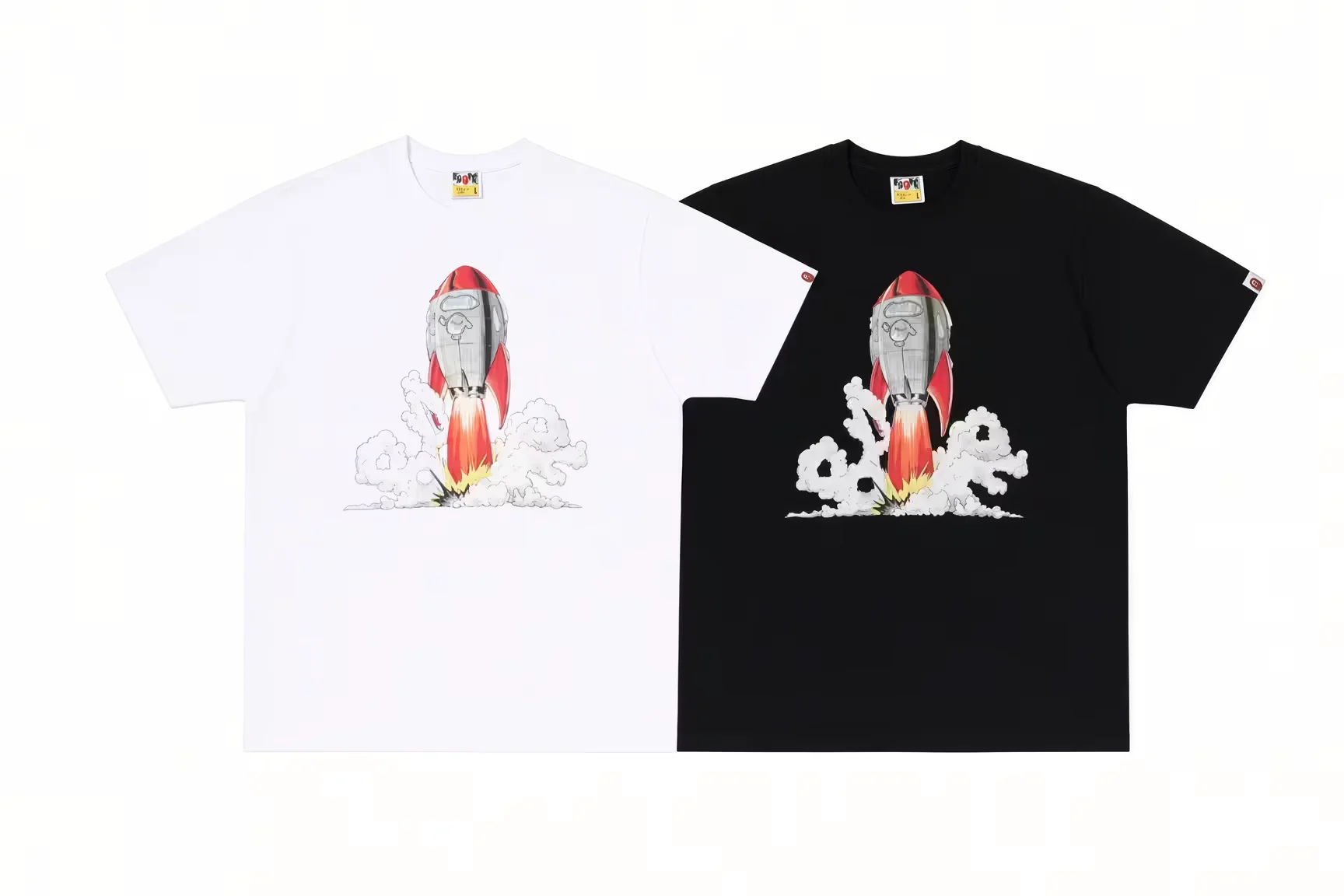
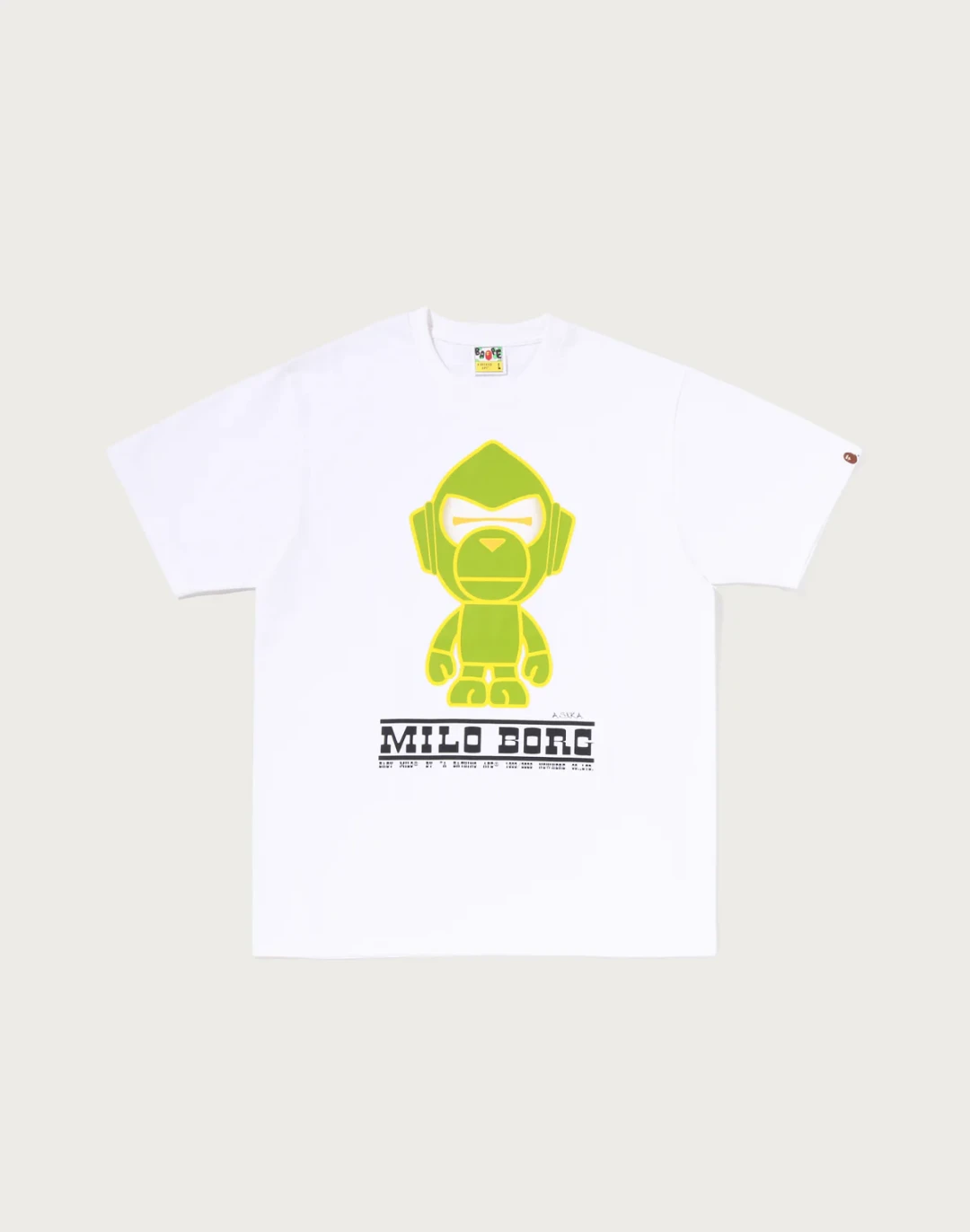
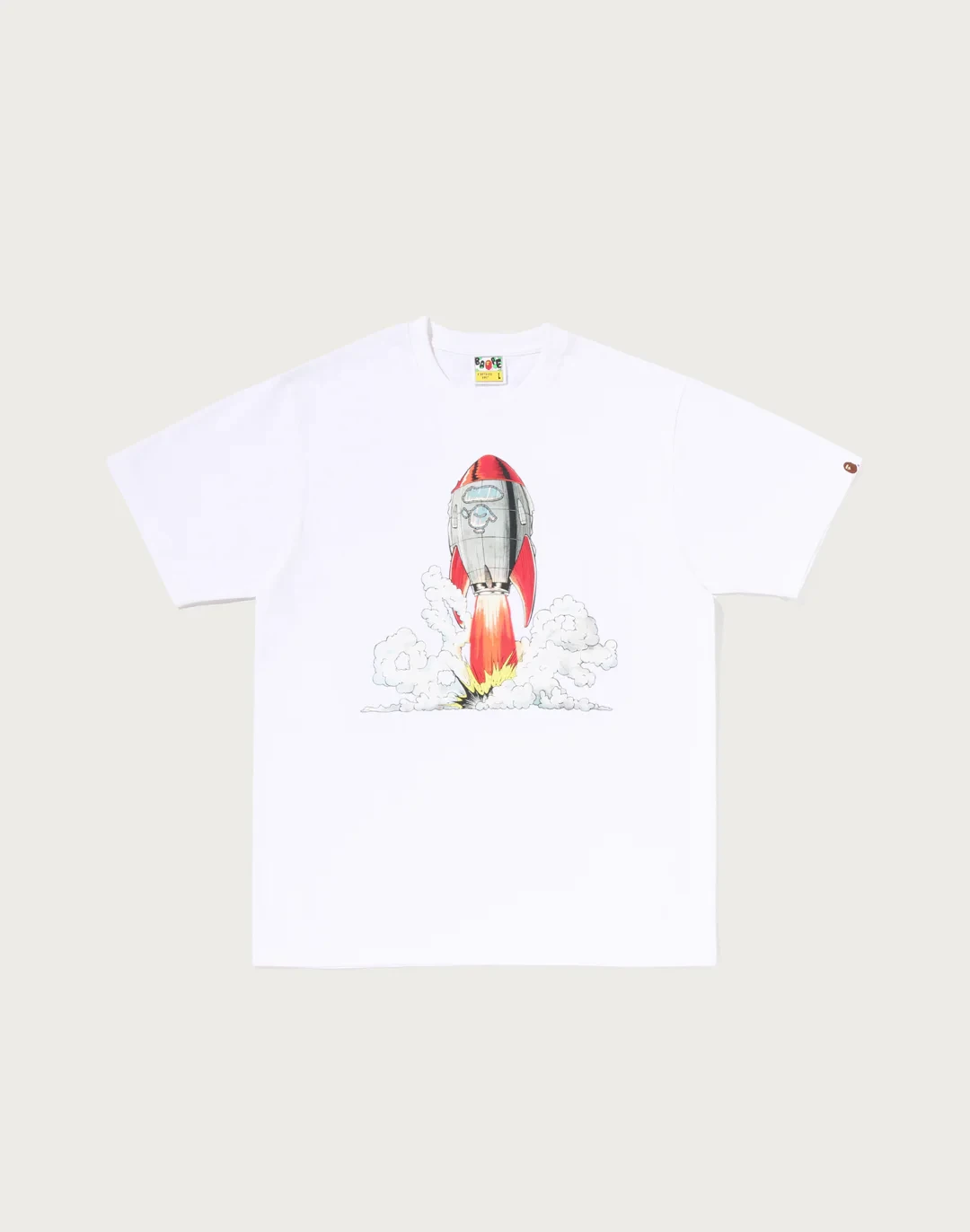
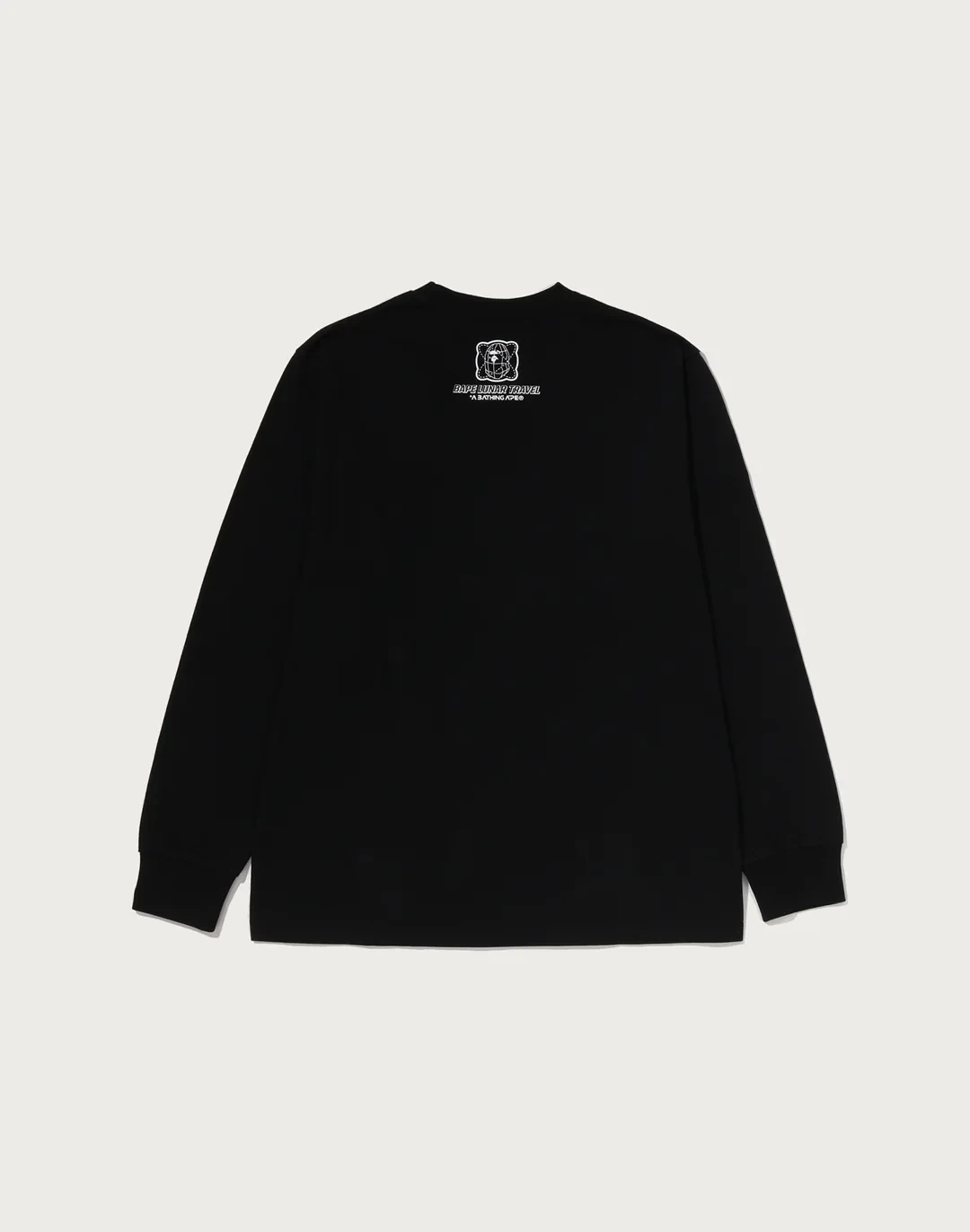
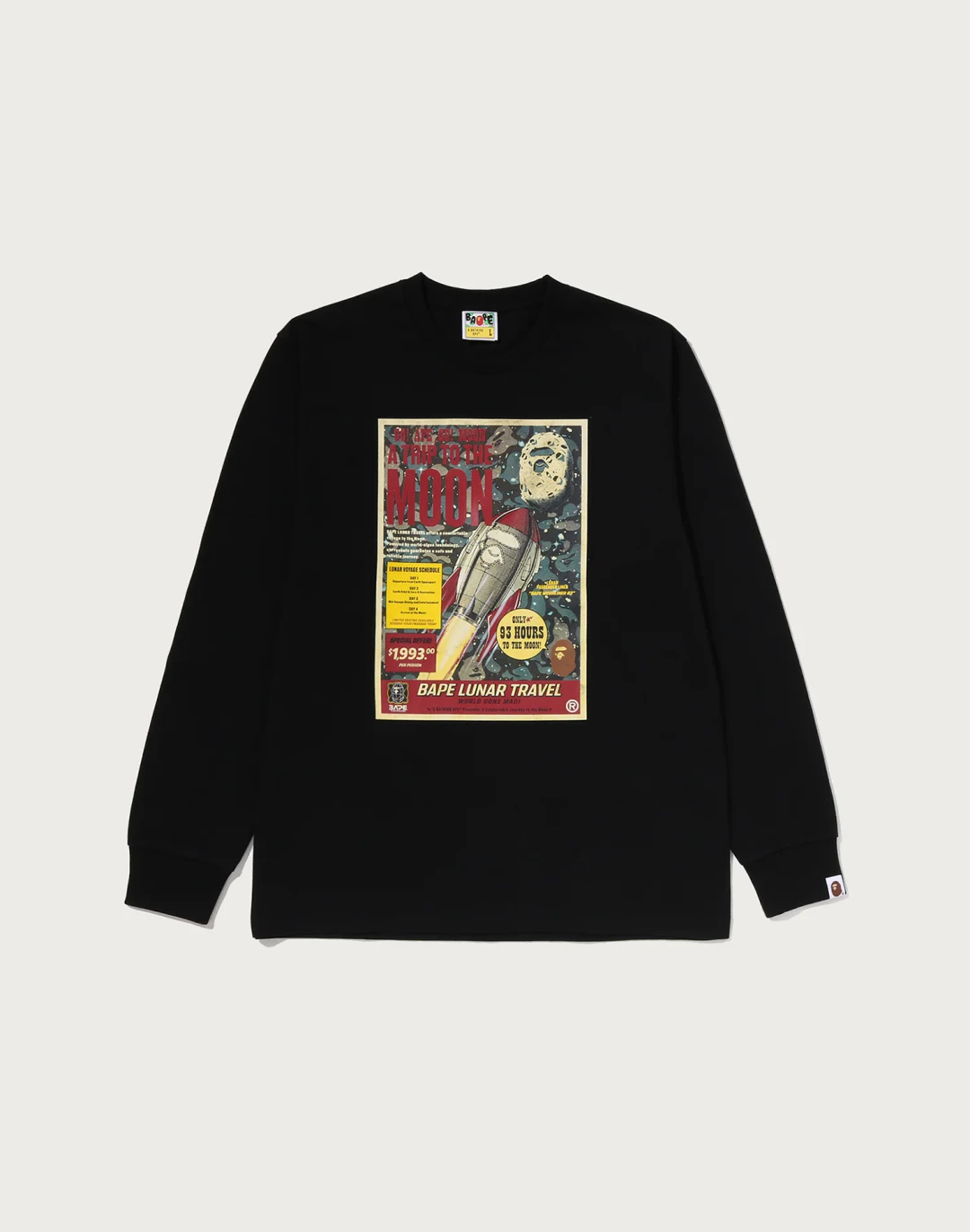
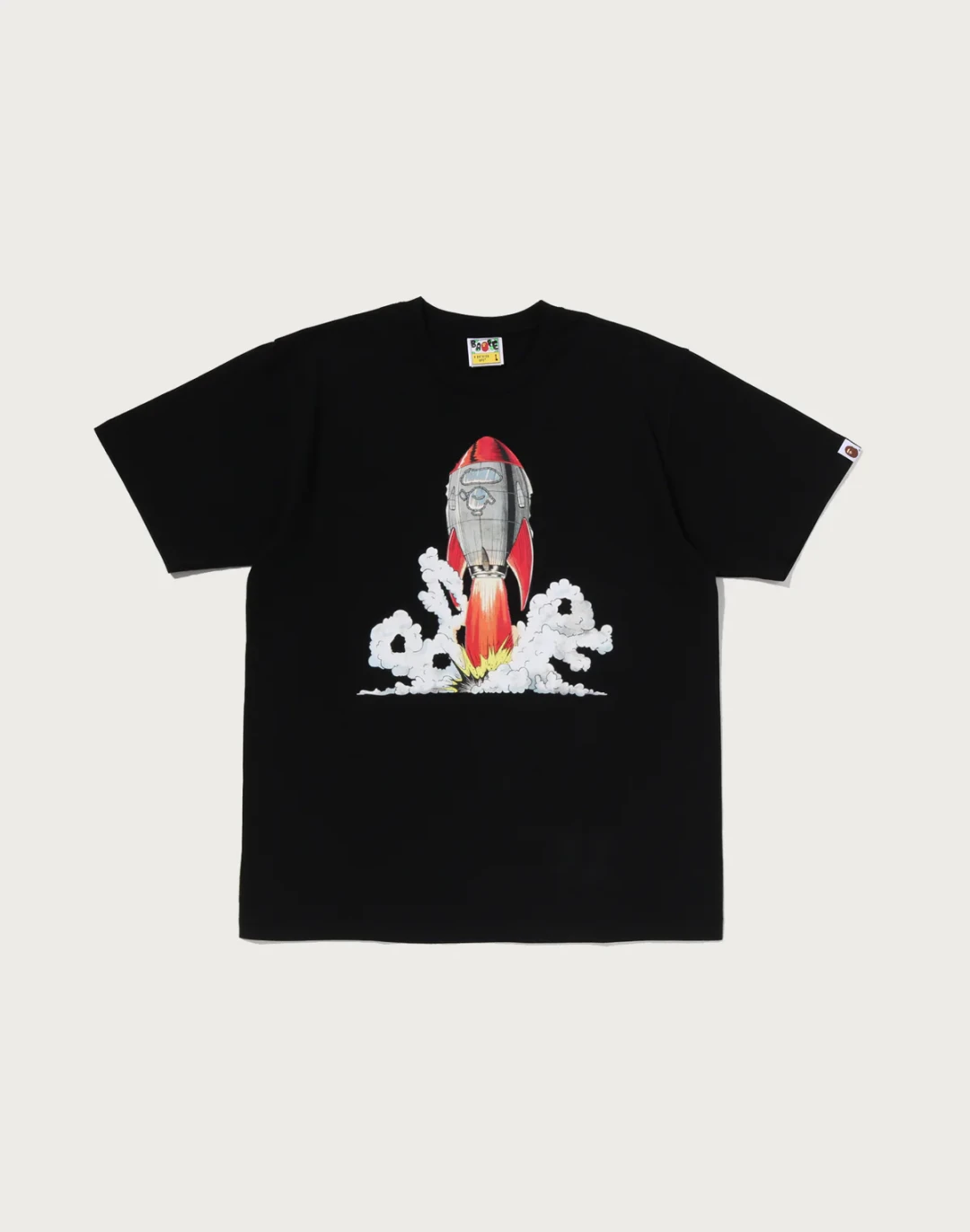
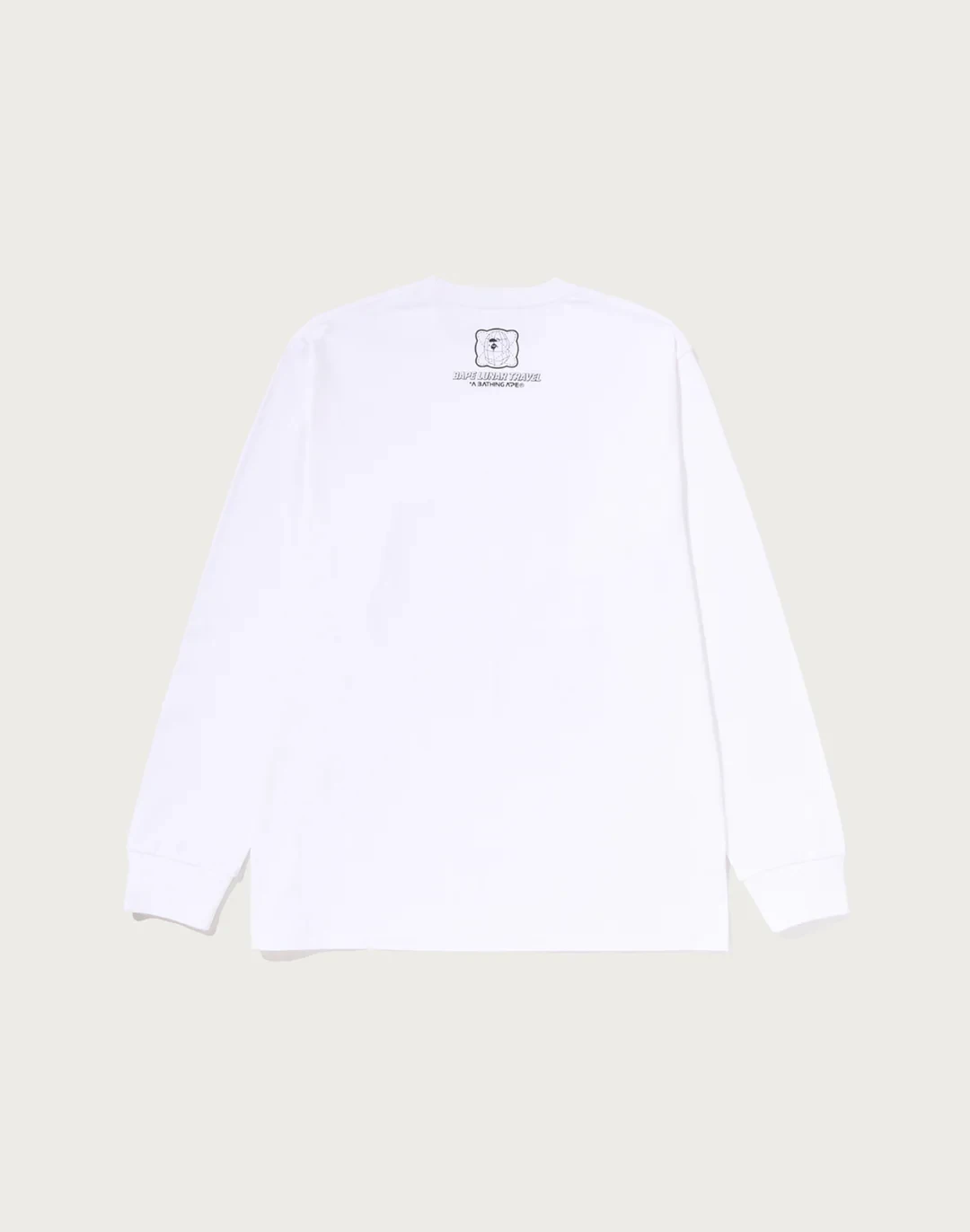
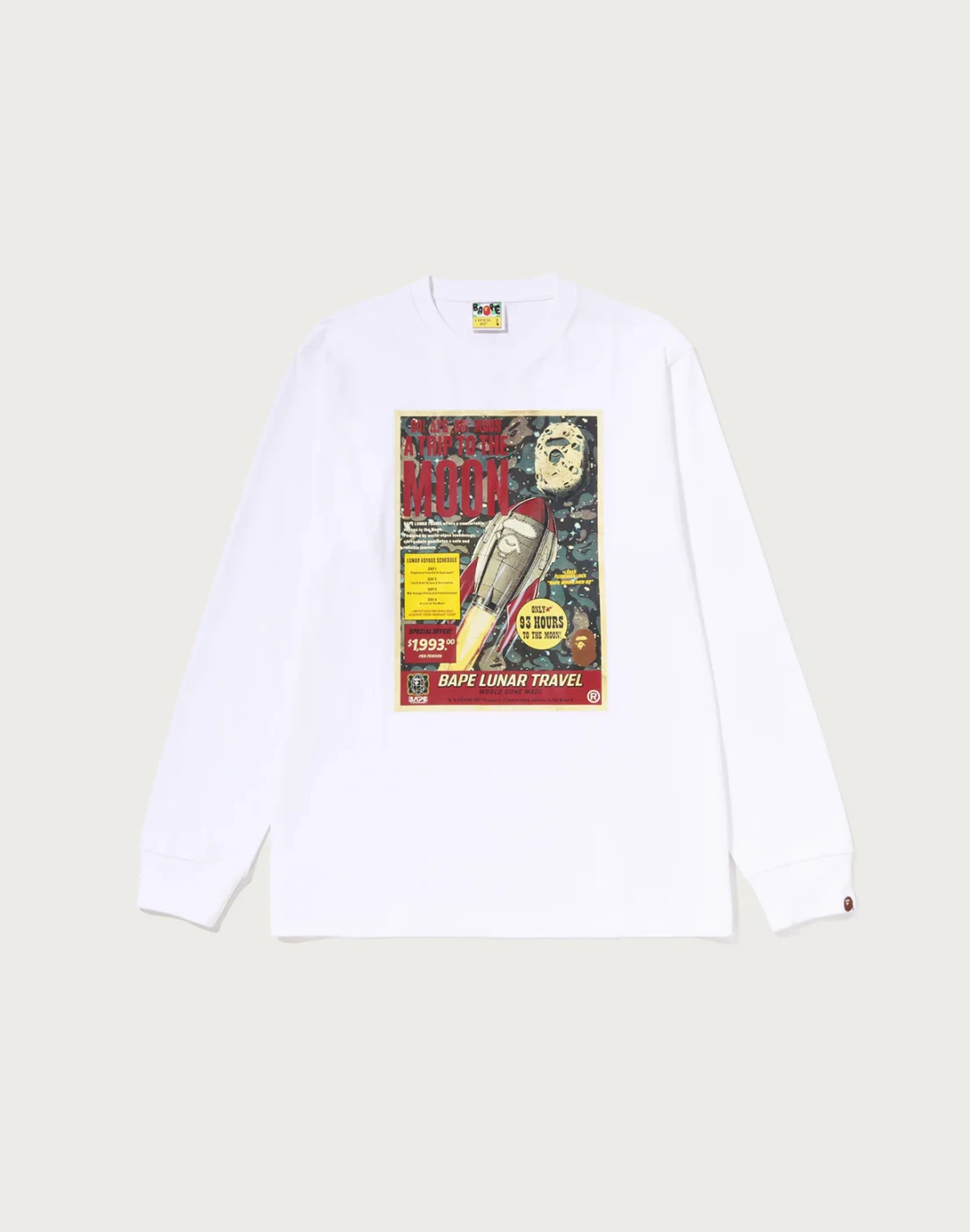
The APE HEAD ROCKET TEE opens the sequence: an Ape Head-shaped rocket blasts off from Earth trailing heavy plumes of smoke, rendered in linework that leans hard into vintage sci-fi comic panels. It comes in white or black, both ¥12,100. The MOON APE HEAD TEE, also ¥12,100 in either colorway, picks up the thread mid-flight, pairing an Ape Head-shaped moon with a spacecraft closing in on it, the collection’s most literal illustration of its own name. The MILO BORG TEE (¥12,100, white or black) introduces a mechanized take on BAPE’s mascot as a supporting character, its vividly colored front graphic offset by typography on the back. Closing the sequence is the BAPE® LUNAR TRAVEL POSTER LS TEE, a ¥14,300 long-sleeve built around a conceit BAPE states directly in its own copy: what would a pulp sci-fi magazine’s advertisement for a trip to the moon have looked like, had one ever run. Its front graphic, centered on the same rocket-shaped ship and moon, is staged like an ad for a vacation that was never actually for sale.
All eight SKUs (four graphics, two colorways apiece) release September 19 at BAPE’s authorized Japanese retail stores and on the BAPE.COM WEB STORE, according to the brand’s own product announcement. Past editions of this capsule have occasionally surfaced later on BAPE’s US and international storefronts at adjusted pricing (the 2023 edition, for instance, sold stateside for $99 to $145 per piece), though as of this writing no US release date has been confirmed for the 2026 lineup.
flow
BAPE has a name for the aesthetic tying the four pieces together: “レトロポップフューチャー,” or “retro pop future,” a deliberate collision of a decades-old visual language, the yellowed color separations and blocky captions of mid-century pulp science fiction magazines, with the forward-looking subject matter those magazines used to sell. Pulp titles like Amazing Stories and Astounding Science Fiction spent the 1930s through the 1950s illustrating space travel with a mix of technical confidence and gee-whiz showmanship, long before an actual moon landing existed to compare it against. BAPE’s own copy for the collection leans directly on that image, imagining a vintage pulp magazine that ran an advertisement for lunar tourism, a device that lets a 2026 streetwear capsule borrow the optimism of a genre that treated space travel as inevitable rather than newsworthy.
It’s a more disciplined creative brief than BAPE has historically applied to this particular capsule. Past Moon Collections leaned on the Mid-Autumn Festival as license to throw several only loosely related graphics at the wall: hologram-printed UFOs one year, foil-stamped rabbits referencing Japan’s own Fifteenth Night lunar tradition the next, astronaut helmets with the moon reflected in the visor the year after that. The 2026 lineup reads instead as a single authored narrative, using its four garments the way a four-panel strip uses its frames: liftoff, approach, a supporting character, and finally the poster that would have sold the whole trip in the first place.
mech
The MILO BORG TEE isn’t a one-off. It’s the second appear of a mechanized take on Baby Milo, BAPE’s baby-chimp mascot, which debuted on last year’s Moon Collection as a relaxed-fit crewneck sweatshirt before returning this season on a tee.
Baby Milo himself dates to 1999, when BAPE artist Mankey designed the character under Nigo’s direction, drawing on the infant chimpanzee named Milo from the Planet of the Apes film series that had already given the brand its name and logo. Where BAPE’s Ape Head and camo patterns projected a harder, more masculine edge, Milo’s cartoon cuteness opened up a different register entirely. By 2005 the character had outgrown a supporting role, anchoring the 2006 launch of BAPE KIDS, the brand’s first dedicated push into family and children’s design, and expanding from apparel into plush toys, homeware, and a long run of standalone collaborations under its own BABY MILO STORE banner. BAPE has periodically pushed the character into mechanical or sci-fi territory before, including a Baby Milo Cyborg colorway of the BAPESTA sneaker credited to Nigo’s own design, so MILO BORG’s robotic redesign extends a lineage rather than inventing one from scratch.
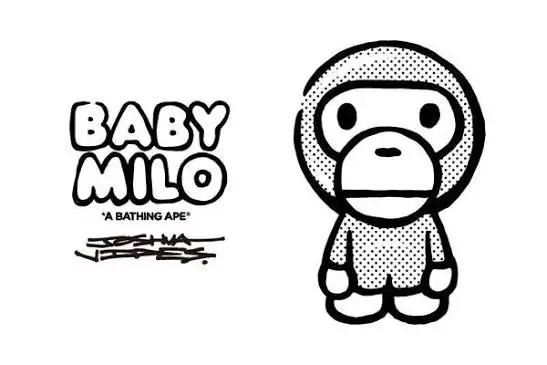
Baby Milo character with the “BABY MILO” and “*A BATHING APE®” logo, along with the Joshua Vides signature.
Within the 2026 collection specifically, MILO BORG functions as connective tissue between the human-scale story of an Ape Head leaving Earth and the collection’s science-fiction stakes. A robot companion along for a moon trip is a genre convention old enough to predate the pulp magazines BAPE is nodding to in the first place.
length
BAPE has returned to this well nearly every autumn since 2019, when it released its first-ever Mid-Autumn Festival capsule: black and white tees stamped with the Ape Head, the “A BUSY WORKS” emblem, and the brand’s signature wordmark, all set against a reflective moon’s surface and limited to one item per customer. That first run, sold exclusively through bapeonline.com, arrived six days ahead of that year’s Mid-Autumn Festival date, the same gap separating this year’s September 19 release from the actual September 25 full moon. The 2019 capsule was also paired with a Mooncake Gift boxset built with The Peninsula Boutique, tying the collection explicitly to the festival’s culinary traditions rather than just its imagery.
The collection kept evolving from there. A 2021 edition, APE HEAD MOON COLLECTION, wrapped the Ape Head in metallic 3D prints and moonlight-styled reflectors across a tee, long-sleeve tee, and crewneck ranging from ¥9,900 to ¥22,000. By 2023, the lineup split into three distinct design directions, including MOON JAPAN APE HEAD, which borrowed foil stamping, kanji, and rabbit motifs from Japan’s own Fifteenth Night lunar tradition rather than the UFO-and-moon imagery used elsewhere that year. The 2024 edition went fully astronautical, with a SPACE APE TEE, MOON LANDING TEE, and a SPACE APE RELAXED FIT COACH JACKET (¥40,700) depicting three suited Ape members touching down on the lunar surface, footprints and all. Last year’s 2025 capsule introduced the MOON APE HEAD OLD PHOTO series and, notably, MILO BORG’s first appearance as a crewneck sweatshirt, setting up the character’s return this season.
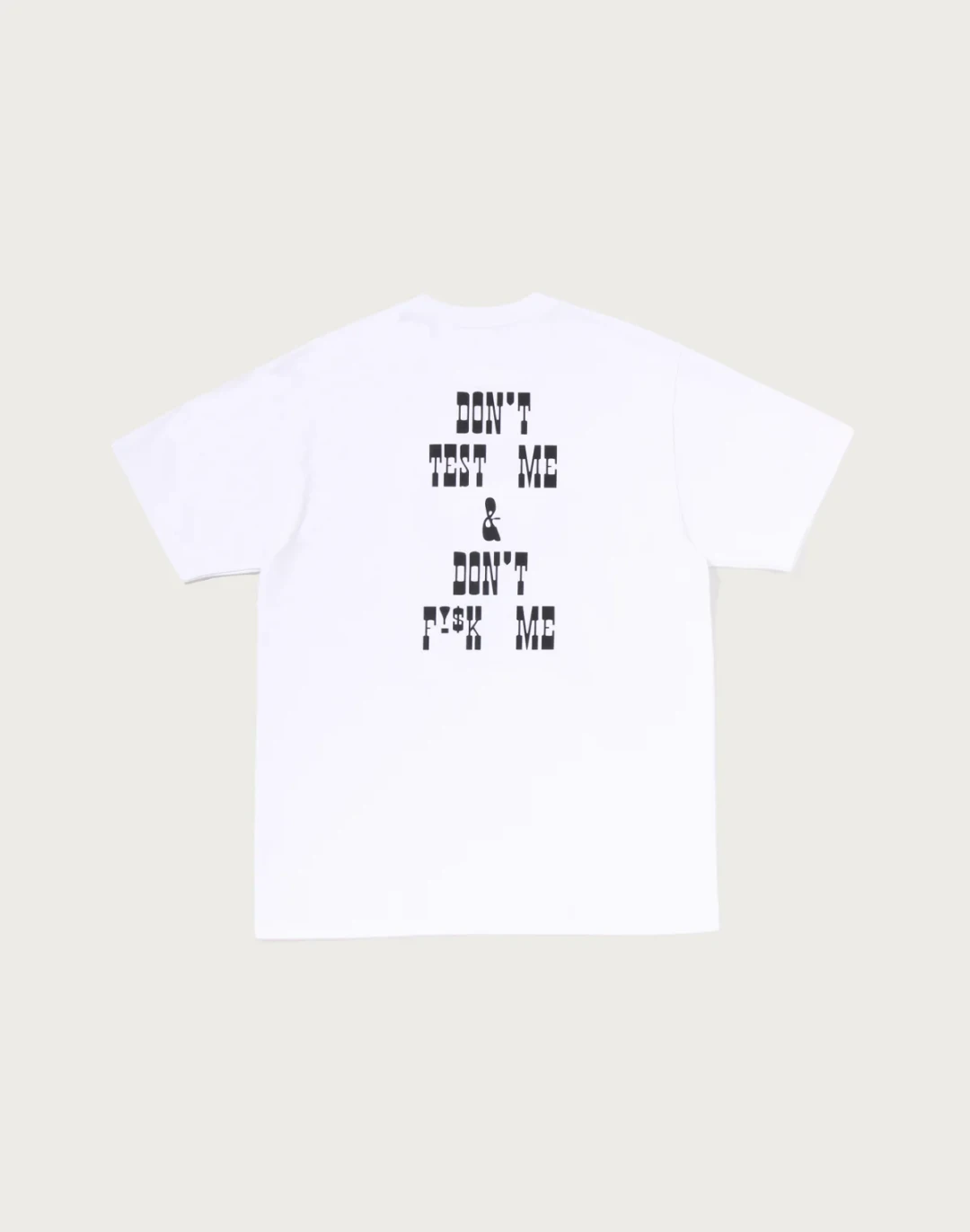
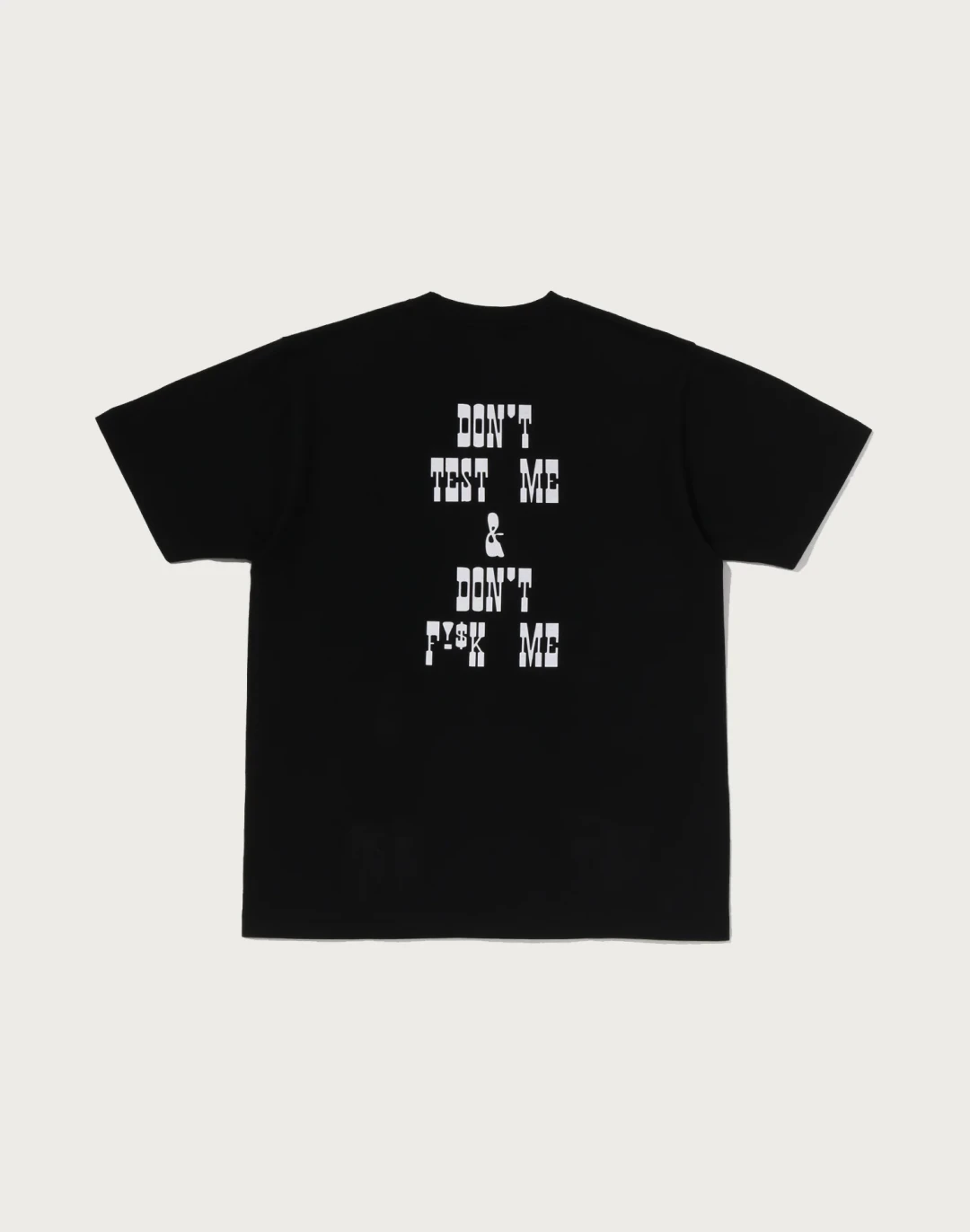
Bape “Don’t Test Me” Tee with Baby Milo graphic in the center, from a 2002 release.
Read across six years, the throughline is a brand steadily building out a private mythology rather than repeating a single graphic. A moon that started as a decorative motif in 2019 has become, by 2026, a fully staged destination with its own returning supporting cast, its own visual continuity from one September to the next, and, for the first time this year, a genuine narrative sequence rather than a loose theme.
to
The Mid-Autumn capsule sits inside a much longer company story. Nigo (born Tomoaki Nagao) founded BAPE in 1993 out of a small Ura-Harajuku shop called Nowhere, opened during the neighborhood’s Uraharajuku movement alongside future Undercover designer Jun Takahashi. He named the brand after a Japanese idiom about overindulgent youth “bathing in lukewarm water,” while borrowing its ape imagery and logo from his own fascination with Planet of the Apes. Scarcity was a deliberate strategy from early on: by 1998, BAPE’s tees were already sold across 40 stores in Japan, yet Nigo reportedly kept supply to roughly 10 percent of actual demand to keep the label desirable. What started as a small run of graphic tees grew across the following decade into one of Japanese streetwear’s most exported labels, eventually worn by figures including The Notorious B.I.G., Pharrell Williams, and Kanye West.
This capsule also sits inside a much larger seasonal rollout. BAPE’s broader Fall/Winter 2026 collection, themed “Timeless Culture,” fuses Japanese craftsmanship with American vintage street codes across workwear, military, and classic streetwear silhouettes, and the MOON COLLECTION functions as a limited-run capsule within that larger push rather than a standalone release.
BAPE hasn’t been Nigo’s company for well over a decade. Hong Kong fashion conglomerate I.T Group acquired a majority stake in 2011 following a run of financial losses, and Nigo formally departed the brand in 2013. By then he had already founded Human Made in 2010 as a side project, and he later took the creative directorship at KENZO in 2021. BAPE’s operating company today still trades under the name NOWHERE Co., Ltd., the same name Nigo gave his original 1993 storefront, a small continuity running underneath three decades of ownership changes, market expansion, and now an annual trip to the moon.
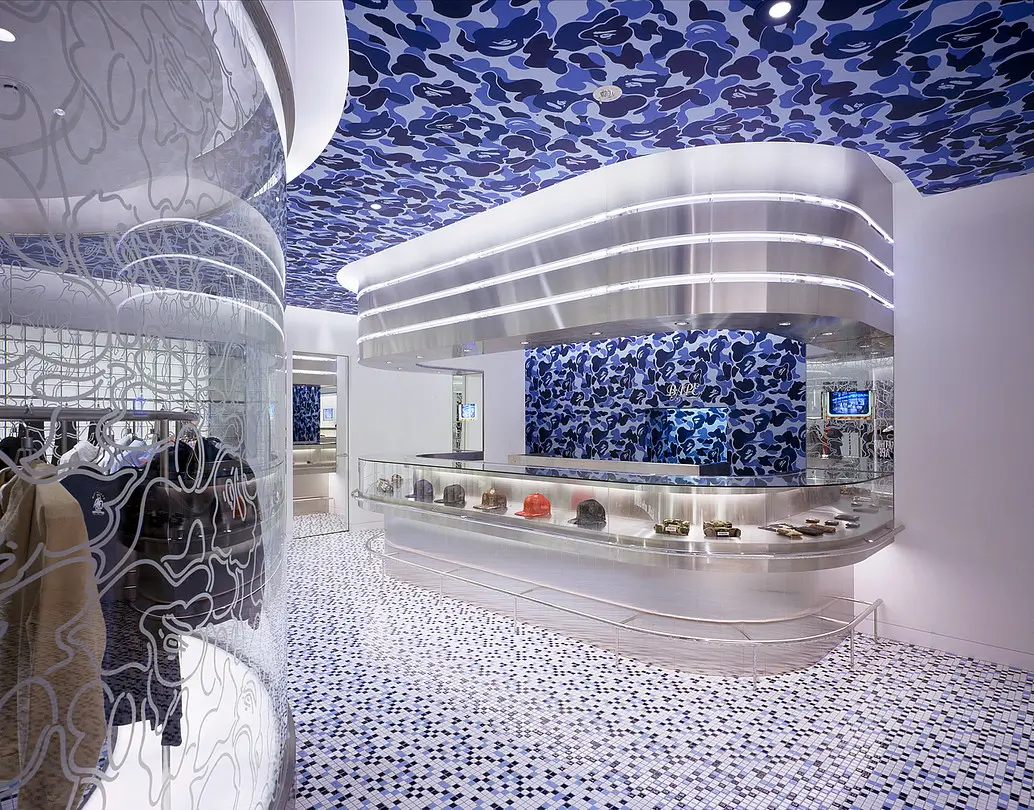
BAPE STORE® HARAJUKU in Tokyo, designed by Wonderwall and featuring a blue camo pattern.
why
The Mid-Autumn Festival itself falls on the 15th day of the eighth lunar month, when the moon is traditionally at its fullest and brightest, and is marked across East and Southeast Asia with family gatherings, mooncakes, and lantern displays. In 2026, that date lands on September 25, meaning BAPE’s release beats the actual festival by six days, the same gap the brand ran with its very first capsule back in 2019.
Japan observes its own parallel version of the tradition, Tsukimi, a moon-viewing custom with roots distinct from the Chinese Mid-Autumn Festival but centered on the same autumn full moon, and BAPE’s Japanese branding for the capsule draws on both. It’s a fitting overlap for a brand that has always sat at the intersection of Japanese subculture and a genuinely global customer base: a company built on a Japanese idiom, run today by a Hong Kong conglomerate, releasing a Mid-Autumn capsule that speaks to Chinese and Japanese lunar traditions at once, with its actual shelf life measured in a Western retail calendar.
The timing isn’t incidental. Releasing before the festival gives the capsule a run of retail life ahead of the holiday itself, when gift-giving and family gatherings typically peak, while keeping the collection visually and thematically tied to the full moon at the center of the celebration. It’s a scheduling logic that treats Mid-Autumn less as a single date to hit and more as a season BAPE has claimed for itself, one now populated with its own recurring cast of rockets, robots, and an Ape Head that keeps finding new ways to leave the planet, one September at a time.
Related Articles
Nubian Put Distressed Cotton Jersey On Needles Track
20th Exclusive Vol.7. Needles. Four shapes. Black and grey. 19 September 2026. All NUBIAN doors […]